Kamala Harris under pressure as her path to victory narrows - Newstrends
Connect with us

International

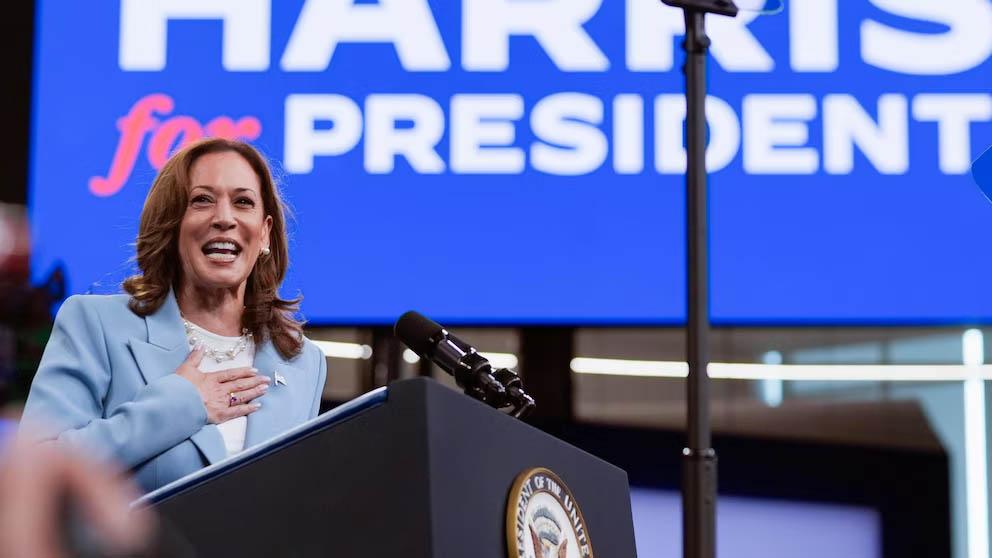
Kamala Harris under pressure as her path to victory narrows
Published

on

Kamala Harris under pressure as her path to victory narrows

Donald Trump has won North Carolina and Georgia and taken a lead over Kamala Harris in most of the other five battleground states that will decide the winner of the US election, BBC’s US partner CBS projects.

CBS says Pennsylvania and Wisconsin are leaning towards Trump and he is ahead in the other so-called Rust Belt state of Michigan. The results are not final.

Incomplete returns also suggest Trump has a lead in Nevada, while the race remains tight in the other sun belt battleground of Arizona.

In more good news for Trump’s fellow Republicans, the party is projected to win majority control of the Senate.

As expected, Trump has won conservative strongholds from Florida to Idaho, while Harris swept liberal states from New York to California, CBS projects.

The Democrat was expected to spend election night at Howard University in Washington DC, where she was an undergraduate, but it emerged after midnight that she would not attend.

Following the announcement by campaign co-chairman Cedric Richmond, the crowd all but disappeared from Harris HQ at the historically black college.

The party-like atmosphere of a few hours earlier at Howard had already turned sour as two swing states were called for Trump.

From Harris HQ, Democratic fundraiser Lindy Li told the BBC that it is “pretty grim right now”.

“People are getting increasingly anxious,” she said, “but there is still a pathway. I am still holding on to that, but this is not the night we wanted.”

Trump was expected to appear shortly at his campaign watch party in West Palm Beach, Florida, where the mood was celebratory.

Elon Musk, the world’s richest man and Trump mega-donor, is spending election night with the Republican nominee.

Whichever way it goes the result will be historic – giving America its first woman president or marking a seismic political comeback for Trump.

Whoever takes the White House may have their hands tied by Congress, which is also up for grabs in Tuesday’s vote.

CBS projects Republicans will win control of the Senate after wresting two seats in West Virginia and Ohio from the Democrats and beating off a stiff challenge in Texas.

Neither party seemed to have an overall edge in the House, which Republicans narrowly control.

Around 86 million voters cast their ballots early amid one of the most turbulent campaigns in recent American history.

Vice-President Harris, 60, only became the Democratic Party candidate in July, after President Joe Biden withdrew from the race under pressure from within the party.

Trump, 78, was the target of two assassination plots – narrowly avoiding a sniper’s bullet in Pennsylvania.

The former president said he felt “very confident” as he voted earlier on Tuesday near his home in Palm Beach, Florida, with his wife, Melania.

“If I lose an election, if it’s a fair election, I’m going to be the first one to acknowledge it,” he said.

He posted earlier on his social media platform, Truth Social, saying “law enforcement coming” to Philadelphia because of “massive cheating”.

Philadelphia’s police department told BBC Verify they were unaware of any electoral fraud. The city’s top prosecutor said the allegation had “no factual basis whatsoever”.

Both sides have armies of lawyers on standby for legal challenges on and after election day.

If Harris won, she would become the first woman, black woman and South-Asian American to win the presidency.

Trump would become the first president to win non-consecutive terms in more than 130 years. He is also the only president to be impeached twice and the first former president to be criminally convicted.

CBS exit poll data suggests Harris may have under-performed with women.

Some 54% of female voters cast their ballots for her, the numbers indicate. But Joe Biden won the support of 57% of women in 2020.

Law enforcement agencies nationwide are on high alert for potential violence.

About 30 bomb threats hoaxes targeted election-related locations nationwide on Tuesday, more than half of them in the state of Georgia alone, reports CBS.

Kamala Harris under pressure as her path to victory narrows

Loading

International

US Ends 60-Year Policy, Orders Nigerians, Others Home for Green Card Processing

Published

on

US Ends 60-Year Policy, Orders Nigerians, Others Home for Green Card Processing

US Ends 60-Year Policy, Orders Nigerians, Others Home for Green Card Processing

United States President Donald Trump has introduced a new immigration policy requiring Nigerians and other foreign nationals seeking green cards to return to their countries of origin to complete the application process, except under extraordinary circumstances. The directive was announced on Friday through a statement released by the US Citizenship and Immigration Services (USCIS) , effectively ending a longstanding practice that had allowed legal immigrants to apply for and obtain permanent residency from within the United States for over 60 years . According to the agency, the policy is intended to restore what it described as the “original intent” of American immigration laws .

USCIS explained that individuals seeking permanent residency through adjustment of status would now process their applications at US consular offices outside the country under the supervision of the Department of State. The agency stated, “We’re returning to the original intent of the law to ensure aliens navigate our nation’s immigration system properly. From now on, an alien who is in the U.S. temporarily and wants a Green Card must return to their home country to apply, except in extraordinary circumstances” . A spokesperson for USCIS, Zach Kahler , said the measure would help reduce the number of immigrants who remain in the United States unlawfully after their residency requests are denied .

“This policy allows our immigration system to function as the law intended instead of incentivising loopholes. When aliens apply from their home country, it reduces the need to find and remove those who decide to slip into the shadows and remain in the U.S. illegally after being denied residency,” Kahler said . The immigration agency noted that the new policy would mainly affect temporary visa holders , including tourists, students, and foreign workers residing in the United States on nonimmigrant visas . “Nonimmigrants, like students, temporary workers, or people on tourist visas, come to the U.S. for a short time and for a specific purpose. Our system is designed for them to leave when their visit is over. Their visit should not function as the first step in the Green Card process,” the statement added.

READ ALSO:

USCIS further argued that handling green card applications through overseas consular offices would allow the agency to redirect resources to other immigration-related responsibilities. According to the statement, greater attention would now be given to applications involving victims of violent crimes, cases linked to human trafficking, naturalisation requests, and related immigration services. “The law was written this way for a reason, and despite the fact that it has been ignored for years, following it will help make our system fairer and more efficient,” the agency stated .

The policy change has drawn sharp criticism from immigrant rights advocates, legal experts, and humanitarian organisations , who warn that it could separate families, create new barriers for applicants, and expose some individuals to long waits or dangers in their countries of origin. World Relief , a humanitarian and refugee resettlement organization, warned in a statement: “If families are told that the non-citizen family member must return to his or her country of origin to process their immigrant visa, but immigrant visas are not being processed there, it’s a Catch-22. These policies will effectively create an indefinite separation of families” .

Jamaican immigration attorney Dahlia Walker-Huntington told The Gleaner that the move is likely headed for a major legal challenge. “I can bet my last dollar that there will be a lawsuit in short order to stop this. As far as immigration lawyers are concerned, this is against existing law. Adjustment of status is not a policy… a discretionary policy, it is factored into law,” she said. She pointed to section 245(i) of the Immigration and Nationality Act , which allows certain qualifying immigrants to obtain a green card from within the US . Attorney Oliver J. Langstadt added that this policy memo is going to result in “heavy litigation,” and that his “colleagues are already brewing for a fight” .

The immigration agency noted that officers are now directed to consider all relevant factors and information on a case-by-case basis when determining whether an alien warrants this “extraordinary form of relief” . The memo doesn’t create new law but could influence officers to treat applicants more skeptically, said Rachel Girod , a partner at Eldridge Crandell. “They’re implying that it’s a negative factor to even just be applying for adjustment of status,” Girod said, arguing USCIS selectively cited decades-old case law to justify a more restrictive approach. Legal challenges could emerge if USCIS begins denying applications based heavily on the memo’s discretionary framework, Girod said .

USCIS did not specify when the change would take effect , whether individuals would be required to remain outside the United States throughout the entire processing period, or whether the policy would affect applications already pending. According to an analyst with the Cato Institute, more than 1 million immigrants in the US are waiting on their green cards . The announcement has sent shockwaves through immigrant communities across the United States, including thousands of Nigerians who are currently in the country legally on various visa categories and were pursuing the path to permanent residency .

READ ALSO:

The policy also raises serious concerns for individuals from countries where US consular operations are limited or suspended. Attorney Langstadt noted that with the current pause on immigrant visa processing in 75 countries, insisting that people go overseas means they are “basically walking into a serious problem.” He further stated that there are people who are trying to get their green cards but have overstayed their legal stay in the US, and if they leave and go overseas, they would be subjected to a three or a 10-year bar and will have to file an additional waiver abroad which may or may not be granted .

HIAS , an aid group that provides services to refugees, among other groups of immigrants, said USCIS was forcing survivors of trafficking and abused and neglected children to return to the dangerous countries they fled in order to process their applications for green cards granting them permanent residency in the US . The group argued that this policy could put the most vulnerable migrants at serious risk by forcing them back into harm’s way. The USCIS memo does provide for “extraordinary circumstances” to be considered, but it remains unclear what criteria would qualify for such an exemption .

The latest directive comes amid a broader tightening of immigration policies under the Trump administration. In December 2025, the administration temporarily suspended the processing of green card and citizenship applications submitted by Nigerians and nationals of several other countries that were added to a US travel ban, according to reports by CBS News . The suspension affected legal immigration applications handled by USCIS and largely targeted applicants from selected African and Asian countries. Many of those impacted were already residing legally in the United States and were seeking permanent residency or US citizenship . The administration also instructed USCIS to halt immigration petitions, including applications for permanent residency and naturalisation, from nationals of 19 countries covered by a travel ban announced in June, with Nigeria listed under “partial suspension” alongside Angola, Benin, Senegal, Tanzania, and others .

Friday’s policy change is the latest in a series of steps taken by Donald Trump over the last year to tighten immigration to the United States. Last year, the Trump administration moved to shorten the duration of visas for students, cultural exchange visitors, and members of the media. In January 2026, the state department announced that it had revoked more than 100,000 visas in the second Trump administration . The administration has also attacked other immigrants with legal status in the US, like refugees and other protected immigrants .

The move followed a shooting incident in Washington, D.C., during Thanksgiving week in which two National Guard soldiers were injured. US authorities alleged that the attack was carried out by an Afghan national . The administration has cited security concerns as justification for many of its recent immigration restrictions. The December 2025 suspension of green card processing for nationals of travel ban countries was reportedly linked to this incident .

Immigration attorneys are advising clients to seek legal counsel to understand how the new policy might affect their specific circumstances and to explore whether they might qualify for the “extraordinary circumstances” exemption. Walker-Huntington offered advice to those affected: “It’s rough. And I feel for my people today who are getting word of this, and I really just want to tell them, if you have a lawyer, reach out to your lawyer. If you don’t have a lawyer, reach out to a lawyer” . As legal challenges are expected to be filed in short order, the fate of this policy may ultimately be decided by the federal courts.

US Ends 60-Year Policy, Orders Nigerians, Others Home for Green Card Processing

Loading

Continue Reading

International

Iran Accuses US of ‘Excessive Demands’ as Tehran Weighs Fresh Peace Proposal

Published

on

Iran’s Foreign Minister, Abbas Araghchi
Iranian Foreign Minister Abbas Araghchi

Iran Accuses US of ‘Excessive Demands’ as Tehran Weighs Fresh Peace Proposal

Iran has accused the United States of making “excessive demands” as leaders in Tehran consider a new peace proposal aimed at ending months of conflict that have destabilised the Middle East and rattled global energy markets.

The latest diplomatic developments come amid growing speculation that Washington could launch fresh strikes on Iran if ongoing negotiations fail to produce a breakthrough.

Tensions escalated after reports emerged that US President Donald Trump abruptly cancelled plans to attend his son’s wedding in order to remain in Washington due to what aides described as “circumstances pertaining to government.”

The move fuelled speculation that discussions surrounding the Iran conflict had entered a critical stage.

The war began on February 28 following coordinated US-Israeli strikes on Iran, triggering retaliatory measures by Tehran and a prolonged standoff around the strategic Strait of Hormuz — one of the world’s most important oil shipping routes.

Since an April 8 ceasefire agreement, diplomatic efforts involving regional and international actors have failed to secure a permanent resolution to the conflict or fully restore unrestricted maritime access through the strait.

READ ALSO:

The disruption has significantly affected global oil supplies and contributed to volatility in international financial markets.

Iranian Foreign Minister Abbas Araghchi, during a telephone conversation with United Nations Secretary-General António Guterres, accused Washington of undermining diplomacy through what he described as contradictory policies and aggressive demands.

According to Iran’s foreign ministry, Araghchi said Tehran remained committed to diplomatic engagement despite “repeated betrayals of diplomacy and military aggression against Iran, along with contradictory positions and repeated excessive demands” by the United States.

US media organisations including Axios and CBS News reported that the White House was considering new strikes against Iran, although no final decision had reportedly been reached.

The reports indicated that senior US officials were reviewing military options in the event negotiations collapse.

US Secretary of State Marco Rubio acknowledged that there had been “some progress” in negotiations but stressed that major differences remained unresolved.

Speaking on the sidelines of a NATO conference in Sweden, Rubio said Washington was still dealing with “a very difficult group of people,” adding that President Trump had “other options” if diplomacy failed.

Meanwhile, Pakistan’s Chief of Army Staff, General Asim Munir, arrived in Tehran on Friday as part of mediation efforts aimed at preventing further escalation.

Iran’s official IRNA news agency reported that Munir held late-night talks with Araghchi focused on diplomatic initiatives to end the conflict.

Iranian Foreign Ministry spokesman Esmaeil Baqaei, however, cautioned against optimism, saying deep disagreements still existed between Tehran and Washington.

He noted that Qatar had also sent a delegation to hold discussions with Iranian officials as regional powers intensified efforts to broker peace.

“In recent days, many countries — both regional and non-regional — have been trying to help bring the war to an end,” Baqaei said, while emphasising that Pakistan remained the official mediator.

Pakistan’s Prime Minister Shehbaz Sharif and Foreign Minister Ishaq Dar also travelled to China — Iran’s largest trading partner — for high-level discussions expected to include the Middle East crisis.

A major sticking point in the negotiations remains the status of the Strait of Hormuz and retaliatory measures affecting Iranian ports.

Iran has warned that continued pressure could further disrupt maritime operations in the region, raising concerns over the impact on global trade and energy supply chains.

European Union member states on Friday condemned Iran’s blockade measures as contrary to international law and expanded sanctions targeting individuals allegedly linked to the closure of shipping routes.

Despite ongoing tensions, global markets showed cautious optimism that diplomacy could eventually succeed.

Wall Street closed higher on Friday, with the Dow Jones Industrial Average recording another all-time high as investors reacted positively to signs of continued negotiations.

However, oil prices also rose amid fears that prolonged instability around Hormuz could worsen global inflation and increase pressure on household incomes worldwide.

The conflict has also continued to spill into neighbouring Lebanon, where fighting between Israel and the Iran-backed Hezbollah movement has persisted despite ceasefire efforts.

Lebanon’s state-run National News Agency reported that Israeli forces carried out multiple airstrikes near the Syrian border targeting areas believed to house Hezbollah positions.

Iranian officials insisted that any comprehensive peace agreement must include an end to hostilities in Lebanon and other conflict zones linked to the war.

Lebanon’s health ministry said more than 3,100 people had been killed in the country since fighting escalated earlier this year, including civilians caught in cross-border attacks.

Iran Accuses US of ‘Excessive Demands’ as Tehran Weighs Fresh Peace Proposal

Loading

Continue Reading

International

Iran Tightens Grip On Strait Of Hormuz Amid Rising Tensions With US

Published

on

Iran Tightens Grip On Strait Of Hormuz Amid Rising Tensions With US

Iran Tightens Grip On Strait Of Hormuz Amid Rising Tensions With US

Iran has intensified efforts to assert military and administrative control over the strategic Strait of Hormuz, escalating tensions with the United States, the United Arab Emirates (UAE), and other Gulf allies over one of the world’s most critical oil shipping routes.

The latest controversy erupted after Iran’s newly established Persian Gulf Strait Authority (PGSA) published a map claiming “Iranian armed forces oversight” across more than 22,000 square kilometres of waters surrounding the Strait.

The claimed maritime zone extends beyond Iran’s recognised territorial boundaries into waters belonging to Oman and the UAE, triggering strong condemnation from Gulf governments.

The UAE swiftly rejected Tehran’s claims, describing them as provocative and unrealistic.

Diplomatic adviser to the UAE president, Anwar Gargash, accused Iran of attempting to impose “a new reality born from a clear military defeat,” insisting that efforts to dominate the Strait of Hormuz or violate Emirati maritime sovereignty were “nothing but fragments of dreams.”

Iran’s new maritime authority further declared that all vessels passing through the Strait of Hormuz would now require “coordination with and authorization from the Persian Gulf Strait Authority.”

The move has been interpreted by analysts as an attempt by Tehran to establish de facto control over one of the world’s busiest energy corridors.

The United States and Gulf allies immediately rejected the directive, stressing that the Strait of Hormuz remains an international waterway protected under global maritime law.

READ ALSO:

Washington has reportedly advised commercial shipping operators not to comply with Iran’s instructions.

The Strait of Hormuz, located between Iran and Oman, handles nearly 20 percent of global oil shipments and a significant share of the world’s liquefied natural gas exports.

Any disruption to navigation through the narrow waterway is considered a major threat to global energy supplies and international trade.

Although the United Nations Convention on the Law of the Sea (UNCLOS) guarantees freedom of navigation and safe passage through international straits, Iran has never formally ratified the treaty and has repeatedly challenged aspects of international maritime law.

The crisis has deepened amid worsening confrontation between Tehran and Washington following renewed US-Israeli strikes on Iranian-linked targets earlier this year.

Media outlets linked to Iran’s Islamic Revolutionary Guard Corps (IRGC) this week aired footage allegedly showing a “punishment strike” on an oil tanker navigating the Strait of Hormuz.

BBC Verify later reported that details in the footage matched the Liberian-flagged tanker Barakah, whose operators earlier disclosed that the vessel had been struck by unidentified projectiles while travelling through the area.

Tensions escalated further on Wednesday after US forces boarded an Iran-bound oil tanker in the Gulf of Oman.

The United States Central Command (CENTCOM) identified the vessel as Celestial Sea and claimed it was suspected of violating the US-led blockade imposed on Iranian ports in April.

Video footage released by CENTCOM showed US Marines descending from a helicopter onto the tanker during the operation.

According to maritime security company Vanguard, American forces later searched the ship and ordered the crew to alter course.

Tracking data from MarineTraffic subsequently showed the tanker redirecting toward the Omani port of Duqm.

The vessel had previously been sanctioned by Washington under another name over alleged links to Iranian oil transportation networks.

CENTCOM disclosed that since the blockade began on April 13, US forces had redirected 94 commercial vessels and disabled four ships suspected of violating sanctions tied to Iran.

The growing maritime confrontation has already disrupted shipping activities in the Gulf, with analysts warning of rising freight insurance costs, delays in crude oil exports, and heightened instability in global energy markets.

The chief executive officer of the UAE’s ADNOC recently warned that full restoration of normal oil flows through the Strait of Hormuz may not happen before 2027, even if hostilities end soon.

Diplomatic efforts are now intensifying to prevent a broader regional conflict.

Former US President Donald Trump revealed that he delayed planned military strikes against Iran earlier this week following requests from Gulf leaders, including Qatar, Saudi Arabia, and the UAE, who urged Washington to allow more time for negotiations.

Trump said “serious negotiations” were ongoing but warned that military action remained possible if Tehran failed to respond positively to American proposals.

Meanwhile, Pakistan’s military chief, General Asim Munir, reportedly arrived in Tehran on Thursday as part of mediation efforts aimed at easing tensions between Iran and the United States.

Iranian state media confirmed that Munir was meeting senior Iranian officials while Tehran reviewed the latest US proposals designed to end the crisis and restore stability in the Gulf.

Security analysts warn that continued escalation around the Strait of Hormuz could trigger serious consequences for global oil prices, maritime trade, and regional security if military incidents continue in one of the world’s most sensitive waterways.

Iran Tightens Grip On Strait Of Hormuz Amid Rising Tensions With US

Loading

Continue Reading

Trending