

News
Tax reform bills not to impoverish the north – Presidency
Tax reform bills not to impoverish the north – Presidency
The presidency has said no part of the controversial tax reform bills is meant to impoverish the northern part of the country.
In a statement by Bayo Onanuga the Special Adviser to President Tinubu on Information and Strategy, the presidency denied that the bills recommend the scrapping of the Tertiary Education Trust Fund (TETFUND), The National Agency for Science and Engineering Infrastructure (NASENI) and the National Information Technology Development Agency (NITDA) .
The statement read, “Since the public debate around the transformative tax bills before the National Assembly began in the last few weeks, various political actors and commentators have tried to obfuscate the facts, deliberately misinforming and misleading the public.
“Unfortunately, most reactions are not grounded in facts, reality, or sufficient knowledge of the bills. While some commentators have attempted to incite the people against lawmakers, others have polarized one section of the country against another.
“The tax reform bills will not make Lagos or Rivers more affluent and other parts of the country, as recklessly canvassed, poorer. The bills will not destroy the economy of any section of the country. Instead, they aim to enhance the quality of life for Nigerians, especially the disadvantaged, who are trying to make a living.
Contrary to the lies being peddled, the bills do not suggest that NASENI, TETFUND, and NITDA will cease to exist in 2029 after the passage of the bills.
“Government agencies, such as NASENI, TETFUND, and NITDA, are funded through budgetary provisions with company income tax and other taxes paid by the same businesses that are being overburdened with the special taxes.
One reason President Bola Tinubu embarked on the Tax and Fiscal Policy Reforms is the need to streamline tax administration in Nigeria and make the operating environment conducive for businesses.
For decades, businesses, investors, and private sector players in Nigeria have complained of being overburdened by a myriad of taxes and levies, including those earmarked to fund various government agencies and initiatives.
READ ALSO:
- EFCC makes single largest asset recovery in 21 years
- Unknown persons set Lagos building ablaze, killing mother, two children
- Nigerian actress joins US Army
“The multiple taxes complicate the economic environment, making Nigeria uncompetitive for investment and preventing many businesses from growing or continuing their operations. Some companies have had to make the rational decision to relocate to other countries. We can not continue on this path or wait for 20 years if this country is to deliver the prosperity we need for our people.
Tax reform bills not to impoverish the north – Presidency







News
2027 Hajj: NAHCON Announces N7.5m–N7.8m Fares, Sets September 26 Biometric Deadline

News
UK Opens 2026/27 Commonwealth Fellowship Applications for Nigerians – How to Apply
UK Opens 2026/27 Commonwealth Fellowship Applications for Nigerians – How to Apply
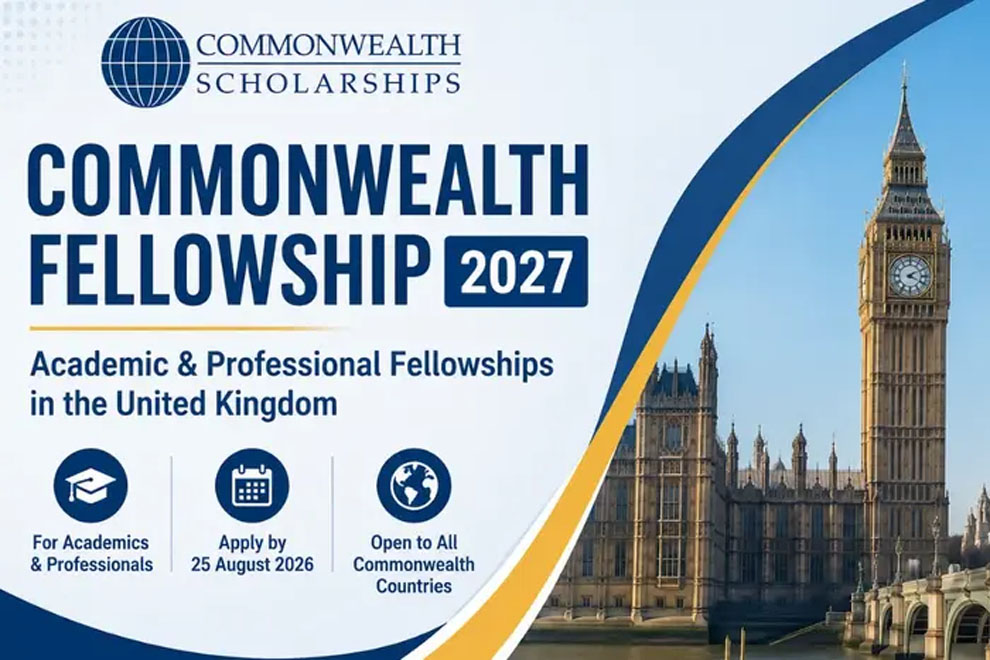
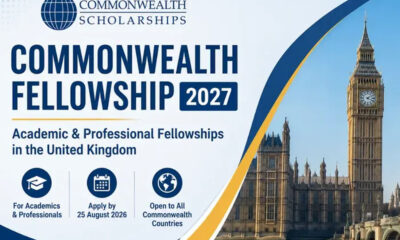
The United Kingdom has opened applications for the 2026/27 Commonwealth Fellowship Programme, offering fully funded opportunities for mid-career professionals and university academics from Commonwealth countries, including Nigeria. The UK in Nigeria announced the opening via its X handle on Thursday, urging eligible candidates to apply before the August 25, 2026 deadline. The Commonwealth Scholarship Commission administers the programme under two distinct strands: Commonwealth Professional Fellowships and Commonwealth Academic Fellowships. These fellowships enable professionals and academics from eligible Commonwealth countries to spend time in the UK at host organisations working on programmes of professional or academic development that will have a developmental impact upon their return home.
The programme is divided into two categories, each designed for different career paths. Commonwealth Professional Fellowships target mid-career professionals seeking development at a UK host organisation in their sector. Professional Fellowships are expected to last between six weeks and three months, with start dates between mid-February and mid-March 2027. Applicants must have at least five years of full-time, or equivalent part-time, relevant work experience by the proposed start of the fellowship, and voluntary work experience does not count toward this minimum. Commonwealth Academic Fellowships are designed for university academic staff who hold a PhD and are employed at a university in a Commonwealth country outside the UK. These fellowships last three months and are scheduled to begin in January or February 2027, focusing on academic skills updates, knowledge exchange, and networking, with the goal of establishing future collaborations with UK universities.
READ ALSO:
- Osun Decides 2026: Over 40,000 Security Operatives Deploy as Voters Brave Tensions to Elect New Governor
- Netanyahu Calls UK ‘Islamic Republic of Britain,’ Sparks Outrage Over Islamophobic Remark
- “Obi Is a Regional Champion” — Dino Melaye Explains Why He Can’t Be President
The CSC has provisionally planned approximately 40 fellowships for the 2026/27 cycle. Approximately 30 fellowships are available for citizens of Commonwealth countries eligible for Official Development Assistance, which includes Nigeria, while approximately 10 fellowships are available for citizens of Commonwealth countries not eligible for ODA. All fellowship proposals must align with one of the CSC’s six development themes. These themes include science and technology for development; improving population health, health systems and capacity; promoting innovation and entrepreneurship; strengthening peace, security and governance; strengthening resilience and response to crises; and access, inclusion and opportunity.
To be eligible for these fellowships, prospective Fellows must meet several general requirements. They must be citizens of, or have been granted refugee status by, an eligible Commonwealth country, or be a British Protected Person, and must be permanently resident in an eligible Commonwealth country. They must not have indefinite leave to remain in the UK and must be in employment at the time of application at an organisation they will return to after completing the fellowship. Applicants must provide at least two references, one of which must be from their current employer, as applications without references will be considered ineligible. They must not have undertaken a Commonwealth Fellowship within the last five years at the time of taking up the award and must be available to undertake the fellowship from the prescribed start date. Nigeria is listed among the eligible Commonwealth countries.
Applicants for Professional Fellowships must have at least five years of full-time, or equivalent part-time, relevant work experience in a profession related to the subject of the fellowship programme by the proposed start date, and voluntary work experience will not be counted toward this minimum. Applicants for Academic Fellowships must hold a PhD and be employed by a university in a Commonwealth country other than the UK.
READ ALSO:
- Adeleke Campaign Council Protests Release of APC Assembly Candidate Arrested with Gun in Osun
- Omo-Agege Escapes Assassination Attempt in Usiefrun, Six NDC Members Injured
- From One Goat to a Global Empire: Dino Melaye’s Inspiring Journey to Financial Freedom
The CSC provides comprehensive funding for all fellowships, including approved return airfare from the Fellow’s home country to the UK and reimbursement of the standard visa application fee. Fellows will receive a monthly stipend living allowance of £2,218 per month for organisations outside London or £2,753 per month for organisations in the London metropolitan area, based on 2025/26 levels. The package also includes an arrival allowance of up to £1,247.09, including an element for warm clothing. Additional funding is available for programmes from six weeks to two months, which can claim up to £1,000 for short courses, conferences, or travel to other UK organisations, while programmes of two months to three months can claim up to £2,000. If a Fellow declares a disability, a full assessment of needs and eligibility for additional financial support will be offered by the CSC.
Applications opened at 9:00 AM BST on July 28, 2026, and will close at 4:00 PM BST on August 25, 2026. Interested applicants must complete the online application form through the CSC application portal. Required information and documents include educational qualifications, employment history, relevant work experience, publications and prizes where applicable, at least two references with one from the current employer, a development impact statement explaining how the fellowship relates to one of the CSC’s six development themes and how skills will be applied after returning home, a personal statement of up to 500 words summarising how personal background has encouraged the applicant to want to make an impact in their home country, a summary of voluntary and leadership experience of up to 500 words, and a scanned copy of passport or national identity card. The application is free, and no money is required. Nigerian applicants can contact the Federal Scholarship Board for further information via email at fsb@education.gov.ng or by phone at 09124516750 or 09082454557.
Fellows must adhere to several conditions, including returning to their home country and previous place of employment within five days of the award’s end, not undertaking paid employment during the award, residing in the UK throughout the award period, securing suitable UK entry clearance and meeting all immigration regulations, and not receiving other fellowships, awards, or bursaries covering the same costs concurrently. In line with the UK Bribery Act 2010, any applicant convicted of bribery will be banned from reapplying for a Commonwealth Scholarship or Fellowship for up to five years.
UK Opens 2026/27 Commonwealth Fellowship Applications for Nigerians – How to Apply
News
Oyinlola Denies Adeleke’s Car Gift Claim: “Osun Govt Gave Me the Car, Not You”
Oyinlola Denies Adeleke’s Car Gift Claim: “Osun Govt Gave Me the Car, Not You”
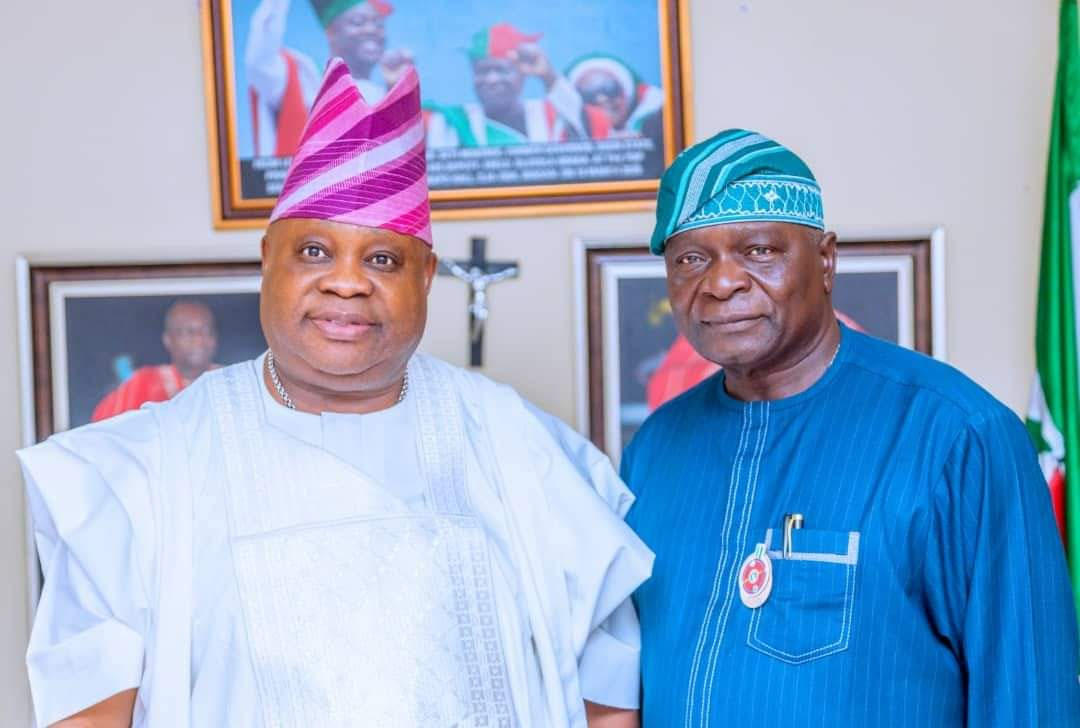
Former Osun State Governor Olagunsoye Oyinlola has dismissed Governor Ademola Adeleke’s claim that he received a vehicle from him before endorsing the All Progressives Congress (APC) governorship candidate, Bola Oyebamiji, ahead of the August 15 election. Oyinlola said the claim was false, maintaining that the vehicle was provided by the Osun State Government as part of benefits legally approved for former governors. The former governor made the clarification during an interview on Channels Television’s Politics Today while reacting to Adeleke’s assertion that he gave him a car, describing the governor’s claim as untrue and expressing disappointment at what he called a misrepresentation of facts. “That is far from the truth and it is a bad development that a governor will continue to tell lies,” Oyinlola said, emphasizing that the vehicle was not a personal gift but a statutory entitlement.
Explaining his position, Oyinlola said a law enacted by the Osun State House of Assembly provides certain entitlements for former governors, including the replacement of official vehicles every four years. He maintained that the vehicle in question was issued under that legal provision and should not be regarded as a personal gift from the governor. “It wasn’t Ademola that gave me vehicle. It was the Osun State Government; it is a law of the state enacted by the House of Assembly,” he said, clarifying that the vehicle was provided through the state’s official channels and not through the governor’s personal resources. This explanation underscores the former governor’s insistence that Adeleke’s claim misrepresents the nature of the transaction and the legal framework governing benefits for former governors in Osun State.
READ ALSO:
- Tinubu Rejects Blame Game, Vows to Revive Refineries with Profitability Focus
- Scores of Terrorists Killed, 60 Arrested in Nationwide Military Operations
- Navy Rescues 22 Sea Robbery Victims, Recovers Hijacked Boat in Akwa Ibom
Oyinlola further noted that having left office 16 years ago, he remained entitled to several vehicle replacements that accrued during that period. He explained that the law provides for the replacement of official vehicles allocated to former governors every four years, and having been out of office for 16 years, he argued that he was still entitled to three more vehicles under the provision. “I’ve been out of Osun State government since the last 16 years. If you aggregate it, it means the state is still having to give up three vehicles,” he stated, suggesting that the vehicle he received was just one of several to which he is legally entitled. The former governor also said the legislation covers other benefits available to former occupants of the office, including security arrangements and support staff, such as police personnel, cooks, and drivers, all of which are part of the statutory benefits package for former governors under the law.
The former governor rejected Adeleke’s suggestion that he had approached him because he could not afford or did not own a vehicle. “By the grace of God, I had started buying cars since I was 21. When I was going to the Government House, I went with my entire convoy. So, how will he paint it as if I went to beg? It is a very sad development. He should say it the way it is, and that it is a law, it is my entitlement and he still owes me three more vehicles,” he said, challenging the governor to present the facts accurately rather than misrepresenting the situation. Oyinlola’s response reflects his frustration with what he perceives as an attempt to diminish his standing by suggesting he was dependent on the governor’s goodwill for a vehicle.
The vehicle controversy has emerged amid a broader political disagreement between the two figures ahead of Saturday’s governorship election, in which Adeleke is seeking re-election. Oyinlola, a chieftain of the Peoples Democratic Party (PDP), recently endorsed the APC governorship candidate, Bola Oyebamiji, a decision that has further strained his relationship with Adeleke. Explaining his decision, Oyinlola cited Adeleke’s decision to defect from the PDP to Accord without consultation and what he described as the concentration of major government projects in Adeleke’s hometown of Ede, among other concerns. He revealed that he had held discussions with Adeleke and his brother on four alternative political platforms amid the crisis within the PDP, with Oyinlola advocating for Accord. However, he said he was surprised to learn through social media that Adeleke had resigned from the PDP and joined Accord without further consultation, a move that Oyinlola described as dismissive and disrespectful. These political tensions have now spilled over into public view, with the vehicle claim becoming a point of contention between the two political figures.
Oyinlola Denies Adeleke’s Car Gift Claim: “Osun Govt Gave Me the Car, Not You”
-

 News3 days ago
FG to Attach 300 NYSC Corps Members to CNG Workshops for Skills Training
-
 metro2 days ago
Seven Miners Killed in Plateau Mining Pit Collapse, Renewing Urgent Calls for Safety Reform
-

 International3 days ago
Iran Had Detailed Intel on Trump’s Location Before Secret Turkey Escape
-
 Politics3 days ago
INEC reprints Osun ballot papers, result sheets, includes SDP candidate
-

 Education2 days ago
JAMB Aggregate Score 2026/2027: How Nigerian Universities Calculate Your Admission Chances
-
 Politics2 days ago
Osun Governorship: Accord Party Faction Withdraws Support for Adeleke, Endorses APC’s Oyebamiji
-

 Sports3 days ago
WAFCON: Chawinga sisters fire Malawi into historic final
-
 News18 hours ago
UK Opens 2026/27 Commonwealth Fellowship Applications for Nigerians – How to Apply