NSCIA Secretary-General Clarifies Council Receives No Government Funding
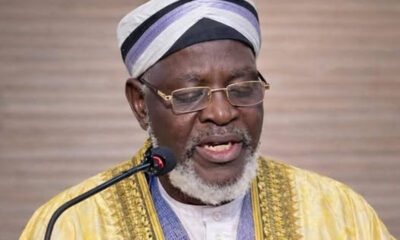
The Secretary-General of the Nigerian Supreme Council for Islamic Affairs (NSCIA), Prof. Is-haq Oloyede, has clarified that the council has never received financial support from any government, either within or outside Nigeria. Speaking in Lagos at the 31st Annual Pre-Ramadan Lecture of the University of Lagos Muslim Alumni (UMA), Oloyede stressed that the NSCIA operates independently and relies largely on modest private donations to sustain its activities.
Oloyede, who also serves as Registrar of the Joint Admissions and Matriculation Board (JAMB), explained that in his 15-year tenure as NSCIA Secretary-General, the council had not received “a kobo” from any government. He added that fewer than 20 individuals have donated amounts up to ₦500,000 since 2013, highlighting that the council functions without significant external funding. He decried misinformation and divisive narratives suggesting government involvement under the leadership of the Sultan of Sokoto, Muhammad Saad Abubakar, noting that such speculation undermines unity within Nigeria’s Muslim community.
READ ALSO:
Speaking on the theme “Muslims: The Challenge of National Security,” Oloyede warned against viewing insecurity, terrorism, and banditry through a religious lens. He said extremists often cloak their violent acts in religious language, but such actions do not reflect Islam. “Islam cannot be determined by what extremists say or do. We have a duty to correct that narrative,” he said, urging Muslims to reject all forms of extremism while understanding that insurgency thrives on enabling political, social, and economic conditions.
Oloyede stressed that security is central to Sharia, emphasizing that a true Muslim is someone “from whose actions neighbours — regardless of their faith — are safe and secure.” He cautioned against reducing insecurity to regional or religious differences, noting that all parts of Nigeria face security challenges. He called on Muslims to embrace moral responsibility, civic accountability, and practical partnerships to improve national security.
Other speakers at the lecture also highlighted the societal dimensions of insecurity. Dr. Ridwan Jamiu, Chief Imam of Lekki Central Mosque, described insurgents as agents of evil and stressed the need for religious leaders to promote peace and guide followers toward positive community engagement. Lagos State Assembly Speaker Mudashiru Obasa identified poverty and economic inequality as key drivers of insecurity and urged the government and policymakers to focus on job creation, education, and inclusive development as long-term solutions.
The lecture, part of the annual pre-Ramadan engagements, comes at a time when Nigeria continues to grapple with complex security challenges, including insurgency in the Northeast, banditry in the Northwest and North-Central, and rising violent crime in the South. Experts emphasize that national cohesion, interfaith cooperation, and community-led security initiatives are vital to tackling these threats effectively.
NSCIA Secretary-General Clarifies Council Receives No Government Funding