

metro
Nigeria Tax Act 2025: FG Clarifies No New Construction or Bank Taxes
Nigeria Tax Act 2025: FG Clarifies No New Construction or Bank Taxes
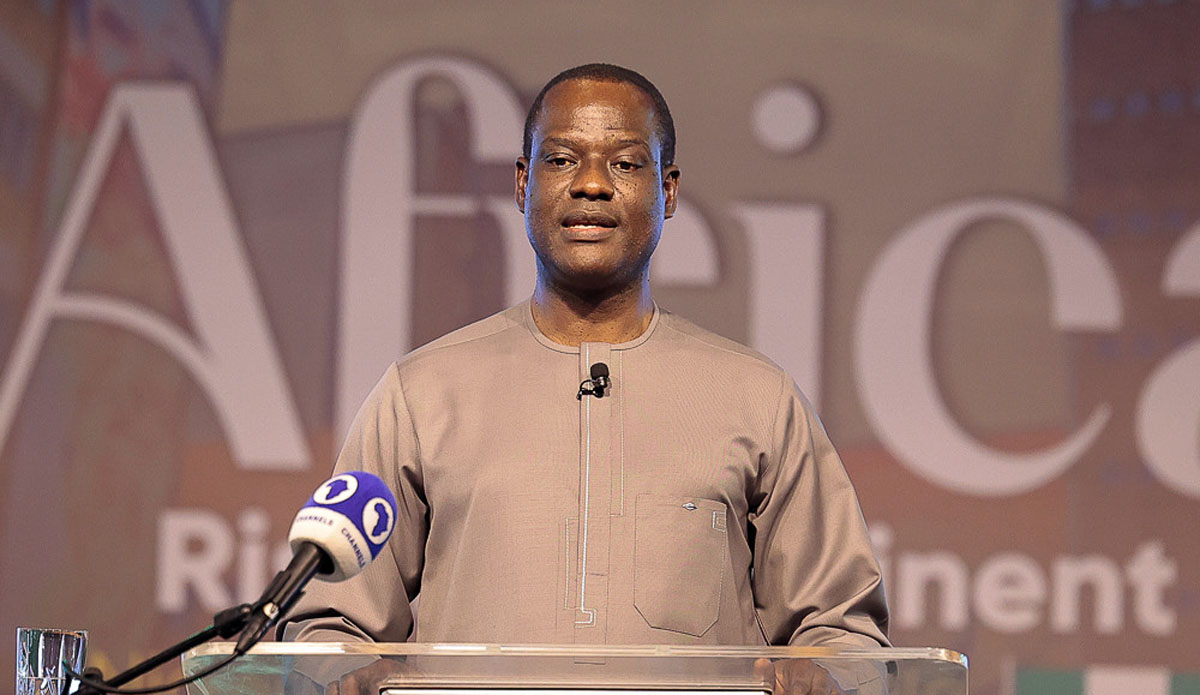
The Federal Government has dismissed claims that the Nigeria Tax Act 2025 imposes a 25% tax on building materials, construction-related funds, business expenses, or money in bank accounts. The government described the viral video circulating on social media as false and misleading, adding that the law, which has already taken effect, does not postpone implementation until 2027.
Taiwo Oyedele, Chairman of the Presidential Fiscal Policy and Tax Reforms Committee, said the misinformation misrepresents the objectives of the Tax Act, which are to lower housing costs, support real estate development, and encourage economic growth. He clarified that the video’s claims — that the law would start in 2027 and impose a 25% levy on construction transactions — are both inaccurate.
Under the new law, several housing and construction reliefs have been introduced. Land and buildings are exempt from Value Added Tax (VAT) under Section 185(l), while contractors can recover VAT on materials and services, reducing overall construction expenses. The Withholding Tax (WHT) rate on construction contracts has been lowered to 2%, improving cash flow for developers. Individuals building owner-occupied homes can deduct mortgage interest, and property owners earning rental income may deduct expenses such as repairs, insurance, and agency fees. These provisions are designed to make housing projects more affordable and attractive to investors.
READ ALSO:
- Israeli Airstrikes Kill 12 in Gaza as Violence Persists Despite Ceasefire
- FBI Probe Continues as Ex‑Church Minister Who Confessed to Child Abuse Remains Free
- Presidency Dismisses El-Rufai’s Thallium Claim as Diversion From N432bn Probe
The Act also offers direct support for renters and low-income earners. Eligible tenants can claim rent relief of up to ₦500,000, equivalent to 20% of annual rent, while rent payments are fully exempt from VAT. Lease agreements below ₦10 million per year, or less than ten times the national minimum wage, are also exempt from stamp duty. These measures are expected to increase disposable income for low-income households and reduce the financial burden of housing.
Incentives under the Act extend to investors and businesses in the construction and real estate sectors. Individuals are exempt from Capital Gains Tax when selling a dwelling house or interest in one. Real Estate Investment Trusts (REITs) distributing at least 75% of dividends or rental income within 12 months are exempt from Companies Income Tax. Manufacturers of building materials, including iron, steel, and domestic appliances, may qualify for tax holidays of up to 10 years, while large businesses could see Companies Income Tax reduced from 30% to 25%. These provisions are intended to encourage investment, stimulate local production, and support the growth of the housing sector.
The Tax Act also includes provisions that relieve workers and small businesses. The taxable value of employer-provided accommodation is capped at 20% of an employee’s annual gross income, excluding rental value. Small companies that qualify under the Act will pay 0% Companies Income Tax, are exempt from charging VAT, and are not required to deduct Withholding Tax from invoices and payments. These measures reduce the compliance burden on smaller businesses and support entrepreneurship.
The committee also clarified what the Act does not include. It does not tax money in bank accounts, does not impose 25% taxes on construction costs or building materials, and does not delay implementation until 2027. Officials described claims suggesting otherwise as misleading and urged Nigerians to rely on verified government sources for accurate information. According to the committee, the Tax Act is intended to make housing more affordable, reduce rent, and stimulate economic growth, not to increase taxes on citizens or businesses.
Nigeria Tax Act 2025: FG Clarifies No New Construction or Bank Taxes










metro
Igbo Ministers Link UK Separatist Crisis to Kanu’s Conviction, Demand His Release
Igbo Ministers Link UK Separatist Crisis to Kanu’s Conviction, Demand His Release
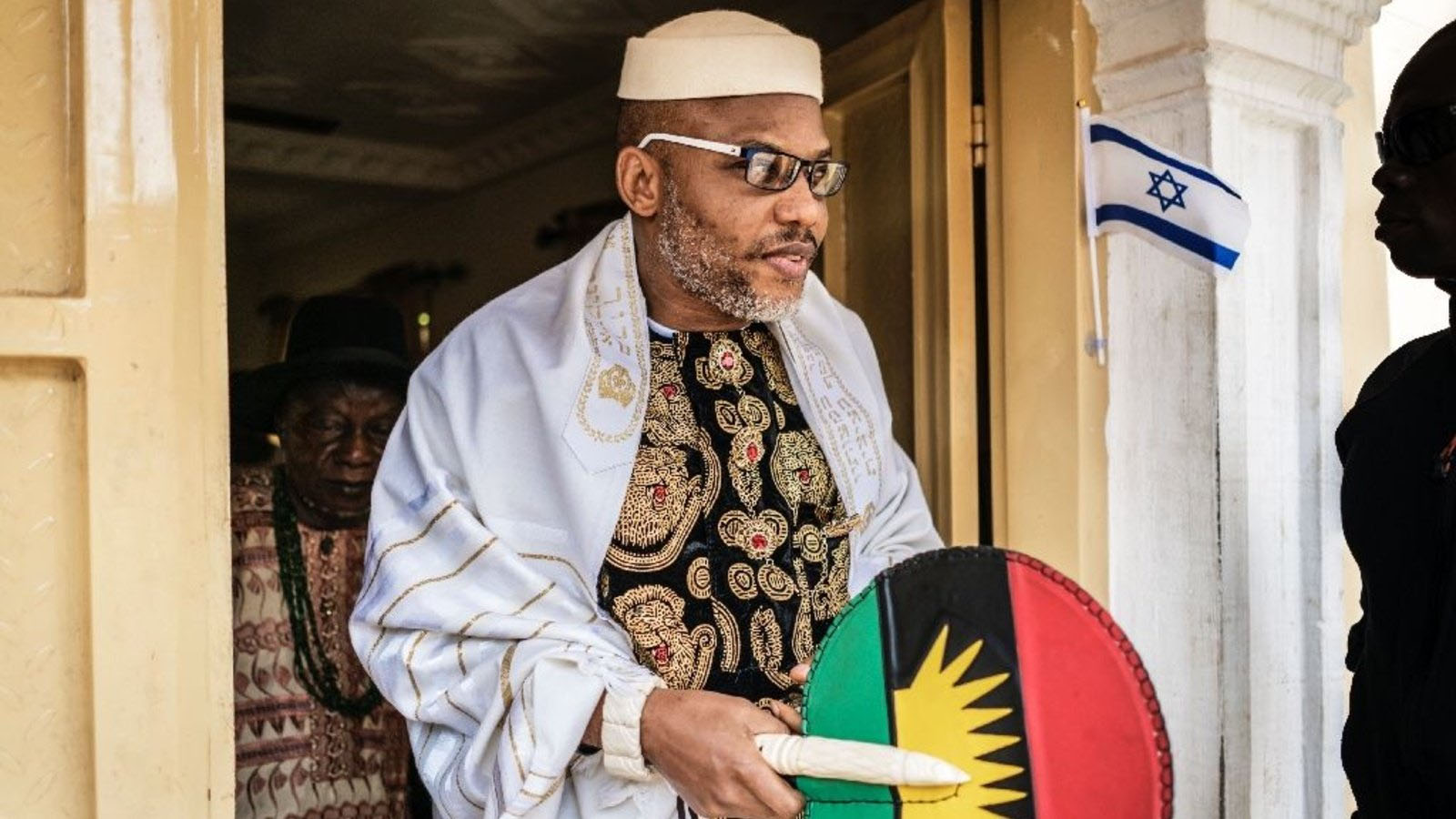
A group of Concerned Igbo Ministers has linked renewed separatist agitation involving Nigerians in the United Kingdom to the conviction and continued detention of Nnamdi Kanu, the leader of the Indigenous People of Biafra (IPOB), and called on the Federal Government to release him.
The group argued that Kanu’s continued imprisonment has not resolved the grievances driving support for the Biafra separatist movement, insisting that a political and peaceful approach is needed to address the wider crisis.
The ministers said the Federal Government should consider dialogue, reconciliation and political engagement alongside security and judicial measures in dealing with separatist sentiments in the South-East and among some Nigerians abroad.
Their position comes amid renewed attention to activities by pro-Biafra groups in the United Kingdom, where supporters of Kanu have continued to campaign for his release and raise concerns over his conviction and treatment in detention.
The group reportedly maintained that the issues surrounding Kanu should not be viewed solely as a criminal matter, arguing that his case has become closely associated with broader grievances over governance, political representation and perceived marginalisation.
Kanu, a British-Nigerian separatist leader, has remained at the centre of Nigeria’s South-East separatist crisis for more than a decade.
He was arrested in Kenya in 2021 and subsequently returned to Nigeria, where he faced terrorism-related charges arising from his activities and broadcasts linked to the separatist campaign.
A Federal High Court in Abuja later convicted Kanu on terrorism-related charges and handed him multiple life sentences. He has challenged the conviction through the judicial process.
READ ALSO:
- Driver Flees With Employer’s Car Two Days After Employment
- Boris Johnson Caught in Russian Drone Strike Scare Near Poland Border
- South Africa: Two Women Arrested Over Alleged Rape, Kidnap of E-Hailing Driver
The conviction has continued to generate controversy, with Kanu’s supporters and some community leaders arguing that the case should be resolved through political intervention.
The Nigerian government, however, has maintained that Kanu must answer to the charges against him and that his case is subject to the country’s judicial process.
The Concerned Igbo Ministers said the continued incarceration of the IPOB leader could make it more difficult to achieve lasting peace in the region.
They urged the authorities to examine the root causes of the separatist agitation and pursue measures capable of restoring confidence among communities affected by the prolonged crisis.
The group’s intervention adds to previous calls by some Igbo religious, political and community leaders for Kanu’s release and a broader political solution to the separatist conflict.
The debate over Kanu’s fate has also extended beyond Nigeria because of his British citizenship and the involvement of his family and supporters in legal and political campaigns in the UK.
British authorities have previously faced questions over Kanu’s detention in Nigeria, particularly following his controversial transfer from Kenya.
Kanu’s family had also pursued legal action in the United Kingdom over the circumstances surrounding his return to Nigeria, although British courts have previously rejected aspects of the challenge.
The controversy has remained closely connected to the wider activities of IPOB, which campaigns for an independent Biafra.
READ ALSO:
- Four-Storey Building Collapses in Enugu, Workers Trapped Inside
- 27-Year Wait Ends as Construction Begins on New Dutse Emir’s Palace
- Mother ‘sold daughter’s abuse videos for $300’: Nigeria child pornography case shocks nation
The Nigerian government has proscribed IPOB and accused the group and its armed wing, the Eastern Security Network, of involvement in violence and attacks in the South-East.
IPOB has repeatedly rejected some of the allegations attributed to it and maintained that its campaign is focused on achieving self-determination for the people of the former Eastern Region.
The wider separatist conflict has nevertheless had significant consequences for residents and businesses in the South-East, including disruptions caused by sit-at-home orders, insecurity and attacks on public infrastructure.
Security agencies have continued operations against armed groups in the region, while political and community leaders have repeatedly called for approaches that combine security measures with dialogue and economic development.
The ministers’ latest demand comes against this background, with the group arguing that Kanu’s case should be considered as part of the broader search for peace and stability.
Supporters of Kanu have long maintained that his release could help reduce tensions and create an opportunity for dialogue between the Federal Government and representatives of communities advocating greater autonomy or self-determination.
Critics of such calls, however, argue that Kanu’s conviction followed a judicial process and that any decision concerning his sentence must respect the independence of the courts.
The demand for his release therefore remains politically sensitive, particularly as the Federal Government continues to address security challenges across the South-East.
For now, Nnamdi Kanu remains in custody, while his legal challenge continues.
The latest intervention by the Concerned Igbo Ministers has further intensified the debate over whether the government should pursue a judicial, political or negotiated approach to the Kanu case and the wider Biafra separatist agitation.
The Federal Government has yet to announce any decision to accept the ministers’ demand for Kanu’s release.
Igbo Ministers Link UK Separatist Crisis to Kanu’s Conviction, Demand His Release
metro
Driver Flees With Employer’s Car Two Days After Employment

Driver Flees With Employer’s Car Two Days After Employment
The Ogun State Police Command has recovered a 2016 Toyota Camry allegedly taken by a newly employed driver just two days after he was hired, while an alleged accomplice has been arrested in connection with the incident.
The vehicle, belonging to an Indian national based at the Ilupeju Industrial Estate in Lagos, was recovered from a hotel in Ifo, Ogun State, less than eight hours after it was reported missing.
The police identified the fleeing driver as Waidi Olaide Kolawale, who had reportedly been employed by the vehicle owner only two days before the incident.
According to the Ogun State Police spokesperson, DSP Oluseyi Babaseyi, the incident occurred on September 9 when Kolawale allegedly told his employer that he was taking the vehicle to a nearby vulcaniser to repair a tyre.
The driver, however, allegedly failed to return with the vehicle and instead absconded with the Toyota Camry.
The vehicle owner subsequently reported the incident to the police, while electronic tracking technology was used to establish its location.
The tracking information reportedly placed the vehicle in the Ifo axis, prompting the Divisional Police Officer of Ifo Division, Kamorudeen Olabisi, to deploy surveillance and anti-robbery operatives to recover it.
The police team subsequently tracked the vehicle through several locations before locating it at a hotel in Ifo at about 8:30pm.
Police said Kolawale fled after sighting the operatives, allegedly taking the vehicle’s ignition key with him.
READ ALSO:
- Boris Johnson Caught in Russian Drone Strike Scare Near Poland Border
- South Africa: Two Women Arrested Over Alleged Rape, Kidnap of E-Hailing Driver
- Four-Storey Building Collapses in Enugu, Workers Trapped Inside
However, an alleged accomplice identified as Monday Adetunji was arrested at the scene.
Preliminary investigations reportedly revealed that the suspects had approached a mechanic with an alleged plan to remove the vehicle’s catalytic converter, also known as a catalyst.
The mechanic reportedly refused to carry out the work, after which the vehicle was eventually traced to the hotel where police recovered it.
The police have since secured the recovered Toyota Camry while efforts are ongoing to apprehend Kolawale and establish the full circumstances surrounding the alleged theft.
Investigators are also working to determine whether other people were involved in the alleged plan and the intended purpose of removing the vehicle’s catalytic converter.
The swift recovery was made possible in part by the vehicle’s electronic tracking system, which enabled investigators to follow its movement after the owner reported it missing.
The incident highlights the security risks that vehicle owners may face when newly employed drivers are entrusted with access to their cars, particularly high-value vehicles.
It also underscores the usefulness of vehicle tracking technology in assisting security agencies to locate stolen vehicles and potentially identify those behind their disappearance.
The Ogun Police Command has continued to emphasise surveillance, intelligence gathering and rapid response in its efforts to tackle crime across the state.
Meanwhile, the police have not disclosed whether the arrested suspect has been formally charged before a court.
Kolawale remains wanted in connection with the incident, while investigations continue to determine the full extent of the alleged offence.
The allegations against the suspects remain subject to investigation and judicial determination.
Driver Flees With Employer’s Car Two Days After Employment
metro
2027: LP Chieftain Sues WAEC, UNN, NYSC Over Peter Obi’s Credentials
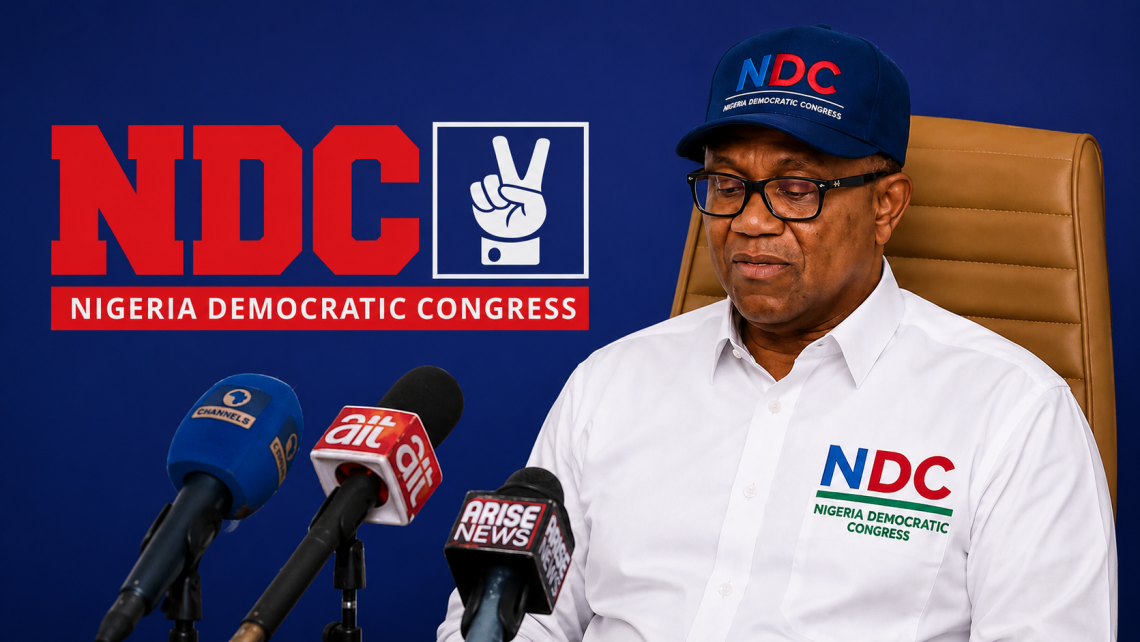
2027: LP Chieftain Sues WAEC, UNN, NYSC Over Peter Obi’s Credentials
ABUJA — The academic and National Youth Service Corps records of Peter Obi, presidential candidate of the Nigerian Democratic Congress (NDC) in the 2027 election, have come under fresh scrutiny following three separate suits filed before the Federal High Court in Abuja.
The suits, instituted by Abayomi Arabambi, a chieftain of the Labour Party (LP), seek orders of mandamus compelling the West African Examinations Council (WAEC), the University of Nigeria, Nsukka (UNN) and the National Youth Service Corps (NYSC) to release official records relating to certificates allegedly issued to Obi.
The legal actions are based on provisions of the Freedom of Information (FOI) Act 2011, with Arabambi alleging that the institutions failed to provide information he requested concerning the academic credentials and NYSC records of the former Anambra State governor.
The three cases were filed separately.
The suit against WAEC, marked FHC/ABJ/CS/2064/2026, and the action against NYSC, marked FHC/ABJ/CS/2063/2026, were filed on September 1, 2026.
The separate suit against UNN, marked FHC/ABJ/CS/2144/2026, was filed on September 9, 2026.
Arabambi filed the cases through his legal team led by Anderson Asemota.
However, the plaintiff has stressed that he is not asking the Federal High Court to determine whether the certificates associated with Obi are genuine or forged.
Instead, he is asking the court to compel the institutions to disclose their existing official records so that the status and particulars of the certificates can be established from the records of the organisations that allegedly issued or processed them.
The distinction is significant because the suits, as presently constituted, do not amount to a judicial finding that Peter Obi’s certificates are forged, invalid or fraudulent.
In the WAEC case, Arabambi is asking the court to compel the examination body to release a Certified True Copy (CTC) of WAEC Certificate No. SC042560, which the plaintiff says was issued to “Obi Gregory Onwubuase” in June 1978.
READ ALSO:
- 27-Year Wait Ends as Construction Begins on New Dutse Emir’s Palace
- Mother ‘sold daughter’s abuse videos for $300’: Nigeria child pornography case shocks nation
- Petrol Subsidy: Presidency Rejects Atiku’s Plan, Says No Going Back
He is also seeking information that would enable him to establish the circumstances surrounding the certificate and its details.
Arabambi said he had previously written to WAEC requesting the information under the Freedom of Information Act, but the examination body declined the request.
WAEC reportedly communicated its refusal in a letter dated August 11, 2026, citing Sections 14(1)(a) and 14(2)(a) and (b) of the FOI Act.
The plaintiff is challenging the refusal and wants the court to declare that the grounds relied upon by WAEC were not sufficient to deny him access to the requested information.
The suit against University of Nigeria, Nsukka focuses on Certificate No. D000198, which Arabambi says relates to a Bachelor of Arts degree in Philosophy allegedly awarded to Obi.
He is asking the university to release its certificate register, academic records, graduation records, Senate or degree-award records, as well as other existing official documents relevant to the certificate, insofar as such records exist.
The plaintiff said his request was intended to establish what the university’s own records show concerning the certificate rather than to ask the court to pronounce on its authenticity.
He is specifically seeking an order compelling UNN to communicate the result of any verification of Certificate No. D000198 based on its existing official records, including whether the certificate and its particulars appear in those records.
According to the court processes, Arabambi had earlier written to the university under the FOI Act but alleged that the request was not granted.
A subsequent reminder was also reportedly sent after the initial request did not receive the response he expected.
The third suit concerns NYSC Certificate No. 203495, which Arabambi says was issued on May 1, 1986, to “Obi, Gregory Peter-Onwubuase (Mr.).”
The plaintiff wants the NYSC to release the relevant certificate and any existing official records, documents or other materials upon which the certificate was based or issued.
READ ALSO:
- JAMB Takes Over HND Admissions in Polytechnics, Health Institutions Nationwide
- SERAP Threatens Legal Action Over ₦126bn INEC Electoral Funds
- Why I Gave Peter Obi My Vehicle During Benue Visit — Ortom
He is also seeking information about the appearance of the name “Peter-Onwubuase” in the relevant NYSC records.
The request is intended, among other things, to establish what the NYSC’s official records show about the certificate and the particulars attached to it.
Arabambi has told the court that the information he is seeking is in the public interest, particularly because it relates to transparency and accountability concerning a person seeking election to public office.
He is asking the court to compel the institutions to disclose information that is not legally exempt and to identify any portion of the requested information they believe is protected from disclosure.
One of the reliefs sought by the plaintiff is an order directing the respondents, where they contend that any part of the information is exempt, to identify the specific information withheld and the precise statutory provision relied upon for the refusal.
He is also seeking disclosure of any severable portion of the records that is not covered by a lawful exemption.
Another relief invokes Section 25 of the Freedom of Information Act, asking the court to order disclosure if it determines that the institutions are not authorised to deny access, lack reasonable grounds for doing so, or that the public interest in disclosure outweighs the interest served by withholding the information.
The cases have emerged amid heightened political attention to the credentials of presidential candidates ahead of the 2027 general election.
Obi, who previously contested the 2023 presidential election under the Labour Party, is now the NDC presidential candidate for the 2027 election.
The legal action by Arabambi, who remains a Labour Party chieftain, therefore introduces another layer to the political contest surrounding the opposition candidate.
The controversy over Obi’s academic records is not entirely new, as questions about his certificates and names appearing on official documents have previously generated political debate and public commentary.
Supporters of Obi have in the past rejected allegations questioning the validity of his educational credentials.
The current cases, however, seek to obtain information directly from the institutions whose records are expected to contain details about the certificates.
The Federal High Court will therefore be asked to determine whether the plaintiff is entitled under the FOI Act to the information he requested and whether the respondents were legally justified in withholding or refusing to provide the records.
The outcome could have wider implications for access to official records concerning public office seekers, particularly where requests involve educational qualifications, professional credentials and other documents submitted for electoral purposes.
For now, there has been no judicial finding that Peter Obi’s certificates are forged or invalid.
The immediate issue before the court is whether WAEC, UNN and NYSC should be compelled to release or verify the relevant records requested by Arabambi.
As of September 13, 2026, no hearing date had been fixed for the three suits.
The cases are expected to attract significant attention as political parties and candidates intensify preparations for the 2027 presidential election.
2027: LP Chieftain Sues WAEC, UNN, NYSC Over Peter Obi’s Credentials
-

 metro2 days ago
Woman disguises as Muslim woman in Niqab to steal in Ado-Ekiti market, video sparks outrage
-

 metro2 days ago
Ondo Herbal Drink Tragedy: Survivor Vows Never to Drink Again as Death Toll Tops 30
-

 metro2 days ago
Sokoto Cleric Stabbed Twice in Neck After Juma’at Prayer, Attacker Killed
-

 Business1 day ago
Dangote: ₦525 Refinery Shares Could Rise to ₦10,000
-

 Africa2 days ago
Murder of Nigerian Bishop in South Africa Sparks Outcry Over Unsolved Killings
-

 Community2 days ago
Kaduna Traditional Rulers Set for 100% Pay Rise as Zazzau Emir Backs Proposal
-

 News2 days ago
AI on the Roads: LASTMA Turns to China to Fix Lagos Traffic
-

 metro1 day ago
MURIC fires back at Peter Obi: Forget Sallah ceremony, free Nigerian Muslims