

News
Again, Sheik Gumi insists on amnesty for bandits

•Says no official pardon, no end to banditry •ACF, Afenifere, M’Belt Forum, Ohanaeze, Fani Kayode kick
By Sunday Ani and Seye Ojo, Ibadan
Nigerians, particularly ethnic nationality groups, have tackled controversial Islamic cleric, Sheik Abubakar Gumi, over his clamour for amnesty to bandits.
Sheik Gumi, yesterday, said bandits troubling the northern part of Nigeria “are going nowhere” restating the need for government to halt military actions and grant them amnesty.
The cleric, in a post on his known Facebook titled “Zamfara: The flaring of crisis” said military action against criminal herdsmen and bandits would not solve the security challenge but “will only worsen the situation.”
The controversial Islamic preacher was reacting to the recent perceived military success over bandits at Zamfara forests.
“Now with the prodding of the government to take more military actions of an already ugly situation whereby they were left to amass weapons, a huge military budget that is almost draining the economy to a standstill in the purchase of fighter aircrafts and conducting military operations in the region has become to the authorities in their calculations a necessity.
“Unfortunately, this is no solution or wisdom. When you don’t have the monopoly of the instruments of violence, then dialogue has the monopoly of resolving the conflict. This is what the UN is all about. i.e., Roundtable resolution of conflicts. What we are seeing is more than just criminals and criminality, yes it may have started as such but like any conflict, it is dynamic.
“The danger we face now is ideological demagogues changing the narrative. They are trying hard to infiltrate the herdsmen. And we know their objectives. They want to destroy all modern governments by fighting the military and now in the recent cajoling of local populations, they have tormented before to join them in the struggle.
“Let us face the reality, these herdsmen are going nowhere, and they are already in battle gear, and we know our Military very well, so before things get messy, we need cold brains to handle this delicate situation. Its common sense that if you allow your neighbors to be your enemy you are already conquered. Because they can easily be used against you by other forces as we see now the herdsmen are ultimately used to destabilize the region, pauperize and even depopulate it.
“Military actions in the past have worsen the situation stimulating herdsmen resistance. Any more action will push them closer to religious fanaticism. It gives them protection from discrediting them as thieves and also reinforce their mobilisation of gullible young unemployed youth as we saw with BH.
“I have met many of the bandit leaders to see a way out of this gridlock. I have talked to the political class and security agents. Except for an exception, most state governors want a peaceful resolution of the conflict. The Police and other security outfits have also realized the enormity of the problem. But, unfortunately, the presidency for what appears to be political gullibility and the military for budgetary reasons as they are the most beneficiary of conflicts of this nature doesn’t seem to be on the same page.
“This conflict can be resolved by active engagement of the government with the agitators. Just as we saw how EndSAR agitation was swiftly managed after an initial scandalous failed military confrontation, was peacefully resolved by the government, likewise, the herdsmen crisis can be.
“Just as we had the Niger Delta conflict resolved with an amnesty which comes with reconciliation, reparation, and rehabilitation packages, so will the herdsmen crisis be resolved. In fact, there is a need for a Marshal plan to educate the nomadic pastoralist so that no citizen is left behind.”
“These measures I enumerated are cheaper, easier, and lasting than the kinetic approach which is now taking place. No military especially of a poor economy can win guerrilla warfare. The recent victory of the Taliban in Afghanistan is a factual warning for those that contemplate.”
However, National Publicity Secretary, Ohanaeze Ndigbo, Alex Ogbonnia, disagreed with Gumi saying there was no basis to grant amnesty to faceless criminals like bandits.
“Boko Haram is an organised ideological movement but bandits are not organised. They are pure criminals. It is only when you have them organised that you can even talk about amnesty. When you talk about an amorphous group, you can’t be talking about amnesty.”
He maintained that anybody talking about amnesty for bandits is only trying to create entirely a new terrorist group. By the time Gumi’s idea prevails, he would have created a new ideological body in banditry, so his suggestion is very dangerous. He is now instigating them to form themselves into an ideological group that can now begin to bargain with the political system. It is unfortunate that Gumi is trying to create that kind of movement again when we already have enough terrorist organisations at hand,” he said.
Similarly, president of Arewa Youth Consultative Forum, Yerima Shettima, said nobody that carried arms against the state should be granted amnesty.
“I wouldn’t know what informed Gumi’s argument, but for me, I have always been against amnesty of any kind. Even before Yar’Adua offered amnesty to the Niger Delta boys, I am one of those voices in the north that opposed it on the ground that you don’t do that because when you do, every idiot will take up arms and begin to demand for amnesty.
“All of us could have at the end of the day taken up arms and gone into the forest to unleash terror on innocent Nigerians but we decided to be law abiding. So, there is no excuse for banditry. They should be dealt with according to the law otherwise; even the armed robbers in prisons should also be granted amnesty. Only Gumi knows why he is saying what is saying but for me, anybody who has taken up arms against the state should be punished according to the law.”
Publicity Secretary of Afenifere, Jare Ajayi, said the Federal Government has not been decisive in tackling banditry, kidnapping and insecurity in the country.
He regretted that Gumi was advocating clemency and amnesty for criminals when the security situation in the country was getting worse. Ajayi said the apex socio-cultural organisation was not in support of Gumi’s call for amnesty for bandits and urged the Federal Government not to listen to him.
President of the Middle Belt Forum (MBF), Pogu Bitrus, believes that the whole idea about banditry is a big conspiracy.
“The military is not willing to deal with bandits. When you know the location of the bandits and you can’t bomb them out of the place but want to negotiate and grant amnesty to them; it is the conspirators within the system that are doing this.”
He claimed that some people were protecting bandits so that they could achieve what they want to achieve.
“It is simply a conspiracy and stopping the military from doing their job. Since the acquisition of the Tucano Jet fighters, what have the military done with that? The issue is that there is no political will to solve the problem. There are people protecting the bandits and stopping the military from doing their job,” he submitted.
Reacting, former Aviation Minister, Femi Fani-Kayode, told Sheik Gumi not to compare Niger Delta militants to bandits as the latter does not rape or abduct children from schools.
On his Twitter page, he wrote: “ For Gumi to say that the killer bandits & terrorists are not going anywhere unless and until they are given amnesty like the Niger Delta militants is asinine and unacceptable. The Niger Delta militants did not target, rape, kill women and they did not abduct children from their schools.”
- Those behind Nigeria’s woes’ll incur God’s anger –Bishop Oke
The Presiding Bishop of the Sword of the Spirit Ministries, Ibadan, Oyo State, Bishop Wale Oke, has warned those working against the progress and stability of Nigeria to desist from their nefarious activities in order to avoid the wrath of God.
He gave the warning at the grand finale of the 39th Annual Holy Ghost Convention of the ministry held at the PCU Campus, Garden of Victory, Ibadan.
Oke, who is also the President of the Pentecostal Fellowship of Nigerian (PFN), noted: “There are wicked people in this country, who God will deal with unless they repent. Their activities have led to the sufferings of many Nigerians and have put the nation in needless jeopardy.”
He, however, encouraged Nigerians not to entertain fear about the corporate existence of the country, saying the nation would survive in spite of the socio-economic and political challenges, besetting its progress.
“Nigeria will survive. Nigeria will prevail. There are people, who are troubling Nigeria and unless they repent, God will deal with them,” Oke stated.
The convention featured, among other things, ordination of pastors, deacons and deaconesses, elders and ministers, numbering about 200.
Source: https://www.sunnewsonline.com








News
Iwo Son Becomes Yorubaland’s First Muslim Professor of Arabic Without Secondary School
Iwo Son Becomes Yorubaland’s First Muslim Professor of Arabic Without Secondary School
Prof. Razaq Abubakre’s remarkable journey from self-study to academic excellence
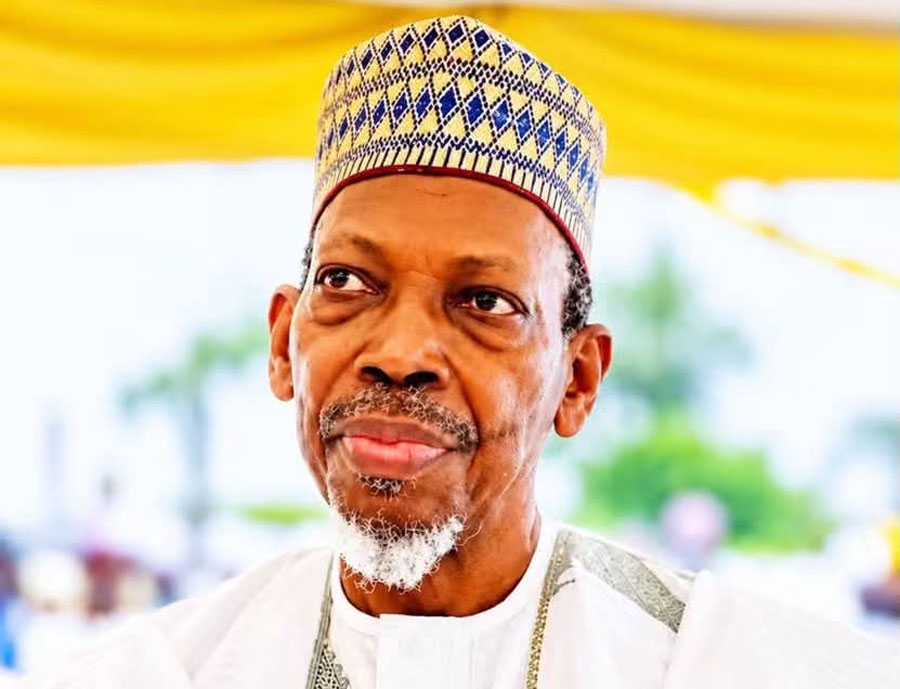
The remarkable story of Professor Razaq Deremi Abubakre, an indigene of Iwo, Osun State, has continued to inspire generations, particularly for his extraordinary journey from a humble educational background to the pinnacle of Arabic scholarship in Nigeria.
Born on January 20, 1948, in Iwo, Abubakre rose to become the first Muslim Professor of Arabic in Yorubaland, a feat that established his place among the foremost scholars of Arabic and Islamic studies in the country.
What makes his achievement even more remarkable is the unusual path through which he attained academic excellence.
Available biographical accounts indicate that Abubakre did not attend a conventional secondary school. Instead, he pursued much of his early education through Arabic and Islamic learning, self-study and personal discipline.
His determination eventually paid off when he obtained distinctions that enabled him to proceed to the University of Ibadan, where he studied Arabic and graduated with First Class honours.
In an interview published by The PUNCH, Abubakre recalled how he returned to formal schooling after leaving in 1961 and was placed in Year Three in 1966. He said he subsequently performed exceptionally well, before later taking the University of Ibadan entrance examination for a Certificate in Arabic and Islamic Studies in 1969.
His academic journey later took him to the School of Oriental and African Studies (SOAS), University of London, where he pursued doctoral studies in Arabic Literature under a Commonwealth Scholarship and completed his PhD in 1980.
READ ALSO:
- Troops Take Down Zamfara Bandit Kingpins Baban Love, Mai Zamani, Three Others
- FG Gives N250m To Families Of 37 Miners Who Died In NSCDC Custody
- Tompolo’s PBAT Movement Suspends Campaign Over Ondo Military Crash
In 1989, Abubakre was appointed a Professor of Arabic at the University of Ilorin, at the age of 41, cementing his place in the history of Arabic scholarship in Yorubaland.
But beyond his own academic accomplishments, perhaps the most enduring part of Abubakre’s legacy is the number of scholars and intellectuals he taught and mentored.
Among those associated with him as students are Professor Ishaq Oloyede, former Vice-Chancellor of the University of Ilorin and current Registrar of the Joint Admissions and Matriculation Board (JAMB); Professor Muhammad Shafi’u Abdullahi, former Registrar of the National Board for Arabic and Islamic Studies (NBAIS); and Professor Amidu Olalekan Sanni, former Vice-Chancellor of Fountain University.
Others include Professor Abdul-Rasheed Na’Allah, former Vice-Chancellor of the University of Abuja, as well as Professors K.K. Oloso and Muhibbu-Din Opeloye, who served at different times as commissioners in Oyo and Osun states respectively.
Academic records and scholarly publications also attest to Abubakre’s influence on the development of Arabic and Islamic scholarship in Nigeria. A University of Ibadan research publication, for instance, lists him alongside Professor Ishaq Oloyede and other prominent scholars as products of the Arabic-Islamic educational tradition.
Abubakre’s career has extended beyond the classroom. He served as Vice-Chancellor of Al-Hikmah University, Ilorin, and held several academic and administrative responsibilities, while also contributing extensively to scholarship through books, journal articles and international academic engagements.
His story therefore goes beyond the title of professor.
It is a story of determination, self-education, intellectual discipline and mentorship.
For Iwo, it is also a story of a son of the ancient town who rose from an unconventional educational beginning to become a major figure in Arabic scholarship and a mentor to generations of academics.
Professor Abubakre’s journey demonstrates that the circumstances of one’s beginning do not necessarily determine the height of one’s achievement.
From Iwo to the University of Ibadan, from there to SOAS in London and eventually to professorial leadership in Nigeria, his life remains an enduring testimony to the power of knowledge, perseverance and purposeful mentorship.
At a time when educational opportunities are increasingly available to millions of young Nigerians, the story of the Iwo-born scholar offers another important lesson: great intellectual achievements can emerge from the most unlikely beginnings when determination is matched with discipline and opportunity.
Iwo Son Becomes Yorubaland’s First Muslim Professor of Arabic Without Secondary School
News
President Tinubu Mourns 32 NAF Personnel in Ondo Jet Crash, Orders Immediate Probe
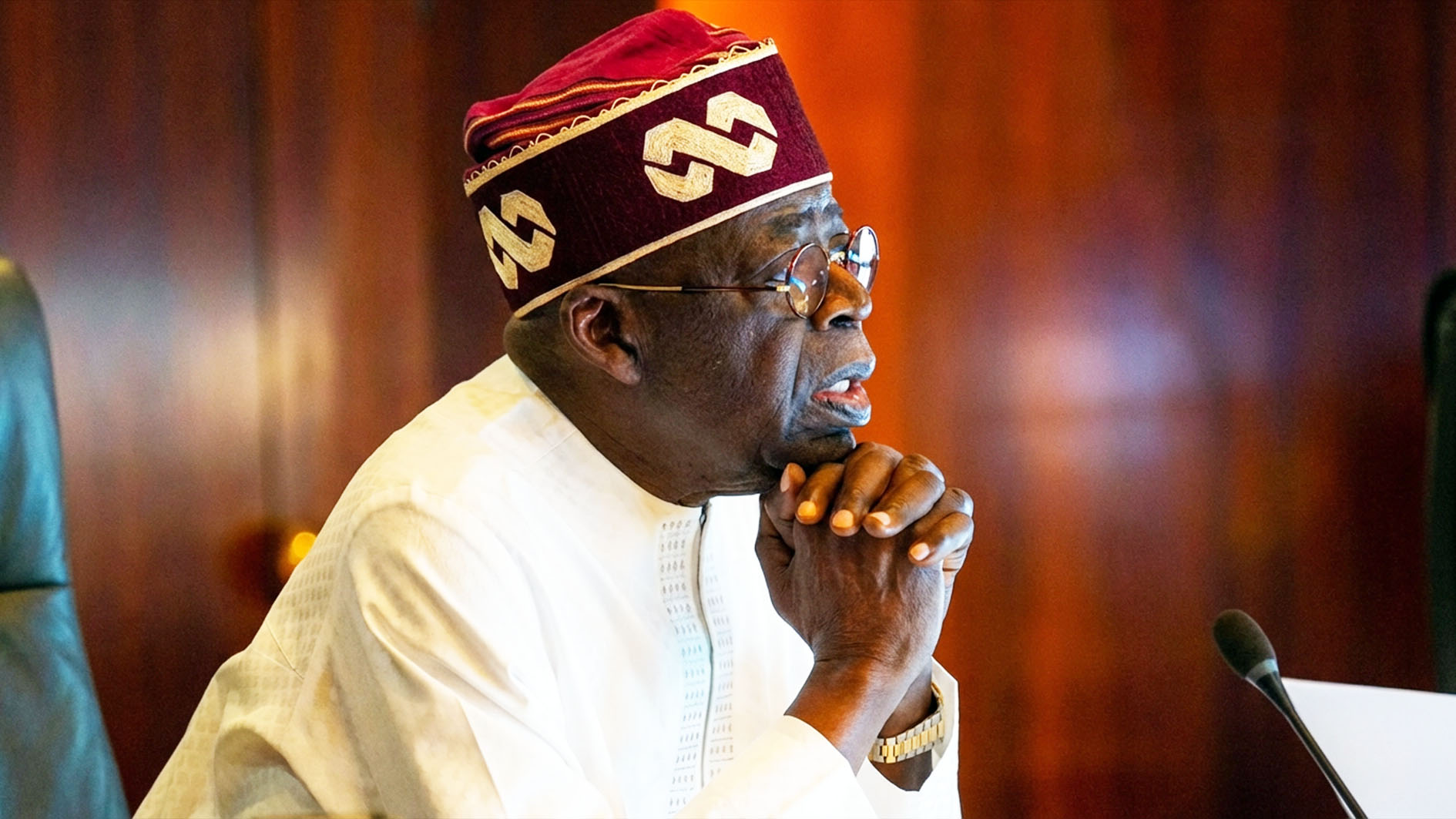
President Tinubu Mourns 32 NAF Personnel in Ondo Jet Crash, Orders Immediate Probe
President Bola Ahmed Tinubu has expressed profound grief over the crash of a Nigerian Air Force ATR-42 aircraft near a naval base in the Igbokoda area of Ondo State, which claimed the lives of all 32 personnel on board.
The tragic incident occurred on Monday morning when the aircraft, on a routine mission from Benin to Lagos, went down shortly before reaching its destination. The victims include 25 passengers and seven crew members.
In a statement released by his Special Adviser on Information and Strategy, Bayo Onanuga, the President described the incident as “a painful moment for our Armed Forces and for the entire nation.”
“Our Air Force personnel put their lives on the line every day to secure Nigeria. Their sacrifice will never be forgotten,” Tinubu said.
The President extended his deepest condolences to the families of the deceased, the Chief of the Air Staff, Air Marshal Sunday Kelvin Aneke, and the entire Nigerian Air Force community.
READ ALSO:
- Benue Boat Mishap: Catholic Priest Among Four Dead, Nine Missing
- Rivers Police Arrest OSPAC Operative Over Alleged Killing, Secret Burial
- Adeleke Signs New Law to Regulate Motor Parks Across Osun
President Tinubu revealed that he had received a briefing from the Chief of Air Staff and has directed an immediate and thorough investigation into the cause of the crash to prevent future occurrences.
“I have directed the Nigerian Air Force to immediately commence a thorough investigation into the cause of the crash to prevent future occurrences,” he stated.
The President commended the Nigerian Air Force for activating an immediate Search and Rescue operation following the accident, as well as the swift response of first responders and the Ondo State Government at the crash site.
“I pray for the repose of the souls of the gallant officers and for Almighty God to grant their families and the Nigerian Air Force the fortitude to bear the unfortunate loss,” Tinubu said.
He further assured the Nigerian Air Force of the continued support of his administration as they continue their vital role in securing the nation.
The crash marks one of the deadliest air disasters involving Nigerian military personnel in recent years, casting a shadow over the nation’s security apparatus. The Nigerian Air Force is expected to release further details as the investigation gets underway.
President Tinubu Mourns 32 NAF Personnel in Ondo Jet Crash, Orders Immediate Probe
News
BREAKING: Many Feared Dead as Helicopter Crashes in Ondo Community
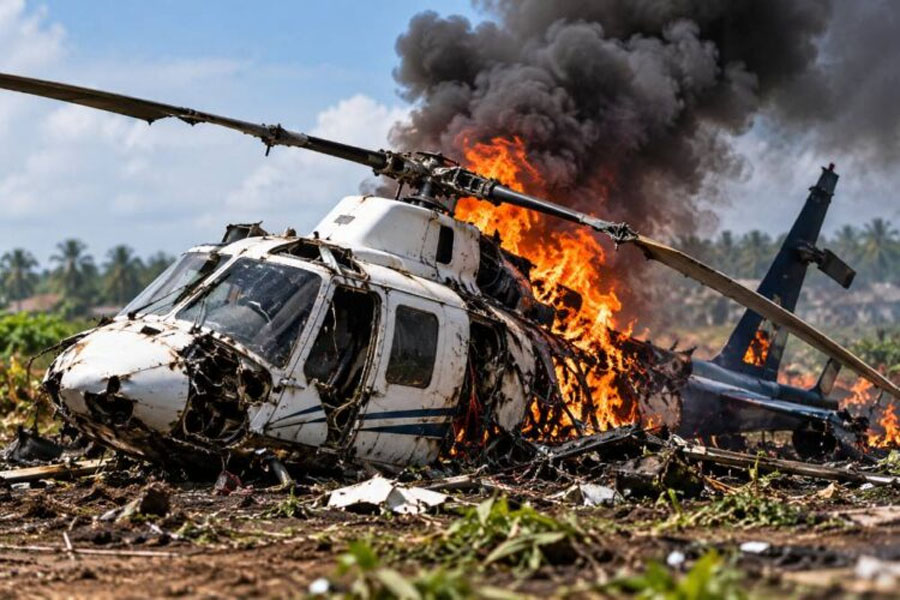
BREAKING: Many Feared Dead as Helicopter Crashes in Ondo Community
Several people are feared dead after a helicopter crashed in Igbokoda, headquarters of Ilaje Local Government Area of Ondo State, on Monday.
The incident occurred in the riverine community, triggering panic among residents as efforts began to establish the circumstances surrounding the crash and the fate of those on board.
Early reports indicate that the aircraft came down in a swampy area opposite a naval base in Igbokoda. The helicopter was reportedly badly damaged, with one local official saying military equipment was found at the scene.
The Chairman of Ilaje Local Government Area, Maurice Oripelaye, confirmed the crash when contacted by journalists but said the number of people aboard the aircraft could not immediately be established.
He reportedly said the helicopter had been burnt extensively, making it difficult to determine the number of occupants or confirm their identities.
The circumstances surrounding the crash remained unclear as of Monday afternoon. It was also not immediately established whether the aircraft was operated by the military, a private company or another organisation.
Some reports described the aircraft as a suspected military helicopter, based on the military equipment reportedly recovered from the crash site. However, authorities had not officially confirmed the identity or operator of the aircraft.
READ ALSO:
- Transporters Urge IGP Disu to Arrest Illegal Highway Tax Collectors
- Army, DSS, Amotekun Kill ISWAP Commander Planning Attacks in Southern Nigeria
- 2027: Soludo Govt Accuses Peter Obi Of Plot To Destroy APGA
The Ondo State Police Command also had not immediately confirmed the incident. Police spokesperson Abayomi Jimoh was reported to have said he was unaware of the crash when contacted and would make inquiries.
Reports from the community indicated that residents moved towards the crash area following news of the incident, while efforts were reportedly underway to assess the wreckage and establish whether there were survivors.
The number of people on board remains unknown, and no official casualty figure had been released at the time of filing this report.
The crash occurred in Ilaje, one of Ondo State’s major riverine and oil-producing areas. Igbokoda serves as the headquarters of the local government and is surrounded by waterways and swampy terrain.
The location is also used for logistics and transportation activities connected to the coastal and oil and gas industry, where helicopters are sometimes deployed to transport personnel and equipment.
The reported crash has renewed attention on the safety challenges associated with helicopter operations in Nigeria’s coastal areas, although the cause of Monday’s incident remains unknown.
Authorities are expected to establish the identity of the aircraft, its operator, flight route, number of occupants and the circumstances that led to the crash.
The Nigerian Safety Investigation Bureau (NSIB) is responsible for investigating aviation accidents and incidents within its jurisdiction, and further official information is expected as authorities assess the crash site.
For now, residents and families awaiting information about possible occupants are left without confirmed casualty figures or details of those involved.
Further updates are expected from the relevant security, aviation and emergency-response authorities as the investigation and recovery efforts continue.
BREAKING: Many Feared Dead as Helicopter Crashes in Ondo Community
-

 metro2 days ago
‘I Thought I Was Dead’ — Hairstylist’s Daring Escape From Kidnappers After Benin-Ore Ambush
-

 metro3 days ago
Tension as Kidnappers Threaten to Kill Abducted Oyo Corps Members
-

 metro24 hours ago
Tragedy Strikes FMC: Medical Director Loses Two Daughters—A Doctor and a Pharmacist—Within 48 Hours
-

 metro2 days ago
Court Restricts Osun Accounts Over $13.9m Arbitration Award
-

 metro1 day ago
Transporters Urge IGP Disu to Arrest Illegal Highway Tax Collectors
-

 International3 days ago
Nigerian-Born Ex-Professor Jailed 78 Months Over $1.3m US Student Aid Fraud
-

 Politics1 day ago
2027: Soludo Govt Accuses Peter Obi Of Plot To Destroy APGA
-
 metro1 day ago
Army, DSS, Amotekun Kill ISWAP Commander Planning Attacks in Southern Nigeria