

metro
Apex Court Ends Kudirat Abiola Murder Case, Dismisses Al-Mustapha Trial

Apex Court Ends Kudirat Abiola Murder Case, Dismisses Al-Mustapha Trial
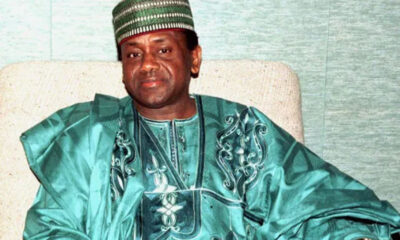
The Supreme Court of Nigeria has dismissed all attempts to revive the murder trial of Major Hamza Al-Mustapha (retd.), former Chief Security Officer to late military ruler General Sani Abacha, over the killing of Alhaja Kudirat Abiola.
In a unanimous decision, a five-member panel of the apex court ruled that the Lagos State Government abandoned its appeal seeking to reopen the case, having failed to take required legal steps for over nine years after being granted leave to appeal.
The court held that Lagos State was given 30 days to file its notice of appeal and relevant court processes following the 2013 judgment of the Court of Appeal, which discharged and acquitted Al-Mustapha and his co-accused. However, the state neither filed the documents nor appeared in court during several hearings, despite being duly served.
READ ALSO:
- Why I Declined to Set Up Panel to Probe Fubara — Rivers Chief Judge Explains
- Casemiro Set to Leave Manchester United as Contract Nears Expiry
- Wike Drags Striking FCTA Workers to Court as Abuja Offices Remain Shut
Delivering the lead judgment, the Supreme Court stressed that the prolonged inaction showed a clear lack of diligence, leaving the court with no option but to strike out and dismiss the appeal.
The ruling effectively brings to an end one of Nigeria’s most high-profile and controversial murder cases, nearly three decades after Kudirat Abiola — a prominent pro-democracy activist and wife of late Chief MKO Abiola — was assassinated in Lagos on June 4, 1996.
Al-Mustapha had initially been convicted and sentenced to death by a Lagos High Court in 2012. However, the Court of Appeal overturned the conviction in 2013, citing insufficient and contradictory evidence. Lagos State’s failure to properly pursue its challenge at the Supreme Court has now permanently closed the case.
Legal analysts say the judgment reinforces the importance of strict compliance with procedural rules and underscores the judiciary’s position that justice delayed by prosecutorial neglect cannot be endlessly revived.
Apex Court Ends Kudirat Abiola Murder Case, Dismisses Al-Mustapha Trial











metro
Rivers Approves State Police Bill as Kano Assembly Starts Consideration
Rivers Approves State Police Bill as Kano Assembly Starts Consideration
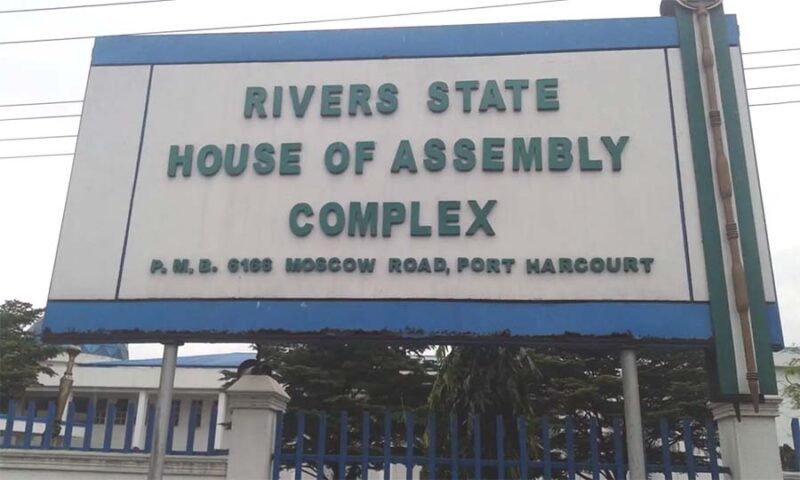
The Rivers State House of Assembly has unanimously endorsed the constitutional amendment seeking to establish State Police Services in Nigeria, while the Kano State House of Assembly has begun considering the proposal as the nationwide legislative process gathers pace.
All 25 members of the Rivers Assembly voted in favour of the State Police Bill during plenary on Monday, September 28, following consideration of the Constitution of the Federal Republic of Nigeria, 1999 (Sixth Alteration) Bill, 2026.
The bill was transmitted to the 36 state Houses of Assembly by the National Assembly on September 16 for consideration and concurrence.
Rivers Assembly Speaker Martin Amaewhule said the lawmakers had consulted their constituents before taking a position on the proposed constitutional amendment.
He said the proposal would create a constitutional pathway for states to establish their own police services while allowing the National Assembly to prescribe minimum standards for policing nationwide.
The Rivers Assembly’s resolution is expected to be formally communicated to the National Assembly as part of the constitutional amendment process.
Meanwhile, the Kano State House of Assembly has commenced consideration of the bill after lawmakers resumed plenary on September 28.
The Kano Assembly had earlier indicated that it would examine the proposal when it reconvened, with lawmakers expected to scrutinise its provisions before taking a formal position.
The Kano development is part of a wider process involving the 36 state legislatures. The National Assembly has clarified that the State Police Services Bill is the only constitutional alteration proposal so far transmitted to the state assemblies for consideration.
READ ALSO:
- FG Releases 2026–2028 Approved Textbooks, Introduces QR Codes for Tracking
- 24 Hours in Darkness: Iju Ishaga Residents, Businesses Count Losses as Ikeja Electric Fails to Restore Power
- TCAN Honours Dangote Cement Transport for Safety, Logistics Excellence
Under Section 9 of the 1999 Constitution, a constitutional amendment passed by the National Assembly requires the approval of at least two-thirds of the state Houses of Assembly before it can proceed to the next stage.
This means at least 24 of the 36 state assemblies must approve the proposed amendment.
The National Assembly has given the state legislatures a 30-day administrative timeframe to consider and communicate their resolutions, although the Constitution itself does not prescribe that period as a statutory deadline.
The state-level consideration follows the passage of the executive-sponsored State Police constitutional amendment bill by the Senate and House of Representatives earlier in 2026.
The proposed amendment seeks to provide constitutional backing for a decentralised policing structure in which State Police Services would operate alongside the existing Federal Police Service.
The proposal also contains provisions intended to establish national minimum standards and safeguards for state policing.
According to the proposed framework, the Federal Police Service would continue to operate across Nigeria, while individual states that establish state police would have their own police services subject to the constitutional and legislative requirements.
The proposal comes amid longstanding discussions about restructuring Nigeria’s policing system and bringing law enforcement closer to communities.
President Bola Ahmed Tinubu has previously backed the establishment of state police, saying a decentralised policing structure could complement the existing federal security architecture and strengthen grassroots policing.
The Presidency has also said that any new state policing framework would require provisions covering recruitment, training, funding, oversight, discipline, firearms control, complaints mechanisms and other safeguards before state police services begin operations.
The legislative process has already produced different responses from state assemblies. Osun and Edo have also backed the proposed amendment, while other assemblies, including Oyo, Nasarawa and Gombe, have begun or scheduled consideration of the bill.
The proposal, however, has not yet created State Police Services in Nigeria. It must first secure the constitutionally required support from at least 24 state assemblies and complete the remaining stages of the constitutional amendment process.
With Rivers having endorsed the proposal and Kano now considering it, attention is shifting to the decisions of the other state Houses of Assembly as the State Police Bill moves through the next phase of the constitutional review process.
Rivers Approves State Police Bill as Kano Assembly Starts Consideration
metro
Troops Rescue 41 Travellers as Bandits Attack Senegal-to-Kano Vehicle in Zamfara
Troops Rescue 41 Travellers as Bandits Attack Senegal-to-Kano Vehicle in Zamfara
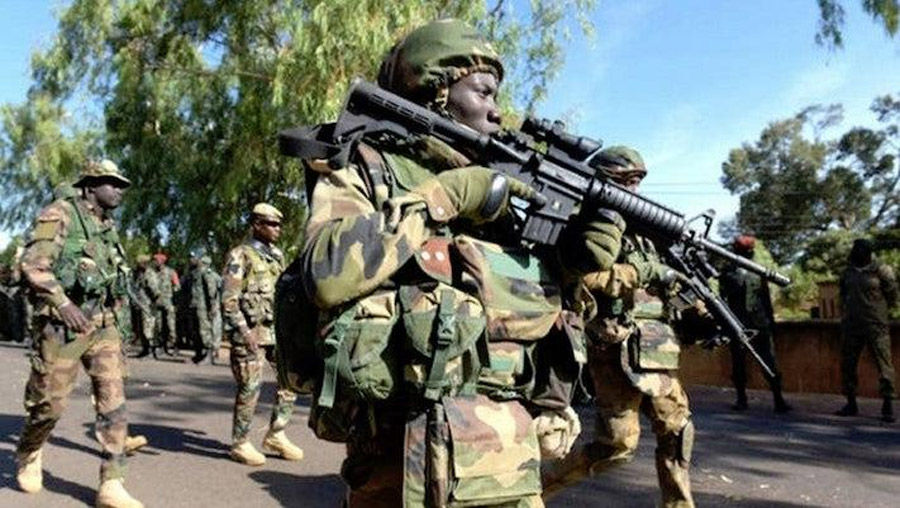
Troops of Operation FANSAN YAMMA have rescued 41 travellers after suspected bandits attempted to abduct them when their vehicle broke down along a highway in Tsafe Local Government Area of Zamfara State.
The travellers were reportedly travelling from Senegal to Kano State when their commercial vehicle developed a mechanical fault, leaving them stranded along the road.
The armed attackers reportedly seized the opportunity to target the passengers and attempted to move them away from the vehicle.
However, troops of Sector 2, Operation FANSAN YAMMA, responded after receiving actionable intelligence about the attack and moved swiftly to the location.
The intervention forced the suspected bandits to abandon the travellers and flee into nearby farmlands.
The military said all 41 passengers were rescued unharmed. The group comprised 24 men, 10 women and seven children.
The rescued travellers were subsequently taken to safety and were expected to receive necessary support before being reunited with their families and relevant transit authorities.
Troops also remained in the area to secure the route and pursue the fleeing attackers.
The identities of the suspected bandits were not immediately disclosed, and there was no official confirmation that any of the attackers were killed, injured or arrested during the operation.
The rescue occurred amid intensified military operations against banditry and kidnapping in Zamfara State, particularly along roads and rural communities considered vulnerable to attacks.
Just two days earlier, troops of Operation FANSAN YAMMA had reportedly foiled separate kidnapping attempts in Tsafe and Maru local government areas, rescuing 10 other victims.
Along the Tsafe–Funtua Road, troops responded to gunshots around the Kwanoni axis and encountered suspected bandits.
The attackers reportedly set a Sharon vehicle on fire while attempting to abduct its occupants. The occupants escaped before the vehicle was completely consumed by fire.
READ ALSO:
- Osogbo Food Bonanza Turns Nightmare as Discount Vendor Vanishes With Customers’ Millions
- Obi’s Debt Storm Deepens as Okonkwo Says: ‘I Was Misled’
- Lagos Club Robbery: Police Arrest Suspect After N5m Bounty
Troops also rescued six people from another vehicle that reportedly lost control during the attack. The vehicle was later removed from the road to restore traffic movement.
In another operation at Kade Daba village in Kanoma District, Maru Local Government Area, troops responded to information about an ongoing abduction.
Three victims were rescued during the initial operation, while a follow-up search led to the rescue of another victim.
The latest incident involving the 41 Senegal-to-Kano travellers highlights the continuing security risks faced by motorists and passengers travelling through parts of Zamfara, particularly along isolated sections of major and feeder roads.
The incident also illustrates how vehicle breakdowns can leave travellers particularly vulnerable in areas affected by kidnapping and bandit attacks.
The military has continued to urge residents and motorists to provide timely and credible information to security agencies to assist ongoing operations against armed groups.
There have been conflicting figures in some reports concerning the number of travellers involved in the incident. However, military-linked accounts and several reports put the number of rescued passengers at 41, comprising 24 men, 10 women and seven children.
With the passengers safely rescued, security forces are continuing efforts to locate the fleeing attackers and prevent further attacks on the route.
Troops Rescue 41 Travellers as Bandits Attack Senegal-to-Kano Vehicle in Zamfara
metro
Zamfara Abduction: Six Imams Still in Bandits’ Den Two Weeks Later
Zamfara Abduction: Six Imams Still in Bandits’ Den Two Weeks Later
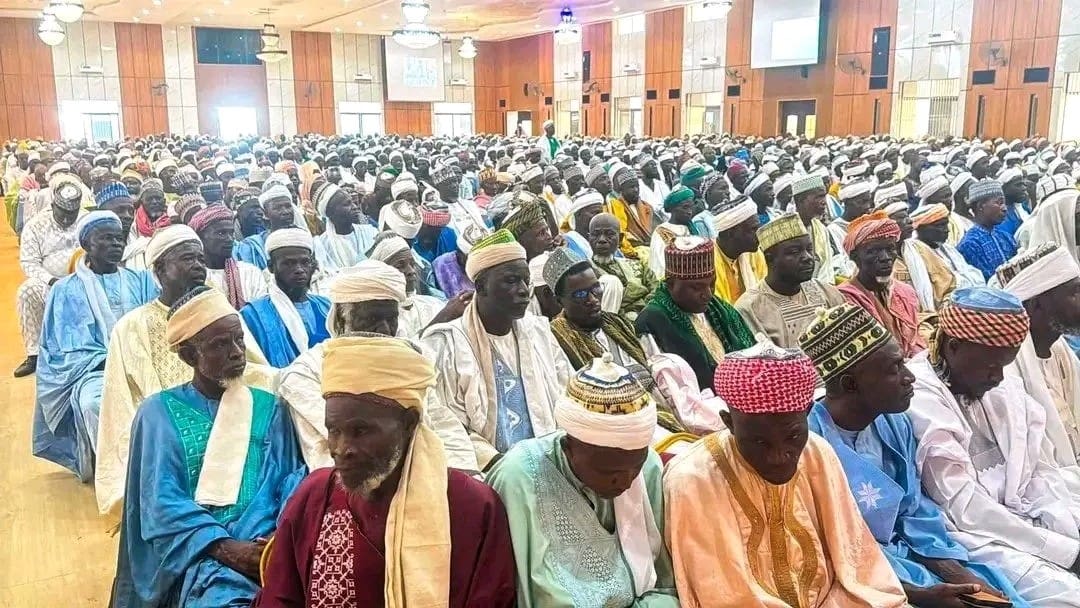
Six Islamic clerics abducted by suspected bandits in Zamfara State have remained in captivity for about two weeks, with their families and communities still awaiting their safe release.
The six Imams were abducted on September 12, 2026, along the Dakko–Damri feeder road in Bakura Local Government Area, while travelling towards Talata Mafara.
The victims were identified as Malam Muhammadu Shehu, Chief Imam of Dakko Juma’at Mosque; Malam Murtala Dakko, Deputy Imam of the mosque; Malam Muhammad Yahuza, Chief Imam of Dogon Madacci First Juma’at Mosque; Malam Magawata Abdullahi, Chief Imam of Dogon Madacci Second Juma’at Mosque; Malam Bala Hogun, Chief Imam of Hogun Juma’at Mosque; and Malam Muhammad Tasi’u, Chief Imam of Kwatsama Juma’at Mosque.
The Zamfara State Police Command said the clerics were travelling in a private vehicle when armed men reportedly ambushed them at about 11:30am.
Following the attack, police operatives and other security personnel launched a search-and-rescue operation to locate the victims and apprehend those responsible.
The police commissioner directed the operatives to intensify efforts to secure the clerics’ release and appealed to residents to provide credible information that could assist the operation.
The Nigerian Army also confirmed the incident but clarified that the clerics were not abducted at the residence of former Zamfara governor and serving Senator Abdul’aziz Yari, contrary to some initial reports.
The Army said intelligence indicated that the victims were abducted while travelling from the Sububu Forest axis in Bakura towards Talata Mafara.
READ ALSO:
- FG Releases 2026–2028 Approved Textbooks, Introduces QR Codes for Tracking
- 24 Hours in Darkness: Iju Ishaga Residents, Businesses Count Losses as Ikeja Electric Fails to Restore Power
- TCAN Honours Dangote Cement Transport for Safety, Logistics Excellence
The clerics were reportedly travelling to Talata Mafara for a meeting at Yari’s residence. Reports said the gathering involved Islamic scholars and prayers linked to President Bola Ahmed Tinubu’s 2027 re-election campaign, although the abduction occurred before the clerics reached the venue.
The case took a more worrying turn after the abductors reportedly demanded ₦30 million ransom for the release of the six Imams.
A resident of Dakko said the bandits initially abducted eight people, including the six clerics, their driver and two other people returning from a farm.
The driver was reportedly released after his family paid ₦2 million, while the two other victims were said to have regained their freedom after their families reportedly paid ₦300,000 each and provided two 25-litre jerrycans of petrol.
The same account said efforts were underway to raise the ₦30 million ransom demanded for the six Imams.
There were also reports that a serving senator from Zamfara had offered to assist with the ransom. However, the chairman of Talata Mafara Local Government Area, Yahaya Yari, later denied reports that Senator Abdul’aziz Yari had promised to pay the ransom.
The reported ransom demand has therefore not translated into any confirmed payment arrangement by the government or the senator.
The prolonged captivity has heightened anxiety among the families and communities of the abducted clerics, particularly because some of the victims are elderly.
Residents have also expressed concern over the security of travellers using rural roads in Zamfara State, where armed groups have repeatedly targeted motorists and residents.
Some community members said travellers had increasingly turned to feeder roads to avoid attacks on major routes. The abduction of the six Imams, however, demonstrated that rural roads remain vulnerable to attacks.
Local vigilantes reportedly pursued the attackers after the abduction and managed to restrict their movement for several hours.
A vigilante involved in the operation said the attackers were unable to move freely with the victims for some time but that the local security personnel eventually withdrew because they lacked sufficient reinforcement and feared that a confrontation could endanger the captives.
The incident has renewed calls for stronger security operations in Zamfara, particularly along routes linking rural communities with major towns.
Despite the passage of about two weeks since the Zamfara Imams were abducted, there has been no confirmed public announcement of their release.
Their families and community leaders are continuing to await their safe return while security agencies face pressure to intensify efforts to locate the victims and bring their abductors to justice.
Zamfara Abduction: Six Imams Still in Bandits’ Den Two Weeks Later
-

 metro3 days ago
$155m Left Behind, $750m Liabilities: Anambra Govt Opens Fresh Obi Files
-

 News2 days ago
Fake Agency Scandal: Gbajabiamila Says He Never Betrayed Tinubu’s Trust
-

 metro2 days ago
Woman Busted With Alleged Alcohol Hidden in Water Pack at Ogun Prison
-

 International2 days ago
Iran Claims Capture of Second US Underwater Drone in Strait of Hormuz
-
News2 days ago
Anambra Govt Demands Unreserved Apology From Peter Obi Over Debt Claims
-

 Politics2 days ago
2027: NDC State Chairmen Reject Obi-Kwankwaso Movement’s Parallel Structures
-

 Politics2 days ago
APC Sweeps Enugu LG Election, Wins All 17 Chairmanship, 260 Councillorship Seats
-

 Sports3 days ago
Man City Chairman Breaks Silence After Club Found Guilty Of 114 Charges