
Education
ASUU, ASUP disagree with JAMB on cut-off marks for varsities, polytechnics

ASUU, ASUP disagree with JAMB on cut-off marks for varsities, polytechnics
The Academic Staff Union of Universities (ASUU) and the Academic Staff Union of Polytechnics (ASUP) have rejected the recent decision by the Joint Admissions and Matriculation Board (JAMB) to fix 150 as the admission cut-off mark for universities.
ASUU described the benchmark as illegal, adding that JAMB could not set entrance age criteria or cut-off marks for tertiary institutions.
The federal government’s reaffirmation of 16 years as the minimum age for admission to tertiary institutions has received strong support from key education stakeholders such as the Colleges of Education Academic Staff Union (COEASU) and the National Association of Nigerian Students (NANS).
While they praised the policy to restore academic discipline, they also expressed concern over ongoing systemic policy infractions.
However, the revelation of a minimal cut-off mark of 150 for universities and 100 for polytechnics and colleges of education has caused significant criticism, with many fearing that it will further undermine standards in Nigeria’s tertiary education system.
Speaking in an interview, ASUU president, Professor Chris Piwuna, expressed strong disapproval, calling the gathering “an illegal meeting” and warning that it undermines the authority of university senates.
“I am shocked that some vice chancellors, who are chairmen of their respective university senates, would attend such a meeting and, by doing so, subject their institutions to the authority of JAMB.
“This act differs from the principle of university autonomy and the core issues we are renegotiating with the federal government,” he said.
“Our union has not taken an official position on the issue of minimum age for university entry. But let it be clear, it is not JAMB’s role to determine that. Each university senate is empowered by law to decide on admissions and other academic matters,” he added.
Also, ASUP has opposed the new admission cut-off marks approved by JAMB, describing them as a threat to the integrity of Nigeria’s tertiary education system.
Speaking on the issue in an interview, the president of the Union, Comrade Shammah S. Kpanja, said, “Honestly speaking, fixing the JAMB examination cut-off points to 150 for universities and 100 for polytechnics and colleges of education is counterproductive.
READ ALSO:
- U.S. offers free flight, $1,000 stipend to undocumented migrants who voluntarily leave
- Why I was blacklisted in movie industry – Moji Afolayan
- Yahaya Bello disowns APC chairmanship campaign posters
“As you know, JAMB’s total score is 400. By this standard, a candidate only needs 37.5% to gain admission into a university and just 25% to enter a polytechnic or college of education. Undoubtedly, this will contribute greatly to lowering academic standards,” he said.
In response to the news, Dr Smart Olugbeko, National President of COEASU, praised the federal government’s stance on the 16-year-age ban but expressed deeper worries about widespread infractions that have rendered the rule ineffectual over time.
“This is not a new policy. The issue is that it has been consistently violated due to noncompliance by institutions. But we’ve failed to address the root cause: when should children begin formal schooling?”
He mentioned that several private institutions have eliminated primary six, allowing students to start secondary school as early as primary 3 or 4. He stated that as a result, underage pupils complete secondary education and apply for university entrance before the age of 16.
“The government just added a policy today, and the minister announced that the admission age is 16 years old. Yes, that is not a new statement. It is not something new. That has always been like that,” he said.
However, while COEASU supports the federal government’s enforcement of the age limit, the union is firmly opposed to the recently established cut-off marks.
The leadership of the National Association of Nigerian Students (NANS) acknowledged the potential benefits of increased access and advocated for a balance between inclusivity and academic standards.
NANS‘ National Public Relations Officer, Samson Ajasa Adeyemi, stated that while the 16-year age limit is reasonable, the true difficulty is implementation.
Their views come after the 2025 JAMB policy meeting in Abuja, when the Joint Admissions and Matriculation Board (JAMB), in conjunction with education stakeholders, agreed on the minimum criteria for the new admission cycle.
At the conference, stakeholders agreed that the minimum cut-off for admission to Nigerian universities would be 150.
The baseline for polytechnics and colleges of education is 100, whereas colleges of nursing sciences will admit students with a minimum score of 140.
The meeting was led by Dr Maruf Alausa, Minister of Education, and attended by vice-chancellors, rectors, provosts, and leaders of regulatory bodies.
The cut-off marks serve as national benchmarks, but individual institutions maintain the ability to set higher thresholds based on the competitiveness of their programmes.
At the ceremony, JAMB Registrar Prof. Ishaq Oloyede stressed that while these were basic qualifications, no institution could admit candidates not meeting the agreed-upon benchmarks.
He also stated that the policy ensures justice, access, and excellence across higher education.
“This policy reflects the reality of our education system and the need to align admission processes with merit, equity, and capacity,” he stated.
The meeting also reaffirmed that institutional autonomy in admissions was still intact, but it must be exercised within the context of national standards.
Institutions are expected to complete admissions according to the approved calendar and report their activities to JAMB for central processing.




Education
Check Your Name: UNILORIN Releases Updated NELFUND Refund List for 2024/2025 Students
Check Your Name: UNILORIN Releases Updated NELFUND Refund List for 2024/2025 Students
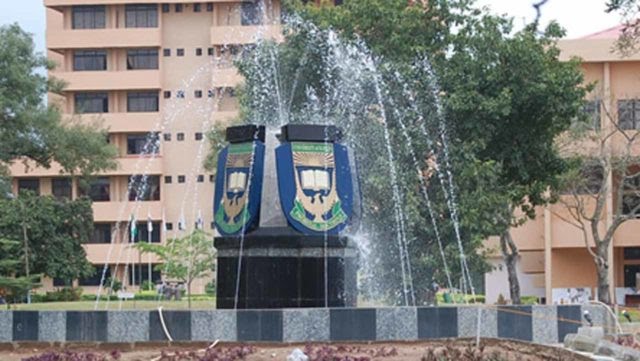
The University of Ilorin (UNILORIN) has released a new list of students eligible to apply for the 2024/2025 NELFUND refund, according to the UNILORIN Students’ Union (SU). Students who paid school fees before NELFUND disbursed funds directly to the university are now required to check their names and submit refund requests through the proper channels.
The official refund eligibility list has been shared in an Excel spreadsheet format and contains verified student details, including full name, matriculation number, department, and eligibility status. Students can search the file using their name or matric number to confirm their eligibility.
Those whose names appear on the list are instructed to fill the official refund form and submit supporting documents, including fee receipts and bank account details, to the Student Affairs Unit (SAU) or their respective Dean’s Office. The refund disbursement is gradual and ongoing, depending on NELFUND fund release schedules.
READ ALSO:
- Argungu Festival 2026 Highlights Peace, Stability, Economic Growth — Tinubu
- US Military Boosts Support for Nigeria’s Fight Against Insurgency With Ammunition, Troop
- Afenifere Calls for Immediate Take-Off of State Police as Terror Threats Rise in Yorubaland
For students whose names are not on the current list, they are advised to check their NELFUND portal status at portal.nelf.gov.ng and ensure all records are correctly verified. UNILORIN and the Students’ Union have also clarified that this is not the final list, as additional batches of eligible students may be added as verification continues.
Students are urged to act promptly, as following the prescribed procedures will ensure timely refund of fees paid in advance.
How to Check Your Eligibility
Students can confirm their eligibility by viewing the official list published by the university. To streamline verification, a table of students in the Department of Accounting and select departments is presented below.
| S/N | Matric Number | Student Name | Programme | Level | Department |
|---|---|---|---|---|---|
| 1 | 20/66MA093 | Johnson Babatunde Ogunwunmiju | B.Sc. Accounting | 400 | Accounting |
| 2 | 21/66MA002 | Zainab Oreoluwa Abdulrahmon | B.Sc. Accounting | 400 | Accounting |
| 3 | 21/66MA021 | Shukurat Oluwapelumi Adetunji | B.Sc. Accounting | 400 | Accounting |
| 4 | 21/66MA038 | Josephine Oluwateniola Akoki | B.Sc. Accounting | 400 | Accounting |
| 5 | 21/66MA049 | Vivian Member Aun | B.Sc. Accounting | 400 | Accounting |
| 6 | 21/66MA054 | Yusuf Olamilekan Babatunde | B.Sc. Accounting | 400 | Accounting |
| 7 | 21/66MA065 | Precious John Elijah | B.Sc. Accounting | 400 | Accounting |
| 8 | 21/66MA083 | Mariam Omowunmi Issa | B.Sc. Accounting | 400 | Accounting |
| 9 | 21/66MA088 | Toyosi Kolade | B.Sc. Accounting | 400 | Accounting |
| 10 | 21/66MA091 | Ayanfe Olaoluwa Makanjuola | B.Sc. Accounting | 400 | Accounting |
Note: The above table shows a partial list for illustration. The full list includes hundreds of students across various faculties and levels.
UNILORIN NELFUND Refund List 2025/2026
Check Your Name: UNILORIN Releases Updated NELFUND Refund List for 2024/2025 Students
Education
NELFUND Refutes UniAbuja Loan Diversion Claims

NELFUND Refutes UniAbuja Loan Diversion Claims
The Nigerian Education Loan Fund (NELFUND) has strongly refuted recent claims that officials of the University of Abuja (UniAbuja), including the vice‑chancellor and senior administrators, diverted or misappropriated student loan funds intended for indigent students.
In a detailed statement, NELFUND clarified that no verified evidence exists to support allegations that UniAbuja unlawfully withheld or diverted loan disbursements. The Fund said the speculation circulating in some media reports — which implicated the university’s vice‑chancellor, the Dean of Students’ Affairs, and other officials in the alleged diversion of multibillion‑naira funds — is unfounded and misleading.
The reports also suggested that UniAbuja failed to reimburse residual balances to students whose actual tuition fees were lower than the amounts disbursed by NELFUND on their behalf. In response, NELFUND maintained that its structured disbursement and reconciliation framework ensures that funds released for student loans are properly applied in line with its statutory mandate.
READ ALSO:
- NRC, Entertainers Finalise Plans for 2026 Valentine Train Ride
- 2027 General Elections: INEC Announces February 20 for Presidential Poll
- EFCC Nabs Three in Borno Over Viral ₦500 Naira Mutilation Video
Mrs. Oseyemi Oluwatuyi, NELFUND’s Director of Strategic Communications, emphasised that the Fund’s operations are governed by formal verification, compliance, and reconciliation protocols. According to her, loan funds are released through established institutional channels, and strict accountability mechanisms are in place to safeguard both student and institutional interests.
The Fund acknowledged that discrepancies or timing issues sometimes arise in the process of crediting student or institutional accounts, but said these are typically resolved through direct engagement with the relevant institutions, in accordance with due administrative processes.
“Where concerns arise regarding timelines of crediting student accounts or institutional reconciliation processes, NELFUND engages directly with the relevant institution to clarify and resolve such matters administratively and in accordance with due process,” the statement read.
NELFUND reiterated its commitment to transparency, accountability, and rigorous audit procedures, which include reliance on verified documentation and formal reconciliation mechanisms when addressing any issue related to its student loan disbursements.
The Fund also reaffirmed its dedication to protecting the interests of eligible Nigerian students and ensuring that all disbursements are applied lawfully and effectively to support access to tertiary education.
NELFUND Refutes UniAbuja Loan Diversion Claims
Education
Supreme Court Affirms Muslim Students’ Right to Worship at Rivers State University

Supreme Court Affirms Muslim Students’ Right to Worship at Rivers State University
The Supreme Court of Nigeria has ruled in favor of Muslim students at Rivers State University (RSU), affirming their constitutional right to practice Islam and perform religious activities on campus. The landmark judgment, delivered on February 10, 2026, closes a legal battle that has lasted for over a decade.
The ruling reinforces Section 38 of the 1999 Constitution (as amended), which guarantees freedom of thought, conscience, and religion for all Nigerians.
The Muslim Students’ Society of Nigeria (MSSN), Rivers State Area Unit, hailed the judgment as a historic affirmation of constitutional rights and the rule of law.
READ ALSO:
- Malami’s EFCC Trials Face Procedural Delay as Judge Steps Aside
- Umahi Vows to Quit if Road Project Fails Independent Quality Test
- NUFBTE Workers Occupy NAFDAC Lagos Office Over Sachet Alcohol Ban
The case traces back to 2012, when a mosque on the university campus was demolished, leaving Muslim students without a dedicated place of worship. The matter passed through the Federal High Court in 2013 and the Court of Appeal in 2017, before finally reaching the Supreme Court.
In a statement, the MSSN emphasized that the ruling is not a victory for one religion over another but a triumph for constitutionalism, equity, and justice. The society commended Muslim students for their discipline, resilience, and peaceful conduct throughout the legal process and acknowledged the efforts of its legal team and community leaders.
The MSSN called on Rivers State University management and relevant authorities to implement the ruling promptly by providing a dedicated and befitting place of worship for Muslim students on campus. The organization also urged students to respond with gratitude and maturity, emphasizing peaceful coexistence and mutual respect within the university community.
Experts believe this decision will have far-reaching implications for religious accommodation and inclusivity in public tertiary institutions across Nigeria.
Supreme Court Affirms Muslim Students’ Right to Worship at Rivers State University

-

 Education2 days ago
Check Your Name: UNILORIN Releases Updated NELFUND Refund List for 2024/2025 Students
-

 News2 days ago
Osogbo Sons and Daughters Mark 5th Anniversary with Awards, Political Undertones
-

 metro1 day ago
US Freezes Assets of Eight Nigerians Over Boko Haram, ISIL, Cybercrime Links
-

 News3 hours ago
Saudi Arabia Confirms Sighting of Ramadan Crescent, Fasting Begins Wednesday
-

 News2 days ago
Afenifere Calls for Immediate Take-Off of State Police as Terror Threats Rise in Yorubaland
-

 metro1 day ago
Terror in Lagos Traffic: Cutlass Gang Unleashes Mayhem on Mile 12–Ketu Road
-

 Entertainment1 day ago
Mystery in Lekki: Police Probe Death of Two Nollywood Crew Found Lifeless in Parked Car
-

 metro2 days ago
US Military Boosts Support for Nigeria’s Fight Against Insurgency With Ammunition, Troop