

metro
Audit Flags ₦288bn in INEC Spending Irregularities Under Mahmood Yakubu
Audit Flags ₦288bn in INEC Spending Irregularities Under Mahmood Yakubu
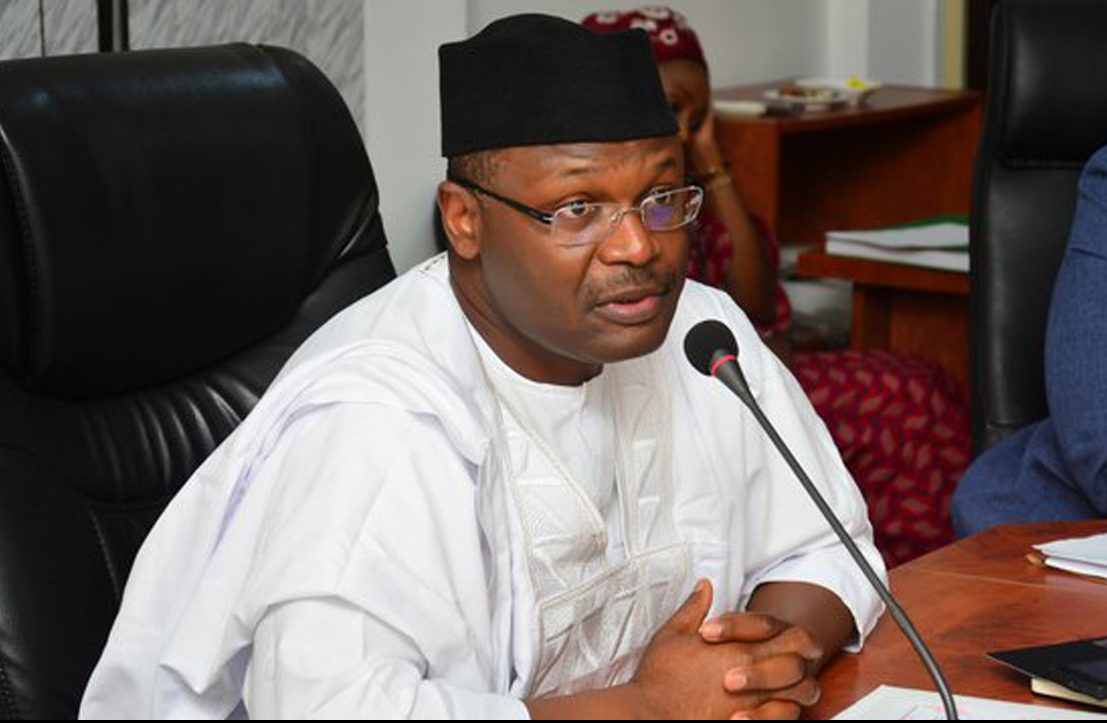
A total sum of ₦288,188,772,947.06 has been flagged in the operations of the Independent National Electoral Commission (INEC) following revelations in the Auditor-General’s Annual Report on Noncompliance and Internal Control Weaknesses in MDAs for 2022.
The report identified widespread financial and procurement irregularities involving contract awards, contractor payments, unretired advances and failure to remit statutory deductions between 2018 and 2019, during the tenure of INEC Chairman, Prof. Mahmood Yakubu.
According to the audit, ₦5.31 billion was paid for the supply of Smart Card Readers (SCRs) for the 2019 general elections using a restricted procurement method without prior approval from the Bureau of Public Procurement (BPP).
The Federal Executive Council (FEC) did not approve the contract despite its value exceeding the INEC Tender Board’s approval threshold, while the Auditor-General noted that the cited presidential clearance did not align with Section 15(2) of the Public Procurement Act, which was deemed inapplicable to the procurement of smart card readers.
The audit further alleged that mobilisation fees and subsequent payments were released without sufficient documentation or proof of supply.
READ ALSO:
- Kwara Village Empties as Bandits Attempt Fresh Abduction Amid Monarch’s Kidnap
- Legal Group Asks Court to Shut Down NBA-ICLE, Demand Refund of Lawyers’ Fees
- Trump Recalls US Ambassador to Nigeria as Africa Bears Brunt of Diplomatic Overhaul
Responding to the findings, INEC management maintained that due process was followed, stating that approvals were obtained from the Presidency and that advance payments were made due to the urgency of preparations for the 2019 elections. INEC said all required documents and guarantees were in place.
However, the Auditor-General described INEC’s explanations as unsatisfactory.
The report also queried ₦4.5 billion paid as 35 per cent contract payments to six contractors without documentary evidence of supply, as well as the use of conditional Advance Payment Guarantees, which allegedly violated procurement laws.
Further concerns were raised over ₦331.2 million paid to contractors under questionable circumstances, including payments allegedly made before contract awards.
In addition, the audit revealed that ₦235.79 billion was paid to contractors without deducting the mandatory 1 per cent stamp duty, amounting to ₦2.19 billion, which was neither deducted nor remitted to government coffers.
The report also found that ₦630.6 million in non-personal advances issued to INEC officials remained unretired, with some officers allegedly receiving fresh advances without accounting for previous ones.
Another major finding involved contracts worth ₦41.31 billion for the production of ballot papers and result sheets, with the audit stating that there was no evidence showing that the contractors met eligibility and experience requirements, nor proof of FEC approval or a “No Objection” certificate from the BPP.
The audit also flagged the procurement of four Toyota Land Cruiser vehicles for ₦297.78 million, noting that the contract sum exceeded prevailing market prices at the time.
While INEC insisted that all procurements complied with legal requirements and presidential approvals, the Auditor-General ruled that the responses did not sufficiently address the audit observations.
The report recommended that the INEC Chairman should account for the disputed funds before the National Assembly’s Public Accounts Committees, recover irregular payments and refund them to the Treasury.
It warned that failure to comply could attract sanctions under the Financial Regulations (2009) for irregular payments and poor management of public funds.
Audit Flags ₦288bn in INEC Spending Irregularities Under Mahmood Yakubu




metro
Former PDP Chairman Bamanga Tukur Dies at 90
Former PDP Chairman Bamanga Tukur Dies at 90
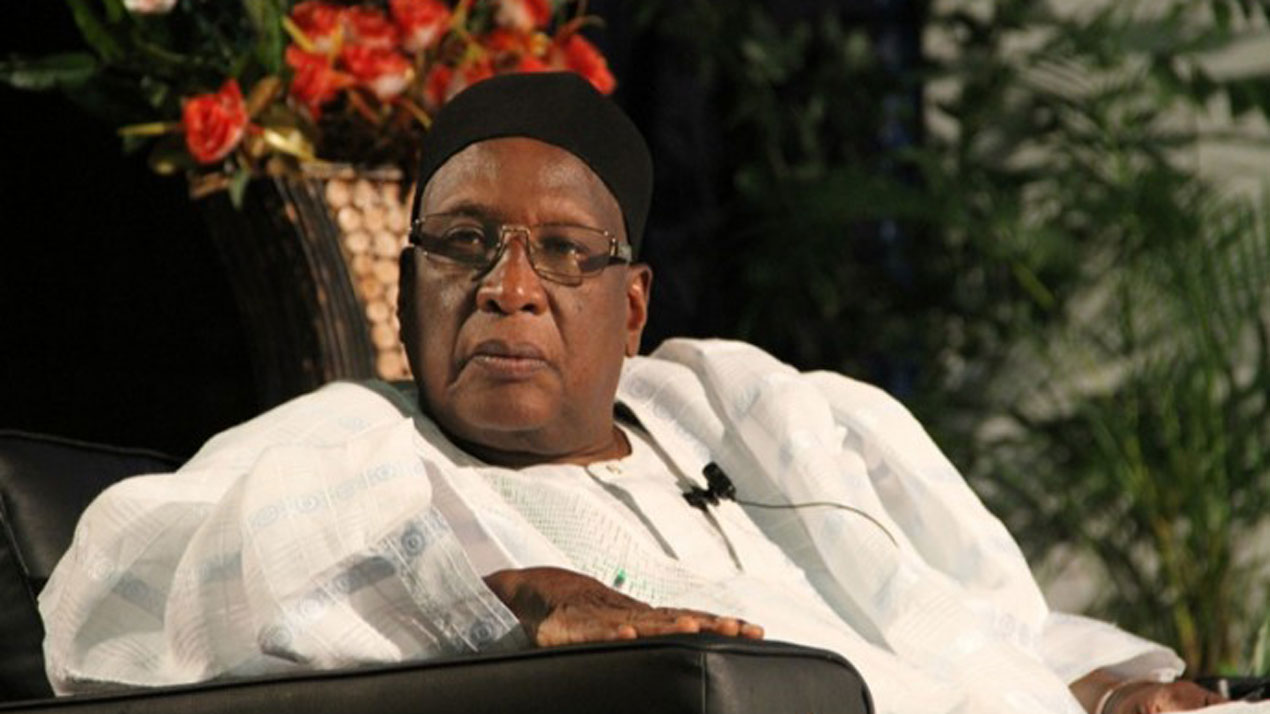
Former governor of the old Gongola State and one-time National Chairman of the Peoples Democratic Party (PDP), Alhaji Bamanga Mohammed Tukur, has died at the age of 90.
Tukur died on Saturday, September 12, 2026, according to a statement issued by his family and signed by his son, Hon. Awwal D. Tukur.
The former governor died three days before his 91st birthday. He was born on September 15, 1935, and was one of the prominent figures whose career spanned politics, public administration, business and national development.
Announcing his death, the family said it was with “profound sadness and total submission to the will of Almighty Allah” that it announced the passing of its patriarch, describing him as a man whose life was dedicated to his family, community, Adamawa State and Nigeria.
The family said his wisdom, generosity and commitment to the development of the country touched many lives and that his legacy would endure for generations.
It thanked relatives, friends and well-wishers for their prayers and support, adding that details of the Janazah and other funeral arrangements would be announced subsequently.
Tukur was a major political and business figure from present-day Adamawa State whose public career extended from the Second Republic through successive military administrations and into Nigeria’s current democratic era.
He served as Governor of the old Gongola State in 1983 after emerging as the candidate of the National Party of Nigeria (NPN). His tenure was, however, cut short by the military coup of December 1983 that ended the Second Republic.
Gongola State was later divided into Adamawa and Taraba states in 1991, but Tukur continued to play an influential role in the political and social affairs of the region, particularly in Adamawa.
READ ALSO:
- Police Arrest Woman Over Alleged Drug Trafficking in Delta
- Dangote raises petrol price 6.7% to N1,350/litre
- Anambra Police Arrest Woman Over Alleged Sexual Abuse of Child, Rescue Four
Before becoming governor, Tukur had established a reputation in public administration. He served as General Manager and Chief Executive of the Nigerian Ports Authority (NPA) from 1975 to 1982, overseeing the agency during a significant period in Nigeria’s economic development.
He later served as Minister of Industries during the military administration of the late General Sani Abacha in the 1990s.
Beyond government, Tukur was active in business and continental economic affairs. He served as Executive President of the African Business Roundtable and participated in initiatives associated with the New Partnership for Africa’s Development (NEPAD), particularly efforts aimed at strengthening private-sector participation and investment across Africa.
His political career took another major turn in 2012 when he emerged as National Chairman of the PDP, the then-ruling political party at the federal level.
Tukur’s tenure as PDP chairman coincided with a period of deep internal disagreements within the party, involving governors, senior politicians and other influential members.
The crisis intensified in 2013 with the emergence of a breakaway faction popularly known as the New PDP, comprising prominent party figures who opposed the leadership of the mainstream PDP.
The internal divisions became an important feature of the political developments leading to the 2015 general election. Tukur eventually resigned as PDP national chairman in January 2014 and was succeeded by Adamu Mu’azu.
Despite the political controversies associated with his tenure as party chairman, Tukur remained an important elder statesman and continued to command respect in political, business and traditional circles.
He also held traditional responsibilities in Adamawa, including the title of Tafidan Adamawa, further cementing his position within the state’s traditional and political establishment.
President Bola Ahmed Tinubu had previously celebrated Tukur on his 88th birthday, recognising his contributions as a businessman, politician and public servant.
Tukur’s death marks the end of a long public career that traversed some of the most significant phases of Nigeria’s political history, including the Second Republic, military rule, the restoration of democratic government in 1999 and the subsequent evolution of the PDP.
His death is expected to generate tributes from political leaders, the PDP, the Adamawa State Government, business associates, traditional institutions and other Nigerians who worked with or interacted with him throughout his decades of public service.
The family has asked for prayers for the deceased and said further information concerning his burial arrangements would be communicated in due course.
It prayed that Almighty Allah would forgive Tukur’s shortcomings, accept his good deeds and grant him Aljannatul Firdaus.
“Inna lillahi wa inna ilayhi raji’un,” the family said.
Former PDP Chairman Bamanga Tukur Dies at 90
metro
Anambra Police Arrest Woman Over Alleged Sexual Abuse of Child, Rescue Four
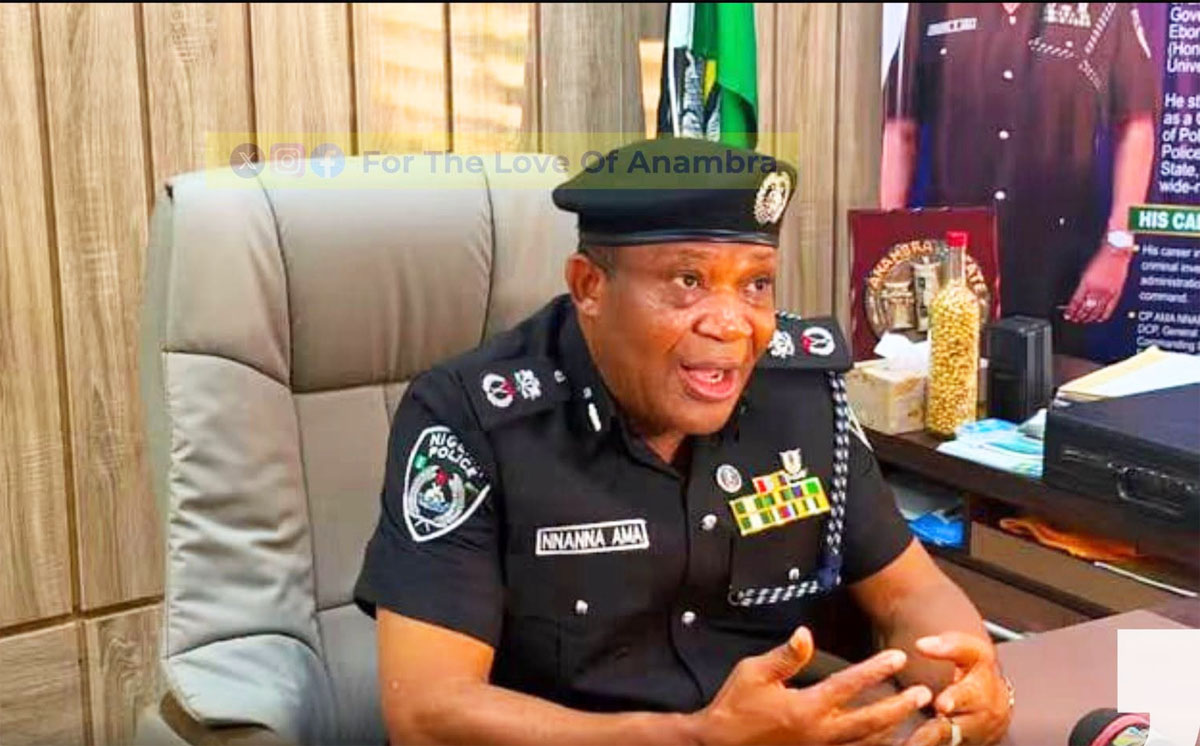
Anambra Police Arrest Woman Over Alleged Sexual Abuse of Child, Rescue Four
The Anambra State Police Command has arrested a 36-year-old woman, identified as Anulika Onyeanusia, over an alleged child sexual abuse case in Onitsha following the circulation of a disturbing video online.
The arrest was made after police operatives obtained open-source intelligence concerning a trending video that allegedly depicted the abuse of a minor. The development prompted an investigation by the command, which subsequently led to the rescue of four children from the location.
According to the police, the operation was carried out on September 10, 2026, and the rescued children are aged two, three, six and nine.
Police operatives also recovered sex toys and other items considered relevant to the investigation.
The suspect remains in police custody while investigators work to establish the circumstances surrounding the alleged abuse and determine whether other individuals were involved.
The woman’s husband has also been questioned by the police as part of the ongoing investigation.
The Anambra State Commissioner of Police, Nnanna Oji Ama, described the alleged exploitation of a child as unacceptable and directed that the matter be thoroughly investigated. He also ordered that the rescued children receive appropriate protection, care and support.
READ ALSO:
- MURIC fires back at Peter Obi: Forget Sallah ceremony, free Nigerian Muslims
- Fani-Kayode Condemns Fresh Killing of Two Nigerians in South Africa
- FG Targets 2 Million Creative Jobs by 2030
The command said it would work with relevant child protection and support agencies to safeguard the welfare of the children and provide assistance as required.
Police authorities also stressed the need to protect the identities and privacy of the children involved, particularly as the case gained attention following the circulation of the video online.
The command commended local vigilantes, residents and individuals who provided information that assisted the investigation.
Authorities have not publicly established who created or distributed the video, nor have they confirmed claims that the suspect sold the material. Those circumstances remain part of the investigation.
The police are expected to establish the relationship between the suspect and the children, determine how the alleged abuse occurred and ascertain whether anyone else participated in or facilitated the alleged offence.
The command urged members of the public not to circulate material that could identify or further expose the children involved, stressing that their protection and wellbeing remain a priority as the investigation continues.
Anambra Police Arrest Woman Over Alleged Sexual Abuse of Child, Rescue Four
metro
MURIC fires back at Peter Obi: Forget Sallah ceremony, free Nigerian Muslims
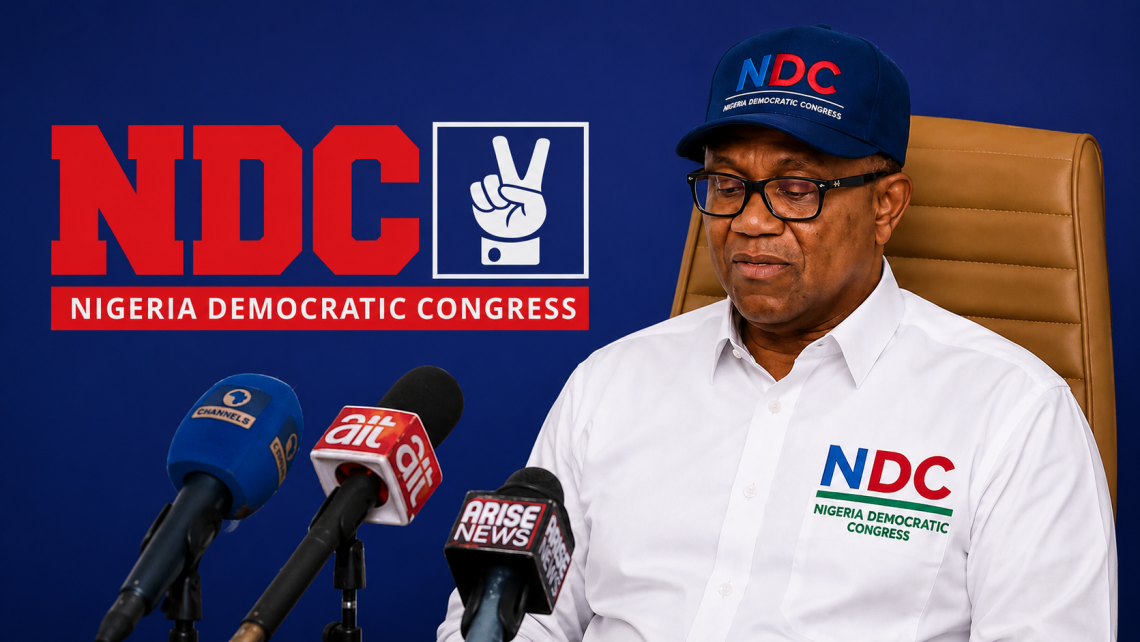
MURIC fires back at Peter Obi: Forget Sallah ceremony, free Nigerian Muslims
The Muslim Rights Concern (MURIC) has fired a strong warning to the presidential candidate of the Nigeria Democratic Congress, Peter Obi, saying that sharing Sallah with the Sultan of Sokoto will mean little to Nigerian Muslims unless accompanied by concrete policies to address what it described as years of religious inequality and exclusion.
MURIC said Obi’s reported promise to spend Sallah with the Sultan if elected president in 2027 was a welcome gesture, but insisted that Nigerian Muslims were no longer interested in political symbolism, Sallah gifts or pilgrimage sponsorship.
The organisation, in a statement signed by its Founder and Executive Director, Professor Ishaq Akintola, on Saturday, challenged Obi to tell Nigerian Muslims what he intends to do differently if he wins the presidency.
According to MURIC, Muslims need inclusion in governance and a level playing field rather than presidential ceremonies designed to create political goodwill.
The group said Obi’s proposed Sallah visit to Sokoto was “sheer window dressing” if it was not backed by policies capable of improving the welfare and protecting the rights of Nigerian Muslims.
“We welcome Mr. Peter Obi’s offer as it reflects his willingness to identify with Muslim leaders, particularly our respected and beloved leader, the Sultan of Sokoto. But that is poles apart from a readiness to involve Muslims in governance. We covet the latter and reject the former. It is sheer window dressing,” MURIC said.
The organisation declared that the era when Muslims could be won over with promises of Hajj slots, Sallah cows and Ramadan gifts was over.
MURIC said Muslim voters had become more conscious of what it described as disparities in the country’s political, economic, educational and social structures.
“For gone are those days when eyes were still located at the knees,” the group said, arguing that Muslims now wanted to examine government policies and their practical impact rather than rely on political gestures.
READ ALSO:
- Fani-Kayode Condemns Fresh Killing of Two Nigerians in South Africa
- FG Targets 2 Million Creative Jobs by 2030
- Donnarumma: Two Jailed Over Violent Paris Burglary of Man City Goalkeeper, Wife
MURIC alleged that Muslims had been disadvantaged by aspects of Nigeria’s national structure, beginning with the public holiday system.
The organisation questioned why Sunday was recognised nationwide as a public holiday while the Muslim Friday congregational prayer was not accorded similar consideration.
It argued that Muslim workers often had to combine normal work obligations with Friday worship, describing the arrangement as unfair.
“That is not balance. That is not fairness,” MURIC declared.
The organisation also launched a broadside against what it described as the Christian orientation of Nigeria’s educational and legal systems.
MURIC alleged that the country’s educational system, including its administrative arrangements and curriculum, had been structured in a manner that did not adequately accommodate Muslim interests.
On the judiciary, the group demanded what it described as a genuinely plural legal structure involving common law, Sharia and customary law.
It criticised what it called the rejection of Sharia in Southern Nigeria, while noting that common law is accepted across the country.
“The North accepts common law. But the South rejects Shari’ah. That is not inclusivity. That is not acceptance. That is not tolerance,” the organisation said.
MURIC also took aim at the country’s holiday calendar, demanding greater official recognition for Islamic dates.
The organisation questioned why January 1 is recognised as a public holiday while 1 Muharram, the beginning of the Islamic calendar year, is not given similar national recognition.
It described the situation as “official refusal of recognition” and urged political leaders to address what it considers religious imbalance in national policy.
The group further raised concerns over the participation of Muslim women in the Nigerian military.
MURIC alleged that military uniform regulations that do not accommodate the hijab could discourage or prevent some Muslim women from joining the armed forces.
It argued that the issue had implications for employment opportunities and economic advancement for Muslim women.
“Muslim women cannot join the army because the military’s uniform does not accommodate hijab,” the organisation alleged, adding that it considered the matter a question of civil liberties.
MURIC said these were the issues Obi should be addressing if he genuinely wanted the support and confidence of Nigerian Muslims ahead of the 2027 election.
READ ALSO:
- Police Clarify IGP Disu’s Position on Recording Officers
- Abia Police Arrest Father, Three Others Over Alleged Attempt to Sell 16-Month-Old Daughter
- Dangote: ₦525 Refinery Shares Could Rise to ₦10,000
The organisation insisted that restructuring Nigeria must go beyond political arrangements and include what it called a comprehensive restructuring of opportunities and rights for religious communities.
“Real restructuring must be comprehensive. It must not leave any particular group in perpetual slavery,” MURIC said.
‘We don’t need Hajj sponsorship’
In a striking departure from the traditional demands often associated with Muslim political engagement, MURIC told politicians to stop using government-sponsored pilgrimage as a tool for winning Muslim support.
The organisation said Muslims knew the road to Makkah and could organise their pilgrimage without political sponsorship.
It alleged that government-funded pilgrimage arrangements were sometimes abused by politicians to reward political loyalists and associates.
“Away with the old ways. We don’t want pilgrimage sponsorship. Muslims know the road to Makkah,” MURIC declared.
The group said governments should limit their role in pilgrimage to necessary protocol matters rather than sponsoring individuals.
According to MURIC, such an approach would reduce opportunities for political patronage and ensure that pilgrimage was not turned into a political reward system.
MURIC challenges Obi
While taking a tough stance against Obi’s Sallah pledge, MURIC acknowledged the former Anambra State governor’s efforts to broaden his appeal ahead of the 2027 presidential election.
The organisation said it recognised Obi’s second attempt at the presidency and his apparent efforts not to be perceived as an exclusively Christian candidate.
But it said symbolic gestures would not be enough to win its confidence.
MURIC challenged Obi to clearly explain his agenda for Nigerian Muslims and demonstrate how his administration, if elected, would address the concerns raised by the organisation.
“What is his plan for Nigerian Muslims: to continue to enslave us or to set us free?” MURIC asked.
The organisation then delivered its clearest political message to the presidential hopeful: it said Muslim voters were ready to support him if he committed himself to addressing their demands.
“We are ready to vote for you if you promise to address the above issues. The ball is in Peter Obi’s court,” MURIC declared.
The statement comes as political parties and presidential aspirants intensify their engagement with various religious, regional and demographic blocs ahead of the 2027 general elections.
For MURIC, however, the message to Obi is clear: Sallah greetings and visits to Muslim leaders may win applause, but policy commitments, according to the organisation, will determine whether Nigerian Muslims consider a presidential candidate worthy of their support.
MURIC fires back at Peter Obi: Forget Sallah ceremony, free Nigerian Muslims
-

 metro1 day ago
Woman disguises as Muslim woman in Niqab to steal in Ado-Ekiti market, video sparks outrage
-

 metro3 days ago
Police Arrest Woman Over Fake OPay Shutdown Notice
-

 Politics3 days ago
Amaechi will be caged politically, Wike shouldn’t bother about Ikwerre votes — Wihioka
-

 metro3 days ago
Residents Cry Out Over Poorly Constructed Entrance of Ademola Abiola Street, Demand Urgent Intervention
-
 Politics3 days ago
Remi Tinubu Appeals To South-East Voters, Says She Wants To ‘Enjoy Nigeria’ In Old Age
-
 Politics3 days ago
Breaking the Cycle of Collective Guilt: When a Ruling Party Voice Backs Peter Obi
-

 Business15 hours ago
Dangote: ₦525 Refinery Shares Could Rise to ₦10,000
-

 News1 day ago
AI on the Roads: LASTMA Turns to China to Fix Lagos Traffic