
Health
Bauchi Gov Approves 100% Salary Increase for Doctors, Health Workers

Bauchi Gov Approves 100% Salary Increase for Doctors, Health Workers
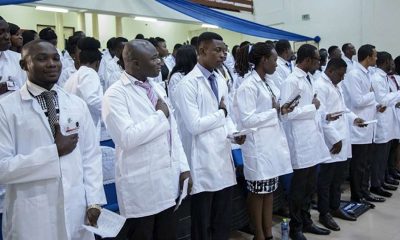
Governor Bala Mohammed of Bauchi State has approved a 100 per cent salary increase for doctors and other healthcare workers, marking one of the most significant welfare interventions in the state’s health sector.
The approval was announced on Saturday by the Commissioner for Health, Dr. Muhammad Dambam, while briefing journalists after the State Executive Council meeting at the Government House, Bauchi. He said the decision followed the council’s consideration of recommendations submitted by a special committee set up to assess the financial implications of implementing a new scheme of service for healthcare workers.
Dr. Dambam explained that the approval amounts to a full review of the existing salary structure, aimed at improving staff welfare, retaining skilled medical professionals and strengthening healthcare service delivery in Bauchi State.
READ ALSO:
- Nigerian Troops Repel ISWAP Attack on Borno FOB, Kill Terrorists
- Mass Shooting at Brown University in US Leaves 2 Dead, 9 Injured
- Premier League: Arsenal Beat Wolves 2-1 in Thrilling Stoppage-Time Finish
In addition to the salary increase, the government approved peculiar allowances, including outside-posting allowances, to encourage doctors and healthcare workers to accept and remain in postings outside major urban centres. He noted that workers under the State Primary Healthcare Development Board would also benefit, addressing long-standing disparities in welfare benefits within the sector.
The commissioner further disclosed that the council approved the payment of outstanding promotion arrears for healthcare workers, with over 2,000 personnel expected to benefit. To further boost morale, the government also granted access to car and housing loans for doctors and other health workers to ease financial pressures and improve their living conditions.
As part of accountability and service improvement measures, Dr. Dambam said the state would deploy biometric and verification systems across health facilities to enhance transparency and ensure efficient service delivery.
The policy move underscores the Bauchi State Government’s commitment to strengthening the health sector, improving workers’ welfare and ensuring better healthcare outcomes for residents.
Bauchi Gov Approves 100% Salary Increase for Doctors, Health Workers










Health
Nigeria’s Health Crisis Deepens as Canada Opens Express Entry Route for Foreign Doctors

Nigeria’s Health Crisis Deepens as Canada Opens Express Entry Route for Foreign Doctors
As Nigeria battles a worsening shortage of medical personnel, especially in the northern region, Canada has announced plans to introduce a new Express Entry category in early 2026 that will allow foreign doctors working in the country to more easily transition to permanent residency. The policy is expected to intensify Nigeria’s already severe medical brain drain.
In a joint statement, Canada’s Minister of Immigration, Refugees and Citizenship, Lena Diab, and the Parliamentary Secretary to the Minister of Health, Maggie Chi, revealed that the new immigration stream will target international physicians with at least one year of Canadian work experience in an eligible medical occupation within the past three years. The initiative comes as Canada grapples with persistent shortages of physicians and seeks to stabilise its healthcare system by attracting skilled professionals.
READ ALSO:
- Wole Soyinka criticises heavy security escort for President Tinubu’s son in Lagos
- Counterterrorism: Nigeria Obtains 860 Convictions, Releases 891 Suspects — Fagbemi
- Iran, Egypt Challenge Seattle’s “Pride Match” Branding Ahead of 2026 World Cup Clash
The development poses serious concerns for Nigeria, where the doctor-to-patient ratio has reached crisis levels. According to the Joint Annual Review Health Sector Statistical Book 2025, several northern states—including Yobe, Kebbi, Zamfara and Jigawa—have as few as 0.5 doctors per 10,000 people, meaning one doctor may be responsible for up to 20,000 patients. Some states report cases where a single doctor attends to more than 43,000 patients, far below the World Health Organisation (WHO) benchmark of 2.5 doctors per 1,000 people.
While no Nigerian state meets the WHO standard, the northern region suffers the most acute shortages, aggravated by long-standing insecurity and deteriorating working conditions that continue to drive medical professionals abroad.
Although Canada is opening doors specifically for foreign doctors, it is simultaneously tightening aspects of its broader immigration system for 2026—yet the targeted pathway is expected to draw interest from Nigerian physicians seeking better pay, improved facilities, and safer working environments.
Health experts warn that unless Nigeria implements urgent retention policies, the introduction of Canada’s new immigration category could further erode the country’s already fragile healthcare system.
Nigeria’s Health Crisis Deepens as Canada Opens Express Entry Route for Foreign Doctors
Health
Studies show menopause can reduce women’s memory, concentration by 40%

Studies show menopause can reduce women’s memory, concentration by 40%
Women going through the menopause may experience a significant decline in memory, concentration, and the ability to carry out daily tasks, with research suggesting a drop of up to 40 per cent in cognitive performance. This revelation was highlighted at a recent international conference on women’s health.
Experts warn that as many as four in ten women could be affected, making it increasingly difficult to manage work responsibilities or daily routines. Researchers also note that younger women may experience temporary concentration difficulties at certain points in the menstrual cycle due to hormonal changes, performing better when oestrogen levels peak just before ovulation.
Professor Martha Hickey, an obstetrics and gynaecology expert at Melbourne University, told the American Society for Reproductive Medicine in Boston that compelling evidence now links menopause with declines in attention span, learning ability, and memory function. She identified possible causes, including a drop in oestrogen levels and sleep disruption from night sweats and hot flushes.
READ ALSO:
- South Africa Horror: Gunmen Kill 11 in Pretoria Hostel Shebeen Attack
- Ex-AGF Abubakar Malami denies allegations of terrorism financing, calls report misleading
- Nigerian woman sparks outrage for refusing chemotherapy despite ₦30 million donations over religious Beliefs
“Oestrogen decline during the menopause may affect key areas of the brain responsible for memory and concentration, including the hippocampus, midbrain, and prefrontal cortex,” Professor Hickey said. Brain scans have shown changes in these regions in menopausal women, though she noted that previous research likely underestimated the effects due to less sensitive testing methods.
Professor Hickey is currently studying 105 women in the US undergoing oophorectomy (surgical removal of ovaries), which induces menopause, to further explore cognitive effects. Earlier studies, including a 2001 survey of 12,450 US women, found that post-menopausal women were 40% more likely to report forgetfulness. Another US study involving 16,000 women found that four in ten admitted to experiencing memory problems.
The average age of menopause is 52, although it can occur in the 30s or 40s. The condition is marked by the cessation of ovarian oestrogen production, which also leads to mood swings, hot flushes, and night sweats.
Studies show menopause can reduce women’s memory, concentration by 40%
Health
Scientists Identify Key Immune “Exhaustion Switch,” Opening New Path for Powerful Cancer Treatments
Scientists Identify Key Immune “Exhaustion Switch,” Opening New Path for Powerful Cancer Treatments
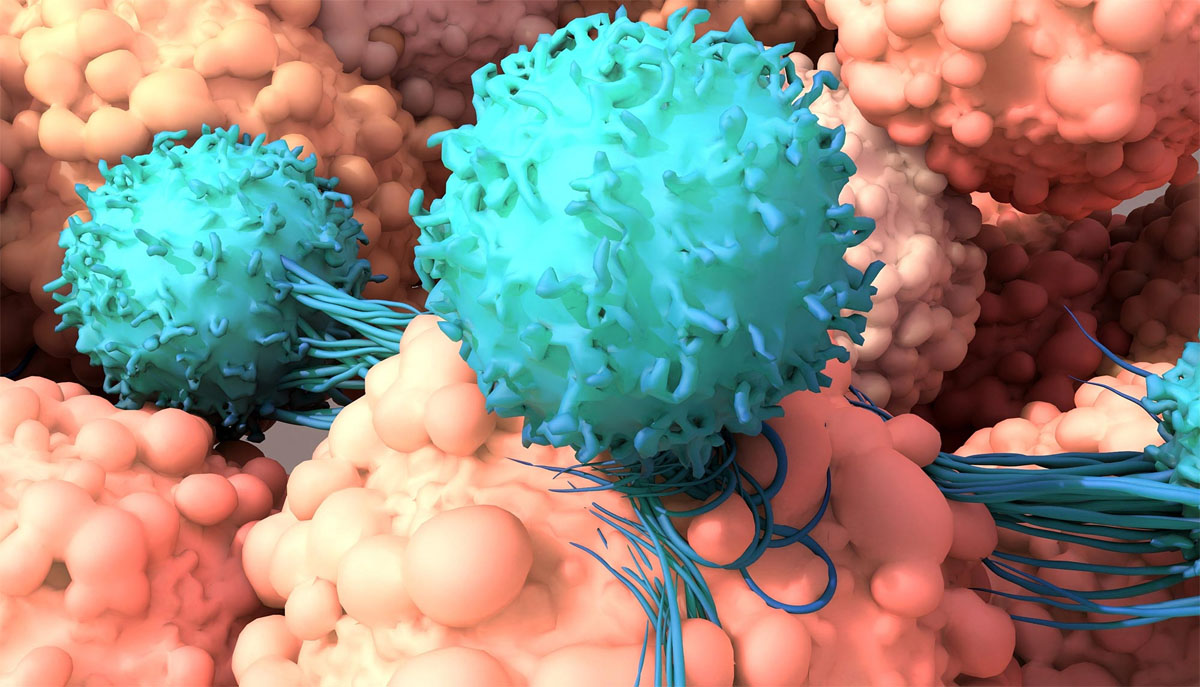
In a major scientific breakthrough that could transform cancer care, researchers at Weill Cornell Medicine have uncovered how tumours weaken the body’s immune defences—and how blocking that process can supercharge treatment. The findings, published in Nature Immunology, reveal a critical pathway that drives T cell exhaustion, a major obstacle in modern cancer immunotherapy.
According to the study, cancer cells exploit a molecular signal to drain T cells of their strength, reducing their ability to attack tumours. By blocking this signal, scientists were able to keep T cells active and dramatically enhance their tumour-fighting capacity.
“Our dream is to revive exhausted T cells so the immune system itself can defeat cancer. This discovery brings that future closer,” said co-senior author Dr. Taha Merghoub, noting that T cell exhaustion limits the long-term success of immunotherapies even in patients who initially respond well.
READ ALSO:
- Turkey Football Betting Scandal: 46 Arrested as Match-Fixing Probe Widens
- Four Teenagers Killed in Banki Explosion as Borno Police Probe Deadly IED Blast
- Osimhen Scores Brace as Galatasaray Edge Samsunspor 3-2 in Turkish Super Lig Thriller
The researchers focused on CD47, a protein known as the immune-evading “don’t eat me” signal used by cancer cells. Unexpectedly, the team discovered that T cells also produce CD47—and its levels surge when T cells become exhausted. Tests in mice revealed that animals lacking CD47 developed slower-growing tumours, showing the protein plays a powerful internal role in immune suppression.
Tumours appear to worsen this phenomenon by releasing thrombospondin-1, a protein that binds to CD47 and further weakens T cells. “Remove CD47 or thrombospondin-1, and T cells stay strong,” Merghoub said.
To counter this mechanism, researchers tested TAX2, a peptide that prevents CD47 and thrombospondin-1 from interacting. Mice treated with TAX2 displayed slower growth of melanoma and colorectal tumours, more active T cells, and stronger immune responses. TAX2 also significantly enhanced the effectiveness of PD1 immunotherapy, one of the most widely used cancer treatments.
Lead author Dr. Chien-Huan Weng described TAX2 as a “proof-of-concept,” adding that further work is underway to create safe and targeted ways to block this newly identified exhaustion pathway in human patients.
Scientists say the approach could form a powerful standalone therapy or boost existing immunotherapies, marking one of the most promising advances yet in the fight against cancer.
Scientists Identify Key Immune “Exhaustion Switch,” Opening New Path for Powerful Cancer Treatments

-

 Auto1 day ago
Expectations High as 2025 NAJA Awards Hold Tuesday December 16 in Lagos
-

 News1 day ago
FG Opens 47km Lagos–Calabar Coastal Highway Section to Ease Yuletide Traffic
-

 metro1 day ago
Presidency Dismisses Christmas Terror Attack Claims, Assures Nigerians of Security Nationwide
-

 metro15 hours ago
Ooni of Ife Hails Fani-Kayode’s Ambassadorial Clearance as Honour to Ife, Osun State
-

 Sports1 day ago
Messi Tour Chaos in India: Angry Fans Storm Kolkata Stadium After Football Icon’s Abrupt Exit
-

 metro15 hours ago
32 Nigerians Nabbed in Ghana as Cyber Security Authority Raids Kasoa Scam Hub
-

 metro15 hours ago
From Sneakers to Suits: Shettima Recalls NBA Dressing Saga at NIPSS Event
-

 metro1 day ago
No Christian Genocide in Nigeria, Only Terrorism — Tinubu Tells NASFAT Conference