

Opinion
Siyan Oyeweso: Lessons in virtue and vanity
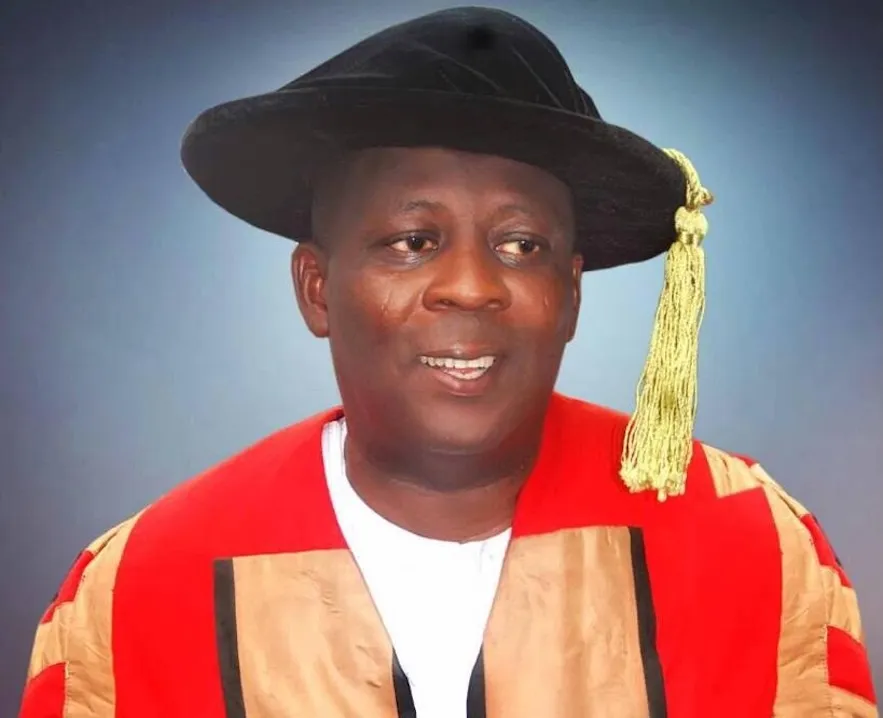
Siyan Oyeweso: Lessons in virtue and vanity
Tunde Odesola
(Published in The PUNCH, on Friday, December 5, 2025)
H-o-r-r-o-r!? The lamp has gone out in the ancestral grove. Frightening darkness reigns. I step inside the grove, I grope on staggering steps. The gourd is broken. I saw its shattered pieces. I stagger. I can feel the wet wood, torn drum, snapped beads, burning ice, soundless speech, blind sight, lifeless breath, static motion and cold fire. I call out to the deep, but the deep does not call back. The deep is silent. The deep has become a mound. The light has gone out in the grove. Everything is cold.
Don’t our ancestors say if the load refuses to stay on the ground and rejects being hung, there’s yet a place to place it? I refuse to bury. I will perform the rites and turn back the hands of time. I beseech thee, owners of the land, heed my pleading just this once, because when the dead is invoked in the street, it is the living that answers (Ti a ba pe oku ni popo, alaye lo n dahun). Abdulgafar Siyan omo Oyeweso ooooo! Please, answer me, hearken to my chant and heed my plea. Come! Cone back, please! It is me, your little aburo, Tunde, that is calling. It is I, Odesola, your disciple.
Baba Ibeta, I refuse to refer to you in the past tense. Prof, please, I need you to do just one thing for me, real quick. I need you to remember our discussions before sickness struck. Remember our discussions when sickness struck. The one million naira you gave me on your sickbed lies doggo in my account, untouched. You said I should use it for the publication of a full-page colour advert in PUNCH for Prof Olu Aina, who is billed to bag an honorary doctorate from the Obafemi Awolowo University, Ile-Ife, the prestigious citadel of learning, which you oversee as the Pro-Chancellor and Chairman of Council. From the one million naira, you said I should place radio advertisements to announce the degree to be bestowed on the emeritus Professor Aina, Nigeria’s pioneer and distinguished scholar of Technical and Vocational Education, on December 13, 2025. I have long finished the artwork on The PUNCH advert, which you approved. I was awaiting the radio jingle being handled by ace broadcaster, Oyesiku Adelu. Now, I shall return the N1,000,000.00 to Iya Ibeta because the bowstring has snapped, and the bow has become a mere stick. Ọsán ja, ọrún dọpa.
Bọ̀dá Gàfárù, your humanity is gripping. What manner of man, lying prostrate on a sickbed, would remember to honour the living with his own money? What manner of man, stricken by a stroke, would give out N1,000,000.00 to honour a senior academic, two months before the event was to take place? What manner of man would hover between life and death, and still bend over backwards for the living? That manner of man can only be Siyan Oyeweso. He loves his fellow men and women far more than himself.
READ ALSO:
- Court Rules Only Lawyers Can Represent Nnamdi Kanu, Rejects Brother’s Appearance
- Imo Economic Summit: Aliko Dangote Vows to Become State’s Largest Investor
- NSCDC rejects VIP protection requests from senators as demand surges after police withdrawal
Ẹ̀gbọ́n mí àtàtà, I weep bitter tears because I know you do not deserve to go. You do not want to embark on that returnless ‘Àrè Mabò’ journey. As your life hangs by a thread and we pray for your recovery, you said you would be grateful if the Almighty Allah gave you a second chance. You express the desire to write a book, “Siyan Oyeweso: Life After Stroke.” Also, you hope to take delivery of one of your earliest books, “Journey From Epe: A Biography of S.L. EDU,” which is out of print, but is being reprinted. Your book on Ile-Ife and the one on Ikorodu are undergoing proofreading. It’s your dream to see them to the press. In the throes of death, you still cater for the whole family. Now, Iya Ibeta is a widow. Your two-year-old triplets are fatherless. Oh Allah, this grief is unbearable.
I weep because I have whined with you in the days of famine and wined with you in the days of flourish. I’m with you in defeat and in victory. I witnessed the way you took defeat like a sportsman and celebrated victory with humility. I gnash because you are the ‘opomulero’ pillar behind my literary garden, even though I was never a pupil in the four walls of your classroom. I am the acolyte who sits at your feet after work.
Baba Òyé, I remember how we first met. Our first-ever meeting ended in a fight. That was at the palace of the 12th Timi Agbale of Ede, the late Oba Tijani Oladokun Ajagbe Oyewusi, the Agboran II, in the early 2000s. That fateful day, Oyeweso didn’t come to the palace to fight, nor did I, but the PUNCH spirit of fearless candour overtook me as I challenged what I saw as overpresumption.
Oyeweso had come to address a news conference, whose exact purpose I can’t recall, but the conference was certainly in the interest of Ede, the illustrious town Oyeweso lived for. I came to the news conference as PUNCH reporter from Osogbo, the state capital. And katakátá burst when it was question time.
Then, I was new to Osun State, having just been transferred from the Lagos headquarters of PUNCH. Oyeweso had answered a couple of questions from faces familiar to him within the Osun Correspondents chapel and was in a hurry to attend another assignment on behalf of the town. I raised my hand to ask a question. Exuding confidence and convivality, Oyeweso said everything there was to know lay in the press release shared to journalists at the conference. “No more questions, please,” he said. Anger boiled inside me. Who is this palace jester, I thought.
READ ALSO:
- Edo Assembly Moves to Arrest Obaseki, Others Over MOWAA, Radisson Hotel Probe
- Three Top Contenders to Replace William Troost-Ekong as Super Eagles Captain
- Ned Nwoko vows legal action against rising online harassment, criminal defamation
“I can’t come all the way from Osogbo to be told not to ask questions here,” my anger boiled over. All heads turned in my direction, eyes piercing to see if there was a tag on my clothes suggesting I was a member of the union of road transport workers. “From where did this one stray?” the looks asked. But I continued, “I’m not going to write any story from this press release if you don’t answer my question!” Heads turned away from me to Oyeweso, who didn’t show he was rattled. He smiled, held the right hem of his agbada and folded it on his right shoulder. He did a similar folding to the left hem of his agbada, beaming his trademark ‘ẹ̀rù òbodò’ smile.
Then a journalist whispered, “He is Professor Oyeweso!” “So what!?” I shot back outside the earshot of Oyeweso. “My dear brother from PUNCH newspapers,” he began, sugar in his voice, “I do not mean to evade questions, far from it. If you know me, you would know I enjoy talking. In fact, I talk for a living. But the Timi, Oba Tijani Oyewusi, has just sent me an urgent text, demanding I run an errand, and I don’t want to keep him waiting. I’ll leave my numbers with you, so you cakl and ask any question as I run the king’s errand, please.”
That was the day our journey began. You were still a professor at Lagos State University then. This was before the Olagunsoye Oyinlola administration established the multi-campus Osun State University, and you moved back to your home state. You are the inaugural Provost, College of Humanities and Culture, UNIOSUN. Twice, you vied for the post of Vice Chancellor, UNIOSUN, and lost not for lack of competence, but to power play. The next day after each loss, you dust yourself up and trudge on as if nothing had happened.
To understand the Oyeweso enigma, picture a vehicle shaft connecting the two opposite wheels. This is why the late Ooni of Ife, Oba Okunade Sijuwade, and the late Alaafin of Oyo, Oba Lamidi Adeyemi, opened their palace doors to his erudition even though both monarchs hardly saw eye to eye on many issues. Baba Iremide’s charm infects the political board. This is why he was embraced by both Governor Oyinlola and Rauf Aregbesola, two gladiators from different political camps. Despite being from Ede, the hometown of the popular Adeleke family, Baba Adekunle stayed true to his political ideals, pitching his tent with the BATified All Progressives Congress. Their differing political alignments notwithstanding, Oyeweso did not spoil Ede, his hometown, because he was going to Ẹ̀dẹ̀, the hallway. This is why the Adeleke family maintained the communal bond by supporting him on his sickbed. Minister of Marine and Blue Economy, Alhaji Adegboyega Oyetola, supported Oyeweso before and during the sickness. In fact, it was Oyetola, aka Baba Jeje, who recommended Oyeweso for the post of Pro-Chancellor and Chairman of Council, Obafemi Awolowo University, Ile-Ife.
Your uncommon equanimity is the reason why I gave you my support when you expressed the desire to vie for the House of Representatives ticket in Ede-North-Ede-South-Egbdore-Ejigbo federal constituency. When that also fell through, I became a thorn in the flesh of Oyetola, whom I called morning, day and night, urging him to reward Oyeweso with a position. One day at a public function, an exasperated Oyetola saw Oyeweso and said, “Prof, tell Tunde Odesola to unclasp his fingernails on my neck o. I have told him repeatedly that you shall get an appointment, but he won’t leave me alone. Ha!” Shortly after the encounter, Oyeweso called me, and said, “Tunde,” I answered, “Sir!” Oyewso said, “Please, unclasp your fingernails on Oga’s neck o. We were at a function today, and Oga said, “So fun Tunde Odesola pe ko tu ekanna lorun mi o.” We both laughed. Aside from me pestering Oyetola, Baba Oluwasikemi would surely have a couple of other voices putting in words of recommendation on his behalf. So, his appointment was a collective victory for sagacity, hard work, resilience and vision.
Oyeweso was initially appointed Pro-Chancellor and Chairman of Council of the Federal University of Lokoja, Kogi State, before he was later announced as the Pro-Chancellor and Chairman of Council, OAU, in June last year. Therefore, it is not out of place to say that death did not allow Oyeweso to enjoy the fruit of his labour, affirming the philosophical thought that the world is a vanity fair. I do not believe in this philosophical thought; I believe Oyeweso’s life tramples vanity to affirm virtue.
READ ALSO:
- Senate Launches Emergency Probe into Widespread Lead Poisoning in Ogijo, Lagos/Ogun
- Court of Appeal Affirms Ruling Barring VIO from Seizing Vehicles or Fining Motorists
- FG secures release of three Nigerians detained in Saudi Arabia
This is why Oyeweso blends perfectly into any setting – be it rural or urban, academic or marketplace. When you see him on the street, he could pass for a nobody. But when he mounts the podium, you hear an oracle of history. This virtue is what endears Oyeweso to the masses, and I suspect, it is one of the reasons why some of his colleagues despise him – they believe he mixes with every Tom, Dick and Harry. To this tribe of his colleagues, an academic should possess raised shoulders, a back haunched by the weight of poring over books, and a nose in the air.
I haven’t come out of mourning the Owa of Igbajo, Oba Adegboyega Famodun, when the Oyeweso disaster hit below the belt.
Where will I find another soulmate? Though we were born sired by different parents in the February of different years, Oyeweso took me as his blood brother, confiding in me his innermost wishes and fears. Who will call me “Prof Tunde? Who will come to my house unannounced? Oyewso would call my wife and say, “Hello, ma; Tunde o sun ile loni o. Odo mi lo ma sun” – “Tunde is not sleeping at home today. He’s sleeping in my house.” Then we would begin the intellectual rigour of writing and editing late into the night. The Nation Correspondent, now an oba, Kabiyesi Adesoji Adeniyi, Prince Wale Olayemi, my childhood friend, Abiodun Idowu, a psychiatrist, Temitope Ajani Fasunloye, Ismaeel Uthman, among others, participated in the rigour Oyeweso took us through – analysing and discussing. We did not do this on empty stomachs. There was plenty to eat and drink. At times, when Prof eventually allows you to go home, all you want to do is just go home and sleep. At times, I ran away from him. When I ran from him, he appeared in my house or office unannounced and says, “Ha, I caught you.”
Who would host a party for my promotion? Who would host a party for my homecoming? Death has crept upon us and taken our most prized jewel away. Oyeweso. I woke up that day around 6 a.m. I checked my phone. I saw your picture on Professor Samuel Gbadebo Odewumi’s reel. I told myself, Prof Odewumi is probably celebrating your recuperation. Still in bed, I scrolled and saw a post by Saturday Tribune Editor, Lasisi Olagunju, announcing your death.
Frantically, I checked Osun WhatsApp platforms. And there I saw the news of your passing into eternity. I then noticed I had received many calls and texts. It was dawning, but I was denying. I called. I asked questions. I blamed the Nigerian healthcare system, saying Oyeweso wouldn’t have died if he lived in an advanced country. I cited the misdiagnosis of the late Mohammed Fawehinmi in Nigeria, following his auto accident. But my oga and Managing Director/Editor-in-Chief, Mr Adeyeye Joseph, reminded me that the legendary Gani Fawehinmi, Mohammed’s father, was misdiagnosed in England.
So, I kept my mouth shut. And submitted to the will of Allah. Ina Lilah Waina Allah Rajun. Baba mi, I never thought I would ever write this about you. If tears could wake up the dead, you would be in our arms today. Orun re ire o, oko Nike.
Email: tundeodes2003@yahoo.com
Facebook: @Tunde Odesola
X: @Tunde_Odesola
Siyan Oyeweso: Lessons in virtue and vanity

Opinion
2027: Competence, Not Zoning, Should Decide Nigeria’s Next President — Imasuagbon
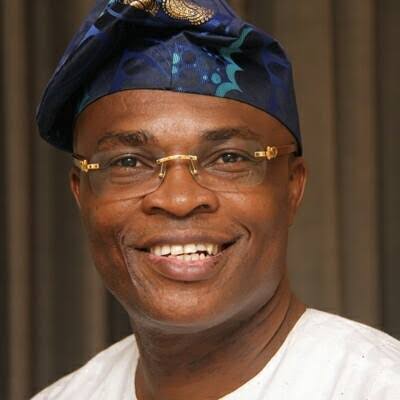
Nigerians should look beyond ethnicity, region and the longstanding debate over rotational presidency when choosing the country’s next leader, according to a chieftain of the African Democratic Congress (ADC), Kenneth Imasuagbon.
The former Edo State governorship aspirant said the priority ahead of the 2027 election should be finding a president with the ability to confront Nigeria’s economic, security and infrastructure challenges.
Speaking to journalists in Benin, Imasuagbon argued that presidential rotation is not a requirement of the Nigerian Constitution and should therefore not outweigh the question of competence.
He said voters should be more concerned about replacing poor schools with better ones, improving healthcare and addressing hardship than debating where the next president comes from.
Imasuagbon specifically appealed to voters in the South to support former Vice President Atiku Abubakar, who is contesting the 2027 presidency on the ADC platform.
According to him, Atiku has demonstrated the experience and determination needed to improve the country, describing the former vice president as someone capable of promoting national unity and fairness.
He also accused the Bola Tinubu administration of worsening economic pressure through policies including the removal of fuel subsidy, while expressing concern about the condition of roads, electricity and other infrastructure.
Imasuagbon argued that the next administration must focus on practical improvements in areas such as power, transportation, employment, security and public services.
The ADC chieftain also dismissed the idea that the ruling All Progressives Congress (APC) would automatically benefit from its incumbency advantage in 2027.
He maintained that the electorate ultimately determines the outcome of an election, arguing that voters could change the political direction of the country if they were determined to do so.
Imasuagbon further criticised what he described as regional and ethnic considerations in the distribution of political appointments and opportunities, insisting that the next president should give Nigerians across different parts of the country a sense of belonging.
His comments come as political parties and their candidates intensify preparations for the 2027 presidential election.
Opinion
Lesson from Dotun Oladipo’s Brave Daughters, by Bamidele Johnson
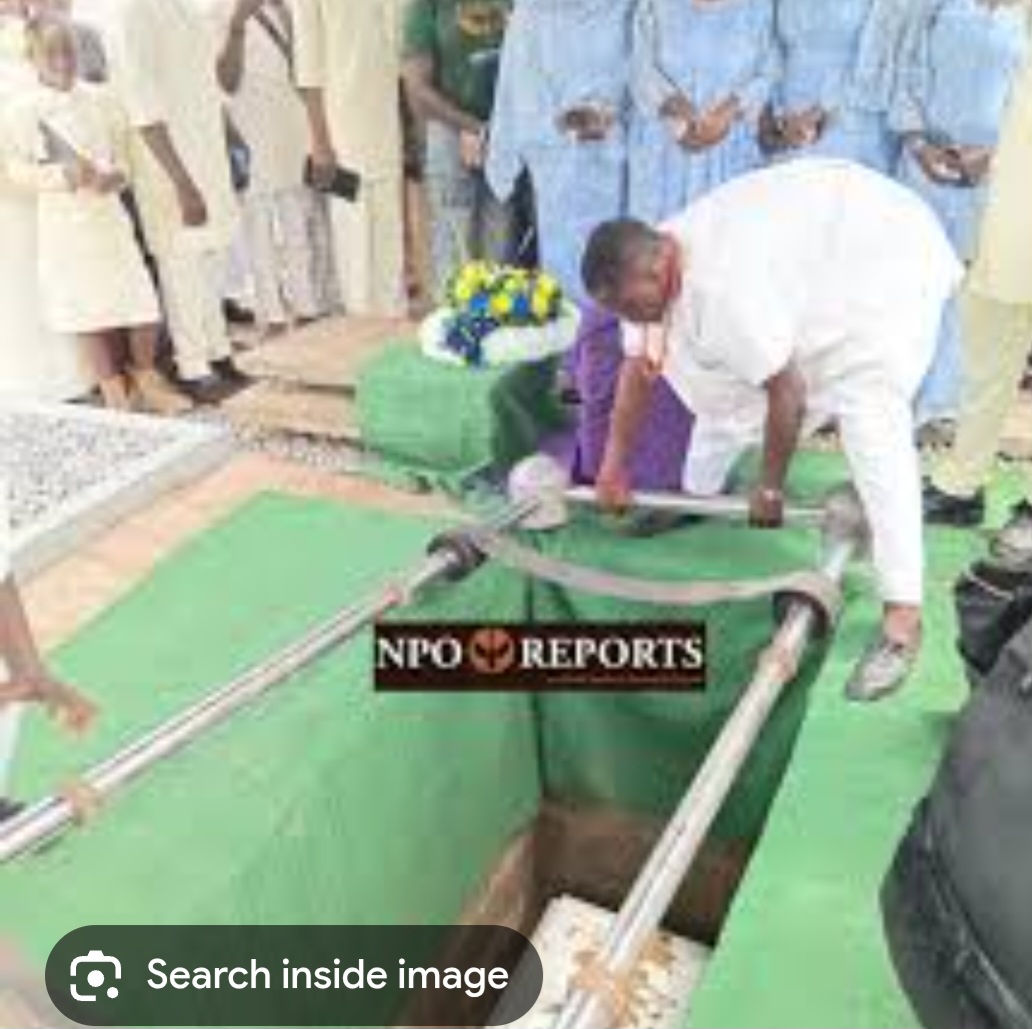
Lesson from Dotun Oladipo’s Brave Daughters, by Bamidele Johnson
I hope to grow old. I want to see my kids become real adults, find their own feet, make mistakes, recover from them, and perhaps one day complain that their own children are giving them grey hairs. I want that plainly stated before anything else, as everything that follows might read as a man agreeing to an early exit rather than a man simply being honest about the odds.
I want the decades. I want to become the grandfather who repeats the same stories until nobody bothers correcting him anymore. But wanting a thing and being granted are different things. The last year has made that difference harder to ignore than I would like. I have lost many friends recently to keep thinking that optimism is my natural resting state. Some of these men had better blood pressure than mine, better habits, better everything that is supposed to count. It did not save them.
There is no formula I know that reliably separates the men who make it to 70 from those who do not. Anyone who says he knows one is selling something. So, I do not assume that old age is an already booked destination. Even if I once did, which I doubt, the last three years have cured me of such an illusion. As such, I treat it as a hope rather than an expectation, and I have found that a more honest way to live.
It is exactly why I want something placed on record now, while I am still able to place things on record, rather than leave it for people to guess what my wishes were in the fog of a funeral week. If I do not make old bones, my children are not to be asked to read tributes at my funeral. Not one line, however short, however lovingly written.
This, for me, was settled today rather than re-opened. At Dotun Oladipo’s funeral service, his three daughters took turns to read their tributes to their dad, and I found myself watching them with awe. There was a kind of strength in them that I do not possess. It is the strength needed to stand in front of a hall brimming with grieving adults and speak about a man they have just lost. Forever. Strength, however, is not the same as ease. I could see plainly what that strength was costing them as they read. Their voices caught. Their composure held and then did not hold and then held again through sheer will.
In front of them, in the pews, men and women considerably older than them came undone in ways the girls themselves were somehow managing to resist. I went mightily close. Some of the sobbing was quiet, the type people try to fold into a handkerchief. Some of it was not quiet at all, the kind that announces itself whether or not you want it.
Those young women honoured their father with a grace that is beyond me. What they did was astonishing. So, what I am attempting is an observation of a custom I have now watched wound people. This was not the first time I had watched this particular ritual extract more than it should from people already running on fumes. I saw an earlier and harder version of it at a friend’s wake back in 2015.
The first son was called forward to read his father’s tribute, and he could not do it. He tried, but the words would not come, and he stood there in front of a crowd of mourners, with his grief simply refusing to organise itself into sentences. The officiating minister, rather than releasing him from the task, urged him to continue. I sat fizzing with sorrow and ire. He could not go on and, eventually, the minister accepted, but not before insisting a while longer than it should have reasonably taken. His younger brother was called up next, presumably on the theory that if one grieving son could not manage it, maybe another one could. He flunked it in the same way. Grief does not distribute itself more conveniently among siblings just because a programme has been printed and needs to be followed.
I have turned that memory over many times since, trying to work out why this part of the rites is treated as mandatory in the first place. I have not found a satisfying answer. Maybe it comes from a belief that a child’s words carry more weight than anyone else’s, which may even be true, but weight is exactly the problem when those carrying it are struggling to hold themselves together with nothing but adrenaline and the fear of dissolving in public.
Maybe it is simply inertia, the reason we still do a hundred things at funerals that nobody can explain the original purpose of. Either way, I have stopped looking for the justification. I no longer think one exists that is good enough to weigh against what I watched happen to that boy in 2015.
So, let this stand as my instruction rather than my preference, the kind of thing I would rather state plainly now than leave for my children to infer later from how uncertain I sound when the subject comes up in passing. If I do not get the old age I am hoping for, my children will not be asked to read a single word over my body. Someone else can speak for me. A friend, a stranger with a steadier voice and a smaller stake in the loss, anyone whose grief will not be quite so total that standing upright becomes almost impossible.
My children, of course, will sit in front and fall apart if that is what the day requires of them, but without the microphone. That, at least, is one small mercy I intend to arrange for them while I am still here to arrange it.
Dotun deserved every bit of the send-off his daughters gave him today, and I suspect he would have been the first to tell them to sit down and let someone else carry the weight for a while. He did not get a say in that, as none of us ever do once we are the ones being spoken of rather than the ones speaking. Rest well, Dotun. You raised three young women whose strength I will not soon forget. That alone says everything worth saying about the man you were.
Opinion
‘Tinubu Will Win Again in 2027’ — Charismatic Bishops’ Secretary
‘Tinubu Will Win Again in 2027’ — Charismatic Bishops’ Secretary
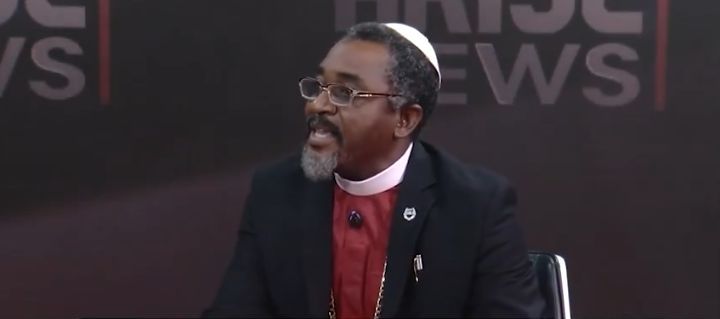
A senior Nigerian cleric, Archbishop Chivir Chianson, has declared that President Bola Tinubu will retain the presidency after the 2027 general election, attributing the prediction to a message he said came from God.
Chianson, who serves as Secretary General of the Charismatic Bishops’ Conference of Nigeria, made the statement while appearing on Arise Television on Saturday.
Rather than basing his prediction on political calculations, the archbishop said his confidence came from what he described as the prophetic role of bishops.
He maintained that the conference had previously spoken about Tinubu’s political future based on what he said was divine revelation and that the President would return for another term.
Chianson also predicted that Tinubu’s performance would improve if he wins the 2027 election.
READ ALSO:
- DSS warns Osun churches, mosques, markets over alleged terrorist attack plot ahead of 2027
- ‘Tinubu Will Win Again in 2027’ — Charismatic Bishops’ Secretary
- Fake miracles, bogus grants: How clerics allegedly fleece Nigerians of millions
Addressing the political opposition, the cleric said the bishops could not be blamed if rival parties failed to unite or organise themselves effectively ahead of the election.
He also sought to clarify the position of the bishops when dealing with government, saying their role in speaking truth to power did not mean they should approach political leaders with hostility or disrespect.
According to him, the Constitution, alongside their religious convictions, should guide how they engage the President and the country.
Chianson said he was sufficiently confident in his prediction to promise that he would return to the Arise TV studio after the 2027 election, when he expects the result to demonstrate that the bishops’ prophecy was correct.
His comments add a religious dimension to the increasingly active political conversation surrounding the 2027 presidential race.
‘Tinubu Will Win Again in 2027’ — Charismatic Bishops’ Secretary
-

 metro3 days ago
Woman disguises as Muslim woman in Niqab to steal in Ado-Ekiti market, video sparks outrage
-

 metro2 days ago
Ondo Herbal Drink Tragedy: Survivor Vows Never to Drink Again as Death Toll Tops 30
-

 metro2 days ago
Sokoto Cleric Stabbed Twice in Neck After Juma’at Prayer, Attacker Killed
-

 Africa3 days ago
Murder of Nigerian Bishop in South Africa Sparks Outcry Over Unsolved Killings
-
 Business2 days ago
Dangote: ₦525 Refinery Shares Could Rise to ₦10,000
-

 metro2 days ago
MURIC fires back at Peter Obi: Forget Sallah ceremony, free Nigerian Muslims
-

 Community3 days ago
Kaduna Traditional Rulers Set for 100% Pay Rise as Zazzau Emir Backs Proposal
-

 News3 days ago
AI on the Roads: LASTMA Turns to China to Fix Lagos Traffic