

Opinion
Sixty-fifth birthday fireworks: Obasanjo versus Fayose (II)
Sixty-fifth birthday fireworks: Obasanjo versus Fayose (II)
By BOLANLE BOLAWOLE
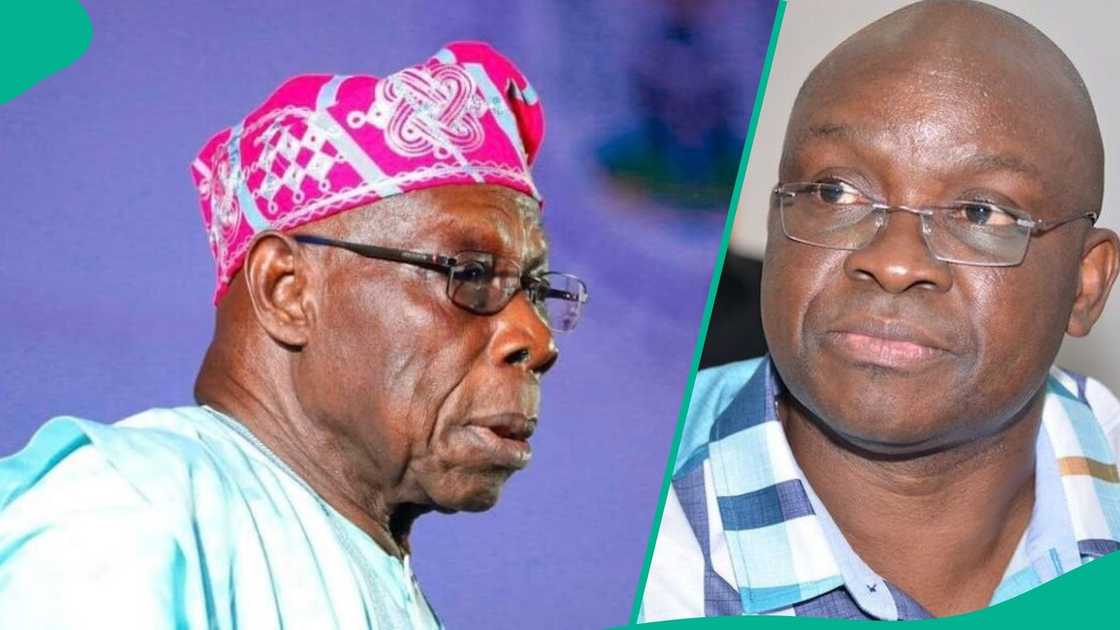
Last week we started with the spat between former President Olusegun Obasanjo and former Ekiti State governor, Peter Ayodele Fayose. Fayose had invited Obasanjo to his 65th birthday celebrations, where the former president made statements that irked the celebrant. Fayose afterwards responded in kind to Obasanjo in a “Thank You” message where he took the former president to the cleaners. Obasanjo also responded by topping it up for Fayose!
Going down memory lane, we narrated how relations went from good to bad between the two leaders, hearing, as it were, from the horse’s mouth – meaning, Ayodele Fayose himself – in his unpublished autobiography titled “Peter the Rock: Autobiography of Dr. Peter Ayodele Fayose”, which was collated together with others and edited by this writer. Read on:
“Obasanjo returned from the USA on 17th June, 2006 and visited Ekiti on June 18th. He had quickly convened a meeting in Abuja in the early hours of 18th before coming to Ekiti. He was earlier scheduled to have visited Ekiti on the 17th and 18th. Realising that his third term agenda had been killed by the National Assembly, he quickly convened a meeting of the leadership of the party, denied the third term agenda, and called for reconciliation in the party. He then came to Ekiti and praised me to high heavens on the same day. Obasanjo assured the Ekiti people that I would be returned as governor and left. I later met with him at Ota in company with other South-west governors; he said he trusted me and believed in my judgment and, therefore, made me the chairman of a group that would search for his successor. He also reaffirmed his support for my second term bid.
“However, in late August of that year (2006), the then Chairman of the Economic and Financial Crimes Commission (EFCC), Nuhu Ribadu, in collaboration with my enemies who believed there was no way I would not win the 2007 governorship election, convinced Obasanjo that I was fraudulent and should be removed from office. Obasanjo bought into this and invited me to Abuja to ask me to step down as the governor of Ekiti state. I told him the step he was taking stemmed from conspiracy against my person. He finally said I should not contest for a second term as governor of Ekiti state, which was ludicrous. I was very much loved by my people who wanted me to continue in office; to be single-handedly short-circuited by one man was patently undemocratic. But unequal power relations made me succumb and we both agreed I should go to the Senate while they shopped for someone else to take my place. To avoid trouble, I said this was okay by me.
READ ALSO:
- Presidency fires back at Obasanjo, says terrorism took root under his administration
- Alexander Isak ends goal drought as Liverpool beat West Ham 2-0 in Premier League clash
- Manchester United fight back to beat Crystal Palace 2-1, reclaim Premier League top-six spot
“Two weeks later, I was invited by the same Obasanjo to the Presidential villa and, in the presence of Chief Bode George and the then PDP chairman, Dr. Ahmadu Ali, the president said, ‘Ayo, you did not offend me but the powers-that-be in your state do not want you. So you have to resign now as governor.’ To my amazement, they brought out a letter on the letter-head of the Ekiti State Government, which they asked me to sign – a document I never prepared. I pleaded with the president but he insisted, in spite of entreaties by Chief Bode George and Ahmadu Ali. I then cleverly pleaded with him to let me go back home and tidy myself up so that I could leave honourably. He agreed. When I got back to Ekiti, Obasanjo called me to ask, ‘When are you bringing the letter of resignation?‘ He said, ‘If you think you can see light at the end of the tunnel, it is not with me! You better resign.’
“The ‘story behind the story’ of how I tactically dodged signing the resignation letter they prepared in Abuja was that I had been tipped off by Mrs. Mariam Ali, wife of Dr. Ahmadu Ali, whom I was close to. She had sent a message to me through Bukola Saraki and some other people that I would be invited to a place in Abuja to sign a letter but that ‘under no circumstance’ should I sign the letter. Had I signed the letter, I would have been arrested at the door of the Presidential villa by the EFCC. They would have used that letter in the media, saying that I resigned willingly after admitting that I was corrupt. With the Abuja macabre dance, I realised they had made up their mind to get me. The EFCC arrested everyone around me after they had withdrawn my Chief Security Officer, my ADC, etc…
Politics is truly a dirty game! The same Olabode George, who played a key role in how Fayose upstaged Babalola, later became Fayose’s punching bag during Fayose’s second term of office when Chief George took positions that were diametrically opposed to those of the Fayose/Nyesom Wike camp of the PDP.
“Initially, news of the collaboration of members of the state House of Assembly with my enemies came as a rumour. I summoned courage and invited them through the Clerk of the House. All entreaties to make them see reason fell on deaf ears. They made some unreasonable demands, obviously acting the script of their collaborators. During the heat, when it became obvious they were not ready to back down, having been coerced and at the same time mesmerised with outlandish promises made to them by their sponsors, I told them that if what they planned eventually happened and I was forced out of office; they, too, would sink with me. True to my courageous and prophetic pronouncement, the House of Assembly was suspended following the declaration of emergency rule.
“Stripped of my security details, I was naked and exposed security-wise. The next thing I saw was that my House of Assembly members were ‘arrested’ and taken over by the EFCC in an organised manner. They signed an impeachment letter at the EFCC camp, which they forwarded to me, and in the space of five days, they brought the ‘Honourables’ to the House of Assembly complex where the then (but now late) Speaker, Friday Aderemi, purportedly sacked the Chief Judge of the state, Justice Kayode Bamisile, which was beyond his powers and those of the House of Assembly, and got a consenting judge to act as Acting Chief Judge. The purported Acting Judge, JBK Aladejana, set up another panel after the first panel had absolved me of any guilt. After my acquittal by the first panel, that should have been the end of the matter, but the second panel then pronounced me guilty.
READ ALSO:
“The then Inspector-General of Police, Sunday Ehindero, who had a brother who was very close to me, phoned me that he had been ordered to effect my arrest and that lorry-loads of armed policemen were already on their way to carry out the order. He told me quite clearly that tipping me off was the very best he could do for me. If I waited and the men he had sent cornered me, he would not be in any position to assist me. His hands were tied over this matter, he told me quite emphatically. I had to run for my life. So, I escaped out the Government House in the night of 12th October, 2006 and went into exile”
How did Fayose escape from the Government House already surrounded by security forces? In the trunk of a jalopy car, disguised! And for the next eight years he suffered exile, later returning home to surrender himself to the authorities. He was incarcerated and faced trial but, in the end, he was exonerated and became a free man once again. Those travails must have been what Obasanjo referred to at Fayose’s birthday event; what he neglected to add, however, was that he, Obasanjo, was the chief architect of those travails! Fayose contested election again and was victorious, serving out his second term of office between 2014 and 2018. It was during the latter part of that period that our paths crossed, at his invitation.
The story that is yet to be told, but which Obasanjo alluded to in his controversial remarks at Fayose’s 65th birthday bash, is that it is the same Obasanjo – and Chief Olabode George – that was instrumental in Fayose becoming governor in his first tenure, in place of Obasanjo’s own personal friend, Chief SK Babalola. True, then, is the statement by Gen. Oluleye that Obasanjo has equal capacity to do both good and evil!
Politics is truly a dirty game! The same Olabode George, who played a key role in how Fayose upstaged Babalola, later became Fayose’s punching bag during Fayose’s second term of office when Chief George took positions that were diametrically opposed to those of the Fayose/Nyesom Wike camp of the PDP. Call it Karma or whatever, it is the same Olabode George who reportedly moved the motion to expel Wike, Fayose and other PDP leaders at the recent convention of a faction of the PDP at Ibadan.
Proverbs 30: 18 – 19 says: “There be thr
ee things which are too wonderful for me, yea, four which I know not: the way of an eagle in the air; the way of a serpent upon a rock; the way of a ship in the midst of the sea; and the way of a man with a maid” A fifth must now be added: The mysterious ways of Nigerian politicians when they engage in their dirty games!
READ ALSO:
- NECO grants full accreditation to schools in Burkina Faso to conduct SSCE, BECE exams
- Four Dead, Ten Injured in Mass Shooting at Child’s Birthday Party in California
- White House Shooting: Suspect Once Worked With CIA as US Opens Full Terrorism Probe
Listen to how Fayose himself narrated th
e story of the helping hand he received from Chief Olabode George: “These people still did not give up, despite the fact that I had been given the flag. Again, they set up machinery and started moving around, saying that ‘When Obasanjo comes, we will now allow him to present the flag formally to Fayose in Ekiti.’ They said Obasanjo was going to present the flag to Chief SK Babalola…They were working against me until Obasanjo finally arrived…The night before he landed, Chief SK Babalola and Chief Bamidele Olumilua had sewn the same uniform for themselves and Obasanjo…And I was supposed to be the candidate!
“So, Chief Bode George told us in the afternoon of the night before, when he came to wait for Chief Obasanjo, and got wind of their plan, to quickly go to Oje market in Ibadan to get Aso Oke (Yoruba local fabric) of the same colour for me and Obasanjo and bring it to him. The fabric was done all night and we brought it to Ado-Ekiti before Obasanjo arrived. We now took it to Akure and gave it to Bode George…”
Fayose narrated how Obasanjo ditched a flabbergasted Chief SK Babalola right there on the podium and threw away his aso-oke, reached out for Fayose’s aso-oke, ordered him to the podium, raised up his hand and formally presented the flag to him as the party flagbearer!
After I heard the story of the role Chief Bode George played in frustrating the plans and plots against Fayose becoming the governor of Ekiti state in 2003 straight from Fayose’s own mouth, I marvelled each time Fayose mercilessly tore into the same Bode George when both leaders stood in opposing camps within the same party, the PDP.
One fateful day I held up a proof of his autobiography to Fayose and said: ‘Concerning your relationship with Chief Olabode George, don’t you think your own words in this book indict you?‘
Characteristically, he stared at me, but said nothing! Those who said I was responsible for Fayose not eventually officially launching the autobiography have a point; don’t they?
*Bolawole (turnpot@gmail.com 0807 552 5533), former Editor of PUNCH newspapers, Chairman of its Editorial Board and Deputy Editor-in-chief, was also the Managing Director/ Editor-in-chief of the Westerner newsmagazine. He writes the “ON THE LORD’S DAY” column in the Sunday Tribune and “TREASURES” column in the New Telegraph newspapers. He is also a public affairs analyst on radio and television.
Sixty-fifth birthday fireworks: Obasanjo versus Fayose (II)






Opinion
2027: Competence, Not Zoning, Should Decide Nigeria’s Next President — Imasuagbon
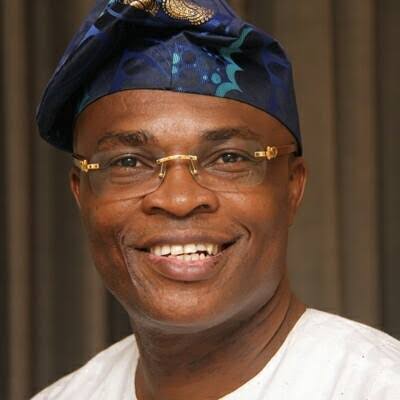
Nigerians should look beyond ethnicity, region and the longstanding debate over rotational presidency when choosing the country’s next leader, according to a chieftain of the African Democratic Congress (ADC), Kenneth Imasuagbon.
The former Edo State governorship aspirant said the priority ahead of the 2027 election should be finding a president with the ability to confront Nigeria’s economic, security and infrastructure challenges.
Speaking to journalists in Benin, Imasuagbon argued that presidential rotation is not a requirement of the Nigerian Constitution and should therefore not outweigh the question of competence.
He said voters should be more concerned about replacing poor schools with better ones, improving healthcare and addressing hardship than debating where the next president comes from.
Imasuagbon specifically appealed to voters in the South to support former Vice President Atiku Abubakar, who is contesting the 2027 presidency on the ADC platform.
According to him, Atiku has demonstrated the experience and determination needed to improve the country, describing the former vice president as someone capable of promoting national unity and fairness.
He also accused the Bola Tinubu administration of worsening economic pressure through policies including the removal of fuel subsidy, while expressing concern about the condition of roads, electricity and other infrastructure.
Imasuagbon argued that the next administration must focus on practical improvements in areas such as power, transportation, employment, security and public services.
The ADC chieftain also dismissed the idea that the ruling All Progressives Congress (APC) would automatically benefit from its incumbency advantage in 2027.
He maintained that the electorate ultimately determines the outcome of an election, arguing that voters could change the political direction of the country if they were determined to do so.
Imasuagbon further criticised what he described as regional and ethnic considerations in the distribution of political appointments and opportunities, insisting that the next president should give Nigerians across different parts of the country a sense of belonging.
His comments come as political parties and their candidates intensify preparations for the 2027 presidential election.
Opinion
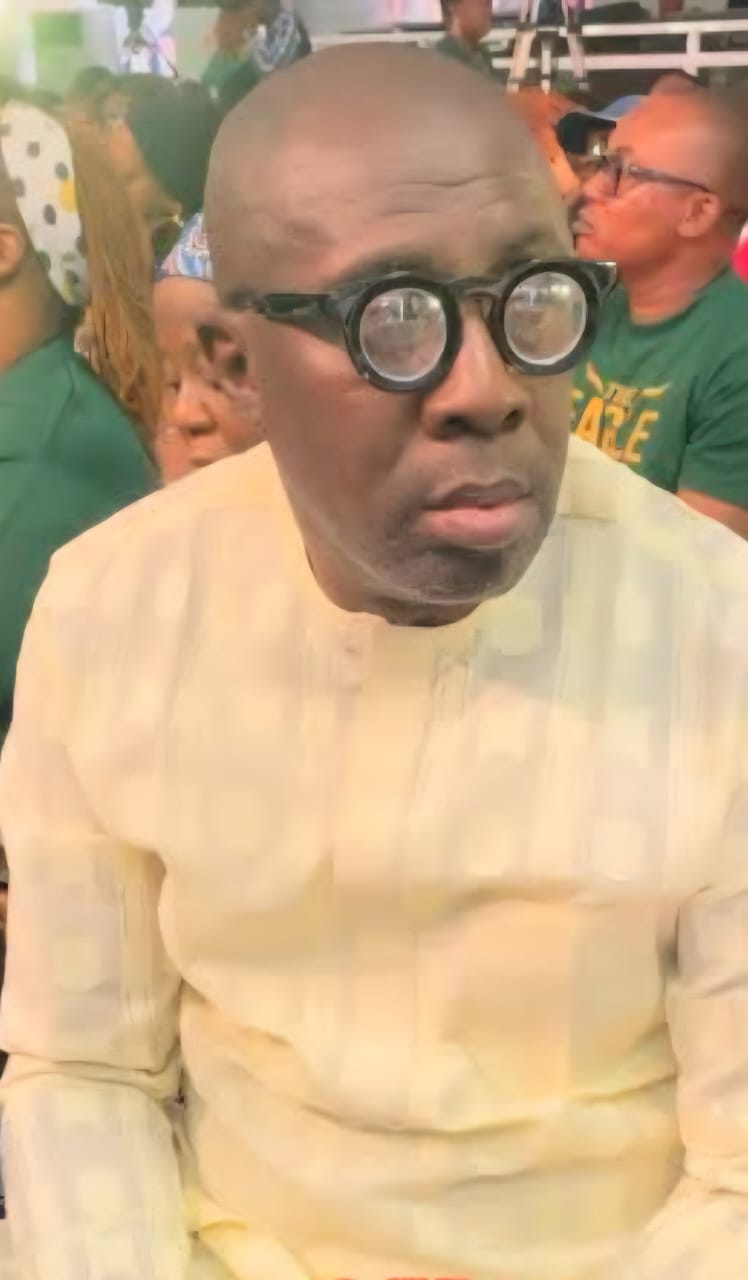
Lesson from Dotun Oladipo’s Brave Daughters, by Bamidele Johnson
Lesson from Dotun Oladipo’s Brave Daughters, by Bamidele Johnson
I hope to grow old. I want to see my kids become real adults, find their own feet, make mistakes, recover from them, and perhaps one day complain that their own children are giving them grey hairs. I want that plainly stated before anything else, as everything that follows might read as a man agreeing to an early exit rather than a man simply being honest about the odds.
I want the decades. I want to become the grandfather who repeats the same stories until nobody bothers correcting him anymore. But wanting a thing and being granted are different things. The last year has made that difference harder to ignore than I would like. I have lost many friends recently to keep thinking that optimism is my natural resting state. Some of these men had better blood pressure than mine, better habits, better everything that is supposed to count. It did not save them.
There is no formula I know that reliably separates the men who make it to 70 from those who do not. Anyone who says he knows one is selling something. So, I do not assume that old age is an already booked destination. Even if I once did, which I doubt, the last three years have cured me of such an illusion. As such, I treat it as a hope rather than an expectation, and I have found that a more honest way to live.
It is exactly why I want something placed on record now, while I am still able to place things on record, rather than leave it for people to guess what my wishes were in the fog of a funeral week. If I do not make old bones, my children are not to be asked to read tributes at my funeral. Not one line, however short, however lovingly written.
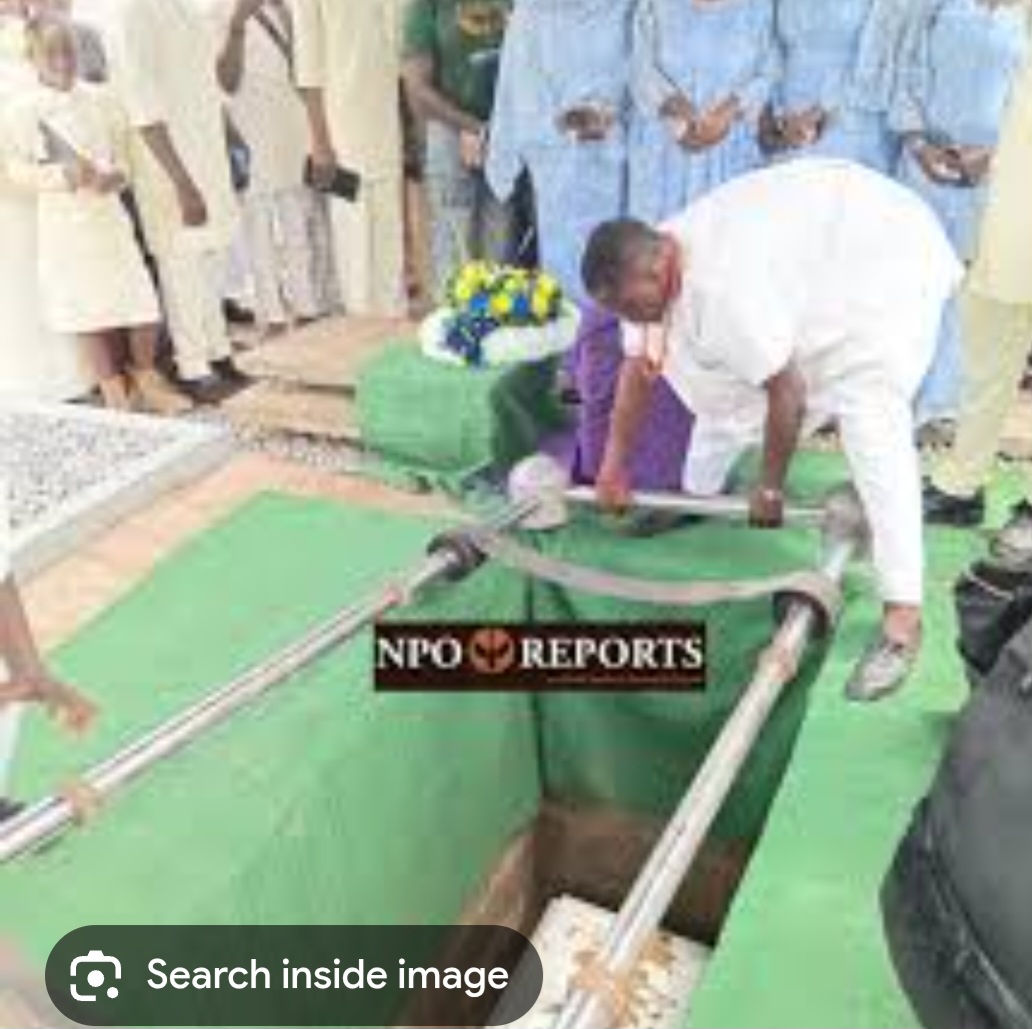
This, for me, was settled today rather than re-opened. At Dotun Oladipo’s funeral service, his three daughters took turns to read their tributes to their dad, and I found myself watching them with awe. There was a kind of strength in them that I do not possess. It is the strength needed to stand in front of a hall brimming with grieving adults and speak about a man they have just lost. Forever. Strength, however, is not the same as ease. I could see plainly what that strength was costing them as they read. Their voices caught. Their composure held and then did not hold and then held again through sheer will.
In front of them, in the pews, men and women considerably older than them came undone in ways the girls themselves were somehow managing to resist. I went mightily close. Some of the sobbing was quiet, the type people try to fold into a handkerchief. Some of it was not quiet at all, the kind that announces itself whether or not you want it.
Those young women honoured their father with a grace that is beyond me. What they did was astonishing. So, what I am attempting is an observation of a custom I have now watched wound people. This was not the first time I had watched this particular ritual extract more than it should from people already running on fumes. I saw an earlier and harder version of it at a friend’s wake back in 2015.
The first son was called forward to read his father’s tribute, and he could not do it. He tried, but the words would not come, and he stood there in front of a crowd of mourners, with his grief simply refusing to organise itself into sentences. The officiating minister, rather than releasing him from the task, urged him to continue. I sat fizzing with sorrow and ire. He could not go on and, eventually, the minister accepted, but not before insisting a while longer than it should have reasonably taken. His younger brother was called up next, presumably on the theory that if one grieving son could not manage it, maybe another one could. He flunked it in the same way. Grief does not distribute itself more conveniently among siblings just because a programme has been printed and needs to be followed.
I have turned that memory over many times since, trying to work out why this part of the rites is treated as mandatory in the first place. I have not found a satisfying answer. Maybe it comes from a belief that a child’s words carry more weight than anyone else’s, which may even be true, but weight is exactly the problem when those carrying it are struggling to hold themselves together with nothing but adrenaline and the fear of dissolving in public.
Maybe it is simply inertia, the reason we still do a hundred things at funerals that nobody can explain the original purpose of. Either way, I have stopped looking for the justification. I no longer think one exists that is good enough to weigh against what I watched happen to that boy in 2015.
So, let this stand as my instruction rather than my preference, the kind of thing I would rather state plainly now than leave for my children to infer later from how uncertain I sound when the subject comes up in passing. If I do not get the old age I am hoping for, my children will not be asked to read a single word over my body. Someone else can speak for me. A friend, a stranger with a steadier voice and a smaller stake in the loss, anyone whose grief will not be quite so total that standing upright becomes almost impossible.
My children, of course, will sit in front and fall apart if that is what the day requires of them, but without the microphone. That, at least, is one small mercy I intend to arrange for them while I am still here to arrange it.
Dotun deserved every bit of the send-off his daughters gave him today, and I suspect he would have been the first to tell them to sit down and let someone else carry the weight for a while. He did not get a say in that, as none of us ever do once we are the ones being spoken of rather than the ones speaking. Rest well, Dotun. You raised three young women whose strength I will not soon forget. That alone says everything worth saying about the man you were.
Opinion
‘Tinubu Will Win Again in 2027’ — Charismatic Bishops’ Secretary
‘Tinubu Will Win Again in 2027’ — Charismatic Bishops’ Secretary
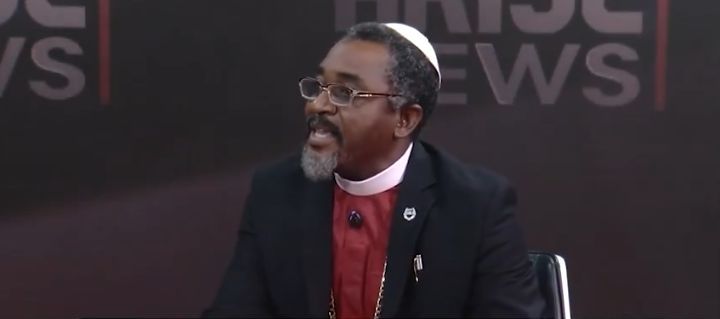
A senior Nigerian cleric, Archbishop Chivir Chianson, has declared that President Bola Tinubu will retain the presidency after the 2027 general election, attributing the prediction to a message he said came from God.
Chianson, who serves as Secretary General of the Charismatic Bishops’ Conference of Nigeria, made the statement while appearing on Arise Television on Saturday.
Rather than basing his prediction on political calculations, the archbishop said his confidence came from what he described as the prophetic role of bishops.
He maintained that the conference had previously spoken about Tinubu’s political future based on what he said was divine revelation and that the President would return for another term.
Chianson also predicted that Tinubu’s performance would improve if he wins the 2027 election.
READ ALSO:
- DSS warns Osun churches, mosques, markets over alleged terrorist attack plot ahead of 2027
- ‘Tinubu Will Win Again in 2027’ — Charismatic Bishops’ Secretary
- Fake miracles, bogus grants: How clerics allegedly fleece Nigerians of millions
Addressing the political opposition, the cleric said the bishops could not be blamed if rival parties failed to unite or organise themselves effectively ahead of the election.
He also sought to clarify the position of the bishops when dealing with government, saying their role in speaking truth to power did not mean they should approach political leaders with hostility or disrespect.
According to him, the Constitution, alongside their religious convictions, should guide how they engage the President and the country.
Chianson said he was sufficiently confident in his prediction to promise that he would return to the Arise TV studio after the 2027 election, when he expects the result to demonstrate that the bishops’ prophecy was correct.
His comments add a religious dimension to the increasingly active political conversation surrounding the 2027 presidential race.
‘Tinubu Will Win Again in 2027’ — Charismatic Bishops’ Secretary
-

 metro3 days ago
Woman disguises as Muslim woman in Niqab to steal in Ado-Ekiti market, video sparks outrage
-

 metro2 days ago
Ondo Herbal Drink Tragedy: Survivor Vows Never to Drink Again as Death Toll Tops 30
-

 metro2 days ago
Sokoto Cleric Stabbed Twice in Neck After Juma’at Prayer, Attacker Killed
-

 Africa3 days ago
Murder of Nigerian Bishop in South Africa Sparks Outcry Over Unsolved Killings
-
 Business2 days ago
Dangote: ₦525 Refinery Shares Could Rise to ₦10,000
-

 metro2 days ago
MURIC fires back at Peter Obi: Forget Sallah ceremony, free Nigerian Muslims
-

 Community3 days ago
Kaduna Traditional Rulers Set for 100% Pay Rise as Zazzau Emir Backs Proposal
-

 News3 days ago
AI on the Roads: LASTMA Turns to China to Fix Lagos Traffic