
Opinion
Bobrisky, Cubana Chief Priest and Indabosky Bahose
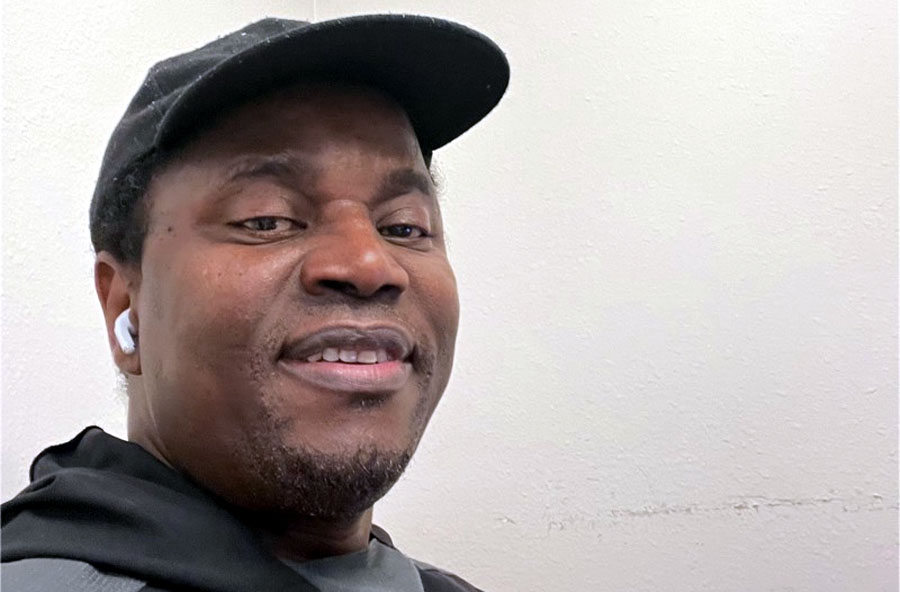
Bobrisky, Cubana Chief Priest and Indabosky Bahose
Tunde Odesola
(Published in The PUNCH, on Friday, April 19, 2024)
Abido Shaker! Life is a widening gyre where women fear cockroaches, cockroaches fear cocks, cocks fear men, and men fear women. A few years ago, Chukwemeka Cyril Ohanaemere was an ordinary name in Nigeria until fakery kissed bombast and vainglory took materialism to bed, birthing ‘The Lion Himself’, ‘The War’. ‘The Fight’, ‘Dabus Kabash’, ‘The Indabosky Bahose’.
Ohanaemere, the unlettered Anambra indigene, more famous for his comic displays than his cleric claims, also calls himself ‘The Liquid Metal’, which is another name for mercury. Ohanaemere aka Odumeje doesn’t call himself ‘The Liquid Metal’ because he understands that mercury is the only metal that is liquid at room temperature. He calls himself ‘The Liquid Metal’ because of the fancy the name carries.
In a viral video, 41-year-old Odumeje boasted to some fans about his numerous spiritual powers that he hasn’t used yet, saying, “…Indabosky Bahose is power, Lebadusi Prelamande is power, Abido Shaker is power, Dabus Kabash is power, Lipase Parrel is power, Gandukah Gandusah is power; those powers, I have not touched them, I’ve never used them, I’m still on Indabosky Bahose!” All na wash (in Nyesome Wike’s voice)
Odumeje’s gung-ho powers are like the sands of the beach. When angry, he can make people go deaf and dumb because he’s the ‘Warlord’, which he pronounces as ‘Worrod’. In 2022, however, when the men of the Anambra State Environmental Task Force pulled down his illegal church in Onitsha, the all-conquering God that Odumeje serves refused to rescue him. Odumeje’s God was probably snoring when the officials of the environmental task force rained slaps on him and kicked him around like a graven image.
Because of their unique adaptability nature, the female gender deserves the ‘Liquid Metal’ title much more than the jester of Onitsha. But the female gender shouldn’t undermine their flexibility and overlook a worrisome development that the case of popular cross-dresser, Idris Olanrewaju Okuneye, presents.
READ ALSO:
- Damagum to continue as PDP national chairman until August – NEC
- Reversing electricity tariff hike will cost us N3.2 trillion in subsidy payments – FG
- Bandits gun down 23 villagers in Kaduna community
Ever since Okuneye aka Bobrisky confessed before a Federal High Court in Lagos, to possessing a cock, the calm in the women’s rights community nationwide has been disturbing.
By his confession, it’s not out of place to imply that Bobrisky had seen the nakedness of women in public restrooms. In this light, I had expected Nigerian women’s rights advocacy groups to test the (in)elasticity of our laws by pressing against Bobrisky charges such as invasion capable of causing breach of law and order, intrusion of privacy, and potential sexual threat against children and women, among others. Or, how else can you explain the dangers posed when a man in a woman’s clothing uses the same restroom with unsuspecting females?
In the US, a man or woman who wishes to change their sex must first live the gender they want to change to for a year before undergoing sex-change surgery. They must also undergo a series of psychological and psychotherapy care before they can change their gender. This is to test their resolve.
Both Odumeje and Bobrisky are the creations of a society whose gaping vacuum for icons has been filled by Mammon-seeking pranksters. They are the products of a crippling economy and morally shattered nation unfurling as Paradise Lost. This is why you see the millions of Nigerians seeking guidance from yeyebrities, who themselves are lacking-thought broken spirits.
Many see the prosecution and conviction of Bobrisky for naira mutilation as scapegoating, coupled with the ongoing prosecution of a former shoemaker, Pascal Okechukwukwu aka Cubana Chief Priest, for the same offence. The position of people who hold this belief can’t be impeached because scapegoating, according to Merriam-Webster Dictionary, is ‘a goat upon whose head are symbolically placed the sins of the people after which he is sent into the wilderness…’. This is the same reason why the Yoruba say the fellow on whose head the community coconut is broken won’t wait to partake in it, ‘eniti won fi ori re fo agbon, ko ni duro je ni be’.
It was former President Goodluck Jonathan who defined the lack of shoes as an index of poverty. I don’t know whether to categorise shoemaking as a mirror reflecting poverty or affluence. But a background search describes Odumeje as a hustler who ‘had his humble days as a struggling leather designer on the streets of buzzing and busy Onitsha City in Anambra State’. I’m not unaware that the dazzle in razzmatazz can polish a shoemaker into a leather designer on the streets of Onitsha. Cubana Chief Priest wasn’t ashamed to reveal life on the streets of Aba, Abia State, as a shoemaker.
READ ALSO:
- Netizens knock Tinubu aide, Onanuga, over comment on Yahaya Bello arrest
- Boy, 19, nabbed for raping 9-year-old girl in Kwara
- 16 killed as Borno bus runs over ISWAP explosives
Valid questions are being raised as to the parameters used in singling out Bobrisky and Cubana Chief Priest for prosecution when the children of former President Muhammadu Buhari and their powerful guests ‘sprayed’ and trampled on naira during the wedding of Hanan, one of Buhari’s daughters. I’ll offer free consultation here: the Economic and Financial Crimes Commission can pin the prosecution of the two citizens on their serial abuse of the naira, but for Christ’s sake, Nigerians need an explanation on why a musician like Wasiu Ayinde, who was garlanded by an Ogun State monarch, Oba Kolawole Sowemimo, with taped naira notes, is left of the EFCC hook. Sowemimi, who’s the Olu of Owode, was suspended by the Ogun State Council of Traditional Rulers but Wasiu was not even questioned by the EFCC for his consistent abuse of the naira. Is it because Ayinde is the bard of the ruling All Progressives Congress? For the integrity of its brand, the EFCC should explain lest the crackdown be seen as a witch-hunt.
Instead of picking on Bobrisky for naira abuse, numerous online videos of Bobrisky showing Bobrisky claiming to be a woman and having boyfriends abound. Her nickname name, ‘Mummy of Lagos’, points at homosexual allegations trailing her. In an online video, Bobrisky said, “If you dump me, na another man go kari me. Do you get what I’m saying? If you dump me, if you think you’re done with me, na another man wey dey cherish me, wey wan nack me, go kari me.”
On account of this video alone, and in the light of his confession before a court, to being a man, Bobrisky is guilty of the anti-homosexual laws of the country. Also, the EFCC should know the dangers inherent in leaving Bobrisky’s five million online followers, mostly youths, to manipulation and indoctrination.
If Nigeria had laws against homosexuality, the country should man up to defend the laws and stop hiding behind the naira-spraying fingers of Bobrisky – US position on homosexuality notwithstanding. Nigeria and the US both need each other. The ‘not guilty’ plea of Cubana Chief Priest is expected to expand the frontiers of the laws against naira abuse, and I wait to see how the case unfolds. C-o-u-r-t!
Email: [email protected]
Facebook: @Tunde Odesola
X: @Tunde_Odesola
Bobrisky, Cubana Chief Priest and Indabosky Bahose






Opinion
How a Misleading Channels TV Headline Reignited Nigeria’s Religious Tensions
How a Misleading Channels TV Headline Reignited Nigeria’s Religious Tensions
In Southwestern Nigeria, the historic heartland of the Yoruba ethnic group, religious coexistence was once deeply ingrained in everyday life. Families were often religiously heterogeneous yet harmonious: a Muslim husband with a Christian wife, parents of different faiths raising children who chose Islam, Christianity or indigenous beliefs. Religious festivals were commonly celebrated together, reinforcing social cohesion.
This tradition of harmony began to erode significantly after the introduction of the Structural Adjustment Programme (SAP) in 1986 by the military government of General Ibrahim Badamasi Babangida, under the influence of the World Bank and the International Monetary Fund (IMF). SAP policies—such as reduced government spending on education and social services, trade liberalisation and currency devaluation—triggered soaring inflation, weakened purchasing power and widespread economic hardship.
As livelihoods collapsed, some Nigerians turned to corrupt practices, while others found opportunity in the rise of commercialised religious enterprises, complete with aggressive business models and intense competition for followers. This shift contributed to rising intra- and inter-religious tensions, particularly in a region once celebrated for tolerance.
The erosion of harmony in the Southwest mirrored growing religious conflicts across Nigeria, especially between Christians and Muslims. Scholars and analysts have long warned that the media plays a decisive role in either escalating or de-escalating such conflicts. In his 2006 pamphlet Voices of War: Conflict and the Role of the Media, Andrew Puddephatt observed that media outlets can either inflame violence through partisan reporting or promote peace through independence and responsible framing.
READ ALSO:
- Carter Efe Slams Peller’s Suicide Attempt, Urges Him Back to Streaming After Jarvis Breakup
- Breaking: Popular Nigerian Actress Allwell Ademola Dies at 43
- Labour Party Urges Tinubu to Sign Executive Order on Local Government Autonomy
These concerns resurfaced sharply on 24 December 2025, when a mosque in Maiduguri, Borno State, was bombed during Maghrib prayers, killing worshippers. International and local media clearly identified the target as a mosque. Headlines from BBC, Al Jazeera, Deutsche Welle, The Cable, The Guardian (Nigeria) and Daily Trust all referenced the mosque or Muslim worshippers.
However, Channels Television published the headline: “BREAKING: Many feared dead as bomb blast rocks Maiduguri on Christmas eve.” The omission of the mosque and the emphasis on “Christmas Eve” drew widespread criticism for being misleading and inflammatory.
Reacting on X, commentator Boss Kitty Kitty (@Aashfinn) condemned the framing, warning that it fed a dangerous “Christian genocide” narrative, despite evidence that terrorism in Nigeria targets victims indiscriminately. The Muslim Public Affairs Centre (MPAC) also issued a strong statement, accusing Channels Television of editorial bias, deliberate omission of Muslim identity, and the weaponisation of language to provoke religious tension.
MPAC argued that the headline change—adding “Christmas Eve” after initial publication—suggested a calculated attempt to drive engagement at the expense of national unity. The organisation further alleged a pattern in which Muslim victims are anonymised while narratives that heighten suspicion against Islam are amplified.
Media scholars describe this practice as media bias and confirmation bias, where editorial choices reinforce preconceived narratives while excluding crucial context. Studies consistently show that headlines shape public perception, especially in an era where many readers share stories based solely on headlines without reading full reports.
The controversy came just a day after President Bola Ahmed Tinubu, in his Christmas Day 2025 broadcast, reaffirmed the government’s commitment to religious freedom, protection of all faiths, and peaceful coexistence. While the President sought to calm tensions and promote dialogue, critics argue that irresponsible media framing risks undermining these efforts.
As one commentator, @mrabdulreacts, noted on TikTok: “Narratives can be more dangerous than bullets… misleading headlines can destroy trust for generations.” The Maiduguri bombing coverage has therefore reignited urgent questions about journalistic responsibility, religious sensitivity, and whether sections of the Nigerian media are contributing to division in an already fragile society.
How a Misleading Channels TV Headline Reignited Nigeria’s Religious Tensions
Opinion
When a Tax Law is an illegality, By Farooq Kperogi

When a Tax Law is an illegality, By Farooq Kperogi
What began as a routine legislative reform of the Nigerian tax system by the Bola Tinubu administration has transmogrified and metastasized into an allegation of unexampled transmutation of a duly passed law to an illegality.
It’s by now well known that a law passed by the National Assembly and assented to by the president may have been materially altered after assent and then presented to the public as binding law. If this allegation is established beyond all shadows of doubt, Nigeria would be confronting the specter of an illegality fraudulently constituted as law.
Interestingly, the discovery wasn’t brought to public notice by secretive, conscientious whistleblowers in the bureaucracy or from eagle-eyed civil society audits. It came from within the legislature itself.
A member of the House of Representatives, Abdulsammad Dasuki, raised a point of privilege after personally comparing the harmonized bill passed by both chambers with the version of the tax laws published in the official gazette. He found that the documents did not match.
His discovery was the product of days of rigorous, studious and painstaking examination of Votes and Proceedings, committee harmonization records and the gazetted text. He realized that he voted for one thing, but the country was being governed by another.
That intervention sparked a chain reaction. Other lawmakers requested certified true copies of the assented bill to verify whether the president had signed the same text that was now in circulation. According to multiple reports, those requests were denied.
The refusal to release certified copies deepened suspicion and transformed what could have been dismissed as a clerical misunderstanding into a full-blown institutional crisis.
When legislators are blocked from seeing the law that they passed and that the president signed, the issue verges on criminal constitutional transgression that must not be swept under the carpet.
While full official disclosure is still pending, several discrepancies have been repeatedly cited by lawmakers, journalists and civil society groups. These include expansions of the discretionary powers of tax authorities beyond what the National Assembly approved, alterations to reporting and oversight obligations, changes in enforcement thresholds, and adjustments that potentially increase executive control over revenue administration.
READ ALSO:
- AFCON 2025: Mali Fight Back to Draw With Hosts Morocco in Rabat
- AFCON 2025: Salah’s Spot Kick Seals Egypt’s Knockout Spot Against South Africa
- 2026 World Cup: FIFA Throws Out Nigeria’s Appeal Against DR Congo
These are not innocent, unintentional clerical slips. They go to the meaning, scope and intent of the law. In short, they change who has power to tax Nigerians, how that power is exercised and to whom it is accountable.
The distinction matters. All legislative systems experience clerical errors. A misplaced word or a misnumbered section does not invalidate a statute. But when alterations confer new powers, remove safeguards, or shift institutional balance, they cross from error into illegality.
A gazette cannot lawfully create what the legislature did not enact or what the president did not assent to. Publication is supposed to merely provide evidence of the existence of the law. It can invent a law that hasn’t been passed.
The official responses so far have been evasive and contradictory. Government representatives initially insisted that there was only one authentic version of the law and that claims of alteration were partisan, ill-natured rumors. But that posture is difficult to reconcile with subsequent developments.
For example, a December 26, 2025, press statement signed by Akin Rotimi, House Spokesman and Chairman of the House Committee on Media and Public Affairs, said the National Assembly has now constituted an ad hoc committee to investigate the sequence of events from harmonization to assent to gazetting.
More tellingly, Rotimi said, the leadership of the legislature has directed that the tax laws be re-gazetted and that certified true copies of the versions duly passed by both chambers be issued.
Re-gazetting is not a neutral act. It is an implicit admission that the existing gazette cannot be confidently treated as an accurate record of legislative intent. If nothing were amiss, there would be nothing to authenticate. The attempt to frame this as a routine administrative clarification rings hollow. Laws are not re-gazetted in the absence of doubt about their authenticity.
Supporters of the government have urged the public to trust the president’s integrity and to avoid speculation. The issue, however, is not whether the president is personally trustworthy but whether the law now being enforced is the law he signed. No amount of rhetorical reassurance can substitute for producing the signed text and allowing a side-by-side comparison with the gazetted version.
There is no precedent in the world that I have found for this kind of illegality. In the United States, the much-cited Deficit Reduction Act controversy of 2006 involved a discrepancy between House and Senate versions due to a clerical transmission error. The president signed the enrolled bill that was presented to him.
Courts upheld it under the enrolled bill doctrine, which treats the signed text as conclusive. Crucially, there was no claim that the law was altered after presidential assent.
READ ALSO:
- Cancer Patient Appeals for Second Wife for Husband, Cites Sexual, Health Challenges
- ACF Awaits Full Details Before Commenting on US–Nigeria Airstrikes in Sokoto
- FG Confirms Debris from US–Nigeria Joint Airstrikes on ISIS in Sokoto Fell in Offa
In the Philippines, in 1964, there was a case where the wrong version of a bill was signed by the president. Legislative leaders later disowned the enrolled copy and treated the signature as invalid. Again, the error occurred before or at assent, not after. Once discovered, it was confronted as a mistake. It wasn’t normalized.
Nigeria’s case, if the allegations are borne out, is more disturbing. Here, the claim is that the president signed the correct bill but that the authoritative law published afterward materially departs from it.
Comparative constitutional practice offers no comfort here. Stable legal systems do not recognize post-assent textual mutation as valid law. Where gazetting errors occur, they are corrected. They do not become the basis for enforcement.
This raises an unavoidable question: why would anyone alter a law after it has been passed and signed? Motives can only be inferred from circumstantial evidence, but the inferences are troubling.
Expanding the powers of tax authorities in a period of fiscal stress creates incentives for bureaucratic overreach. Removing or weakening legislative-oversight provisions reduces accountability. Centralizing discretion in the executive arm simplifies revenue extraction while insulating decision makers from scrutiny. These are not abstract possibilities. They align closely with the specific alterations that have been alleged.
There is an even more unsettling implication. If a major tax reform law can be altered after assent without immediate detection, what confidence can citizens have in the integrity of other statutes? Nigeria has passed hundreds of laws over the years, many of them technical, complex and rarely scrutinized line by line after gazetting. The discovery of this discrepancy raises the chilling possibility that post-assent alterations may not be unprecedented in practice.
That possibility should alarm every Nigerian regardless of political affiliation. Law is the foundation of collective life. If the text of the law is unstable, if it can be surreptitiously modified after constitutional procedures have been completed, then legality itself becomes provisional. Governance slides from rule of law to rule by document manipulation.
The seriousness of this violation cannot be overstated. If officials altered the tax law knowingly, they did not merely breach administrative rules. They subverted the Constitution. Such conduct would amount to forgery, abuse of office and an assault on democratic sovereignty. It would mean that Nigerians are being taxed under provisions that were never lawfully enacted.
This is why a thorough, transparent investigation is not optional. It must establish a clear documentary chain: the harmonized bill passed by both chambers, the exact text transmitted for assent, the document signed by the president and the version published in the gazette. Any divergence must be accounted for, step by step, with named responsibility. Institutional reviews that end in vague recommendations will not suffice.
If culpability is established, punishment must be severe. Anything less would invite repetition. As I always say, there is no greater enabler of habitual relapses into the same crime than the absence of consequences for committing the crimes.
The alteration of law after assent is not a victimless bureaucratic shortcut. It is a constitutional crime with nationwide consequences. Deterrence requires more than quiet corrections. It requires accountability that is visible, proportionate and unmistakable.
This episode can either be buried under procedural language and political loyalty, or it can become a moment of constitutional self-correction. A tax law that is an illegality cannot be the foundation of fiscal reform. The integrity of the lawmaking process is itself a public good. Without it, no reform, however well intentioned, can claim legitimacy.
When a Tax Law is an illegality, By Farooq Kperogi
Kperogi is a renowned columnist and United States-based Professor of Journalism
Opinion
Experts Warn US Strikes in Nigeria Could Harm Civilians, Fuel Sectarian Tensions
Experts Warn US Strikes in Nigeria Could Harm Civilians, Fuel Sectarian Tensions
Security analysts and local observers have raised concerns over the recent United States military strikes in Nigeria, warning that the operations could misfire and exacerbate tensions rather than curb terrorism.
The strikes, carried out in Sokoto State on Christmas Day under the guise of counterterrorism, mark the first US military operation on Nigerian soil in modern history. The action follows repeated claims by former US President Donald Trump, who alleged a “Christian genocide” in Nigeria and threatened military intervention.
According to eyewitnesses, the areas targeted have no established history of terrorist or bandit activity, with some strikes reportedly affecting civilian-populated areas rather than forested hideouts typically associated with terrorist groups like Boko Haram and ISWAP. Analysts warn that this raises questions about intelligence accuracy and operational planning.
READ ALSO:
- Fenerbahçe Move Ahead of Galatasaray in Race to Sign Nigerian Star Ademola Lookman
- Benue Police Foil Christmas Day Kidnap, Rescue Victim Unharmed
- Alleged Alterations Threaten Nigeria’s January Tax Reforms, Lawmakers Call for Suspension
Mallam Ibrahim Agunbiade, writing on the implications of the strikes, emphasized that Nigeria’s security challenges are regionally specific. Boko Haram and ISWAP are concentrated in the North-East, while armed banditry is largely confined to forested regions in Zamfara and Niger states. “Any counterterrorism effort that ignores these realities is either grossly incompetent or deliberately misleading,” he noted.
Experts also caution against framing Nigeria’s crisis as a religious conflict, pointing out that both Muslims and Christians are affected by terrorism. Weaponizing religion to justify foreign military intervention could delegitimize Nigeria’s sovereignty and inflame sectarian tensions.
Agunbiade stressed that the country needs intelligence-driven cooperation and respect for its territorial integrity, rather than indiscriminate bombardments that may increase civilian casualties, deepen resentment, and destabilize communities.
“The goal must be accuracy, accountability, and restraint. Anything less is not counterterrorism; it is a reckless intervention with potentially devastating consequences,” he wrote.
Experts Warn US Strikes in Nigeria Could Harm Civilians, Fuel Sectarian Tensions

-

 Entertainment3 days ago
Breaking: Popular Nigerian Actress Allwell Ademola Dies at 43
-
 metro2 days ago
Ibadan Explosion: Fayose Releases Documents, Claims Makinde Got ₦50bn from FG
-
 metro2 days ago
Plateau Kidnappers Demand ₦1.5m Each as 28 Muslim Travellers Remain in Captivity
-

 metro21 hours ago
Niger Delta Crackdown: Army Seizes ₦150m Stolen Oil, Arrests 19 Suspects
-
 Sports22 hours ago
Anthony Joshua injured as two die in fatal Lagos-Ibadan Expressway crash (plus photos)
-
 Opinion2 days ago
How a Misleading Channels TV Headline Reignited Nigeria’s Religious Tensions
-
 metro3 days ago
Troops, CJTF Repel Boko Haram Assault Near Sambisa Corridor in Adamawa
-
 Politics1 day ago
Kwankwaso, Governor Abba Yusuf Set to Dump NNPP for APC in Major Kano Political Realignment