

Borgu, Northern Nigeria and Yoruba history, By Farooq Kperogi – Newstrends
Connect with us

Opinion

Borgu, Northern Nigeria and Yoruba history, By Farooq Kperogi

Published

on

Farooq Kperogi

Borgu, Northern Nigeria and Yoruba history, By Farooq Kperogi

My December 21, 2024, column titled “Kemi Badenoch’s Yoruba Identity Meets Inconvenient Truths,” where I set out to show that, contrary to Kemi Badenoch’s claim, the Yoruba and the “North” have had and still have a lot in common, hurt the ethnic susceptibilities of many Yoruba nationalists who misunderstood me as creating a hierarchy of historical and cultural dominance in which the Yoruba are inferior.

That was not what my column was about. If it comes across that way, it’s because people are gazing at the past with the lenses of the present. Historians call that presentism. Presentism animates the sort of defensive, ahistorical, knee-jerk, decontextualized, and emotive reactions that some people gave to my column.

Notions of collective identity with definite ethnographic boundaries are relatively new all over the world. I made this clear to Dr. Lasisi Olagunju who wrote a 3,526-word response to my column last Monday in which he cherry-picked evidence from the self-comforting presentist fantasies of certain Yoruba historians to countermine my arguments. Here’s my response to his response.

Dr. Olagunju took issue with my restating of a well-known, uncontested socio-historical fact: that “Yoruba,” the collective name for the people of western Nigeria, is an exonym that traces etymological provenance from what is now called northern Nigeria and that it originally referred only to people from Oyo, not other subgroups such as Ijebu, Ondo, Ijesa, Egba, etc.

It explains why Oba Sikiru Adetona, the Awujale of Ijebuland, still says the Ijebu are not Yoruba and are not even descendants of Oduduwa. It also explains why, as I pointed out in my October 26, 2019 column titled “Fulani and Origin of the Names ‘Yoruba’ and ‘Yamuri’,” Nigeria’s first modern newspaper, called Iwe Irohin fun awon Egba ati Yoruba (Yoruba for “newspaper for the Egba and Yoruba people”) indicated from its name that the Egba and the Yoruba were different ethnic groups who nonetheless belonged to the same linguistic group.

In other words, as of 1859 when the newspaper was set up, the Egba didn’t call themselves “Yoruba.”

READ ALSO:

That the name Yoruba is an exonym from the North of Nigeria for the people of Oyo is so settled in the literature that I am befuddled that anyone would contest it with mere implausible conjectures and self-created oral histories.

For example, in his 1984 article titled “Yoruba Ethnic Groups or a Yoruba Ethnic Group? A Review of the Problem of Ethnic Identification” published in África: Revista do Centro de Estudos Africanos, Professor Biodun Adediran argued that the term Yoruba wasn’t native to Yoruba and was, in fact, a word first used for Oyo people by northerners.

He said, “the term first appeared in Arabic sources and in European accounts based on information from the Hausa country,” arguing “It was probably the Hausa who first gave the name ‘Yarribah’ to their Yoruba-speaking neighbours. Since the Oyo were the sub-group the Hausa came most frequently in contact with, the name easily became synonymous with ‘Oyo’” (p. 62).

Adeniran also argued that the term “Yoruba” initially remained confined to “the dictionary of those who invented it” (p. 63) and gained broader use only in the early 19th century due to increased interactions between the Yoruba and their northern neighbors. During this period, local wars fostered sub-group pride, leading many non-Oyo groups to reject “Yoruba” as a foreign name.

It was only toward the end of the century, when Europeans insisted on its use and referred to the Alaafin as the King of the Yoruba, that even the Oyo (to whom the name originally referred) began to embrace the term (p. 63).

In his 2019 book, Partitioned Borgu: State, Society and Politics in a West African Border Region, Dr. Hussaini Abdu investigated it further and found that the Hausa themselves borrowed the term Yariba (or versions of it) from the Baatonu people of Borgu, known to the Yoruba as Bariba, Baruba, or Ibariba, who are Oyo’s northwestern neighbors. The Baatonu, as I argued before, refer to the Oyo people as “Yoru” (singular) and “Yorubu” (plural), with “Yoruba” used in third-person references.

Abdu traces the name’s spread to Songhai-Borgu interactions, later reinforced by interviews with Baatonu slaves in Sierra Leone and popularized through European travelers and missionary records, such as Samuel Johnson’s 19th-century writings. This theory aligns with the historical and cultural links between Songhai, Borgu, and Oyo, including the spread of Islam to both Borgu and Yoruba land by Songhai-speaking Mande from ancient Mali, reflected in the Yoruba term for Islam, “imale.”

This is consistent with collective naming practices all over the world. Immediate neighbors typically name each other, which others then adopt. Olagunju cited the examples of “Hausa” (which came from the Songhai) and “Fulani,” which came from the Hausa.

The older Hausa name for Yoruba people was Ayagi (see my August 19, 2022, article titled “‘Ayagi’”: Earliest Nupe-Influenced Hausa Name for Yoruba People” based on my review of Professor Rasheed Olaniyi’s work), not Yariba, which strengthens Abdu’s research about the Borgu origins of the name Yoruba.

READ ALSO:

Of course, Katanga, the name of the old capital of the Oyo Empire was, according to Professor Stefan Reichmuth, the “Hausa name for Old Qyo,” adding, “This term which might even be originally a stranger’s name of northern origin was in the late nineteenth century coming to be accepted as an overall ‘national’ name not only by the Oyo themselves but by other related groups as well.” (p.157).

However, in his 1934 book titled A Hausa-English Dictionary and English-Hausa Vocabulary, G.P. Bargery defined Katanga as the Hausa word for a “wall of a house or compound” (p. 583).

Well, in their 2015 article titled “’Lucumi, ‘Terranova’, and The Origins of the Yoruba Nation,” published in The Journal of African History, Henry B. Lovejoy and Olatunji Ojo point out that all the collective names by which the Yoruba people were known are exonyms. They also agree that “Yoruba” came from the North.

Most importantly, they found that the term “Yoruba” does not appear in European slave records, slave-owner documents, or early self-references by the Yoruba people themselves before the 19th century. So, Olagunju’s argument that Baatonu people might have imitated the name from Oyo people whose Alaafin sought refuge in their land seems highly unlikely.

Yoruba isn’t the only exonym by which the “Yoruba” people were known. A common name in slave records that historians have found is “Lucumi” (or Lukumi). Lovejoy and Ojo found that while the term could mean “my friend” in Yoruba, or “female lover” or “concubine” in the Owo dialect, it was the name Bini people called people in eastern Yorubaland.

They said it originated as a pejorative Edo term for foreigners, likely slaves, who spoke unintelligible languages, including Yoruba. In Edo, they pointed out, oluku means “young animal,” while mi or mie translates as “that” or “to have.” The term’s dual meanings in Yoruba and Edo, they said, suggest an ironic basis for its later identity formation.

“Nagô,” a self-appellation of the Anago subgroup of Yoruba, became the dominant term in Brazil for enslaved Yoruba speakers. Fon-speaking Dahomeans adapted this term as “Anagonu” to refer broadly to Yoruba-speaking groups (p. 355).

“Aku,” derived from the Yoruba greeting “eku,” was also used to identify Yoruba-speaking recaptives in Sierra Leone following British anti-slavery efforts in the early 19th century.

Nonetheless, as I pointed out in my 2019 column, which Lovejoy and Ojo supported with more scholarly evidence, the people of Western Nigeria aren’t called “Yoruba” today because the Borgu people called them so, or because they were identified by a version of that name by Songhai, Hausa, and Fulani people.

READ ALSO:

They self-identify as “Yoruba” precisely because returnee slaves of Yoruba descent chose the name, popularized it, and encouraged people in the region to embrace it. More significantly, though, it was because colonialists insisted on it even when other subgroups protested its imposition.

To put it cheekily for Kemi Badenoch, the same Europeans who stitched the North and South together to form Nigeria were the ones who insisted on calling her Ondo and Ijebu kin “Yoruba,” a northern label originally meant for the Oyo, a group her people weren’t even part of. Oh, the irony!

Dr. Olagunju reproduced passages from his favorite Yoruba nationalist historians to dispute specific claims about Borgu’s immersion in Oyo’s history but dismissed the claims of the well-regarded Akinwumi Ogundiran’s well-received book, The Yoruba: A New History, which supported some of my claims, as suspect because he “did not cite any authority to back this claim.”

Never mind Dr. Olagunju’s unsupported claim that I. A. Akinjogbin said Borgu was under Oyo “until 1783.” Well, he made no such statement. What he actually wrote was that Oyo’s “tributaries included at least parts of the Nupe and the Bariba countries” (p. 450). How “parts of” a territory paying tribute translates to the entire country being under Oyo’s rule is beyond me.

Nonetheless, later Yoruba historians have challenged the exaggerated narratives of Oyo’s rule and reach and undermined claims such as Akinjogbi’s and the predecessors that inspired him. For example, Professor Olayemi Duro Akinwumi, in a 1992 article titled “The Oyo-Borgu Military Alliance of 1835: A Case Study in the Pre-Colonial Military History published in Transafrican Journal of History wrote:

“The extent of the Old Oyo Kingdom had been a subject of debate among the professional and non-professional historians. Crowder, for example, had given the impression that Oyo at its peak of glory extended far and wide to cover north, south, west and east of the kingdom…. Among the states incorporated into the Kingdom was Benin on the east, and Dahomey on the west. Samuel Johnson (1960:179) went further by including a portion of Nupe, Borgu and Dahomey. It is now certain that the Kingdom did not embrace all the Yoruba and the non-Yoruba states as claimed by many authors” (p. 160).

Dr. Olagunju doubted that the bashoruns of the Oyo empire were of Borgu origins even when Professor Ogundiran pointed it out in his book. Well, they were more than bashoruns. According to Professor Babatunded Agiri, whom Dr. Olagunju quoted in his response to me, “This process, by which the earliest Yoruba dynasties lost their political power to an invading Borgawa group, is also found in the Save area (now in Dahomey).

“Here the invasion probably took place sometime in the seventeenth century or slightly earlier. That the ruling dynasty in Old Oyo was non-Yoruba is also supported by the existence of a relic of an extinct (and probably Yoruba) dynasty in the lineage of the Basorun” (see “Early Oyo History Reconsidered” by Babatunde Agiri, History in Africa, 1975, p.7).

Agiri also pointed out that, “The Oranyan dynasty was from Borgu and the traditions of its origin in Old Oyo emphasize this link. The conquest of Old Oyo by the Borgawa dynasty must have occurred well before the fifteenth century” and that Borgu “established satellite dynasties in the Yoruba towns in the area, including Oyo, replacing the former Nupe influence there” (p. 10).

He said Alaafin Abipa owed his success in reestablishing his dynasty at Old Oyo to the large following of warriors from Borgu who accompanied him and that some of these warriors were rewarded for their services by being permitted to replace the rulers of some former Yoruba settlements such as Kishi, Igboho, and Igbeti.

“Others became rulers of new settlements like Ogbomoso, located in strategic areas to guard the state against further Nupe incursions. Thus, the post-Igboho period witnessed another influx of Borgu men and blood among the Oyo but, as with the earlier conquerors, their descendants have been absorbed completely into Yoruba culture-a culture which probably expressed a broad continuity with the earliest inhabitants,” he wrote (p. 10).

However, in his 1985 article, “How Many Times Can History Repeat Itself,” Professor Robin Law argued that the Alaafins of Oyo were of Borgu origin. He dismissed the idea that these rulers were returning Oyo refugees, labeling it a stereotypical narrative used to legitimize foreign rule.

Instead, Law suggested a Borgu conquest, noting that several northern Yoruba towns, including Saki, Kisi, Igbeti, Igboho, and Ogbomoso, had royal dynasties of Borgu descent. He linked the foundation of Igboho to a significant influx of Borgu settlers, who likely introduced cavalry, enabling them to dominate northern Yorubaland despite their small numbers.

Law also questioned the traditional timeline, proposing that the Borgu dynasty’s arrival at Igboho could predate the 16th century (p. 47), which annihilates the notion that Borgu could ever be a tributary state of Oyo, especially because there is not a single ruling dynasty in all of Borgu that traces ancestry to Yoruba.

All that this shows is that the Yoruba and the North have always been intertwined since precolonial times. That’s not a reason to force a union of the people or to deny anyone the prerogative to take pride in their ethnic or regional identity. It’s merely to set the records straight.


Borgu, Northern Nigeria and Yoruba history, By Farooq Kperogi

Farooq Kperogi is a renowned Nigerian columnist and United States-based Professor of Journalism 

Opinion

A troubling message from Guinea-Bissau, by Azu Ishiekwene

Published

on

Azubuike Ishiekwene

A troubling message from Guinea-Bissau, by Azu Ishiekwene

A troubling message from Guinea-Bissau, by Azu Ishiekwene

Continue Reading

Opinion

Siyan Oyeweso: Lessons in virtue and vanity

Published

on

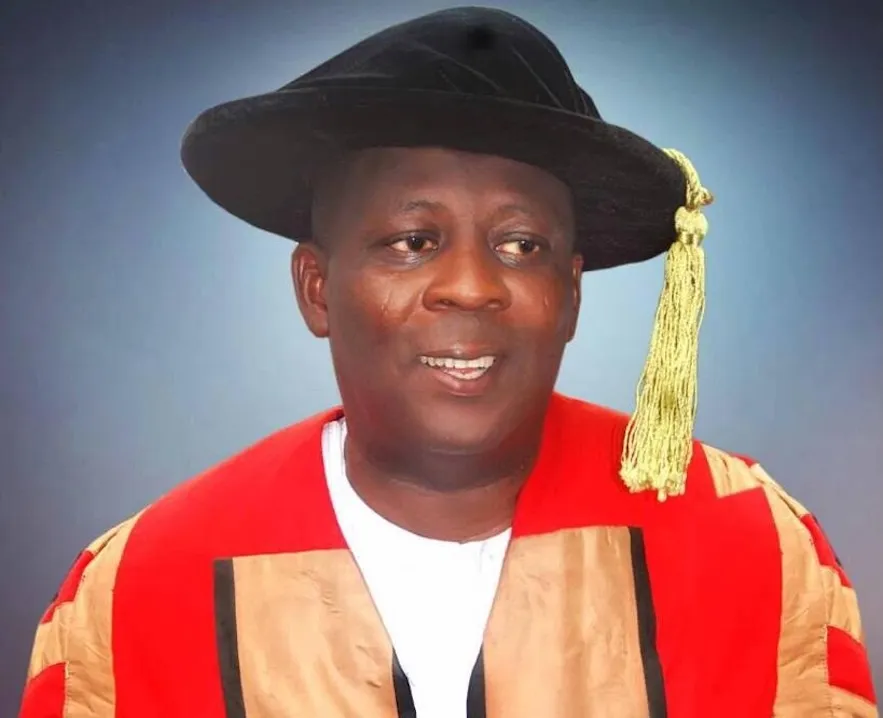
Professor Siyan Oyeweso

Siyan Oyeweso: Lessons in virtue and vanity

Tunde Odesola

(Published in The PUNCH, on Friday, December 5, 2025)

H-o-r-r-o-r!? The lamp has gone out in the ancestral grove. Frightening darkness reigns. I step inside the grove, I grope on staggering steps. The gourd is broken. I saw its shattered pieces. I stagger. I can feel the wet wood, torn drum, snapped beads, burning ice, soundless speech, blind sight, lifeless breath, static motion and cold fire. I call out to the deep, but the deep does not call back. The deep is silent. The deep has become a mound. The light has gone out in the grove. Everything is cold.

Don’t our ancestors say if the load refuses to stay on the ground and rejects being hung, there’s yet a place to place it? I refuse to bury. I will perform the rites and turn back the hands of time. I beseech thee, owners of the land, heed my pleading just this once, because when the dead is invoked in the street, it is the living that answers (Ti a ba pe oku ni popo, alaye lo n dahun). Abdulgafar Siyan omo Oyeweso ooooo! Please, answer me, hearken to my chant and heed my plea. Come! Cone back, please! It is me, your little aburo, Tunde, that is calling. It is I, Odesola, your disciple.

Baba Ibeta, I refuse to refer to you in the past tense. Prof, please, I need you to do just one thing for me, real quick. I need you to remember our discussions before sickness struck. Remember our discussions when sickness struck. The one million naira you gave me on your sickbed lies doggo in my account, untouched. You said I should use it for the publication of a full-page colour advert in PUNCH for Prof Olu Aina, who is billed to bag an honorary doctorate from the Obafemi Awolowo University, Ile-Ife, the prestigious citadel of learning, which you oversee as the Pro-Chancellor and Chairman of Council. From the one million naira, you said I should place radio advertisements to announce the degree to be bestowed on the emeritus Professor Aina, Nigeria’s pioneer and distinguished scholar of Technical and Vocational Education, on December 13, 2025. I have long finished the artwork on The PUNCH advert, which you approved. I was awaiting the radio jingle being handled by ace broadcaster, Oyesiku Adelu. Now, I shall return the N1,000,000.00 to Iya Ibeta because the bowstring has snapped, and the bow has become a mere stick. Ọsán ja, ọrún dọpa.

Bọ̀dá Gàfárù, your humanity is gripping. What manner of man, lying prostrate on a sickbed, would remember to honour the living with his own money? What manner of man, stricken by a stroke, would give out N1,000,000.00 to honour a senior academic, two months before the event was to take place? What manner of man would hover between life and death, and still bend over backwards for the living? That manner of man can only be Siyan Oyeweso. He loves his fellow men and women far more than himself.

READ ALSO:

Ẹ̀gbọ́n mí àtàtà, I weep bitter tears because I know you do not deserve to go. You do not want to embark on that returnless ‘Àrè Mabò’ journey. As your life hangs by a thread and we pray for your recovery, you said you would be grateful if the Almighty Allah gave you a second chance. You express the desire to write a book, “Siyan Oyeweso: Life After Stroke.” Also, you hope to take delivery of one of your earliest books, “Journey From Epe: A Biography of S.L. EDU,” which is out of print, but is being reprinted. Your book on Ile-Ife and the one on Ikorodu are undergoing proofreading. It’s your dream to see them to the press. In the throes of death, you still cater for the whole family. Now, Iya Ibeta is a widow. Your two-year-old triplets are fatherless. Oh Allah, this grief is unbearable.

I weep because I have whined with you in the days of famine and wined with you in the days of flourish. I’m with you in defeat and in victory. I witnessed the way you took defeat like a sportsman and celebrated victory with humility. I gnash because you are the ‘opomulero’ pillar behind my literary garden, even though I was never a pupil in the four walls of your classroom. I am the acolyte who sits at your feet after work.

Baba Òyé, I remember how we first met. Our first-ever meeting ended in a fight. That was at the palace of the 12th Timi Agbale of Ede, the late Oba Tijani Oladokun Ajagbe Oyewusi, the Agboran II, in the early 2000s. That fateful day, Oyeweso didn’t come to the palace to fight, nor did I, but the PUNCH spirit of fearless candour overtook me as I challenged what I saw as overpresumption.

Oyeweso had come to address a news conference, whose exact purpose I can’t recall, but the conference was certainly in the interest of Ede, the illustrious town Oyeweso lived for. I came to the news conference as PUNCH reporter from Osogbo, the state capital. And katakátá burst when it was question time.

Then, I was new to Osun State, having just been transferred from the Lagos headquarters of PUNCH. Oyeweso had answered a couple of questions from faces familiar to him within the Osun Correspondents chapel and was in a hurry to attend another assignment on behalf of the town. I raised my hand to ask a question. Exuding confidence and convivality, Oyeweso said everything there was to know lay in the press release shared to journalists at the conference. “No more questions, please,” he said. Anger boiled inside me. Who is this palace jester, I thought.

READ ALSO:

“I can’t come all the way from Osogbo to be told not to ask questions here,” my anger boiled over. All heads turned in my direction, eyes piercing to see if there was a tag on my clothes suggesting I was a member of the union of road transport workers. “From where did this one stray?” the looks asked. But I continued, “I’m not going to write any story from this press release if you don’t answer my question!” Heads turned away from me to Oyeweso, who didn’t show he was rattled. He smiled, held the right hem of his agbada and folded it on his right shoulder. He did a similar folding to the left hem of his agbada, beaming his trademark ‘ẹ̀rù òbodò’ smile.

Then a journalist whispered, “He is Professor Oyeweso!” “So what!?” I shot back outside the earshot of Oyeweso. “My dear brother from PUNCH newspapers,” he began, sugar in his voice, “I do not mean to evade questions, far from it. If you know me, you would know I enjoy talking. In fact, I talk for a living. But the Timi, Oba Tijani Oyewusi, has just sent me an urgent text, demanding I run an errand, and I don’t want to keep him waiting. I’ll leave my numbers with you, so you cakl and ask any question as I run the king’s errand, please.”

That was the day our journey began. You were still a professor at Lagos State University then. This was before the Olagunsoye Oyinlola administration established the multi-campus Osun State University, and you moved back to your home state. You are the inaugural Provost, College of Humanities and Culture, UNIOSUN. Twice, you vied for the post of Vice Chancellor, UNIOSUN, and lost not for lack of competence, but to power play. The next day after each loss, you dust yourself up and trudge on as if nothing had happened.

To understand the Oyeweso enigma, picture a vehicle shaft connecting the two opposite wheels. This is why the late Ooni of Ife, Oba Okunade Sijuwade, and the late Alaafin of Oyo, Oba Lamidi Adeyemi, opened their palace doors to his erudition even though both monarchs hardly saw eye to eye on many issues. Baba Iremide’s charm infects the political board. This is why he was embraced by both Governor Oyinlola and Rauf Aregbesola, two gladiators from different political camps. Despite being from Ede, the hometown of the popular Adeleke family, Baba Adekunle stayed true to his political ideals, pitching his tent with the BATified All Progressives Congress. Their differing political alignments notwithstanding, Oyeweso did not spoil Ede, his hometown, because he was going to Ẹ̀dẹ̀, the hallway. This is why the Adeleke family maintained the communal bond by supporting him on his sickbed. Minister of Marine and Blue Economy, Alhaji Adegboyega Oyetola, supported Oyeweso before and during the sickness. In fact, it was Oyetola, aka Baba Jeje, who recommended Oyeweso for the post of Pro-Chancellor and Chairman of Council, Obafemi Awolowo University, Ile-Ife.

Your uncommon equanimity is the reason why I gave you my support when you expressed the desire to vie for the House of Representatives ticket in Ede-North-Ede-South-Egbdore-Ejigbo federal constituency. When that also fell through, I became a thorn in the flesh of Oyetola, whom I called morning, day and night, urging him to reward Oyeweso with a position. One day at a public function, an exasperated Oyetola saw Oyeweso and said, “Prof, tell Tunde Odesola to unclasp his fingernails on my neck o. I have told him repeatedly that you shall get an appointment, but he won’t leave me alone. Ha!” Shortly after the encounter, Oyeweso called me, and said, “Tunde,” I answered, “Sir!” Oyewso said, “Please, unclasp your fingernails on Oga’s neck o. We were at a function today, and Oga said, “So fun Tunde Odesola pe ko tu ekanna lorun mi o.” We both laughed. Aside from me pestering Oyetola, Baba Oluwasikemi would surely have a couple of other voices putting in words of recommendation on his behalf. So, his appointment was a collective victory for sagacity, hard work, resilience and vision.

Oyeweso was initially appointed Pro-Chancellor and Chairman of Council of the Federal University of Lokoja, Kogi State, before he was later announced as the Pro-Chancellor and Chairman of Council, OAU, in June last year. Therefore, it is not out of place to say that death did not allow Oyeweso to enjoy the fruit of his labour, affirming the philosophical thought that the world is a vanity fair. I do not believe in this philosophical thought; I believe Oyeweso’s life tramples vanity to affirm virtue.

READ ALSO:

This is why Oyeweso blends perfectly into any setting – be it rural or urban, academic or marketplace. When you see him on the street, he could pass for a nobody. But when he mounts the podium, you hear an oracle of history. This virtue is what endears Oyeweso to the masses, and I suspect, it is one of the reasons why some of his colleagues despise him – they believe he mixes with every Tom, Dick and Harry. To this tribe of his colleagues, an academic should possess raised shoulders, a back haunched by the weight of poring over books, and a nose in the air.

I haven’t come out of mourning the Owa of Igbajo, Oba Adegboyega Famodun, when the Oyeweso disaster hit below the belt.

Where will I find another soulmate? Though we were born sired by different parents in the February of different years, Oyeweso took me as his blood brother, confiding in me his innermost wishes and fears. Who will call me “Prof Tunde? Who will come to my house unannounced? Oyewso would call my wife and say, “Hello, ma; Tunde o sun ile loni o. Odo mi lo ma sun” – “Tunde is not sleeping at home today. He’s sleeping in my house.” Then we would begin the intellectual rigour of writing and editing late into the night. The Nation Correspondent, now an oba, Kabiyesi Adesoji Adeniyi, Prince Wale Olayemi, my childhood friend, Abiodun Idowu, a psychiatrist, Temitope Ajani Fasunloye, Ismaeel Uthman, among others, participated in the rigour Oyeweso took us through – analysing and discussing. We did not do this on empty stomachs. There was plenty to eat and drink. At times, when Prof eventually allows you to go home, all you want to do is just go home and sleep. At times, I ran away from him. When I ran from him, he appeared in my house or office unannounced and says, “Ha, I caught you.”

Who would host a party for my promotion? Who would host a party for my homecoming? Death has crept upon us and taken our most prized jewel away. Oyeweso. I woke up that day around 6 a.m. I checked my phone. I saw your picture on Professor Samuel Gbadebo Odewumi’s reel. I told myself, Prof Odewumi is probably celebrating your recuperation. Still in bed, I scrolled and saw a post by Saturday Tribune Editor, Lasisi Olagunju, announcing your death.

Frantically, I checked Osun WhatsApp platforms. And there I saw the news of your passing into eternity. I then noticed I had received many calls and texts. It was dawning, but I was denying. I called. I asked questions. I blamed the Nigerian healthcare system, saying Oyeweso wouldn’t have died if he lived in an advanced country. I cited the misdiagnosis of the late Mohammed Fawehinmi in Nigeria, following his auto accident. But my oga and Managing Director/Editor-in-Chief, Mr Adeyeye Joseph, reminded me that the legendary Gani Fawehinmi, Mohammed’s father, was misdiagnosed in England.

So, I kept my mouth shut. And submitted to the will of Allah. Ina Lilah Waina Allah Rajun. Baba mi, I never thought I would ever write this about you. If tears could wake up the dead, you would be in our arms today. Orun re ire o, oko Nike.

Email: [email protected]

Facebook: @Tunde Odesola

X: @Tunde_Odesola

Siyan Oyeweso: Lessons in virtue and vanity

Continue Reading

Opinion

Sixty-fifth birthday fireworks: Obasanjo versus Fayose (II)

Published

on

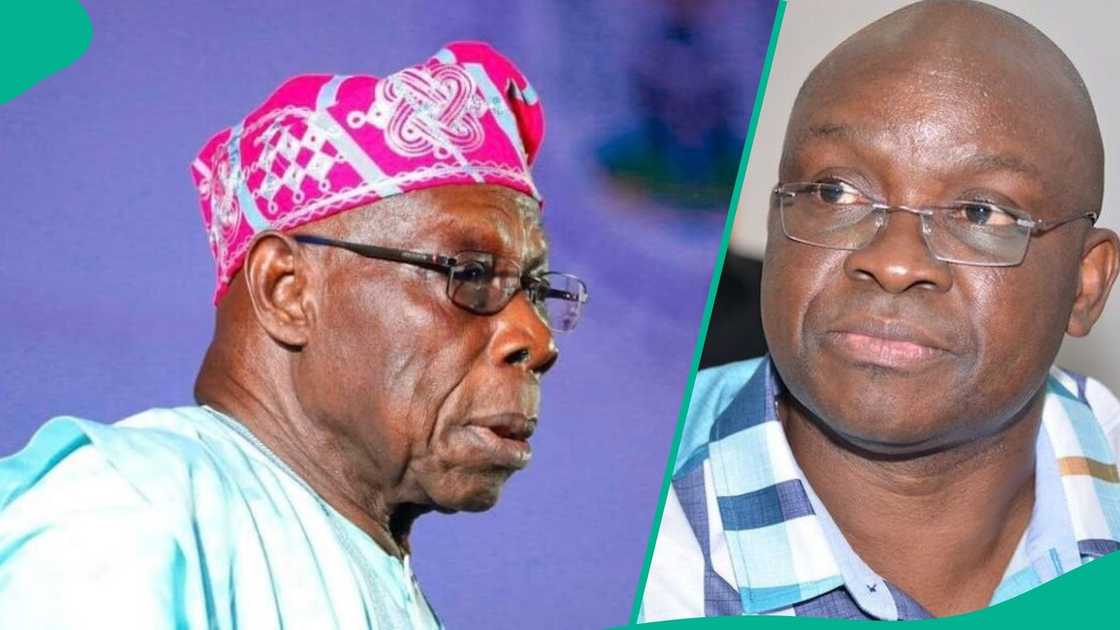
Olusegun Obasanjo and Ayodele Fayose

Sixty-fifth birthday fireworks: Obasanjo versus Fayose (II)

By BOLANLE BOLAWOLE

Last week we started with the spat between former President Olusegun Obasanjo and former Ekiti State governor, Peter Ayodele Fayose. Fayose had invited Obasanjo to his 65th birthday celebrations, where the former president made statements that irked the celebrant. Fayose afterwards responded in kind to Obasanjo in a “Thank You” message where he took the former president to the cleaners. Obasanjo also responded by topping it up for Fayose!

Going down memory lane, we narrated how relations went from good to bad between the two leaders, hearing, as it were, from the horse’s mouth – meaning, Ayodele Fayose himself – in his unpublished autobiography titled “Peter the Rock: Autobiography of Dr. Peter Ayodele Fayose”, which was collated together with others and edited by this writer. Read on:

“Obasanjo returned from the USA on 17th June, 2006 and visited Ekiti on June 18th. He had quickly convened a meeting in Abuja in the early hours of 18th before coming to Ekiti. He was earlier scheduled to have visited Ekiti on the 17th and 18th. Realising that his third term agenda had been killed by the National Assembly, he quickly convened a meeting of the leadership of the party, denied the third term agenda, and called for reconciliation in the party. He then came to Ekiti and praised me to high heavens on the same day. Obasanjo assured the Ekiti people that I would be returned as governor and left. I later met with him at Ota in company with other South-west governors; he said he trusted me and believed in my judgment and, therefore, made me the chairman of a group that would search for his successor. He also reaffirmed his support for my second term bid.

“However, in late August of that year (2006), the then Chairman of the Economic and Financial Crimes Commission (EFCC), Nuhu Ribadu, in collaboration with my enemies who believed there was no way I would not win the 2007 governorship election, convinced Obasanjo that I was fraudulent and should be removed from office. Obasanjo bought into this and invited me to Abuja to ask me to step down as the governor of Ekiti state. I told him the step he was taking stemmed from conspiracy against my person. He finally said I should not contest for a second term as governor of Ekiti state, which was ludicrous. I was very much loved by my people who wanted me to continue in office; to be single-handedly short-circuited by one man was patently undemocratic. But unequal power relations made me succumb and we both agreed I should go to the Senate while they shopped for someone else to take my place. To avoid trouble, I said this was okay by me.

READ ALSO:

“Two weeks later, I was invited by the same Obasanjo to the Presidential villa and, in the presence of Chief Bode George and the then PDP chairman, Dr. Ahmadu Ali, the president said, ‘Ayo, you did not offend me but the powers-that-be in your state do not want you. So you have to resign now as governor.’ To my amazement, they brought out a letter on the letter-head of the Ekiti State Government, which they asked me to sign – a document I never prepared. I pleaded with the president but he insisted, in spite of entreaties by Chief Bode George and Ahmadu Ali. I then cleverly pleaded with him to let me go back home and tidy myself up so that I could leave honourably. He agreed. When I got back to Ekiti, Obasanjo called me to ask, ‘When are you bringing the letter of resignation?‘ He said, ‘If you think you can see light at the end of the tunnel, it is not with me! You better resign.’

“The ‘story behind the story’ of how I tactically dodged signing the resignation letter they prepared in Abuja was that I had been tipped off by Mrs. Mariam Ali, wife of Dr. Ahmadu Ali, whom I was close to. She had sent a message to me through Bukola Saraki and some other people that I would be invited to a place in Abuja to sign a letter but that ‘under no circumstance’ should I sign the letter. Had I signed the letter, I would have been arrested at the door of the Presidential villa by the EFCC. They would have used that letter in the media, saying that I resigned willingly after admitting that I was corrupt. With the Abuja macabre dance, I realised they had made up their mind to get me. The EFCC arrested everyone around me after they had withdrawn my Chief Security Officer, my ADC, etc…

Politics is truly a dirty game! The same Olabode George, who played a key role in how Fayose upstaged Babalola, later became Fayose’s punching bag during Fayose’s second term of office when Chief George took positions that were diametrically opposed to those of the Fayose/Nyesom Wike camp of the PDP.

“Initially, news of the collaboration of members of the state House of Assembly with my enemies came as a rumour. I summoned courage and invited them through the Clerk of the House. All entreaties to make them see reason fell on deaf ears. They made some unreasonable demands, obviously acting the script of their collaborators. During the heat, when it became obvious they were not ready to back down, having been coerced and at the same time mesmerised with outlandish promises made to them by their sponsors, I told them that if what they planned eventually happened and I was forced out of office; they, too, would sink with me. True to my courageous and prophetic pronouncement, the House of Assembly was suspended following the declaration of emergency rule.

“Stripped of my security details, I was naked and exposed security-wise. The next thing I saw was that my House of Assembly members were ‘arrested’ and taken over by the EFCC in an organised manner. They signed an impeachment letter at the EFCC camp, which they forwarded to me, and in the space of five days, they brought the ‘Honourables’ to the House of Assembly complex where the then (but now late) Speaker, Friday Aderemi, purportedly sacked the Chief Judge of the state, Justice Kayode Bamisile, which was beyond his powers and those of the House of Assembly, and got a consenting judge to act as Acting Chief Judge. The purported Acting Judge, JBK Aladejana, set up another panel after the first panel had absolved me of any guilt. After my acquittal by the first panel, that should have been the end of the matter, but the second panel then pronounced me guilty.

READ ALSO:


“The then Inspector-General of Police, Sunday Ehindero, who had a brother who was very close to me, phoned me that he had been ordered to effect my arrest and that lorry-loads of armed policemen were already on their way to carry out the order. He told me quite clearly that tipping me off was the very best he could do for me. If I waited and the men he had sent cornered me, he would not be in any position to assist me. His hands were tied over this matter, he told me quite emphatically. I had to run for my life. So, I escaped out the Government House in the night of 12th October, 2006 and went into exile”

How did Fayose escape from the Government House already surrounded by security forces? In the trunk of a jalopy car, disguised! And for the next eight years he suffered exile, later returning home to surrender himself to the authorities. He was incarcerated and faced trial but, in the end, he was exonerated and became a free man once again. Those travails must have been what Obasanjo referred to at Fayose’s birthday event; what he neglected to add, however, was that he, Obasanjo, was the chief architect of those travails! Fayose contested election again and was victorious, serving out his second term of office between 2014 and 2018. It was during the latter part of that period that our paths crossed, at his invitation.

The story that is yet to be told, but which Obasanjo alluded to in his controversial remarks at Fayose’s 65th birthday bash, is that it is the same Obasanjo – and Chief Olabode George – that was instrumental in Fayose becoming governor in his first tenure, in place of Obasanjo’s own personal friend, Chief SK Babalola. True, then, is the statement by Gen. Oluleye that Obasanjo has equal capacity to do both good and evil!

Politics is truly a dirty game! The same Olabode George, who played a key role in how Fayose upstaged Babalola, later became Fayose’s punching bag during Fayose’s second term of office when Chief George took positions that were diametrically opposed to those of the Fayose/Nyesom Wike camp of the PDP. Call it Karma or whatever, it is the same Olabode George who reportedly moved the motion to expel Wike, Fayose and other PDP leaders at the recent convention of a faction of the PDP at Ibadan.

Proverbs 30: 18 – 19 says: “There be thr

ee things which are too wonderful for me, yea, four which I know not: the way of an eagle in the air; the way of a serpent upon a rock; the way of a ship in the midst of the sea; and the way of a man with a maid” A fifth must now be added: The mysterious ways of Nigerian politicians when they engage in their dirty games!

READ ALSO:

Listen to how Fayose himself narrated th

e story of the helping hand he received from Chief Olabode George: “These people still did not give up, despite the fact that I had been given the flag. Again, they set up machinery and started moving around, saying that ‘When Obasanjo comes, we will now allow him to present the flag formally to Fayose in Ekiti.’ They said Obasanjo was going to present the flag to Chief SK Babalola…They were working against me until Obasanjo finally arrived…The night before he landed, Chief SK Babalola and Chief Bamidele Olumilua had sewn the same uniform for themselves and Obasanjo…And I was supposed to be the candidate!

“So, Chief Bode George told us in the afternoon of the night before, when he came to wait for Chief Obasanjo, and got wind of their plan, to quickly go to Oje market in Ibadan to get Aso Oke (Yoruba local fabric) of the same colour for me and Obasanjo and bring it to him. The fabric was done all night and we brought it to Ado-Ekiti before Obasanjo arrived. We now took it to Akure and gave it to Bode George…”

Fayose narrated how Obasanjo ditched a flabbergasted Chief SK Babalola right there on the podium and threw away his aso-oke, reached out for Fayose’s aso-oke, ordered him to the podium, raised up his hand and formally presented the flag to him as the party flagbearer!

After I heard the story of the role Chief Bode George played in frustrating the plans and plots against Fayose becoming the governor of Ekiti state in 2003 straight from Fayose’s own mouth, I marvelled each time Fayose mercilessly tore into the same Bode George when both leaders stood in opposing camps within the same party, the PDP.

One fateful day I held up a proof of his autobiography to Fayose and said: ‘Concerning your relationship with Chief Olabode George, don’t you think your own words in this book indict you?‘

Characteristically, he stared at me, but said nothing! Those who said I was responsible for Fayose not eventually officially launching the autobiography have a point; don’t they?

*Bolawole ([email protected] 0807 552 5533), former Editor of PUNCH newspapers, Chairman of its Editorial Board and Deputy Editor-in-chief, was also the Managing Director/ Editor-in-chief of the Westerner newsmagazine. He writes the “ON THE LORD’S DAY” column in the Sunday Tribune and “TREASURES” column in the New Telegraph newspapers. He is also a public affairs analyst on radio and television.


Sixty-fifth birthday fireworks: Obasanjo versus Fayose (II)

Continue Reading
HostArmada Affordable Cloud SSD Shared Hosting
HostArmada - Affordable Cloud SSD Web Hosting

Trending