

News
Inflation rate hit 14.23%, highest in four years – NBS
By AbdulAzeez Dare
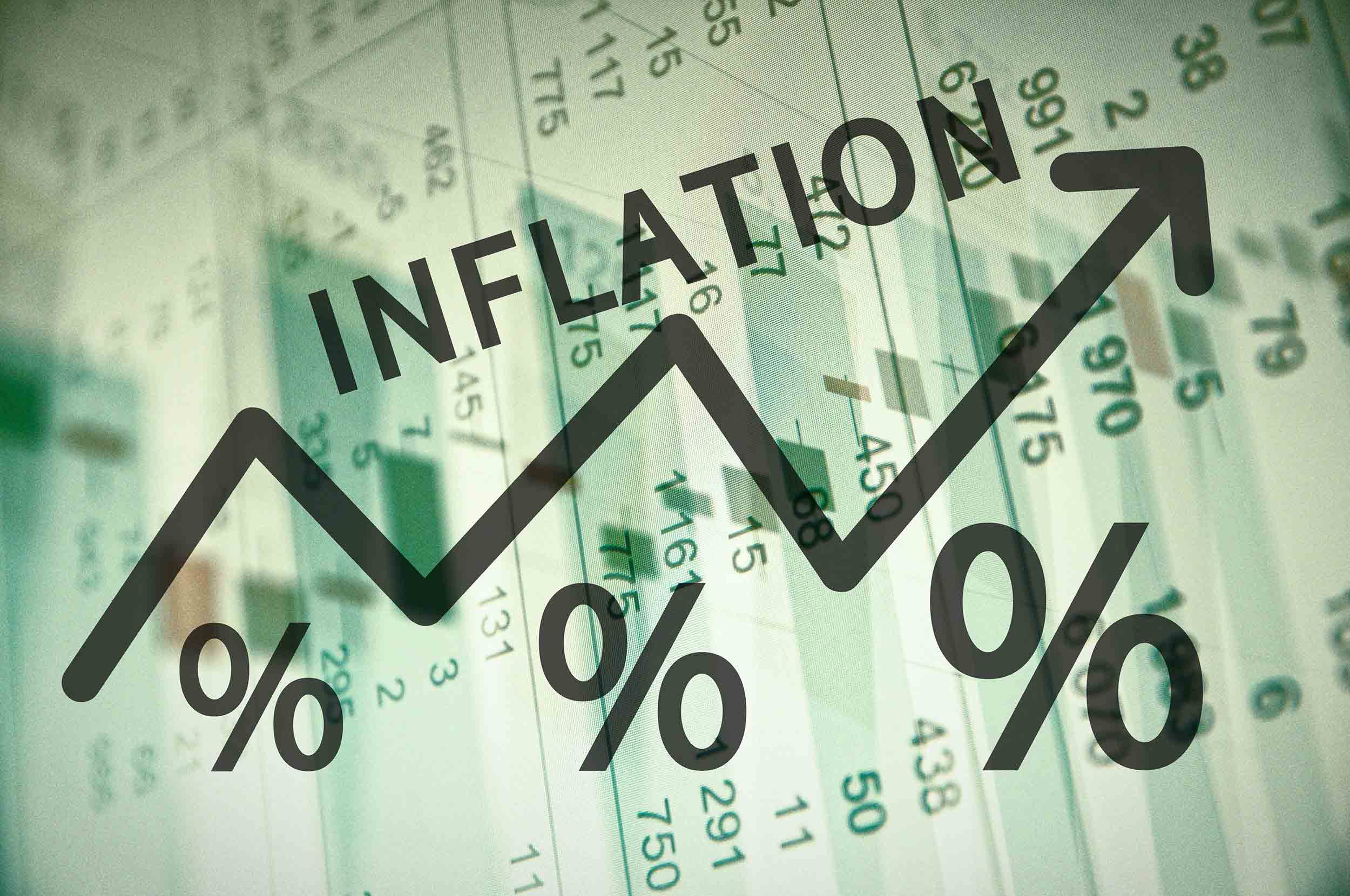
The National Bureau of Statistics (NBS) has released the consumer price index for October 2020 and it puts the inflation rate at 14.23 per cent.
The figure indicates that the inflation rate jumped by 0.52 percentage points, which is the highest since July 2016 when the inflation rate increased by 0.65 percentage points.
Inflation measures the rate at which the prices of goods and services increase over a period of time.
The October CPI/Inflation report released on Monday showed that food inflation hit 17.38 per cent in October 2020 compared to 16.66 per cent in September 2020.
On a month-on-month basis, the headline index increased by 1.54 per cent in October 2020, this is 0.06 per cent rate higher than the rate recorded in September 2020 (1.48 per cent).
The percentage change in the average composite CPI for the 12 months period ending October 2020 over the average of the CPI for the previous 12 months period was 12.66 per cent, showing a 0.22 per cent point rise from 12.44 per cent recorded in September 2020.
The urban inflation rate increased by 14.81 per cent (year-on-year) in October 2020 from 14.31 per cent recorded in September 2020, while the rural inflation rate increased by 13.68 per cent in October 2020 from 13.14 per cent in September 2020.
On a month-on-month basis, the urban index rose by 1.60 per cent in October 2020, up by 0.04 from 1.56 per cent recorded in September 2020, while the rural index also rose by 1.48 per cent in October 2020, up by 0.08 from the rate recorded in September 2020 (1.40 per cent).
The corresponding 12-month year-on-year average percentage change for the urban index is 13.29 per cent in October 2020. This is higher than 13.07 per cent reported in September 2020, while the corresponding rural inflation rate in October 2020 is 12.09 per cent compared to 11.86 per cent recorded in September 2020.
This rise in the food index was said to be caused by increases in prices of bread and cereals, potatoes, yam and other tubers, meat, fish, fruits, vegetable, alcoholic and food beverages and oils and fats.
On a month-on-month basis, the food sub-index increased by 1.96 per cent in October 2020, up by 0.08 per cent points from 1.88 percent recorded in September 2020.
The average annual rate of change of the food sub-index for the 12-month period ending October 2020 over the previous 12-month average was 15.42 per cent, representing a 0.29 per cent points from the average annual rate of change recorded in September 2020 (15.13) per cent.
The “All items less farm produce” or core inflation, which excludes the prices of volatile agricultural produce stood at 11.14 per cent in October 2020, up by 0.56 per cent when compared with 10.58 per cent recorded in September 2020.
On a month-on-month basis, the core sub-index increased by 1.25 per cent in October 2020. This was up by 0.31 per cent when compared with 0.94 percent recorded in September 2020.
The highest increases were recorded in prices of passenger transport by air, hospital and medical services, passenger transport by road, pharmaceutical products, motor cars, vehicle spare parts, maintenance and repair of personal transport equipment, hairdressing salons and personal grooming establishments, miscellaneous services relating to the dwelling, paramedical services and shoes and other footwear.
The average 12-month annual rate of change of the index was 9.96 per cent for the twelve-month period ending October 2020 representing is 0.19 per cent points higher than 9.77 per cent recorded in September 2020.
In October 2020, all items inflation on year on year basis was highest in Zamfara (17.69 per cent), Sokoto (16.99 per cent) and Ebonyi (16.91 per cent), while Lagos (11.96 per cent), Abuja (11.84 per cent) and Cross River (10.50 per cent) recorded the slowest rise in headline Year on Year inflation.
On month on month basis however, October 2020 all items inflation was highest in Sokoto (2.91%), Edo (2.53%) and Akwa Ibom (2.52%), while Oyo (0.69%), Taraba (0.60%) and Jigawa (0.37%) recorded the slowest rise in headline month on month inflation.
In October 2020, food inflation on a year on year basis was highest in Edo (21.65%), Zamfara (20.88%) and Kogi (20.58%), while Lagos (14.57%), Ogun (14.47%) and Ondo (14.23%) recorded the slowest rise.
On month on month basis however, October 2020 food inflation was highest in Kwara (3.88%), Edo (3.81%) and Sokoto (3.65%), while Oyo (0.57%) and Jigawa (0.54%) and Taraba (0.29%) recorded the slowest rise on month on month inflation.










News
Agunbiade Proposes Council of Grand Chief Imams for Yorubaland, Edo, Delta
Agunbiade Proposes Council of Grand Chief Imams for Yorubaland, Edo, Delta
Calls for Specialised Leadership Platform to Address Succession Disputes, Recognition, Institutional Challenges
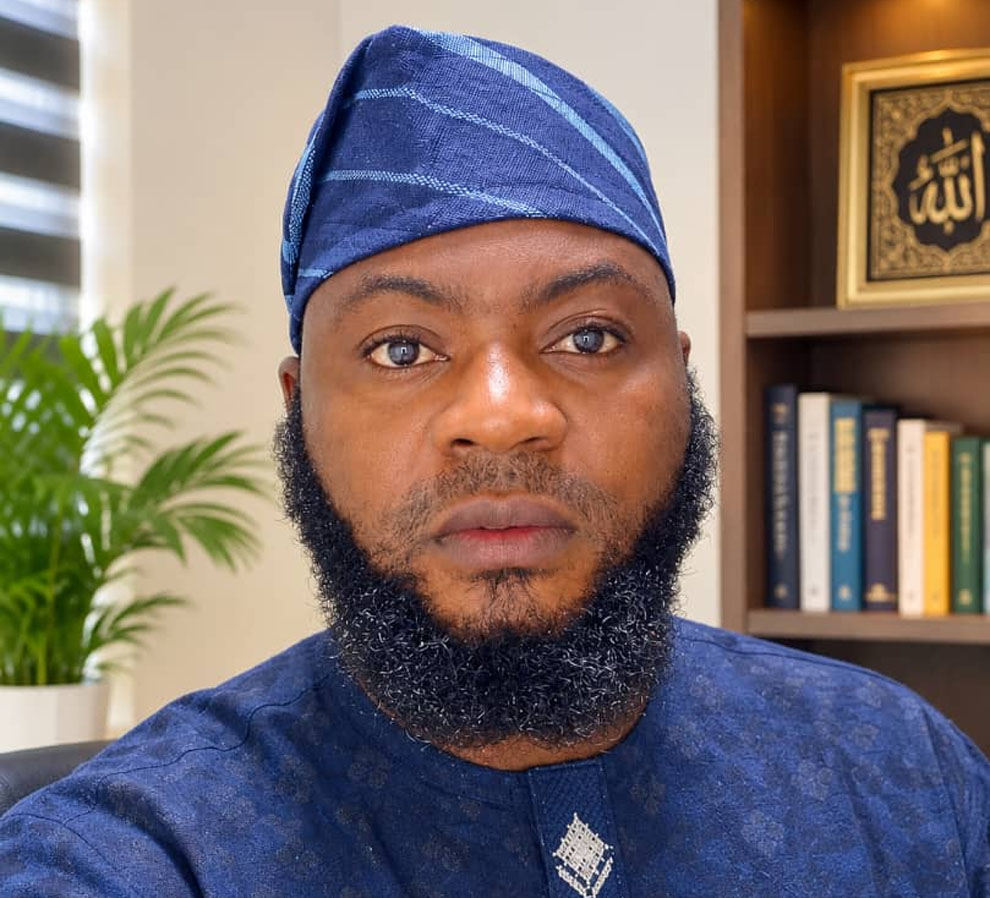
A member of Rabwa Islamic Propagation in Riyadh, Saudi Arabia, Mallam Ibrahim Agunbiade, has proposed the establishment of a Council of Grand Chief Imams of Yorubaland, Edo and Delta States to strengthen traditional Islamic leadership, promote unity among Muslim leaders and address challenges confronting holders of the offices of Grand Chief Imams.
Agunbiade made the proposal in a detailed position article dated Thursday, November 19, 2026, following the recent League of Imams and Alfas Conference held at Jogor Centre in Ibadan, Oyo State.
He argued that the conference and the controversies surrounding it should provide an opportunity for meaningful reflection on the institutional structure of Islamic leadership across Yorubaland and neighbouring states rather than becoming a source of further disagreement among Muslims.
According to him, the proposed body, which could also be known as the Assembly of Grand Chief Imams of Yorubaland, would provide a specialised and independent platform for recognised Grand Chief Imams to discuss issues affecting their offices, communities and the wider Muslim Ummah.
The proposal, he explained, was not intended to undermine the League of Imams and Alfas or challenge its relevance in the Muslim community.
Rather, he maintained that the League and the proposed council could operate independently while complementing each other’s responsibilities.
Agunbiade noted that although the League provides a broader platform for Imams, Alfas and Islamic scholars, the peculiar responsibilities attached to the office of a Grand Chief Imam require a dedicated institutional structure.
He described Grand Chief Imams as important figures within the religious, traditional and administrative structures of Muslim communities, stressing that their responsibilities extend beyond leading congregational prayers.
According to him, Grand Chief Imams serve as spiritual heads, custodians of Islamic traditions and representatives of Muslim communities in engagements with traditional rulers, governments and other relevant institutions.
He expressed concern that the peculiar challenges associated with these offices do not always receive adequate institutional attention, making it necessary to establish a platform through which Grand Chief Imams can collectively address their concerns.
Among the issues he identified were disputes over the recognition of Grand Chief Imams, succession arrangements, installation procedures, disagreements between religious authorities, government engagements and the preservation of the dignity of the traditional Islamic office.
Proposed Council to Have State Chapters
Under the proposal, the Council of Grand Chief Imams would comprise recognised Grand Chief Imams from different states, cities and towns across the Southwest, as well as Edo and Delta States.
Agunbiade suggested the establishment of state chapters to provide opportunities for Grand Chief Imams within individual states to deliberate on local challenges and resolve matters before referring issues requiring wider intervention to the regional body.
He explained that the arrangement would promote regular consultations, experience sharing, conflict resolution and collective decision-making among Islamic leaders.
He further argued that no Grand Chief Imam should be left to confront challenges relating to his office, recognition, succession or relationship with traditional institutions without access to the advice and support of fellow Grand Chief Imams.
The proposed council, he added, could also serve as a common platform for engaging state governments, traditional rulers, security agencies and other relevant stakeholders on issues affecting Muslim communities.
Agunbiade Rules Out Rivalry With League of Imams and Alfas
Addressing possible concerns about the emergence of another Islamic organisation, Agunbiade emphasised that the proposed council should not be regarded as a rival to the League of Imams and Alfas or any other established Muslim association.
He maintained that the two institutions could coexist because their areas of concentration and institutional responsibilities would not necessarily be the same.
While the League would continue to provide a broad platform for Imams, Alfas and Islamic scholars, the proposed council would focus specifically on the institutional affairs and peculiar responsibilities of Grand Chief Imams.
He argued that the existence of different Muslim organisations should not automatically be interpreted as evidence of division, provided their responsibilities were clearly defined and their activities contributed positively to Islam and the welfare of Muslims.
However, he warned that the proposed council must not become another platform for the pursuit of personal recognition, political influence or supremacy.
Instead, he said its operations should be guided by Islamic principles of consultation, known as Shura, mutual respect, transparency, accountability and sincere commitment to the service of Allah.
He also stressed that membership should be based on recognised traditional and community-based offices of Grand Chief Imams, with due consideration for established processes and legitimate arrangements within individual Muslim communities.
Calls for Constitution, Annual Assembly
To ensure the sustainability and effective operation of the proposed institution, Agunbiade recommended the development of a comprehensive constitution outlining its membership requirements, leadership structure, tenure of office, responsibilities, meeting schedules and dispute-resolution procedures.
He proposed regular meetings at the state level, alongside regional gatherings that would provide opportunities for broader discussions and collective decisions on matters of common interest.
He also suggested an annual assembly of Grand Chief Imams from the participating states to strengthen relationships, encourage cooperation and develop common positions on issues affecting Islamic leadership across the region.
Beyond administrative coordination, Agunbiade said the council should promote mentorship between senior and younger Islamic leaders, preserve the historical heritage of traditional Islamic leadership and encourage peaceful succession arrangements in communities where such matters arise.
He emphasised that the proposed institution must respect the independence and authority of individual Grand Chief Imams while providing a common platform for consultation and cooperation.
Appeals to Grand Chief Imams Across Nine States
Agunbiade specifically called on Grand Chief Imams across Lagos, Ogun, Oyo, Osun, Ondo and Ekiti States, as well as their counterparts in Edo and Delta States, to give serious consideration to the proposal.
He urged Muslim leaders to look beyond the disagreements surrounding the recent Ibadan conference and use the experience as an opportunity to strengthen Islamic leadership institutions.
According to him, occasional conferences and gatherings may not be sufficient to address the recurring institutional challenges confronting traditional Islamic leadership.
He argued that a permanent and well-structured council would provide a more reliable mechanism for addressing disagreements, protecting the dignity of traditional Islamic offices and promoting unity among Muslim leaders.
The proposed body, he added, would give Grand Chief Imams an opportunity to deliberate freely, resolve disagreements amicably, exchange ideas and collectively advance the interests of the Muslim Ummah.
He expressed optimism that the establishment of the Council of Grand Chief Imams of Yorubaland, Edo and Delta States could become an important milestone in the development of Islamic institutional leadership in the region.
Agunbiade concluded that the objective was not to establish another centre of controversy but to create an institution dedicated to consultation, reconciliation, cooperation and responsible leadership.
He described the desired outcome as unity without uniformity, cooperation without subordination, and leadership anchored in consultation, wisdom and mutual respect.
He also prayed for Allah’s guidance for Islamic leaders, asking that their hearts be united upon righteousness and that they be granted the wisdom to discharge their responsibilities with sincerity, justice and accountability.
Mallam Ibrahim Agunbiade is a member of Rabwa Islamic Propagation, Riyadh, Saudi Arabia.
Agunbiade Proposes Council of Grand Chief Imams for Yorubaland, Edo, Delta
News
Adeleke Rejects Proposed Naming of Osogbo Stadium After Him, Orders Removal of Signpost

OSOGBO – The Osun State Government has ordered the immediate removal of a signpost announcing the renaming of Osogbo Township Stadium after Governor Ademola Adeleke, following clarification that the governor had not given final approval for the proposed change.
The controversy erupted on Wednesday, November 18, 2026, after a large signpost bearing the proposed name, Ademola Adeleke Imole Stadium, was erected at the entrance of the sporting facility.
The development initially generated reports that the state government had renamed the stadium in honour of Adeleke, barely days before his scheduled second-term inauguration on November 27.
However, the state government subsequently disowned the action, explaining that those responsible for installing the signpost had acted without obtaining the governor’s final approval.
READ ALSO:
- Petrol Prices Crash as Dangote Refinery, NNPCL, MRS Adjust Rates Nationwide
- Military Air Strike Destroys ISWAP Hideout, Kills 10 Fighters in Borno
- Fire Destroys Seven Classrooms, Truck, Car at Lagos NNPC Filling Station
- 17 Dead as Gunmen Launch Two Fresh Mass Shootings in South Africa
The Commissioner for Information and Public Enlightenment, Kolapo Alimi, said the governor had only been informed about the proposal and indicated that he would consult before making a decision.
According to Alimi, those behind the installation failed to wait for the governor’s final response before proceeding with the action.
He said Adeleke consequently directed that the signpost be removed immediately, adding that any eventual decision to rename the facility would be formally communicated to the public.
The signpost was subsequently taken down following a directive reportedly issued by the Deputy Governor and Commissioner for Sports, Kola Adewusi.
Also reacting, the General Manager of the Osun State Sports Council, Ademola Daini, described the action of those who installed the signpost as an overzealous move.
The proposed renaming had attracted public attention and mixed reactions, with some residents and commentators questioning the decision to name a public sporting facility after a sitting governor, while others argued that public officeholders could be recognised for their contributions.
The stadium, formerly known as Osogbo City Stadium, is currently undergoing rehabilitation as part of efforts to restore the facility for sporting activities.
The stadium previously served as the home ground for Osun State’s male and female football teams. However, its deteriorating condition forced the teams to consider alternative venues for their league matches.
The facility is also expected to host activities marking Adeleke’s scheduled second-term inauguration on November 27.
The state government has, however, made it clear that no final decision on the proposed renaming should be inferred from the signpost that was erected without the governor’s authorisation.
The government said the public would be properly informed if a decision to rename the stadium was eventually approved.
Adeleke Rejects Proposed Naming of Osogbo Stadium After Him, Orders Removal of Signpost
News
Kemi Olunloyo’s Son Declared Wanted in US Over Alleged Gunpoint Kidnapping, Shooting

Kemi Olunloyo’s Son Declared Wanted in US Over Alleged Gunpoint Kidnapping, Shooting
PHILADELPHIA, UNITED STATES — The family of controversial Nigerian journalist Kemi Olunloyo has been thrown into the spotlight following reports that her son, identified as **Olunkayode J. Taiwo**, has been declared wanted by police in Philadelphia, United States, over allegations of kidnapping a woman at gunpoint and subsequently shooting at her.
The Philadelphia Police Department is searching for Taiwo in connection with two separate incidents involving the same woman, according to reports by American media outlets.
The development has attracted attention in Nigeria because Taiwo has been identified in Nigerian media reports as the son of the outspoken journalist, Kemi Olunloyo.
According to the Philadelphia Police Department, the first incident occurred at approximately 10 p.m. on November 2, 2026, along the 1500 block of West Seybert Street in North Philadelphia. Investigators alleged that Taiwo abducted a woman at gunpoint during the incident.
Police subsequently linked him to another disturbing incident involving the same woman, which reportedly occurred on November 15.
In the second incident, detectives alleged that Taiwo fired two gunshots in the direction of the woman and her residence along the 7600 block of Rugby Street in Philadelphia’s Cedarbrook neighbourhood.
Authorities have not disclosed the circumstances that allegedly led to the incidents or provided further details about the victim’s condition.
The Philadelphia Police Department’s Special Victims Unit is handling the investigation and has appealed to members of the public to provide information that could assist in locating the suspect.
Reports by American media outlets indicate that an arrest warrant has been issued for Taiwo, who was yet to be taken into custody as of the time of the reports.
Investigators believe he may be driving a silver or grey 2026 Honda Accord with Pennsylvania registration number H900330.
Anyone with information about his whereabouts has been urged to contact the Philadelphia Police Department’s Special Victims Unit on 215-685-3251. Anonymous information can also be submitted by calling or texting 215-686-TIPS (8477).
The case has generated considerable interest among Nigerian social media users following reports identifying Taiwo as the son of Kemi Olunloyo, a journalist known for her outspoken commentary on Nigerian politics, entertainment and public affairs.
However, the Philadelphia Police Department’s public information, as reported by American media outlets, has focused on the allegations against Taiwo and has not independently confirmed his reported relationship with Olunloyo.
As of the time of filing this report, no public statement from Kemi Olunloyo concerning the allegations had been established.
The allegations against Taiwo remain allegations, and his being declared wanted or the reported issuance of an arrest warrant does not amount to a conviction. He remains entitled to the presumption of innocence.
Kemi Olunloyo’s Son Declared Wanted in US Over Alleged Gunpoint Kidnapping, Shooting
-

 metro2 days ago
Viral Video: Nigerian Army Explains Why Soldiers, DSS Operatives Met Bandits In Kwara Forest
-

 International1 day ago
Islam Set to Overtake Christianity as World’s Largest Religion by 2035
-

 Business20 hours ago
NNPCL, MRS, Other Marketers Slash Petrol Prices Across Nigeria As Motorists Get Fresh Relief
-

 News3 days ago
BREAKING: Fountain Of Life Crisis Deepens As Trustees Reaffirm Jimmy Odukoya’s Removal, Appoint Interim Leader
-

 Sports3 days ago
Super Eagles Stumble Against Tanzania As Nigeria Settle For Goalless Draw In AFCON Qualifier
-

 News1 day ago
Adeleke Rejects Proposed Naming of Osogbo Stadium After Him, Orders Removal of Signpost
-

 News21 hours ago
Agunbiade Proposes Council of Grand Chief Imams for Yorubaland, Edo, Delta
-

 metro3 days ago
Jimmy Odukoya Rejects Removal As Senior Pastor, Accuses Trustees Of Violating Church Constitution
You must be logged in to post a comment Login