

News
BREAKING : Tinubu approves additional N25,000 pay for junior workers
BREAKING : Tinubu approves additional N25,000 pay for junior workers
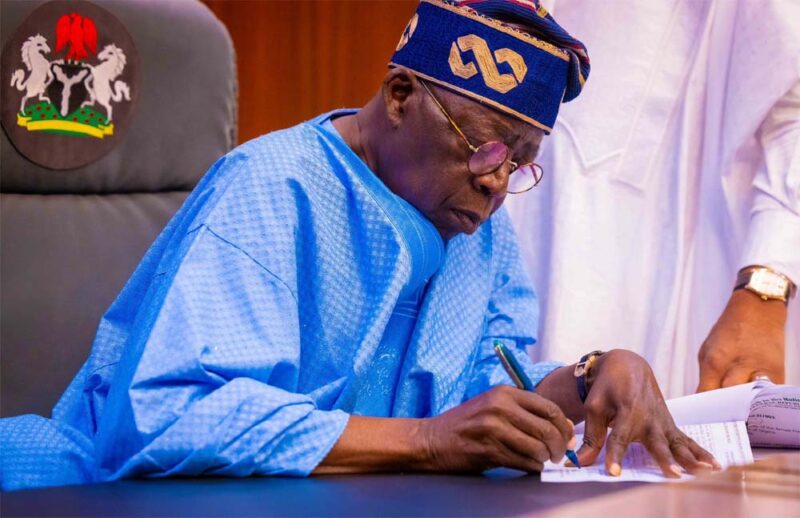
President Bola Ahmed Tinubu has said that for the next six months, an average low-grade worker shall receive an additional N25,000 per month.
The president said this in his nationwide broadcast as part of the programme of events marking Nigeria’s 63rd Independence anniversary celebration.
“Based on our talks with labour, business and other stakeholders, we are introducing a provisional wage increment to enhance the federal minimum wage without causing undue inflation. For the next six months, the average low-grade worker shall receive an additional N25,000 per month,” he announced, while outlining measures being taken to relieve the stress on families and households after the removal of fuel subsidy and unification of exchange rates.
Tinubu said his government was doing all it could to ease the load, stating, “We have embarked on several public sector reforms to stabilise the economy, direct fiscal and monetary policy to fight inflation, encourage production, ensure the security of lives and property and lend more support to the poor and the vulnerable.”
The president said that commencing this month, the social safety net was being extended through the expansion of cash transfer programmes to an additional 15 million vulnerable households.
READ ALSO:
- Italian bags 24 years in jail for beating physically challenged Nigerian to death
-
Chinua Achebe will weep for Nigeria today – Peter Obi
-
No going back on strike: NLC sends emotional Oct 1 message to Nigerians
He added that the government had set up an Infrastructure Support Fund for states to invest in critical areas to ensure better grassroots development, stressing, “States have already received funds to provide relief packages against the impact of rising food and other prices.”
Tinubu said the government had also opened a new chapter in public transportation through the deployment of cheaper, safer Compressed Natural Gas (CNG) buses across the country, adding that “These buses will operate at a fraction of current fuel prices, positively affecting transport fares.
“New CNG conversion kits will start coming in very soon as all hands are on deck to fast track the usually lengthy procurement process. We are also setting up training facilities and workshops across the country to train and provide new opportunities for transport operators and entrepreneurs. This is a groundbreaking moment where, as a country, we embrace more efficient means to power our economy. In making this change, we also make history.”
The president said his administration was providing investment funding for enterprises with great potential to boost employment and urban incomes.
He added that the government was equally “increasing investment in micro, small and medium-sized enterprises.”
President Tinubu, who restated the reasons behind the ongoing reforms in the country, appealed for more understanding from citizens.
He said, “I said bold reforms were necessary to place our nation on the path of prosperity and growth. On that occasion, I announced the end of the fuel subsidy.
READ ALSO:
-
Tribunal affirms Kefas as Taraba governor
-
Malicious Facebook Post: Erisco Foods fingers ‘powerful syndicate’
-
Nigerian student in UK lands in trouble after asking flatmate if she was a virgin
“I am attuned to the hardships that have come. I have a heart that feels and eyes that see. I wish to explain to you why we must endure this trying moment. Those who sought to perpetuate the fuel subsidy and broken foreign exchange policies are people who would build their family mansion in the middle of a swamp. I am different. I am not a man to erect our national home on a foundation of mud. To endure, our home must be constructed on safe and pleasant ground.
“Reforms may be painful, but it is what greatness and the future require. We now carry the cost of reaching a future Nigeria where the abundance and fruits of the nation are fairly shared among all, not hoarded by a select and greedy few; a Nigeria where hunger, poverty and hardship are pushed into the shadows of an ever fading past.
“There is no joy in seeing the people of this nation shoulder burdens that should have been shed years ago. I wish today’s difficulties did not exist. But we must endure if we are to reach the good side of our future.”
On his pledge of a thorough housecleaning of the den of malfeasance the Central Bank of Nigeria (CBN) had become, President Tinubu said, “That housecleaning is well underway. A new leadership for the Central Bank has been constituted.”
He added that his special investigator would soon present his findings on past lapses and how to prevent similar reoccurrences, stressing, “Henceforth, monetary policy shall be for the benefit of all and not the exclusive province of the powerful and wealthy.”
The president, who said his administration shall always accord the highest priority to the safety of the people, stated that inter-service collaboration and intelligence sharing had been enhanced.
He said service chiefs had been tasked with the vital responsibility of rebuilding the capacities of our security services.
BREAKING : Tinubu approves additional N25,000 pay for junior workers





News
NBS: Nigeria’s Inflation Slips to 15.39% in August
NBS: Nigeria’s Inflation Slips to 15.39% in August
Nigeria’s inflation rate eased to 15.39 per cent in August 2026 as the pace of price increases slowed across the economy, the National Bureau of Statistics has reported.
The latest Consumer Price Index report shows a modest fall from the 15.43 per cent recorded in July.
A sharper improvement was recorded in monthly inflation. The rate dropped from 1.57 per cent in July to 0.71 per cent in August, meaning prices continued to rise but at a much slower pace.
Food inflation also slowed significantly.
The NBS put year-on-year food inflation at 19.57 per cent in August. This was below the 25.30 per cent recorded a year earlier. Monthly food inflation also fell sharply, moving from 5.56 per cent in July to 1.02 per cent in August.
The statistics agency attributed the monthly decline to lower average prices for a range of food products, including palm oil, pepper, onions, cassava flour, beef, yam flour, egusi, ginger, fresh fish, Irish potatoes, chicken and turkey.
The improvement, however, was not shared equally across the country.
Adamawa had the highest annual food inflation rate at 38.85 per cent. Zamfara followed with 37.96 per cent, while Bayelsa recorded 36.20 per cent.
At the other end, Borno recorded negative annual food inflation of -4.04 per cent. Jigawa recorded -0.23 per cent, while Kebbi stood at 3.47 per cent.
For monthly food inflation, Katsina recorded the highest rate at 9.48 per cent, followed by Rivers at 8.86 per cent and Osun at 8.32 per cent.
The latest figures suggest a broad slowdown in price growth, although the wide differences between states show that many households are still facing very different food price pressures depending on where they live.
NBS: Nigeria’s Inflation Slips to 15.39% in August
metro
Fatal NURTW Leadership Clash in Osun Leaves Two Dead; State Orders Park Shut Down
Fatal NURTW Leadership Clash in Osun Leaves Two Dead; State Orders Park Shut Down
As Olalekan Oyeyemi is buried in Osogbo, authorities transfer murder probe to the State Criminal Investigation Department.
News
Peter Obi Rejects Anambra Debt Claims, Challenges Soludo Govt to Produce Evidence
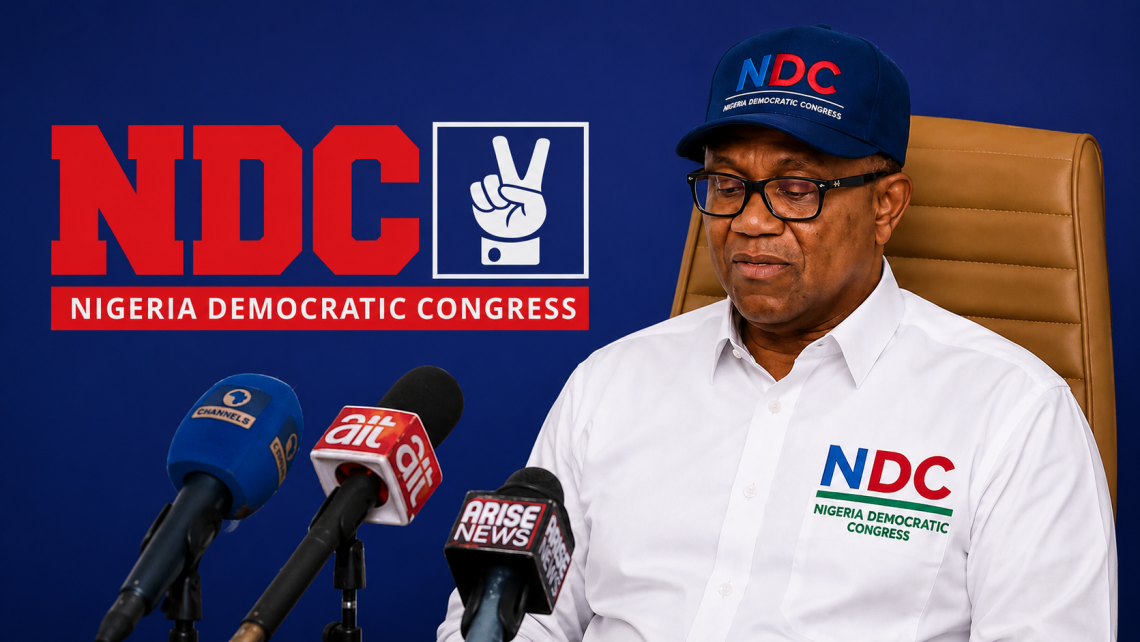
Peter Obi Rejects Anambra Debt Claims, Challenges Soludo Government to Produce Evidence
Former Anambra State Governor and 2027 presidential candidate Peter Obi has rejected claims that he left the state with unpaid financial obligations when he handed over power in 2014, challenging the Anambra State Government to identify any contractor, supplier, worker or pensioner who was owed money by his administration at the time.
Obi made the statement in response to renewed claims by the administration of Governor Chukwuma Soludo that the state is still servicing loans and other financial obligations inherited from previous administrations.
The dispute has opened a fresh political debate over Anambra’s debt profile, the financial obligations inherited by successive governments and the management of the state’s resources before and after Obi left office.
Obi, who governed Anambra between 2006 and 2013 before handing over to his successor in 2014, said he paid what was due during his tenure and left the state in a financially stable position.
He challenged the Soludo administration to provide evidence of any unpaid obligation incurred by his government that remained outstanding when he left office.
According to Obi, if the state government can identify any contractor, supplier, employee, pensioner or other beneficiary who was owed money by his administration at the time of the handover, he would be prepared to address the matter.
The former governor also said his administration left funds in government accounts, including an alleged ₦2.14 billion ecological fund balance, when he handed over power.
However, the claim regarding the ecological fund is from Obi’s camp and would require confirmation from the relevant official financial records.
READ ALSO:
- Peter Obi: Release My UNN Academic Records, I Have Nothing to Hide
- A Son Wouldn’t Have Done Better — Dangote Speaks on Daughters, Succession
- 2027: APC Governors Reject Wike’s Rainbow Coalition, Insist on Party Loyalty
The response followed comments by the Anambra Commissioner for Finance, Izuchukwu Okafor, who said the state was still repaying loans inherited from previous administrations.
Okafor said the Soludo administration had not obtained any commercial bank loan since it came into office in 2022, arguing that the government’s focus had been on reducing the state’s inherited financial obligations.
He said the state’s debt burden had been substantially reduced under Soludo and that the administration had also cleared inherited liabilities relating to contracts, gratuities and pensions.
The commissioner said some loans taken by previous administrations remain subject to repayment and deductions from the state’s federal allocations.
This distinction is at the centre of the current disagreement.
The Soludo administration is not necessarily claiming that Obi personally left unpaid bills to contractors or workers. Rather, the government is pointing to loans and other financial commitments inherited from successive administrations, some of which continue to be serviced.
Obi, on the other hand, is arguing that his administration settled the obligations that were due and payable when he left office and should not be held responsible for liabilities incurred by subsequent governments.
The issue has therefore raised questions about the difference between a state’s overall outstanding debt and debts that were specifically incurred by an individual administration.
Available public debt records have shown that Anambra had outstanding formal obligations around the period Obi left office. However, the political dispute centres on when particular obligations were incurred, which administration contracted them, when repayment became due and whether they should be described as unpaid debts inherited from Obi’s administration.
The Soludo administration has maintained that it inherited financial commitments from previous governments and has been working to reduce them.
The finance commissioner reportedly said the state’s domestic debt was now close to zero and that the government had reduced its overall debt burden significantly.
He also said the Soludo administration had not resorted to commercial bank borrowing since assuming office, presenting the reduction in liabilities as evidence of improved fiscal management.
The government has simultaneously highlighted investments in infrastructure and other projects while maintaining that debt reduction remains an important part of its financial strategy.
READ ALSO:
- Sanwo-Olu Joins Dangote as Historic N2.15tn Refinery IPO Opens on Nigerian Exchange
- Shehu Buba Submits Himself To DSS Over Banditry Allegations
- No Lives Lost as Responders Contain Dual Fire Outbreaks Across Lagos
Obi’s camp, however, has questioned the basis for attributing current financial obligations to his administration.
The former governor has repeatedly presented his tenure as one characterised by fiscal discipline, savings and investment in infrastructure, education, healthcare and other sectors.
His supporters have pointed to the savings and financial reserves accumulated during his tenure as evidence that the state was handed over in relatively strong financial condition.
Critics of the former governor, however, argue that the financial position of a state cannot be assessed solely by looking at cash balances or the absence of unpaid bills because governments can inherit long-term obligations whose repayment extends beyond the tenure of the administration that contracted them.
That distinction is particularly relevant in Anambra, where governments have succeeded one another while continuing to service financial commitments made over several administrations.
The latest exchange has consequently shifted the political conversation from whether Anambra has debt to the more specific question of which administration incurred particular liabilities and whether those obligations were outstanding at the time of each handover.
The dispute also comes at a politically sensitive period, with Obi preparing for the 2027 presidential election under the Nigerian Democratic Congress (NDC).
Questions about his record as Anambra governor are likely to remain part of the political debate as the election approaches, particularly because his administration’s economic management has been a central part of his political narrative.
For Soludo, who is serving as Anambra governor, the emphasis has been on the state’s current fiscal position and the steps his administration says it has taken to reduce inherited liabilities while funding development projects.
For Obi, the priority is to establish that he did not leave unpaid obligations to contractors, workers, pensioners or other beneficiaries when he left office.
The former governor has therefore challenged the state government to publish specific records showing any outstanding obligation attributable to his administration at the point of handover.
The competing claims have yet to be resolved by an independent audit or judicial determination.
What remains clear is that Anambra’s debt debate involves more than a simple disagreement over whether the state owes money. It encompasses loans contracted by successive administrations, repayment schedules, inherited liabilities, outstanding contracts and the question of how political leaders should be held accountable for financial commitments made during their tenure.
As the exchange continues, official debt records, audited financial statements and handover documents could provide the clearest basis for determining the extent of liabilities inherited by each administration.
Until such records are independently reviewed, claims that Obi either left the state completely debt-free or was solely responsible for all of its inherited obligations should be treated with caution.
The latest dispute therefore leaves two competing narratives: Obi’s insistence that he paid what was due before leaving office, and the Soludo administration’s position that Anambra continues to service financial obligations inherited from previous governments, including loans dating back to earlier administrations.
With the 2027 election approaching, the controversy is likely to remain part of the wider political contest over Obi’s record in Anambra and his claims of fiscal discipline in government.
Peter Obi Rejects Anambra Debt Claims, Challenges Soludo Government to Produce Evidence
-
 News3 days ago
SERAP Threatens Legal Action Over ₦126bn INEC Electoral Funds
-
 Politics3 days ago
Five Islamic Clerics Abducted After Tinubu Re-Election Prayer At Yari’s Zamfara Residence
-
 Opinion3 days ago
‘Tinubu Will Win Again in 2027’ — Charismatic Bishops’ Secretary
-
 Politics1 day ago
2027: Northern Lecturers Back Tinubu, ASUU Disowns Endorsement
-

 metro2 days ago
Mother ‘sold daughter’s abuse videos for $300’: Nigeria child pornography case shocks nation
-

 Sports3 days ago
‘Unacceptable’ — Arteta Furious Over Sunderland Penalty in Arsenal Win
-

 News2 days ago
Petrol Subsidy: Presidency Rejects Atiku’s Plan, Says No Going Back
-

 International3 days ago
US Blockade Tightens As CENTCOM Redirects 100 Commercial Ships From Iranian Ports