
Business
Buhari Sacks Abuja Disco Board Over Prolonged Internal Wrangling
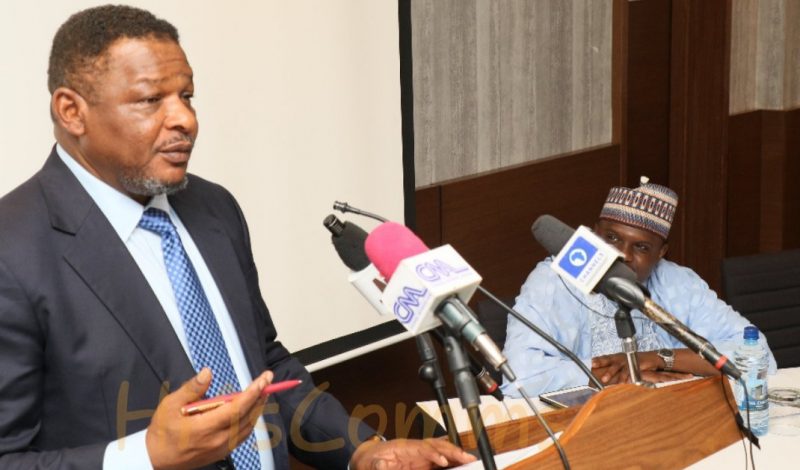
•Sets up interim management to oversee power company
President Muhammadu Buhari yesterday formally sacked the management of the Abuja Electricity Distribution Company (AEDC), following a prolonged internal power tussle among the owners of the company which affected the welfare of the staff of the distribution company.
A statement by Ofem Uket, a Media Aide to the Minister of State, Power, Mr. Goddy Jedy-Agba, announced that a new interim governing board had been appointed to oversee the day-to-day operations of the electricity distribution company.
Although the decision had been expected long before now, the dissolution of the board was further accelerated by Monday’s industrial action embarked upon by the aggrieved staff of the company over the non-payment of arrears of pensions, allowances, salaries and promotion.
The statement indicated that the sack of the management team was conveyed by the presidency to the federal ministry of power, stressing that the new development takes immediate effect.
READ ALSO:
- ASUU strike: Union discloses next line of action as 3-week ultimatum to FG elapses
- President Has Recovered Over N1trn Stolen Funds, Says PACAC
- Banditry: How Sokoto passengers were burnt alive in broad daylight
In addition, it stated that the Minister of Power, Aliyu Abubakar and Agba, had earlier intervened through dialogue with the ministry of labour, Bureau of Public Enterprises, and the Nigerian union of Electricity Employees, NUEE, to resolve and call off the 14 hours strike action.
AEDC’s franchise areas include the Federal Capital Territory (FCT), Kogi, Nasarawa, Kaduna and parts of Edo states.
The industrial action by the workers on Monday, had left the affected areas in total blackout between 7 am in the morning to about 8 pm as a result of the strike action.
“The presidential directive as conveyed has also directed the BPE to set up a new management team for the AEDC,” the statement revealed.
Furthermore, the statement noted that a Memorandum of Understanding (MoU), had earlier been jointly signed by Jedy-Agba; the Chairman, Nigerian Electricity Regulatory Commission (NERC), Sanusi Garba; the Director General, BPE, Alex Okoh; as well as Joe Ajaero on behalf of the union, for the suspension of the strike.
“And they have been given 21 days within which the outstanding emoluments and entitlements of staff will be paid,” the statement noted.
It further noted that government, “has described the non-performance and incompetence of the AEDC as a national embarrassment,” saying the suspension of the management team will subsist until further notice.
“At the end of the expansive consultation between the leadership of NUEE and relevant government institutions in the power sector over the industrial action government intervened with the firm arrangement to ensure the payment of the outstanding entitlements of AEDC staff within 21 days counting from the date of the signing of the MoU.
The tussle relating to the board of KANN Utility Company Limited, owners of AEDC had raged for years as the shareholders had continued to differ on decisions and appointments to the board and the management.
READ ALSO:
- Missing child found dead in Ekiti pastor’s house…as irate youths set residence ablaze
- Gunmen abduct Ondo Catholic priest
- Edo students strip policeman, set school ablaze, principal flees
The matter got to a head last year when some investors in the AEDC purportedly announced changes to the governing board of Disco.
At the time CEC Africa Limited (CECA), one of the parties in the matter, had said the board of KANN Utility Company Limited had announced the withdrawal of their nominations to the board of AEDC and their replacement with new nominees.
It had said that the board of KANN proposed the following new directors: Mr. Joe (Joseph) Makoju , Mallam Ibrahim Aliyu, Dr. Olubunmi Peters, Dr. George Nwangwu, and Mr. Faruk Aliyu.
“The board of AEDC has since resolved to accept both the withdrawals and the new appointments,” it said.
But Chairman of the dissolved board of AEDC and KANN, Shehu Malami in a reaction, said the alleged change in the management of the Disco was false.
”For the records the board of AEDC is the only authorised body that can appoint or remove its directors, and has made no such decision in recent time,” he said at the time.
Thisday









Business
TCAN Targets Logistics Reforms to Drive Economic Growth at 2026 Transport Summit
TCAN Targets Logistics Reforms to Drive Economic Growth at 2026 Transport Summit
The Transportation Correspondents Association of Nigeria (TCAN) has begun preparations for its 2026 Annual Transport Summit, placing Nigeria’s logistics value chain at the centre of national economic discourse.
Scheduled for September 2026 in Lagos, the summit will be held under the theme, “Unlocking Economic Growth Through Transportation Logistics.”
It is expected to draw major stakeholders across the aviation, maritime, rail and road transport sectors, alongside logistics service providers, policymakers, regulators, development partners and financial institutions.
In a statement, TCAN said the summit would critically examine how efficient transportation logistics can serve as a catalyst for sustainable economic growth, trade facilitation, job creation and regional integration, especially in the context of ongoing reforms and infrastructure investments within the sector.
Chairman of TCAN, Tola Adenubi, described transportation logistics as the backbone of economic development, stressing that the performance of Nigeria’s logistics ecosystem directly impacts the nation’s competitiveness.
“From cargo handling at airports and seaports to inland freight movement and last-mile delivery systems, the efficiency of Nigeria’s logistics architecture plays a decisive role in determining the competitiveness of the nation’s economy,” Adenubi said.
He noted that the 2026 summit would explore innovative strategies to strengthen the sector, including digital transformation, infrastructure financing models, public-private partnerships and regulatory reforms aimed at optimising performance.
Chairman of the 2026 Conference Committee, Suleiman Idris, said the summit would feature high-level panel discussions, keynote addresses and interactive sessions designed to assess the current state of Nigeria’s transportation logistics framework.
According to him, deliberations will focus on identifying bottlenecks hindering seamless cargo and passenger movement, examining the impact of multimodal transport integration on economic expansion, and highlighting investment opportunities within the logistics and supply chain ecosystem.
Idris added that experts at the summit would also provide policy recommendations targeted at enhancing operational efficiency and boosting Nigeria’s global competitiveness in trade and transportation.
As part of the programme, TCAN will confer its Champions of Transport Industry Development (COTID) certificates on selected government agencies and private operators that have made significant contributions to the advancement of Nigeria’s transportation sector.
Over the years, the TCAN Annual Transport Summit has evolved into a credible platform for constructive engagement between regulators, operators and other industry stakeholders.
The association said the 2026 edition aims to deepen policy conversations, promote transparency and accountability, and accelerate reforms capable of unlocking the full economic potential of Nigeria’s transport and logistics industry.
With logistics increasingly recognised as a key enabler of economic growth, industry observers expect the 2026 summit to set the tone for fresh strategies that could reshape Nigeria’s transportation landscape in the years ahead.
Business
Petrol Jumps to ₦937 in Lagos, ₦975 in Abuja Amid Middle East Oil Crisis

Petrol Jumps to ₦937 in Lagos, ₦975 in Abuja Amid Middle East Oil Crisis
Nigeria’s fuel market is under renewed strain as escalating tensions in the Middle East push global crude oil prices above $80 per barrel, driving domestic petrol prices toward the ₦1,000 per litre mark. Motorists across the country, from Lagos to Abuja, have woken to sharp increases at filling stations, with pump prices rising almost overnight.
In Lagos, several outlets raised the price of Premium Motor Spirit (PMS) from ₦830–₦835 per litre to ₦937, while in the Federal Capital Territory, major retailers including NNPC Limited and MRS Oil Nigeria Plc increased prices from ₦875 to ₦975 per litre. Independent marketers were dispensing fuel at about ₦960 per litre, reflecting the immediate effects of rising international oil prices.
The surge followed a fresh upward review in the ex-depot price by Dangote Petroleum Refinery & Petrochemicals, which moved its gantry price from ₦774 to approximately ₦874–₦875 per litre. Industry insiders linked the hike to rising replacement costs and the ongoing surge in crude prices. A senior refinery official confirmed that petrol loading operations were temporarily suspended earlier in the week, further tightening supply expectations and accelerating retail price adjustments.
READ ALSO:
- US Military Says It Has Struck Nearly 2,000 Targets in Iran as War Escalates
- FG Bans Roadblocks, Cash Tax Collection Nationwide
- Trade Row Looms as Trump Threatens Spain After Refusal to Support Iran Strikes
The Middle East conflict, particularly involving the United States, Israel, and Iran, has heightened fears of disruption around the Strait of Hormuz, a strategic maritime route responsible for nearly one-fifth of global crude supply. Analysts warn that prolonged instability in the corridor could push global oil prices to $100 per barrel or higher, with direct consequences for Nigeria’s cost-reflective petrol pricing system.
The Petroleum Products Retail Outlets Owners Association of Nigeria (PETROAN) described the situation as worrisome, noting that rising crude prices inevitably feed into domestic pump prices, given the current deregulated pricing regime. PETROAN’s National President, Mr Billy Gillis-Harry, emphasized the urgent need to strengthen Nigeria’s domestic refining capacity as a protective buffer. The association also called for consistent crude supply to local refineries and accelerated rehabilitation of the country’s four state-owned refineries to cushion the economy against external shocks.
For Nigerians, the impact has been immediate. Commercial drivers and commuters report that rising fuel costs are forcing them to adjust transport fares, adding pressure to household budgets. “I bought fuel yesterday at ₦875, and this morning it is ₦975. Every increase affects us directly. If we don’t raise fares, we run at a loss,” said Mr. Chinedu Okeke, a driver in Abuja.
Commuters fear the ripple effect of higher petrol costs on everyday goods. “If fuel is almost ₦1,000 per litre, it means fares and prices of essentials will rise. Things are becoming unbearable,” said Mrs. Aisha Ladan, a civil servant in the capital city. Analysts warn that increased transport costs could widen inflationary pressures, as businesses pass on higher operational expenses to consumers.
The psychological impact of petrol nearing the four-digit mark is also significant. For many Nigerians, it represents another milestone in a period already marked by subsidy removal, currency volatility, and persistent price adjustments. Unless global energy markets stabilize or domestic refining capacity is expanded, petrol prices in Nigeria may soon cross ₦1,000 per litre, with broad implications for the economy.
Petrol Jumps to ₦937 in Lagos, ₦975 in Abuja Amid Middle East Oil Crisis
Business
FG Bans Roadblocks, Cash Tax Collection Nationwide

FG Bans Roadblocks, Cash Tax Collection Nationwide
The Federal Government of Nigeria has officially banned the mounting of roadblocks and the collection of taxes in cash nationwide, in a decisive move to modernise the country’s tax system, enhance transparency, and streamline revenue collection across federal, state, and local governments.
The announcement was made in Abuja by Mr Olusegun Adesokan, Executive Secretary of the Joint Revenue Board, during the signing of the Presumptive Tax Regulations and Implementation Guidelines. Adesokan said the new rules are designed to eliminate informal, coercive, and fragmented tax practices, particularly in the informal sector, and promote fairness and equity in tax administration.
“All forms of cash tax collection by authorities are now prohibited, alongside the use of roadblocks for revenue enforcement,” Adesokan explained, stressing that these reforms signal a nationwide shift toward technology-driven tax collection systems.
READ ALSO:
- Trade Row Looms as Trump Threatens Spain After Refusal to Support Iran Strikes
- UK, France Deploy Warships, Anti‑Drone Helicopters to Cyprus After RAF Akrotiri Strike
- NRC Expands Abuja–Kaduna Train Service with Additional Trips
Under the regulations, nano and small businesses with an annual turnover of ₦12 million or less are exempt from taxation, while other informal businesses are subject to a 1% tax on turnover. The reforms encourage the use of digital payments and the integration of operators into the formal economy through a Tax Identification Number (TIN) platform, ensuring uniform tax administration across states.
The Minister of Finance and Coordinating Minister of the Economy, Wale Edun, described the move as a shift from legislative approval of Nigeria’s 2025–2026 tax reforms to full implementation. Edun emphasised that the framework does not raise tax rates but broadens the tax base, prevents arbitrary assessments, protects small businesses, and supports economic growth.
Mr Joseph Tegbe, Chairman of the National Tax Policy Implementation Committee, said the reforms aim to restore order and replace arbitrary practices with transparency. He highlighted that the informal sector employs over 80% of Nigeria’s workforce, yet its contribution to structured public revenue remains low. The guidelines are intended to encourage compliance while strengthening revenue mobilisation for public services.
The ban on roadblocks, a longstanding method for informal tax enforcement, is expected to reduce harassment of traders and motorists, improve ease of doing business, and foster trust in government tax authorities. Observers say the shift to cashless, digital tax collection will curb corruption, enhance efficiency, and integrate informal operators into the formal economy.
FG Bans Roadblocks, Cash Tax Collection Nationwide

-
 International2 days ago
Iran Retaliates: Gulf States Allied With US Hit by Missiles, Drones
-
 International2 days ago
Saudi Arabia Denies Lobbying US to Strike Iran as Gulf States Respond to Escalation
-
 International2 days ago
Several U.S. Warplanes Crash in Kuwait Amid Ongoing Iranian Strikes
-

 metro2 days ago
Daddy Freeze Warns Couples Over 40: ‘Avoid Moving Abroad, Especially US, UK’
-

 International2 days ago
Israeli Airstrikes Kill 31 in Lebanon as Hezbollah Loses Senior Figures
-
 Politics2 days ago
Wike Blasts Kingibe Over FCT Council Election Remarks
-

 Health2 days ago
Nigeria to Receive Breakthrough HIV Prevention Drug This Month – NACA
-

 International2 days ago
Austin Bar Shooting Kills 3, FBI Investigates Possible Terrorism Link