
News
CBN to sanction banks limiting ATM withdrawal below N20,000
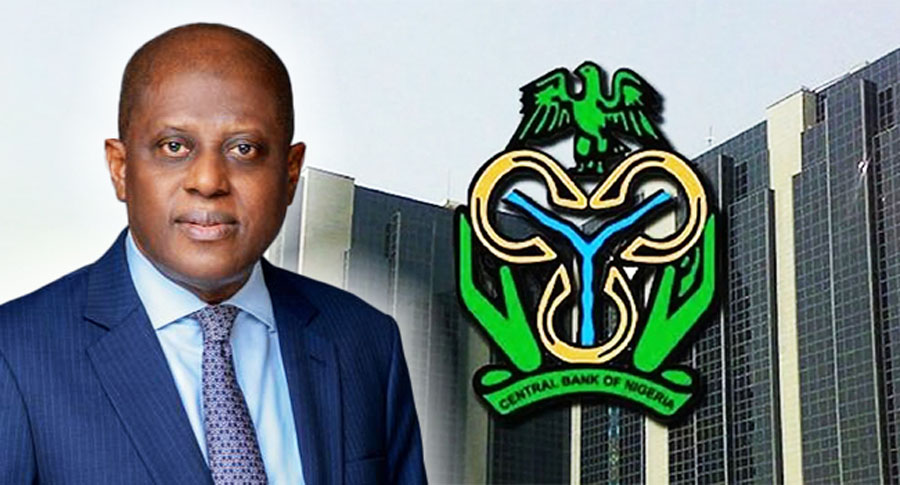
CBN to sanction banks limiting ATM withdrawal below N20,000
The Central Bank of Nigeria, CBN, has threatened to sanction banks that limit Automated Teller Machines (ATM) withdrawal to less than N20,000 per transaction.
The apex bank disclosed this in a document addressing concerns over the reviewed fees on ATM withdrawal.
Recall that CBN on Tuesday increased ATM transaction withdrawal fees, saying, from March 1st, bank customers will pay N100 charge for every N20,000 withdrawal from the on-site ATM of other banks.
The CBN in a circular to banks and other financial institutions, the CBN said, “ATM Transaction Fees On-Us for customers withdrawing at the ATM of the customer’s financial institution in Nigeria with No charge.
“Not-On-Us for withdrawal from another institution’s ATM in Nigeria; On-site ATMs will attract a charge of N100 per N20,000 withdrawal.
“Off-site ATMs will attract a charge of N100 plus a surcharge of not more than N500 per N20,000 withdrawal.
“The surcharge, which is an income of the ATM deployer/acquirer, shall be disclosed at the point of withdrawal to the consumer.
“International Withdrawals (per transaction) whether debit/credit card: Cost Recovery – exact charge by international acquirer.
“Furthermore, the three free monthly withdrawals allowed for Remote-On-Us (other bank’s customers/Not-On-Us consumers) in Nigeria under Section 10.6.2 of the Guide shall no longer apply.”
READ ALSO:
- Group seeks protection for Lagos Assembly speaker, Meranda
- B-Haram influx: S’West govs consider joint security team
- N’Assembly approves N14.3tn for debt service, of N45.9tn 2025 budget
However, following widespread concerns over the limit on ATM cash withdrawal by banks, the apex and yesterday released a list Frequently Asked Question, FAQ, to clarify implementation of the new charge.
CBN to sanction banks limiting ATM withdrawal below N20,000








News
NSCIA Secretary-General Clarifies Council Receives No Government Funding

NSCIA Secretary-General Clarifies Council Receives No Government Funding
The Secretary-General of the Nigerian Supreme Council for Islamic Affairs (NSCIA), Prof. Is-haq Oloyede, has clarified that the council has never received financial support from any government, either within or outside Nigeria. Speaking in Lagos at the 31st Annual Pre-Ramadan Lecture of the University of Lagos Muslim Alumni (UMA), Oloyede stressed that the NSCIA operates independently and relies largely on modest private donations to sustain its activities.
Oloyede, who also serves as Registrar of the Joint Admissions and Matriculation Board (JAMB), explained that in his 15-year tenure as NSCIA Secretary-General, the council had not received “a kobo” from any government. He added that fewer than 20 individuals have donated amounts up to ₦500,000 since 2013, highlighting that the council functions without significant external funding. He decried misinformation and divisive narratives suggesting government involvement under the leadership of the Sultan of Sokoto, Muhammad Saad Abubakar, noting that such speculation undermines unity within Nigeria’s Muslim community.
READ ALSO:
- Saudi Supreme Court Calls on Muslims to Sight Ramadan Crescent Moon on Tuesday Evening
- Nigeria Tax Act 2025: FG Clarifies No New Construction or Bank Taxes
- Israeli Airstrikes Kill 12 in Gaza as Violence Persists Despite Ceasefire
Speaking on the theme “Muslims: The Challenge of National Security,” Oloyede warned against viewing insecurity, terrorism, and banditry through a religious lens. He said extremists often cloak their violent acts in religious language, but such actions do not reflect Islam. “Islam cannot be determined by what extremists say or do. We have a duty to correct that narrative,” he said, urging Muslims to reject all forms of extremism while understanding that insurgency thrives on enabling political, social, and economic conditions.
Oloyede stressed that security is central to Sharia, emphasizing that a true Muslim is someone “from whose actions neighbours — regardless of their faith — are safe and secure.” He cautioned against reducing insecurity to regional or religious differences, noting that all parts of Nigeria face security challenges. He called on Muslims to embrace moral responsibility, civic accountability, and practical partnerships to improve national security.
Other speakers at the lecture also highlighted the societal dimensions of insecurity. Dr. Ridwan Jamiu, Chief Imam of Lekki Central Mosque, described insurgents as agents of evil and stressed the need for religious leaders to promote peace and guide followers toward positive community engagement. Lagos State Assembly Speaker Mudashiru Obasa identified poverty and economic inequality as key drivers of insecurity and urged the government and policymakers to focus on job creation, education, and inclusive development as long-term solutions.
The lecture, part of the annual pre-Ramadan engagements, comes at a time when Nigeria continues to grapple with complex security challenges, including insurgency in the Northeast, banditry in the Northwest and North-Central, and rising violent crime in the South. Experts emphasize that national cohesion, interfaith cooperation, and community-led security initiatives are vital to tackling these threats effectively.
NSCIA Secretary-General Clarifies Council Receives No Government Funding
News
Saudi Supreme Court Calls on Muslims to Sight Ramadan Crescent Moon on Tuesday Evening
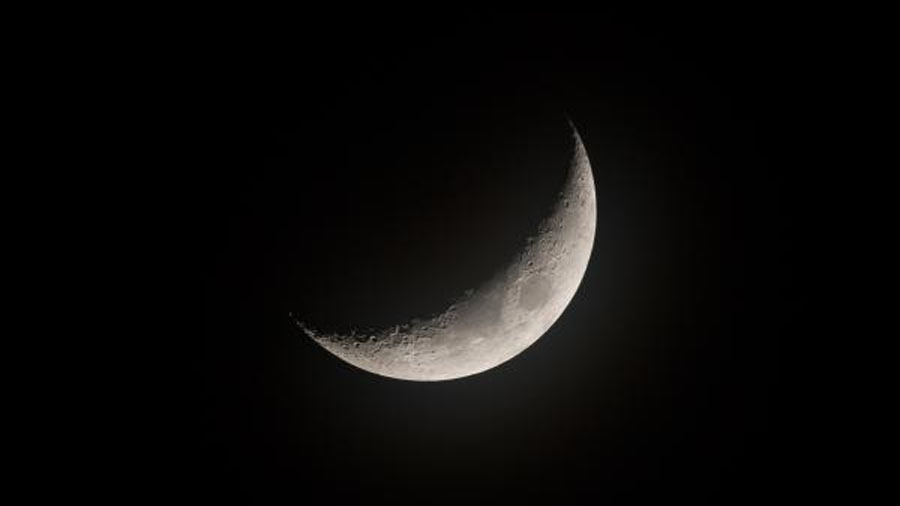
Saudi Supreme Court Calls on Muslims to Sight Ramadan Crescent Moon on Tuesday Evening
The Supreme Court of Saudi Arabia has urged Muslims across the Kingdom to look for the Ramadan crescent moon on the evening of Tuesday, February 17, 2026, to determine the official start of Ramadan 1447 AH. The court emphasized that community participation in moon sighting is vital for confirming the beginning of the holy month.
In an official statement relayed by the Saudi Press Agency, the Supreme Court instructed anyone who spots the new moon crescent — either with the naked eye or using binoculars — to report their observation to the nearest court and ensure their testimony is recorded. Local centres have also been set up to assist observers in reaching judicial offices.
The Kingdom has established moon sighting committees across regions to coordinate observations and support public involvement. Authorities encouraged citizens to actively participate, noting that their contributions are essential to help Muslims across Saudi Arabia begin Ramadan in unity.
READ ALSO:
- Nigeria Tax Act 2025: FG Clarifies No New Construction or Bank Taxes
- Israeli Airstrikes Kill 12 in Gaza as Violence Persists Despite Ceasefire
- FBI Probe Continues as Ex‑Church Minister Who Confessed to Child Abuse Remains Free
Tuesday corresponds to 29 Sha’ban 1447 AH in the Islamic lunar calendar. If the crescent moon is sighted, Ramadan 1447 AH will commence on Wednesday, February 18, 2026. If the moon is not visible, Sha’ban will be completed as 30 days, and Ramadan will begin on Thursday, February 19, 2026. This aligns with centuries-old Islamic tradition of lunar observation.
Muslims worldwide, including in the Gulf Cooperation Council (GCC) countries, are preparing for Ramadan, a sacred month of fasting, prayer, reflection, and charity. Astronomical forecasts suggest visibility may vary across regions, making local observations and testimonies crucial. Similar calls for crescent moon sightings have also been issued by authorities in countries such as Qatar and the United Arab Emirates.
The Supreme Court’s announcement underscores the importance of lunar observation in Islamic practice and encourages public engagement to ensure a synchronized start of Ramadan across the Kingdom.
Saudi Supreme Court Calls on Muslims to Sight Ramadan Crescent Moon on Tuesday Evening
News
Presidency Dismisses El-Rufai’s Thallium Claim as Diversion From N432bn Probe
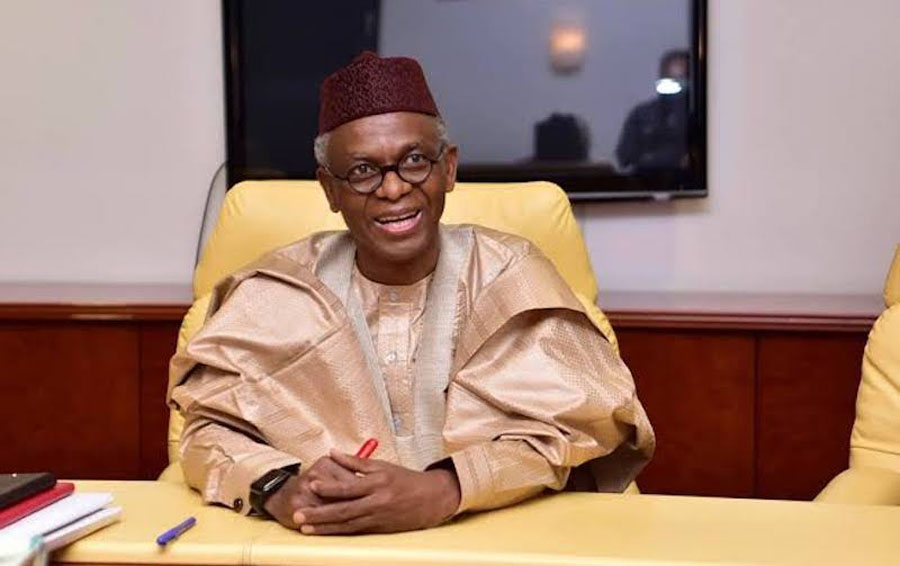
Presidency Dismisses El-Rufai’s Thallium Claim as Diversion From N432bn Probe
The Presidency has dismissed former Kaduna State Governor Nasir El-Rufai’s recent claim that the Office of the National Security Adviser (ONSA) procured thallium sulphate, describing it as a politically motivated attempt to stir tension and divert attention from corruption allegations linked to his tenure in Kaduna State.
Officials said the allegation comes shortly after the Kaduna State House of Assembly reportedly endorsed a petition to the Independent Corrupt Practices and Other Related Offences Commission (ICPC) and the Economic and Financial Crimes Commission (EFCC), urging investigations into alleged financial improprieties totaling N432 billion during El-Rufai’s administration. The anti-graft agencies have since invited him for questioning.
Reacting to El-Rufai’s inquiry to the NSA, the Senior Special Assistant to the President on Media and Publicity, Temitope Ajayi, said the former governor was spreading misinformation capable of generating fear and unrest, while attempting to portray himself as a victim. Ajayi stressed that no government procurement or importation of thallium sulphate had taken place through ONSA.
READ ALSO:
- Ghana Moves to Extradite Russian Man Over Secret Sex Video Scandal
- Residents Flee as Gunmen Launch Fresh Attack on Kwara Community
- DSS Probes El-Rufai’s Claim of Toxic Chemical Import by Ribadu
“Mallam El-Rufai certainly got a reply to his letter from the NSA’s office, and he should be honourable enough to release it just as he mischievously released his own letter,” Ajayi said in a statement shared on social media.
According to the Presidency, El-Rufai’s actions are designed to create political instability and shift public focus away from the corruption allegations he faces. The statement argued that he is attempting to “nationalise his personal challenges” with the Kaduna State Government, insisting the controversy is not about President Bola Tinubu or the NSA, but about his waning political influence after eight years in office.
The Presidency further claimed El-Rufai had lost support from key stakeholders in Kaduna, including political allies, and had fallen out with his successor, Uba Sani, whom he had previously endorsed. Government officials urged the former governor to abandon political theatrics and address the allegations through appropriate legal and institutional channels.
The controversy comes amid heightened attention to both the thallium sulphate claim and the ongoing N432 billion Kaduna corruption probe, with analysts observing potential political and legal implications for the former governor.
Presidency Dismisses El-Rufai’s Thallium Claim as Diversion From N432bn Probe

-
 Education22 hours ago
Check Your Name: UNILORIN Releases Updated NELFUND Refund List for 2024/2025 Students
-

 News13 hours ago
Osogbo Sons and Daughters Mark 5th Anniversary with Awards, Political Undertones
-

 metro2 days ago
Woman Arrested Over Murder of Nigerian E-Hailing Driver in South Africa
-

 metro2 days ago
Boko Haram Terrorists Release Video of 176 Abducted Kwara Residents
-

 News24 hours ago
Afenifere Calls for Immediate Take-Off of State Police as Terror Threats Rise in Yorubaland
-
 metro3 days ago
Court Orders DIA to Produce Cleric Accused of Coup Plot by February 18
-
 metro23 hours ago
US Military Boosts Support for Nigeria’s Fight Against Insurgency With Ammunition, Troop
-

 metro23 hours ago
Argungu Festival 2026 Highlights Peace, Stability, Economic Growth — Tinubu