
Opinion
Opinion: Contextualising the crimes of illicit sexual affair, rape

Zinā is the technical term for any act of illicit sexual affair in the Sharī’ah. Literally, it connotes the act of casting lustful gaze at the opposite gender, engaging in dirty and flirtatious talks, listening, touching and making such moves that are aimed at gratification of the carnal desires.
Muslim reported on the authority of Abū Hurayrah that the Messenger of Allāh ﷺ said:
إِنَّ اللَّهَ كَتَبَ عَلَى ابْنِ آدَمَ حَظَّهُ مِنَ الزِّنَا، أَدْرَكَ ذَلِكَ لاَ مَحَالَةَ ، فَزِنَا العَيْنِ النَّظَرُ، وَزِنَا اللِّسَانِ المَنْطِقُ ، وَالنَّفْسُ تَمَنَّى وَتَشْتَهِي ، وَالفَرْجُ يُصَدِّقُ ذَلِكَ كُلَّهُ وَيُكَذِّبُهُ
“Verily, Allāh has decreed for every son of Ādam his share of Zinā, which he will inevitably commit. The Zinā of the eyes is looking; the Zinā of the tongue is speaking; the soul may wish and desire, and the private parts confirm that (engage in it) or deny it (refrain).”
This hadīth confirms that every human being is guilty of the crime of Zinā in the literal sense, since everyone falls into it at some point, advertently or inadvertently. However, one may NOT be referred to as Zānī (adulterer/fornicator) or Zāniyah (adulteress/fornicatoress) unless he or she engages in the physical act of intercourse.
The punishment for Zinā in Islām depends on marital status of the individuals involved. For the SINGLE Zānī, it’s a PUBLIC floggin of a hundred strokes of cane, and banishment for the period of 1 year, while the MARRIED Zāni is to be stoned to DEATH. This is the consensus opinion of the scholars of the Ummah since the time of the Rasūl ﷺ till our present time. It is also the view of all the scholars whose opinions on matters of the Dīn matter.
فإذا كان الزاني حراً محصناً رُجم حتى الموت رجلاً كان أو امرأة ، وهو محل إجماع
“If the Zānī is a freeborn who is married, he is to be stoned to death, whether male or female. This is a matter of consensus.”
READ ALSO:
- US security alert: We shouldn’t depend on foreigners for our internal safety – DHQ
- Soldiers kill 44 terrorists, apprehend 50 in N’East, N’West
- Provide value for taxpayers money, FIRS urges African govts
Ibn Qudāmah رحمه الله said:
وأجمع عليه أصحاب محمد صلى الله عليه وسلم ، وعن أحمد رواية أنه يجلد ويرجم ، والمذهب الرجم فقط ، كما اتفق الفقهاء على أن الزاني غير المحصن رجلاً كان أو امرأة يجلد مائة جلدة إن كان حراً ، وأما العبد والأمة فحدهما خمسون جلدة سواء كانا بكرين أو ثيبين
“The Companions of the Prophet ﷺ all agreed on this issue. A report from Imām Ahmad states that such a Zānī be flogged a 100 times & then stoned to death. However, the position of the Hanābilah madh-hab is stoning to death only. The jurists are also unanimous that the unmarried Zānī, male or female is to be lashed a 100 times if he’s a freeborn. As for the slave male or female, the punishment is 50 lashes whether he/she is married.”
It is important to note that the hadd punishment mentioned above is APPLICABLE only to the traditional definition of Zinā as
إيلاج/ مَغِيبُ الحَشَفَةِ ,في فَرجٍ مُحَرَّمٍ
“penetration of the vagina (or anus) that is legally prohibited with the tip of the penis (whether or not ejaculation occurs).” That is, the perpetrator would be guilty of Zinā even if it was just the tip of his penis that had penetrated the forbidden hole.
Further explanations reveal that the act must neither be done under duress nor in ambiguous circumstances (شُبْهَة). Any other illicit sexual affair will carry the DISCRETIONARY punishments to be determined by the judge. Such includes touching, kissing, romancing, penetration of the mouth, the breasts, the hips, etc with the penis.
Furthermore, the Sharī’ah’s perspective of Zinā has NOTHING to do with CONSENT. What distinguishes Zinā from licit intercourse is VALID MARRIAGE, not CONSENT. This is also why the concept of MARITAL RAPE has NO BASIS in the Sharī’ah. Marriage validates sexual gratification among spouses. A woman may not refuse her husband sex without valid reasons of menstruation, postpartum bleeding, illness, obligatory fast, or injury. If he goes ahead and penetrates her forcefully, against her will, he’s a sinner but not a RAPIST in the context of the Sharī’ah.
READ ALSO:
- Adebutu, four others expelled from Ogun PDP for manipulation of delegate list
- ASUU: Lecturers Kick As FG Pays Salary For The First Time Since February
- INEC bars new RECs from visiting govt houses
- Naira Redesign: 3 governors under EFCC watch for Stashed Cash
The crime of Zinā is established in the Sharī’ah through voluntary confession of the culprit(s), statements of FOUR credible witnesses, or (in modern times to some extent) through DNA tests. However, as Shaykh Wahbah Az-Zuhaylī puts it, “The DNA does not provide independent evidence in the sense of the court issuing a sentence solely on its basis, but it does provide supportive and persuasive evidence for a court decision.”
The reason for this skeptical approach to DNA results in establishing crimes is the fact that it may be fabricated, falsified and tampered with, just as its reliability may diminish with the lapse of time between the occurrence of the incident and its collection.
Concerning rape, the technical term for it in the Sharī’ah is الاغْتِصابُ. Literally, it means to take a thing by force. It is the worst form of Zinā because of its physical, mental and psychological effects on the victim. All the Scholars of Islām condemn the crime of rape in the harshest of terms. They are also unanimous in their opinion that a rapist is deemed a Zānī and would be punished according to his marital status (as stated above).
Imām Mālik رحمه الله in his Muwatta’ (2/734) said:
الأمر عندنا في الرجل يغتصب المرأة بكراً كانت أو ثيبا : أنها إن كانت حرة : فعليه صداق مثلها , وإن كانت أمَة : فعليه ما نقص من ثمنها ، والعقوبة في ذلك على المغتصب ، ولا عقوبة على المغتصبة في ذلك كله ” انتهى .
“Our position on the rapist who forcefully has carnal knowledge of a woman whether she’s single or married is that, if she’s a freeborn, he must pay her the dower of a woman of her status and if she’s a slave girl, he must pay the sum of what has diminished of her value. The punishment for the crime is on the rapist. The victim is not to be punished in such cases.”
Ibn ‘Abdilbarr in al-Istidhkār 7/146 further elaborates on the issue when he submitted thus:
وقد أجمع العلماء على أن على المستكرِه المغتصِب الحدَّ إن شهدت البينة عليه بما يوجب الحد ، أو أقر بذلك ، فإن لم يكن : فعليه العقوبة (يعني : إذا لم يثبت عليه حد الزنا لعدم اعترافه ، وعدم وجود أربعة شهود ، فإن الحاكم يعاقبه ويعزره العقوبة التي تردعه وأمثاله) ولا عقوبة عليها إذا صح أنه استكرهها وغلبها على نفسها ، وذلك يعلم بصراخها ، واستغاثتها ، وصياحها
“The scholars have all agreed the rapist shall be given the hadd punishment if credible proofs necessitating such punishment are established against him, or he confesses to committing it. In the absence of such proofs, the judge shall exercise his discretion in punishing him in a way that will deter him and others like him. The victim is not to be punished if it’s proven that he overpowered her and forced himself on her. Such can be known through her cry for help and shouts.”
READ ALSO:
- 2023: PDP Women Leader defects to APC
- TETFund Contractor Muhammad Zanna Vanishes After Receiving Supplies for Bida Poly Contract
- Emirates suspends flights to Nigeria again over trapped funds
Protection of life and honour are fundamental aspects of the Cardinal Objectives of the Sharī’ah. It is for this reason that it has laid down strict procedures for the establishment of claims against one another. Bukhāri & Muslim reported on the authority of ibn Abbās that the Messenger of Allāh ﷺ said:
لَوْ يُعْطَى اَلنَّاسُ بِدَعْوَاهُمْ, لَادَّعَى نَاسٌ دِمَاءَ رِجَالٍ, وَأَمْوَالَهُمْ, وَلَكِنِ اَلْيَمِينُ عَلَى اَلْمُدَّعَى عَلَيْهِ
“If people were given whatever they claimed (in disputes), some people would claim the lives and wealth of others; but the oath (of denial) must be taken by the defendant.”
In the narration by Al-Bayhaqī:
اَلْبَيِّنَةُ عَلَى اَلْمُدَّعِي, وَالْيَمِينُ عَلَى مَنْ أَنْكَرَ
“The burden of proof lies on the claimant, and oath must be taken by the one rejecting the claim.”
Based on this hadīth, the crime of rape cannot be brought against anyone without CONCRETE proofs beyond any shadow of doubt. Crimes are to be proven before the judge in a court of competent jurisdiction and not on the social media. Where there are no concrete proofs establishing guilt of the accused, the judge may look into the circumstantial evidence and exercise his discretionary powers.
However, if the victim was able to prove that the rapist gagged her mouth and restrained her, or knocked her out by the aid of pills or gas, or threatened her life with dangerous weapons, such a RAPIST is considered a مُحارِبٌ and, depending on the degree of his culpability, the judge is expected to apply any of the injunctions in Q.5:33 based on his discretion:
إِنَّمَا جَزَاءُ الَّذِينَ يُحَارِبُونَ اللَّهَ وَرَسُولَهُ وَيَسْعَوْنَ فِي الأَرْضِ فَسَاداً أَنْ يُقَتَّلُوا أَوْ يُصَلَّبُوا أَوْ تُقَطَّعَ أَيْدِيهِمْ وَأَرْجُلُهُمْ مِنْ خِلافٍ أَوْ يُنْفَوْا مِنَ الأَرْضِ ذَلِكَ لَهُمْ خِزْيٌ فِي الدُّنْيَا وَلَهُمْ فِي الآخِرَةِ عَذَابٌ عَظِيمٌ
“The penalty of those who wage war against Allāh and His Messenger and seek corruption in the land is to be killed, or crucified, or to have their hands and feet cut on alternate sides, or to be banished from the land. That is their disgrace in this world, and in the Hereafter they shall have a great punishment.”
READ ALSO:
- Wike revokes Atiku campaign chairman’s Certificate of Occupancy
- Arrest embarrassing naira depreciation now, Clark tells CBN
- Immigration Arrests Suspects With 29 Cartons Of Hard Drugs At Jigawa Border
In a situation (though rare) where the victim of rape is a male, scholars of Islām have differed on the appropriate ruling in this regard.
قال ابن قدامة
فَصْلٌ: وَإِنْ أُكْرِهَ الرَّجُلُ فَزَنَى، فَقَالَ أَصْحَابُنَا: عَلَيْهِ الْحَدُّ. وَبِهِ قَالَ مُحَمَّدُ بْنُ الْحَسَنِ، وَأَبُو ثَوْرٍ؛ لِأَنَّ الْوَطْءَ لَا يَكُونُ إلَّا بِالِانْتِشَارِ، وَالْإِكْرَاهُ يُنَافِيهِ. فَإِذَا وُجِدَ الِانْتِشَارُ انْتَفَى الْإِكْرَاهُ، فَيَلْزَمُهُ الْحَدُّ، كَمَا لَوْ أُكْرِهَ عَلَى غَيْرِ الزِّنَى، فَزَنَى.
Ibn Qudāmah رحمه الله notes:
“Chapter: If a man was forced to commit Zinā and he commits it, our companions (Hanābilah) said: he shall face the hadd punishment. This is the view of Muhammad bn Al-Hasan (Ash-Shaybānī) and Abū Thawr. This is because sex cannot occur without erection, and duress makes erection impossible. So if he has erection, it’s not treated as forced sex and as such he would be given the hadd punishment just as if he was forced to do something else and he commits Zinā.”
He continues:
وَقَالَ الشَّافِعِيُّ، وَابْنُ الْمُنْذِرِ: لَا حَدَّ عَلَيْهِ؛ لِعُمُومِ الْخَبَرِ، وَلِأَنَّ الْحُدُودَ تُدْرَأُ بِالشُّبُهَاتِ، وَالْإِكْرَاهُ شُبْهَةٌ، فَيَمْنَعُ الْحَدَّ، كَمَا لَوْ كَانَتْ امْرَأَةً، يُحَقِّقُهُ أَنَّ الْإِكْرَاهَ، إذَا كَانَ بِالتَّخْوِيفِ، أَوْ بِمَنْعِ مَا تَفُوتُ حَيَاتُهُ بِمَنْعِهِ، كَانَ الرَّجُلُ فِيهِ كَالْمَرْأَةِ، فَإِذَا لَمْ يَجِبْ عَلَيْهَا الْحَدُّ، لَمْ يَجِبْ عَلَيْهِ. وَقَوْلُهُمْ: إنَّ التَّخْوِيفَ يُنَافِي الِانْتِشَارَ. لَا يَصِحُّ؛ لِأَنَّ التَّخْوِيفَ بِتَرْكِ الْفِعْلِ، وَالْفِعْلُ لَا يُخَافُ مِنْهُ، فَلَا يَمْنَعُ ذَلِكَ. وَهَذَا أَصَحُّ الْأَقْوَالِ، إنْ شَاءَ اللَّهُ تَعَالَى.
“Ash-Shāfi’ī and ibn al-Mundhir said: he shall not face the hadd punishment, based on the general implication of the texts, and also because capital punishments are waived by ambiguities. Duress is a form of ambiguity and as such, hadd punishment shall not be applicable in such circumstances. This is the same ruling if the victim were a woman. If a man’s life was threatened, his case is similar to that of a woman penetrated by force. Both would not be punished. As for the statement of those who say, “threat to life makes erection impossible, this is not correct. This is the most sound of opinions.”
Nowadays, it is possible to force a man to have erection through admission of aphrodisiacs (injections, pills, or drinks). This further refutes the claim of those who say that duress makes erection impossible.
Finally, it is important to abide by the clear rules that Islām has laid down aimed at blocking all the means to evils. Our emphasis should not be on the sexual aspect of rape only, but on all forms of objectification and degradation of women’s status by artists and business owners through advertisement of goods and services.
Dr. Sanusi Lafiagi is a lecturer in Department of Islamic Studies, Al-Hikmah University Ilorin











Opinion
How opposition Tinubu would treat President Tinubu, By Farooq Kperogi

How opposition Tinubu would treat President Tinubu, By Farooq Kperogi
How opposition Tinubu would treat President Tinubu, By Farooq Kperogi
Opinion
Adelabu’s Power Lines as Laundry Lines
Adelabu’s Power Lines as Laundry Lines
Azu Ishiekwene
In many parts of the country, the rains poured down earlier in the week, bringing much physical and psychological relief from the searing heat.
The absence of electricity from public supply channels made it worse. Average daytime temperatures throughout March ranged from 33 degrees to 38 degrees centigrade in Lagos and Abuja, respectively.
Nigeria’s public electricity grid must rank among the most intractable problems any developing country could face. There is hardly anything more constant than the announcement of grid collapse, which leaves businesses and homes seeking alternatives and incurring unplanned expenses while paying for electricity not supplied.
What Candidate Tinubu promised
During his 2023 campaign, President Bola Ahmed Tinubu said that if he didn’t fix the problem, he shouldn’t be voted in for a second term. He must be regretting that statement now. Since the beginning of his administration in May 2023, there have been multiple grid collapses, with the highest number recorded in 2024 at 12. Even when incidents were fewer, sporadic outages have continued. The failure, on face value, is attributed to a mix of technical, structural and administrative weaknesses in the system. But there is more to it in the sense in which it is said: “The more you see, the less you understand.”
So unreliable is the public electricity supply that the Presidential villa appropriated N10 billion in 2025, and an additional N7 billion in 2026 for the installation of a solar mini grid that will effectively disconnect Nigeria’s seat of power from the national grid, bedevilled by ageing transmission lines which collapse repeatedly from sabotage, poor maintenance, and frequency imbalances.
The joke is on us
Nigerians, ever ready to make a jest of their tragic maladies and long suffering, are beaten when it comes to power outages. They are shocked beyond humour. If the high-tension cables were not too high overhead, people in communities through which they run would not hesitate to hang their laundry on them – knowing from experience that the lines are just part of the landscape and are very likely to be without electricity.
READ ALSO:
- Ondo PDP Rejects Wike Faction, Affirms Loyalty to Turaki‑Led NWC
- Bandits Abduct Seven Family Members, Three Neighbors in Kaduna
- Festus Keyamo Urges ADC to Thank INEC Over Derecognition of Rival Factions
I have seen a video of a masquerade performing on a streetlight pole. Of course, the crowd applauded its invincibility; yet, both the crowd and the masquerade knew better. The lines had not been electrified for months and were unlikely to be for the spell of the circus.
Hope was rekindled at the beginning of the Tinubu administration when news filtered through that the currently embattled former governor of Kaduna State, Nasir El-Rufai, had not only produced a blueprint, but was going to be given the assignment of sorting out Nigeria’s notorious electricity sector. I learnt reliably that, as part of his plan, El-Rufai was discussing a $10 billion investment agreement with the Saudis before he ran into rough weather.
The coming of Adebayo
That was how Adebayo Adelabu took the job – a job at which he has performed so disastrously, saying he failed would be an honour. But it’s not his fault – it’s the fault of the President who appointed him and the Senate that cleared him for a job that he was clearly incompetent to perform, either based on his record or based on any hope of redemption. He is brilliant, but the power sector is littered with the remains of brilliant people, among whom he is now a fossil.
His better years were when he worked as an auditor at PWC. He was also the Executive Director/CFO at First Bank, and later a deputy governor at the Central Bank. He may not have been directly responsible for the misfortunes of these institutions at the time, but he doesn’t exactly smell of roses.
In the normal course of things, his banking career should have been a yellow flag. Still, Nigeria being Nigeria, the quota system and political connections ensured that he defied gravity.
Then, in 2023, Tinubu offered him the position of Minister of Power, after his failed attempt to become governor of Oyo State on the platform of the Accord Party. That only worsened our misery. Adelabu will be best remembered for splitting electricity consumers into parallel payment bands that do not necessarily reflect improved services.
The thing is not that Adelabu failed at his job. It’s the lack of evidence that he tried. Mr Dan Kunle, an energy expert familiar with the history of that sector, told me that, “No one is saying a power minister should provide the resources to fix the sector from thin air. It’s for him to provide a solid framework that would create the right environment and attract sovereign intervention.”
Adelabu, like many of his predecessors, is running the power ministry in 2026 with the 1950 operational manual of the Electricity Corporation of Nigeria (ECN). Yet, even then, when the country had a population of about 50 million, the British knew that electricity was an economic good. To provide meaningful and sustainable service, they had to prioritise not just the key administrative centres but also areas that could pay. That was why, for example, coal was shipped from Enugu to the Ijora Power Station in Lagos.
No roadmap
Adelabu has no roadmap, or if he has one for a population four times what it was under ECN, it’s a roadmap to nowhere. The same old problems persist: gas shortages, moribund plants, infrastructure deficits, massive debts, and frequent grid collapses, limiting supply to about 4,000 MW despite a capacity of 13,000 MW.
READ ALSO:
- INEC Warns ADC Against Holding Convention Without Supervision
- APC Rejects ADC Claims, Says Tinubu Not Responsible for Party’s Legal Troubles
- Fani‑Kayode Fires Back at Peter Obi, Defends NADECO’s Legacy
While Adelabu may wring his hands alongside Nigerians when the lights trip off, the sector has been drowning under the yoke of N6 trillion in debt as of late 2025, fuelled by non-cost-reflective tariffs and unpaid bills to both generating and distribution companies. Some of the problems predate Adelabu, but his incompetence has worsened them.
Yet, he still has ambition. Not to redeem himself after his disastrous three years as minister, but to become the governor of Oyo State. Obviously, he believes the reward for poor performance is a higher office. He is so shameless, it means nothing to him that he holds the Olympic record for national grid collapse. It means nothing to him that Nigerian businesses are powered by Indian generators and their homes by Chinese solar panels.
Examples from Africa
Egypt, with a population of 110 million, has 100 percent universal electricity access, supported by a heavy reliance on gas (81 percent) and growing low-carbon sources like hydropower. This ensures a stable supply amid population pressures.
South Africa serves 85-90 percent of its 62 million residents but faces severe shortages. Frequent load shedding persists due to Eskom’s debt, ageing infrastructure, and maintenance issues, despite high per-capita generation.
Ghana reaches 88-89 percent coverage for 34 million people, with hydro and thermal power dominating. Urban areas enjoy near-99 percent access, while rural areas still have gaps and occasional outages.
Kenya hits 76 percent for 56 million, excelling in urban (97 percent) and geothermal power. Rural expansion lags, though targets aim for full access by 2030.
Compared to the countries above, only 57 percent of Nigerians are grid-connected, with outages occurring 85 percent of the time, and poor metering and corruption that sustain estimated billing and inefficiencies.
After watching Adelabu perform so poorly over the last two years on the national stage, I was hoping he would go away quietly, under the shadow of the darkness he has fostered. But since he insists that he won’t leave quietly – or appears determined to stay on – I’m considering a self-appointed mission to drag him to Oyo State to see how he will turn their night into day.
Adelabu’s Power Lines as Laundry Lines
Ishiekwene is the Editor-In-Chief of LEADERSHIP and author of the book, Writing for Media and Monetising It.
Opinion
Super Bowl: Can Africa Spring Up anew?
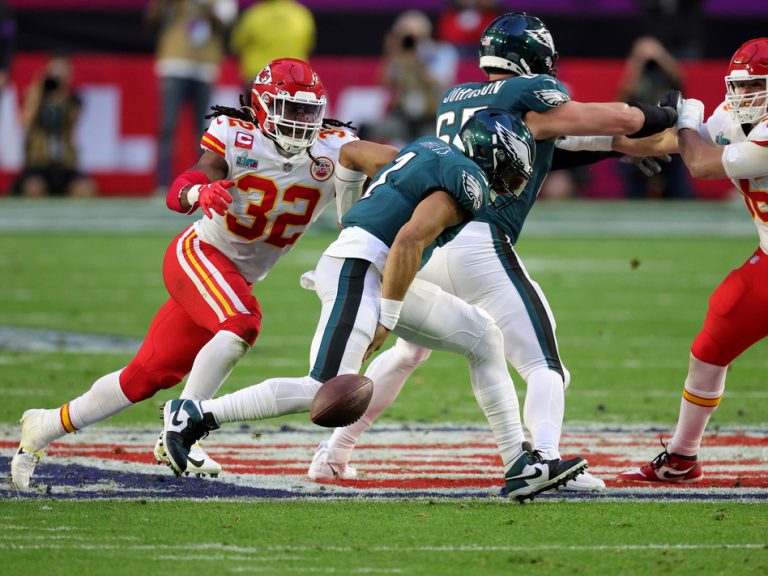
Super Bowl: Can Africa Spring Up anew?
With a landmass of approximately 9.83 million km² and a population of 334–336 million as of 2025—making it the third-largest country in the world—the United States is massive. It is four times the size of Algeria, Africa’s largest country, and dwarfs Nigeria, the continent’s most populous nation.
The United States is a titan among nations. Who knows—perhaps neologists will coin a new term if the U.S. eventually purchases or forcefully takes Greenland from Denmark, further surging its landmass and population. When this massive scale fuses with unparalleled infrastructure, world-class venues, and a vast market, the USA becomes an ideal host for international sporting events with strong returns on investment.
Between 1904 and 2025, the USA hosted one FIFA World Cup (with another to be co-hosted in 2026 with Mexico and Canada), four Summer Olympics, four Winter Olympics, and one FIBA Basketball World Cup. Unlike soccer, which is still finding its footing in the United States—even with Major League Soccer (MLS) having existed for 30 years—American football is the undisputed number-one sport. The Super Bowl—born from Lamar Hunt’s “light-bulb moment”—is the crown jewel. The Super Bowl has become what sociologists call a secular ritual, binding the social fabric of Americans together.
Beyond the Vince Lombardi Trophy, the Super Bowl has evolved into a global marketing masterpiece. From the famous 1984 Apple commercial introducing the Macintosh, which is studied in MBA classes worldwide, to the 1979 Mean Joe Greene Coca-Cola commercial that showed genteel human warmth winning over fearsomeness, the intentionality of brands going head-to-head with rivals has been a recurring feature of every Super Bowl.
While the USA is always attractive for hosting events, the Super Bowl’s success pivots on intellection that results in ingenious marketing. For the recent Super Bowl LX on February 8, 2026, two brands mirrored David Ben-Gurion’s principle of “taking the fight to the enemy.” Pepsi and Anthropic’s Claude entered with an offensive strategy: Claude’s AI ad—“Ads are coming to AI. But not to Claude.”—was a calculated strike in the competitive AI market, while Pepsi’s polar bear blind test revived the sulphurous rivalry with Coca-Cola. Many companies use their ad slots to build brand identity and equity or announce arrival in the business world.
Where does Africa stand in this Super Bowl business and sports calculus? While developed nations are making groundbreaking launches with chutzpah and creativity from creative shops—all resulting in a participatory economy—Africa’s involvement is largely an on-the-field display of Négritude spirit and ravenous passion.
For Africa, the Super Bowl has become a “badge of honor” through representation. Mohammed Elewonibi, a Nigerian raised in Canada, was the first player of African origin to win a Super Bowl (XXVI, 1992, with the Washington Redskins). Since then, nearly 41 players of Nigerian origin or heritage have won—the most of any African country—including six who tasted victory with the recent Seattle Seahawks: Uchenna Nwosu, Nick Emmanwori, Boye Mafe, Jaxon Smith-Njigba (of Nigerian and Sierra Leonean roots), Jalen Milroe, and Olu Oluwatimi.
Yet, as impressive as African athletes are in making the continent proud, we have blatantly failed to translate that audience engagement into commercial windfalls like the Super Bowl on home soil. It is appalling that most of Africa’s sporting events—the Durban July Handicap, Senegalese wrestling (Laamb), or the Safari Rally—have not fully harnessed the intersection of sports and marketing. Even the Africa Cup of Nations (AFCON), despite its 3.45 billion cumulative viewers (far surpassing the Super Bowl’s ~125–127 million), lacks comparable marketing prestige. Why are there no global product launches during our matches? Why aren’t AI giants capitalizing on Africa’s tech startup boom?
Africa is being fed celery when it deserves the whole salad. This asymmetry stems from structural economic factors, but the genie is out of the bottle—we must be forward-looking. To turn African sporting events into “goldmines,” we must reinvent the industry, much as Cirque du Soleil did for the circus. Facing declining audiences, rising costs, and fierce competition, it lost its grip on the circus business. Cirque, however, escaped the dying circus business by reinventing it.
By viewing competition through a new lens, Africa can transform massive viewership into unparalleled economic advantage and value. Just as Cirque du Soleil created uncontested market space, African sports must adopt what W. Chan Kim and Renée Mauborgne called a “Blue Ocean Strategy”—creating uncontested market space and making competition irrelevant. Much as we can not compete toe to toe with advanced economies , we should not follow them like zombies.
In their book Blue Ocean Strategy: How to Create Uncontested Market Space and Make the Competition Irrelevant, the authors highlight how companies in “red oceans” fight for shrinking profits in crowded, defined markets. African sports events currently sit in those crowded red oceans. To elevate them, we need disruptive leaders willing to venture into untapped markets, create new demand, and unlock unlimited growth opportunities.
Joseph Pine and James Gilmore, in their book The Experience Economy, wrote about the need to transform commodities into experiences. As Africans, we have been able to move our sporting events from the commodity stage to the third stage—service delivery—but the experience stage is the North Star we should aspire to reach.
Our cultures, as varied as they are, define us. Despite dilution by Western civilization, our culture stands uneroded, like the mountains that litter our landscape and serve as a canopy to preserve our common heritage. This means our forefathers took culture into the realm of experience—something we are still grappling with in our sporting spectacles today. For us to make headway, our cultures—already bubbling with experience—must mix seamlessly with our sporting spectacles.
Now is the time to merge cultural events like the Eyo Festival, Argungu Festival, Gnaoua World Music Festival, Osun Osogbo Festival, Meskel Festival, and others with our sporting spectacles—that is the Blue Ocean Strategy. This can only be achieved through close collaboration between leaders in sports administration and marketing professionals selling experiences, and the time is now. As this is done, a line from David Diop’s poem Africa—“That is your Africa springing up anew”—would fill our lips.
The experience stage is the nirvana!
Toluwalope Shodunke
Can be reached via tolushodunke@yahoo.com
Super Bowl: Can Africa Spring Up anew?

-
 metro3 days ago
JUST IN: FG Publishes List of 48 Individuals, Groups Linked to Terrorism Financing in Nigeria
-

 metro2 days ago
BREAKING: Troops Arrest 15-Year-Old Linked to Killing of Gen Braimah in Borno
-

 metro2 days ago
Fayose Warns Makinde May Query Olubadan Over Absence at Ibadan Coronation Event
-
 metro2 days ago
Zulum Defends NAF Airstrike, Says Jilli Market Closed Five Years Ago
-
 metro2 days ago
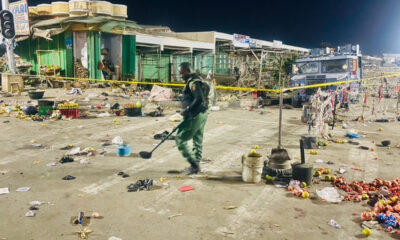
BREAKING: 56 Killed in Accidental Bombing at Borno–Yobe Border Market
-

 Railway2 days ago
FG pushes high-speed train, expands rail links to seaports
-

 Politics2 days ago
Lagos 2027: APC Succession War Intensifies as Tinubu Reportedly Backs Hamzat
-

 metro2 days ago
Police Arrest Suspect Over Fake Job Interview Robbery in Magodo