

Politics
Court dismisses certificate forgery case against Obaseki
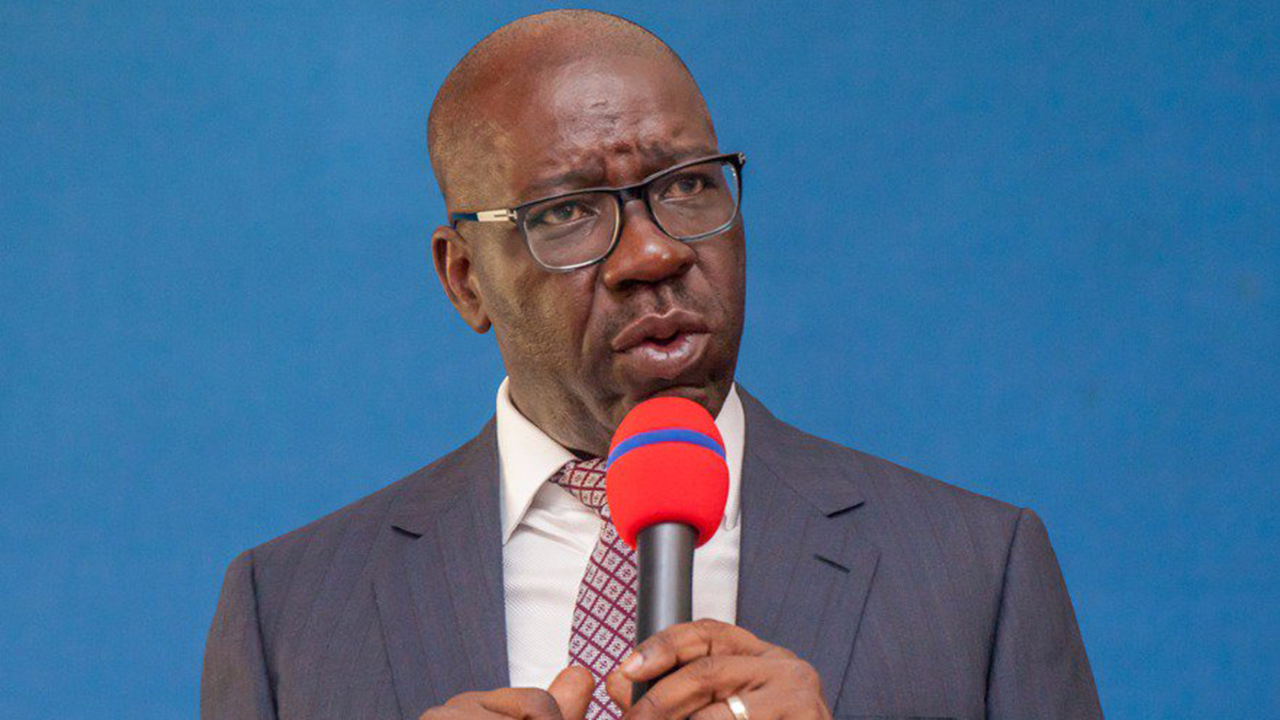
A Federal High Court in Abuja on Saturday declared certificates presented by Governor Godwin Obaseki of Edo State for the 2020 governorship election as genuine.
It dismissed the alleged certificate forgery case brought against the governor by the All Progressives Congress (APC) and one of its members, Edobor Williams.
Justice Ahmed Mohammed, in his judgment held that the plaintiffs failed to prove their claim that Obaseki forged the academic certificates he submitted to the Independent National Electoral Commission (INEC) before the last governorship election in the state.
The judge described as lazy the attitude of the plaintiffs, who made no efforts to cross-check with the University of Ibadan (UI) and the West African Examination Council (WAEC), the two institutions that issued the certificates they claimed were forged by Obaseki.
Lawyers to Obaseki (first defendant), Ken Mozia (SAN) and the Peoples Democratic Party (PDP) – the second defendant – Razaq Isenalumhe, after adopting the their final written addresses, had earlier urged the court to dismiss the suit.
While Mozia also urged the court to hold that the plaintiffs failed to prove their case, Isenalumhe also prayed the court to award substantial cost against the plaintiffs.
Lawyer to the Independent National Electoral Commission (INEC), Murktar Bawa, also said they did not file any process in the suit, adding that they had consistently remained neutral.
“We urge the court to decide the case one way or the other in accordance with the processes before the court.”
In the suit, the plaintiffs wanted the court to, among others, disqualify Obaseki as candidate of the PDP in the September 19, 2020 governorship election in Edo State.
They alleged that the governor forged his first degree certificate, which he claimed to have obtained from the University of Ibadan (UI) in 1979 and which he submitted to INEC as part of his educational qualification.
The plaintiffs claimed that a photocopy of the degree certificate attached to the nomination form Obaseki submitted to INEC did not contain the signature of the Registrar of the university and the date the certificate was issued.
But Obaseki explained that the Registrar’s signature and the date of issue were cut off from the photocopies of his certificate submitted to INEC because the person who made the photocopy used a smaller size paper, an A4, which was smaller than the size of the original certificate.
The plaintiffs called six witnesses and tendered some documents to support their case, while Obaseki called three witnesses to support his case.







Politics
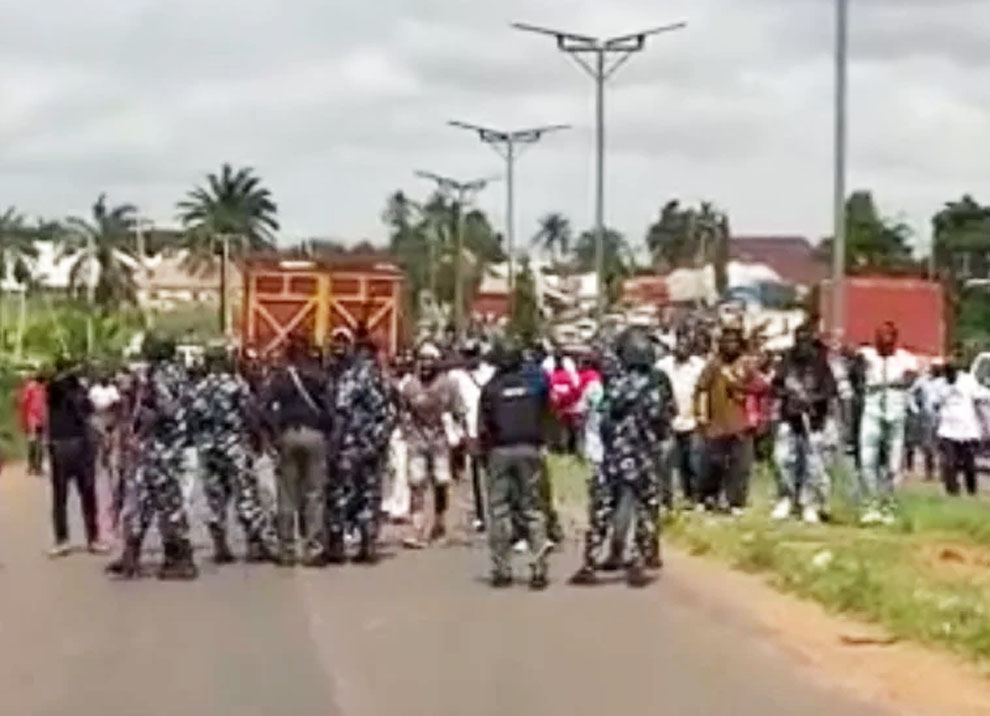
JUST IN: Tension in Benue as Suspected Thugs Attack Peter Obi’s Convoy, Block Access
Politics
Why Did Peter Obi Attend Seyi Makinde’s Campaign Launch? Here’s What He Said
Why Did Peter Obi Attend Seyi Makinde’s Campaign Launch? Here’s What He Said
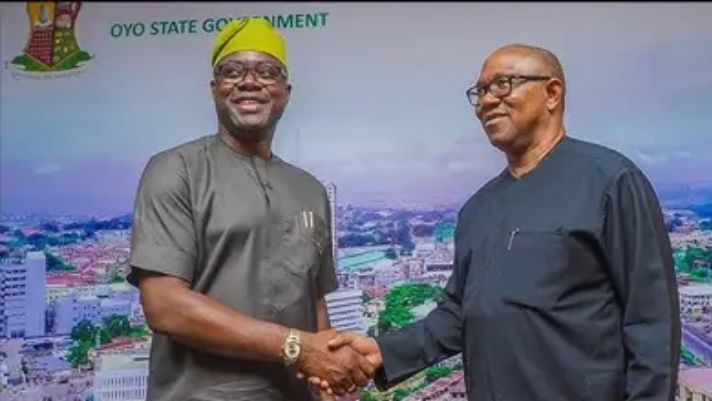
Peter Obi’s appearance at Seyi Makinde’s campaign-office commissioning in Abuja has raised questions about the relationship between the two opposition figures ahead of the 2027 elections.
Obi, the presidential candidate of the Nigeria Democratic Congress (NDC), attended the event on Monday alongside Makinde, the presidential candidate of the Allied Peoples Movement (APM), and Bauchi State Governor Bala Mohammed.
His presence at a rival party’s campaign event was enough to attract attention, particularly at a time when opposition parties are exploring ways to work together ahead of the elections.
But Obi’s message at the event was less about party rivalry and more about the need for cooperation.
‘Politics Without Bitterness’
In his goodwill message, Obi said belonging to different political parties should not make politicians enemies. He described his attendance as a demonstration that opposition parties could work together toward a better Nigeria.
READ ALSO:
- JUST IN: Tension in Benue as Suspected Thugs Attack Peter Obi’s Convoy, Block Access
- FIFA, CAF suspend NFF election as Nigeria football reforms face fresh review
- NNPC Disowns Cannabis-Laden Tanker, Threatens Legal Action Over Brand Misuse
“Politics without bitterness” was the central theme of his message, as he called for political contests to be driven by ideas rather than hostility.
Obi also congratulated Makinde, Mohammed and the APM leadership on the opening of the campaign office.
What Does This Mean for 2027?
The appearance comes as opposition parties continue to discuss possible cooperation ahead of the 2027 presidential election.
Makinde, who is also the Governor of Oyo State, has emerged as one of the prominent figures in the opposition camp. His campaign is being built around the “Reset Nigeria” agenda, while Obi remains a major opposition figure following his 2023 presidential campaign.
Although Obi’s attendance does not, by itself, establish a political alliance, it adds to the growing conversation about cooperation among opposition leaders.
For now, the message from Obi is clear: political differences should not prevent leaders from working together.
Whether that spirit of cooperation will translate into a formal electoral arrangement remains to be seen.
Why Did Peter Obi Attend Seyi Makinde’s Campaign Launch? Here’s What He Said
Politics
Okonkwo Mocks Obi Over Attendance at Makinde’s APM Campaign Office Launch

Okonkwo Mocks Obi Over Attendance at Makinde’s APM Campaign Office Launch
Kenneth Okonkwo, spokesperson for the African Democratic Congress (ADC) presidential candidate Atiku Abubakar, has taken a swipe at Peter Obi, the presidential candidate of the Nigeria Democratic Congress (NDC), over his attendance at the inauguration of Oyo State Governor Seyi Makinde’s presidential campaign office in Abuja.
Okonkwo made the remarks during an interview with News Central while explaining why the ADC was not represented at the event held on Monday. He stated that the inauguration was primarily an Allied Peoples Movement (APM) affair and therefore did not require the participation of ADC leaders. “As far as I’m concerned, that is an APM affair and it should be attributed to APM,” he said. The ADC chieftain appeared to mock Obi and other politicians who attended the gathering, describing them as individuals who would show up at virtually any event once invited. “Those people that were there — even if you had invited them for naming ceremony or birthday party — they are known for people who like to wave to people,” he said. “Even if there’s no crowd, they will still be waving to trees. It’s just normal for them. If you’re doing anything and you call them they will come”.
READ ALSO:
- No US Case Against Tinubu, Family Enjoy Unimpeded Transit for UNGA — Ambassador Ibrahim
- Buhari’s Govt Was Weakened by Sycophants Who Betrayed His Trust, Says Ex-DSS Boss
- EFCC arraigns man over alleged N700m fraud, Ravenpay 2FA breach
Speaking at the APM event in Abuja’s Wuse II district, Obi described Makinde as qualified to seek the presidency in 2027, calling him his “dear brother”. “We have a candidate, who is contesting for president today, my dear brother, Seyi Makinde. Number one is, is he qualified to be president? Yes. He’s qualified. Yes. Yes,” Obi said. The former Anambra State governor, known for attending political events across party lines throughout his career, said Nigeria’s worsening economic and security challenges demanded a different kind of politics. “What we are doing today is to show you that, for us, we don’t have desperation. We want the people of Nigeria to make their choice. Whoever they choose, all of us will come together to build a new Nigeria,” Obi said. “We can’t all continue the way we are going today. Our people are hungry. Our people are poor. Our people are insecure. Whoever wins, genuinely, from a free, fair and credible election, we all want to work together to save this country from collapse,” Obi said. Obi called for an end to confrontational politics, urging that political disagreements should focus on solving the problems facing ordinary Nigerians rather than personal quarrels. “We don’t want politics of quarrel, politics of disagreement. Let our quarrel be to feed our people. Let our quarrel be to pull our people out of poverty,” he said. He also expressed hope for a Nigeria where citizens could succeed regardless of their background or connections, saying: “We want a Nigeria where a child of nobody can be somebody without knowing anybody”.
The event, which also featured Bauchi State Governor and APM National Leader Bala Mohammed, underscored the growing political consultations and alignments ahead of the 2027 general election. The campaign office, located in Wuse II, Abuja, will serve as the national coordinating centre for the Makinde-Daura presidential campaign. Mohammed warned rival political parties against dismissing the electoral strength of the APM and its presidential candidate. “Whoever disregards us is at his own peril, we are here to reset Nigeria and we are bringing in one of the best human capitals that Nigeria has ever produced at the sub-national and national level, that is Makinde,” Mohammed said. Makinde, who is contesting on the APM platform alongside vice-presidential candidate Lawal Daura, used the occasion to present his “Reset Nigeria” agenda and call for greater transparency in the management of the country’s resources. He dismissed suggestions that his presidential ambition should not be taken seriously, recalling similar predictions made before he became governor of Oyo State.
Okonkwo’s criticism comes against the backdrop of a strained relationship between himself and Obi. The Nollywood veteran-turned-politician had previously served as a spokesperson for Obi’s 2023 presidential campaign but later publicly withdrew his support. He has since revealed that he no longer believed Obi possessed the leadership qualities required to govern Nigeria. The rift deepened when Obi filed an N8 billion defamation lawsuit against Okonkwo in June 2026 over remarks the ADC chieftain made during a television interview. Obi is seeking N5 billion in general damages, N2 billion in aggravated damages, and N1 billion in exemplary damages, along with orders for a retraction and apology. In July 2026, Okonkwo was appointed as the official spokesperson for Atiku Abubakar’s 2027 presidential campaign under the ADC platform. His appointment was welcomed by ADC support groups who described it as recognition of his contributions to national development.
Okonkwo Mocks Obi Over Attendance at Makinde’s APM Campaign Office Launch
-
 Business3 days ago
BREAKING: OPay Warns Customers Against Viral Shutdown Message, Threatens Legal Action
-
 metro3 days ago
Osinbajo raises alarm over chemicals in fruits, recalls wife’s orange juice experience
-

 Auto3 days ago
NAJA 19th Auto Awards: Industry’s best to battle for honours December 3
-
 Politics3 days ago
15 northern states may collapse if fuel subsidy returns, OAU professor warns Atiku
-

 Education3 days ago
JAMB Releases Underage UTME Results, Sets Strict Conditions for Admission
-
 metro2 days ago
APC rally: Suspected thugs attack journalists, smash Radio Nigeria vehicle in Kano
-
 metro3 days ago
Lagos-Ibadan Expressway: FG begins Kara Bridge repairs Tuesday, deploys traffic agencies
-

 Auto3 days ago
Jetour Takes Rely R8 Premium Pickup to Abuja in Major FCT Debut
You must be logged in to post a comment Login