
Business
Dangote refinery gets 4th shipment barrels of crude
Dangote refinery gets 4th shipment barrels of crude
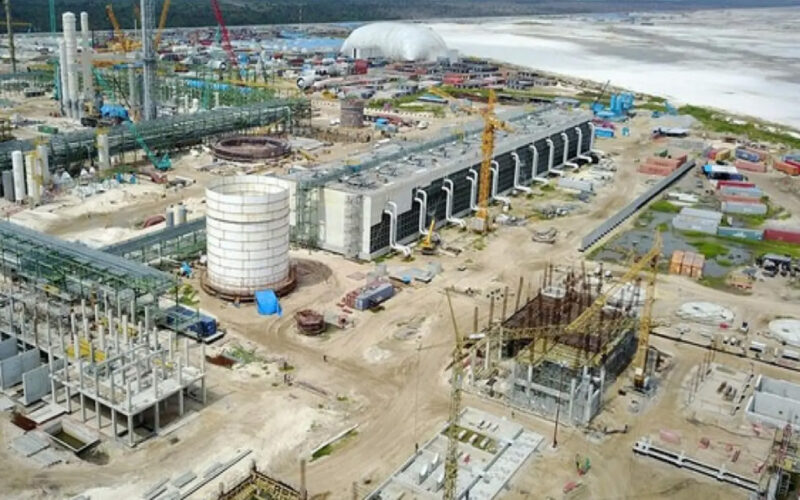
On Monday, the Dangote Petroleum Refinery received the fourth shipment of one million barrels of bonny light crude oil from the Nigeria National Petroleum Corporation Limited.
According to a statement from the $20 billion corporation, the fifth crude oil cargo is expected soon.
The plant had earlier received three shipments of crude oil, as officials of the company told our correspondent that the refinery would start pumping out refined Automotive Gas Oil, also known as diesel, and aviation fuel or JetA1 this month.
In the statement issued on Monday, the company said, “The fresh one million barrels of crude was the fourth consignment to be delivered to the Dangote facility out of the six million barrels of crude being expected by the world’s largest single-train refinery.”
The Managing Director, Dangote Ports Operations, Akin Omole, had earlier told journalists at the Dangote Quay, Ibeju-Lekki, Lagos that the refinery would receive about four million crude oil shipment before the end of 2023.
READ ALSO:
- UNILORIN extends Post-UTME registration to Jan. 31 – Official
- Deputy Senate President distributes 60 Sharon cars in Kano
- Autograph-seeker stabs South Korea opposition chief
According to him, the refinery would get the remaining two by the early of January 2024, adding that this would position the refinery to begin production.
He explained that once the six million barrels were fully delivered, it would facilitate the initial run of the refinery and see to the production of diesel, aviation fuel, and Liquefied Petroleum Gas, before progressing to the production of Premium Motor Spirit, popularly called petrol.
The 650,000 barrels per day capacity Dangote refinery can meet 100 per cent of Nigeria’s requirement of all refined petroleum products including petrol, diesel, kerosene and jet fuel, and also has a surplus of each of these products for export.
Dangote Refinery has a self-sufficient marine facility with the ability to handle the largest vessel globally available, from where it has been receiving the crude oil shipments.
After receiving the first consignment of crude, the President, Dangote Group, Aliko Dangote, had said, “We are delighted to have reached this significant milestone. This is an important achievement for our country as it demonstrates our ability to develop and deliver large capital projects.
“Our focus over the coming months is to ramp up the refinery to its full capacity. I look forward to the next significant milestone when we deliver the first batch of products to the Nigerian market.”
Dangote refinery gets 4th shipment barrels of crude







Business
Dangote Sugar Warns Staff Over Chewing Sugarcane, Threatens Arrest
Dangote Sugar Warns Staff Over Chewing Sugarcane, Threatens Arrest
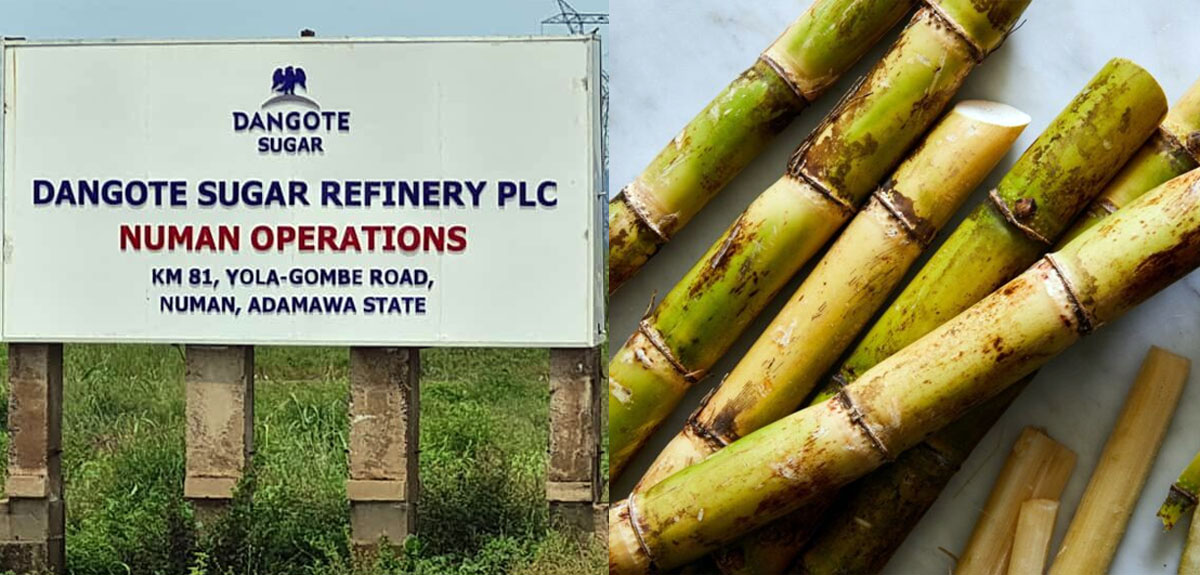
Dangote Sugar Refinery Plc has issued a stern and final warning to employees at its Numan operations in Numan, banning the chewing of company sugarcane within its premises and threatening severe disciplinary actions, including arrest and prosecution, for defaulters.
The directive, contained in an internal memo dated April 7, 2026, and signed by the Head of Human Resources, Ikechukwu Okorie, categorised the act as “gross misconduct”. The company stressed that any staff caught engaging in the practice risks summary disciplinary measures, which may extend to legal consequences.
According to the memo, the sugarcane cultivated and processed at the facility is a valuable company asset, and unauthorised consumption amounts to misuse of resources. Management noted that beyond the economic implications, the habit of chewing cane and discarding chaff indiscriminately undermines hygiene and sanitation standards required in a food processing environment.
The circular further emphasised that maintaining strict housekeeping is critical to operations at the Numan plant, warning that littering the premises with cane residue violates established workplace standards. As part of enforcement, security personnel have been placed on high alert and directed to apprehend any employee found violating the directive, with offenders facing both internal disciplinary action and possible prosecution aimed at recovering losses.
READ ALSO:
- Jetour set to ignite Lagos with four-day automotive experience
- Making Up for Lost Sleep Might Be Healthier Than Experts Once Believed — What Science Says
- Sleeping Positions: How They Affect Your Health and Which Ones to Avoid
The strongly worded memo ended with a clear warning — “BE WARNED FOR THE LAST TIME!!!” — underscoring the company’s zero-tolerance stance on the issue.
The development comes amid ongoing expansion efforts by Dangote Sugar, particularly under its backward integration programme designed to boost local sugar production. The company is scaling up operations through large-scale cultivation and processing projects across multiple states.
As part of its broader financial strategy, Dangote Sugar recently announced a proposed ₦500 billion rights issue to reduce debt, strengthen its balance sheet, and fund expansion projects. These include upgrades at its Numan facility and new developments in Nasarawa State and Taraba State.
Since the memo surfaced online, it has sparked mixed reactions on social media, with some supporting the company’s strict stance on discipline and hygiene, while others consider the threat of arrest excessive for what appears to be a minor infraction. As of the time of filing this report, the company has not released an official public statement addressing the leaked circular.
Dangote Sugar Warns Staff Over Chewing Sugarcane, Threatens Arrest
Auto
Jetour set to ignite Lagos with four-day automotive experience

Jetour set to ignite Lagos with four-day automotive experience
Lovers of sophisticated and elegant SUVs in Lagos are about to witness a combination of automotive engineering and urban lifestyle as Jetour Nigeria announces the hosting of a flagship event, “The Jetour Experience,” a four-day immersive festival designed to redefine how Nigerians interact with the road.
From April 16 to 19, 2026, The Podium in Lekki, Lagos, will be transformed into a high-energy hub where sleek design meets high-octane entertainment. This is not just a standard car show; it’s a curated lifestyle destination, says the organisers in a statement.
The four-day event is said to promise a fusion of horsepower, high fashion, and plenty of fun.
Tagged “The Jetour Experience,” the four-day extravaganza is not just about gleaming chrome and leather seats; it is a high-octane celebration aimed at blurring the lines between mobility and entertainment.
Specifically, it stated that the exhibition would feature test drives, virtual reality gaming, fitness sessions, and interactive activities with branded giveaways.
The statement added that the arena would buzz with entertainment, including contests and interactive games, giving guests the chance to win exclusive branded gifts and prizes.
In a massive show of force, Jetour says it is partnering with its seven prestigious accredited dealers—Elizade Nigeria Limited, New Era Autovehicle Services Limited, Kojo Motors, R.T. Briscoe, Tab Autos Limited, Mandilas Motors, and Germaine Auto Centre —to bring their full fleet to the public.
Whether you are an eco-conscious commuter or an off-road adventurer, the lineup has something for everyone, according to a statement by the Jetour Nigeria.
The Urban Explorers: X50 and X70
The Sophisticates: X70 Plus and X90 Plus
The Eco-Warriors: X70 PHEV and T2 PHEV (Plug-in Hybrids)
The Icons: The rugged T2 and the razor-sharp Dashing
Jetour is blurring the lines between mobility and entertainment. Running daily from 9:00 am to 7:00 pm, the event promises a packed itinerary designed to keep the adrenaline pumping.
Visitors will also push limits during test drives, explore virtual reality (VR) gaming such as foosball, and take part in curated fitness sessions.
In a creative masterstroke, the grand finale will feature a car runway fashion show. Attendees can expect a visual feast where automotive engineering meets sartorial elegance, reinforcing the idea that a Jetour is not just a vehicle but a fashion statement.
The firm stated, “Beyond the glitz, the event maintains a strong focus on safety. A dedicated panel discussion featuring stakeholders and officials from the Federal Road Safety Corps (FRSC) will explore road safety, tech-driven security, and the future of motoring in Nigeria.
“With its blend of adrenaline, artistry, and advocacy, Jetour Nigeria isn’t just hosting an event; it is creating a destination.”
Business
Imported Petrol 12% Cheaper Than Dangote Fuel – World Bank

Imported Petrol 12% Cheaper Than Dangote Fuel – World Bank
The World Bank has revealed that imported Premium Motor Spirit (PMS) is currently about 12 per cent cheaper than petrol supplied by the Dangote Petroleum Refinery, raising concerns over pricing distortions and rising inflationary pressures in Nigeria’s economy.
The disclosure was contained in the Bank’s latest Nigeria Development Update, which highlighted widening gaps between import parity prices and locally refined fuel costs amid volatile global oil market conditions. According to the report, Dangote refinery’s ex-depot price stood at about ₦1,275 per litre as of March 2026, compared to an estimated ₦1,122 per litre for imported petrol, creating a significant price advantage for imports.
Despite the report, Dangote refinery has denied any recent increase in petrol prices, maintaining that its current pricing structure remains unchanged. A source within the company stated that the gantry price is fixed at ₦1,200 per litre, while the coastal price stands at ₦1,153 per litre, stressing that no new pricing has been introduced. The refinery reiterated its commitment to ensuring steady fuel supply across Nigeria and other African markets, positioning itself as a stabilising force in the downstream sector.
The World Bank noted that the price disparity persists even as Dangote refinery has become a dominant supplier of petrol in Nigeria, particularly following the halt in fuel import licences earlier in 2026. According to analysts, this situation reflects structural inefficiencies in the domestic fuel market, including foreign exchange pressures, logistics costs, and crude pricing mechanisms.
The report warned that rising global crude oil prices—driven by geopolitical tensions, particularly in the Middle East—could worsen inflationary pressures if sustained. It projected that an increase in oil prices to about $80 per barrel could add roughly 3.1 percentage points to Nigeria’s headline inflation, assuming full pass-through to domestic fuel prices.
The Bank explained that energy costs serve as a major inflation transmission channel, with transport alone accounting for about 10.1 per cent of Nigeria’s Consumer Price Index (CPI). Higher fuel prices, therefore, have a multiplier effect, increasing costs across transportation, food distribution, and other sectors of the economy.
Beyond fuel, the report highlighted additional risks from rising global food and fertiliser prices, which are also being influenced by the same geopolitical disruptions affecting oil markets. This combination, the Bank warned, could further strain household incomes and worsen cost-of-living pressures.
Speaking during the report presentation in Abuja, the World Bank Country Director for Nigeria, Mathew Verghis, acknowledged improvements in Nigeria’s macroeconomic outlook through 2025 and early 2026, driven by ongoing reforms. However, he cautioned that external shocks remain a major threat to price stability, particularly through rising energy and shipping costs.
Similarly, the World Bank’s Lead Economist for Nigeria, Fiseha Haile, noted that increases in petrol prices have already filtered through transport and logistics chains, amplifying cost pressures across multiple sectors. He also pointed to ongoing vulnerabilities, including volatile global financing conditions and weaker capital inflows, despite improvements in Nigeria’s external reserves and exchange rate reforms.
Meanwhile, global oil prices have recently declined sharply following a ceasefire agreement between the United States and Iran, easing immediate supply concerns. Benchmark Brent crude and West Texas Intermediate crude recorded their steepest one-day drops since 2020, falling to around $93 per barrel after the announcement by Donald Trump that both countries had agreed to a temporary truce and the reopening of the Strait of Hormuz.
Despite this easing, the World Bank maintained that Nigeria’s economy remains highly exposed to global oil market volatility, warning that sustained uncertainties could continue to pressure inflation, fuel prices, and household welfare in the months ahead.
Imported Petrol 12% Cheaper Than Dangote Fuel – World Bank

-

 metro3 days ago
FG Deports US Missionary Alex Barbir Over Alleged Role in Nigeria Insecurity
-

 Entertainment3 days ago
Veteran Nollywood Actor Davis Ofor ‘Clarus’ of New Masquerade Dies at 85
-

 metro2 days ago
2026 NYSC Batch A Stream II: Registration, Swearing-In Dates Announced
-
 Africa18 hours ago
ECOWAS Recruitment 2026: Over 30 Job Vacancies Open for Nigerians (How to Apply)
-
 metro3 days ago
Lagos Announces Partial Road Closures for Project Commissioning
-

 Entertainment2 days ago
Saheed Osupa Defends Juju Use Amid Backlash From Islamic Clerics
-

 Politics23 hours ago
Court Stops ADC Congress, Orders Status Quo in Leadership Row
-
 News3 days ago
Iran Lists Tough Conditions for Peace Talks with US