
Davido: Why Yoruba and Hausa Muslims reacted differently to video, by Farooq Kperogi – Newstrends
Connect with us

Opinion

Davido: Why Yoruba and Hausa Muslims reacted differently to video, by Farooq Kperogi

Published

on

Farooq Kperogi

Davido: Why Yoruba and Hausa Muslims reacted differently to video, by Farooq Kperogi

Music star Davido’s social media promotion of a new song by Logos Olori (whose real name is Olalekan Emeka Taiwo) titled “Jaye Lo” where men dressed in stereotypical Muslims robes gyrated into a sudden burst of frenzied dancing shortly after performing the Muslim prayers near a mosque has incensed Muslims in Hausaphone northern Nigeria but doesn’t seem to bother Yoruba and other Nigerian Muslims.

The differential reactions to the music video—and to most other issues involving religion— among Nigerian Muslims can be traced to the history and character of the evolution of Islam in the North and in the Southwest.

It is not often known that Yoruba and Hausa Muslims share a common, age-old heritage even though the manifestation of Islam in the lived experiences of the people is fundamentally different, which is magnified by the often acrimonious political differences between the two groups in contemporary Nigeria.

The emergence of Islam in both societies is not only fairly co-extensive, it is also from the same West African source. Islam came to Katsina, Kano (and in much of Hausaland in Nigeria’s northwest) in a sustained, systematic form in the 1300s. It came to Kano when Yaji I was king of Kano— and to Yorubaland in the 1450s during the reign of Oluaso, the defunct Oyo Empire’s longest reigning monarch on record.

Tarikh arbab hadha al-balad al-musamma Kano, the Arabic-language palace diary known to us in English as the Kano Chronicle, which recorded biographical profiles of Kano’s kings from the 10th century until the Usman Dan Fodio Jihad in the early 1800s, is the first known written account to state that Islam was brought to Kano by the Wangara people of Mali during the reign of Yaji I who ruled from 1349 to 1385.

READ ALSO:

Islam also came to Yorubaland (and surrounding areas such as Borgu and Nupeland) through the same Wangara people of Mali, which explains why Islam is called “Esin imale” in the Yoruba language, which literally means “religion of Mali.” Note that the Wangara are also known by such names as Mande, Mandinka, Malinke, Mandingo, Dyula, Bambara, Soninke, etc.

Although Islam has existed in Yorubaland since at least the 1400s, the first mosque wasn’t built in Oyo-Ile, the ancient capital of the Oyo Empire, until 1550, and in Iwo, a historic Yoruba Muslim town, until the 1600s. While Islam took enough roots in Yorubaland that Sharia courts were established in some towns, traditional modes of Yoruba worship coexisted with Islam for centuries.

Former Bauchi State governor Isa Yuguda pointed out on April 26, 2013, that “the first Sharia court [in what is now Nigeria] was established in Iwo, in Osun State.” Many Yoruba Muslims repeat this claim both to show that Islam in Yorubaland has a historical edge over Islam in the North and to persuade the Nigerian government to allow the implementation of Sharia for Yoruba Muslims who desire it.

But the claim is probably an exaggeration. Sharia courts seem to have existed in Hausaland before they appeared in Iwo, but their appearance in Yorubaland obviously did precede colonialism by at least 100 years. Other Yoruba towns that had sharia courts decades before colonialism are Epe, Ikirun, and Ede (incidentally Davido’s hometown), which are all located in what is now Osun State. (Davido’s grandfather, Alhaji Raji Adeleke, was a respected Muslim leader in Ede who had the title of Baba Adini of Ede, that is, the Chief Protector of Islam in Ede town).

So, Islam in Yorubaland and Islam in Nigeria’s extreme north share similar Malian-inflected historical trajectories, and neither is a direct consequence of the other, although there are interesting historical overlaps between them. For instance, several Hausa (and pre-Dan Fodio Jihad Fulani) Muslim scholars traveled to Yorubaland to preach and share Islamic knowledge. This inspired a robust linguistic and cultural interchange between the two groups.

READ ALSO:

Prior to Usman Dan Fodio’s 1804 jihad, Islamic practices in both Hausaland and Yorubaland were similar in their syncretism. That is, they blended traditional African religions and Islam. In his book Imale: Yoruba Participation in the Muslim Tradition. A Study of Clerical Piety, Patrick Ryan characterized Islamic practices in Yorubaland as “accommodationist” and pointed out that Usman Dan Fodio would have condemned Yoruba Muslims as “mixers”—as he did Hausa Muslims of the time.

So, Usman Dan Fodio’s jihad was the defining point of departure between Islam in Hausaland and Islam in Yorubaland. The jihad didn’t just extirpate the accommodationist, syncretic brand of Islam previously practiced in Hausaland, it also laid the grounds for a new syncretic ethnic identity in Hausaland.

Over the years, Islam has become not just a religion but an intrinsic constituent of an evolving, increasingly expansionist, politically consequential, and largely non-primordial Hausa Muslim identity. This fact has made Hausa the most ecumenical ethnic identity in Nigeria, by which I mean anybody can be “Hausa” provided they are Muslim, speak the Hausa language with native proficiency, dress like the Hausa, disavow allegiance to competing identities, and subscribe to the cultural consensus of the people.

That is why for most “Hausa” Muslims, Islam isn’t just a faith; it’s also an encapsulation of the totality of their identity and being. That explains why they are more emotionally invested in it—and react forcefully when it is, or perceived to be, attacked, undermined, or ridiculed—than Yoruba and other Muslims are.

Communication scholar Bala Abdullahi Muhammad once wrote in his Weekly Trust column that Hausa Muslims carry on as if Islam was revealed in Kano, as if the Qur’an was written in Hausa, and as if Islam is a uniquely primordial Hausa cultural heritage. Even Mali and Senegambia from where Islam came to Hausaland aren’t as roused to extreme passions over Islam as “Hausa” Muslims often are.

Islam in Yorubaland, on the other hand, hasn’t quite evolved from the accommodationist character it previously shared with Islam in pre-jihad Hausaland. And because Islam has been caked into the Hausa ethnic identity and constituted as the most important building block for identity formation in Northern Nigeria so much so that “Hausa” and “Muslim” have become misleadingly synonymous in the Nigerian popular imagination, Yoruba Muslims have been compelled to privilege their ethnic identity to fend off equivalence with, and to establish difference from, “Hausa” Muslims.

In other words, the association of Islam with Hausa—or Hausa-Fulani—has led to its recalibration in even historically Muslim polities in southern Nigeria such as Yorubaland and northern Edo.

READ ALSO:

As John Paden noted in Ahmadu Bello Sardauna of Sokoto: Values and Leadership in Nigeria, Ahmadu Bello, Northern Nigeria’s first premier and great-great-grandson of Usman Dan Fodio, actively promoted Islam as Northern Nigeria’s official religion before and after independence. Professor Sakah Saidu Mahmud, in his 2004 article in the African Studies Review titled “Islamism in West Africa: Nigeria,” also pointed out that Islam in northern Nigeria emerged as “the source of identity and a medium of competition for resources and political power.”

He added that “The regional leaders were in competition with each other as they worked to consolidate their local powers, and Islamization was a means for promoting regional identity.” (It also caused dissension in the North and intensified the struggles for a separate “Middle Belt” region for Northern Christians). This reality put Yoruba Muslims in Western Nigeria on the spot since the North instrumentalized Islam for identity and for competition with southern Nigeria, including Yorubaland.

Perhaps as a consequence of this, many Yoruba Muslims in pre- and post-independence Nigeria chose to conceal their Muslim names even when they were practicing, believing Muslims, just to distinguish themselves from Northern Muslims who have ethnicized Islam. For example, a prominent pre-independence Ibadan politician by the name of Adelabu Adegoke who was famous for his electrifying oratory changed his family name from Sanusi (which he bore throughout his educational career) to Adegoke.

The fact that the Sultan of Sokoto is recognized in Nigeria as the permanent leader of Nigerian Muslims, whether or not the Sultan is knowledgeable in Islam and against the merit-driven principles of leadership in Islam, hasn’t helped.

It should be noted that these are broad-brush characterizations that overlook many exceptions. There is a minority of Yoruba Muslims, for instance, who have more allegiance to Islam than they do to their ethnic identity.

For example, at a gathering of Yoruba Muslims in Akure on June 19, 2021, Sheikh Imran Molaasan, national president of Jama’at Ta’awunil Muslimeen and Iwo native, reportedly said, “If Nigeria breaks up, Yoruba Muslims will suffocate” in an Oduduwa Republic, and even implied that the resentment against the Fulani in Yorubaland masks sneaky anti-Muslim designs by Yoruba leaders who are mostly Christians.

There is also a minority Hausa ethnic nationalists who resent the “dilution” of their ethnicity with other ethnicities in the name of Islam, and there are Fulani nationalists who agonize over the progressive decline of their language, culture, and identity, but these groups are, for the most part, marginal.

Nonetheless, the foregoing background explains why most Yoruba Muslims see Logos Olori’s music video as mere harmless art not worth their time and Hausa Muslims see it as a mockery of “their” culture over which they must fight.

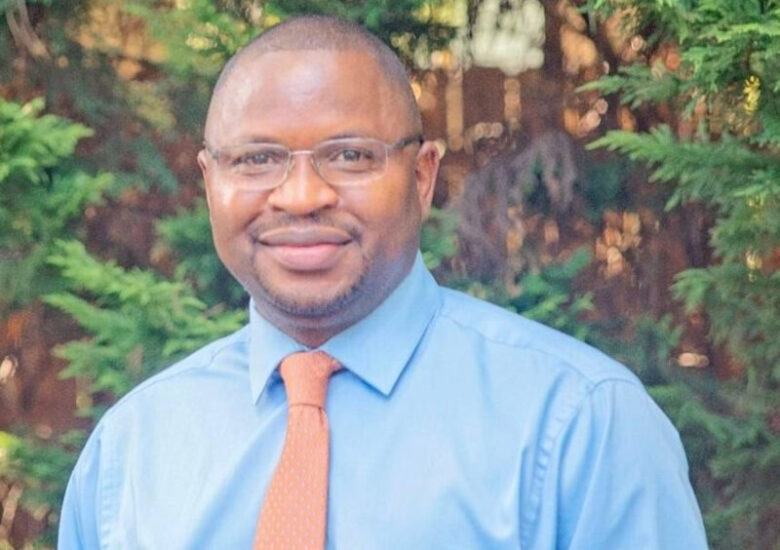
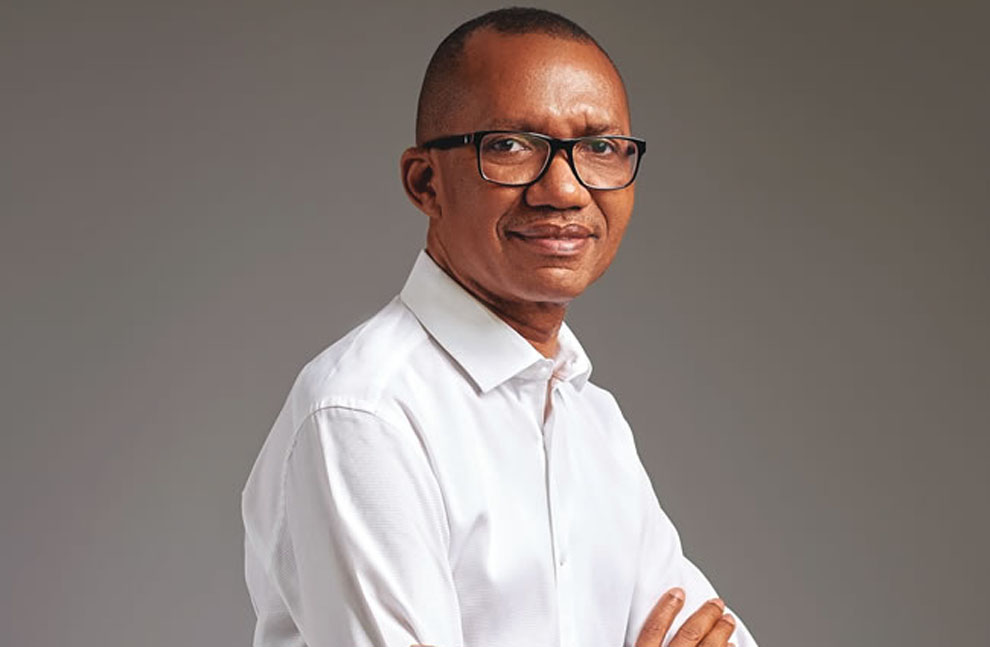
Farooq Kperogi is a renowned Nigerian newspaper columnist and Professor of Journalism in United States.

Davido: Why Yoruba and Hausa Muslims reacted differently to video, by Farooq Kperogi

Opinion

Tinubu’s new tax regime as sovereignty for sale, By Farooq Kperogi

Published

on

Farooq Kperogi

Tinubu’s new tax regime as sovereignty for sale, By Farooq Kperogi

For weeks, I deliberately avoided commenting on the sweeping new tax regime the Bola Ahmed Tinubu administration plans to roll out next year. It’s not because I did not recognize its gravity, but because I am not an economist and did not want to wade into a technically dense debate armed only with moral outrage.

Silence, in this case, felt like intellectual humility. Two developments, however, forced my hand.

The first was the unexpected melodrama that erupted in northern Nigerian social media circles over the federal government’s choice of influencers to “explain” the new tax policies to Nigerians. When a list circulated showing that most of the recruited social media advocates were from the South, northern influencers cried marginalization.

The grievance was loud enough that government handlers scrambled to recruit northern voices to restore regional balance. That this was the most animated public conversation around a punishing tax regime already tells us something disquieting about our political culture.

The second trigger was a widely shared Instagram video posted on October 18, 2025, by The Rohrs Team, a US-based financial education outfit. The video framed Africa’s current wave of tax reforms as a form of “debt colonialism.”

It argues that international institutions and Western governments have perfected a system in which African states are encouraged to accumulate debt and then trained to squeeze their own poor, struggling populations to service that debt. Watching the video, I found myself simultaneously nodding in recognition and wincing at its exaggerations.

READ ALSO:

The video’s core claims are straightforward. It alleges that United Nations-linked initiatives such as Tax Inspectors Without Borders embed Western forensic tax experts in African countries to help governments close tax loopholes, audit businesses, and boost revenue.

It then argues that these efforts are not neutral capacity-building exercises, but part of an expansive IMF and World Bank-driven system designed to ensure that African countries generate enough revenue to repay foreign loans.

According to the video, this system relies on carrot-and-stick tactics: cooperate with external tax advisers and access more loans, resist and face isolation or penalties. The end result, it concludes, is a more efficient and less visible form of colonial extraction.

My check from multiple sources shows that some of this is wrong. Some of it is imprecise. Some of it is uncomfortably true.

It is false that UN or OECD officials directly impose tax laws, prosecute businesses, or collect money on behalf of Western creditors. Tax Inspectors Without Borders does not write tax legislation and does not wield enforcement powers. Those functions remain with national governments.

Claims that Tunisia’s tax-to-GDP ratio increased by over 50 percent because of UN tax collectors are also demonstrably overstated.

But dismissing the entire argument as conspiracy would be intellectually lazy.

What is undeniably true is that Nigeria, like many developing countries, is operating under intense fiscal pressure shaped by external actors. The IMF has for years emphasized “domestic resource mobilization” as a central plank of economic reform.

That’s just a fancy term for raising more taxes. Nigeria’s chronically low tax-to-GDP ratio is routinely cited as a pathology that must be cured. Debt sustainability analyses, credit ratings, access to concessional financing, and investor confidence all hinge on this logic.

In that sense, no one needs to issue direct orders. The structure does the coercion. If this sounds abstract, Kenya offers a concrete, sobering example.

In 2024, the Kenyan government introduced a sweeping finance bill that raised taxes across multiple sectors, including fuel, basic goods, and digital services. The bill was explicitly linked to Kenya’s IMF program and the need to so-called plug fiscal gaps.

The result was one of the most dramatic popular uprisings the country has seen in decades. Protesters poured into the streets, security forces responded brutally, and lives were lost. Faced with mounting unrest, the government withdrew the bill.

The story did not end there. The IMF openly acknowledged that the withdrawal created a financing shortfall. The question immediately became how Kenya would replace the lost revenue, whether through spending cuts, alternative taxes, or future legislation.

In other words, the policy instrument changed, but the fiscal imperative remained intact. That is how structural coercion works. The state may retreat tactically, but the economic logic reasserts itself.

READ ALSO:

Nigeria’s impending tax regime fits neatly into this global pattern. The government presents it as modernization, efficiency and fairness. But its timing and content are inseparable from the overarching debt-fueled economic restructuring that has already produced fuel subsidy removal, currency devaluation, and a cost-of-living crisis of historic proportions.

The same external logic that declared petrol subsidies fiscally irresponsible now applauds aggressive tax expansion as prudent governance.

This is where the Instagram video, for all its rhetorical excess, gets something fundamentally right: sovereignty, as currently practiced, is largely a scam.

Nigeria may have a flag, an anthem and an elected government, but its macroeconomic choices are tightly circumscribed by external expectations. The petrol price regime that has tripled transportation and food costs did not emerge from a grassroots Nigerian consensus. It was the predictable outcome of long-standing IMF orthodoxy about subsidies.

The new tax regime, coming on the heels of that shock, follows the same script. Nigerians are being asked to pay more, endure more and sacrifice more in the name of fiscal responsibility defined elsewhere.

The economic consequences are not difficult to anticipate. Higher consumption taxes and compliance costs in an economy already hollowed out by inflation will depress demand, push more businesses into informality and further erode purchasing power.

Small traders, transport workers and salaried employees will feel the squeeze long before multinational corporations do. In a country where real wages have collapsed and unemployment remains structurally high, this is punishment.

And yet, there is an irony here worth lingering on. For the first time in decades, a significant number of Nigerians may begin to feel, viscerally, that the state is funded by their money. Oil rents long insulated the Nigerian government from its citizens. Taxes were an afterthought, easily evaded and politically inconsequential.

A regime that aggressively extracts revenue from ordinary people risks provoking resentment, but it also risks awakening accountability.

When people know that their tax naira pays for governance, the psychological contract changes. Suddenly, waste is personal. Corruption is theft from one’s pocket. Incompetence becomes intolerable.

The old revolutionary slogan “taxation without representation” was not just about money. It was about dignity and political agency. It was about the right to demand explanations from those who govern.

Nigeria’s new tax regime, harsh as it is, might inadvertently inaugurate a new era of critical democratic citizenship. Citizens who feel economically assaulted may also feel politically entitled. They may begin to ask harder questions, organize more assertively and reject the culture of elite impunity that oil wealth sustained for so long.

This brings me back to the farce of social media influencers scrambling for government patronage.

There is something profoundly grotesque about watching influencers fight over who gets to propagandize for a policy that will make life harder for most Nigerians. It is even more grotesque when this scramble is framed as a regional inclusion debate rather than a substantive policy argument.

The Tinubu administration recruits influencers not to so much to educate citizens as to anesthetize them. Explanation, in this context, is a euphemism for persuasion, and persuasion shades quickly into rhetorical intimidation.

I fully expect that the newly hired influencer battalions will soon swing into action, defending the indefensible, smearing critics, and blurring the line between advocacy and libel.

If recent experience is any guide, I may well become one of their earliest practice targets for having the audacity to point out that a tax regime can be both externally inspired and domestically harmful. Well, I am already used to that.

Nigeria deserves a conversation that goes beyond technocratic jargon and influencer theatrics. It deserves an honest reckoning with the reality that its economic sovereignty is constrained, its people are bearing disproportionate costs and its leaders are more accountable to international creditors than to the citizens they tax.

If this new tax regime teaches Nigerians anything, I hope it is that when the state reaches deep into your pocket, you earn the moral right to reach just as deeply into its conscience.


Tinubu’s new tax regime as sovereignty for sale, By Farooq Kperogi


Kperogi is a renowned columnist and United States-based Professor of Journalism.

Continue Reading

Opinion

Disaster Looms: Otedola Bridge Must Be Demolished and Rebuilt Immediately — Expert

Published

on

Otedola Bridge

Disaster Looms: Otedola Bridge Must Be Demolished and Rebuilt Immediately — Expert

A project management expert and scholar, Dr. ‘Jubreel Odukoya, has urged the Lagos State Government to take immediate action to demolish and reconstruct the Otedola Bridge, warning that it is “a structural death trap” and “a man-made disaster zone” that continues to claim innocent lives.

Dr. Odukoya, a Nigerian-born construction performance researcher trained in Malaysia, condemned the government’s inaction over the recurring tragedies on the bridge, stressing that no amount of condolence messages can replace urgent technical and ethical intervention.

“The Otedola Bridge is badly designed and poorly constructed. It fails all known standards of performance, safety, and engineering ethics. The time has come for the government to stop patching and start acting. The bridge must be completely demolished and rebuilt to meet global standards of road safety and structural integrity,” he advised.

Located along the Lagos-Ibadan Expressway at the boundary between Lagos and Ogun States, the Otedola Bridge has a notorious history of accidents, tanker explosions, and mass fatalities. In June 2018, a fuel tanker explosion destroyed more than fifty vehicles, claiming numerous lives. In March 2024, a newlywed couple — Chiedozie Okoye of Zenith Bank and his America-based nurse wife, Joan Chidalu — died in another crash at the same location.

Dr. Odukoya explained that these recurring disasters are not coincidental but symptomatic of structural negligence, flawed design geometry, and inadequate traffic engineering.

READ ALSO:

“The tragedies on Otedola Bridge are predictable outcomes of engineering failure. Sharp slopes, poor drainage, absence of crash barriers, and unclear lane demarcation make it extremely difficult for heavy-duty vehicles to navigate safely. When combined with weak supervision, poor materials, and disregard for ethical project practices, disaster becomes inevitable.”

Drawing on over 33 years of experience in project management, construction oversight, and quality control, including his tenure as Director of Projects Development at Kercon Construction Limited, Lagos, Dr. Odukoya stressed that government responses must go beyond temporary repairs and ceremonial site visits.

“In Malaysia, a bridge with repeated failures would never remain open to the public. It would be closed, reassessed, and reconstructed according to stringent design and soil stability protocols,” he said.

Dr. Odukoya, a member of the Malaysian Institute of Management (MIM) and the Malaysian Institute of Corporate Governance (MICG), called for the urgent establishment of a Technical Audit and Reconstruction Task Force to assess Otedola Bridge and other hazardous road infrastructures across Lagos State.

“Until we subject these critical infrastructures to independent performance audits, the bloodletting will continue. Lagos cannot keep burying citizens because of man-made negligence. The government must act. Otedola Bridge must be demolished and rebuilt now.”

He appealed to Governor Babajide Sanwo-Olu’s administration to demonstrate leadership by adopting international engineering safety standards and engaging certified professionals to redesign the bridge into a model of sustainable urban infrastructure.

“This is not about blame; it is about saving lives. Lagosians deserve roads that are safe, reliable, and built to last,” Dr. Odukoya concluded.

Disaster Looms: Otedola Bridge Must Be Demolished and Rebuilt Immediately — Expert

Continue Reading

Opinion

A troubling message from Guinea-Bissau, by Azu Ishiekwene

Published

on

Azubuike Ishiekwene

A troubling message from Guinea-Bissau, by Azu Ishiekwene

A troubling message from Guinea-Bissau, by Azu Ishiekwene

Continue Reading
HostArmada Affordable Cloud SSD Shared Hosting
HostArmada - Affordable Cloud SSD Web Hosting

Trending