

Business
Dollar Remittance: Presidency Wades Into CBN, NNPC ‘Feud’

The presidency has waded into the controversy raging between the Central Bank of Nigeria (CBN) and the Nigeria National Petroleum Corporation Limited (NNPC) over the dwindling fortune of the naira, Daily Trust gathered from reliable sources yesterday.
The CBN on Friday blamed the non-remittance of dollars to foreign reserves by NNPC as the reason for the plunge of the naira in the official and parallel markets.
At the time of the allegation, the naira traded for N700/$1 at the parallel market and N415.96/$1 at the official market.
But in what could be seen as contradicting the CBN claim, a document from the NNPC on Sunday showed that the company remitted a total of $2.7bn into its accounts with the CBN from January to June this year.
Financial experts and some Nigerians were taken aback at the counterclaims by the federal government institutions with some of them describing the development as “an embarrassment” to the country.
‘Controversy being resolved’
Although the spokesman for the CBN, Mr Osita Nwanisobi, was not immediately available for comments, some top officials of the apex bank said the presidency had waded into the matter.
One of them said, “As we speak, there is a meeting over this issue at the presidency to resolve the anomaly because the report that they (NNPC) remitted $2.7bn to the federation is misconceived as money to the government.
“The fund they remitted is not oil imports,” he said.
READ ALSO:
- PDP Crisis: Wike Lists Conditions For Ceasefire
- Abiodun, Ogun Pensioners Clash Over N68bn Unpaid Gratuities
- 2023: INEC Yet To Decide Fate Of Multiple Registrants As CVR Ends
According to him, “The money they remitted was not even up to the forex they require for the importation of white products and that was why they sought augmentation to meet the threshold.”
Another official said it was normal for the NNPC to have operational accounts with the CBN but that remittances into the FAAC were halted by NNPC Ltd for several months as it has been using the fund for the importation of petrol at a subsidised rate.
Daily Trust could not establish the identities of the people in the presidency discussing with leaders of the two establishments but it was learnt that “There was no big deal in the two versions of the story.”
A source said, “Both the CBN and the NNPC are meant to serve the public and we have a big problem at hand: the dwindling fortunes of the naira and the high cost of importing fuel for domestic consumption.
“While the CBN desperately needs the US dollar to stabilise the economy, the NNPC is equally battling hard to ensure that there is no relapse in fuel supply in the country. The two of them don’t want to be found wanting.
“But, of course, you know that failure has no father and this is basically why they are trying to shift the blame. Gladly, with the intervention of the presidency, the controversy will soon fizzle out,” he said.
Daily Trust found that so far, the NNPC had spent N1.1 trillion this year on petrol subsidy just as the government budgeted N4trn to cover petrol subsidy for the 2022 fiscal year ending May 2023.
Despite that, the agency had remitted some funds as explained by officials.
The remittance process
One of the CBN officials explained the remittance process that is generating controversy. The management official said: “What they (NNPC) sent so far in seven months this year is $1.6 million.
“CBN had to guarantee to give them additional funds so they can have enough forex for their imports.”
Further enquiries by this newspaper to top officials of CBN, NNPC Ltd and other agencies indicated that the remittance by the national oil company was funds meant for operations and not as accrued revenues to the government.
Before now, NNPC, a national oil corporation does business and remits oil sales proceeds to the Consolidated Revenue Fund (CRF), which is part of the funds shared monthly by the Federation Accounts Allocation Committee (FAAC) to the federal, state and local governments.
However, since January, there has been no known contribution from the NNPC Ltd to the FAAC funds according to the monthly FAAC data report and official pronouncements.
How the controversy started
The CBN Governor, Godwin Emefiele was summoned by the Senate last week over the rate at which the naira was crashing. This followed the adoption of a motion by Senator Olubunmi Adetunmbi (APC, Ekiti North).
Contributing to the debate, Senator Sani Musa (Niger East), said the naira would appreciate if Nigerians consume what they produce.
Senator Biodun Olujimi (Ekiti South) said, “The time has come for us to look holistically into what is happening. What is happening to the dollar is a replica of what is happening to Nigeria,” she said.
The Senate thereafter asked the CBN to stop the rapid decline of the value of the naira.
READ ALSO:
- Man kills sister’s friend over N50,000, buries corpse in room
- Obi, Tinubu divide PDP, APC stalwarts in Enugu
- PDP sets to meet Wike, aggrieved members – BoT Chairman
It was after the resolution of the Senate that the CBN governor brought in the NNPC angle to the matter.
While the CBN said there had been a “zero-dollar” remittance to the country’s foreign reserve by the NNPC Ltd, the report attributed to the NNPC payment document at the weekend stated that the corporation had remitted $2.7 billion into its accounts with the CBN from January to June this year, which could strengthen the naira.
According to the document, $645 million was for dividends paid by the Nigerian Liquefied Natural Gas Company Ltd, while $1.786bn was from the NNPC operational activities.
A breakdown of the NNPC remittances showed that funds into the NNPC accounts included; $18,770,418.97 paid into its account with CBN in January; $194,563,276.49 paid in February and $373,232,875.20 paid in March 2022. In April, NNPC Ltd paid $247,884,295.52; paid $591,565,425.41 in May and $880,906,761.81 in June.
When contacted to explain what is happening, the Group General Manager, Group Public Affairs Division at NNPC Ltd, Garbadeen Mohammed, confirmed the payment to this paper but stated that he does not know the exact amount and also said the payment was made to the NNPC account with the CBN.
This indicates that the payment was not a cash inflow to the federal account or to FAAC which is shared by the three tiers of government.
“I cannot confirm the exact figure but it is true that NNPC Ltd has remitted over two billion dollars into NNPC’s accounts with the CBN in the last six months,” he said.
Data from FAAC showed that NNPC ought to remit N122.7bn every month to FAAC this year from its trade and so far, it has not remitted for six months.
During a side-line interview a fortnight ago at the unveiling of the commercialised NNPC Ltd by President Muhammadu Buhari, the Group CEO of NNPC Ltd, Mele Kyari, said: “We are now a private company. Will MTN go to FAAC? We will pay our taxes; we will pay our royalties and we will deliver dividends to our shareholders.”
On the arrears before the July 19 transition, the GCEO said, “Which arrears? That was the Nigerian National Petroleum Corporation.”
Finance minister mum
When contacted for clarification on the $2.7bn NNPC payments by NNPC and why it did not reflect in the June FAAC report, the Minister of Finance, Budget and National Planning, Mrs Zainab Ahmed, did not respond to a text message sent to her mobile line and WhatsApp.
However, at the public consultation on the 2023 – 2025 Medium Term Expenditure Framework and Fiscal Strategic Paper (MTEF and FSP) in Abuja recently, she explained why the NNPC stopped remittances to FAAC.
She had said, “The new arrangement (is that) NNPC will not be contributing to FAAC on a monthly basis, but NNPC will still be paying taxes, royalties and dividends.
“But let me also say that prior to the NNPC transiting, for about eight months we have not been receiving any revenues. Why are we not receiving any revenues from the NNPC? (It is) because the NNPC has been instructed to cover the cost of fuel subsidy on behalf of the federation.”






Auto
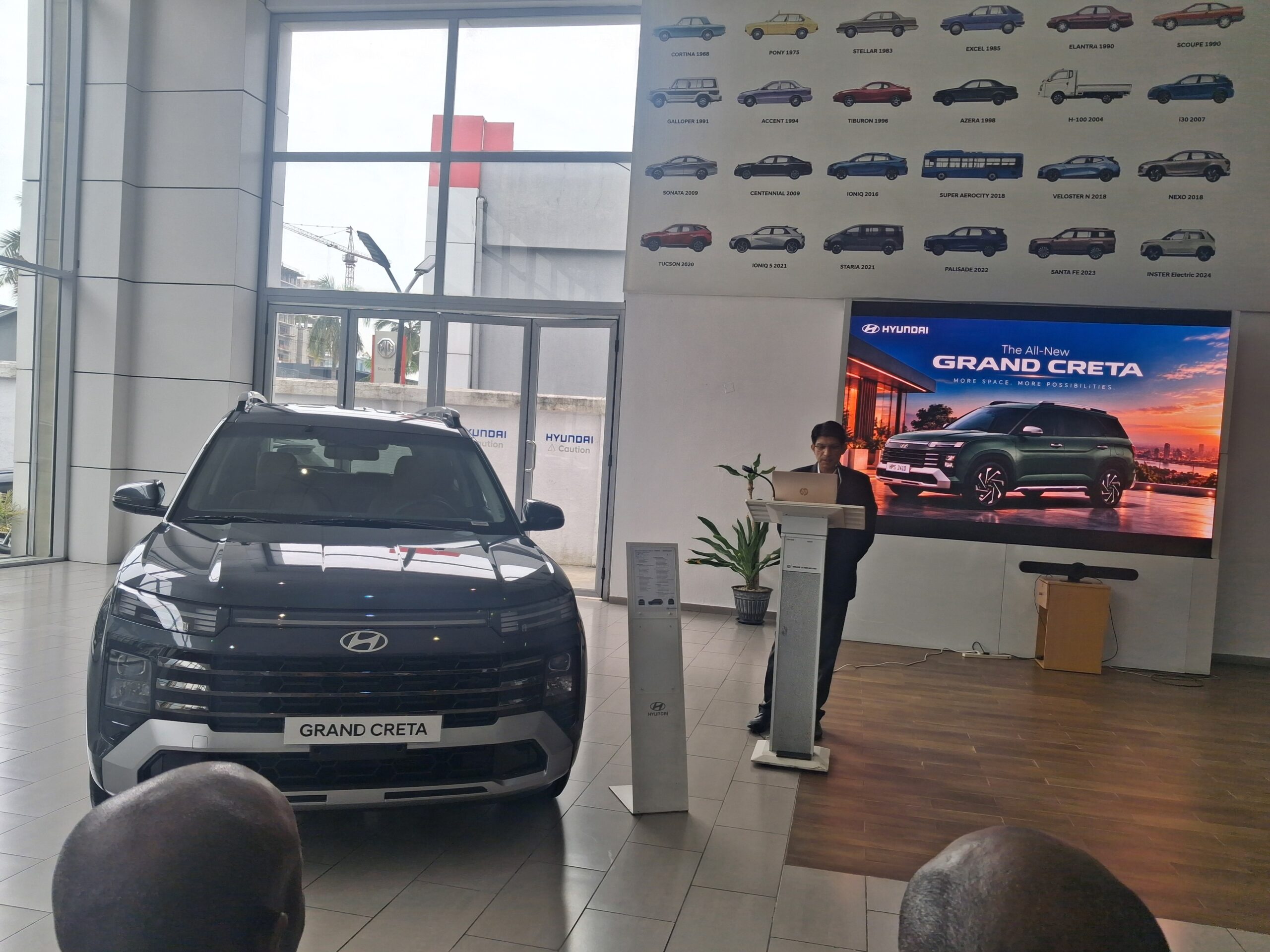
Happening now: Hyundai unveiling of Mufasa and Grand Creta
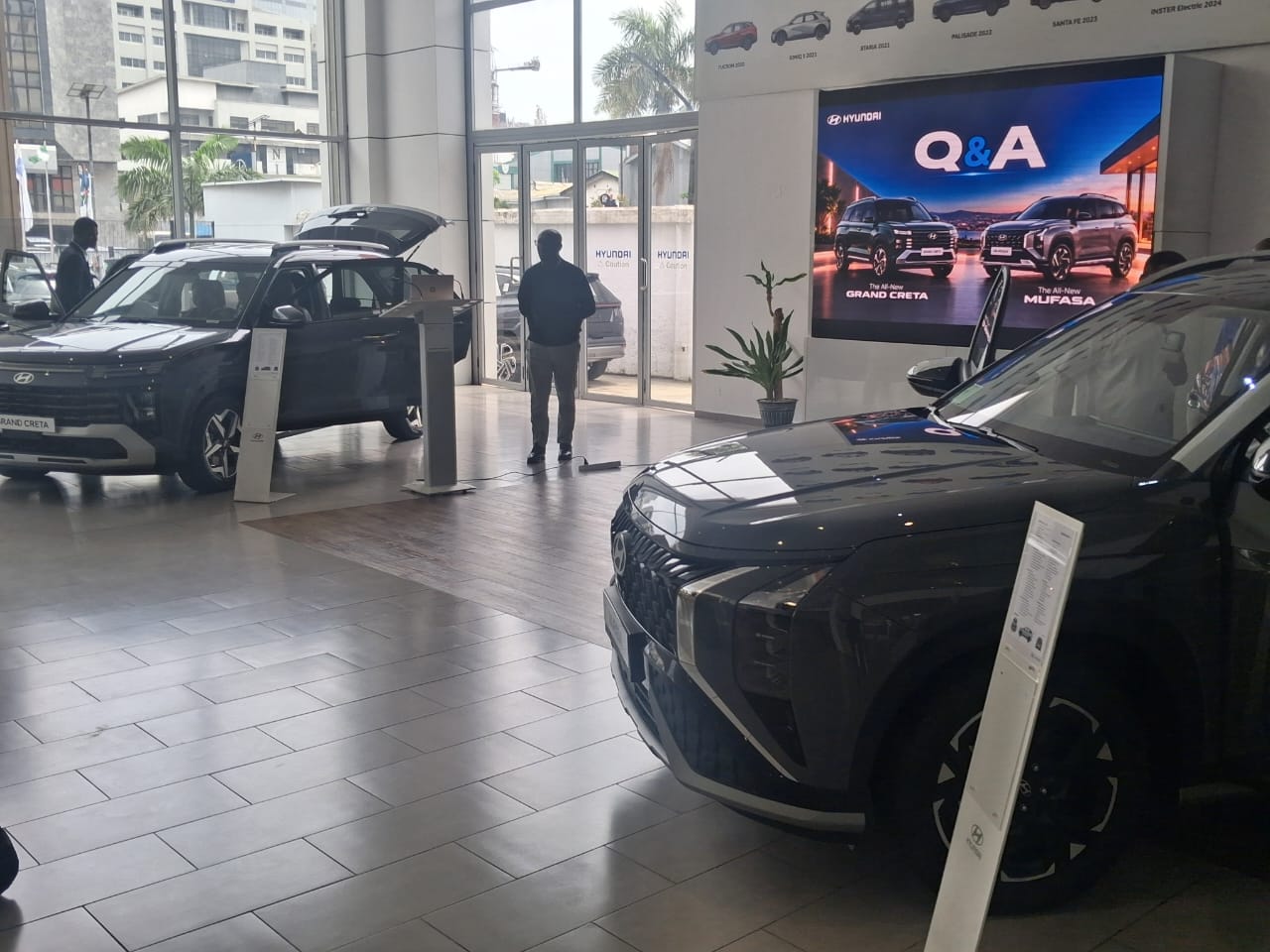
Happening now: Hyundai unveiling of Mufasa and Grand Creta (photos)
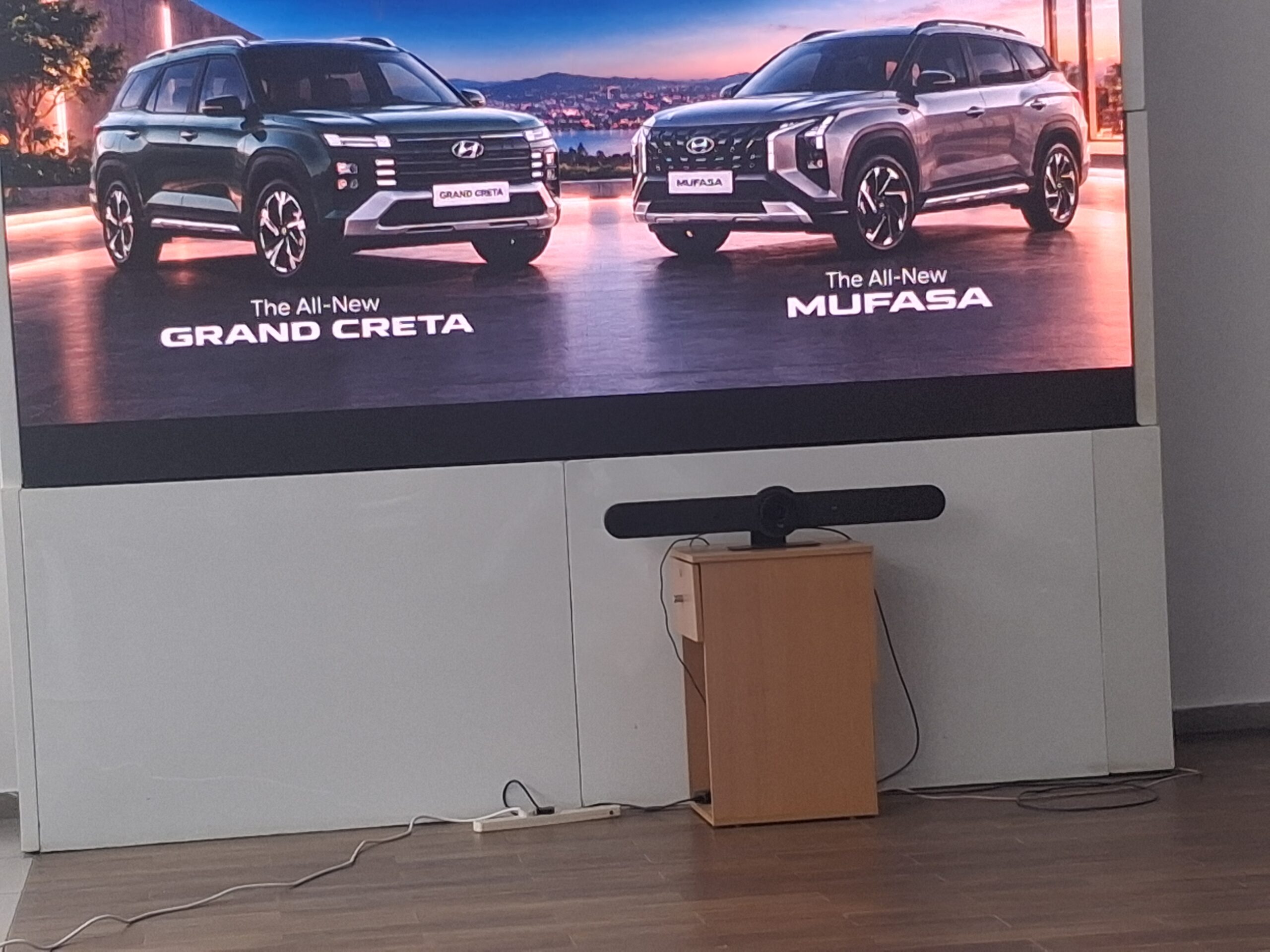
Two latest models of Hyundai auto brands are currently being officially rolled out in Lagos. The new vehicles are Mufasa and Grand Creta.
The unveiling is taking place at the Hyundai showroom on Akin Adesola Street Victoria Island, Lagos.

Auto
No 5% Petrol Tax Plan, Oyedele Says, Amid Public Concerns
No 5% Petrol Tax Plan, Oyedele Says, Amid Public Concerns
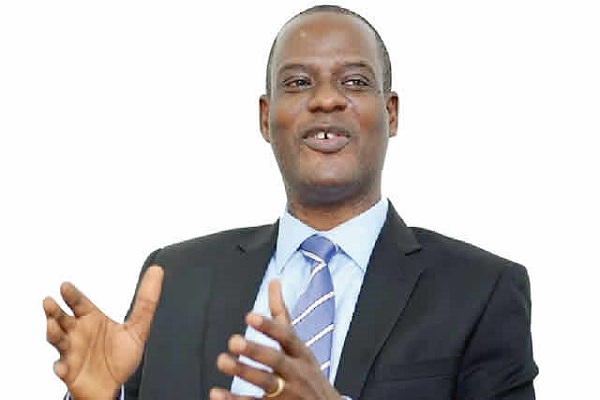
The Federal Government has no plan to introduce a new tax on petrol, Minister of Finance and Coordinating Minister of the Economy, Taiwo Oyedele, has said, dismissing reports that the administration of President Bola Tinubu intends to impose a five per cent levy on petroleum products.
Oyedele clarified the issue in a statement posted on his X account on Tuesday, insisting that a fuel tax was not being considered by the government.
“In my interview with ARISE News, I was clear: a fuel tax is not on the table,” he said.
His statement follows reports linking him to the proposed five per cent tax, which sparked concerns about a possible increase in the cost of petrol amid Nigeria’s persistent cost-of-living crisis.
Petrol prices have remained a major driver of transportation and distribution costs since the removal of the fuel subsidy, contributing to higher prices of food and other essential goods and services.
The prospect of an additional levy had raised fears that households and businesses could face further financial pressure.
However, Oyedele’s clarification indicates that the Federal Government is not currently considering the proposed fuel tax, amid broader efforts to reform Nigeria’s tax system and strengthen public finances.
Auto
Beyond the Showroom: Why After-Sales Service Will Define Auto Industry Winners
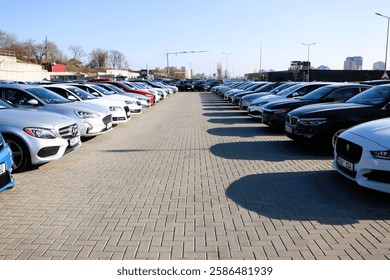
Beyond the Showroom: Why After-Sales Service Will Define Auto Industry Winners
Nigeria’s automotive industry must look beyond vehicle prices, specifications and flashy new models if it hopes to win lasting customer confidence. The real test of competition increasingly lies in what happens after the sale — when a vehicle needs servicing, spare parts, repairs or warranty support.
A car purchase is not a one-off transaction. It marks the beginning of an ownership journey that could last several years, during which the quality of after-sales service can determine whether a customer remains loyal to a brand or regrets the decision to buy it.
When customers struggle to obtain genuine parts, secure timely repairs or get clear answers to warranty claims, their frustration can damage confidence not only in a dealer but also in the manufacturer and the wider automotive market.
After-sales service must therefore move from the background to the centre of automotive competition in Nigeria.
Promises must translate into performance
Effective customer care starts with clear, credible commitments. Buyers deserve to understand warranty coverage, servicing schedules, access to genuine parts, repair procedures and the support available when problems arise.
But promises alone are not enough. A warranty has limited value if customers cannot access a competent service centre. A roadside assistance number means little without an effective response system. And a repair-time guarantee is only as good as the technicians, parts and processes supporting it.
Automotive distributors and dealers must ensure that their marketing promises are matched by the operational capacity to deliver.
Buyers, on their part, should ask questions before committing their money, examine warranty conditions and establish what support they can realistically expect throughout the vehicle’s lifespan.
Competing on ownership experience
Nigeria’s automotive market would benefit enormously if brands competed not only on the vehicles they sell but also on the quality of ownership experience they provide.
Such competition could drive improvements in service delivery, warranty transparency, spare-parts availability, technical training, repair turnaround and customer communication.
Some players are already putting more structured after-sales propositions before buyers. Carloha’s CarlohaCare 6-6-7 programme, for instance, combines a six-year warranty, six years of free servicing and a seven-day repair promise, subject to applicable terms and conditions. Its CarlohaCare Rescue service extends the proposition to assistance beyond the workshop.
These offerings illustrate how clearly defined service commitments can become part of a vehicle’s value proposition, rather than an afterthought.
However, the objective should not be to crown a permanent winner or single out one company as the industry benchmark. Every provider must demonstrate that its commitments are practical, transparent and consistently delivered.
The wider industry should embrace continuous improvement, with customers ultimately judging brands by their real-world experiences.
Automotive journalism must ask tougher questions
Automotive journalism has a critical role in broadening the conversation.
Coverage of the sector often focuses on vehicle launches, new technologies, prices, specifications and expansion plans. These remain important, but consumers also need independent reporting on the realities of vehicle ownership.
Journalists can examine warranty conditions, investigate spare-parts availability, interview service managers and fleet operators, document consumer experiences and assess how effectively companies resolve complaints.
They should celebrate genuine improvements while holding businesses accountable when their public commitments fall short.
The Nigerian Automotive Journalists Association (NAJA) is well positioned to encourage this conversation through informed reporting, industry analysis, interviews and stakeholder engagement.
The goal should be to bring manufacturers, distributors, dealers, fleet operators and consumers around a fundamental question: What level of care should Nigerians reasonably expect after buying a vehicle?
That conversation must remain independent, balanced and evidence-led, rather than becoming a promotional platform for individual brands.
Make after-sales service a buying criterion
The shift towards stronger customer care will gather momentum when Nigerians begin to assess after-sales support as seriously as they consider engine performance, fuel economy, safety features and purchase price.
A private buyer should ask about warranty coverage, servicing costs and the location of authorised workshops. A fleet operator should evaluate parts availability, repair turnaround and vehicle downtime alongside acquisition costs. Families should know what assistance is available when a vehicle breaks down far from home.
Dealers that offer transparent terms and dependable support should earn a competitive advantage. Those that fall short should have a clear incentive to improve.
This is particularly important in a market where vehicle ownership involves significant financial commitment and prolonged exposure to maintenance costs. A seemingly attractive purchase can become expensive if parts are difficult to source or repairs take too long.
The industry must therefore recognise that customer care is not merely a cost centre. Properly managed, it can build loyalty, strengthen brand reputation, generate repeat business and encourage referrals.
The real test begins after payment
Nigeria does not need an automotive market in which businesses compete only to sell more vehicles. It needs one in which they also compete to keep customers satisfied long after the keys have been handed over.
The true measure of a brand is not simply how attractively it markets a vehicle or how efficiently it closes a sale. It is how responsibly it responds when the customer needs help most.
As competition intensifies, the companies that combine good products with reliable service, accessible parts and transparent customer support will have a stronger foundation for lasting success.
For buyers, the message is equally clear: look beyond the showroom, ask the difficult questions and compare the support behind the badge.
Buy the car. Demand the care.
-

 metro1 day ago
Army Major, Soldiers Killed in ISWAP Ambush in Yobe State
-

 Politics3 days ago
Buhari Feared Tinubu Presidency, Resisted Pressure to Back Him – Baba-Ahmed Claims
-
 News3 days ago
FG Challenges World Bank’s 124% Debt-to-Revenue Warning, Cites Rising Income
-

 metro3 days ago
NAFDAC Probes Corps Member’s Death at Enugu Camp as Fake Drug Claims Emerge
-
 metro1 day ago
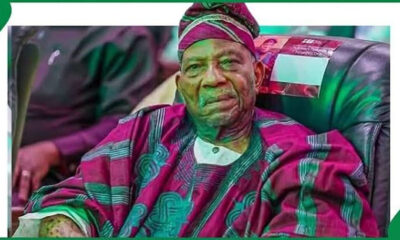
Breaking: Afenifere Leader Pa Fasoranti Dies at 100
-
 metro3 days ago
Ogun House Fire Horror: Husband Arrested After Wife Dies Following Domestic Dispute
-

 Entertainment3 days ago
Nollywood Mourns as Actress, Beauty Queen Tenia Abraham Dies at 32
-

 metro16 hours ago
‘We Don’t Know What Else to Do’ — Mother Begs for Release of Abducted Children