
News
Eid-el-Fitr: Fasting, tool to teach Muslims about kindness, says cleric
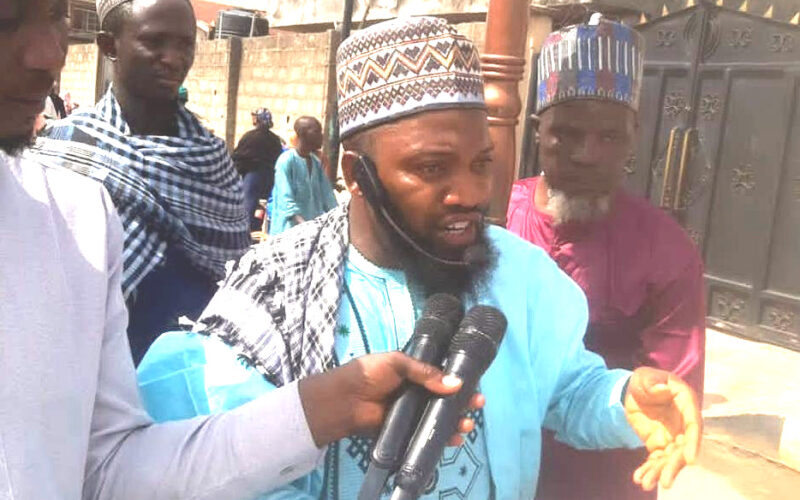
Eid-el-Fitr: Fasting, tool to teach Muslims about kindness, says cleric
The annual Ramadan fasting is a tool used by Allah to teach Muslim faithful how to be good and kind to others in the society, irrespective of professed religion faith and ethnic group.
Observing the fasting, being described as a “school, seminar and conference” is an instrument deployed by Allah to train Muslims how to be useful to neighbours, friends, associates, colleagues at work, among other areas in the society.
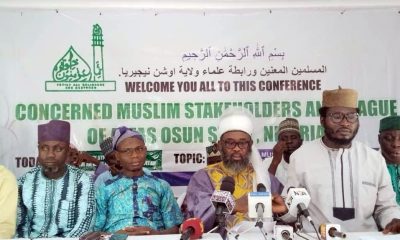
The Chief Imam of Motif Central Mosque, Ojokoro, Ifako-Ijaiye, Lagos State, Shaykh Abdul-Mumin Muhammad Jamiu Al Fulany, articulated these Friday during Khutbah (sermon) after the two rakah voluntary Salah (prayer).
Other virtues Allah uses fasting to teach according Shaykh Al Fulany is for Muslims to realize that every provision given by Allah to individuals was to benefit those who surround one such as families, friends, neighbours, colleagues, among others.
Imam Al Fulany added that Ramadan fasting was to teach kindness to others; avoid sins and how to observe some voluntary fasting, which hold weekly, annually and in every Lunar month.
READ ALSO:
Beware! Fake N200 notes in circulation
Bandits invade Benue community, kidnap five from farm
FG kicks off process to evacuate stranded Nigerians in Sudan
Tinubu not under pressure – Dele Alake
Following this, Shaykh Al Fulany urged the congregation to sustain pledge made by them during the fasting to be devoted to Allah, urging them not to avoid mosque; shun salat (daily prayers); reading of Quran; giving charity (cash and kind), all of these which are common and regular practices during the just concluded fasting period.
Since the month of Ramadan is like a training school, Imam Al-Fulany called on the congregation to strive and convert the remaining 11 months out of 12 to sustain all righteous acts during Ramadan.
Speaking further, the versatile cleric said there are parameters to measure whether all acts of worship during the last Ramadan were accepted by Allah.
This, according to him include: ability to be consistent in acts like observing regular salat and giving charity.
Others, Shaykh Al Fulany listed are: eagerness to involve in act of worship; avoiding sinful acts and ability to avoid arrogance and subsequently sustain modesty and humility.
Ramadan is the 9th Lunar month. The fasting in it is fourth pillars of Islam.
Muslims, especially, those who have attained puberty age and healthy are mandated to fast for 29 or 30 days, after sighting of the moon, specifically to learn “self restraint”.
Eid-el-Fitr: Fasting, tool to teach Muslims about kindness, says cleric
Eagle








News
Former INEC REC Warns of “Chaos” in 2027 Over E-Transmission of Election Results
Former INEC REC Warns of “Chaos” in 2027 Over E-Transmission of Election Results
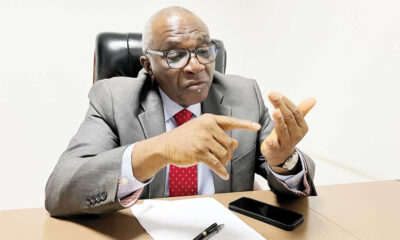
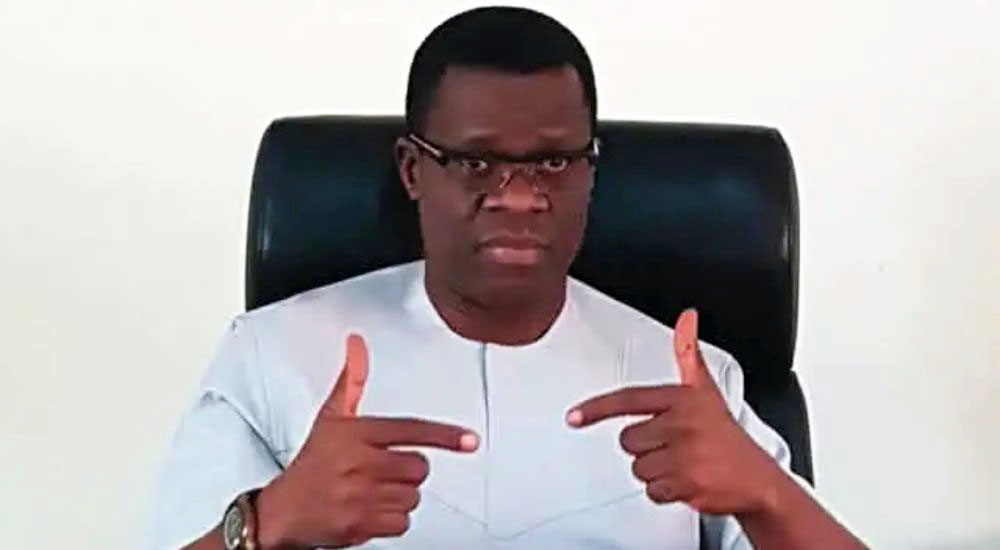
A former Resident Electoral Commissioner (REC) of the Independent National Electoral Commission (INEC), Mike Igini, has raised concerns that Nigeria’s ongoing debate over electronic transmission of election results exposes unresolved legal, institutional, and technological challenges, despite years of electoral reforms. Speaking on Channels Television’s Politics Today on Monday, Igini warned that recent Senate amendments to the Electoral Act could create confusion and vulnerabilities in future elections, particularly the 2027 general polls. He stressed that failing to clarify rules on electronic results transmission risks undermining democracy, transparency, and public confidence.
The controversy stems from the Senate’s recent amendment to the Electoral Act, which now allows electronic transmission of results but removed the “real-time” requirement that had previously been proposed to enable direct uploading from polling units to the INEC Result Viewing Portal (IREV). Under the amendment, Form EC8A, the physical result sheet, remains the primary document in cases of internet outages or connectivity failure. Igini cautioned that this creates a grey area that could trigger disputes in 2027 if presiding officers are allowed discretion over network availability, highlighting that legal and technological clarity is essential to avoid chaos.
READ ALSO:
- DHQ Confirms 100 US Military Personnel Arrive in Bauchi for Counter-Terrorism Training
- Dokpesi Jr, Ex-GMD Akiotu Clash Over DAAR Communications Mgt Restructuring
- EFCC Holds El-Rufai Overnight Over ₦423bn Kaduna Corruption Allegations
Referencing a 2021 technical report by INEC and the Nigerian Communications Commission (NCC), Igini said Nigeria possesses adequate telecommunications coverage, with 2G and 3G networks covering about 93% of the country, making electronic transmission feasible nationwide. INEC had also mapped polling units to mobile network operators and prepared SIM cards and data arrangements to ensure smooth uploads to IREV. He explained that Nigeria had previously relied on interim innovations, including biometric voter registers, card readers, and digital result-viewing platforms, to enhance transparency where legal provisions prohibited full electronic transmission.
Igini further warned that introducing discretionary fallbacks for “network issues” could reintroduce vulnerabilities, as presiding officers might abuse their authority to manipulate results. He emphasised that modern election devices, such as BIVAS machines, can operate both online and offline, uploading results at the nearest connectivity point to ensure integrity in IREV. “The whole purpose of IREV is to make results verifiable and immutable once entered. Allowing manual override defeats the reforms we have painstakingly implemented over the years,” he said.
He also noted that judicial interpretations and evolving legislative amendments have contributed to uncertainty over the legality of technological innovations in elections. Igini urged lawmakers to consider the long-term implications of changes to the Electoral Act, stressing that Nigeria’s democratic stability relies on cooperation between INEC, the judiciary, and key stakeholders. “Our democracy’s future depends on the rule of law. Without it, society risks being dominated by those who act for personal interest rather than public good,” he added.
With the 2027 elections approaching, Igini’s warnings underscore the need for clear legal frameworks, technological preparedness, and robust institutional coordination. He urged all stakeholders to work collaboratively to ensure that electronic transmission of results enhances transparency, accountability, and credibility in Nigeria’s electoral process.
Former INEC REC Warns of “Chaos” in 2027 Over E-Transmission of Election Results
News
Teargas, Chaos at EFCC as El-Rufai’s Supporters Clash with Security Operatives
Teargas, Chaos at EFCC as El-Rufai’s Supporters Clash with Security Operatives
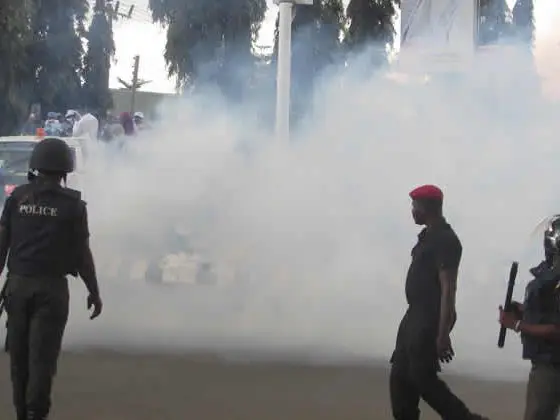
Tension gripped Abuja on Monday as security operatives fired teargas to disperse protesters and supporters of former Kaduna State Governor, Nasir El-Rufai, during a confrontation at the headquarters of the Economic and Financial Crimes Commission (EFCC).
The standoff reportedly occurred when hundreds of El-Rufai’s supporters accompanied him to the anti-graft agency’s headquarters, escalating an already charged political atmosphere in the Federal Capital Territory.
Eyewitness accounts and video footage circulating online showed security personnel deploying teargas canisters as crowds surged toward the EFCC complex.
In one of the videos, agitated voices were heard declaring, “We will come back; when it clears, we will come back,” suggesting the group’s resolve to sustain their protest despite the crackdown.
READ ALSO:
- NSCIA Secretary-General Clarifies Council Receives No Government Funding
- Saudi Supreme Court Calls on Muslims to Sight Ramadan Crescent Moon on Tuesday Evening
- Nigeria Tax Act 2025: FG Clarifies No New Construction or Bank Taxes
The development follows reports last Thursday that El-Rufai was allegedly stopped by security operatives at the Nnamdi Azikiwe International Airport, Abuja, in what his supporters described as an attempted arrest.
While official details surrounding the airport incident remain unclear, the situation appeared to have heightened tensions among his loyalists.
El-Rufai, who served as governor of Kaduna State from 2015 to 2023, remains a prominent political figure and a key voice within Nigeria’s political landscape.
His tenure was marked by sweeping reforms as well as controversy over security challenges and policy decisions in the state.
As of press time, the EFCC had yet to issue an official statement clarifying the circumstances surrounding Monday’s confrontation or addressing reports of any investigation involving the former governor.
Security presence around the commission’s headquarters was significantly reinforced following the clash, with access to parts of the area temporarily restricted.
The incident adds to growing political tensions in the country, particularly as anti-corruption investigations continue to intersect with high-profile political actors.
Teargas, Chaos at EFCC as El-Rufai’s Supporters Clash with Security Operatives
News
NSCIA Secretary-General Clarifies Council Receives No Government Funding

NSCIA Secretary-General Clarifies Council Receives No Government Funding
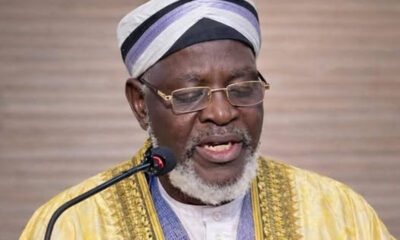
The Secretary-General of the Nigerian Supreme Council for Islamic Affairs (NSCIA), Prof. Is-haq Oloyede, has clarified that the council has never received financial support from any government, either within or outside Nigeria. Speaking in Lagos at the 31st Annual Pre-Ramadan Lecture of the University of Lagos Muslim Alumni (UMA), Oloyede stressed that the NSCIA operates independently and relies largely on modest private donations to sustain its activities.
Oloyede, who also serves as Registrar of the Joint Admissions and Matriculation Board (JAMB), explained that in his 15-year tenure as NSCIA Secretary-General, the council had not received “a kobo” from any government. He added that fewer than 20 individuals have donated amounts up to ₦500,000 since 2013, highlighting that the council functions without significant external funding. He decried misinformation and divisive narratives suggesting government involvement under the leadership of the Sultan of Sokoto, Muhammad Saad Abubakar, noting that such speculation undermines unity within Nigeria’s Muslim community.
READ ALSO:
- Saudi Supreme Court Calls on Muslims to Sight Ramadan Crescent Moon on Tuesday Evening
- Nigeria Tax Act 2025: FG Clarifies No New Construction or Bank Taxes
- Israeli Airstrikes Kill 12 in Gaza as Violence Persists Despite Ceasefire
Speaking on the theme “Muslims: The Challenge of National Security,” Oloyede warned against viewing insecurity, terrorism, and banditry through a religious lens. He said extremists often cloak their violent acts in religious language, but such actions do not reflect Islam. “Islam cannot be determined by what extremists say or do. We have a duty to correct that narrative,” he said, urging Muslims to reject all forms of extremism while understanding that insurgency thrives on enabling political, social, and economic conditions.
Oloyede stressed that security is central to Sharia, emphasizing that a true Muslim is someone “from whose actions neighbours — regardless of their faith — are safe and secure.” He cautioned against reducing insecurity to regional or religious differences, noting that all parts of Nigeria face security challenges. He called on Muslims to embrace moral responsibility, civic accountability, and practical partnerships to improve national security.
Other speakers at the lecture also highlighted the societal dimensions of insecurity. Dr. Ridwan Jamiu, Chief Imam of Lekki Central Mosque, described insurgents as agents of evil and stressed the need for religious leaders to promote peace and guide followers toward positive community engagement. Lagos State Assembly Speaker Mudashiru Obasa identified poverty and economic inequality as key drivers of insecurity and urged the government and policymakers to focus on job creation, education, and inclusive development as long-term solutions.
The lecture, part of the annual pre-Ramadan engagements, comes at a time when Nigeria continues to grapple with complex security challenges, including insurgency in the Northeast, banditry in the Northwest and North-Central, and rising violent crime in the South. Experts emphasize that national cohesion, interfaith cooperation, and community-led security initiatives are vital to tackling these threats effectively.
NSCIA Secretary-General Clarifies Council Receives No Government Funding

-
 Education2 days ago
Check Your Name: UNILORIN Releases Updated NELFUND Refund List for 2024/2025 Students
-

 News2 days ago
Osogbo Sons and Daughters Mark 5th Anniversary with Awards, Political Undertones
-

 metro23 hours ago
US Freezes Assets of Eight Nigerians Over Boko Haram, ISIL, Cybercrime Links
-

 metro3 days ago
Woman Arrested Over Murder of Nigerian E-Hailing Driver in South Africa
-

 metro3 days ago
Boko Haram Terrorists Release Video of 176 Abducted Kwara Residents
-

 News2 days ago
Afenifere Calls for Immediate Take-Off of State Police as Terror Threats Rise in Yorubaland
-
 metro1 day ago
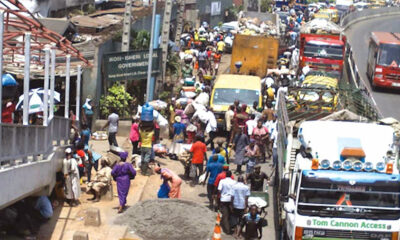
Terror in Lagos Traffic: Cutlass Gang Unleashes Mayhem on Mile 12–Ketu Road
-
 metro2 days ago
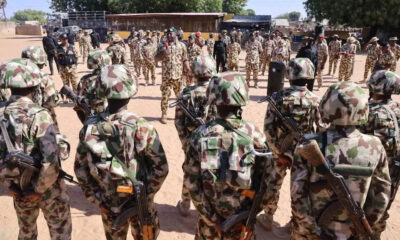
US Military Boosts Support for Nigeria’s Fight Against Insurgency With Ammunition, Troop