

Business
Electricity: FG to deliver 22,000MW next year, asks banks to sell off Disco shares
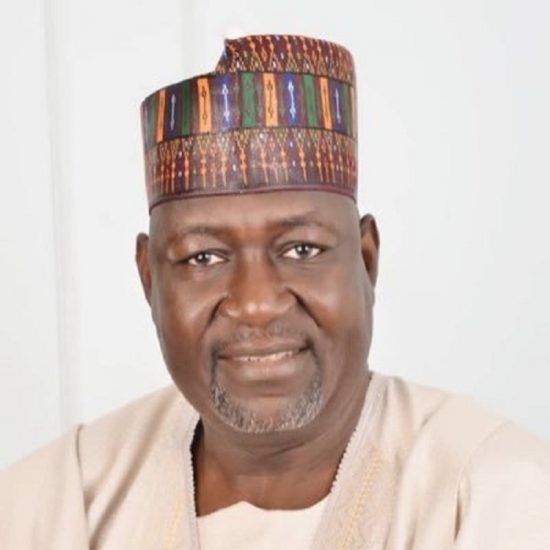
The Federal Government has asked banks holding majority shares in the power distribution companies to divest them within 12 months.
Minister of Power, Abubakar Aliyu, who said this on Tuesday, also disclosed that the current administration would bequeath 22,000 megawatts of electricity to the country before leaving office next year.
He said the government was monitoring the operations and divestment process of the six DisCos to ensure compliance with the core objectives of restructuring the power firms.
Aliyu spoke in Abuja at the 11th edition of the ‘PMB Administration Scorecard Series (2015-2023)’ organised by the Federal Ministry of Information and Culture.
He said the government sacked the previous core investors to make them more responsible.
The minister said, “For the benefit of the doubt when I say we have restructured the Discos this is just saying it mildly.
“Restructuring means that we have sacked the core investors. We have sacked the management and allowed the lenders to take over.
“Either banks or the Asset Management Corporation of Nigeria (AMCON) hold the franchise.
“So the banks have taken over 60 per cent ownership. We have allowed the banks, the Bureau of Public Enterprises (BPE) and the Central Bank of Nigeria (CBN) to take control.
“The lenders provided the chairmanship of the Discos. The BPE provided part of the management, including the managing directors and then the CBN provided the chief financial officer (CFO) and the auditor.
“So this is the position we are now with the six discos. They are Abuja, Kano, Kaduna, Benin, Ibadan and Port Harcourt. One may ask why only six? What about the rest?
“You know we have 11 of them. Three out of the 11 Discos are performing well, that is two in Lagos and one in Enugu. They are not doing badly.
“Jos Disco was re-concessioned in 2022 and Yola was re-concessioned last year. These two Discos are working very hard to improve. So we have to give time to settle down.
“In a way, we have restructured the whole of the 11 discos in one way or the other. Now, it is to help them since we have made them more responsible.
“We are trying to help them to get on their feet.”
The minister spoke about the Nigeria Distribution Sector Recovery Programme (DISREP).
He said, “It is a loan of $500 million which initially we refused to take for the Discos because of their situation. We don’t trust the way things have been handled.
“So, the loan has been there with the World Bank since last year but we did not take it until when we were able to restructure.
“Even now that Mr. President has approved through the Federal Executive Council, the DISREP; there are some conditions tied to them so that we can remove the risks attached to it. This is the situation.
“I hope and it is not going to be forever because banks are not in the business of providing electricity.
“So we have given them six months to one year to find someone serious to sell their 60 per cent equity to those in the business of electricity. This is the situation now and we are monitoring.”
He said the administration of President Buhari would bequeath 22,000MW capacity to the nation before leaving office next year, adding that Siemens was engaged in the power sector to raise the operational capacity from 7000 MW to 11, 000MW and 25, 000MW in 2025.
On tariffs, he said electricity is not a cheap commodity the world over.
He said Nigerians can cut costs by being careful about how they manage and use electricity, noting that the government was doing its best to protect lower-income citizens because of the nexus between lack of access to electricity and poverty.
The minister said, “We have service band from A to E. Accordingly, Band A will be provided with 22 hours of service. But they have to pay for it. Electricity is not a cheap commodity the world over.
“The cost of gas to power is being subsidised by the government by more than half to cushion the effects of electricity cost to the end users.
“The government used to fill up the gap. It used to be N600 billion per annum for the shortfall. But through some reviews we have been able to reduce it to N152 billion.
“Even at N152 billion the government pays in N152 billion, they take loans to pay in order to cushion the effect for all of us. And you know the situation of government finances nowadays. The government may not be able to continue doing that. We have to gradually live up to that.
“We have to be more careful about how we use electricity and how we are able to manage the electricity in order to reduce the cost by ourselves by using it when it is necessary. So this is the situation we are in.
“We have done all of this while protecting our lower-income citizens (that do not always receive adequate electricity) by maintaining subsidies for the lower tariff bands while allowing those with adequate power to pay relatively higher prices. Tariff shortfalls have been reduced by over 80 per cent and we are on the path to having a sustainable market that can pay for itself.
“We have put a focus on electricity poverty. It is proven through various studies that there is a strong nexus between lack of electricity access and poverty.
“Prior to this administration, there was no coherent policy on Rural Electrification with key provisions of the Electric Power Sector Reform Act to electrify rural populations largely ignored. “This administration established the Rural Electrification Fund that provides up to 70% grants for rural mini-grid and solar home systems. Currently REF has electrified more than 300,000 citizens in its short existence. The Ministry is working with REA to expand the Rural Electrification Fund to create more opportunities for rural access.”
According to him, this administration will bequeath to Nigerians 4,000MW of additional generating capacity. It will complete and commission the 700MW Zungeru Hydro Power Plant in the first quarter of 2023.
“We will also see to the operationalization of the 240MW Afam III and 300MW Okpai Phase II to mention a few. We will set the country on a stable path for 10,000MW of supplied energy (today we are at 8,000MW with 5,000MW on-grid and 3,000MW+ of industrial captive off-grid) and we will leave an installed capacity of almost 22,000MW.
“We also have robust programmes ongoing with facilities and investments secured of over $3 billion to eliminate the large gap between our transmission capacity and supplied energy.
“We have repositioned the Siemens Presidential Power Initiative (PPI) and after a slow start, we have begun to take delivery of critical equipment. You may recall that accelerated orders were placed for 10 power transformers and 10 mobile substations, with a delivery schedule beginning Sep’22. So far, six of the 10 power transformers have already arrived on the shores of Nigeria and we have started installation in various locations while the remaining four are expected in Dec’22 and January 2023. The mobile substations are expected from January 2023 through to April 2023.
“As far as I am concerned, it is a government-to-government collaboration between the Nigerian Government and the German Government through President Muhammadu Buhari and the previous German Chancellor, Angerla Merkel, where Merkel agreed to help in giving us a loan under concessionary terms to bring Siemens to implement the rehabilitation of our infrastructure in three phases. Phase one is to raise the operational capacity from 7000 MW to 11, 000MW to 25, 000MW.
“Phase I is supposed to be a quick one because already the TCN capacity is not matching or rather I would say the discos capacity is not matching with the TCN capacity. There are some interfaces, and infrastructure problems. You may have the capacity of TCN up to 8000MW but there is no evacuation due to some interface problem. So that is what Phase One is set out to do, to quickly take the level to where it is balanced.
“And then Phase Two is to further expand to 11, 000MW, and the Phase Three to take the whole value chain from generation, transmission to distribution through up to 2025 to 25, 000MW. So and the loan is around two million Euros.”
He said the government completed a total of 105 power transformer projects between 2015 to 2022, adding a capacity of 6,216MVA to the national grid.
He listed some of the completed power transformer/substation projects including the 150MVA 330/132kV Interbus Power Transformer at Ughelli, Delta IV transmission substation and the 150MVA 330/132kV power transformer at Ayade Transmission Substation
Others are the 2x150MVA 330/132/33kV Substation at Lafia, Nasarawa State, and the 2x60MVA 132/33kV Dawaki/Gwarinpa Substation which was recently completed in November 2022 under the Abuja Feeding Scheme.
The projects also included the 2x60MVA 132/33kV Gagarawa Substation, 2x60MVA 132/33kV Substation at Adiabor, 2x30MVA 132/33kV Yelwa Yauri the1x30MVA 132/33kV Ilashe Substation and the 1x40MVA 132/33kV Substation at Bichi, Kano State among others.
According to the minister, a number of substations and bay extensions were nearing completion and were expected to be inaugurated by the first and second quarters of 2023.
He said a total of 900km of reconductoring and construction of new transmission lines were completed during the period 2015 – 2022.







Auto
NADDC Pushes Affordable Auto Loans to Boost Vehicle Ownership, More Jobs
NADDC Pushes Affordable Auto Loans to Boost Vehicle Ownership, More Job
The National Automotive Design and Development Council has called for far-reaching reforms in vehicle financing to make car ownership more affordable while boosting local vehicle assembly, job creation and industrial development.
The Council said a properly structured financing system could turn vehicle credit from a mere consumer lending product into a major economic tool for expanding productive mobility and strengthening Nigeria’s automotive value chain.
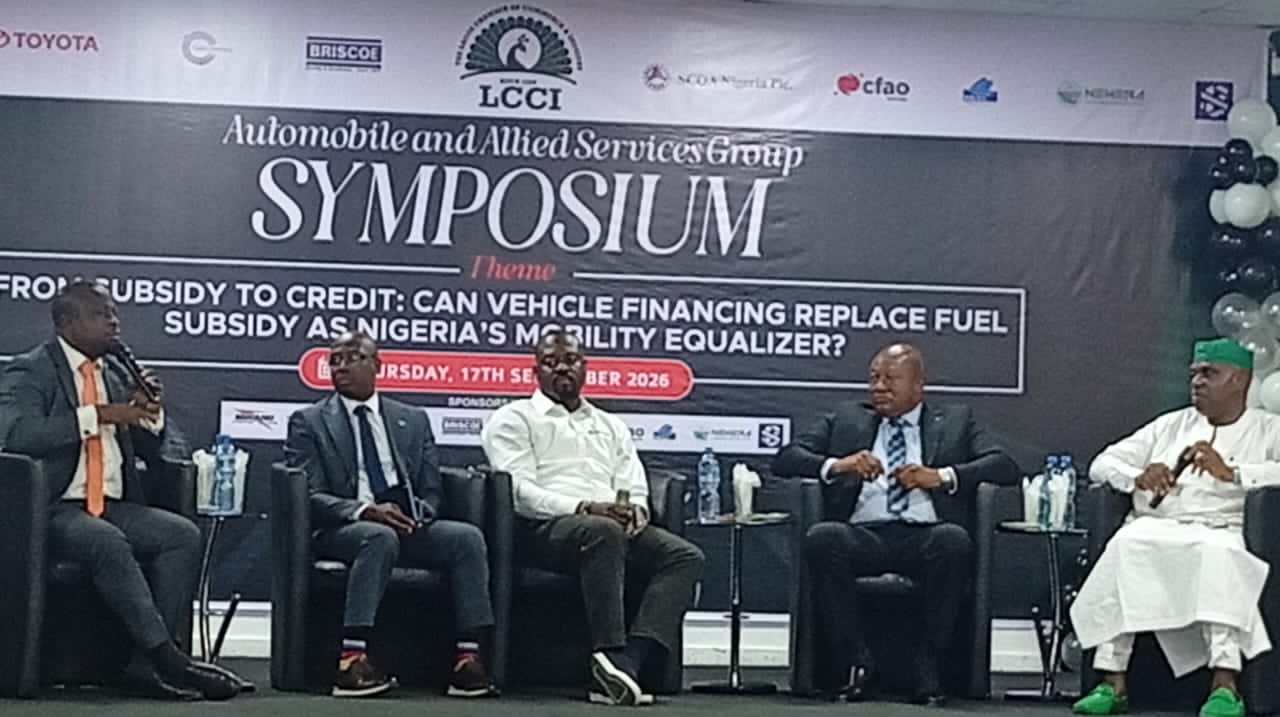
Director-General of NADDC, Otunba Joseph Oluwemimo Osanipin, stated this in an address delivered on his behalf by the Council’s Principal Information Officer, Tanko Kyumnom, at the Lagos Chamber of Commerce and Industry (LCCI) Auto Sectoral Group Symposium in Lagos.
The symposium, held on Thursday, September 17, 2026, at the Henry Fajemirokun Hall of LCCI, was themed: “From Subsidy to Credit: Can Vehicle Financing Replace Fuel Subsidy as Nigeria’s Mobility Equaliser?”
Osanipin said the growing cost of mobility had made it necessary to explore financing models that would enable individuals, businesses and transport operators to acquire vehicles without bearing the full cost of ownership upfront.
According to him, spreading vehicle payments over an agreed period could provide a more sustainable pathway to vehicle acquisition, provided that the financing products are affordable, accessible and structured around the economic realities of Nigerian consumers.
He, however, cautioned that simply making credit available would not be enough.
“Vehicle financing offers a more sustainable approach by enabling individuals, businesses and transport operators to acquire vehicles and pay for them over time,” Osanipin stated.
The NADDC DG said the bigger opportunity lies in linking vehicle financing with the growth of locally assembled and Nigerian-made vehicles.
He explained that increased access to credit for locally produced vehicles could generate wider economic benefits by stimulating demand for domestic assembly, supporting component manufacturers, creating jobs and strengthening local supply chains.
Osanipin therefore urged stronger collaboration among government institutions, financial institutions, vehicle manufacturers and other stakeholders in designing financing schemes capable of supporting both mobility access and automotive industrialisation.
The NADDC boss identified affordable vehicle loans, leasing arrangements, fleet financing, credit guarantees and appropriate interest-rate support as mechanisms that could broaden access to vehicle ownership and productive mobility.
lt also stressed the need for repayment structures that take into account the earning patterns and business realities of Nigerians, particularly transport operators and small businesses whose vehicles are directly linked to their income-generating activities.
Osanipin maintained that the objective should extend beyond increasing the number of vehicles on Nigerian roads.
“The goal is not simply to put more vehicles on Nigerian roads. It is to ensure that Nigerians can access productive mobility without placing an unsustainable burden on government finances or household incomes,” he said.
According to him, a properly structured automotive financing system could create a stronger connection between mobility, economic inclusion and domestic vehicle production.
“With the right policies and partnerships, vehicle financing can become a powerful instrument for mobility, economic inclusion and automotive industrial development,” Osanipin added.
The NADDC’s position places vehicle financing within the broader effort to build a sustainable automotive ecosystem in Nigeria—one in which access to credit supports vehicle users while also creating stronger demand for local assembly, components and associated automotive services.
Auto
Jetour T1 Storms Abuja as Automaker Accelerates Nigeria Expansion
Jetour T1 Set to debut in Abuja as Expansion Gains Momentum
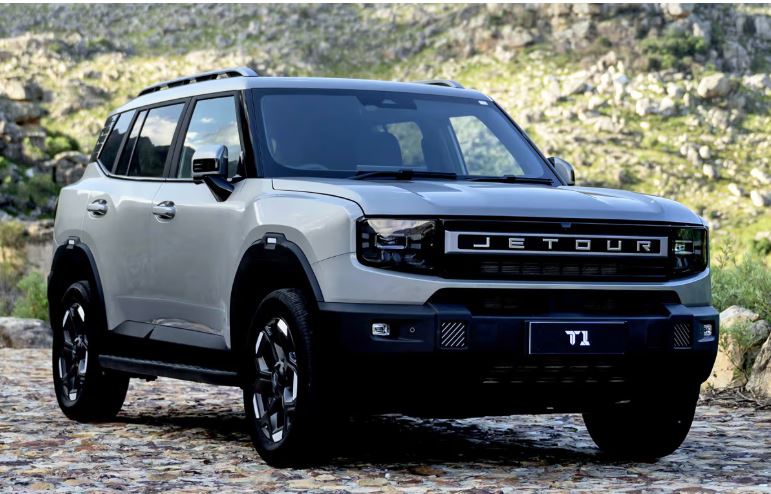
Following a successful debut in Lagos, Jetour Nigeria will host the Jetour Experience Abuja from September 22 to 24, 2026, positioning its all-new T1 model as a major competitor in the country’s growing adventure SUV market.
The three-day event in the Federal Capital Territory will give prospective buyers and motoring enthusiasts direct access to product demonstrations, expert-led technical sessions, and hands-on test drives.
“Strong participation, extensive test drives, and significant sales enquiries at the Lagos edition, coupled with growing demand from Abuja residents, influenced the decision to bring the experience to the nation’s capital,” the company said in a statement. The show holds at Maha Event Centre, Area 8, Garki.
To support its growing national footprint, Jetour Nigeria has established a network of seven accredited dealers: Elizade Nigeria Limited, New Era AutoVehicle Services Limited, Kojo Motors, Germaine Auto Centre, Tab Autos Limited, R.T. Briscoe Motors, and Mandilas Autos. The partnerships cover retail sales, genuine spare parts supply, and comprehensive after-sales maintenance.
READ ALSO:
- Kidnapped Female Police Officer Found Dead in Ebonyi as Suspect Leads Police to Remains
- CNN, MS NOW, Politico Sue Trump Over White House Access Ban
- JAMB Allows Candidates to Change Lost SIM, Email Addresses
The T1 enters the market with a focal point on balance—combining off-road capability with urban comfort.
The smart T1 has the following features-
Dimensions: 4,705mm (L) x 1,967mm (W) x 1,843mm (H) |; Wheelbase: 2,800mm; and
Powertrains: 1.5L Turbo / 2.0L Turbo (254 hp, 390 Nm torque).
The drivetrain is BorgWarner XWD Intelligent 4WD | 7-Speed DCT or 8-Speed Automatic. Terrain Capability: 199mm ground clearance, 600mm wading depth, and 28° approach/departure angles.
Other features include 15.6-inch HD touchscreen, Qualcomm Snapdragon 8155 platform, 8-speaker audio, 5-seater configuration with 574 litres of rear luggage space, 85 percent high-strength steel chassis alongside a Level 2 Advanced Driver Assistance System (ADAS), which includes Adaptive Cruise Control, Lane Keeping Assist, Forward Collision Warning, and Autonomous Emergency Braking.
Since its Nigerian market entry, Jetour has secured several local and international automotive honors, including Fastest Growing Auto Brand of the Year and Auto Brand of the Year.
Jetour T1 Set to debut in Abuja as Expansion Gains Momentum
Auto
Abuja Demand Rises as Jetour Brings X70 Plus Experience to FCT
Abuja Demand Rises as Jetour Brings X70 Plus Experience to FCT
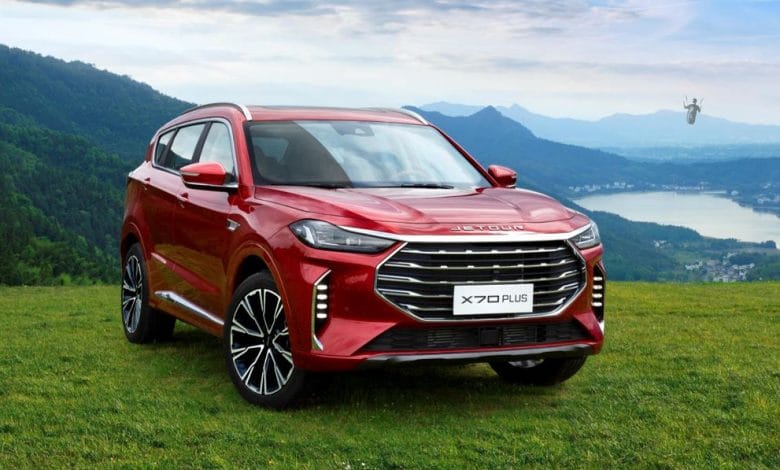
Jetour Nigeria is taking its seven-seater X70 Plus SUV to Abuja as rising interest from motorists in the Federal Capital Territory and neighbouring states fuels the brand’s latest push to deepen its presence across Nigeria.
The X70 Plus will headline the Jetour Experience Abuja, holding from September 22 to 24 at Maha Event Centre, Area 8, Garki, following the strong response recorded during the Lagos edition, where motorists turned out for test drives and made enquiries about Jetour models.
The Abuja activation is designed to give prospective buyers direct access to the X70 Plus and other models, with opportunities to test-drive the vehicles, engage product specialists and experience their technology, safety and comfort features.
The X70 Plus is positioned as a family-oriented SUV, offering seven-seat capacity and a range of features targeted at customers seeking comfort, technology and practicality.
The SUV is available with 1.5-litre and 1.6-litre turbocharged engine options, with outputs of up to 145kW and 290Nm of torque, paired with a dual-clutch automatic transmission.
READ ALSO:
- Enough Is Enough: Muslim Supporters Demand New Man United Owners
- Stray Bullet Kills 400-Level IBBU Student During Land Dispute in Niger
- Oyo Police: Student Who Died by Suicide Was Charged With Assault, Not ₦8,000 Debt
Its safety equipment includes front, side and curtain airbags, Vehicle Stability Control, Hill-Start Assist, Hill-Descent Control and a 360-degree panoramic camera with 2D and 3D viewing modes. Advanced Driver-Assistance Systems are also available.
Inside the cabin, the X70 Plus features a 10.23-inch LCD touchscreen, dual-zone climate control with air purification, wireless charging, a panoramic sunroof and an eight-speaker audio system.
Jetour Nigeria, the authorised distributor of the brand in the country, currently operates through seven accredited dealers: Elizade Nigeria Limited, Mandilas Autos, R.T. Briscoe Motors, Germaine Auto Centre, Kojo Motors, Tab Autos Limited and New Era Auto Vehicle Services Limited.
The company said the dealer network supports vehicle sales, genuine spare-parts supply and after-sales services across the country.
Jetour has also received recent industry recognition in Nigeria, including Fastest Growing Auto Brand by the Nigeria Auto Journalists Association and Auto Brand of the Year at the Nigeria Transport Lecture and Awards.
The Abuja experience is expected to provide prospective customers in the FCT and surrounding states with direct access to the X70 Plus and other Jetour models as the brand continues its national market expansion.
Abuja Demand Rises as Jetour Brings X70 Plus Experience to FCT
-
 metro2 days ago
Oyo Police: Student Who Died by Suicide Was Charged With Assault, Not ₦8,000 Debt
-

 Entertainment3 days ago
“She Wanted to Stay Single”: Rema Opens Up About Rejection That Inspired Hit Song ‘Oh No’
-

 metro3 days ago
Niger Miners’ Deaths: Families Demand Compensation, Justice for Victims
-

 metro3 days ago
Mambilla: ICC Raises Questions Over $500,000 Payment to Atiku’s Former Wife
-
 International22 hours ago
18 Suspects Transferred to US Over 2021 Killing of Haitian President Moïse
-
 Auto2 days ago
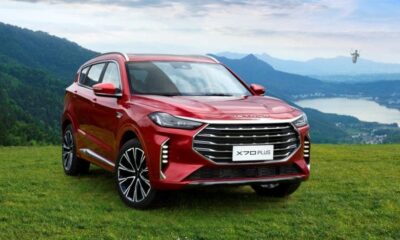
Abuja Demand Rises as Jetour Brings X70 Plus Experience to FCT
-

 metro2 days ago
Irreconcilable Developments: Wedding Cancelled 24 Hours Before Ceremony
-

 metro3 days ago
Niger Miners’ Deaths: Survivor Alleges Substance Was Sprayed in Cell as Probe Intensifies