

News
Electricity: Niger, Togo, others fail to pay $14.19m Q1 debt owed Nigeria

Electricity: Niger, Togo, others fail to pay $14.19m Q1 debt owed Nigeria
Nigeria’s financial challenges have taken another hit as international customers failed to settle a whopping $14.19 million electricity bill for the first quarter of 2024.
The alarming revelation sprang from the Nigeria Electricity Regulatory Commission’s (NERC) Q1 2024 report, which highlighted the persistent non-payment by all four of Nigeria’s international electricity customers.
The customers, comprising neighbouring countries such as Benin Republic, Niger, and Togo, have left Nigeria’s Market Operator (MO) with a substantial unpaid debt.
Analysts noted that the worrisome development remains a lingering issue that must be urgently addressed, as international clients’ repeated failure to honour their financial obligations would continually drain Nigeria’s purse.
The NERC report also shed light on a similar pattern within Nigeria. Domestic bilateral customers, who were billed a total of N1.86 billion for the same period, have also defaulted on their payments. The report clearly states, “In 2024/Q1, none of the four (4) international bilateral customers serviced by the MO made any payment against the $14.19 million invoice issued to them by the MO for services rendered in 2024/Q1. Similarly, none of the bilateral customers within the country made any payment against the cumulative invoice of N1,860.11 million issued to them by the MO for services rendered in 2024/Q1.”
However, the report does note some progress in clearing previous debts. Two international customers managed to pay approximately $5.19 million, while eight domestic customers settled about N505.71 million from past quarters. Although this is a step forward, the recurring failure to meet current payment obligations continues to strain Nigeria’s already troubled financial landscape.
READ ALSO:
- US orders submarine, aircraft carrier to Middle East after Israel warning of Iran attack
- Implement Biden truce plan, Hamas tells Gaza mediators, rejects ‘more negotiations’
- Trump election campaign blames Iran for hacked emails
On the domestic front, Nigeria’s Distribution Companies (DisCos) were billed a staggering N114.12 billion for upstream services in Q1 2024. This amount covers N65.96 billion for generation costs and N48.16 billion for transmission and administrative services. Despite this significant billing, the DisCos managed to remit N110.62 billion, leaving a shortfall of N3.50 billion. Nevertheless, their remittance performance of 96.93 per cent marks a notable improvement from the 69.88 per cent recorded in the previous quarter, reflecting a more concerted effort to address the financial bottlenecks within the sector.
Yet, the problem of unpaid international electricity debts looms large. In 2023, the federal government reported an outstanding $51.26 million owed by international customers for electricity exported from Nigeria.
To mitigate this, the government in May 2024 issued a directive limiting the supply of electricity to international customers to no more than 6 per cent of the total grid generation per hour.
In addition, the Nigerian Electricity Regulatory Commission (NERC) has criticized the ongoing practice of prioritizing international customers over local distribution companies (DisCos) during grid imbalances. The commission called this approach both inefficient and unfair, demanding a recalibration of priorities. Under a new order, electricity generation companies are now required to allocate no more than 10 per cent of their generation capacity to international off-takers over the next six months.
As Nigeria navigates these turbulent waters, the unresolved debts, both international and domestic, threaten to undermine the stability of the nation’s electricity sector, further exacerbating the country’s broader financial woes.
Electricity: Niger, Togo, others fail to pay $14.19m Q1 debt owed Nigeria








News
Tinubu Suspends Three Permanent Secretaries, Orders Arrest Over Fake Agency in SGF Office

Tinubu Suspends Three Permanent Secretaries, Orders Arrest Over Fake Agency in SGF Office
The Independent Corrupt Practices and Other Related Offences Commission (ICPC) uncovered the “National Brands Development and Made-in-Nigeria Special Project Office,” which allegedly operated without presidential approval within the Office of the Secretary to the Government of the Federation. The President has ordered the immediate arrest of the agency’s promoter and the suspension of three top civil servants.
President Bola Tinubu has ordered the immediate suspension of three permanent secretaries and directed the arrest of the promoter of a newly uncovered fake government agency operating within the premises of the Office of the Secretary to the Government of the Federation (OSGF). The discovery was announced on Friday by the Chairman of the Independent Corrupt Practices and Other Related Offences Commission (ICPC), Dr Musa Adamu Aliyu, SAN, during a briefing with State House correspondents at the Presidential Villa, Abuja.
The illegal entity, identified as the National Brands Development and Made-in-Nigeria Special Project Office, was found to have been allocated office space within the OSGF complex without presidential authorisation and in violation of existing regulations. The ICPC chairman explained that the discovery was made during the commission’s broader investigation into the earlier uncovered fake Presidential Foreign Intervention Promotion Council (PFIPC) and other procedural weaknesses in the public service.
READ ALSO:
- Troops Arrest Female Gunrunner, Recover AK-47 in Plateau
- Why Atiku’s subsidy gambit rattles Tinubu, By Farooq Kperogi
- Tinubu’s order: EFCC lifts freeze on Osun government accounts
According to Aliyu, the fake agency was promoted by Prince George Buchi Nwabueze, who was found to have allegedly operated under several variations of his name, including George Nathan, George Nathan Nwabueze, Honourable George Buchi Nwabueze, and George Nwabueze. The investigation also uncovered the alleged involvement of suspected collaborators within the OSGF who may have facilitated the agency’s operations.
Following the ICPC’s briefing, President Tinubu directed the immediate arrest of Nwabueze and the suspension of three permanent secretaries: M.S. Danjuma, Engineer Nadungu Gagare, and Richard P. Pheelangwah. The ICPC has engaged with officials of the OSGF to gather vital information regarding the unauthorised office, and the investigation remains active.
The latest discovery comes barely weeks after the exposure of the fictitious Presidential Foreign Intervention Promotion Council (PFIPC), whose self-styled Director-General, Adeniyi Adeyemi Matthew, is currently facing prosecution over allegations of forgery and impersonation. An interim ICPC report submitted to President Tinubu on August 6 had also identified two other fictitious bodies: the FCT Investment Promotion Agency and the Foreign Investment Promotion Agency and Public-Private Partnership. With Friday’s announcement, the National Brands Development and Made-in-Nigeria Special Project Office becomes the fourth fake agency uncovered by the anti-corruption commission in connection with the scandal since early April.
The ICPC chairman commended President Tinubu for directing a forensic audit of government processes and a wider policy audit of federal ministries, departments, and agencies, describing the move as a proactive step towards strengthening governance and closing loopholes that could facilitate abuse within the public service. The investigation is expected to focus not only on the individuals behind the purported agency but also on the institutional weaknesses that allowed an unauthorised entity to gain access to federal government premises.
Tinubu Suspends Three Permanent Secretaries, Orders Arrest Over Fake Agency in SGF Office
News
N3.14 Trillion Spent on Electricity Subsidy in 31 Months – FG
N3.14 Trillion Spent on Electricity Subsidy in 31 Months – FG
The Federal Government says the massive spending shielded consumers from the full impact of tariff hikes, but critics question the value amid persistent blackouts and plans to phase out subsidies by 2027.
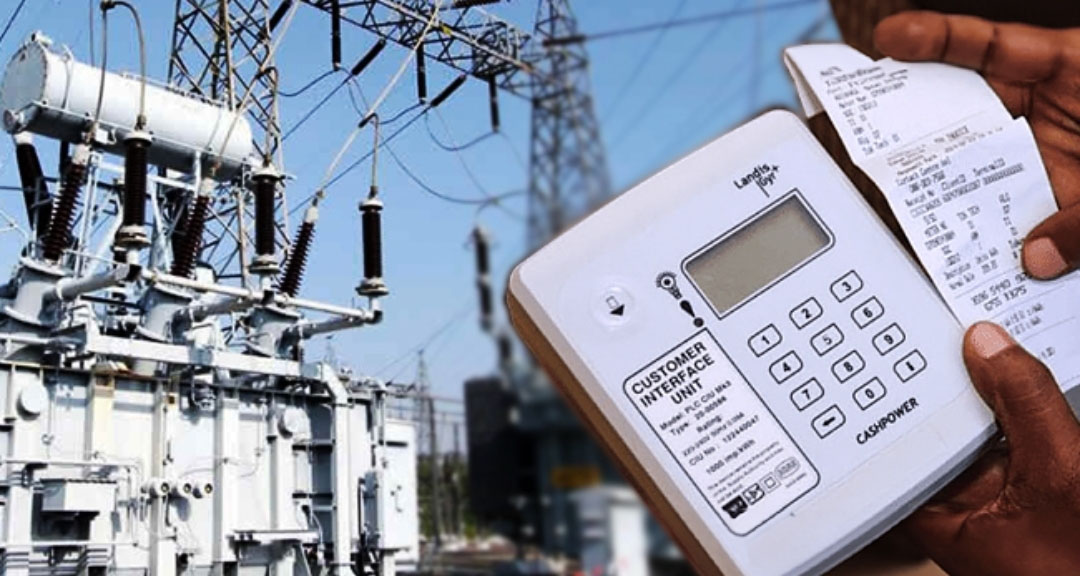
The President Bola Tinubu-led Federal Government has disclosed that it spent N3.14 trillion on electricity subsidies between June 2023 and December 2025, according to figures contained in its latest economic reform scorecard. The government said the intervention was designed to protect electricity consumers from the full effect of tariff increases as reforms in the power sector continued.
The electricity subsidy was among N30.64 trillion in additional spending pressures incurred by the Federal Government during the 31-month period. The figures were released by the Ministry of Finance following a presentation by Taiwo Oyedele, Minister of Finance and Coordinating Minister of the Economy.
According to the ministry, electricity subsidy payments rose sharply from N177 billion in 2023 to N1.48 trillion in 2024, representing an increase of more than 740 per cent. By December 2025, the subsidy bill stood at N1.47 trillion, indicating a marginal 1.14 per cent decline compared with the previous year.
Other major spending pressures recorded during the period included N9.39 trillion for wage adjustments and minimum-wage increases, N9.37 trillion arising from the impact of exchange-rate movements on external debt servicing, and N6.47 trillion for strategic infrastructure projects.
READ ALSO:
- 100 Days in Captivity: Borno Families Beg Tinubu, Zulum to Rescue 78 Abducted Students
- Hamzat warns workers against spending over 40% of income on rent
- Newlywed Woman Remanded for Allegedly Stabbing Husband to Death Over Party Dispute in Kano
The government said it mobilised N20.4 trillion in additional resources to partly finance the increased expenditure. The funds comprised N5.43 trillion from the Federal Government’s share of estimated petrol subsidy savings, N3.12 trillion in additional revenues, and N11.85 trillion raised through incremental borrowing. Despite these resources, the government said there was still a funding shortfall of N10.24 trillion, which had to be accommodated within the existing revenue base.
Despite the substantial subsidy spending, electricity supply deteriorated during the same period. According to the Nigerian Electricity Regulatory Commission (NERC), the Federal Government incurred an electricity tariff subsidy of N358.32 billion in the first quarter of 2026 alone. The subsidy bill averaged more than N119 billion per month as the government maintained its freeze on end-user electricity tariffs at July 2024 rates.
NERC explained that because electricity tariffs remain below cost-reflective levels, the government continues to subsidise the difference between the actual cost of power generation and the approved tariffs charged to consumers. Under the current Distribution Companies’ Remittance Obligation (DRO) framework, electricity generation companies invoiced the 11 DisCos a total of N689.72 billion during the quarter. However, only N331.40 billion was billed to the DisCos, leaving the government to cover the remaining N358.32 billion. The subsidy accounted for 51.95 per cent of the total generation invoice during the period.
The commission clarified that the lower subsidy payment in Q1 2026 did not result from the introduction of cost-reflective tariffs but rather from a decline in electricity purchased by the distribution companies during the quarter. According to the report, average available generation capacity fell by 17.45 per cent, dropping from 5,400.38MW in the fourth quarter of 2025 to 4,457.96MW in the first quarter of 2026. Total electricity generation also declined by 9.64 per cent to 8,883.47GWh.
The subsidy disclosure has drawn criticism from organised private sector groups. The Lagos Chamber of Commerce and Industry (LCCI) questioned the impact of the N15.8 trillion in petrol subsidy savings and criticised the N3.14 trillion electricity subsidy, saying it appeared to contradict the logic behind electricity tariff reforms and highlighted the high power costs that continue to burden businesses.
NERC has warned that the current subsidy regime leaves the Federal Government exposed to uncertain and potentially rising financial obligations. “The open-ended nature of the subsidy exposes the FGN to indeterminate subsidy obligations due to volumetric risk and changes in generation costs arising from changes in the generation mix, particularly with an increase in thermal generation,” the commission stated.
The disclosure comes against the backdrop of the Federal Government’s plan to gradually withdraw electricity subsidies from 2027. In July, Joseph Tegbe, Minister of Power, said the government had no immediate plan to increase electricity tariffs, explaining that subsidy payments would be gradually phased out from next year while ensuring that Nigerians continued to benefit from existing arrangements. “I promise you, next year, by God’s grace, we will put a stop to this so-called subsidy in the power sector,” Tegbe said.
The government has also proposed establishing a Power Consumer Assistance Fund (PCAF) , established under the Electricity Act 2023, as the preferred mechanism for delivering targeted subsidies directly to vulnerable electricity users. The initiative is designed to channel financial support through consumers’ electricity accounts or other verified identity-linked platforms, improving transparency in subsidy administration while boosting investor confidence in the sector.
However, analysts note that ending the subsidy without imposing another sharp tariff increase will require widespread metering, lower transmission and distribution losses, improved collections, reliable supply, and targeted protection for poorer households. The government is also working to clear debts owed to power generation companies, with GenCos reportedly owed about N6.5 trillion and receiving only about 35 per cent of their monthly invoices.
In April 2024, NERC raised electricity tariffs for Band A customers from N66 to N225 per kilowatt-hour. The affected consumers were expected to receive at least 20 hours of electricity daily, while the adjustment was projected to reduce the government’s subsidy burden by about N1.14 trillion in 2024. Despite this adjustment, the subsidy bill for 2024 and 2025 combined still reached nearly N3 trillion.
N3.14 Trillion Spent on Electricity Subsidy in 31 Months – FG
News
100 Days in Captivity: Borno Families Beg Tinubu, Zulum to Rescue 78 Abducted Students
-

 metro3 days ago
History in Makkah: Nigerian Teen Wins Prestigious Qur’anic Contest, Breaks 46-Year Gender Barrier
-

 News3 days ago
Delta Governor Reveals ₦503,000 Monthly Salary, Says Permanent Secretaries Earn ₦900,000
-
 Auto3 days ago
Dangote deploys technology to curb truck crashes, improve road safety
-
 metro20 hours ago
Lagos Police arrest five suspected telecom vandals, recover truckload of iron rods
-
 News3 days ago
Atiku’s Fuel Subsidy Plan Unrealistic, Destructive, Says Presidency
-

 Sports3 days ago
Okocha Ignites Fresh GOAT Debate: Nigerian Legend Says Messi Is ‘Art,’ Ronaldo Is ‘Goalscorer Like Haaland’
-
 Politics3 days ago
2027: Senator Saliu Mustapha quits APC after losing Kwara governorship ticket
-
 Politics3 days ago
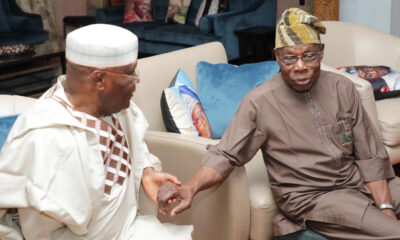
Donald Duke Recounts How IBB Warned Obasanjo About Atiku: ‘This One Cannot Rule Nigeria’