
Aviation
FAAN Introduces Hybrid Toll Payment System Following Tinubu’s Directive
FAAN Introduces Hybrid Toll Payment System Following Tinubu’s Directive
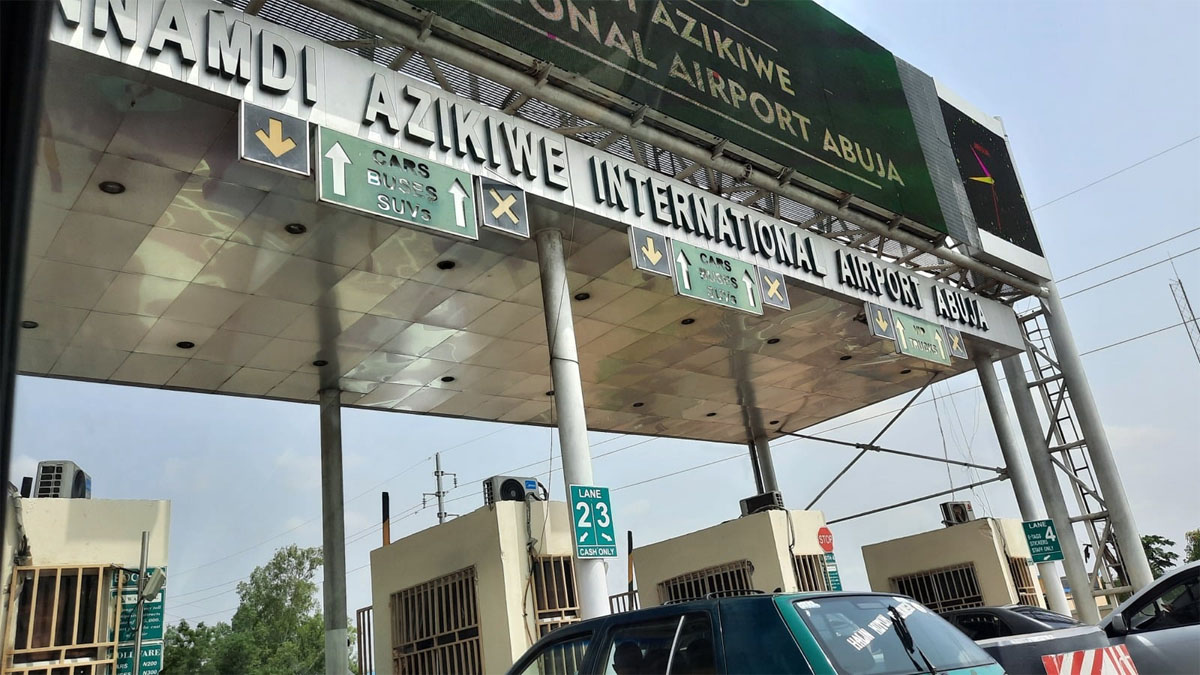
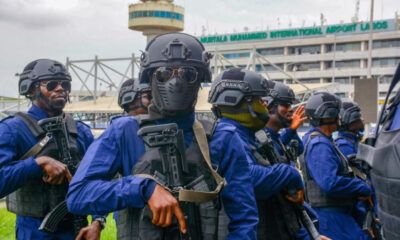
The Federal Airports Authority of Nigeria (FAAN) has introduced a temporary hybrid toll payment system at airports nationwide following heavy traffic congestion caused by the rollout of its cashless toll payment policy. The move comes after President Bola Tinubu directed the authority to ease implementation challenges to prevent travel disruptions.
FAAN Managing Director, Mrs. Olubunmi Kuku, told journalists in Lagos on Thursday that the decision followed severe gridlock at major airport toll gates, particularly Murtala Muhammed International Airport (MMIA), Lagos, as motorists struggled to adapt to fully digital payment methods. “He [the President] saw the traffic congestion and directed us to temporarily revert to a hybrid approach,” Kuku said. “This ensures smoother access while we refine the cashless system — it is a win for the industry.”
The hybrid model allows commuters and travellers to pay tolls using a combination of cash, prepaid FAAN cards, e-tags, debit cards, and other electronic options. Kuku emphasized that the arrangement will let FAAN continue its digital payment initiative while still accommodating users who have yet to register or activate electronic payment channels.
READ ALSO:
- Trump Warns Iranian Military, Including IRGC, to Surrender or Face “Certain Death”
- Trump Rejects Khamenei’s Son, Demands Role in Iran Leadership Selection
- FG Clarifies FEC Decision, Says PhD Not Equivalent to Medical Fellowship in Nigeria
She highlighted that the authority had registered over 100,000 users on its cashless platform between October 2025 and March 3, 2026, with around 60,000 sign-ups occurring in the final three days before the March 1 rollout deadline. The technology reportedly achieved a 99% success rate during initial operations, demonstrating strong potential for adoption once operational challenges are addressed.
Kuku explained that the initial rollout lacked a comprehensive pilot phase due to the pressure to meet the government’s deadline. The additional time granted by the Presidency now serves as an extended pilot period, enabling FAAN to raise public awareness, onboard private technology partners, and enhance monitoring mechanisms to prevent revenue leakages while cash payments are still allowed.
The MD noted that no new deadline has been set for the complete elimination of cash payments. The focus now is on refining the system, ensuring user convenience, and achieving a smooth transition to a fully digital tolling platform in line with global best practices in airport infrastructure management.
FAAN said the hybrid arrangement aims to prevent delays that could cause passengers to miss flights, while also maintaining transparency in revenue collection and improving overall airport operational efficiency.
FAAN Introduces Hybrid Toll Payment System Following Tinubu’s Directive







Aviation
FCCPC Finds Evidence of Airfare Manipulation by Domestic Airlines

FCCPC Finds Evidence of Airfare Manipulation by Domestic Airlines
The Federal Competition and Consumer Protection Commission (FCCPC) says it has uncovered credible evidence of airfare manipulation by domestic airlines in Nigeria, revealing that some carriers may have artificially inflated ticket prices during the December 2025 festive travel season beyond what market forces would justify. In an interim report released on Thursday, the FCCPC said its extensive forensic review of airfare data collected directly from airlines across key domestic routes shows striking irregularities in pricing patterns that appear inconsistent with normal seasonal demand, fuel costs, foreign exchange movements, or other operational variables.
The review by the Commission’s Surveillance and Investigations Department, led by Director of Corporate Affairs Ondaje Ijagwu, compared peak-season fares in December 2025 against ticket prices in the post-holiday period of January 2026. In many cases — notably on high-traffic corridors such as Abuja–Port Harcourt, Lagos–Calabar, and Lagos–Enugu — the difference in fares reached as high as ₦405,000 for a single ticket, even though essential cost drivers remained relatively stable. “These fare differences appear to reflect airlines’ arbitrary pricing decisions, yield management strategies, and capacity allocation practices rather than any variation in regulated fees or significant changes in operating conditions,” Ijagwu said, suggesting that multiple domestic carriers might have engaged in tacit coordination rather than true competition.
The report also showed that during the peak period, reduced seat availability paired with clustered price ranges across multiple operators raised further competition concerns, lending weight to potential violations of Nigeria’s Federal Competition and Consumer Protection Act (FCCPA) 2018. The interim findings flagged possible breaches of provisions governing restraint of competition, abuse of dominant positions, price-fixing, conspiracy, unfair contract terms, and consumers’ right to fair dealings — signalling that airlines may have breached multiple competition and consumer protection rules.
READ ALSO:
- US Lawmaker Says Christians in Nigeria Bear Brunt of Violence, Calls on Trump to Act
- Eric Chelle Explains $130,000 Salary Proposal, Reaffirms Loyalty to Super Eagles
- Suspected Arsonists Set St. Mary’s Catholic Church Ablaze in Cross River
The Airline Operators of Nigeria (AON) swiftly pushed back against the FCCPC’s report. AON spokesman Prof. Obiora Okonkwo said the Commission lacks the specialised expertise to analyse aviation pricing, warning that the probe could harm Nigeria’s fragile airline sector. “They don’t understand the economics of airlines or how ticket prices are set based on yield, load factors, aircraft utilisation and revenue management systems,” Okonkwo said. “This action is very detrimental to the survival of domestic operators.”
Independent aviation analysts in Nigeria say pricing behaviour in the sector has long lacked transparency. Dr. Uche Okoro, a transport economist, told news editors that while peak-season travel normally pushes fares up, the consistency of spikes across multiple airlines on the same dates and routes — even where there was no significant change in fuel or exchange rates — suggests coordinated pricing behaviour. “Market competition should push airlines to differentiate prices based on service levels and actual costs,” Okoro said. “When several carriers raise prices almost in unison, especially on predictable peak travel dates, it warrants scrutiny.”
The Nigerian Civil Aviation Authority (NCAA) acknowledged the FCCPC’s interim report and pledged to support the broader probe, noting that the aviation sector must balance airline financial sustainability with fair market practices. An NCAA spokesperson said: “We are engaging with the FCCPC and industry stakeholders to promote a transparent pricing environment. While airlines need to remain viable, consumers must also be protected from exploitative fare regimes.” The NCAA emphasised that factors such as fleet size limits, airport slot restrictions, seasonal demand patterns, and infrastructure capacity do affect pricing, but agreed that unusually steep price spikes merit investigation.
According to the FCCPC, the route-by-route analysis showed that on Abuja–Port Harcourt, average peak-period fares were far higher than post-peak levels, with many tickets in December priced well above the typical seasonal range. On Lagos–Calabar and Lagos–Enugu, similar patterns of clustered fare bands across airlines suggested pricing behaviour broadly aligned among competitors rather than differentiated by market forces. Across sampled routes, median fares during the festive period were significantly elevated compared with post-peak benchmarks, despite stable fuel price trends, unchanged airport taxes, and no major exchange rate shocks. The FCCPC noted that while predictable seasonal demand surges can justify higher fares, the magnitude and pattern of the increases observed in December 2025 are not fully explained by ordinary market conditions.
FCCPC Executive Vice Chairman and CEO Tunji Bello stressed that the interim report is not an enforcement action, but a step toward deeper investigation. “The Commission’s role is to ensure that market outcomes reflect competition and consumer protection principles,” he said, adding that full findings and possible enforcement measures will follow after the ongoing review. Bello also signalled that foreign airlines operating international routes involving Nigeria will soon be probed, following complaints that Nigerian passengers are often charged significantly higher fares on similar international distances. “No operator — domestic or foreign — will be shielded if evidence confirms fare-fixing or consumer exploitation,” Bello said. The FCCPC has asked both airlines and consumers to assist in the investigation by providing additional data, while warning airlines that violations of the FCCPA could result in regulatory sanctions, fines, or mandatory corrective orders once the full review is concluded.
FCCPC Finds Evidence of Airfare Manipulation by Domestic Airlines
Aviation
248 Passengers Safe as Aircraft Makes Emergency Landing in Lagos

248 Passengers Safe as Aircraft Makes Emergency Landing in Lagos
An aircraft carrying 248 passengers and 12 crew members made a successful emergency landing in Lagos after developing a mid-air technical fault, aviation and emergency authorities have confirmed.
The aircraft, operated by Qatar Airways, landed safely at the Murtala Muhammed International Airport (MMIA), Lagos, after the flight crew alerted air traffic control to the fault while en route. Emergency response teams were immediately placed on standby as the plane approached the runway.
READ ALSO:
- Twins’ Deaths: Lagos Begins Autopsy Probe After Post-Vaccination Tragedy
- BREAKING: ADC Suspends Chairman Over Alleged Anti-Party Activities
- Fresh Bandit Attack in Katsina Leaves Two Dead, Several Injured
Officials said the aircraft executed a controlled landing, with all passengers and crew evacuated safely and no injuries or fatalities recorded. Emergency agencies, including the Lagos State Emergency Management Agency (LASEMA), FAAN, fire services and medical responders, coordinated the operation.
Eyewitnesses at the airport described tense moments as rescue teams lined the runway, but calm was restored shortly after landing when passengers disembarked without incident.
The incident has again drawn attention to aviation safety in Nigeria, though authorities praised the swift response and professionalism of the flight crew and emergency agencies, noting that early alerts and coordination helped avert a major disaster.
248 Passengers Safe as Aircraft Makes Emergency Landing in Lagos
Aviation
VAT on Aircraft, Spare Parts Threatens Survival of Nigerian Airlines, says Allen Onyema

VAT on Aircraft, Spare Parts Threatens Survival of Nigerian Airlines, says Allen Onyema
The Air Peace CEO, Allen Onyema, has warned that Nigeria’s new tax laws threaten the survival of local airlines, arguing that the legislation reinstates taxes removed under the 2020 reforms. The taxes include customs duties on imported aircraft, aircraft parts, engines, and Value Added Tax (VAT) on tickets, which Onyema says will impose unsustainable financial burdens on airlines.
Speaking in an interview with Arise News on Sunday, Onyema stressed the high cost implications for airline operators.
“There is VAT on the importation of aircraft. For an aircraft worth $80 million, you are supposed to pay 7.5 percent. With bank loan interest rates at 30–35 percent, plus VAT on spare parts, it is unsustainable,” Onyema said. “If we implement that tax reform, Nigerian airlines will go down in three months.”
The Air Peace CEO also announced that the airline industry will no longer tolerate unruly passengers starting January 1, 2026. Onyema cited instances of disruptive behaviour by passengers on flights, including smuggling alcohol into the cabin, forcing upgrades to business class without payment, and threatening fellow travellers.
READ ALSO:
- Train Derailment in Southern Mexico Kills 13, Injures Nearly 100 in Oaxaca
- Tragedy in Lekki as Lexus SUV Crashes Into Children, One Feared Dead, Four Injured
- Presidency Intervenes in Akume, Alia Political Dispute in Benue
He referenced a recent incident on a flight diverted to Manchester, UK, due to bad weather, where passengers staged a viral video accusing Air Peace of misconduct, despite British authorities confirming that over 200 flights were diverted that day.
Onyema emphasised that airlines will now enforce stricter measures, including blacklisting unruly passengers, asserting that the behaviour is currently being “supported by the system unnecessarily.”
The statement comes amid growing concerns over rising domestic airfares. On December 10, the Senate summoned the Aviation Minister, Festus Keyamo, and industry stakeholders over soaring ticket prices. Subsequently, on December 11, the House of Representatives called on the federal government to reduce aviation taxes by 50 percent to ease costs for travellers.
Onyema’s comments highlight both the financial pressures on Nigerian airlines due to aviation taxes and the sector’s new stance on passenger discipline to safeguard safety and service standards.
VAT on Aircraft, Spare Parts Threatens Survival of Nigerian Airlines, says Allen Onyema

-
 News18 hours ago
FG Approves Medical Fellowships as PhD Equivalent in Nigerian Universities
-

 metro21 hours ago
Police Announce Dates, Requirements for 2026 Constable Recruitment Screening
-

 metro22 hours ago
Leadership Reshuffle: IGP Tunji Disu Removes Hundeyin as Nigeria Police Force PRO
-

 metro18 hours ago
Family Prepares Funeral for Abducted NYSC Member After ₦10m Ransom Fails
-

 metro1 day ago
Islamic Scholar Barred From Ramadan Tafseer After Criticising Tinubu, Governors
-

 News19 hours ago
FEC Approves 100% Gratuity for Retiring Federal Civil Servants
-

 metro2 days ago
How Ikwechegh’s ₦1.15tr Interrogation Led to Tinubu’s Cabinet Shake-Up
-

 Politics1 day ago
Lai Mohammed: Peter Obi Couldn’t Have Won 2023 Election Even With 10 Million Extra Votes