
Opinion
Barbaric mass burning of innocents in Edo, by Farooq Kperogi
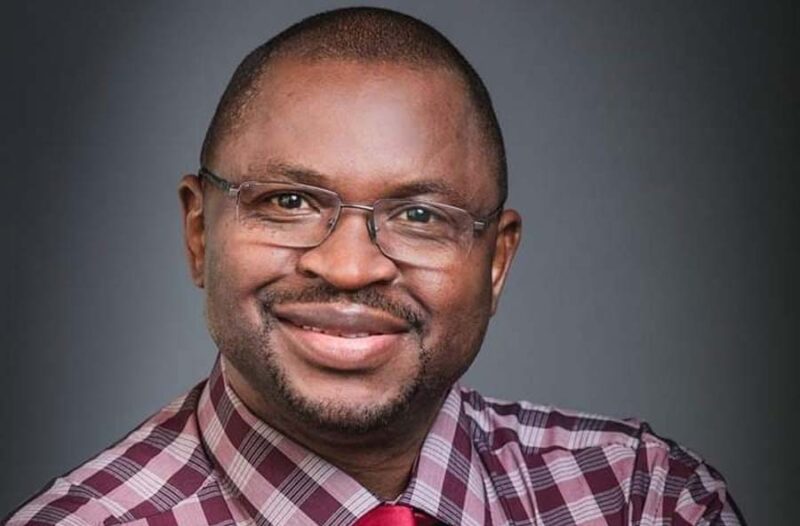
Barbaric mass burning of innocents in Edo, by Farooq Kperogi
I woke up on Friday morning to a deluge of forwarded, unwatchably terrifying videos showing 16 Hausa hunters, who were traveling from Port Harcourt to Kano for the forthcoming Eid-el-fitr festivities, being lynched and burned alive by a mob of blood-thirsty savages in the town of Uromi in Edo State. I’ve been sick to my stomach.
My inquiry has led me to understand that the Uromi community has been gripped by abductions for ransom, which sometimes result in deaths. Seething with rage and vengeance over the incessancy of deadly kidnapping by “Fulani herdsmen,” the community was primed for jungle justice.
When local vigilantes accosted a bus traveling northward through the town, they found Hausa hunters armed with hunting guns and machetes aboard. In the bigoted, know-nothing estimation of the Uromi vigilantes, Hausa hunters were one and the same as Fulani kidnappers.
So, they burned the innocent Hausa hunters for the crimes of anonymous Fulani bandits. I honestly couldn’t bring myself to watch the dreadfully nightmarish videos to the end.
These sorts of savage slaughters of innocents persist in Nigeria not just because of a progressive loss of faith in formal institutions for the redress of communal grievance, heightened anxieties about safety, and increasing faith in the efficacy of jungle justice but also because of the absence of consequences for them.
As I pointed out when Deborah Yakubu was extrajudicially murdered by a mob of unhinged fanatics in Sokoto in May 2022, there is no greater enabler of jungle justice than a lack of consequence for it.
Sadly, when tragedies like this occur, there is a habitual, safe, standard, prepackaged rhetorical template that people in government effortlessly regurgitate. They promise to bring the perpetrators to justice, make performative arrests to quench public thirst for justice, and nothing else happens. That can’t continue.
When I called for the prosecution and public execution of the murderers of Deborah in 2022, I warned that it was necessary “to serve as an example to other would-be murderers.”
READ ALSO:
- Investigation of wanted businesswoman Achimugu not linked with Atiku, Sanwo-Olu – EFCC
- No Sallah durbar festival in Kano this year – Police warn
- $100m coin collection buried for decade to be auctioned
Of course, Deborah’s murder wasn’t the first example of jungle justice. Harira and her four children were ferociously murdered by maniacal thugs in Anambra State, and nothing was done about it. The list is too long to fit in a newspaper column. But I argued that it’s never too late to do the right thing.
I will repeat my plea. The murderers of these innocent travelers are easily identifiable from the videos that are circulating online. They should all be apprehended, tried, and executed in public to deter a repeat.
But, in the interest of proportionality of justice, this should not be limited to this Uromi incident. All cases of jungle justice should equally be punished the same way. The punishment for murder in both the Criminal Code and the Penal Code is death. The law should be followed.
Another thing that this incident instantiates is the danger of toxic ignorance. Before Muhammadu Buhari became president, all northerners in southern Nigeria used to be “Hausa,” irrespective of their ethnic and religious identities.
After Buhari became president, every northerner, especially if the northerner is also Muslim, became “Fulani,” which led me to write a June 5, 2021, column titled, “‘Fulanization’ of the North by the South.” The South, I wrote, was relentlessly rhetorically Fulanizing the North, particularly the Muslim North, just to fertilize and sustain a simplistic narrative.
This simplistic, misbegotten narrative probably led the Uromi mass murderers to assume that Hausa people with hunting instruments must be Fulani bandits since they have internalized the wrongheaded notion that all northern Muslims are “Fulani.”
Never mind that Hausa and Fulani communities in many northwestern states are at daggers drawn over kidnappings for ransom by Fulani outlaws, or that more northerners are kidnapped for ransom than people anywhere else in the country.
Trust TV, the broadcast arm of Daily Trust, did an informative documentary on March 5, 2022, titled “Nigeria’s Banditry: The Inside Story” that brought the tension between Fulani herders and Hausa people into focus.
A subsequent July 25, 2022, BBC Africa Eye documentary titled “The Bandit Warlords of Zamfara,” which got the hackles of the Muhammadu Buhari administration up, amplified the tensile relational dynamics between Hausa and Fulani communities in the northwest since kidnapping for ransom took roots in the region, transmuted into full-on terrorism, and finally morphed into the full-scale Hausa-versus-Fulani ethnic war, particularly in such states as Zamfara, Kebbi, and Katsina.
In response to the rural and urban banditry by mostly Fulani brigands against Hausa people in the northwest (Fulani people have also accused Hausa people of cattle theft, indiscriminate murders, and systematic exclusion), the BBC documentary tells us, Hausa people formed or strengthened preexisting vigilante groups called yan sakai or yan banga for self-defense against bandits.
READ ALSO:
- EFCC re-arraigns son of ex-PDP chairman for alleged N2.2bn oil subsidy fraud
- Group says Natasha’s recall will deepen democracy
- We welcome Gov Makinde’s U-turn on Shari’ah panel – MURIC
Yan banga groups originally come from traditional Hausa hunters’ associations and draw upon the skills and rituals commonly associated with traditional hunters (such as using charms, dane guns, and other traditional weaponry) for vigilante duties.
In other words, most of the Hausa hunters that the Uromi homicidal beasts murdered in cold blood to avenge the banditry of Fulani herders would be targets of elimination by Fulani bandits in the northwest. That’s double jeopardy.
The northwest is the theater of a ceaseless spiral of recrimination and reciprocal violence between the Hausa and Fulani communities, thereby imperiling the longstanding, Islamically-inspired ethnocultural synthesis that historically unites them.
Remarkably, this volatile dynamic persisted largely unnoticed by both national and global media until it was thrust into international consciousness through BBC Africa Eye’s seminal July 2022 “The Bandit Warlords of Zamfara” documentary.
The documentary revealed the paradoxical reality wherein, despite substantial overlaps in culture, religion, heritage, and linguistic traditions, the Hausa and Fulani populations remain predominantly segregated, particularly in rural areas. Intercommunity relations are characterized by persistent tensions that manifest in conflicts over scarce resources such as land, water, and sustenance.
But the rest of Nigeria has a hard time grasping the existence of tensile ethnic stress between Hausa and Fulani people in the north on account of banditry because the southern-dominated institutional news media in Nigeria, which help frame how we make sense of our social and cultural realities, lack ready-made, stereotypical mental representations with which to frame the conflict, so they either avoid reporting it altogether or minimize its horrors if they report it at all.
The news media thrive on Manichean binaries, conflictual differences, and sensation, which a conflict between Hausa and Fulani people doesn’t present. After all, a popular Yoruba epigram says, “Gambari pa Fulani ko lejo ninu,” which roughly translates as “If a Hausa person kills a Fulani person, there is no case,” implying that the Hausa and the Fulani are indistinguishable.
I have also read many northerners on social media encouraging a retaliation over the Uromi massacre of Hausa hunters. That would be most unfortunate for at least three reasons. First, the people who committed the murders are easily identifiable. Indiscriminate murder of innocent southerners in the north for a crime committed by a recognizably small group of people violates not just the law of the land but also Islamic precepts.
Surah Al-Ma’idah (Chapter 5, Verse 32) of the Qur’an says, “whoever kills a soul…it is as if he had slain mankind entirely. And whoever saves one—it is as if he had saved mankind entirely.”
Second, based on the experiences of the past, one can almost guarantee that innocent, law-abiding Igbos in the north would bear the brunt of any “retaliation” even though Uromi in Edo State isn’t an Igbo town.
The town is populated by the Esan people who, although they constitute a major ethnic group in the state, are not the majority in the state. They also don’t have a numerically significant presence in the North, so innocent southerners would be murdered in cold blood.
Finally, killing innocent southerners in the North for the crimes of a few people would be identical to the crimes of the Uromi vigilantes that the retaliators are supposedly avenging.
I hope the president and the governor of Edo State will act expeditiously to contain this upheaval and prevent it from snowballing into a bigger problem than it should.
Barbaric mass burning of innocents in Edo, by Farooq Kperogi
Farooq Kperogi is a renowned Nigerian columnist and United States-based Professor of journalism.







Opinion
El Rufai’s Arise News mind game with Ribadu, By Farooq Kperogi

El Rufai’s Arise News mind game with Ribadu, By Farooq Kperogi
El Rufai’s Arise News mind game with Ribadu, By Farooq Kperogi
Opinion
Oshiomhole: Behold the 13th disciple of Christ
Oshiomhole: Behold the 13th disciple of Christ
Opinion
AFCON 2025: Flipping Content Creation From Coverage to Strategy

AFCON 2025: Flipping Content Creation From Coverage to Strategy
By Toluwalope Shodunke
The beautiful and enchanting butterfly called the Africa Cup of Nations (AFCON) emerged from its chrysalis in Khartoum, Sudan, under the presidency of Abdelaziz Abdallah Salem, an Egyptian, with three countries—Egypt, Sudan, and Ethiopia—participating, and Egypt emerging as the eventual winner.
The reason for this limited participation is not far-fetched. At the time, only nine African countries were independent. The remaining 45 countries that now make up CAF’s 54 member nations were either pushing Queen Elizabeth’s dogsled made unique with the Union Jack, making supplications at the Eiffel Tower, or knocking at the doors of the Palácio de Belém, the Quirinal Palace, and the Royal Palace of Brussels—seeking the mercies of their colonial masters who, without regard for cultures, sub-cultures, or primordial affinities, divided Africa among the colonial gods.
From then until now, CAF has had seven presidents, including Patrice Motsepe, who was elected as the seventh president in 2021. With more countries gaining independence and under various CAF leaderships, AFCON has undergone several reforms—transforming from a “backyard event” involving only three nations into competitions featuring 8, 16, and now 24 teams. It has evolved into a global spectacle consumed by millions worldwide.
Looking back, I can trace my personal connection to AFCON to table soccer, which I played alone on concrete in our balcony at Olafimihan Street—between Mushin and Ilasamaja—adjacent to Alafia Oluwa Primary School, close to Alfa Nda and Akanro Street, all in Lagos State.
Zygmunt Bauman, the Polish-British sociologist who developed the concept of “liquid modernity,” argues that the world is in constant flux rather than static, among other themes in his revelatory works.
For the benefit of Millennials (Generation Y) and Generation Z—who are accustomed to high-tech pads, iPhones, AI technologies, and chat boxes—table soccer is a replica of football played with bottle corks (often from carbonated drinks or beer) as players, cassette hubs as the ball, and “Bic” biro covers for engagement. The game can be played by two people, each controlling eleven players.
I, however, enjoyed playing alone in a secluded area, running my own commentary like the great Ernest Okonkwo, Yinka Craig, and Fabio Lanipekun, who are all late. At the time, I knew next to nothing about the Africa Cup of Nations. Yet, I named my cork players after Nigerian legends such as Segun Odegbami, Godwin Odiye, Aloysius Atuegbu, Tunji Banjo, Muda Lawal, Felix Owolabi, and Adokiye Amiesimaka, among others, as I must have taken to heart their names from commentary and utterances of my uncles resulting from sporadic and wild celebrations of Nigeria winning the Cup of Nations on home soil for the first time.
While my connection to AFCON remained somewhat ephemeral until Libya 1982, my AFCON anecdotes became deeply rooted in Abidjan 1984, where Cameroon defeated Nigeria 3–1. The name Théophile Abéga was etched into my youthful memory.
Even as I write this, I remember the silence that enveloped our compound after the final whistle.
It felt similar to how Ukrainians experienced the Battle of Mariupol against Russia—where resolute resistance eventually succumbed to overwhelming force.
The Indomitable Lions were better and superior in every aspect. The lion not only caged the Eagles, they cooked pepper soup with the Green Eagles.
In Maroc ’88, I again tasted defeat with the Green Eagles (now Super Eagles), coached by the German Manfred Höner. Players like Henry Nwosu, Stephen Keshi, Sunday Eboigbe, Bright Omolara, Rashidi Yekini, Austin Eguavoen, Peter Rufai, Folorunsho Okenla, Ademola Adeshina, Yisa Sofoluwe, and others featured prominently. A beautiful goal by Henry Nwosu—then a diminutive ACB Lagos player—was controversially disallowed.
This sparked outrage among Nigerians, many of whom believed the referee acted under the influence of Issa Hayatou, the Cameroonian who served as CAF president from 1988 to 2017.
This stroll down memory lane illustrates that controversy and allegations of biased officiating have long been part of AFCON’s history.
The 2025 Africa Cup of Nations in Morocco, held from December 21, 2025, to January 18, 2026, will be discussed for a long time by football historians, raconteurs, and aficionados—for both positive and negative reasons.
These include Morocco’s world-class facilities, the ravenous hunger of ball boys and players (superstars included) for the towels of opposing goalkeepers—popularly dubbed TowelGate—allegations of biased officiating, strained relations among Arab African nations (Egypt, Algeria, Tunisia, and Morocco), CAF President Patrice Motsepe’s curt “keep quiet” response to veteran journalist Osasu Obayiuwana regarding the proposed four-year AFCON cycle post-2028, and the “Oga Patapata” incident, where Senegalese players walked off the pitch after a legitimate goal was chalked off and a penalty awarded against them by DR Congo referee Jean-Jacques Ndala.
While these narratives dominated global discourse, another critical issue—less prominent but equally important—emerged within Nigeria’s media and content-creation landscape.
Following Nigeria’s qualification from the group stage, the Super Eagles were scheduled to face Mozambique in the Round of 16. Between January 1 and January 3, Coach Eric Chelle instituted closed-door training sessions, denying journalists and content creators access, with media interaction limited to pre-match press conferences.
According to Chelle, the knockout stage demanded “maximum concentration,” and privacy was necessary to protect players from distractions.
This decision sparked mixed reactions on social media.
Twitter user @QualityQuadry wrote:
“What Eric Chelle is doing to journalists is bad.
Journalists were subjected to a media parley under cold weather in an open field for the first time in Super Eagles history.
Journalists were beaten by rain because Chelle doesn’t want journalists around the camp.
Locking down training sessions for three days is unprofessional.
I wish him well against Mozambique.”
Another user, @PoojaMedia, stated:
“Again, Eric Chelle has closed the Super Eagles’ training today.
That means journalists in Morocco won’t have access to the team for three straight days ahead of the Round of 16.
This is serious and sad for journalists who spent millions to get content around the team.
We move.”
Conversely, @sportsdokitor wrote:
“I’m not Eric Chelle’s biggest supporter, but on this issue, I support him 110%.
There’s a time to speak and a time to train.
Let the boys focus on why they’re in Morocco—they’re not here for your content creation.”
From these three tweets, one can see accessibility being clothed in beautiful garments. Two of the tweets suggest that there is only one way to get to the zenith of Mount Kilimanjaro, when indeed there are many routes—if we think within the box, not outside the box as we’ve not exhausted the content inside the box.
In the past, when the economy was buoyant, media organisations sponsored reporters to cover the World Cup, Olympics, Commonwealth Games, and other international competitions.
Today, with financial pressures mounting, many journalists and content creators seek collaborations and sponsorships from corporations and tech startups to cover sporting events, who in turn get awareness, brand visibility, and other intangibles.
As Gary Vaynerchuk famously said, “Every company is a media company.” Yet most creators covering AFCON 2025 followed the same playbook.
At AFCON 2025, most Nigerian journalists and content creators pitched similar offerings: on-the-ground coverage, press conferences, team updates, behind-the-scenes footage, analysis, cuisine, fan interactions, and Moroccan cultural experiences.
If they were not interviewing Victor Osimhen, they were showcasing the stand-up comedy talents of Samuel Chukwueze and other forms of entertainment.
What was missing was differentiation. No clear Unique Selling Proposition (USP). The result was generic, repetitive content with little strategic distinction. Everyone appeared to be deploying the same “Jab, Jab, Jab, Hook” formula—throwing multiple jabs of access-driven content in the hope that one hook would land.
The lesson is simple: when everyone is jabbing the same way, the hook becomes predictable and loses its power.
As J. P. Clark wrote in the poem “The Casualties”, “We are all casualties,” casualties of sameness—content without differentiation. The audience consumes shallow content, sponsors lose return on investment, and creators return home bearing the “weight of paper” from disappointed benefactors.
On November 23, 1963, a shining light was dimmed in America when President John F. Kennedy was assassinated.
As with AFCON today, media organisations sent their best hands to cover the funeral, as the who’s who of the planet—and if possible, the stratosphere—would attend. Unconfirmed reports suggested that over 220 VVIPs were expected.
While every newspaper, radio, and television station covered the spectacle and grandeur of the event, one man, Jimmy Breslin, swam against the tide. He chose instead to interview Clifton Pollard, the foreman of gravediggers at Arlington National Cemetery—the man who dug John F. Kennedy’s grave.
This act of upended thinking differentiated Jimmy Breslin from the odds and sods, and he went on to win the Pulitzer Prize in 1986.
Until journalists and content creators stop following the motley and begin swimming against the tide, access will continue to be treated as king—when in reality, differentiation, aided by strategy, is king.
When every journalist and content creator is using Gary Vaynerchuk’s “Jab, Jab, Jab, Hook” template while covering major sporting events, thinkers among them must learn to replace one jab with a counterpunch—and a bit of head movement—to stay ahead of the herd.
Toluwalope Shodunke can be reached via tolushodunke@yahoo.com

-

 News2 days ago
Saudi Arabia Confirms Sighting of Ramadan Crescent, Fasting Begins Wednesday
-

 metro2 days ago
Lagos Woman Shares Ordeal After Alleged Rape, Sparks Nationwide Outcry
-

 News2 days ago
Ramadan Begins in Nigeria as Sultan Confirms Crescent Sighting
-
 metro2 days ago
Seven Killed in Horrific Crash at Ota Toll Gate
-

 International7 hours ago
Canada Opens New Express Entry Draw for Nigerian Workers, Others
-
 metro2 days ago
Deadlock at National Assembly as House Snubs Electoral Act Bill Meeting on E-Transmission Clause
-
 News1 day ago
Korope Drivers Shut Down Lekki–Epe Expressway Over Lagos Ban (Video)
-

 Health1 day ago
Ramadan Health Tips: Six Ways to Stay Hydrated While Fasting