Farooq Kperogi: Celebrating Buhari’s death Vs forgiving him - Newstrends
Connect with us

Opinion

Farooq Kperogi: Celebrating Buhari’s death Vs forgiving him

Published

on

Farooq Kperogi

Farooq Kperogi: Celebrating Buhari’s death Vs forgiving him

Two dominant narrative strands have emerged in Nigerian discursive spheres in the aftermath of former President Muhammadu Buhari’s death: whether it offends decency to celebrate his death (as many have done both online and offline) and whether Nigerians should forgive his betrayal of the country. I have slightly unconventional views on both.

The religious and cultural values that shaped me in my formative years and that I have internalized throughout my academic and interpersonal socializations have predisposed me to find no value in celebrating anybody’s death, although I admit that it would amount to discursive tyranny for me to insist that people who find value or cathartic experience in celebrating a death shouldn’t do so.

Here’s why, outside the realm of my religio-cultural socialization, I don’t celebrate anybody’s death.

First, death is a garment that every living soul, irrespective of their piety or depravity, will wear at some point.

Celebrating another person’s death, in my mind, is like a line of schoolchildren, all guilty of the same offense, awaiting punishment from a stern teacher. When an obnoxious child gets whipped, those farther down the line cheer and clap, momentarily delighted that it wasn’t them and overjoyed that the loathsome child had met his comeuppance, forgetting that the teacher is merely working through the queue.

The cane is coming, steadily and inevitably. Their distance from the front of the line is merely a delay, not a pardon. Their personal sense of righteousness or imagined innocence won’t save them. Death, like that teacher’s cane, is no respecter of position or moral superiority. It will reach everyone in turn.

So, to me, rejoicing in another’s death only reveals a foolish ignorance of your own place in the line. Still, I acknowledge and respect the right of people to celebrate anybody’s death, if that gives them even temporary emotional reprieve. It’s the same as the right of schoolchildren in a whipping line to chuckle when the cane lands on someone ahead of them, even if they, too, won’t escape the cane.

Every death is a sharp reminder that I, too, am just further down the line, waiting my turn, not exempt from the cane.

READ ALSO:

In a July 10, 2010, column titled “Grieving in America,” which I wrote in the aftermath of my first wife’s death, I pointed out that, “It is supremely ironic that it is tragedies and traumas, more than successes and prosperity, that bring out the depth of the humanity in us. Perhaps it is because these tragedies remind us all of our own mortality, our own frailty, our own vulnerability.”

Nevertheless, had Buhari died while he was inflicting pain on Nigerians with his harsh policies, it would be justified, I think, if people that were being crushed under the weight of his ineptitude and insouciance exulted.

But he died after eight ruinous years that reversed Nigeria’s little progress by decades. And he died in his 80s at one of the best hospitals in the world. The average lifespan in Nigeria is only about 54. Buhari lived close to the highest life expectancy anywhere in the world. Most of us would be lucky to reach 70 before the inevitable, inexorable cane of death gets to us.

So, I see no karmic retribution in the death of a man who caused so much anguish to millions of people but who lived his best life at the expense of the country that gave him everything and that he devastated without remorse.

Now, should he be forgiven in the interest of posthumous clemency and reverence? Well, Buhari’s offense was to the Nigerian state. Speaking for myself, he never offended me as a person. We are so far in age, symbolic capital, and social symmetry for him to have offended me.

But if he did, as a Muslim, I would forgive him. Although the Qur’an and Hadith do not explicitly command Muslims to forgive the dead who wronged them, they strongly recommend forgiveness as a moral virtue, and there is no teaching that restricts forgiveness to only the living.

We are taught to forgive because forgiveness heals the heart from the toxin of resentment and removes the burden of grudge from our own souls. I simply don’t have the emotional and mental stamina to hate or nurse a grudge against anyone.

However, Buhari collectively offended the Nigerian state and its people. He became president when he knew he had neither the physical fitness nor the mental agility to navigate the complex contours of our nation. So, he left Nigeria hungrier, angrier, more divided, and less hopeful than he met it when he became president.

There is no mechanism to get the Nigerian state and its people to forgive him. The hurt he visited on the country and its people, both knowingly and unknowingly, is both unforgivable and inerasable. Forgiving him is beyond the realm of human capacity. Since he was a man of faith, only his Creator can choose to forgive him.

It is noteworthy, nonetheless, that Buhari’s entire adult life was marked by a stubborn resistance to forgive people whom he felt offended him. He had a remarkably gargantuan passion to feed and nurse grudges. Yet, somehow, most people he personally offended often forgave him.

There’s a long list of people that Buhari refused to forgive until his death for minor and major slights they committed against him, but perhaps his bitterest, most intense enemy was former military president Ibrahim Badamasi Babangida (IBB) who overthrew and jailed him in 1985.

He never forgave IBB for that until he died. But former President Shehu Usman Shagari, whom Buhari also overthrew and jailed in 1983, forgave Buhari. I’ll come back to this point shortly.

Buhari was pretty petty and explicit in his vindictiveness. For instance, he deliberately shunned the launch of IBB’s autobiography even when several previous “enemies” of IBB honored it in the interest of maturity and late-stage reconciliation. He could never forgive IBB.

READ ALSO:

He desperately wanted to get back to power not because the benefit of hindsight inspired him with the vision to map out what he could do differently from what he did between 1983 and 1985 to make Nigeria better, but because he wanted to one-up IBB.

He wanted to prove that although IBB got him out of power through the bullet, he got back to power decades later through the ballot. One of his most cherished bragging rights, according to people who were close to him, was that he ended up ruling Nigeria for more years than IBB did.

I joked to someone a few days ago that if the dead could see and talk, Buhari would probably say his only regret was that IBB outlived him. Yes, he had that much consuming obsession with sustaining his grievance and one-upmanship with IBB, even after several efforts were made by northern elders to reconcile them.

For me, though, what was worse than Buhari’s inability to forgive people who offended him was his incapacity to requite the grace of people he offended who chose to forgive him. A classic example was President Shagari.

Although in the aftermath of reconciliation efforts by northern elders Shagari forgave him and was gracious about it, Buhari never quite requited this even when Shagari died. Buhari barely personally acknowledged Shagari’s death. He asked Boss Mustapha, a Christian, to represent him at Shagari’s Muslim funeral.

I recall the horror Buhari’s act evoked in Muslim northern Nigeria at the time. It was seen as symbolic, posthumous “F U” to Shagari. Elders of the region had to prevail on Buhari to pay a personal visit to Shagari’s house after the funeral to compensate for his symbolic blunder.

I doubt that it was a blunder because although he visited the house, he refused to write anything on the condolence register. He just signed his name and didn’t even get the date right. There were no delicately phrased words of condolence, the kind that IBB, his sworn enemy, wrote for him.

Members of the Shagari family took a screenshot of the blank page, which bore testimony to Buhari’s cold-heartedness and unforgiving spirit. I shared it on my website in a January 19, 2019, column I wrote titled “Buhari’s Physical and Mental Health is Now a National Emergency.”

So, it came as no surprise to me when a grandson of Shagari by the name of Nura Muhammad Mahe went public on July 16 with the hurt the family felt by Buhari’s conduct when their patriarch departed.

Drawing a contrast between the praiseworthy dignity with which the Bola Ahmed Tinubu administration has treated Buhari’s death and the shabby, ice-old contempt with which he treated Shagari’s, Mahe said although Buhari wasn’t out of the country when Shagari died, Buhari neither attended his funeral nor accorded him a state burial.

“It remains a painful memory that Shagari’s death occurred under the leadership of a man who many believe harboured political animosity toward him,” Mahe wrote. “Even in death, Buhari showed little public remorse or respect for his predecessor.”

In the end, Buhari’s death may have closed the chapter on his life, but it reopened the wounds of a nation he led with cold detachment and punishing indifference. The irony is that a man who struggled to forgive others now stands in need of forgiveness that only the divine can dispense.

For the rest of us still in line, perhaps the lesson is less about the man who has passed and more about the moral imprint we leave behind before the cane reaches us.

Farooq Kperogi: Celebrating Buhari’s death Vs forgiving him

Farooq Kperogi is a renowned Nigerian columnist and United States-based Professor of Journalism.

Advertisement

Opinion

How opposition Tinubu would treat President Tinubu, By Farooq Kperogi

Published

on

Kperogi is a renowned columnist and United States-based Professor of Journalism 
Farooq Kperogi

How opposition Tinubu would treat President Tinubu, By Farooq  Kperogi

You may resent Bola Ahmed Tinubu, but you can’t deny that he has earned his place in Nigerian political history as one of the, if not the, most consequential opposition figures in Nigeria’s Fourth Republic. He constructed a carefully planned political and rhetorical template to oppose central governments effectively and then converted the symbolic capital he gained into a path to the presidency.

By May 29, Tinubu will mark his third year as president. He is beset by the same constraints his predecessors faced and is reacting to opponents almost exactly as they did, perhaps with even more viciousness and guile.

But the opposition seems to be in the wilderness. It is flustered, incoherent, spineless, and in strategic disarray. It would do well to study how an opposition Asiwaju Bola Ahmed Tinubu would have confronted an increasingly tyrannical and devious President Bola Ahmed Tinubu.

If Bola Ahmed Tinubu were in opposition today, watching a president preside over widening and deepening oceans of blood and rising insecurity, constrict the space for alternative parties, intensify economic hardship and offer only perfunctory condolence optics amid horrendous mass slaughters, he would launch a sustained, strategic, organized, merciless and unsparing regime of critical engagement using every available medium. We know this because we have a record of him doing precisely that.

My recollection of his key moves as an opposition politician aren’t intended to be exhaustive. They are merely representative.

In March 2013, for instance, in remarks widely reported at the time, Tinubu said that if President Goodluck Jonathan could not guarantee security, he should “honorably resign.” By November 2014, his tone had hardened. According to TheCable, Tinubu said that in any serious country Jonathan would have resigned over the scale of insecurity in the country.

In the same 2014, he accused Jonathan’s government of “failure, lack of capacity, vision and creativity” and of misleading Nigerians about the true state of security.

READ ALSO:

That is the vocabulary Tinubu reaches for when he is not in power. He did not treat insecurity as a complicated policy arena deserving of cautious language. He treated it as evidence of unfitness for office.

An aggregation of all his statements about the insecurity that pervaded the country when Jonathan was in government (which has become worse on his watch) amounted to this: insecurity equals loss of legitimacy. That was one of his most potent rhetorical blitzkriegs against Jonathan, which traveled beyond the shores of Nigeria.

The same pattern holds for economic distress. On January 11, 2012, in an article published by PM News, Tinubu attacked Jonathan’s removal of fuel subsidy, dubbing it the “Jonathan tax.” He said the policy breached the social contract between the rulers and the ruled, described it as a punitive imposition on the poor and, crucially, urged Nigerians to resist it.

He wrote that citizens had a duty to “peacefully demonstrate and record their opposition.” That line matters. It shows that Tinubu, in opposition, does not merely diagnose hardship. He authorizes not just rhetorical dissent but physical rebellion against it.

Following his exhortation, there were disabling, convulsive and fatal nationwide protests and strikes. Tinubu aligned himself with that mood. He did not urge patience. He gave moral and political cover to resistance. Some even said he funded the protests, called “Occupy Nigeria,” in which at least 12 people died. It ultimately forced Jonathan to reverse the withdrawal of subsidies, which Tinubu is now implementing with more soullessness than Jonathan ever did.

He also does not leave resistance unorganized. On February 6, 2013, opposition parties merged into what became the All Progressives Congress. Tinubu was one of the principal architects of that coalition. The merger’s stated aim was to end corruption, insecurity and economic stagnation. It was a calculated attempt to convert grievance into power. Tinubu did not wait for electoral cycles to do their work. He engineered an alternative.

When he believed the Jonathan administration was using institutions against the opposition, he said so without equivocation. In January 2014, during the Rivers State political crisis, Tinubu described the disruption of opposition activity as “a frontal assault against democracy” and even a “coup against democracy.” In November 2014, after the chaos at the National Assembly, he again held Jonathan responsible. He saw pattern, not accident, and he said it plainly.

READ ALSO:

He went further. In October 2014, when Jonathan sought legislative approval for a $1 billion loan to fight Boko Haram, Tinubu opposed it. He argued that the funds could be used for political purposes rather than security. In other words, he was willing to recast even security spending as partisan maneuvering. That instinct has not been erased by time.

Now bring this record forward.

On April 2, 2026, President Tinubu met victims of the Plateau killings at the airport rather than visiting affected communities, with the presidency citing time and logistical constraints. Strip away the explanations and look at it from the vantage point of opposition Tinubu. This is the sort of image he historically converts into a political weapon. He would not defend it. He would amplify it as proof of cold detachment and deadly incompetence.

In fact, the seemingly intractable and worsening sanguinary communal upheavals that are spreading all over the country and the rising mass abductions for ransom that seem to be unabating would have constituted more than sufficient grounds for opposition Tinubu to delegitimize the presidency of President Tinubu.

There is also the matter of political space. Tinubu’s own rise was made possible by the constellation of opposition forces. The 2013 merger was a deliberate construction of an alternative to an incumbent he portrayed as incompetent and anti-democratic. If he were outside power today and perceived any effort, real or imagined, to frustrate the emergence of rival parties, such as we are seeing with the ADC, he would not respond with restraint. His record from 2013 to 2015 shows a readiness to build countervailing structures and to accuse incumbents of undermining democracy.

In early 2013 when there were credible fears that INEC might block or frustrate the registration of the new opposition merger that became the APC, including the controversy over a rival party using the same acronym, Tinubu framed any attempt to deny registration as authoritarian sabotage of democracy by the president.

Tinubu’s stance as opposition was confrontational and absolutist. When he was outside power, he interpreted procedural or institutional resistance in maximalist terms as existential threats to democracy, not routine political or legal friction.

And he routinely blamed it on the sneaky wiles of the president, not the institutions that were responsible for the actions he railed against. Opposition Tinubu would have put the blame for INEC’s withdrawal of recognition of the David Mark-led leadership of the ADC squarely on President Tinubu’s desk and would have called it Tinubu’s fascist, cowardly, fear-inspired strangulation of a rival, oppositional political space.

What emerges from this is not a series of isolated reactions but a coherent oppositional method. Tinubu indicts insecurity as presidential failure, frames economic pain as betrayal, promotes and legitimizes physical public resistance, works to consolidate opposition power and heaps all blames for the misfortunes of the opposition on the president. He combined rhetoric with organization. He did not do half measures.

Tinubu in opposition would not recognize the defenses now offered on behalf of Tinubu in power. He would reject them, loudly and repeatedly, and he would mobilize against them.

Criticism of Bola Ahmed Tinubu on the grounds that his NADECO-era allies or Southwest loyalists no longer protest policies they had consistently condemned misses a basic truth about power. People rarely mobilize against themselves, their benefactors or the networks that sustain them. Expecting otherwise is naïve.

The more useful lesson is not to lament their silence but to study Tinubu’s own playbook when he stood outside power. He exemplified disciplined opposition, coalition building, strategic messaging and relentless pursuit of institutional leverage. Those outside the orbit of power should stop waiting for insiders to revolt and instead organize to displace them. Power is not donated; it is taken. Tinubu has proved that.

How opposition Tinubu would treat President Tinubu, By Farooq  Kperogi

Kperogi is a renowned columnist and United States-based Professor of Journalism.

Continue Reading

Opinion

Adelabu’s Power Lines as Laundry Lines
Published

on

Azu Ishiekwene
Azu Ishiekwene

Adelabu’s Power Lines as Laundry Lines

Azu Ishiekwene

In many parts of the country, the rains poured down earlier in the week, bringing much physical and psychological relief from the searing heat.

The absence of electricity from public supply channels made it worse. Average daytime temperatures throughout March ranged from 33 degrees to 38 degrees centigrade in Lagos and Abuja, respectively.

Nigeria’s public electricity grid must rank among the most intractable problems any developing country could face. There is hardly anything more constant than the announcement of grid collapse, which leaves businesses and homes seeking alternatives and incurring unplanned expenses while paying for electricity not supplied.

What Candidate Tinubu promised

During his 2023 campaign, President Bola Ahmed Tinubu said that if he didn’t fix the problem, he shouldn’t be voted in for a second term. He must be regretting that statement now. Since the beginning of his administration in May 2023, there have been multiple grid collapses, with the highest number recorded in 2024 at 12. Even when incidents were fewer, sporadic outages have continued. The failure, on face value, is attributed to a mix of technical, structural and administrative weaknesses in the system. But there is more to it in the sense in which it is said: “The more you see, the less you understand.”

So unreliable is the public electricity supply that the Presidential villa appropriated N10 billion in 2025, and an additional N7 billion in 2026 for the installation of a solar mini grid that will effectively disconnect Nigeria’s seat of power from the national grid, bedevilled by ageing transmission lines which collapse repeatedly from sabotage, poor maintenance, and frequency imbalances.

The joke is on us

Nigerians, ever ready to make a jest of their tragic maladies and long suffering, are beaten when it comes to power outages. They are shocked beyond humour. If the high-tension cables were not too high overhead, people in communities through which they run would not hesitate to hang their laundry on them – knowing from experience that the lines are just part of the landscape and are very likely to be without electricity.

READ ALSO:

I have seen a video of a masquerade performing on a streetlight pole. Of course, the crowd applauded its invincibility; yet, both the crowd and the masquerade knew better. The lines had not been electrified for months and were unlikely to be for the spell of the circus.

Hope was rekindled at the beginning of the Tinubu administration when news filtered through that the currently embattled former governor of Kaduna State, Nasir El-Rufai, had not only produced a blueprint, but was going to be given the assignment of sorting out Nigeria’s notorious electricity sector. I learnt reliably that, as part of his plan, El-Rufai was discussing a $10 billion investment agreement with the Saudis before he ran into rough weather.

The coming of Adebayo

That was how Adebayo Adelabu took the job – a job at which he has performed so disastrously, saying he failed would be an honour. But it’s not his fault – it’s the fault of the President who appointed him and the Senate that cleared him for a job that he was clearly incompetent to perform, either based on his record or based on any hope of redemption. He is brilliant, but the power sector is littered with the remains of brilliant people, among whom he is now a fossil.

His better years were when he worked as an auditor at PWC. He was also the Executive Director/CFO at First Bank, and later a deputy governor at the Central Bank. He may not have been directly responsible for the misfortunes of these institutions at the time, but he doesn’t exactly smell of roses.

In the normal course of things, his banking career should have been a yellow flag. Still, Nigeria being Nigeria, the quota system and political connections ensured that he defied gravity.

Then, in 2023, Tinubu offered him the position of Minister of Power, after his failed attempt to become governor of Oyo State on the platform of the Accord Party. That only worsened our misery. Adelabu will be best remembered for splitting electricity consumers into parallel payment bands that do not necessarily reflect improved services.

The thing is not that Adelabu failed at his job. It’s the lack of evidence that he tried. Mr Dan Kunle, an energy expert familiar with the history of that sector, told me that, “No one is saying a power minister should provide the resources to fix the sector from thin air. It’s for him to provide a solid framework that would create the right environment and attract sovereign intervention.”

Adelabu, like many of his predecessors, is running the power ministry in 2026 with the 1950 operational manual of the Electricity Corporation of Nigeria (ECN). Yet, even then, when the country had a population of about 50 million, the British knew that electricity was an economic good. To provide meaningful and sustainable service, they had to prioritise not just the key administrative centres but also areas that could pay. That was why, for example, coal was shipped from Enugu to the Ijora Power Station in Lagos.

No roadmap

Adelabu has no roadmap, or if he has one for a population four times what it was under ECN, it’s a roadmap to nowhere. The same old problems persist: gas shortages, moribund plants, infrastructure deficits, massive debts, and frequent grid collapses, limiting supply to about 4,000 MW despite a capacity of 13,000 MW.

READ ALSO:

While Adelabu may wring his hands alongside Nigerians when the lights trip off, the sector has been drowning under the yoke of N6 trillion in debt as of late 2025, fuelled by non-cost-reflective tariffs and unpaid bills to both generating and distribution companies. Some of the problems predate Adelabu, but his incompetence has worsened them.

Yet, he still has ambition. Not to redeem himself after his disastrous three years as minister, but to become the governor of Oyo State. Obviously, he believes the reward for poor performance is a higher office. He is so shameless, it means nothing to him that he holds the Olympic record for national grid collapse. It means nothing to him that Nigerian businesses are powered by Indian generators and their homes by Chinese solar panels.

Examples from Africa

Egypt, with a population of 110 million, has 100 percent universal electricity access, supported by a heavy reliance on gas (81 percent) and growing low-carbon sources like hydropower. This ensures a stable supply amid population pressures.

South Africa serves 85-90 percent of its 62 million residents but faces severe shortages. Frequent load shedding persists due to Eskom’s debt, ageing infrastructure, and maintenance issues, despite high per-capita generation.

Ghana reaches 88-89 percent coverage for 34 million people, with hydro and thermal power dominating. Urban areas enjoy near-99 percent access, while rural areas still have gaps and occasional outages.

Kenya hits 76 percent for 56 million, excelling in urban (97 percent) and geothermal power. Rural expansion lags, though targets aim for full access by 2030.

Compared to the countries above, only 57 percent of Nigerians are grid-connected, with outages occurring 85 percent of the time, and poor metering and corruption that sustain estimated billing and inefficiencies.

After watching Adelabu perform so poorly over the last two years on the national stage, I was hoping he would go away quietly, under the shadow of the darkness he has fostered. But since he insists that he won’t leave quietly – or appears determined to stay on – I’m considering a self-appointed mission to drag him to Oyo State to see how he will turn their night into day.

Adelabu’s Power Lines as Laundry Lines

Ishiekwene is the Editor-In-Chief of LEADERSHIP and author of the book, Writing for Media and Monetising It.

Continue Reading

Opinion

Super Bowl: Can Africa Spring Up anew?
Published

on

Super Bowl: Can Africa Spring Up anew?

With a landmass of approximately 9.83 million km² and a population of 334–336 million as of 2025—making it the third-largest country in the world—the United States is massive. It is four times the size of Algeria, Africa’s largest country, and dwarfs Nigeria, the continent’s most populous nation.


​The United States is a titan among nations. Who knows—perhaps neologists will coin a new term if the U.S. eventually purchases or forcefully takes Greenland from Denmark, further surging its landmass and population. When this massive scale fuses with unparalleled infrastructure, world-class venues, and a vast market, the USA becomes an ideal host for international sporting events with strong returns on investment.


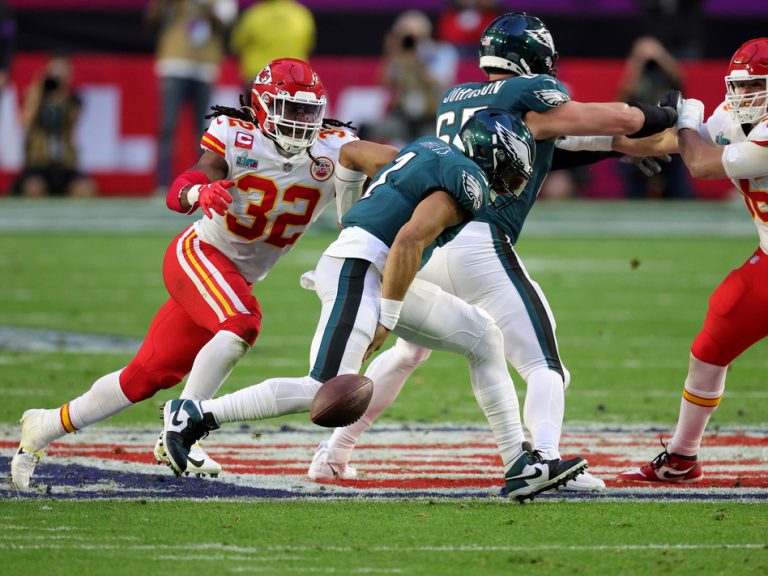
​Between 1904 and 2025, the USA hosted one FIFA World Cup (with another to be co-hosted in 2026 with Mexico and Canada), four Summer Olympics, four Winter Olympics, and one FIBA Basketball World Cup. Unlike soccer, which is still finding its footing in the United States—even with Major League Soccer (MLS) having existed for 30 years—American football is the undisputed number-one sport. The Super Bowl—born from Lamar Hunt’s “light-bulb moment”—is the crown jewel. The Super Bowl has become what sociologists call a secular ritual, binding the social fabric of Americans together.


​Beyond the Vince Lombardi Trophy, the Super Bowl has evolved into a global marketing masterpiece. From the famous 1984 Apple commercial introducing the Macintosh, which is studied in MBA classes worldwide, to the 1979 Mean Joe Greene Coca-Cola commercial that showed genteel human warmth winning over fearsomeness, the intentionality of brands going head-to-head with rivals has been a recurring feature of every Super Bowl.


​While the USA is always attractive for hosting events, the Super Bowl’s success pivots on intellection that results in ingenious marketing. For the recent Super Bowl LX on February 8, 2026, two brands mirrored David Ben-Gurion’s principle of “taking the fight to the enemy.” Pepsi and Anthropic’s Claude entered with an offensive strategy: Claude’s AI ad—“Ads are coming to AI. But not to Claude.”—was a calculated strike in the competitive AI market, while Pepsi’s polar bear blind test revived the sulphurous rivalry with Coca-Cola. Many companies use their ad slots to build brand identity and equity or announce arrival in the business world.


Where does Africa stand in this Super Bowl business and sports calculus? While developed nations are making groundbreaking launches with chutzpah and creativity from creative shops—all resulting in a participatory economy—Africa’s involvement is largely an on-the-field display of Négritude spirit and ravenous passion.


​For Africa, the Super Bowl has become a “badge of honor” through representation. Mohammed Elewonibi, a Nigerian raised in Canada, was the first player of African origin to win a Super Bowl (XXVI, 1992, with the Washington Redskins). Since then, nearly 41 players of Nigerian origin or heritage have won—the most of any African country—including six who tasted victory with the recent Seattle Seahawks: Uchenna Nwosu, Nick Emmanwori, Boye Mafe, Jaxon Smith-Njigba (of Nigerian and Sierra Leonean roots), Jalen Milroe, and Olu Oluwatimi.


​Yet, as impressive as African athletes are in making the continent proud, we have blatantly failed to translate that audience engagement into commercial windfalls like the Super Bowl on home soil. It is appalling that most of Africa’s sporting events—the Durban July Handicap, Senegalese wrestling (Laamb), or the Safari Rally—have not fully harnessed the intersection of sports and marketing. Even the Africa Cup of Nations (AFCON), despite its 3.45 billion cumulative viewers (far surpassing the Super Bowl’s ~125–127 million), lacks comparable marketing prestige. Why are there no global product launches during our matches? Why aren’t AI giants capitalizing on Africa’s tech startup boom?


​Africa is being fed celery when it deserves the whole salad. This asymmetry stems from structural economic factors, but the genie is out of the bottle—we must be forward-looking. To turn African sporting events into “goldmines,” we must reinvent the industry, much as Cirque du Soleil did for the circus. Facing declining audiences, rising costs, and fierce competition, it lost its grip on the circus business. Cirque, however, escaped the dying circus business by reinventing it.


​By viewing competition through a new lens, Africa can transform massive viewership into unparalleled economic advantage and value. Just as Cirque du Soleil created uncontested market space, African sports must adopt what W. Chan Kim and Renée Mauborgne called a “Blue Ocean Strategy”—creating uncontested market space and making competition irrelevant. Much as we can not compete toe to toe with advanced economies , we should not follow them like zombies.


​In their book Blue Ocean Strategy: How to Create Uncontested Market Space and Make the Competition Irrelevant, the authors highlight how companies in “red oceans” fight for shrinking profits in crowded, defined markets. African sports events currently sit in those crowded red oceans. To elevate them, we need disruptive leaders willing to venture into untapped markets, create new demand, and unlock unlimited growth opportunities.


​Joseph Pine and James Gilmore, in their book The Experience Economy, wrote about the need to transform commodities into experiences. As Africans, we have been able to move our sporting events from the commodity stage to the third stage—service delivery—but the experience stage is the North Star we should aspire to reach.


​Our cultures, as varied as they are, define us. Despite dilution by Western civilization, our culture stands uneroded, like the mountains that litter our landscape and serve as a canopy to preserve our common heritage. This means our forefathers took culture into the realm of experience—something we are still grappling with in our sporting spectacles today. For us to make headway, our cultures—already bubbling with experience—must mix seamlessly with our sporting spectacles.


​Now is the time to merge cultural events like the Eyo Festival, Argungu Festival, Gnaoua World Music Festival, Osun Osogbo Festival, Meskel Festival, and others with our sporting spectacles—that is the Blue Ocean Strategy. This can only be achieved through close collaboration between leaders in sports administration and marketing professionals selling experiences, and the time is now. As this is done, a line from David Diop’s poem Africa—“That is your Africa springing up anew”—would fill our lips.

​The experience stage is the nirvana!


Toluwalope Shodunke

Can be reached via tolushodunke@yahoo.com


Super Bowl: Can Africa Spring Up anew?

Continue Reading
HostArmada Affordable Cloud SSD Shared Hosting
HostArmada - Affordable Cloud SSD Web Hosting

Trending