

Education
FG moves to establish special tribunal for exam malpractice cases
FG moves to establish special tribunal for exam malpractice cases
In a decisive move to curb widespread examination misconduct, the Federal Government is proposing the creation of a dedicated National Examination Malpractice Court/Tribunal.
The initiative aims to ensure swift prosecution of offenders and set a clear deterrent for future infractions.
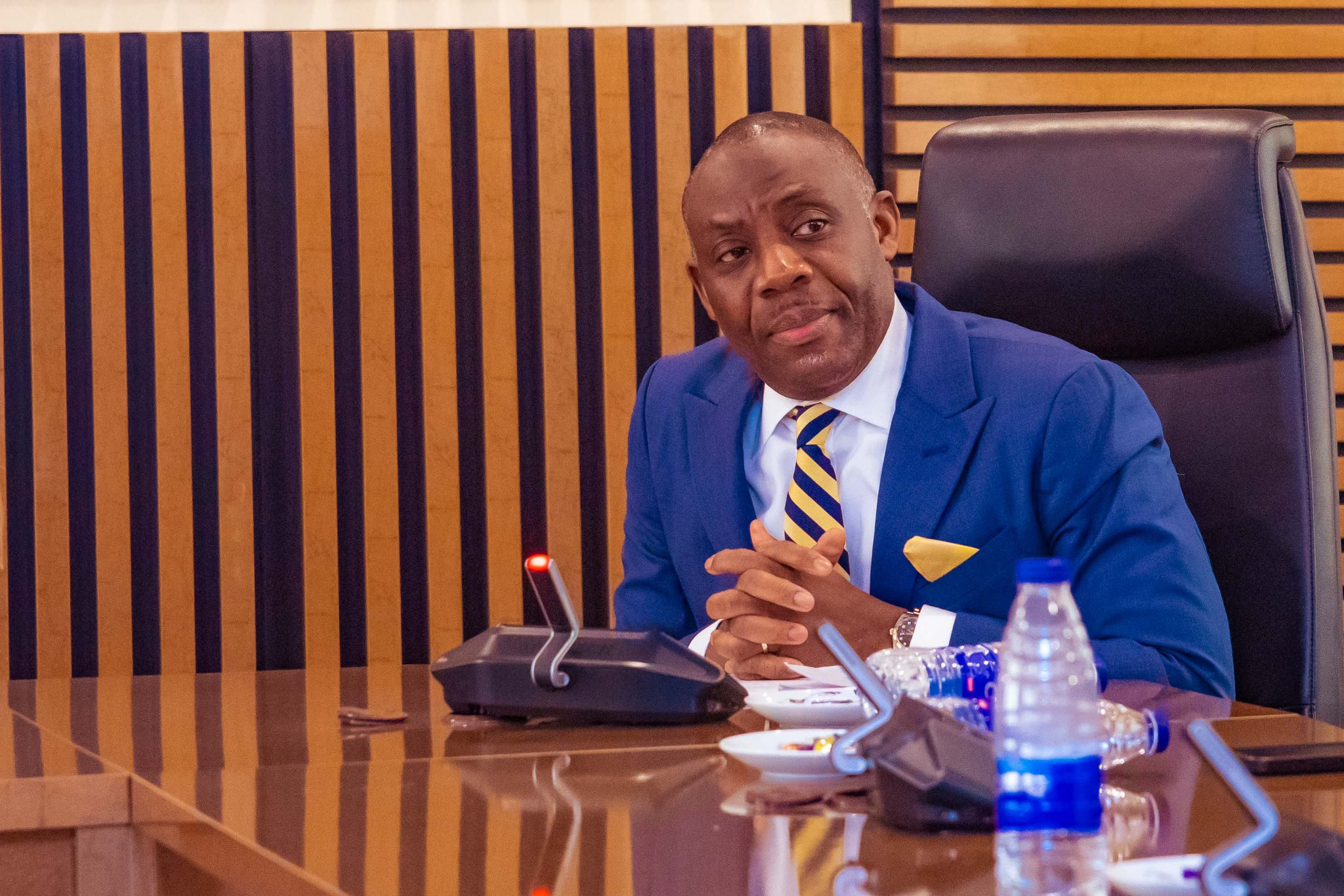
Minister of Education, Dr. Tunji Alausa, made this known in Abuja during the formal handover of a report by a committee set up to enhance the integrity and quality of examinations across the country.
The 17-member panel, chaired by Prof. Ishaq Oloyede, Registrar of the Joint Admissions and Matriculation Board (JAMB), submitted a 12-point recommendation for reform. Dr. Alausa confirmed the federal government’s readiness to implement the recommendations in full.
“Let me assure all the committee members that you have done so much work here, and all the recommendations you have given us as a government, we will implement every single one of them,” Alausa said.“All the 12 recommendations that you reeled out, everyone will agree with me today that none of them will be impossible to implement.“They are all practicable things. Those that will be implemented now, we will do that right away,” he added.
READ ALSO:
- BREAKING: 20 Kano athletes die while returning from sports festival
- Reps to begin public hearing on constitution review July 11
- Opposition groups dump SDP, ADC, consider registering new party
The committee was inaugurated in January and submitted its interim report after five months of deliberations.
Among its proposals, the committee advised the Federal Ministry of Education to collaborate with the National Assembly on legislation to establish the examination tribunal. This would empower the justice system to swiftly handle cheating cases and discourage academic dishonesty.
To further tighten security and enhance identity verification, the panel recommended that certificates, registration documents, and result slips carry each candidate’s National Identification Number (NIN), photograph, and date of birth.
“All Invigilators and Supervisors must register through NIN and subscribe to the examination body’s Short Code, using the same pattern of 55019/66019 of JAMB in order so track and have full information about the examination officials, including examiners, supervisors and invigilators,” the report stated.
It also advised that supervisors and invigilators be rotated starting from the 2025 private Senior School Certificate Examinations (SSCE), in response to concerns raised by examination bodies including WAEC, NECO, NABTEB, and NBAIS.Where possible, these officials should be career public servants or teachers with pensionable appointments, the committee said.
Recommendations also included strict adherence to standard examination hall specifications—stipulating a seating space of at least 1.8 square meters per candidate—and the mandatory installation of fixed CCTV systems at all centres.
“In addition, every examination centre shall have a mini control room where the CCTV camera is monitored for urgent and immediate alert,” the report noted.
To further streamline operations, the committee proposed that examination bodies share central control facilities to reduce costs. It also called for the use of wearable body cameras to enhance on-site monitoring.
A significant long-term measure included assigning a unique code, tied to the NIN, to every pupil at the time of entry into basic education, ensuring consistent identity tracking throughout their academic journey.
The committee observed that the 1999 Examination Malpractice Act had seen little implementation, citing political inertia or impracticality. It called for an immediate review of the law to make it enforceable.
“Rather than wait till 2027 as initially suggested, the Computer Based Examination (CBE) should be implemented for objective questions in 2025 private examinations and in full for school candidates in 2026,” the report added.
The panel also addressed the corruption associated with the current 30% Continuous Assessment (CA) component of the SSCE. Due to manipulation of scores submitted after-the-fact, the committee recommended a complete overhaul of the CA system by relevant agencies.
FG moves to establish special tribunal for exam malpractice cases



Education
FG Releases Eight-Month Arrears After SSANU Strike Threat

FG Releases Eight-Month Arrears After SSANU Strike Threat
The Federal Government has released eight months’ salary arrears owed members of the Senior Staff Association of Nigerian Universities (SSANU), less than 48 hours after the union issued a 14-day ultimatum threatening an indefinite strike.
SSANU had issued the ultimatum over the implementation of the 2026 FGN/SSANU Agreement and demanded payment of outstanding entitlements, warning that failure to act would lead to a “total, comprehensive and indefinite strike action.”
The union’s demands included payment of outstanding Consolidated University Teaching and Tertiary Institutions Salary Structure (CONTTA) arrears calculated from January 1, 2026.
It also demanded payment of two months’ salaries withheld during the 2022 industrial action, as well as one-year arrears arising from the approved 25 per cent and 35 per cent salary increases.
READ ALSO:
- Yobe: 9-Year-Old Boy Burns Stepmothers, Brothers To Death In Revenge Attack
- 2027: Donald Duke Pledges To Bring Petrol Price Down To N300 Per Litre
- Olu of Warri Denies N2.7tn Pipeline Deal, Demands Evidence From Dokubo
Confirming the release, SSANU National President, Mohammed Haruna Ibrahim, said members would begin receiving alerts reflecting the payment.
Ibrahim commended the Minister of Education, Tunji Alausa, for intervening in the matter and facilitating the release of the funds.
However, the payment does not resolve all of the union’s outstanding demands. SSANU has maintained that the government must settle the remaining arrears and ensure full implementation of the 2026 agreement.
The development has nevertheless eased an immediate threat of disruption in the Nigerian university system, coming just days after the union warned of a nationwide industrial action.
SSANU has urged affected members to liaise with their respective university managements to ensure that the released funds are properly and promptly paid.
The latest development comes amid continuing concerns over university workers’ salaries, arrears and welfare, as well as the implementation of agreements between the Federal Government and university-based unions.
FG Releases Eight-Month Arrears After SSANU Strike Threat
Education
Why JAMB Is Taking UTME To Canada — Registrar Explains

Why JAMB Is Taking UTME To Canada — Registrar Explains
The Joint Admissions and Matriculation Board (JAMB) has explained why it is taking the Unified Tertiary Matriculation Examination (UTME) to Canada, saying the move is aimed at expanding access to Nigerian tertiary education rather than making money.
JAMB Registrar, Professor Segun Aina, said the board is working to establish a UTME examination centre in Ottawa, Canada, from 2027 to enable eligible Nigerians living in Canada and other parts of North America to sit the examination without travelling to Nigeria solely for the exercise.
The planned centre followed Aina’s visit to the Nigerian High Commission in Ottawa, where discussions were held on arrangements for conducting the examination.
JAMB said the initiative is part of its effort to make the Nigerian university admission system more accessible to Nigerians in the diaspora, particularly those seeking admission into universities and other tertiary institutions in Nigeria.
“For Nigerians in Canada, the UTME is coming closer to home,” the board said while announcing the plan.
However, the decision has generated questions over the likely number of candidates who would use the centre and whether establishing an examination facility in Canada would be financially viable.
Responding to such concerns, Aina said the number of candidates was not the primary consideration for establishing foreign examination centres.
READ ALSO:
- FULL LIST: NAF Releases Names Of 25 Victims Killed In Ondo Crash
- Supreme Council For Sharia Secretary-General Nafiu Baba-Ahmed Dies
- Former NADECO Leader Ralph Obioha Dies At 80
He explained that JAMB currently conducts the UTME in about 10 foreign countries as a service to improve access to education, adding that the board also conducts examinations in correctional service centres for the same reason.
According to the registrar, Nigerians relocate abroad for different reasons, while children of Nigerian public servants posted overseas may also need to sit the UTME without returning to the country specifically for the examination.
Aina said the absence of a JAMB examination centre in North America had previously made it difficult for prospective candidates in the region to participate in the UTME locally.
He added that JAMB does not necessarily need to acquire or rent a permanent building or employ a new workforce to establish the Ottawa centre.
The registrar explained that the board works with Nigerian diplomatic missions in countries where it conducts overseas examinations, using temporary spaces within high commission premises and relying on diplomatic mission staff to assist with the exercise.
Aina also said no money had been spent on the proposed Canadian centre so far.
He explained that his visit to Canada coincided with a conference and that he used the opportunity to initiate discussions with the Nigerian High Commission about the proposed examination arrangement.
JAMB‘s spokesperson, Fabian Benjamin, also defended the initiative, saying more than 100 prospective candidates in Canada had already indicated interest in sitting the examination there.
The proposed Ottawa centre is expected to serve eligible Nigerians in Canada as well as those in other parts of North America who wish to gain admission into Nigerian tertiary institutions.
JAMB said the move would reduce the barriers faced by Nigerians abroad and strengthen their connection with the country’s education system.
The board also said the initiative would provide an opportunity to showcase Nigerian tertiary education internationally and create more pathways for Nigerians in the diaspora to pursue higher education in Nigeria.
The proposed JAMB Canada centre is expected to commence operations with the 2027 UTME.
Why JAMB Is Taking UTME To Canada — Registrar Explains
Education
World Teachers’ Day: Ogun Residents Demand Better Pay, Equipped Schools for Teachers
World Teachers’ Day: Ogun Residents Demand Better Pay, Equipped Schools for Teachers
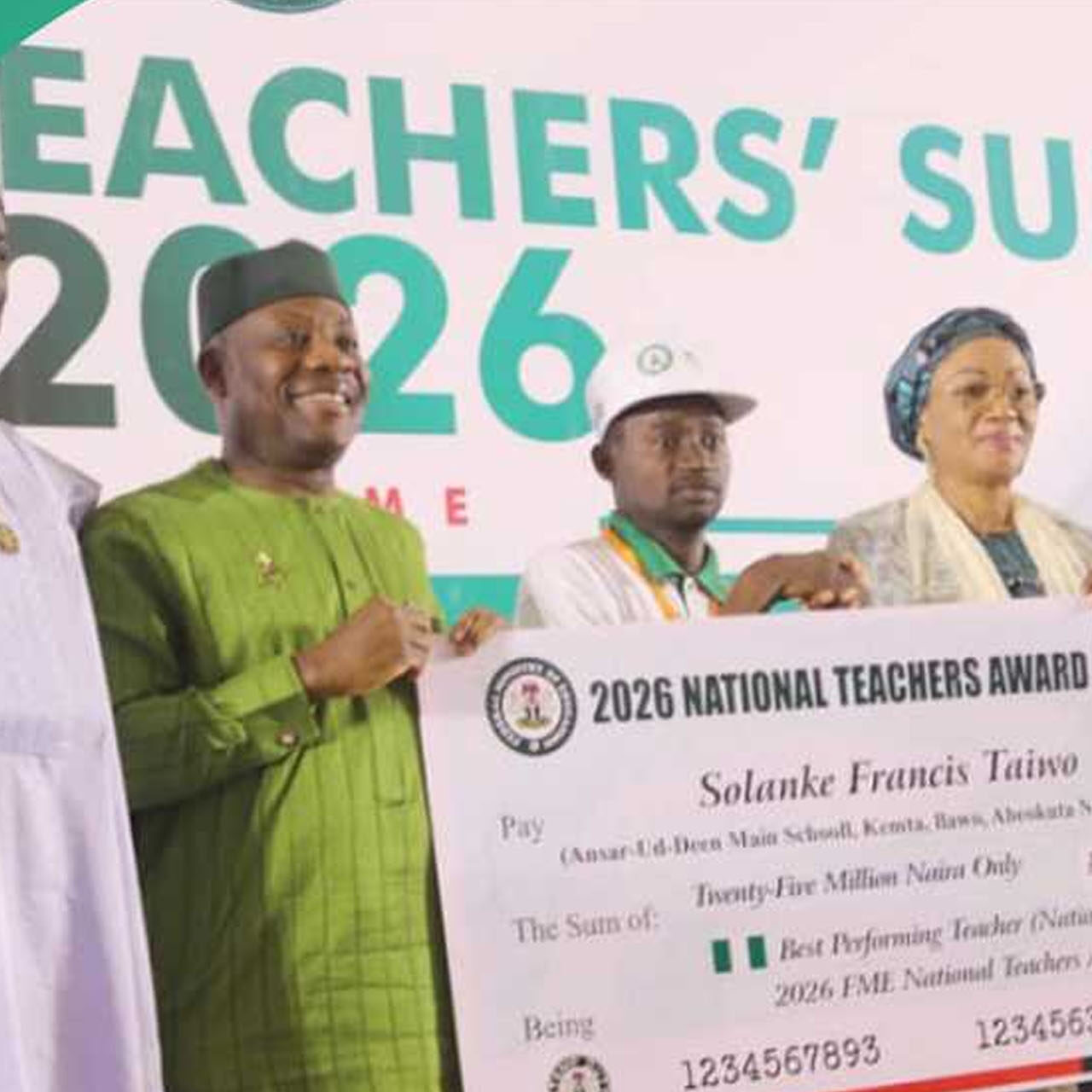
As Nigeria marked the 2026 World Teachers’ Day, residents of Ogun State have called on the government to improve teachers’ welfare, increase remuneration and provide adequate facilities in public schools, insisting that celebrating educators must translate into tangible improvements in their working conditions.
The demand was made by callers on Eagle 102.5 FM’s Frontline programme on Monday, October 5, during a discussion on teachers’ welfare and their contributions to education and community development. The programme featured the Chairman of the Ogun State Teaching Service Commission (TESCOM), Apostle Abiodun Sanyaolu.
Contributors stressed that teachers remain central to the development of children and the nation’s human capital, arguing that their responsibilities deserve better financial rewards, improved working conditions and a more conducive teaching and learning environment.
A caller from Ilese-Ijebu described teachers as the foundation of society, noting that their influence extends beyond the classroom to shaping children’s character, knowledge and future prospects.
Describing teachers as “the pillar of everything in life,” the caller urged the government to prioritise their welfare, arguing that educators must be adequately supported to deliver on their responsibilities.
“The welfare of the teachers is very, very important. The government should look at it and make sure that teachers are given a good welfare system so that they will be proud of doing what they are doing,” she said.
She also called for increased investment in school facilities, warning that constructing classrooms without providing the necessary equipment and learning materials would leave schools ill-equipped to deliver quality education.
“It’s not just only the structure alone. They should put in the necessary things that are supposed to be in the school,” she added.
The caller’s remarks highlighted the need for a comprehensive approach to educational development, encompassing not only physical infrastructure but also the resources required by teachers and students for effective teaching and learning.
Another contributor, Olu Ogunike, called for better remuneration for teachers, arguing that their salaries and conditions of service should reflect the critical role they play in national development.
“Teaching should be one of the well-paying work in the country,” Ogunike said, stressing that teachers lay the foundation for virtually every other profession.
He argued that the quality of a country’s workforce depended significantly on the quality of its teachers, adding that improved financial rewards would help enhance the status and attractiveness of the profession.
The contributions reflected growing public expectations that governments should match their recognition of teachers with practical measures to improve their welfare and the quality of education.
Speaking on the programme, TESCOM Chairman Sanyaolu described teachers as important stakeholders in community development, noting that their influence extends beyond academic instruction to shaping the moral, social and intellectual development of children.
According to him, every child taught by an educator eventually becomes part of the wider community, making teachers indispensable to the social and economic advancement of Ogun State.
Sanyaolu acknowledged, however, that more work remained to be done in the state’s education sector, despite the reforms and interventions introduced by the government.
“We still have a lot to do. There is a lot that is still ongoing, and we will continue to work to ensure that the gains recorded in the education sector are sustained,” he said.
His remarks underscored the continuing challenge of consolidating improvements in education while addressing concerns about teachers’ welfare, school infrastructure and the resources available for effective learning.
The callers’ demands also highlighted the connection between teachers’ working conditions and students’ educational outcomes.
They argued that better remuneration could boost teachers’ morale, while well-equipped classrooms, adequate learning materials and modern teaching resources would strengthen their ability to deliver quality education.
Similarly, improved welfare could help make teaching more attractive to qualified professionals and encourage greater commitment to the profession, particularly at a time when schools require skilled and motivated educators to prepare young people for the demands of a changing economy.
The 2026 World Teachers’ Day celebration therefore provided an opportunity to reflect on both the contributions of educators and the challenges confronting the profession.
For the contributors on Eagle 102.5 FM’s Frontline programme, the message was clear: public recognition of teachers must go beyond annual celebrations to include improved pay, better welfare packages, adequate school facilities and sustained investment in professional development.
They maintained that supporting teachers was not merely a reward for their service but also a necessary investment in the future of Ogun State and the country at large.

-
 metro3 days ago
Supreme Council For Sharia Secretary-General Nafiu Baba-Ahmed Dies
-

 metro3 days ago
UCH CMD: After Decades Without Muslim, Agunbiade Demands Fair Chance
-
 metro1 day ago
[UPDATED] 20 NYSC Prospective Corps Members Freed After Seven Days in Captivity
-
 News3 days ago
Iwo Son Becomes Yorubaland’s First Muslim Professor of Arabic Without Secondary School
-

 Politics2 days ago
‘No Decent Wages, No Credible Elections’ — Sowore Threatens 2027 Boycott
-

 Politics3 days ago
Tompolo’s PBAT Movement Suspends Campaign Over Ondo Military Crash
-
 metro2 days ago
Seven Years With Parkinson’s: Man Seeks N65m for Brain Surgery in Türkiye
-

 Politics2 days ago
2027: Obi Makes U-Turn, Vows to Restore Fuel Subsidy If Elected