
Following the most recent London hearing, another London judge ordered P&ID to disclose additional information, including WhatsApp and text messages.
Business
FG Raises Fresh Fraud Claims against P&ID Ahead $11bn Trial

•Nigeria moves to prove firm secured contract through bribery, lies
Nigeria has levelled fresh claims of fraud against a little-known offshore firm, Process and Industrial Developments (P&ID), which earlier won an $11 billion arbitration award against the country, ramping up the pressure ahead of one of the biggest London trials to take place next year.
The federal government would seek to prove to the court that P&ID did not make full disclosure to the court in the first place in the course of the case.
As it attempts to show the court that the contract was corruptly procured, it would also urge the firm in the eye of the storm to answer the following questions:
“Did P&ID, or any individual or company associated with P&ID, make, procure to be made by any other person, or promise to make payments” to or on behalf of various Nigerian officials, including one Ms Taiga, Mr. Tijani, Mr Dikko, Mr. Rilwanu Lukman or Mr Ibrahim?
“Did P&ID collude with and/or communicate with and/or enter into a corrupt agreement with and/or make payments to Mr Shasore and/or any other person directly or indirectly involved in the FRN’s defence (including Ms Adelore and Mr Oguine), before, during or after the arbitration, with a view to influencing the conduct of the FRN’s defence in the arbitration?
“In what circumstances did the FRN engage Mr Shasore (and/or his firm) in respect of the arbitration? Did Mr Shasore conduct the arbitration in a manner contrary to Nigeria’s interests and/or instructions, and if so, why?”
“Did P&ID induce Ms Taiga or any other Nigerian official to depart from the terms of the FRN’s model arbitration clause in the Gas Sales and Purchase Agreement (GSPA)?” according to court filing.
An update on the legal tussle also showed that the Federal Government of Nigeria (FRN) has been successful in its bid at the London High Court to obtain further documentation in support of its efforts to set aside the $11 billion arbitration award.
READ ALSO:
- Nine varsities may lose 159 courses’ accreditation
- Man dies in motel after meeting online lover
- 2023: Wike alleges aggrieved PDP elders are plotting against him
- Varsity Student Escapes From Kidnappers’ Den
In the recent hearing, Mr. Justice Jacobs judged that the approach taken by P&ID to providing disclosure of WhatsApp/SMS messages had not been entirely satisfactory to date and as such it would be reasonable and proportionate for P&ID to disclose further information related to private WhatsApp/SMS messages sent between key figures associated with the company over a period of several years. Nigeria’s government hoped that disclosure of the messages would further reveal the questionable activities of the company ahead of the High Court trial due to begin in January 2023.
A spokesperson for the Federal Republic of Nigeria who pleaded to remain anonymous, was quoted to have said: “The Federal Republic of Nigeria remains dedicated to overturning arbitral award of around $11 billion and is leaving no stone unturned in its fight through the courts.
“This is another step in our long running effort to reveal who stands to benefit from one of the world’s largest scams. Today’s judgment will help us have greater access to messages sent between the senior figures associated with P&ID which is vital ahead of the trial which will begin in the High Court in January 2023.”
However, a Bloomberg report yesterday stated that Nigeria would try to overturn the penalty by proving that P&ID secured a gas-supply contract and the subsequent arbitration victory through bribes and lies.
The federal government had sought to convince a United Kingdom (UK) High Court that the purported $9.6 billion contract, which had now generated additional interest with P&ID, for a 20-year deal to turn Nigeria’s gas reserves into electricity, was a scam ab initio.
The lawyers representing the Nigerian government told Sir Ross Cranston, head of the court, that P&ID knew from the beginning that there was no deal, noting that it was only a facade to fleece the Nigerian people.
P&ID founded by the late Michael Quinn and Brendan Cahill, the lawyers told the court, had no intention to perform any obligation concerning the purported contract, reason the company went about bribing Nigerian government officials at the time.
The company had taken legal action against Nigeria for alleged breach of contract, with a panel of three arbitrators voting 2-1 to award P & ID the full sum of its claim of $6.6 billion at the time, plus interest, which spiked the arbitration value to about $9.6 billion.
In January 2010, Nigeria allegedly signed the gas-processing project, but two years later, the company began an arbitration process, alleging breach of contract.
In July 2015, a London tribunal gave judgement in favour of the company and in January 2017, gave the final award of $6.6 billion, with an interest rate of seven per cent, pre and post judgement.
Citing fraud, the federal government had ordered an investigation by the Economic and Financial Crimes Commission (EFCC) and in January requested a hearing to present evidence that the so-called deal was a fraud.
The project first started under the petroleum minister at the time, Mr. Rilwanu Lukman, who died in 2014, whom the Nigerian legal representative said yesterday spearheaded the alleged fraud.
The federal government told the judge that Lukman and several government officials knew the agreement was a sham and stood to make financial gains.
READ ALSO:
- ASUU On Strike Because Of PDP – Keyamo
- Benue youths to Miyetti Allah: Threat to drag Ortom to ICC, a futile exercise
- Breaking: Finally, William Ruto declares winner of Kenya presidential election
A tribunal granted the company the damages in early 2017, after finding that the government had breached the original agreement.
P&ID didn’t respond to a request for comments, according to Bloomberg, but had repeatedly denied the allegations. It insisted that President Muhammadu Buhari’s government concocted the claims to avoid its legal obligation to compensate the British Virgin Islands-registered company.
The potentially costly crisis for Nigeria stems from a deal struck in 2010, where the government agreed to provide gas to a plant P&ID proposed to build.
Buhari’s administration now argues the project was a “sham” from the outset designed by the company and corrupt public officials to engineer the successful arbitration claim that a tribunal delivered more than five years ago.
The government introduced the fraud allegations after a UK judge ruled in August 2019 that P&ID could enforce the award, which has increased with interest from an initial $6.6 billion.
Nigeria discovered late last year that P&ID was, “in possession of numerous documents which might be privileged and confidential” to the government, it said in documents prepared for a London court hearing last month.
While the “full details” of how P&ID obtained the documents “remain obscured,” it was to be “inferred” they were provided to the company by a former legal director at the petroleum resources ministry and “other corrupted individuals” acting on behalf of the government, Nigeria claimed.
Granting Nigeria permission to proceed to a full trial, Judge Cranston had said in September 2020 the government had established a strong case that the contract was “procured by bribes” and the arbitration was “tainted.”
There is “a possibility” that Olasupo Shasore, the state’s lawyer during most of the arbitration, was “corrupted,” he had said.
Shasore didn’t respond to a request for comments, according to Bloomberg.
P&ID rejected Cranston’s conclusions in its skeleton argument last month, telling the court that Nigeria’s allegations are “clearly unfounded.” The eight-week fraud trial is scheduled to start in January.
The Nigerian government “keenly awaits the opportunity to present its case before the High Court” and “is confident that justice will finally be served,” a spokesman told Bloomberg by email.
An image of at least one of the privileged documents was supplied to P&ID by Adetunji Adebayo, a Nigerian businessman active in the oil and gas industry, who signed an agreement with the company in 2014 instructing him to facilitate negotiations around a potential settlement during the arbitration, according to the government’s skeleton argument.
Adebayo was entitled to up to half of any pay-out above $1 billion, the court document said.
The company’s co-founder, Brendan Cahill, secured the “silence” of one of his former employees who had offered in 2020 to act as a witness in the trial by entering an agreement that is “contingent on P&ID succeeding in its claim,” Nigeria further alleged last month. Neither Adetunji nor Cahill responded to requests for comments.








Business
MTN Nigeria Suspends Airtime Loan Service
MTN Nigeria Suspends Airtime Loan Service
MTN Nigeria Communications PLC has temporarily suspended its airtime and data credit service, Xtratime, following new regulatory requirements governing digital consumer lending services in Nigeria.
The company disclosed the development in a corporate filing to the Nigerian Exchange Limited (NGX) on Thursday, stating that the suspension was necessary to comply with the 2025 Digital, Electronic, Online and Non-Traditional Consumer Lending Regulations issued by the Federal Competition and Consumer Protection Commission (FCCPC).
According to MTN, the Xtratime service—which allows prepaid subscribers to borrow airtime or data and repay on their next recharge—falls under the expanded scope of the new regulatory framework and now requires additional compliance and licensing processes before it can resume.
In the regulatory notice signed by Company Secretary Uto Ukpanah, MTN said:
“MTN Nigeria Communications PLC hereby notifies the Nigerian Exchange Limited and the investing public that the company has temporarily suspended its airtime and data credit advance service (‘Xtratime’).”
The telecom operator added that the suspension is tied to ongoing implementation of the FCCPC’s updated rules, which introduce stricter compliance, registration, and licensing obligations for all providers of digital or non-traditional credit services.
READ ALSO:
- Money Laundering: Court Orders Arrest of Ex-Minister Sadiya Umar Farouq
- High-Salt Diet Linked to Faster Memory Decline in Men, Study Finds
- INEC Revises Osun Governorship Campaign Deadline
MTN stressed that despite the suspension, customers can still purchase airtime and data through other available channels, including banking platforms, USSD services, and mobile apps, assuring that the decision is not expected to significantly affect earnings.
“Given the scale within the revenue mix, we do not expect the temporary suspension to have a material impact,” the company said, adding that updates would be provided in its Q1 2026 financial report.
The development highlights the widening reach of Nigeria’s consumer credit regulations, which now extend beyond banks and fintech loan apps to include telecommunications companies offering airtime advances.
The FCCPC had earlier introduced a framework for digital lending in 2022 but strengthened enforcement with the 2025 regulations, requiring all operators in the sector to register and obtain approval before continuing operations.
Under the new rules, companies offering short-term digital credit services must meet stricter standards on consumer protection, transparency, data governance, and ethical debt recovery practices. The commission has reportedly set an April 2026 deadline for full compliance by existing operators.
Industry analysts say the move reflects a broader effort by regulators to bring order to Nigeria’s fast-growing digital credit ecosystem, where airtime loans have become a key financial support tool for millions of low-income mobile users.
For now, MTN has not announced a timeline for restoring the Xtratime service, stating only that it will resume once full regulatory compliance is achieved.
MTN Nigeria Suspends Airtime Loan Service
Business
Dangote Named Only Nigerian on TIME100 2026 Global Influence Ranking
Dangote Named Only Nigerian on TIME100 2026 Global Influence Ranking
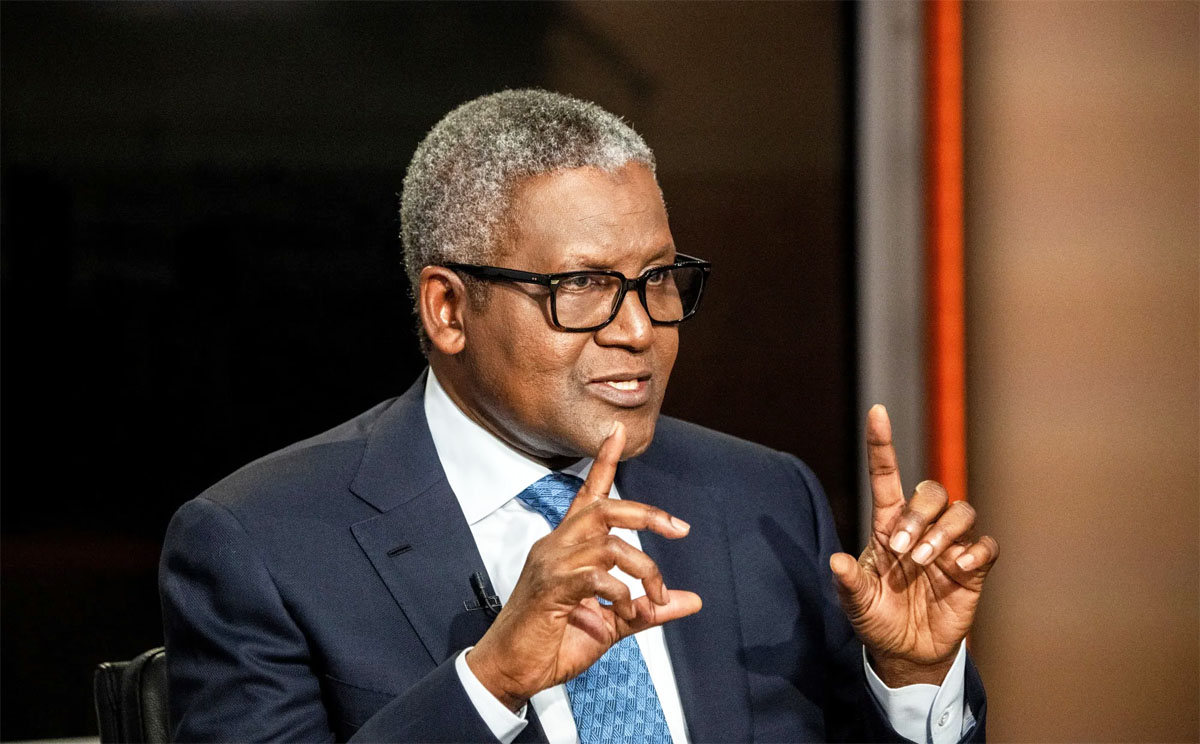
Nigerian business magnate Aliko Dangote has been named among the TIME100 Most Influential People in the World for 2026, as TIME Magazine released its latest list recognising individuals shaping global politics, business, technology, and culture.
Dangote, Africa’s richest man and founder of the Dangote Group, is the only Nigerian featured in the 2026 edition. He appears in the Titans category, recognised for his decades-long push to industrialise Africa through investments in cement, sugar, fertiliser, and the landmark Dangote Refinery—one of the largest single-train refineries in the world.
This marks Dangote’s second appearance on the TIME100 list, following his first inclusion in 2014, further cementing his status as one of Africa’s most globally recognised industrialists.
A key highlight of this year’s recognition is the tribute written by fellow Nigerian billionaire Tony Elumelu, who praised Dangote’s entrepreneurial journey and continental impact. Elumelu described him as “indefatigable, resilient, and foresighted,” and lauded him as “one of the greatest African entrepreneurs of our time.”
READ ALSO:
- UNILAG Lecturer Sexual Assault Trial: Student Testifies in Lagos Court
- Bayern Survive Real Madrid Comeback to Reach UCL Semi-Finals Against PSG
- Grandfather in police net for impregnating granddaughter
He added that Dangote’s work demonstrates that Africans can create large-scale value “with our own resources, on our continent,” reinforcing the philosophy of economic self-reliance that has shaped both businessmen’s careers.
Interestingly, the gesture reflects a role reversal from previous years, as Dangote once wrote Elumelu’s TIME100 tribute when the UBA chairman appeared on the list in 2020.
The 2026 TIME100 list, now in its 23rd edition, features global figures across multiple categories, including Titans, Leaders, Innovators, Icons, Artists, and Pioneers. High-profile names this year include U.S. President Donald Trump, Chinese President Xi Jinping, and major technology leaders such as Google CEO Sundar Pichai and YouTube CEO Neal Mohan.
Other political figures featured include Israeli Prime Minister Benjamin Netanyahu and Canadian Prime Minister Mark Carney, alongside global leaders in health, finance, and multilateral institutions.
Analysts say Dangote’s inclusion carries strong symbolic significance for Africa, particularly at a time of economic restructuring and renewed calls for industrialisation and self-sufficiency across the continent. His multi-billion-dollar refinery project, in particular, is seen as a strategic asset aimed at reducing Nigeria’s reliance on imported refined petroleum products, boosting local production, and creating thousands of jobs.
The recognition also reinforces Dangote’s global reputation as a leading figure in African entrepreneurship, with his business empire spanning critical sectors of the economy and influencing industrial policy conversations across the region.
The TIME100 announcement precedes the annual TIME100 Summit scheduled for April 22 in New York, where selected honourees are expected to participate in discussions on global leadership and innovation.
The full list and tributes are available via TIME Magazine’s official platforms.
Dangote Named Only Nigerian on TIME100 2026 Global Influence Ranking
Business
Experts Reject World Bank Fuel Import Advice, Warn of Economic Setback for Nigeria
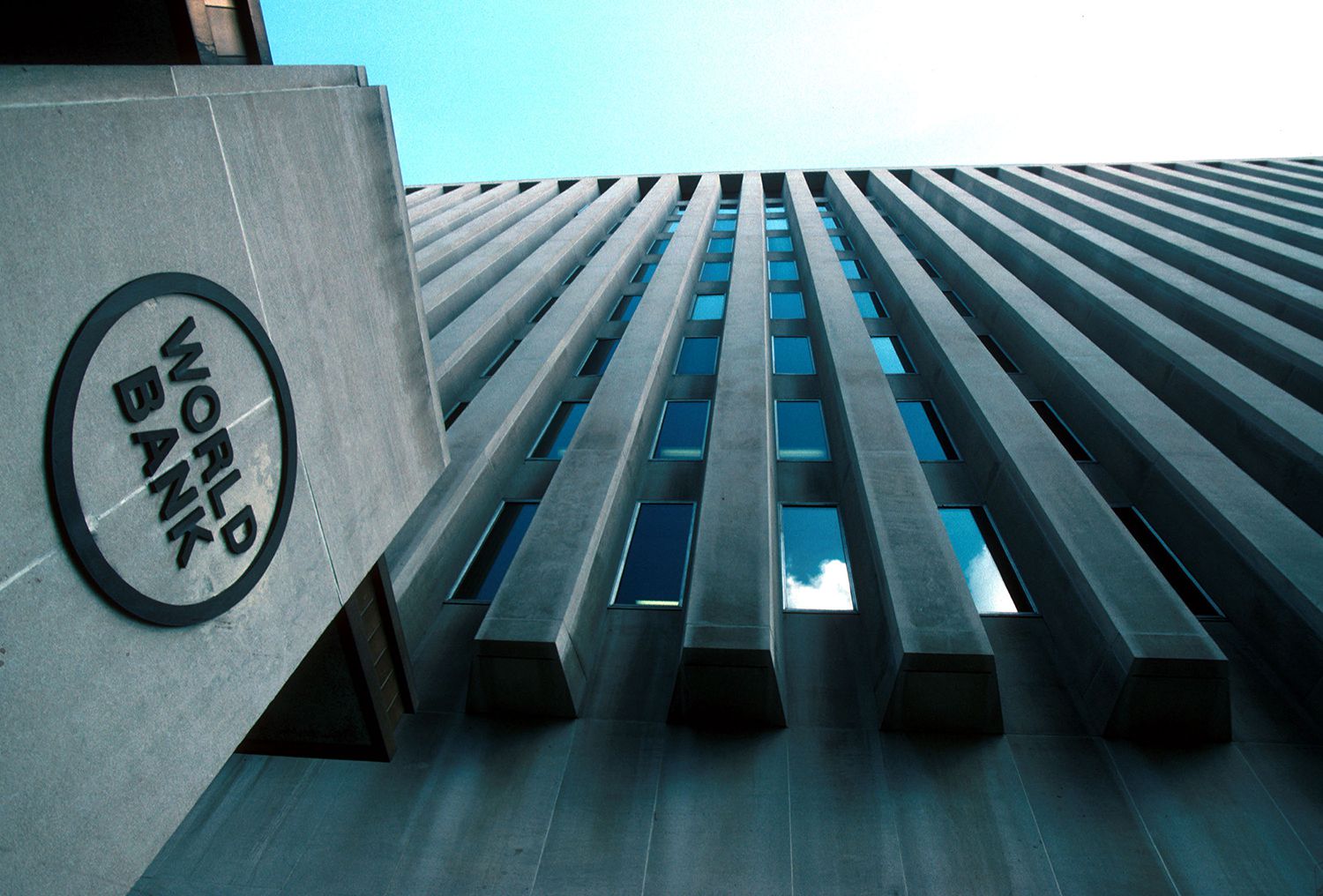
Experts Reject World Bank Fuel Import Advice, Warn of Economic Setback for Nigeria
Energy experts have strongly criticised recent recommendations attributed to the World Bank urging Nigeria to deepen fuel importation and further liberalise its downstream petroleum sector, warning that the proposal is economically risky, poorly timed, and inconsistent with Nigeria’s petroleum law.
The criticism comes amid growing debate over the findings of the World Bank’s latest Nigeria Development Update, which some stakeholders say suggests a return to higher fuel import dependence as part of broader market reforms aimed at stabilising prices and improving efficiency.
However, energy economist Prof. Ken Ife faulted the recommendation, arguing that it contradicts Nigeria’s long-term goal of energy self-sufficiency and undermines ongoing investments in domestic refining capacity.
“You cannot advise a country struggling to achieve economic self-reliance to return to fuel importation,” Ife said, warning that such a policy shift would reverse gains made under the Petroleum Industry framework.
He stressed that the proposal runs counter to the provisions of the Petroleum Industry Act, particularly the Domestic Crude Supply Obligation, which prioritises crude allocation to local refineries to support domestic production.
According to him, abandoning this structure would weaken Nigeria’s refining ambitions, increase exposure to global oil shocks, and worsen pressure on foreign exchange reserves.
“We are building capacity that could exceed domestic demand. Reversing course now would discourage investors and destabilise the downstream sector,” he added.
Ife further questioned the empirical basis of the recommendation, describing it as inconsistent with the broader analytical strength of the World Bank report.
READ ALSO:
- Fake Image of Governor Alia Bowing to Sultan Sparks Controversy, Palace Reacts
- Tinubu Aide Defends Early INEC Statement Release on Amupitan Controversy
- Nigeria-Kenya Comparison Won’t Solve Economic Crisis — Peter Obi Replies Tinubu
Other energy analysts echoed similar concerns, arguing that Nigeria is already at a critical stage of expanding domestic refining, including private-sector-led investments that are expected to reduce dependence on imported petrol in the coming years.
Energy analyst Kelvin Emmanuel also criticised the proposal, insisting that it is disconnected from current global pricing realities and supply chain risks.
He argued that landing imported petrol in Nigeria is already significantly expensive when freight, insurance, and exchange rate factors are considered, making large-scale import reliance economically unsustainable.
Emmanuel further noted that rising crude oil prices—driven partly by geopolitical tensions in the Middle East—have pushed global energy markets into volatility, reinforcing the need for domestic refining resilience rather than import dependence.
He also disputed claims that imported fuel could be cheaper than locally refined products, arguing that such assumptions ignore structural cost realities in the global supply chain.
On inflation and fuel pricing, Emmanuel maintained that Nigeria’s challenges are linked more to policy implementation gaps than production shortages, particularly in crude allocation to local refineries as outlined in the Petroleum Industry Act.
“If domestic supply obligations are properly enforced, price stability will improve and market volatility will reduce,” he said.
He also criticised proposals suggesting that Nigeria should expand social safety nets through borrowing, arguing that such measures could worsen fiscal pressure and contradict responsible debt management principles.
While acknowledging that social protection is important, he insisted that funding should prioritise grants or targeted revenue sources rather than additional debt obligations.
The debate highlights growing tension between international policy advice and Nigeria’s domestic energy strategy at a time when the country is attempting to stabilise fuel supply, reduce import dependence, and strengthen local refining capacity.
Industry observers say the outcome of this policy direction could significantly shape Nigeria’s downstream petroleum sector, foreign exchange stability, and long-term energy security.
Experts Reject World Bank Fuel Import Advice, Warn of Economic Setback for Nigeria

-

 Education1 day ago
JAMB Releases First Batch of 2026 UTME Results for 632,788 Candidates
-

 metro2 days ago
Power Supply Drops in Lagos as Transmission Faults Trigger Load Shedding
-

 Education2 days ago
FG Ends Physical Certificate Verification as Process Goes Fully Digital
-
 International2 days ago
Iran Declares Strait of Hormuz Fully Open
-

 News3 days ago
Atiku, Obi, Kwankwaso Camps Clash as ADC Grapples with Leadership Dispute
-
 International2 days ago
Trump Says Iran Agrees to Hand Over Enriched Uranium in Nuclear Deal Talks
-

 metro2 days ago
Troops Arrest Bandit Kingpin’s Deputy, Wife in Gombe
-

 metro1 day ago
US-Based Nigerian Doctor Dies During Free Medical Outreach in Nigeria