
Health
FG to quarantine passengers from China amid virus surge
FG to quarantine passengers from China amid virus surge
The Federal Government says it will implement surveillance measures including quarantining air passengers coming into Nigeria from China, following a surge in respiratory virus cases attributed to the Human Metapneumovirus (HMPV).
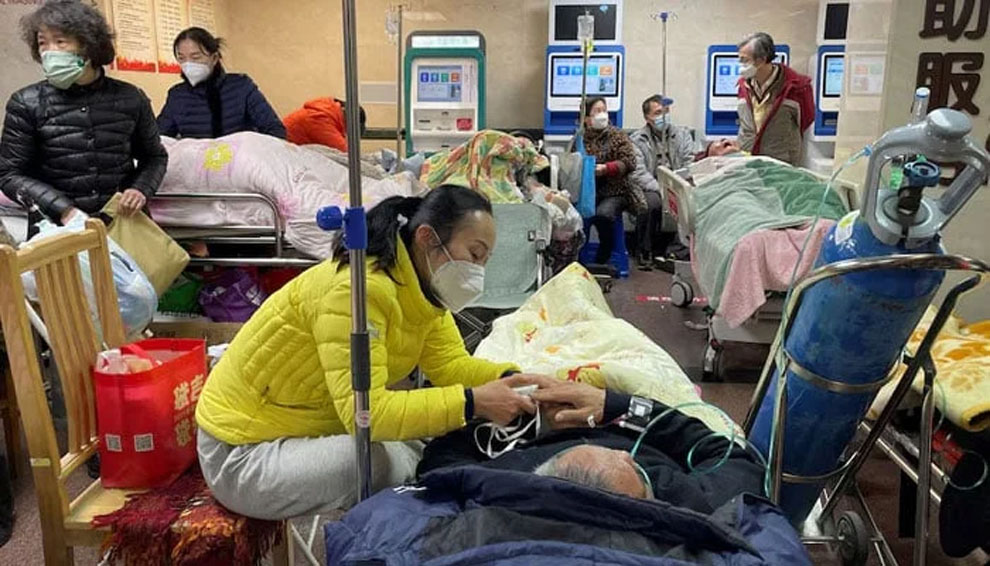
This, according to a PUNCH report, is in response to reports of overcrowded hospitals, emergency interventions, and growing public concern in China, where HMPV cases have spiked across northern provinces, particularly affecting children during the winter season.
The Nigerian authorities aim to monitor the situation closely to prevent potential spread within the country.
Neighbouring nations such as Cambodia, Taiwan, and Hong Kong are also taking precautionary measures, though they have reported only a few cases and no widespread outbreaks.
Health experts describe HMPV as a respiratory virus that can cause symptoms ranging from mild cold-like issues to severe complications, especially in children, the elderly, and those with low immune systems.
According to Chinese authorities, there has been a noticeable increase in HMPV cases, especially among children under 14 years old in northern parts of the country.
Social media posts, accompanied by videos of overcrowded hospitals, have raised fears of a larger-scale health crisis.
In response to the rising cases, the Chinese government announced measures, including constant monitoring of cases, the adoption of masks, social distancing and disinfection of public spaces to curb the increase of the virus.
READ ALSO:
- Delta resident stabs man to death for insulting his mother
- Ukraine launches new offensive in Russia’s Kursk
- El-Rufai speaks on report of defection to PDP
The new virus outbreak is coming five years after the emergence of coronavirus – COVID-19 – in Wuhan, China, which was declared a global pandemic by the World Health Organisation on March 11, 2020.
So far, COVID-19 has infected 777 million people globally and killed over seven million, according to WHO.
However, while both HMPV and COVID-19 are respiratory illnesses, there are important differences.
HMPV typically causes milder symptoms such as a cold or flu, while COVID-19, caused by the SARS-CoV-2 virus, can lead to more severe health complications and long-term effects.
HMPV is also a seasonal virus, similar to other cold-causing pathogens like RSV, and infections usually peak during the winter months.
HMPV, like COVID-19, spreads through respiratory droplets when an infected person coughs or sneezes and it can also spread via contaminated surfaces.
However, officials from the National Health Commission stated that while respiratory diseases are expected to rise during the winter months, the overall situation this year is less severe than last year.
Beijing also downplayed the developments as an annual winter occurrence.
China’s foreign ministry spokesperson Mao Ning said on Friday, “Respiratory infections tend to peak during the winter season.
“The diseases appear to be less severe and spread with a smaller scale compared to the previous year,” she said.
The US Centers for Disease Control and Prevention said HMPV could cause upper and lower respiratory diseases in people of all ages, especially among young children, older adults and people with weakened immune systems.
READ ALSO:
- Delta Gov Oborevwori under fire for hobnobbing with APC
- Why Fubara can do business with three lawmakers – Court
- As Hamas, Israel quarrel over talks, Israeli intensifies strikes in Gaza
The US CDC noted that HMPV is most likely spread from an infected person to others through secretions from coughing and sneezing, close personal contact and touching objects or surfaces that have the viruses on them, then touching the mouth, nose or eyes.
“Symptoms commonly associated with HMPV include cough, fever, nasal congestion and shortness of breath. Clinical symptoms of HMPV infection may progress to bronchitis or pneumonia and are similar to other viruses that cause upper and lower respiratory infections.
“The estimated incubation period is three to six days, and the median duration of illness can vary, depending upon severity but is similar to other respiratory infections caused by viruses,” the US CDC stated.
Meanwhile, health authorities in Nigeria are already implementing emergency measures to monitor and manage the spread of the HMPV.
The Director, Special Duties, Office of the Director-General of the Nigeria Centre for Disease Control and Prevention, Dr John Oladejo, told The PUNCH on Sunday that the Federal Government would implement preventive measures by activating surveillance measures to curb the spread of the virus.
“The FG will activate surveillance measures, like quarantine, for passengers coming in from China,” Oladejo said.
Earlier in November 2024, global health body WHO noted that it was closely monitoring the situation and was in close contact with national authorities in China, adding that it would continue to provide updates as warranted.
READ ALSO:
- WAEC announces resit exams for candidates from Jan/Feb 2025
- Hamas lists 34 hostages it may free under ceasefire
- Bandits demand N10m ransom to release abducted Kogi varsity lecturer
“WHO advises against the application of any travel or trade restrictions based on the current information available on this event,” the body added.
First detected in Pakistan in 2001, the HMPV has caused several outbreaks over the years in the Asian nation, primarily affecting children, but the virus is new to Africa as there haven’t been reported cases on the continent.
“Human Metapneumovirus was first identified in Pakistan in 2001, and outbreaks have been reported since then,” an official at the National Institute of Health, Islamabad, said.
“In 2015, a study conducted at Pakistan Institute of Medical Sciences found 21 cases of HMPV in children hospitalised with severe lower respiratory tract infections.”
Meanwhile, medical experts have stated that implementing surveillance measures against the virus was a crucial and appropriate step in ensuring that it doesn’t spread to the country.
They emphasised that surveillance should be an ongoing process carried out continuously by the government.
A virologist at the Department of Virology, College of Medicine, University College Hospital, Ibadan, Dr Moses Adewumi said, “On good day, surveillance should always be part of us. What happens most times is that despite the amount that was voted for COVID-19, we seem to have relaxed. Our people are more interested in spending the money, and after that, we probably decide to go to sleep. So, the surveillance should be a continuous thing.
“It is good that we increase our surveillance for people coming into the country, especially from China, Japan and other places, where we have the outbreaks. The government should be more involved in surveillance because most of the surveillance and all the research we do is funded by foreign bodies, so our own government should be more interested in research, in surveillance for all these viruses.
“The virus is not new but the surge may be because there is a different variant, and that is why we need to increase our surveillance and monitor it closely to curtail its introduction into the country. Experience has taught us that if we check now, we may have our people with antibodies already, and that’s a confirmation that it’s likely that this is circulating here, maybe not the exact variants that they have now.”
Also, an Associate Professor of Infectious Diseases and Genomics in the Department of Microbiology at the Adeleke University, Osun State, Oladipo Kolawole, noted that the decision by the government to implement surveillance measures was a good one, adding that it aimed to monitor and control the potential spread of the virus, ensuring public health safety as the situation developed.
Kolawole said, “The government is likely to enhance screening processes at points of entry and provide guidelines for travellers from China, this is to mitigate risks associated with HMPV.
“Activating surveillance allows for the early detection of cases, which is essential in managing outbreaks effectively.
“Monitoring travellers from regions experiencing outbreaks can help identify and isolate cases before they spread within the community.
“Also, quarantine for inbound passengers from the affected regions can significantly reduce the risk of transmission.
“It serves as a precautionary measure to ensure that individuals who may be infected do not unknowingly spread the virus to others. Finally, this situation underscores the importance of preparedness in public health systems.”
FG to quarantine passengers from China amid virus surge
(Punch)











Health
Lassa Fever: Lagos Raises Alarm as Nigeria Records 660 Cases, 167 Deaths

Lassa Fever: Lagos Raises Alarm as Nigeria Records 660 Cases, 167 Deaths
The Lagos State Government has raised a public health alert over a worsening Lassa fever outbreak in Nigeria, announcing the launch of a statewide awareness and prevention campaign as infections and fatalities continue to rise across multiple states.
The warning was issued by the Lagos State Commissioner for Health, Akin Abayomi, who revealed that Nigeria is currently experiencing one of its most severe Lassa fever outbreaks in recent years, with over 660 confirmed cases and 167 deaths recorded between January and mid-March 2026.
He said the outbreak has now spread across 22 states and 93 local government areas, describing it as a serious national health threat requiring urgent, coordinated intervention from federal and state authorities.
The Commissioner expressed concern over infections among healthcare workers, disclosing that at least 38 health personnel have contracted the virus, while three doctors have died. He warned that infections among frontline workers signal a dangerous escalation that demands stricter infection control measures in hospitals and clinics.
READ ALSO:
- Netanyahu Says Israel’s Campaign Against Iran ‘Not Over’ Despite Ongoing Ceasefire
- US-Iran Talks in Pakistan Collapse After 21 Hours of Marathon Negotiations
- Strait of Hormuz: US Launches Naval Mine-Clearing Operation
Lassa fever, a viral haemorrhagic disease transmitted mainly through contact with food or household items contaminated by infected rodents, can also spread between humans, particularly in healthcare settings with poor infection prevention practices.
Health authorities noted that Nigeria’s repeated outbreaks are being driven by environmental and behavioural factors, including poor sanitation, increased rodent exposure, deforestation, and climate-related ecological changes that bring humans closer to animal reservoirs of the virus.
Although Lagos is not classified as an endemic state, officials warned that its high population density and constant movement of people in and out of the state make it highly vulnerable to imported infections and rapid community spread if not quickly contained.
The Commissioner further warned that up to 70 per cent of infected individuals may show mild or no symptoms, increasing the risk of silent transmission in densely populated urban areas such as Lagos. He also noted that about one in five symptomatic cases can become severe or fatal, especially when diagnosis and treatment are delayed.
Lassa fever was described alongside diseases such as Ebola and Marburg virus disease as a high-risk pathogen capable of overwhelming health systems if not properly managed.
To respond to the rising threat, Lagos has activated a 24-hour Emergency Operations Centre, strengthened surveillance systems, and deployed digital health tools to improve early detection and reporting of suspected cases. Healthcare workers have also received additional training on infection prevention, biosecurity, and emergency response protocols.
The state government confirmed it is working closely with the Nigeria Centre for Disease Control and Prevention, the Federal Ministry of Health, and specialist treatment centres to coordinate national response efforts.
As part of the response, Lagos has launched a statewide Lassa fever awareness campaign targeting markets, schools, transport hubs, and communities. Residents are being urged to maintain hygiene, store food properly, avoid rodent exposure, and seek early medical attention if symptoms such as fever, weakness, or unexplained bleeding appear.
Officials stressed that early diagnosis and treatment significantly improve survival rates and urged the public to remain calm but vigilant as efforts continue to contain the outbreak.
Lassa Fever: Lagos Raises Alarm as Nigeria Records 660 Cases, 167 Deaths
Health
Making Up for Lost Sleep Might Be Healthier Than Experts Once Believed — What Science Says

Making Up for Lost Sleep Might Be Healthier Than Experts Once Believed — What Science Says
Many of us occasionally lose sleep due to work, stress, travel, or life’s demands — and for years, experts warned that those lost hours could have lasting harm. However, recent research suggests that catching up on sleep — sometimes called “sleep recovery” — may be more beneficial than previously thought, helping to restore cognitive function, reduce stress, and improve overall wellbeing.
What Happens When You Lose Sleep
Sleep plays a critical role in memory consolidation, immune function, and metabolic regulation. Missing sleep — even for a single night — can lead to increased hunger, reduced concentration, impaired decision‑making, and mood disruptions. Chronic sleep loss has been linked to higher risk for conditions such as heart disease, obesity, diabetes, and cognitive decline.
For years, some scientists argued that lost sleep could never be fully recovered — meaning the body and brain would continue to suffer even if you slept longer later. But newer research is challenging that idea.
Can You Truly “Make Up” Lost Sleep?
Emerging studies show that catching up on sleep on weekends or after periods of short sleep can help reverse many negative effects. When you sleep extra after sleep deprivation, your body tends to spend more time in deep restorative stages of sleep, which supports immune function, tissue repair, and memory processing.
READ ALSO:
- Sleeping Positions: How They Affect Your Health and Which Ones to Avoid
- Thousands Rally Across Iran to Honour Late Supreme Leader Khamenei
- UN Chief Condemns Israeli Airstrikes in Lebanon
One study found that people who slept longer after periods of deprivation performed better on cognitive tasks than those who didn’t make up for lost sleep. Another study showed improved metabolic health and mood in participants who allowed themselves extra sleep following a week of restricted rest.
Why Sleep Recovery May Work
During sleep, especially in deep non‑REM stages, the brain clears out metabolic waste and strengthens neural connections. When you’re sleep‑deprived, this restorative process is disrupted. Sleeping more afterward allows your brain to catch up on essential maintenance work, which may explain why recovery sleep can improve alertness and mood.
Experts also believe that extra sleep helps regulate hormones involved in appetite, stress response, and inflammation — helping the body return to a healthier balance after sleep loss.
How to Make Up Lost Sleep the Right Way
Here are practical ways to help your body recover after a period of insufficient sleep:
- Gradually increase sleep time: Add an extra 1–2 hours of sleep per night rather than trying to “crash” for one long sleep.
- Nap strategically: Short naps (20–30 minutes) can improve alertness and performance without disrupting nighttime sleep.
- Prioritize deep sleep: Create a calm, dark, and cool sleep environment to support deeper restorative sleep stages.
- Keep consistent sleep routines: Going to bed and waking up at similar times helps your body repair its internal clock.
What This Means for Overall Health
Although regular, consistent sleep every night is ideal, making up lost sleep when needed can be a valuable tool for physical and mental restoration. It’s especially relevant for people who occasionally experience sleep disruption due to travel, work schedules, or personal responsibilities.
However, chronic sleep deprivation shouldn’t be seen as harmless — consistently ignoring your body’s need for rest still poses health risks. Recovery sleep can help, but it’s not a substitute for healthy sleep habits.
Making Up for Lost Sleep Might Be Healthier Than Experts Once Believed — What Science Says
Health
Sleeping Positions: How They Affect Your Health and Which Ones to Avoid

Sleeping Positions: How They Affect Your Health and Which Ones to Avoid
Sleep is essential for physical and mental wellbeing, yet few people consider how their sleeping position affects their health. Experts say the way you sleep can influence spinal alignment, breathing, digestion, and overall sleep quality. Choosing the right position and using supportive bedding can significantly improve rest while reducing pain and long-term health risks.
According to Dr Deborah Lee of Dr Fox Online Pharmacy, “Good quality sleep depends on finding the best sleeping position for you – one in which your spine is correctly aligned, your airway remains open, and your limbs can move freely.” She emphasizes that side sleeping often meets these criteria, particularly when paired with the right mattress, pillows, and breathable bedding. Gentle stretching before bed can also improve circulation and reduce muscle tension, helping the body relax into sleep.
Side Sleeping — The Most Common and Beneficial Position
Side sleeping is the most popular sleep posture, with many people preferring the fetal, log, yearner, or T-rex positions. The fetal position, where the body is curled up on one side, is especially beneficial for those with sleep apnea or sleep-disordered breathing, as it helps keep the airway open. Side sleeping also supports back health by reducing spinal twisting when a pillow is placed between the knees.
READ ALSO:
- UN Chief Condemns Israeli Airstrikes in Lebanon
- Iran Warns of Sea Mines in Strait of Hormuz, Offers Alternative Routes for Ships
- ADC Leadership Crisis Deepens as Rival Faction Protests at INEC Headquarters
Pregnant women are advised to sleep on their left side, which improves blood flow to the fetus and reduces pressure on major blood vessels. For people with acid reflux or indigestion, left-side sleeping can also ease symptoms. Variations like the log or yearner positions can relieve shoulder and arm pressure, while the T-rex position may support individuals with neurodivergent conditions, offering comfort and sensory regulation. However, prolonged arm curling in the T-rex can risk nerve compression, potentially contributing to carpal tunnel syndrome.
Back Sleeping — Alignment Benefits with Breathing Risks
Back sleeping, including the soldier and starfish positions, keeps the spine aligned and can relieve back pain. It also reduces facial pressure, potentially helping to prevent wrinkles. However, this position can worsen snoring and sleep apnea, as relaxed throat muscles may block the airway, leading to repeated pauses in breathing. Sleep apnea is linked to high blood pressure, heart disease, type 2 diabetes, and fatigue, with up to 80% of cases undiagnosed. Those experiencing loud snoring, unrefreshing sleep, or daytime sleepiness should consult a doctor.
Stomach Sleeping — Comfortable but Risky
Stomach sleeping, often in the freefall position, may reduce snoring by opening the airway. However, it is generally not recommended due to its effects on spinal health. Sleeping on the front can overstretch muscles and ligaments, misalign the spine, and increase strain on the neck, back, and knees, potentially worsening pain. It also does little to prevent acid reflux and is particularly unsuitable for those with spinal injuries or post-surgery recovery needs.
Tips for Healthier Sleep
- Use a supportive mattress and pillows tailored to your preferred sleep position.
- Side sleepers should place a pillow between the knees; back sleepers under the knees.
- Choose breathable bedding made from natural fibers like cotton or bamboo to prevent overheating.
- Gentle pre-bedtime stretching can improve circulation and reduce muscle tension.
- Consider alternating positions to prevent stiffness and pressure points.
By understanding the health implications of different sleep positions, individuals can make informed choices to improve sleep quality, spinal health, and overall wellbeing.
Sleeping Positions: How They Affect Your Health and Which Ones to Avoid
MSN

-

 metro1 day ago
JUST IN: FG Publishes List of 48 Individuals, Groups Linked to Terrorism Financing in Nigeria
-

 metro1 day ago
42-Year-Old Married Woman Declared Missing Found in Hotel with Man
-

 Politics2 days ago
Did Faleke Just Reveal Lagos’ Next Governor? Party Moves Begin
-

 Education2 days ago
Germany Opens Fully Funded Scholarships for Nigerians, Africans
-

 Politics1 day ago
2027: Oyo APC Governorship Aspirant Saheed Oladele Resigns From Party
-
 metro1 day ago
ADC Threatens Civil Disobedience To Force INEC Chairman To Resign
-

 Business3 days ago
Nigeria May Face ₦2,000 Petrol Price Without Intervention, TUC Warns FG
-

 Business3 days ago
Naira Strengthens to ₦1,359.31/$ as CBN Data Shows Further Gain in Official Market