

Education
FG unveils digital portal for teachers’ registration
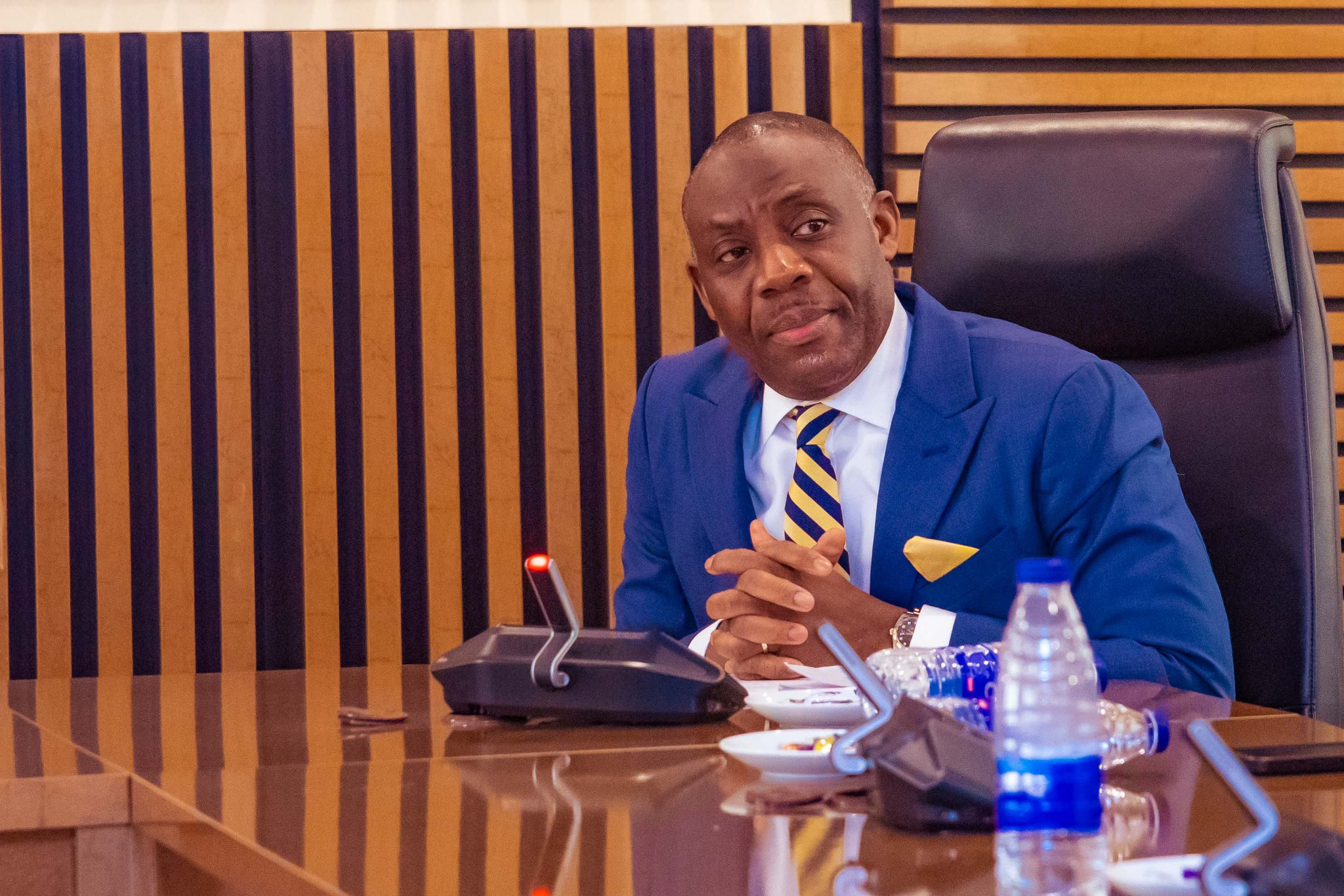
FG unveils digital portal for teachers’ registration
The federal government has unveiled a digital portal designed to ease teachers’ registration, certification, and professional development in line with its vision to strengthen educational standards in the country.
Speaking at the unveiling and strategic vision for Nigerian teachers in Abuja on Monday, the Minister of Education, Tunji Alausa, said the portal and vision framework were designed to reposition education.
Mr Alausa noted that no nation could rise above the quality of its teachers, adding that the unveiling was not merely about technology but a renewal of collective commitment to teachers, their dignity, growth, and future.
According to him, the TRCN portal will serve as a comprehensive platform to facilitate seamless registration, licensing, and renewal of teachers nationwide.
“It will also enable examination scheduling and professional development tracking as well as serve as a national database for teachers’ performance and career progression,” he said.
The minister explained that, beyond technology, the unveiling also marked the rollout of a strategic vision for teachers, anchored on five pillars: professionalisation, digitalisation, accountability, equity, and global alignment.
He said the framework would ensure that teachers were duly registered and continuously developed to leverage technology for wider access to learning.
READ ALSO:
- Thousands evacuated as typhoon ravages Vietnam
- Five journalists among 20 killed in Israeli strike
- 2027: MURIC demands Muslim governors in South West
Mr Alausa also announced the introduction of a mandatory Teacher Ethics and Criminal Record Verification Framework, stressing that no teacher would henceforth be employed in public or private schools without undergoing ethical screening and a criminal background check.
He said private school owners would also be mandated to verify TRCN registration and ethical clearance of their teachers, with the new portal integrating a secure verification system.
”This is not punitive; it is protective. It is about safeguarding our children and upholding the moral integrity of our classrooms,” he said.
Earlier in her remarks, the registrar of the Teachers Registration Council of Nigeria (TRCN), Ronke Soyombo, said the initiative was part of her 100-day action plan to digitise the council’s operations.
Ms Soyombi explained that the portal would improve data management and address long-standing complaints about delays in processing teachers’ certificates and licences.
”With this portal, teachers across Nigeria can conveniently register, access their results, and print their certificates from the comfort of their homes without visiting state offices,” she said.
She added that the TRCN had introduced a service level agreement to ensure that results of the professional qualifying examination (PQE) were released within one week, after which successful candidates could immediately access their certificates.
The registrar also said the reform would enhance transparency, expand coverage, and promote efficiency in teachers’ professional development.
”Every parent can now verify online if their child’s teacher is duly registered with TRCN. Our website also hosts resources for teachers, including study materials ahead of the PQE and access to accredited trainers.
“The TRCN has streamlined the PQE curriculum from 23 subjects to five core areas, such as foundational mathematics, literacy, digital literacy, safeguarding, and pedagogy,” she said.
Ms Soyombo disclosed that by October, the council would launch an artificial intelligence (AI)-powered lesson plan generator to provide teachers with simulated and contextualised instructional materials to make learning more engaging for pupils.
She explained that the initiative would lead to a 50 per cent increase in TRCN-certified teachers, improve child protection, and lead to a global benchmark.
Also speaking, Mohammed Isa, Senior Special Assistant to President Bola Tinubu on Special Needs and Equal Opportunities, said the initiative must incorporate accessibility features such as screen readers, sign language support, and digital braille to align with the administration’s Renewed Hope Agenda.
FG unveils digital portal for teachers’ registration
(NAN)













Education
Gunmen invade Ogun polytechnic hostel, abduct five students

Gunmen invade Ogun polytechnic hostel, abduct five students
At least five students of Gateway ICT Polytechnic, Saapade (GAPOSA), Ogun State, were reportedly abducted after suspected gunmen attacked a private student hostel in Ipara-Remo, prompting the institution to cancel examinations scheduled for Thursday.
The attack reportedly occurred on Wednesday evening at a private hostel located along Paraga Road, Ipara, a community near the polytechnic.
According to accounts from the school community, the armed attackers operated for about 30 minutes and fired gunshots before taking away some occupants of the hostel.
The incident caused fear among students and residents, particularly because the hostel was reportedly located in an isolated area surrounded by dense vegetation.
Following the attack, the management of Gateway ICT Polytechnic announced the cancellation of examinations scheduled for Thursday.
In a notice issued to students, the institution said examinations scheduled for Friday would proceed as planned unless a further announcement was made.
“Following the unfortunate incident that occurred yesterday, today’s examination has been cancelled,” the notice stated.
“However, tomorrow’s examination remains scheduled as planned. If there is any change regarding tomorrow’s examination, an official announcement will be communicated promptly.”
The management encouraged students to remain calm, stay informed through official communication channels and continue preparing for their examinations.
The GAPOSA Students’ Union Government (SUG) later confirmed that five students were abducted during the attack.
READ ALSO:
- FG to phase out electricity subsidy from 2027 as power sector debts rise
- At least 43 migrants die as 49,000 cross into Spain’s Ceuta enclave
- Segun Aina assumes office as JAMB registrar, vows to protect examination integrity
In a statement jointly signed by SUG President Akinpelu Bukunmi Timothy, General Secretary Salau Boluwaduro Saidat and Public Relations Officer Matthew Francis Sonayon, the union described the hostel as being in a remote location that could expose students to security risks.
The union said the attack began at about 7:45 p.m. and lasted for approximately 30 minutes.
According to the SUG, several students escaped through the ceiling of the building, while others were unable to flee before the attackers left the area.
The union said gunshots were fired during the incident but added that no student was reported dead.
“We can confirm that five students were abducted during the incident,” the statement said.
“The matter has officially been reported to the Nigeria Police Force and other relevant security agencies, and we are confident that immediate efforts are underway to ensure the safe rescue of the affected students.”
The SUG appealed to students, parents, guardians and members of the public to avoid sharing unverified information that could create unnecessary fear or interfere with ongoing security operations.
It said some reports circulating on social media did not accurately reflect the information available to the institution and the affected community.
Confirming the incident, the spokesperson for the Ogun State Police Command, DSP Oluseyi Babaseyi, said the police had launched a coordinated operation to rescue the victims and apprehend those responsible.
Babaseyi said tactical teams and intelligence personnel were deployed to the area immediately after the police received a distress report.
“The Ogun State Police Command is aware of the abduction incident reported at a private hostel in the Ipara area on the night of Wednesday, July 29, 2026,” he said.
“Immediately the distress report was received, the command activated a coordinated operational response, deploying tactical teams and intelligence assets to the area.”
He said bush-combing operations and other targeted security activities were ongoing to locate and rescue the victims safely.
The police spokesperson added that the exact number of people abducted had not yet been confirmed because verification and investigations were still ongoing.
The difference between the number confirmed by the SUG and the police position means that the final figure may be clarified as investigations continue.
The attack has renewed concerns about the safety of students living in private, off-campus accommodation, particularly in isolated areas with limited security presence.
It has also raised calls for stronger collaboration among school authorities, landlords, host communities, security agencies and student representatives to improve safety around student residences.
As of the time of filing this report, the Ogun State Police Command had not announced the rescue of the victims or disclosed whether any suspects had been arrested.
Security agencies are expected to provide further updates as rescue operations and investigations continue.
Gunmen invade Ogun polytechnic hostel, abduct five students
Education
Segun Aina assumes office as JAMB registrar, vows to protect examination integrity

Segun Aina assumes office as JAMB registrar, vows to protect examination integrity
Professor Segun Aina has formally assumed office as the new Registrar and Chief Executive of the Joint Admissions and Matriculation Board (JAMB), pledging to strengthen the integrity of the nation’s examination and tertiary admission systems.
Aina assumed office on Friday at JAMB’s headquarters in Bwari, Abuja, succeeding Professor Ishaq Oloyede, whose two-term tenure ended on July 31, 2026.
The new JAMB registrar takes over at a time when the board is expected to deepen the use of technology, strengthen examination security and address emerging challenges affecting the Unified Tertiary Matriculation Examination (UTME) and admission processes.
President Bola Tinubu appointed Aina as the substantive JAMB registrar on May 21, 2026. The Presidency described him as a distinguished academic and systems expert with experience in national examination systems, digital infrastructure and public-sector institutional reform.
Aina, a professor of computer engineering, became one of Nigeria’s youngest professors in the field at the age of 39. His appointment also makes him the youngest registrar in JAMB’s history. (State House)
In his inaugural address, Aina said his administration would protect the credibility of JAMB examinations and sustain public confidence in the board’s operations.
He pledged to build on existing reforms while introducing additional technology-driven measures to improve examination administration, candidate verification and the security of JAMB’s digital systems.
The new registrar also warned individuals involved in examination malpractice to reconsider their actions, stressing that the board would not allow fraudulent practices to undermine the credibility of its examinations.
According to Aina, those involved in examination malpractice should understand that “their business is in the wrong institution.”
READ ALSO:
- 2027 Hajj: NAHCON Sets N5m Minimum Deposit, Opens Registration for 2028-2030 Seasons
- Stop, CBN! The baby is in the bathwater
- Osun Speaker: CP Gotan Arrested SSG Igbalaye for Laughing When Police Boss Was Booed
- Police Release Osun SSG After Controversial Arrest Over Alleged Electoral Offences
He said JAMB would continue to invest in modern technology and strengthen its systems to detect and prevent malpractice, including impersonation, identity fraud, unauthorised access to examination platforms and other forms of examination-related misconduct.
Aina added that the board would maintain close collaboration with security agencies and other relevant institutions to investigate and prosecute individuals or groups found to be involved in examination fraud.
The new JAMB registrar said the board would remain committed to ensuring that qualified candidates have fair and transparent access to tertiary education opportunities.
He also pledged to improve the efficiency of JAMB’s registration, examination and admission processes while ensuring that the board’s services remain accessible to candidates across the country.
Aina’s appointment marks a new chapter for JAMB following Oloyede’s 10-year tenure, during which the board expanded the use of technology, strengthened its admission processes and introduced reforms aimed at improving transparency and accountability.
The outgoing registrar was appointed in 2016 and served two terms, overseeing major changes in JAMB’s examination and admission systems. (TheCable)
Aina is expected to consolidate on those reforms while addressing new challenges associated with digital examinations, cybersecurity, examination malpractice and the growing demand for efficient tertiary admission services.
His background in computer engineering and digital systems is expected to support JAMB’s efforts to deploy technology more effectively in examination administration and protect the integrity of the UTME.
Education stakeholders will also be watching how the new leadership improves the experience of candidates, strengthens the credibility of examination results and promotes transparency in admissions into universities, polytechnics, colleges of education and other tertiary institutions.
With his assumption of office, Aina has pledged that JAMB will continue to uphold merit, fairness, accountability and public trust while taking stronger steps to protect the integrity of Nigeria’s tertiary admission system.
Segun Aina assumes office as JAMB registrar, vows to protect examination integrity
Education
Alausa Warns States as Many Risk Losing $552m World Bank HOPE Education Fund

-

 Aviation14 hours ago
Obi Must Apologise, Pay ₦25,000 or Face FAAN Action — Keyamo Issues Ultimatum
-

 Politics3 days ago
Tinubu tells 2027 rivals: We’ll wrestle ourselves to the finishing line
-

 News2 days ago
Police detain Osun SSG, five others as ₦4.8m, voter cards are recovered
-

 Education3 days ago
BUK, Northwest University students demand prompt payment of NELFUND upkeep allowances
-

 metro3 days ago
Army Colonel Killed, Wife, Aides Injured as Gunmen Storm Home in Coordinated Attack
-

 Business3 days ago
Reps move to end dollar charges on locally refined petrol
-

 Entertainment3 days ago
Abia Gov Steps In With Medical Support for Ailing Nollywood Veteran Ngozi Nwosu
-

 Politics14 hours ago
Where Will Peter Obi’s Votes Come From? I Can’t See It – Keyamo Predicts Tinubu’s Landslide Victory