
News
Fuel Marketers Warn Rising Petrol Prices Worsening Nigeria’s Cost-of-Living Crisis

Fuel Marketers Warn Rising Petrol Prices Worsening Nigeria’s Cost-of-Living Crisis
The Petroleum Products Retail Outlets Owners Association of Nigeria (PETROAN) has raised fresh concerns over Nigeria’s worsening cost-of-living crisis, warning that persistent increases in petrol prices are eroding household incomes and putting severe pressure on businesses.
In a statement issued by its National President, Billy Gillis-Harry, the association said the steady rise in pump prices in recent weeks has triggered a ripple effect across the economy—driving up transportation fares, inflating food prices, and weakening consumers’ purchasing power.
PETROAN acknowledged ongoing reforms in the oil and gas sector but stressed that urgent government intervention is needed to cushion the hardship. The group warned that failure to act swiftly could further deteriorate living conditions and undermine economic stability.
According to the association, the impact is already severe for ordinary Nigerians, with many households struggling to meet daily expenses as the cost of mobility and essential goods continues to climb. Small and medium-sized enterprises are also under pressure, as rising diesel and petrol costs increase operating expenses, reduce profit margins, and slow productivity.
While global oil market dynamics continue to influence domestic fuel pricing, PETROAN insisted that local policy actions remain critical in mitigating the impact. The group called for immediate, targeted relief measures, including transportation support schemes to reduce commuting costs and interventions to stabilise food prices for vulnerable households.
READ ALSO:
- Akpabio Backs Anioma State Creation, Proposes Asaba as Capital
- Man Arrested After Shouting ‘No Water, No Light’ During Bago’s Suleja Visit
- US 15-Point Plan Reportedly Conveyed to Iran via Pakistan
The association also highlighted the need to strengthen Nigeria’s energy framework through improvements to the Naira-for-Crude policy, which is designed to boost local refining by allowing domestic refineries to purchase crude oil in naira. PETROAN urged authorities to ensure the policy is effectively implemented to stabilise supply and reduce dependence on imports.
In addition, the group called for the full and sustained operation of the Port Harcourt Refinery, managed by the Nigerian National Petroleum Company Limited, noting that increased domestic refining capacity would ease supply constraints and help moderate fuel prices over time.
PETROAN further advocated accelerated adoption of alternative energy sources such as Compressed Natural Gas (CNG) and Liquefied Petroleum Gas (LPG), describing them as more affordable and sustainable options for both transportation and household energy use.
Beyond short-term interventions, the association emphasised the need for long-term collaboration between government and industry stakeholders to ensure energy security, price stability, and a resilient fuel supply chain.
Adding to the policy recommendations, the Director-General of the Centre for the Promotion of Public Enterprises, Muda Yusuf, called for a broader strategy to address the crisis. He advised expanding domestic refining capacity, granting tax waivers on solar energy equipment, and scaling up efficient public transportation systems to reduce commuting costs.
Yusuf also stressed that improving Nigeria’s electricity infrastructure remains a critical long-term solution to stabilising energy costs across the economy. He cautioned monetary and fiscal authorities against premature policy easing, urging prudent management of oil revenue windfalls to strengthen foreign exchange reserves and support productive sectors.
Economic analysts note that although Nigeria’s headline inflation has shown signs of moderation, underlying pressures—driven by energy costs and global market volatility—remain significant. They warn that without forward-looking policies, recent gains could quickly reverse.
Experts further recommend building strategic fuel reserves to cushion supply disruptions and prevent sudden price spikes, as well as accelerating nationwide CNG conversion programmes to reduce dependence on petrol.
With fuel costs continuing to shape inflation and economic activity, stakeholders say coordinated and decisive action is essential to protect households, sustain businesses, and maintain macroeconomic stability.
Fuel Marketers Warn Rising Petrol Prices Worsening Nigeria’s Cost-of-Living Crisis











News
Final Notice: FG Orders Civil Servants to Complete PASGA Verification by March 31

Final Notice: FG Orders Civil Servants to Complete PASGA Verification by March 31
The Federal Government of Nigeria has set Tuesday, March 31, 2026, as the final deadline for civil servants to complete the mandatory Personnel Audit and Skills Gap Analysis (PASGA) verification exercise. Workers who fail to comply risk salary suspension and other administrative sanctions, officials warned.
The directive, issued by the Head of the Civil Service of the Federation (OHCSF), Didi Walson-Jack, applies to all employees within the Federal Civil Service. The memo emphasised that the verification process is part of the government’s ongoing effort to eliminate ghost workers, enhance workforce accountability, and improve efficiency in public service operations.
The PASGA exercise consists of two components: Personnel Verification and Skill Assessment and Competency Analysis. Civil servants who have not completed either component are required to do so by March 31, 2026, to obtain their Certificates of Completion. These certificates must then be submitted to the Director of Human Resource Management in their respective Ministries, Departments, and Agencies (MDAs).
READ ALSO:
- Mozambique Deports 13 Nigerians Without Charges, 29 Still Detained
- Iranian Missiles, Drones Strike US Air Base in Saudi Arabia
- Millions to March Across US in Largest Anti-Trump Demonstrations
The OHCSF warned that any officer who fails to comply will be subject to “appropriate administrative sanctions in line with extant rules and regulations,” which may include suspension from the payroll until compliance. Permanent Secretaries and Heads of MDAs have been instructed to circulate the memo widely to ensure that all affected officers are informed.
The PASGA exercise, rolled out in 2025, is designed to assess staffing structures, identify skill gaps, and support the development of targeted training and capacity-building programmes aligned with national priorities. Its outcomes will also guide government decisions on recruitment, career advancement, and resource allocation within the Federal Civil Service.
Officials say the verification process is essential to address longstanding issues such as payroll irregularities and fraudulent entries, which have historically cost billions of naira annually. Completion of the exercise will protect civil servants’ rights to salary and benefits while strengthening the integrity of Nigeria’s public service system.
Civil servants have been urged to prioritise the exercise to avoid disruptions to their pay and career progression. Authorities stressed that while compliance with local laws is expected, all government procedures must follow due process and fairness to ensure that legitimate workers are not unfairly penalised.
Final Notice: FG Orders Civil Servants to Complete PASGA Verification by March 31
News
Kano Deputy Governor, Aminu Abdussalam Gwarzo, Resigns
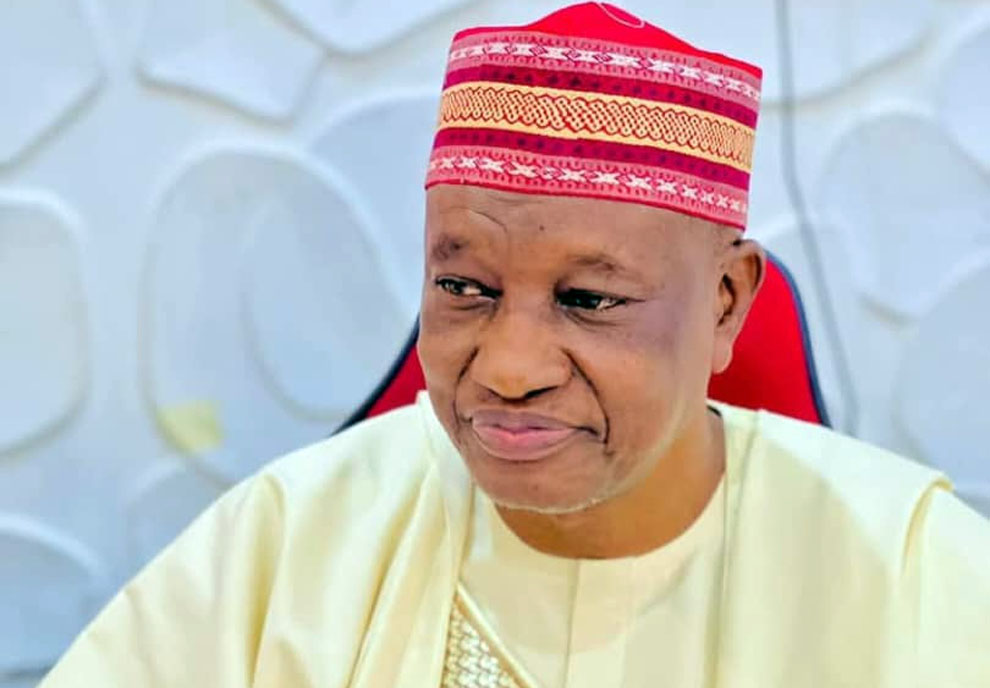
Kano Deputy Governor, Aminu Abdussalam Gwarzo, Resigns
The Deputy Governor of Kano State, Aminu Abdussalam Gwarzo, has resigned from office, bringing a sudden twist to the state’s evolving political landscape.
His spokesperson, Ibrahim Shuaibu, confirmed the development on Friday, stating that the resignation had been formally communicated.
“Yes, it is true. The deputy governor has resigned from his position,” Shuaibu said, declining to provide further details surrounding the decision.
Although no official reason has been disclosed, the resignation comes amid escalating tensions between Gwarzo and the Kano State House of Assembly.
In recent days, the Assembly had levelled a series of allegations against the former deputy governor, including claims of misconduct and concerns related to the discharge of his official duties. Lawmakers were also reported to have initiated moves widely seen as a precursor to possible disciplinary action, raising fears of an impending political crisis within the state executive.
The development also follows recent political shifts in Kano, particularly the defection of Governor Abba Yusuf to the All Progressives Congress, a move that has triggered significant realignments within the state’s political structure.
Since the defection, the governor has undertaken sweeping changes aimed at repositioning the administration. These include the removal of the Head of Service, Abdullahi Musa, as well as the dismissal of the Commissioner for Investment, Commerce and Industry, Shehu Wada Sagagi, as part of broader efforts to enhance efficiency and discipline in governance.
Political observers interpret these actions as part of a strategic move by the administration to consolidate power within the new political alignment and streamline government operations in line with evolving priorities.
While details of the allegations against Gwarzo remain unclear, sources within the Assembly indicated that the matter had been under legislative scrutiny prior to his resignation.
Efforts to obtain further clarification from the Kano State Government were unsuccessful as of the time of filing this report.
Gwarzo’s exit is expected to trigger constitutional procedures for the appointment of a new deputy governor, subject to approval by the State House of Assembly.
Analysts believe the development could further reshape Kano’s political landscape, particularly as the state navigates ongoing alignments ahead of future electoral contests.
Kano Deputy Governor, Aminu Abdussalam Gwarzo, Resigns
News
ADC Primary: Atiku Will Defeat Obi, Amaechi — Umar Ardo

ADC Primary: Atiku Will Defeat Obi, Amaechi — Umar Ardo
Umar Ardo, Convener of the League of Northern Democrats, has declared that former Vice President Atiku Abubakar would emerge victorious in the presidential primary of the African Democratic Congress (ADC) if he decides to contest.
Ardo made the assertion on Friday while speaking during a programme on Focus Nigeria, aired on the African Independent Television (AIT), where he analysed possible scenarios ahead of the party’s primary election.
According to him, although discussions around a consensus candidate may arise within the party, such an arrangement would require key contenders, including Peter Obi and Rotimi Amaechi, to step down — a situation he described as unlikely.
He noted that consensus would only be feasible if major aspirants willingly relinquish their ambitions in favour of a single candidate, stressing that this could prove difficult given the political realities and support bases of those involved.
“If there is going to be consensus, it means that the contenders will have to step down. It would mean that Atiku, Peter Obi, Amaechi, and others would have to step down for somebody,” Ardo said.
He further observed that while Obi might be personally inclined to step down under certain circumstances, his loyal supporters, popularly known as the Obidient Movement, would strongly resist such a move.
Ardo also expressed the view that although Atiku’s supporters might accept a consensus arrangement, the former vice president himself is unlikely to withdraw from the race.
“Peter Obi has the disposition to step down, but his support base would oppose that. Without the Obidients, Obi is nothing. Atiku’s support base may allow him to step down, but he himself is not likely to do so,” he stated.
The northern political figure maintained that if all aspirants proceed to contest the primary election, Atiku stands a clear chance of clinching the party’s ticket, regardless of whether the process is conducted through direct primaries or by delegates.
“If all of them go into the primaries, then Atiku will win — be it by delegates or direct primaries. Atiku will 100 percent win the primaries, even if they are conducted multiple times,” Ardo added.
His remarks come amid ongoing political realignments and speculations over potential alliances and candidacies ahead of future elections, with key political actors weighing their options within and across party lines.
The African Democratic Congress has yet to officially outline its timetable for the primary election, as consultations among stakeholders continue.
ADC Primary: Atiku Will Defeat Obi, Amaechi — Umar Ardo

-

 Entertainment3 days ago
Yoruba Film Industry Mourns as Actress Bukky Mountain Dies
-

 metro2 days ago
“We Pay Men to Sleep With Us in Germany” — Nigerian Woman Laments Loneliness Abroad
-

 Entertainment2 days ago
Tragedy in Music Industry as ‘Show Your Style’ Singer Sabinus Dies
-

 metro22 hours ago
Tragedy in Aramoko: Trailer Rams Residential Building, Kills 300‑Level Student
-

 News1 day ago
Final Notice: FG Orders Civil Servants to Complete PASGA Verification by March 31
-

 metro2 days ago
El-Rufai’s Mother, Hajiya Umma, Dies Amid Son’s Legal Battle
-

 metro3 days ago
Kidnappers Now Using Banks to Receive Ransom Payments — Security Expert Raises Alarm
-

 Business2 days ago
Relief in Sight as Dangote Refinery Lowers Petrol Price