

Business
Fuel Price Cut: Filling Stations Ignore Dangote’s N739 Pump Price, Sell Petrol Up to N900 Nationwide
Fuel Price Cut: Filling Stations Ignore Dangote’s N739 Pump Price, Sell Petrol Up to N900 Nationwide
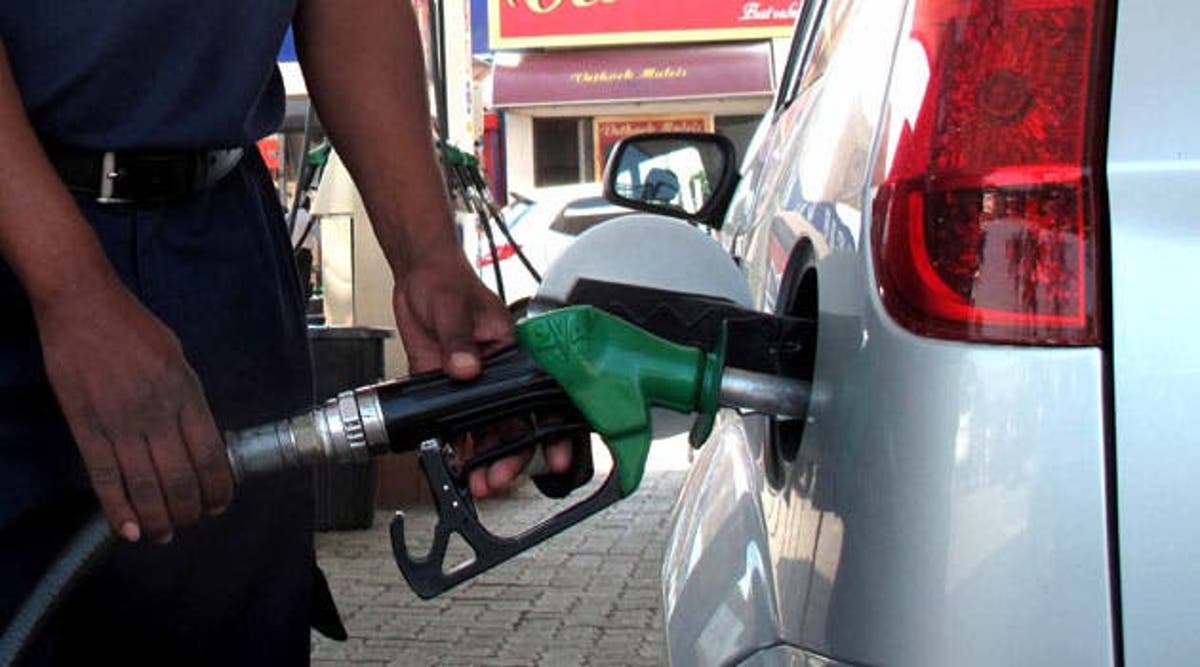
Many filling stations in Nigeria are yet to reflect the latest petrol price reduction announced by the Dangote Refinery, despite assurances that premium motor spirit (PMS) would sell at N739 or N740 per litre nationwide.
Checks by our correspondents across Lagos and its environs revealed that several MRS retail outlets were still selling petrol far above the new benchmark. At the MRS filling station in Alagbole, a border community between Lagos and Ogun states, petrol sold for N850 per litre. Similarly, MRS stations along Ekoro Road, Abule Egba, dispensed petrol at prices ranging between N825 and N870 per litre.
At BOVAS filling station in Ojodu, the pump price stood at N820 per litre, while an NNPC retail outlet at Berger sold petrol at N825 per litre. Other major marketers, including Mobil, TotalEnergies and ConOil, were also found selling petrol at between N850 and N890 per litre.
A petrol attendant at an MRS outlet in Alagbole attributed the delay in price adjustment to existing stock.
“We are still selling at N850 per litre because we have old stock. Once we receive new stock at the new gantry price, we will adjust to about N740 or N750 per litre from Monday,” she said.
READ ALSO:
- Ex-PM Imran Khan, Wife Jailed 17 Years in Pakistan Toshakhana Corruption Scandal
- AFCON to Switch to Four-Year Cycle as CAF Launches African Nations League
- Drake Loses £150k After Backing Jake Paul in Defeat to Anthony Joshua
Outside Lagos, the situation remains largely the same. Reports from Oyo, Delta and Enugu states indicated that petrol prices ranged between N830 and N900 per litre, despite the Dangote price reduction.
However, findings showed a different trend in the Federal Capital Territory (Abuja), where several outlets have implemented the new price regime. NNPC, MRS, Ardova, AA Rano and BOVAS filling stations in Abuja were found selling petrol at N739 per litre, about N70 cheaper than prices recorded in many other states.
Meanwhile, the Independent Petroleum Marketers Association of Nigeria (IPMAN) has urged its members nationwide to patronise the Dangote Refinery for the purchase of PMS, citing its affordability and upcoming free nationwide delivery.
IPMAN National President, Abubakar Maigandi, expressed optimism over the refinery’s plan to supply petrol directly to registered IPMAN members.
“We are excited about the agreement with the Dangote Petroleum Refinery to supply PMS directly to our members, with free delivery to filling stations across Nigeria from January 2026. This will certainly lead to further reductions in pump prices,” he said.
Maigandi added that IPMAN members should prioritise buying from Dangote, noting that the refinery currently offers the most affordable petrol price to marketers nationwide.
Fuel Price Cut: Filling Stations Ignore Dangote’s N739 Pump Price, Sell Petrol Up to N900 Nationwide





Business
Why Petrol Remains Expensive Despite Dangote Refinery’s Local Production

Why Petrol Remains Expensive Despite Dangote Refinery’s Local Production
Nigeria’s emergence as a major local refining hub has reduced the country’s dependence on imported petroleum products, but it has not insulated consumers from rising petrol prices, with the cost of crude oil, international market conditions, refinery economics and downstream distribution continuing to influence pump prices.
The development has renewed debate over why Nigerians are still paying relatively high prices for Premium Motor Spirit (PMS) despite the operation of the Dangote Petroleum Refinery, Africa’s largest refinery.
The refinery recently increased its petrol gantry price to N1,350 per litre, from N1,265, amid higher crude oil prices and rising replacement costs in the downstream market. The increase has subsequently put pressure on marketers and filling stations to adjust their pump prices.
Dangote Group President Aliko Dangote has explained that domestic refining does not automatically mean petrol will be priced independently of the international oil market because crude remains the principal raw material for refining.
The refinery therefore remains exposed to the cost of crude oil, whether the feedstock is sourced locally or imported.
This is particularly important because Nigerian crude is commercially linked to international benchmarks. As a result, producing petrol domestically removes some import-related costs but does not eliminate the underlying value of the crude used to manufacture the product.
Recent developments also show that the availability and cost of Nigerian crude oil remain central to the economics of the Dangote refinery.
The Nigerian Upstream Petroleum Regulatory Commission (NUPRC) reported that 53.7 million barrels of crude oil and condensate were supplied to local refineries between April and June 2026, representing 97.4 per cent performance under the Domestic Crude Supply Obligation (DCSO).
READ ALSO:
- “Clash of Egos”: Ayo Fayose Downplays Public Feud Between Wike and APC Governors
- ASUU Crisis Deepens: Lagos Universities Join UNIBEN, Taraba on Indefinite Strike
- Lagos Power Outage: Ikeja Electric Blames TCN as Businesses, Homes Groan
At the Dangote refinery, producers offered 68.1 million barrels against the facility’s requirement of 63 million barrels during the second quarter. The refinery eventually accepted 52.6 million barrels, equivalent to about 78 per cent of the volumes offered to it.
The figures indicate that the issue is not simply whether crude is available in Nigeria, but also the commercial terms, grades, logistics and timing involved in supplying it to the refinery.
Dangote has previously raised concerns about the cost and competitiveness of some domestic crude supplies. A portion of the refinery’s crude intake has at times been imported, while the company has continued seeking ways to secure sufficient Nigerian crude at competitive prices.
The refinery’s access to domestic crude has, however, improved considerably.
Dangote secured at least 16 million barrels of Nigerian crude for October delivery, equivalent to about 520,000 barrels per day and representing most of the refinery’s 700,000-barrel-per-day capacity.
The October supply includes allocations from the Nigerian National Petroleum Company Limited (NNPCL) as well as additional crude purchased through tenders.
The refinery received an average of about 565,000 barrels per day of Nigerian crude in August, nearly twice its average intake in 2025.
The increased domestic supply could reduce the refinery’s exposure to imported crude, but it does not necessarily mean petrol prices will fall immediately.
The reason is that the cost of crude is only one component of the final price of petrol.
Other factors include refining costs, financing, storage, transportation, depot charges, distribution and retail margins. Exchange-rate movements can also affect costs linked to dollar-denominated purchases and other imported inputs.
The removal of the petrol subsidy has further changed Nigeria’s fuel-pricing structure. Rather than having the government absorb a large portion of the difference between market costs and the regulated pump price, consumers are now more directly exposed to changes in market conditions.
Consequently, movements in global crude prices can affect locally refined petrol just as they affect imported products.
The recent rise in the Dangote refinery’s petrol price demonstrates this relationship. The refinery’s latest adjustment reflected rising crude prices and increased replacement costs faced by refiners, importers and depot operators.
READ ALSO:
- US Court Blocks Trump Visa Rule Limiting Stay of Foreign Students, Journalists
- Sokoto Shuts Mosque After Cleric Stabbing, Names Ulamas Probe Panel
- Iran Rejects US Talks as Trump’s Mixed Signals Deepen Hormuz Standoff
The relationship between global prices and domestic petrol prices has also worked in the opposite direction when crude prices declined.
Earlier in the year, the Dangote refinery reduced its petrol price as international crude prices eased, illustrating how changes in the global market can be transmitted to locally refined products.
The refinery is also increasingly becoming a participant in the international refined-products market rather than solely a supplier to Nigeria.
The facility generated $1.82 billion in net profit during the first half of 2026, on revenue of more than $13 billion, reversing a $476 million loss recorded in 2025.
The refinery has expanded exports of jet fuel, diesel and gasoil, with the company becoming a significant supplier to international markets during disruptions to global fuel supplies.
The development demonstrates the commercial reality of operating a large refinery: refined products can be sold into domestic or international markets depending on market conditions, prices and demand.
For Nigeria, the refinery nevertheless represents a major structural change in the downstream petroleum sector.
The country previously relied heavily on imported refined petrol despite being a major crude oil producer. Increased domestic refining means more crude can be converted into petroleum products within Nigeria, reducing dependence on imported finished products and potentially improving energy security.
The refinery is also expected to expand its capacity further, with plans to increase refining capacity to 1.4 million barrels per day over the next three years.
The larger capacity could increase domestic availability of refined products and strengthen Nigeria’s position as a regional supplier.
However, greater refining capacity by itself does not guarantee permanently cheaper petrol.
For consumers, the crucial issue is how efficiently the entire petroleum value chain operates—from crude production and supply to refining, transportation, storage and retail distribution.
The Domestic Crude Supply Obligation is intended to improve access to Nigerian crude for local refineries. Increased domestic crude production and stronger commercial arrangements between producers and refiners could further improve the reliability of supply.
There are also efforts to address logistics and supply challenges, including proposals for crude-swap arrangements designed to match domestic refiners with local producers and potentially reduce delivery times and logistical complications.
If such measures improve the reliability and competitiveness of domestic crude supply, they could strengthen the economics of local refining.
For now, however, Nigerians remain exposed to a combination of global crude oil prices, domestic crude supply costs, exchange-rate pressures and downstream distribution expenses.
This means that the biggest benefit of the Dangote refinery may not necessarily be an immediate collapse in petrol prices, but a reduction in Nigeria’s dependence on imported refined fuel, greater domestic refining capacity and the potential to retain more value from the petroleum chain within the country.
The immediate challenge remains translating those structural gains into greater petrol price stability and affordability for households, businesses and transport operators.
As Dangote increases its intake of Nigerian crude and moves towards higher utilisation, the cost and reliability of its feedstock will remain critical to the price of petrol in Nigeria.
The latest developments therefore suggest that local refining has changed Nigeria’s fuel supply landscape, but it has not disconnected petrol prices from the international oil market.
Why Petrol Remains Expensive Despite Dangote Refinery’s Local Production
Auto
Jetour Targets Abuja Market with X70 PHEV as Nationwide Expansion Gathers Pace

Jetour Targets Abuja Market with X70 PHEV as Nationwide Expansion Gathers Pace
Jetour Nigeria is taking its hybrid SUV offensive to Abuja, with the X70 Plug-in Hybrid Electric Vehicle (PHEV) set to headline the three-day Jetour Experience from September 22 to 24 as the automaker accelerates its drive to expand its footprint and capture a larger share of Nigeria’s fast-evolving mobility market.
The Abuja showcase, coming on the heels of a strong Lagos edition that generated significant consumer interest, test drives and sales enquiries, is designed to bring Jetour’s latest technologies closer to customers in the Federal Capital Territory and neighbouring states.
The event at Maha Event Centre, Area 8, will give prospective buyers and auto enthusiasts the opportunity to test-drive the X70 PHEV and other Jetour models while interacting with product specialists and experiencing their technology, safety features, performance and comfort firsthand.
According to the company, expanding the showcase to the Federal Capital Territory was a direct response to rising demand from residents in Abuja and neighbouring states.
READ ALSO:
- ASUU Crisis Deepens: Lagos Universities Join UNIBEN, Taraba on Indefinite Strike
- Lagos Power Outage: Ikeja Electric Blames TCN as Businesses, Homes Groan
- US Court Blocks Trump Visa Rule Limiting Stay of Foreign Students, Journalists
To bolster buyer confidence, Jetour Nigeria—the country’s sole authorised distributor—backs the X70 PHEV with a five-year or 150,000-kilometre warranty.
The distributor operates through an accredited nationwide dealer network, including: Elizade Nigeria Limited,
New Era Auto Vehicle Services Limited, Kojo Motors, Germaine Auto Centre, Tab Autos Limited, R.T. Briscoe Motors, and Mandilas Autos.
The X70 PHEV pairs a 1.5-litre turbocharged engine with a 19.43kWh battery and a dedicated hybrid transmission. Designed to balance performance with fuel efficiency, the vehicle supports fast, slow, engine, and regenerative braking charging options—reducing reliance on external charging infrastructure.
Jetour’s rapid growth in the Nigerian market has earned both private and corporate patronage, driven by competitive pricing, high specification levels, and an expanding service footprint. The brand was named “Fastest Growing Auto Brand of the Year” at the 2024 Nigeria Auto Journalists Association (NAJA) Awards.
With the X70 PHEV leading the Abuja showcase, Jetour aims to deepen customer engagement and consolidate its position in the local automotive market.
Jetour Targets Abuja Market with X70 PHEV as Nationwide Expansion Gathers Pace
Business
Sanwo-Olu Joins Dangote as Historic N2.15tn Refinery IPO Opens on Nigerian Exchange

Sanwo-Olu Joins Dangote as Historic N2.15tn Refinery IPO Opens on Nigerian Exchange
Lagos State Governor, Babajide Sanwo-Olu, on Monday joined business leaders, investors and capital-market stakeholders as the Initial Public Offering of the Dangote Petroleum Refinery and Petrochemicals formally opened on the Nigerian Exchange, NGX, in Lagos.
The landmark transaction, which could raise about N2.15 trillion, marks one of the biggest capital-market transactions in Nigeria’s history and gives Nigerians and other investors an opportunity to acquire a stake in Africa’s largest oil refinery.
Sanwo-Olu attended the opening ceremony at the NGX Group building in Marina, Lagos, where Dangote Industries President and Chief Executive Officer, Aliko Dangote, sounded the gong to formally commence the public offer.
The IPO comprises 4.1 billion ordinary shares priced at N525 each, with investors allowed to subscribe for a minimum of 10 shares, valued at N5,250. The offer will remain open until October 13, 2026.
The development represents a major milestone for Nigeria’s capital market, as the Dangote Refinery becomes the first refinery to be offered for public subscription on the Nigerian stock market in the 66-year history of the NGX.
The ceremony attracted an array of prominent figures from government, business and the financial sector, including NGX Group Chairman Umaru Kwairanga, NGX Group Managing Director and Chief Executive Officer Temi Popoola, Zenith Bank founder Jim Ovia, Coronation Group Chairman Aigboje Aig-Imoukhuede and Ooni of Ife, Oba Adeyeye Ogunwusi.
Also present were senior executives of Dangote Industries and representatives of the capital-market community.
Dangote described the offer as a “people’s IPO”, stressing that its primary objective was to broaden ownership of the refinery and allow ordinary Nigerians and investors across the world to participate in the wealth created by the massive industrial project.
According to him, the public offer was not primarily about raising funds for the Dangote Group, which he said already had substantial capital available for its expansion plans, but about democratising wealth creation.
The refinery is currently designed to process 700,000 barrels of crude oil per day, while Dangote Industries plans to expand its capacity to 1.4 million barrels per day over the coming years. Proceeds from the IPO are expected to support the refinery’s expansion and strengthen its capacity for future growth.
The public offer follows a $2.5 billion private placement earlier in the year, which attracted strong institutional interest. Reuters reported that the refinery is valued at about $47.6 billion, making the IPO one of the most significant equity offerings ever undertaken in Africa.
The refinery has increasingly become a strategic component of Nigeria’s energy security drive, reducing the country’s dependence on imported refined petroleum products while positioning Nigeria as a potential major exporter of refined products.
The opening of the IPO also comes at a time when the Dangote refinery has reported a sharp improvement in its financial performance. Reuters reported that the company recorded a $1.82 billion net profit in the first half of 2026, alongside revenue of more than $13 billion.
Dangote has also sought to make the offer accessible to ordinary Nigerians, with subscriptions available through digital investment platforms and other authorised channels. The minimum subscription of 10 shares means an investor can enter the offer with N5,250.
The NGX has described the transaction as an important development for the Nigerian capital market, particularly in broadening retail participation and deepening the investment culture.
For Lagos, where the refinery is located and where the historic IPO was formally launched, the development further reinforces the state’s position as Nigeria’s dominant commercial and financial centre.
With the offer running until October 13, investors will now determine whether the historic transaction achieves its N2.15 trillion target and establishes a new benchmark for public participation in Nigeria’s industrial sector.
-

 Politics2 days ago
2027: Northern Lecturers Back Tinubu, ASUU Disowns Endorsement
-

 metro2 days ago
Police Arrest Mother Over Alleged Brutal Abuse of 7-Year-Old Girl in Anambra
-

 Sports2 days ago
‘I Was Never the Chosen One’ — Dembele Responds to Mbappe
-

 News3 days ago
Nwifuru Dismisses Cubana Chief Priest as ‘Attention-Seeker’
-

 Politics3 days ago
2027: Sowore Promises ₦500,000 Minimum Wage, Free Education, 24-Hour Electricity
-

 Education2 days ago
JAMB Moves 2027 UTME Time — Here’s What Candidates Need To Know
-

 metro3 days ago
Grand Chief Imam calls for professional communication structure for Rabitoh 1964
-
 Politics2 days ago
2027: APC Governors Reject Wike’s Rainbow Coalition, Insist on Party Loyalty