

Politics
Ganduje backs his deputy to emerge next Kano governor
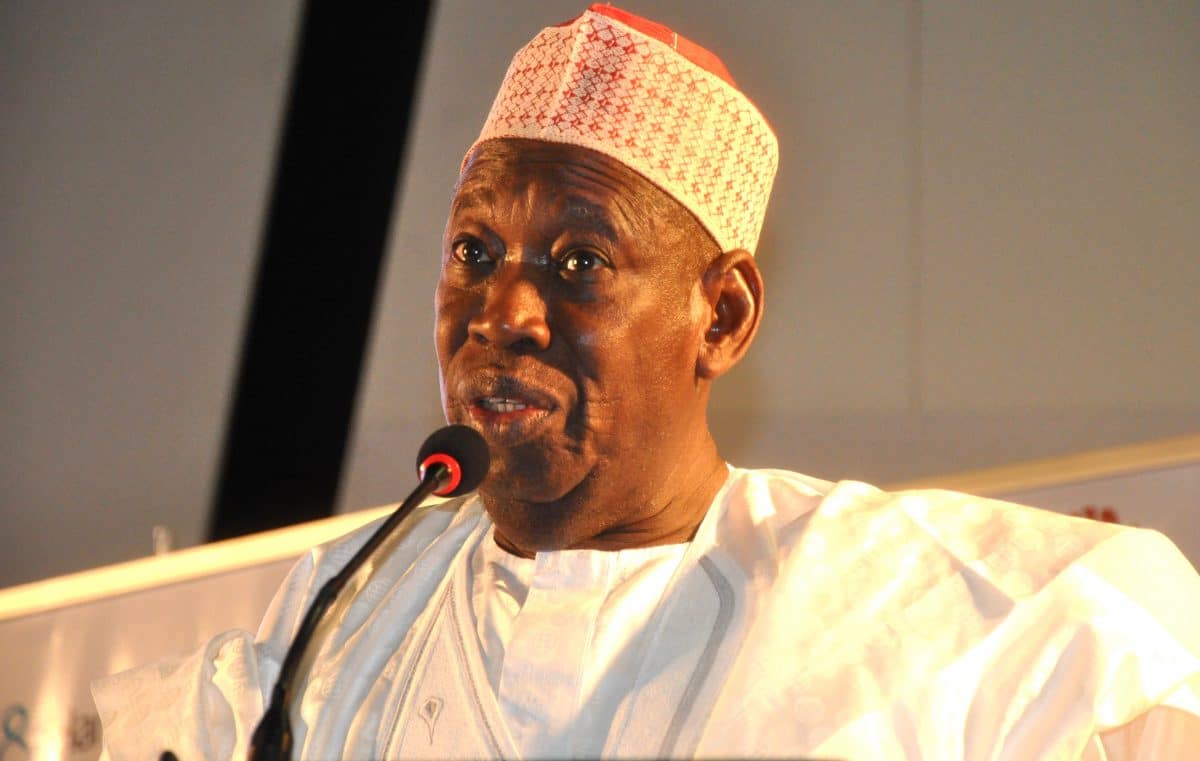
Kano State Governor, Abdullahi Ganduje, has endorsed Nasiru Gawuna, his deputy, to become the next governor of the state.
The decision was reportedly taken at a stakeholders’ meeting of the All Progressives Congress (APC) in Kano.
This came as the Independent National Electoral Commission (INEC) has given all political parties June 3, 2022 as deadline to conduct primaries and present candidates for the 2023 elections.
At the stakeholders’ meeting presided over by the Kano governor, Murtala Garo, former commissioner for local government and chieftaincy affairs, was also selected as Gawuna’s running mate in the 2023 governorship election.
According to sources, Garo is “believed to have the capacity to deliver votes for the party, considering his influence at local government level”.
Ganduje is said to be making plans to obtain the nomination and expression of interest forms to represent Kano north senatorial district.
The Kano north senatorial seat is presently occupied by Barau Jibrin.
Ganduje was deputy governor of Kano to Rabiu Kwankwaso for two terms — 1999 to 2003, and 2011 to 2015 — before he became governor of the state in 2015.
Kwankwaso endorsed Ganduje to succeed him but the relationship between the two became frosty over the years.






Politics
‘Tinubu Must Stay’ Movement Launches Ahead of 2027 Election

‘Tinubu Must Stay’ Movement Launches Ahead of 2027 Election
A political advocacy group, Tinubu Must Stay (TMS), has launched a national campaign ahead of the 2027 general election, calling for continuity in President Bola Ahmed Tinubu’s administration.
The movement was formally unveiled in Abuja on Thursday, October 1, 2026, with its National Convener, Ibrahim Uba, saying the organisation would promote its position through public engagement, data and what it described as fact-based communication.
Uba said the group was established by Nigerians who support the continuation of the Tinubu administration and want the government’s policies, programmes and reported achievements subjected to public discussion.
He acknowledged that major economic reforms, particularly the removal of the petrol subsidy and changes to the foreign-exchange system, had increased pressure on households through higher living, transportation and energy costs.
However, he argued that the reforms should also be assessed against their stated objectives, measurable outcomes and unresolved challenges.
According to Uba, TMS will operate around three main areas: presenting what it calls fact-based responses to criticisms of the administration, providing alternative explanations of government programmes based on available evidence, and increasing civic engagement ahead of the 2027 election.
READ ALSO:
- Trump Threatens Iran With ‘Very Hard’ Response Over Flydubai Attack
- Phyna Knocks Out Nkechi Blessing in Fourth Round, Wins ₦50m, New Car
- NDC Protests Police Cancellation of Obi-Kwankwaso March in Akwa Ibom
The group cited recent economic indicators in making its case. Uba referred to Nigeria’s reported 4.43 per cent real GDP growth in the second quarter of 2026, compared with 4.23 per cent in the same quarter of 2025 and 3.89 per cent in the first quarter of 2026. He also cited the reported moderation in headline inflation in August.
Uba, however, said economic statistics should not be used to dismiss the difficulties faced by Nigerians, arguing that government programmes should ultimately be assessed by their impact on citizens.
The movement also highlighted the Nigerian Education Loan Fund (NELFUND), the 3 Million Technical Talent (3MTT) programme, the National Health Fellows Programme and NG-CARES among initiatives it believes should feature in assessments of the administration.
On infrastructure, TMS cited projects including the Lagos-Calabar Coastal Highway, Sokoto-Badagry Super Highway and Abuja-Kaduna-Zaria-Kano Road, as well as housing projects under the Renewed Hope Housing Programme.
The group also pointed to the Federal Government’s Compressed Natural Gas (CNG) programme, saying it was part of efforts to provide alternatives to petrol and reduce transportation costs following the removal of the subsidy.
On security, Uba acknowledged that insecurity remains a major challenge, while saying government operations against terrorism, banditry, kidnapping, oil theft and other violent crimes had been intensified.
He said the movement would encourage Nigerians to examine both the administration’s reported achievements and the problems that remain unresolved as political activity ahead of the 2027 presidential election intensifies.
The launch of TMS adds to the growing number of political advocacy groups organising around President Tinubu’s political future. While TMS is campaigning for continuity, other groups have adopted opposing positions and are calling for a change of government in 2027.
Uba said TMS would pursue its campaign through what he described as peaceful, factual and democratic engagement, urging Nigerians to assess competing claims about the administration before making their choices in the election.
‘Tinubu Must Stay’ Movement Launches Ahead of 2027 Election
Politics
NDC Protests Police Cancellation of Obi-Kwankwaso March in Akwa Ibom
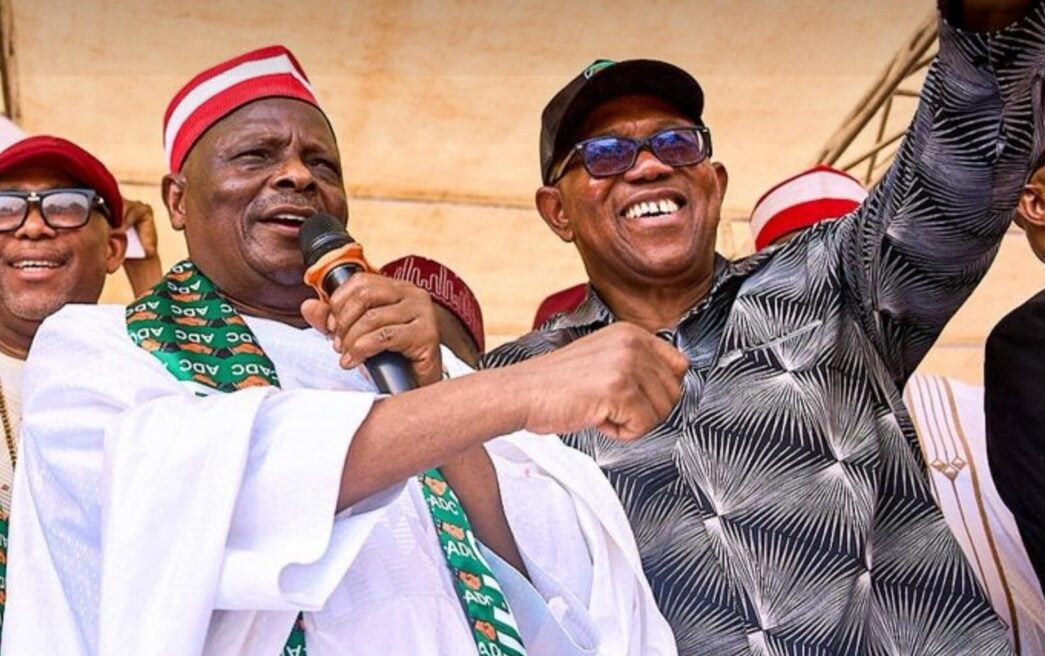
NDC Protests Police Cancellation of Obi-Kwankwaso March in Akwa Ibom
The Nigeria Democratic Congress (NDC) and the Obidient Movement in Akwa Ibom State have protested the cancellation of a planned two-million-man march for Peter Obi and Rabiu Kwankwaso in Uyo.
The march, organised in support of the NDC presidential candidate, Peter Obi, and his running mate, Rabiu Kwankwaso, was scheduled for Thursday, October 1, 2026, to coincide with Nigeria’s Independence Day celebration.
The Akwa Ibom State Police Command, however, directed all political parties, groups and associations to reschedule rallies, meetings, processions and other political activities earlier approved for the day.
In a statement signed by the state Police Public Relations Officer, DSP Timfon John, the command said the decision followed intelligence indicating that some individuals might exploit scheduled political activities to cause disturbances and threaten public peace.
The police said the directive was issued in the interest of public safety and security and applied across Akwa Ibom State.
Addressing journalists in Uyo, the state director of the Obidient Movement, Benjamin Smith, expressed anger over the cancellation, describing the decision as an afterthought.
Smith said the movement had previously engaged the police over the proposed march and claimed that the Commissioner of Police, CP Baba Azare, had initially approved the event.
READ ALSO:
- 2027 Hajj: Nigeria Secures 10,000 Extra Slots, Allocation Hits 60,000
- [UPDATED] Imo Highway Attack: 10 Rescued as Gunmen Abduct NYSC Prospective Members
- Workers to Begin Nationwide Warning Strike Over Petrol Price, Wage Award
According to him, representatives of the party and the organising committee met with the police on September 29. He said the police subsequently raised concerns about the availability of personnel to provide security for a gathering of the proposed size.
Smith said the police also cited the fact that the Peoples Democratic Party (PDP) had been scheduled to hold its own rally in the state from October 1 to 3, raising concerns about possible clashes between supporters of the different political groups.
The Obidient Movement director claimed that more than N20 million had already been spent on mobilisation across Akwa Ibom’s 31 local government areas before the police directive was issued.
He accused the police of violating the group’s rights to peaceful assembly and said the NDC and its supporters would oppose any future cancellation of the event.
Smith, however, urged supporters to remain law-abiding and said a new date for the march would be announced.
The cancellation was followed by the reported arrest of Elijah Noah, the Akwa Ibom coordinator of the Obi-Kwankwaso Movement, during efforts to stop supporters from proceeding with the march in Uyo. Premium Times reported that Noah was arrested after the police directive cancelling previously approved political processions for October 1. (premiumtimesng.com)
The development occurred amid heightened political mobilisation ahead of the 2027 general elections, with the Obi-Kwankwaso camp stepping up activities across the country.
The cancellation and subsequent confrontation have brought renewed attention to the balance between political gatherings, public safety and the right to peaceful assembly as parties and political movements intensify preparations for the 2027 elections.
NDC Protests Police Cancellation of Obi-Kwankwaso March in Akwa Ibom
Politics
Nigeria at 66: Peter Obi Laments Poverty, Insecurity, Says ‘Worst Place to Be Born’
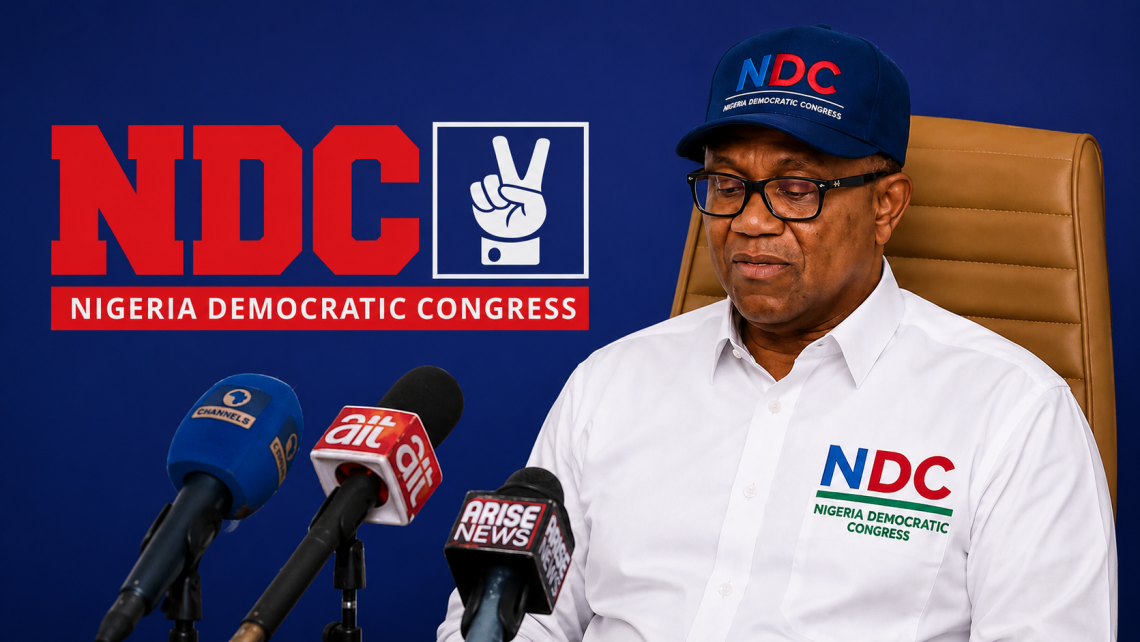
Nigeria at 66: Peter Obi Laments Poverty, Insecurity, Says ‘Worst Place to Be Born’
Presidential candidate of the Nigeria Democratic Congress (NDC), Peter Obi, has described Nigeria as the “worst place to be born”, citing poverty, insecurity, hunger, unemployment, poor healthcare and the high number of out-of-school children.
Obi made the statement in his Independence Day address on Thursday as Nigeria marked its 66th anniversary, using the occasion to call for an honest assessment of the country’s condition and outline his proposed approach to addressing its challenges.
According to Obi, more than 140 million Nigerians are living in poverty and severe hardship, while more than 18 million children are out of school.
He also raised concerns over insecurity, including terrorism, banditry and kidnapping, saying such threats continue to endanger lives and livelihoods across the country.
On food insecurity, Obi claimed that more than 40 million Nigerians could face extreme hunger by the end of 2026.
He also cited what he described as high levels of youth unemployment and underemployment, putting the affected population at more than 35 million.
READ ALSO:
- Workers to Begin Nationwide Warning Strike Over Petrol Price, Wage Award
- Nigeria at 66: MURIC Urges Unity, Peace, Justice Ahead of 2027 Elections
- Atiku Challenges Tinubu’s Prosperity Claim, Says Nigerians Can Barely Afford to Live
Obi further drew attention to Nigeria’s infant and maternal mortality, drug and substance abuse and life expectancy, arguing that the figures reflected serious challenges in the country’s human development.
“Today, Nigeria is the worst place to be born,” Obi said while highlighting the conditions confronting Nigerian children and young people.
The former Anambra State governor said Nigeria’s difficulties could not be attributed to a lack of resources, describing the country as richly endowed with human and natural resources.
He argued that the central challenge was the failure to convert those resources into human development, productivity, security and shared prosperity.
Obi said his assessment followed a two-day visit to Sokoto State, where he and his running mate, Senator Rabiu Kwankwaso, held consultations on insecurity, poverty, out-of-school children, youth unemployment and drug abuse.
The delegation also visited an Internally Displaced Persons (IDP) camp at Ramin Kura in Sokoto metropolis, where Obi said thousands of women and children were living after being displaced from their communities.
He said many of the displaced children lacked access to education, while mothers and children faced limited access to basic healthcare.
Obi argued that Nigerians displaced by insecurity should be able to return safely to their communities, resume farming and businesses, and send their children to school.
He said that, if elected president, his administration would make security, education, healthcare and productive enterprise major priorities.
Obi also promised to make governance more measurable and accountable, with the welfare and productivity of citizens at the centre of government policy.
He said his administration would seek to move Nigeria from a consumption-driven economy to a productive economy capable of creating jobs, expanding agriculture and manufacturing, investing in human capital and improving opportunities for young people.
The NDC candidate also pledged to spend his presidential holidays within Nigeria if elected, saying he would use the periods to visit different states, interact with citizens and gain a closer understanding of their challenges.
His address came on the same day President Bola Ahmed Tinubu said Nigeria had moved beyond the most difficult phase of his administration’s economic reforms and was entering what he described as an era of shared and widespread prosperity. Tinubu said the government’s focus was now on lowering the cost of living, expanding production, creating jobs and improving opportunities.
Obi’s Independence Day message presented a contrasting assessment of Nigeria’s current condition, with the opposition candidate focusing on poverty, insecurity and social indicators while proposing a shift towards greater productivity, accountability and human development.
He ended his address by urging Nigerians not to lose hope, saying a new Nigeria was possible through accountable leadership, responsible citizenship and a stronger focus on the welfare of citizens.
Nigeria at 66: Peter Obi Laments Poverty, Insecurity, Says ‘Worst Place to Be Born’
-
 Education3 days ago
FG Releases 2026–2028 Approved Textbooks, Introduces QR Codes for Tracking
-
 metro2 days ago
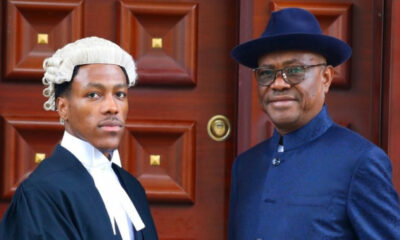
$2.1m Land Suit: Court Orders Wike’s Son to Produce American Passport
-
 News3 days ago
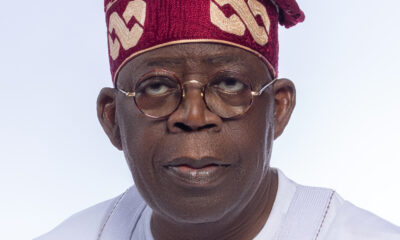
Breaking: Tinubu Ends Extended European Vacation, Departs Paris for Nigeria
-

 metro3 days ago
Hamzat Clarifies Lagos Traffic ‘Lifestyle’ Remark After Backlash
-
 metro3 days ago
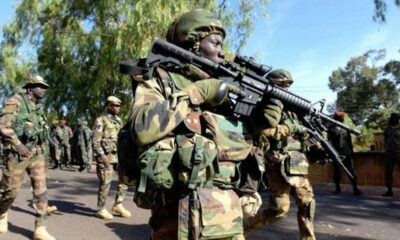
Troops Rescue 41 Travellers as Bandits Attack Senegal-to-Kano Vehicle in Zamfara
-
 metro2 days ago
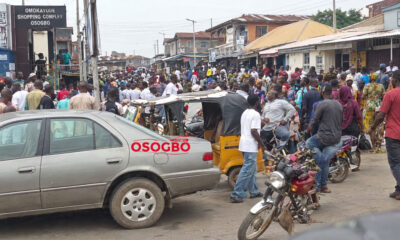
Osogbo Food Bonanza: Angry Customers Loot Warehouse After Operators Vanish
-

 Sports3 days ago
Nigeria XI vs Guinea-Bissau: Awoniyi, Lookman, Adams Lead Super Eagles Attack
-
 News2 days ago
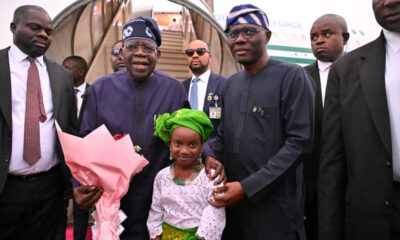
Tinubu Returns After 30 Days in Europe, Says ‘I’m Healthy and Ready to Work’