

News
Halt campaign against NNPC’s progress

Halt campaign against NNPC’s progress
Emmanuel Akanni
The Nigerian National Petroleum Company Limited (NNPC Ltd.) has again been the target of a deliberate misinformation campaign aimed at tarnishing its reputation and undermining the remarkable strides it has made recently.
After failing to discredit the accomplishments of the Mele Kyari-led management—most notably the revitalisation of the 60,000-barrel-per-day Port Harcourt Refinery, which had been non-operational for over 30 years, and the successful restreaming of the Warri Refining & Petrochemicals Company on December 30, 2024—critics have turned to spreading false claims about the quality of fuel supplied by NNPC Ltd.
In a recent viral video, a content creator claimed to have bought a litre of Dangote petrol from the MRS filling station in Lagos at N925 and another litre of PMS from an NNPC station at N945. The video showed two new generators running the fuel, and according to him, the generator running the NNPCL fuel stopped after 17 minutes, while the Dangote petrol lasted for 33 minutes.
Of course, the controversial video was sponsored to damage the reputation of NNPC Ltd, having recorded major milestones under Kyari. The video, which was done in bad faith, portrayed the NNPC Ltd. as a supplier of substandard fuel, an allegation too weighty to be overlooked.
Dismissing the claims, Olufemi Soneye, the Chief Corporate Communications Officer at the NNPC Ltd., said, “The Nigerian National Petroleum Company (NNPC) Ltd strongly refutes the false and misleading allegations made in a viral video circulating online, which claims that NNPC fuel does not last. This assertion is baseless and entirely unfounded, originating from unverified and amateur research that lacks credibility, accuracy, and professional oversight.”
READ ALSO:
- Just in: Microsoft targets one million Nigerians with $1m AI skill investment
- Nollywood actress Chika Ike says Senator Ned Nwoko not her unborn child’s father
- Stay away from Osun LG secretariats, APC tells council bosses
The NNPC Ltd reaffirmed that its fuel was carefully formulated with one of the best compositions, ensuring optimal efficiency, durability, and environmental sustainability for consumers.
“Furthermore, it is important to emphasize that a significant percentage of Premium Motor Spirit (PMS) sold at NNPC retail stations in Lagos—where this deceptive video was created—is sourced from the Dangote Refinery, a strategic partner in promoting local production and energy security. Dangote Refinery adheres to strict industry standards, guaranteeing the quality of petroleum products supplied to our consumers,” NNPC Ltd. added.
According to Soneye, the misleading video was another desperate attempt by economic saboteurs to misinform the public and tarnish NNPC Ltd’s reputation.
Vowing that the NNPC would no longer tolerate malicious and deliberate misinformation designed to undermine its operations and mislead Nigerians, the company warned of dire legal consequences for the merchants of misinformation and campaigners of calumny against it.
“Henceforth, NNPC Ltd will take firm legal action against individuals or groups who intentionally spread falsehoods about our brand and operations. Those engaged in such malicious activities will be held fully accountable under the law,” Soneye added.
The Petroleum Products Retail Outlets Owners Association of Nigeria (PETROAN), after thorough testing, condemned the amateurish video and submitted that the fuel supplied by NNPC Ltd. meets the highest industry standards.
“We urge content creators not to joke with sensitive matters that can collapse the economy,” said Billy Gillis-Harry, the PETROAN president.
The viral video lacks scientific proof, inappropriate, offensive and unethical. The content creator should have opted for laboratory analysis and not a social media stunt aimed at discrediting a particular brand against the other. It was a bad comparative and combative advertising dangerous to both brands.
The sustained campaign to demarket the NNPC Ltd started after the company, under Kyari’s sound leadership, reopened the Old Port Harcourt Refinery on Tuesday, November 26, 2024, apparently to the disappointment of forces against the revival of the country’s four refineries.
READ ALSO:
- Reps summon INEC chairman over delay in bye-elections
- BREAKING: Nigerian govt seeks court order for Binance to pay $81bn fine, tax
- Despite Lookman’s goal, Club Brugge edge out Atalanta of Champions League
Attempts by sceptics to rubbish the achievement recorded with the Port Harcourt refinery were roundly repudiated by the NNPCL, workers at the refinery, experts, and delegates from the Presidency, Nigeria Labour Congress, Trade Union Congress, Petroleum and Natural Gas Senior Staff Association of Nigeria, and Nigeria Union of Petroleum and Natural Gas Workers. However, traducers will stop at nothing to carry out their nefarious agenda.
Let it be known that those fabricating lies to destroy NNPC’s reputation are fighting a lost war. Nobody can demarket a company that is doing well and consistently breaking new ground. From what was believed to be a cesspool of corruption to an organisation guided by sound management, transparency and corporate governance, Kyari and his team are doing a good job. The NNPC Ltd remains steadfast in its mission to ensure fuel availability, affordability, and quality for all Nigerians while maintaining global industry standards.
Of course, the coming of the $23 billion Dangote Refinery has changed the Nigerian downstream landscape igniting competition and a recent price war; such development is welcome and the expectation is that demand and supply forces would continue to drive the market. It is, however, important to keep the competition healthy and virile. No need to demarket one another. The downstream market should be a level playing field for all.
Recall that Kyari played a pivotal role in supporting the Dangote Refinery by securing a $1 billion loan backed by NNPC’s crude reserves. The strategic move not only addressed liquidity challenges but also ensured the successful completion of Dangote Refinery.
This, according to NNPC Ltd., underscores Kyari’s commitment to fostering public-private partnerships that deliver long-term value to the nation.
READ ALSO:
- Four states get FG N400bn funding for light rail projects
- UPDATED: Lagos Speaker Meranda denies resignation rumour
- Just in: Microsoft targets one million Nigerians with $1m AI skill investment
The NNPCL boss was said to have considered the investment in the Dangote Refinery as a strategic move aimed at strengthening domestic fuel supply.
“A strategic decision to secure a $1 billion loan backed by NNPC’s crude was instrumental in supporting the 650,000-barrel-per-day Dangote Refinery during liquidity challenges, paving the way for the establishment of Nigeria’s first private refinery. This initiative underscores NNPC’s dedication to fostering public-private partnerships that drive national development,” Soneye, the NNPC spokesman, had said at a recent Energy Relations Stakeholder Engagement in Abuja.
The Kyari-must-go campaigners have also joined the smear campaign against NNPC Ltd., sponsoring opinion pieces and media publications in an attempt to undermine the company’s progress. However, no amount of negative rhetoric can diminish the achievements NNPC Ltd. has made under Kyari’s leadership.
Apart from the refineries, NNPC Ltd. under Kyari declared N3.297 trillion profit for the 2023 financial year, the highest in its 46-year history and an increase of over N700 billion (28%) when compared to the 2022 profit of N2.548 trillion. This, of course, has been credited to the stringent financial management strategies deployed by Kyari and his team.
In 2021, NNPC declared profit in its operations for the first time. From a loss position of N803 billion in 2018, it reduced the loss further down to N1.7 billion in 2019.
However, in 2020, it posted its ‘first-ever’ profit of N287 billion, then in 2021, it recorded an N674.1 billion profit and in 2022, the profit grew to N2.548, an unprecedented achievement in its financial performance. In a company where profitability was like an anathema, Kyari has bucked the trend and changed the narrative by posting profit year-on-year.
Efforts to discredit NNPC Ltd. are futile in the face of the company’s impressive performance. While constructive criticism is welcomed, malicious campaigns to harm the company’s reputation are unacceptable. NNPC Ltd. should continue to fight against such attacks and stand firm in its commitment to serving the nation.
Emmanuel Akanni, an energy analyst, writes from Lagos.
Halt campaign against NNPC’s progress







Education
Niger State Urges Local Communities to Protect Newly Completed Public Schools
Niger State Urges Local Communities to Protect Newly Completed Public Schools
Basic education officials deliver modern classrooms to help children learn safely, kicking off an ambitious statewide renovation drive.
State education leaders in Niger State are calling on neighborhood residents and parent groups to take good care of newly renovated primary schools.
On Wednesday, the head of the Niger State Universal Basic Education Board, Dr. Ibrahim A. Liman, reminded communities that public classrooms belong to everyone, warning that state funding can only make a lasting difference when local people watch over these shared spaces.
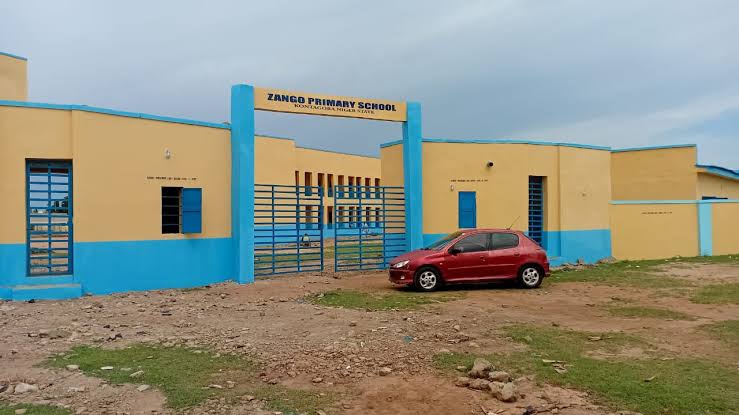
To prepare for handing over the keys, board officials visited Zango Primary School in Kontagora and Richard Lander Primary School in New Bussa. These two locations are the first to finish out of seven model schools currently under construction.
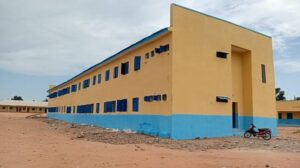
During their visits, team members inspected classrooms to make sure builders followed high safety standards, while encouraging neighbors to keep the grounds secure, tidy, and ready for pupils.
Furthermore, state officials explained that these building projects are part of a larger plan to improve early education across every community. Alongside these new classrooms, the board is starting repair work on about 400 primary schools throughout the state.
In addition to fixing desks and roofs, authorities are upgrading classroom teaching tools and supporting teachers. As a result, children across all backgrounds will have safe, welcoming spaces to learn and grow together.
Niger State Urges Local Communities to Protect Newly Completed Public Schools
Health
Adamawa Health Officials Report 20 Deaths from Suspected Diphtheria Cases
Adamawa Health Officials Report 20 Deaths from Suspected Diphtheria Cases
Parents and caregivers are advised to seek early medical help and update childhood vaccinations as response teams expand outreach.
Health authorities in Adamawa State are responding to a diphtheria outbreak that has caused 20 deaths across 13 local government areas. Speaking on Wednesday, State Epidemiologist Jones Steven Kadabiyu confirmed that health workers have recorded 126 suspected cases throughout the state, with six patients currently receiving medical care in local hospitals.
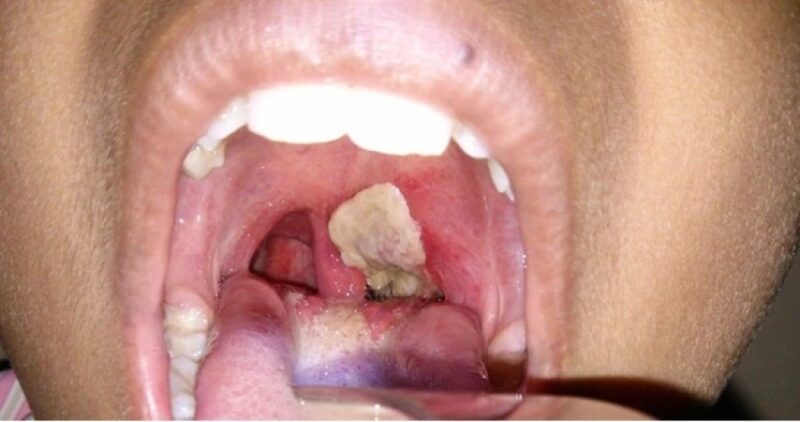
Diphtheria is a serious bacterial illness that spreads through airborne droplets from coughing or close personal contact. It mainly affects the throat and airway, causing sore throats, mild fevers, swollen neck glands, and difficulty swallowing or breathing.
READ ALSO:
- Kara Bridge Repairs, Multiple Crashes Trigger 14-Hour Gridlock on Lagos-Ibadan Expressway
- 2027: Court Gives Atiku Seven Days to Serve Tinubu Through APC in Eligibility Suit
- 2027: Northern Students Back Tinubu, Pledge Campus-to-Campus Mobilisation
Health officials emphasized that the biggest risk to patients has been waiting too long to visit a health center, as some families try informal remedies at home first before seeking professional medical attention.
The state government is working alongside health partners to track new cases, provide specialized antibiotics and treatments, and protect medical workers and family members.
Officials stressed that while diphtheria can affect people of any age, young children are the most vulnerable to serious complications. Parents and guardians are strongly encouraged to ensure their children are up to date on their routine vaccines and to visit the nearest clinic immediately if anyone develops throat swelling or breathing issues.
Adamawa Health Officials Report 20 Deaths from Suspected Diphtheria Cases
News
Blue Line Rail, Hospitals Get Boost as Lagos Approves ₦200bn Bond and Budget Reordering
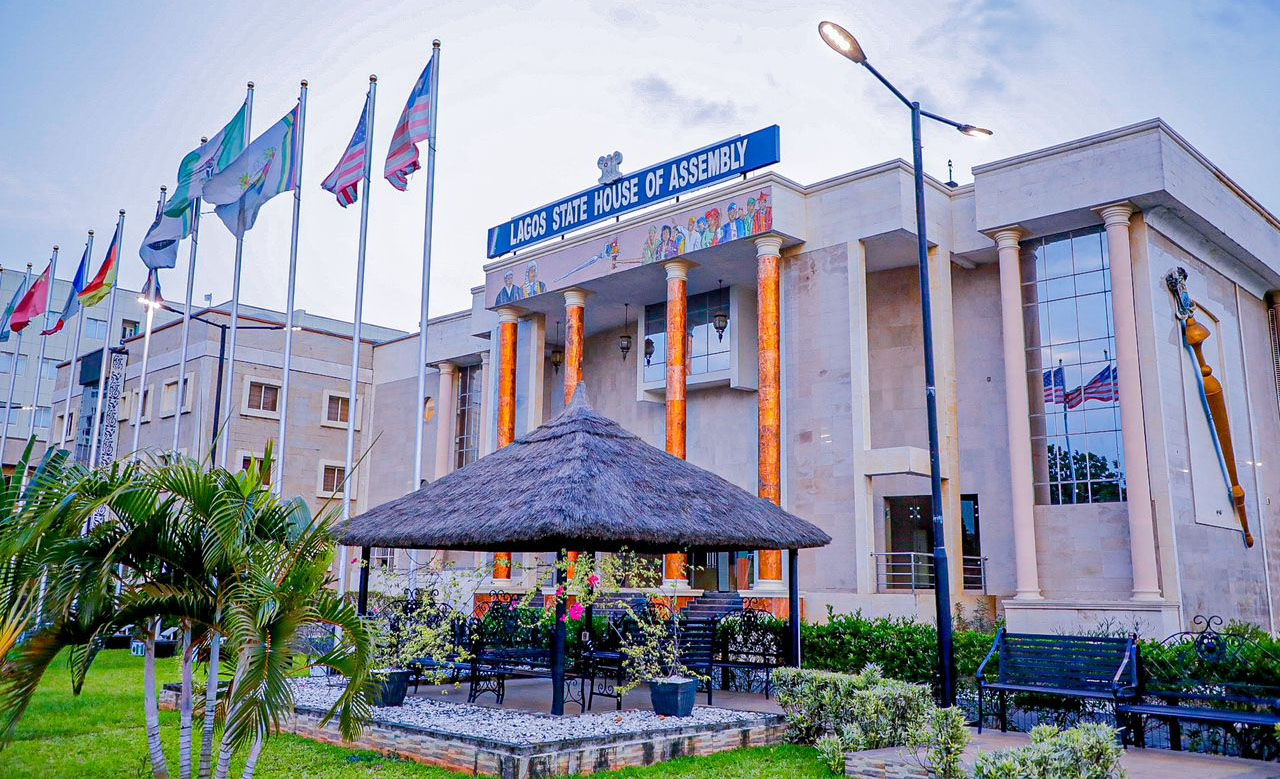
Blue Line Rail, Hospitals Get Boost as Lagos Approves ₦200bn Bond and Budget Reordering
Following Governor Sanwo-Olu’s request, the state legislature approves expanded capital financing for the final months of the fiscal year.
The Lagos State House of Assembly has approved changes to the state’s 2026 spending plan to speed up work on key community infrastructure, including public transit lines, general hospitals, and flood prevention systems.
The decision came after Governor Babajide Sanwo-Olu requested a review of the budget to make sure government funds are directed where they are needed most during the rest of the year.
To support these priority projects, lawmakers agreed to raise the state’s infrastructure bond from ₦150 billion to ₦200 billion. Budget committee chairman Lukmon Olumoh explained that this financial adjustment will help contractors finish essential public facilities faster.
The revised funds will help extend the Blue Line train service between Mile 2 and Trade Fair Station, complete the new Massey Street Children’s Hospital, and finish the 280-bed General Hospital in Ojo.
The amended plan also sets aside funds for fixing potholes on neighborhood roads, clearing drainage channels to prevent flooding, and buying new service vehicles for sanitation and traffic teams.
Lawmakers emphasized that legislative committees will closely monitor how these funds are spent to ensure projects are delivered on schedule and within clear standards. Speaker Mudashiru Obasa confirmed that the approved bill has been sent to the governor to be officially signed into law.
Blue Line Rail, Hospitals Get Boost as Lagos Approves ₦200bn Bond and Budget Reordering
-
 Politics2 days ago
2027: Northern Lecturers Back Tinubu, ASUU Disowns Endorsement
-

 metro2 days ago
Police Arrest Mother Over Alleged Brutal Abuse of 7-Year-Old Girl in Anambra
-

 Sports2 days ago
‘I Was Never the Chosen One’ — Dembele Responds to Mbappe
-
 News3 days ago
Nwifuru Dismisses Cubana Chief Priest as ‘Attention-Seeker’
-
 Politics3 days ago
2027: Sowore Promises ₦500,000 Minimum Wage, Free Education, 24-Hour Electricity
-

 Education2 days ago
JAMB Moves 2027 UTME Time — Here’s What Candidates Need To Know
-
 metro3 days ago
Grand Chief Imam calls for professional communication structure for Rabitoh 1964
-
 Politics2 days ago
2027: APC Governors Reject Wike’s Rainbow Coalition, Insist on Party Loyalty