
International
Hamas to give Israel another hostage body, vows to return rest
Hamas to give Israel another hostage body, vows to return rest
JERUSALEM: Hamas promised to hand over to Israel the remains of one more hostage on Friday night, after insisting it was committed to returning all the dead captives still unaccounted for under Gaza’s ruins.
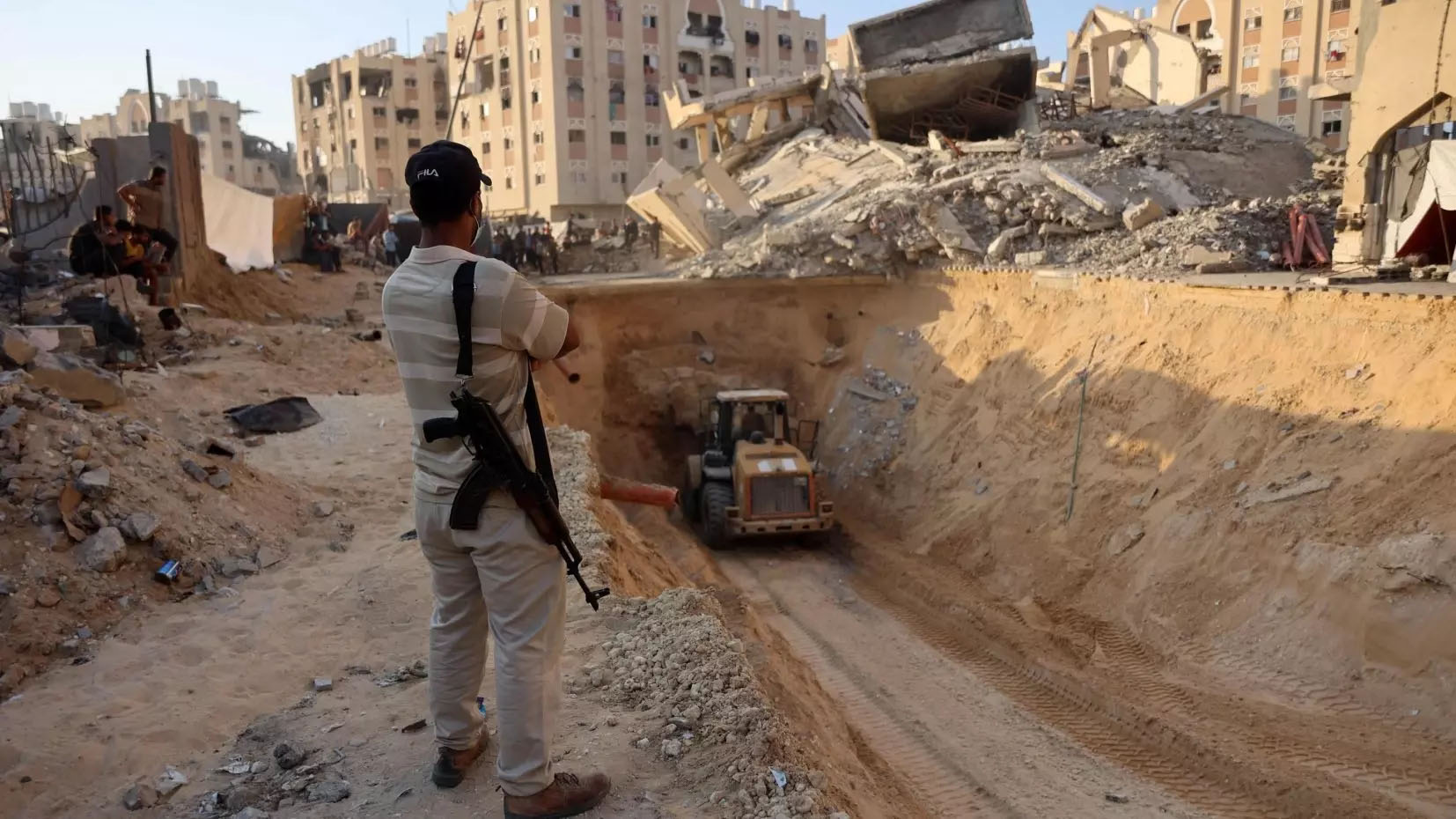
Turkiye, responding to a Hamas call for help in finding the remaining hostage bodies, has dispatched a team of specialists to help retrieve remains buried under the rubble, but the group was still waiting Friday for Israeli permission to enter the territory.
The 81-member team from Turkiye’s Disaster and Emergency Management Authority (AFAD) is equipped with specialized search-and-rescue tools, including life-detection devices and trained search dogs.
“It remains unclear when Israel will allow the Turkish team to enter Gaza,” a Turkish official told AFP, noting the team’s mission included locating both Palestinian and hostage remains
A Hamas source told AFP the Turkish delegation was expected to enter by Sunday.
Under a ceasefire agreement between Israel and Hamas spearheaded by US President Donald Trump, Hamas returned 20 surviving hostages and the remains of nine of 28 known deceased ones — along with another body which Israel has said was not that of a former hostage.
In exchange, Israel freed nearly 2,000 Palestinian prisoners from its jails and halted the military campaign it launched in Gaza after Hamas’s October 7, 2023 attack.
Hamas said Friday that as part of the deal, its armed wing “will hand over the body of one of the Israeli captives, which was recovered today in the Gaza Strip, at 11:00 p.m. Gaza time (2000 GMT).”
READ ALSO:
- Maryam Sanda and Tinubu’s crisis of clemency, By Farooq Kperogi
- Boko Haram killing more Muslims than Christians – US envoy
- FG drags senator to court over alleged defamatory comments against Natasha
– ‘May require some time’ –
Israel’s Prime Minister Benjamin Netanyahu reaffirmed on Thursday his determination to “secure the return of all hostages,” and his defense minister has warned that the military will restart the war if Hamas fails to do so.
Senior Hamas official Ghazi Hamad on Friday called those threats “unacceptable pressure tactics.”
“The issue of the bodies is complex and requires time, especially after the occupation changed the landscape of Gaza,” Hamad said in a statement.
“We will return the bodies and adhere to the agreement as we promised.”
The ceasefire deal has so far seen the war grind to a halt after two years of agony for the hostages’ families, and constant bombardment and hunger for Gazans.
The UN’s World Food Programme said on Friday it had been able to move close to 3,000 tons of food supplies into Gaza since the ceasefire took hold.
But it cautioned it would take time to reverse the famine in the Strip, saying all crossings needed to be opened to “flood Gaza with food.”
Trump’s 20-point plan for Gaza calls for renewed aid provision, with international organizations eagerly awaiting the reopening of southern Gaza’s strategic Rafah crossing.
UN humanitarian chief Tom Fletcher entered Gaza on Friday, where he watched a convoy of aid head to Rafah from Israel’s Kerem Shalom crossing and later visited a bakery making pita bread.
“We’ve begged for this access for months and finally we’re seeing goods moving at scale: food, medicine, tents, fuel, a lot of fuel got in today,” he said, in a video message posted to social media.
READ ALSO:
- Super Eagles climb to 41st in new FIFA ranking
- Osun Govt ‘withdraws’ suit over withheld LG funds
- Labour Party collapses in Enugu East as chairman, ward executives defect to APC
The next phases of the truce should also include the disarmament of Hamas, the offer of amnesty to Hamas leaders who decommission their weapons and establishing the governance of post-war Gaza.
– ‘Better than living on street’ –
The families of the surviving hostages have been able to rejoice in their return after two long years. Others have had to endure the agony of burying the returned remains of their loved ones.
“We’ve been waiting for this for so long, two years that we’ve been fighting for him every single day,” said 30-year-old Gal Gilboa Dalal, the older brother of Guy Gilboa Dalal, who was released after two years in Hamas captivity.
Gal told AFP that Hamas had intentionally starved his brother and another prisoner for three-and-a-half months to use him as a prop in a propaganda video about hunger.
“Their bones hurt, their muscles hurt. Their recovery will be very long.”
At the Nasser Hospital in Gaza, meanwhile, families gathered in front of a screen, hoping to find their loved ones among the bodies of Palestinians returned by Israel.
One, Akram Khalid Al-Manasra, told AFP he identified his son “thanks to the birthmark on his nose and his teeth.”
Others were clearing the rubble from their destroyed homes, undercutting their relief that the bombing had stopped.
“I’m right under the threat of death. It could collapse at any moment,” said Ahmad Saleh Sbeih, a Gaza City resident. “But there is no choice.”
The war has killed at least 67,967 people in Gaza, according to the health ministry in the Hamas-run territory — figures the United Nations considers credible.
The data does not distinguish between civilians and combatants but indicates that more than half of the dead are women and children.
Hamas’s October 7 attack on Israel resulted in the deaths of 1,221 people, mostly civilians, according to an AFP tally based on official Israeli figures.
Hamas to give Israel another hostage body, vows to return rest
ARAB NEWS









International
Iran Denies Refusing Peace Talks in Pakistan, Faults Western Media Reports
Iran Denies Refusing Peace Talks in Pakistan, Faults Western Media Reports
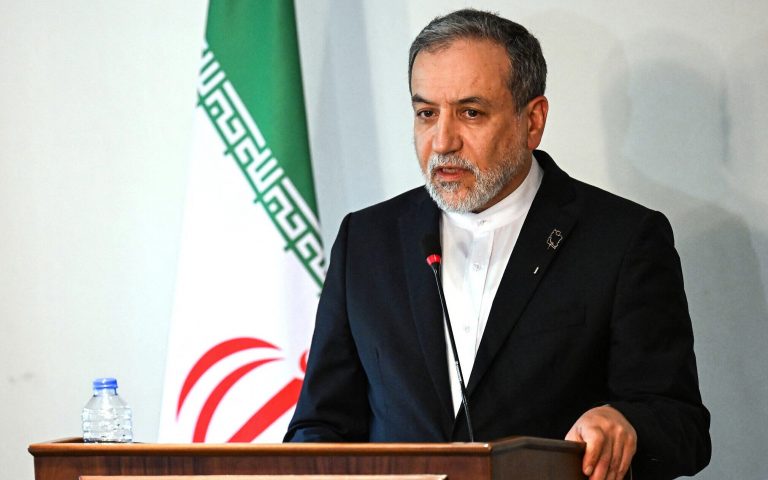
Iran’s Foreign Minister, Abbas Araghchi
Iran’s Foreign Minister, Abbas Araghchi, has dismissed claims circulating in Indian and Western media that Tehran declined mediation talks in Pakistan, describing such reports as false and misleading.
In a fresh clarification, Araghchi stated that Iran has “never refused to go to Islamabad” for negotiations, reaffirming the country’s openness to diplomatic engagement aimed at ending the ongoing conflict.
He expressed gratitude to Pakistan for its efforts to mediate between Iran and the United States, noting that Islamabad’s role remains appreciated despite conflicting media narratives.
The Iranian minister accused sections of the Western media of misrepresenting Tehran’s position, insisting that the issue is not about rejecting talks, but about ensuring that any negotiations lead to a “conclusive and lasting end” to the war.
His comments come amid widespread reports suggesting that Iran had refused to participate in proposed mediation talks in Pakistan, fueling speculation that diplomatic efforts had collapsed. However, both Iranian and Pakistani officials have pushed back against such claims, maintaining that dialogue channels remain open.
The clarification also highlights the complex and evolving nature of backchannel diplomacy in the ongoing conflict, where disagreements over terms—not venue—appear to be the major stumbling block to formal negotiations.
As tensions continue to rise in the region, Pakistan’s mediation initiative is still seen as a potential pathway to de-escalation, even as both sides remain far apart on key conditions for peace.
Iran Denies Refusing Peace Talks in Pakistan, Faults Western Media Reports
International
Earthquake in Afghanistan Kills 8 Members of Same Family
Earthquake in Afghanistan Kills 8 Members of Same Family
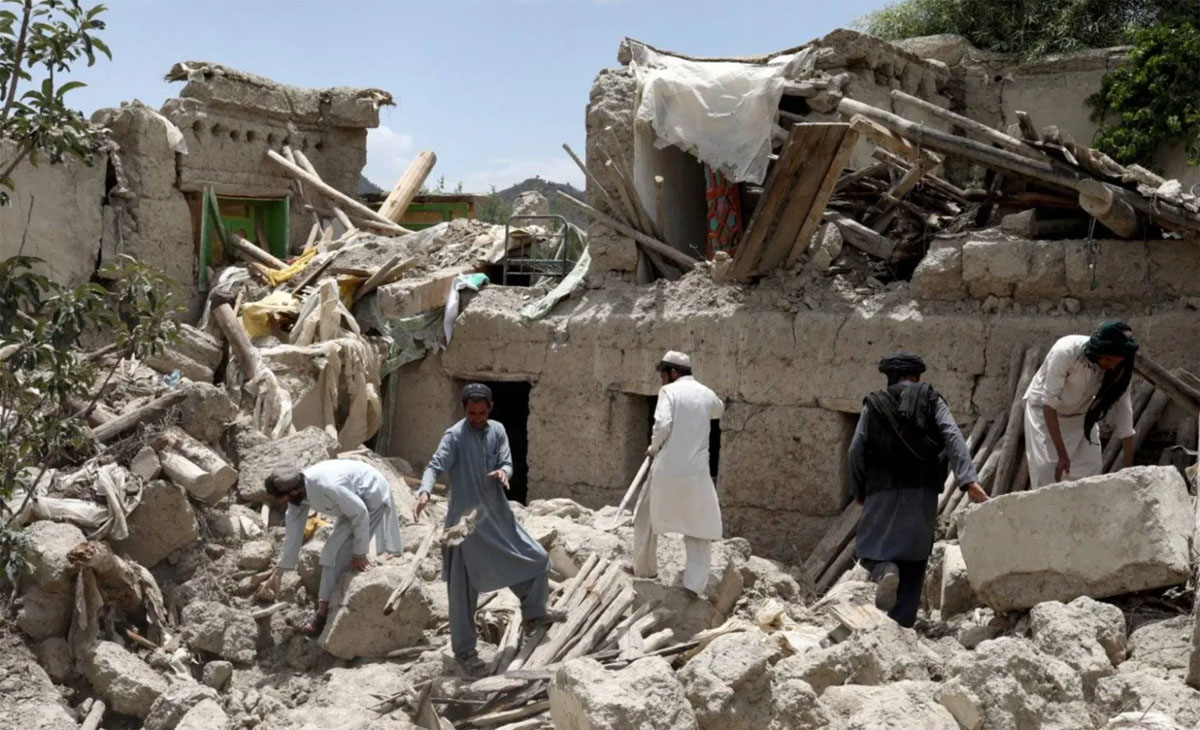
An earthquake in Afghanistan has killed at least eight members of the same family and injured others after striking late on Friday, officials said, deepening the humanitarian toll in a region prone to powerful temblors.
The 5.8‑magnitude earthquake struck at 8:42 p.m. local time (1612 GMT) on Friday, with its epicentre located in Badakhshan Province, according to the U.S. Geological Survey (USGS). The quake occurred at a depth of 186 kilometres (115 miles) beneath the surface, a depth that allowed the shaking to be felt over a wide area, including in the capital Kabul and other surrounding provinces.
Shaking was reported across multiple regions of Afghanistan, with residents describing rooms swaying and items falling from shelves, according to international news agency reports.
In Kabul Province, the Gosfand Dara area was among the most severely affected. Health Ministry spokesman Sharafat Zaman confirmed to AFP that eight members of a single household lost their lives when their home collapsed during the quake. A two‑year‑old child was the lone survivor from the family; the country’s disaster management agency said the boy sustained injuries and was receiving medical care.
READ ALSO:
- How opposition Tinubu would treat President Tinubu, By Farooq Kperogi
- 14-Year-Old British-Nigerian Boy, Fatally Shot in London
- Iran Crisis Escalates as Second US Warplane Crashes in Persian Gulf
Afghan authorities have not yet detailed whether other deaths or injuries occurred beyond this household in Kabul Province, but tremors were widely felt from the northeast to the national capital and beyond.
Afghanistan sits in a seismically active zone along the Hindu Kush mountain range, where the Eurasian and Indian tectonic plates interact. This makes the region particularly susceptible to strong earthquakes that can cause widespread damage, especially in areas with fragile infrastructure.
In August, a much stronger magnitude‑6.1 earthquake struck eastern Afghanistan, flattening mountainside villages and killing more than 2,200 people, making it one of the country’s deadliest in recent memory. That disaster displaced tens of thousands, destroyed homes, schools and roads, and underscored Afghanistan’s vulnerability to seismic calamities.
The latest tremor serves as a stark reminder of that risk, particularly as communities still recover from past earthquakes amid ongoing economic hardship and limited emergency response capacity.
Humanitarian agencies and local officials are assessing the broader impact of Friday’s quake, and calls are mounting for more resources to support affected families, improve response capabilities, and enhance early warning systems.
Earthquake in Afghanistan Kills 8 Members of Same Family
International
Iran Crisis Escalates as Second US Warplane Crashes in Persian Gulf
Iran Crisis Escalates as Second US Warplane Crashes in Persian Gulf
The already fragile security situation in the Middle East has taken a dramatic turn following reports that a second U.S. military aircraft has crashed in the Persian Gulf, intensifying tensions between the United States and Iran.
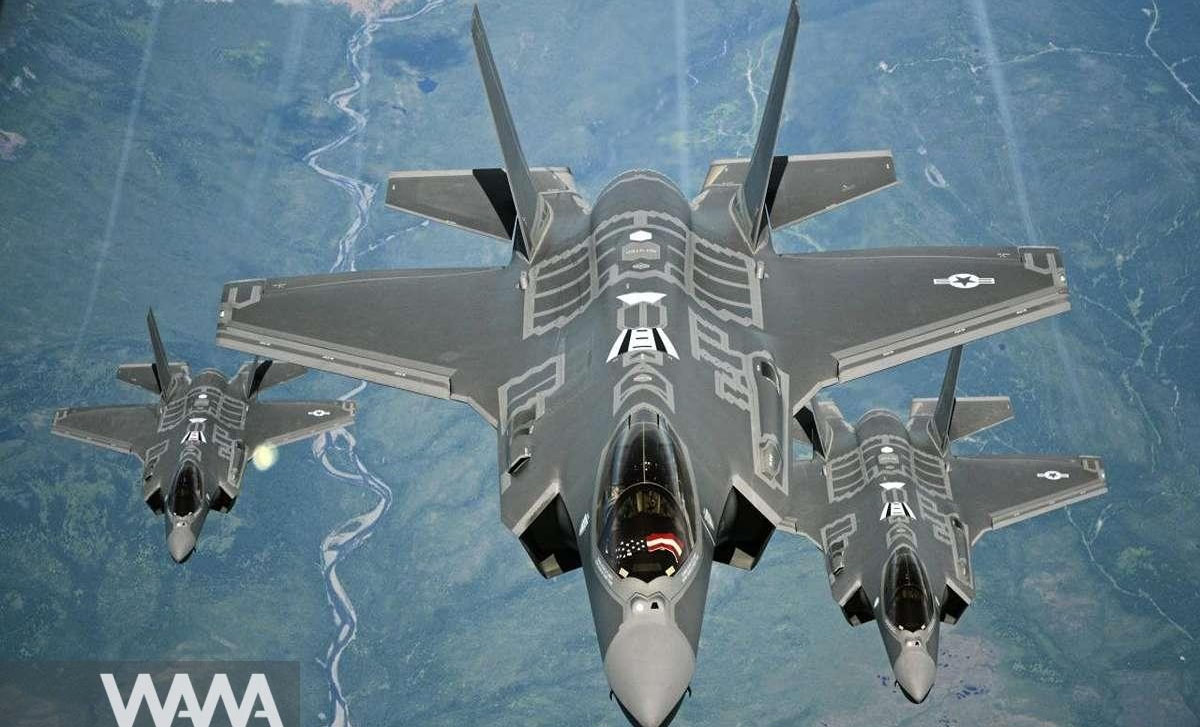
According to U.S. officials cited by The New York Times, a U.S. Air Force A-10 Thunderbolt II, widely known as the Warthog, went down near the Strait of Hormuz. The pilot was successfully rescued, but the exact cause of the crash remains unclear, with early indications suggesting a combination of operational risk and possible hostile engagement.
The incident occurred almost simultaneously with reports that an F-15E Strike Eagle fighter jet was shot down over Iranian territory. Iranian state media claimed responsibility, stating that its air defence systems intercepted the aircraft. U.S. officials have confirmed the loss of the jet, though investigations into the precise circumstances are ongoing.
Rescue operations for the downed F-15E crew are still underway. One crew member has been recovered alive and is receiving medical care, while search efforts continue for the second. The operation has drawn significant military resources, including air and naval support, amid concerns over the safety of personnel operating in hostile territory.
READ ALSO:
- NAF Airstrike Destroys Terrorist Enclave, Kills Scores of ISWAP Fighters in Borno
- Gunmen Attack Zamfara Governor’s Aide Convoy, Escape Unhurt
- Plateau Security: Troops Kill 3 Terrorists, Arrest Fake Soldiers in Jos
Iranian state television further escalated tensions by urging civilians to report the whereabouts of the missing U.S. crew member or members, offering a reward for information. Analysts warn that such actions could complicate rescue missions and heighten the risk of further confrontation.
The A-10 aircraft is believed to have been operating in support of these rescue efforts when it crashed, underscoring the опасность of ongoing operations in the region. Reports indicate that U.S. rescue teams have encountered hostile conditions, including potential ground fire, making recovery efforts increasingly challenging.
U.S. President Donald Trump has intensified rhetoric amid the crisis, confirming earlier strikes on Iranian infrastructure, including a highway bridge near Tehran. He warned that Washington is prepared to escalate military action if necessary, while claiming that U.S. operations have significantly weakened Iran’s military capabilities.
The developments have placed renewed focus on the strategic importance of the Strait of Hormuz, a vital global oil transit route through which a significant portion of the world’s energy supply passes. Any disruption to this corridor could trigger major economic последствия, including spikes in global oil prices.
At the same time, the crisis unfolds against the backdrop of a proposed $1.5 trillion U.S. defence budget for fiscal year 2027, fueling debate over increased military spending and its implications for domestic priorities.
Diplomatic efforts to de-escalate tensions appear to have stalled. Iranian officials have dismissed the possibility of negotiations under current conditions, denying reports that Tehran is seeking a ceasefire and maintaining a hardline stance against Washington.
The near-simultaneous loss of two U.S. military aircraft marks a significant escalation in the conflict, raising concerns about a potential broader regional confrontation if tensions continue to rise.
Iran Crisis Escalates as Second US Warplane Crashes in Persian Gulf

-

 metro2 days ago
VeryDarkMan Dares Sowore Over Blord’s Kuje Prison Remand
-

 metro3 days ago
Nigerians to Enjoy Four-Day Break as FG Declares Easter Holidays
-

 metro2 days ago
Tinubu Approves 1,000 Forest Guards, Orders 5,000 CCTV Cameras to Boost Security in Plateau
-

 metro18 hours ago
Pastor Found Dead in Guest House After Night Out With Married Female Church Member
-
 Business3 days ago
NNPC Boosts Crude Supply to Dangote Refinery to Address Rising Fuel Prices
-
 International2 days ago
Iran Announces ‘Bounty’ on US Pilots After Claiming Downing of Fighter Jet
-
 International3 days ago
Iran Fires Missiles at Israel After Trump Threatens Weeks of ‘Extremely Hard’ Strikes
-

 Politics18 hours ago
Wike: PDP Not Financially Ready for 2027 Presidential Election