
News
Insecurity: Senate okays ranching, demands review of security arrangement
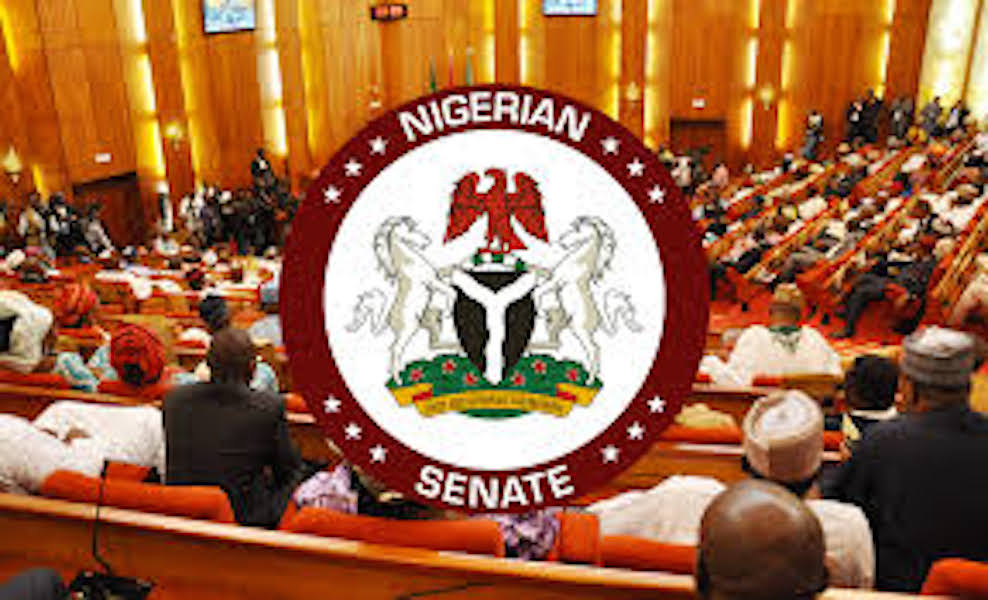
The Senate has called for an end to open grazing of cows, which has repeatedly led to conflicts between farmers and herders.
They have therefore asked all the state governors to implement the 2018 Federal Government’s National Livestock Transformation Plan (NLTP) to curb the conflicts across the country.
The senators who spoke Wednesday on the security issue through a motion sponsored by Ajayi Boroffice and co-sponsored by 105 others, said leaders could no longer continue to pretend as if all was well.
They urged President Muhammadu Buhari to direct the National Security Adviser (NSA) and the nominated service chiefs to overhaul the country’s security architecture.
The Senate had scheduled the bill for debate on Tuesday, but stepped it down, following the death of a member of the House of Representatives, Ossy Prestige.
A former governor of Nasarawa State, Abdullahi Adamu, accused Ondo State Government of ordering Nigerians from other parts of the country to vacate the state
“We’re mixing up issues. I find it hard to believe that in the 21st century, a governor will ask people who are not from the state to leave. We need to find out these allegations of killings or otherwise,” he claimed.
His claims were rebuffed by the Minority Leader of the Senate, Enyinnaya Abaribe.
He said those who were ordered to leave Ondo State were criminals and not citizens doing legitimate business.
Abaribe, who warned against misleading information, said practical solutions must be worked out and the criminals flushed out wherever they were hiding in any part of the country.
Abaribe said, “But we need to clear certain things. I want to address the issue of whether people were sent away. Nigerians were not sent away. Criminals were sent away. We shouldn’t send out the wrong message. The IGP has said that these criminals aren’t from Nigeria. If we want to find solutions, let’s do that. Those criminal elements from anywhere they’re coming from must be flushed out.”
Senate Committee Chairman on Army, Ali Ndume, urged the Senate to set up an ad hoc committee and involve experts during the public hearing to bring a lasting solution.
He said, “We should take responsibility as leaders. We are in government. We are part of the government. These people are criminals. They don’t settle in one place. We can set up an ad-hoc committee to look at all the issues raised.”
Former minority leader, Biodun Olujimi, wondered why a national emergency was declared at the peak of COVID-19 but the government had not deemed it fit to declare a national security emergency.
He said, “We are all in denial. Otherwise, we would have declared it a national emergency. Right now, Nigerians are endangered species. We have spoken and nothing is being done. We must do something. Posterity will not forgive us if we do nothing.”
A lawmaker from Adamawa State, Binos Yero, said Nigerians of Fulani extraction were being encouraged to roam the country freely unchallenged.
“This must stop,” he said.
Tolu Odebiyi from Ogun State said Nigeria was at the precipice of a civil war.
He said President Muhammadu Buhari could sign an executive order and ban open grazing in the country.
He said, “I visited a border community in my place and herdsmen had destroyed their sources of livelihood. They burnt their houses and we are talking about confirming former service chiefs who couldn’t fix our security challenges. What are we doing?”
Smart Adeyemi from Kogi State said, “Whenever we talk about insecurity, there’s an international conspiracy. If things are getting out of hand, there’s nothing wrong if the president asks for foreign support. There’s need for an international support. We don’t need N500 billion on purchase of drugs for COVID-19. We should spend that on insecurity.”
Suleiman Kyari from Kaduna State said: “This country has sunk to a level where it it seen as a failed country. Service Chiefs must address the morale of their troops. We should coordinate security intelligence. That has been failing.”
Deputy Senate Whip, Abdullahi Sabi said: “Niger State has joined the league of states that are daily attacked by bandits. Two local government councils stand out. There were several attacks and people were killed. We are definitely facing the heat.”
Michael Opeyemi Bamidele from Ekiti State, said: “Section 43 of our Constitution grants every Nigerian the right to live in any part of the country. This is different from land ownership. Even if I have the right to live in any part of Nigeria, I don’t have the right to trespass on the property of others. Governors must be able to take charge of their domains. Criminals must be arrested. Let no one be afraid of being called a tribalist.”








News
Saudi Supreme Court Calls on Muslims to Sight Ramadan Crescent Moon on Tuesday Evening

Saudi Supreme Court Calls on Muslims to Sight Ramadan Crescent Moon on Tuesday Evening
The Supreme Court of Saudi Arabia has urged Muslims across the Kingdom to look for the Ramadan crescent moon on the evening of Tuesday, February 17, 2026, to determine the official start of Ramadan 1447 AH. The court emphasized that community participation in moon sighting is vital for confirming the beginning of the holy month.
In an official statement relayed by the Saudi Press Agency, the Supreme Court instructed anyone who spots the new moon crescent — either with the naked eye or using binoculars — to report their observation to the nearest court and ensure their testimony is recorded. Local centres have also been set up to assist observers in reaching judicial offices.
The Kingdom has established moon sighting committees across regions to coordinate observations and support public involvement. Authorities encouraged citizens to actively participate, noting that their contributions are essential to help Muslims across Saudi Arabia begin Ramadan in unity.
READ ALSO:
- Nigeria Tax Act 2025: FG Clarifies No New Construction or Bank Taxes
- Israeli Airstrikes Kill 12 in Gaza as Violence Persists Despite Ceasefire
- FBI Probe Continues as Ex‑Church Minister Who Confessed to Child Abuse Remains Free
Tuesday corresponds to 29 Sha’ban 1447 AH in the Islamic lunar calendar. If the crescent moon is sighted, Ramadan 1447 AH will commence on Wednesday, February 18, 2026. If the moon is not visible, Sha’ban will be completed as 30 days, and Ramadan will begin on Thursday, February 19, 2026. This aligns with centuries-old Islamic tradition of lunar observation.
Muslims worldwide, including in the Gulf Cooperation Council (GCC) countries, are preparing for Ramadan, a sacred month of fasting, prayer, reflection, and charity. Astronomical forecasts suggest visibility may vary across regions, making local observations and testimonies crucial. Similar calls for crescent moon sightings have also been issued by authorities in countries such as Qatar and the United Arab Emirates.
The Supreme Court’s announcement underscores the importance of lunar observation in Islamic practice and encourages public engagement to ensure a synchronized start of Ramadan across the Kingdom.
Saudi Supreme Court Calls on Muslims to Sight Ramadan Crescent Moon on Tuesday Evening
News
Presidency Dismisses El-Rufai’s Thallium Claim as Diversion From N432bn Probe
Presidency Dismisses El-Rufai’s Thallium Claim as Diversion From N432bn Probe
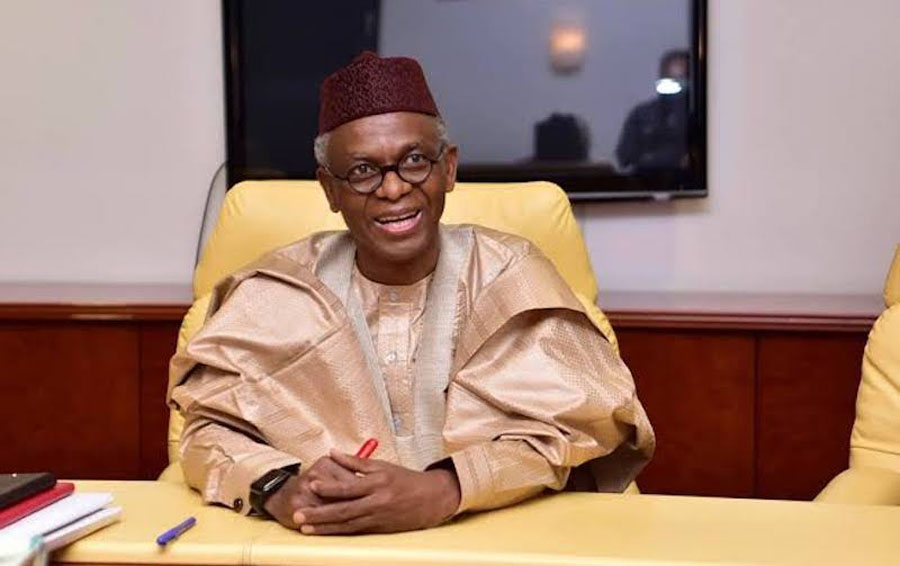
The Presidency has dismissed former Kaduna State Governor Nasir El-Rufai’s recent claim that the Office of the National Security Adviser (ONSA) procured thallium sulphate, describing it as a politically motivated attempt to stir tension and divert attention from corruption allegations linked to his tenure in Kaduna State.
Officials said the allegation comes shortly after the Kaduna State House of Assembly reportedly endorsed a petition to the Independent Corrupt Practices and Other Related Offences Commission (ICPC) and the Economic and Financial Crimes Commission (EFCC), urging investigations into alleged financial improprieties totaling N432 billion during El-Rufai’s administration. The anti-graft agencies have since invited him for questioning.
Reacting to El-Rufai’s inquiry to the NSA, the Senior Special Assistant to the President on Media and Publicity, Temitope Ajayi, said the former governor was spreading misinformation capable of generating fear and unrest, while attempting to portray himself as a victim. Ajayi stressed that no government procurement or importation of thallium sulphate had taken place through ONSA.
READ ALSO:
- Ghana Moves to Extradite Russian Man Over Secret Sex Video Scandal
- Residents Flee as Gunmen Launch Fresh Attack on Kwara Community
- DSS Probes El-Rufai’s Claim of Toxic Chemical Import by Ribadu
“Mallam El-Rufai certainly got a reply to his letter from the NSA’s office, and he should be honourable enough to release it just as he mischievously released his own letter,” Ajayi said in a statement shared on social media.
According to the Presidency, El-Rufai’s actions are designed to create political instability and shift public focus away from the corruption allegations he faces. The statement argued that he is attempting to “nationalise his personal challenges” with the Kaduna State Government, insisting the controversy is not about President Bola Tinubu or the NSA, but about his waning political influence after eight years in office.
The Presidency further claimed El-Rufai had lost support from key stakeholders in Kaduna, including political allies, and had fallen out with his successor, Uba Sani, whom he had previously endorsed. Government officials urged the former governor to abandon political theatrics and address the allegations through appropriate legal and institutional channels.
The controversy comes amid heightened attention to both the thallium sulphate claim and the ongoing N432 billion Kaduna corruption probe, with analysts observing potential political and legal implications for the former governor.
Presidency Dismisses El-Rufai’s Thallium Claim as Diversion From N432bn Probe
News
Senate Explains Why Real-Time E-Transmission Cannot Be Mandatory in 2027 Elections
Senate Explains Why Real-Time E-Transmission Cannot Be Mandatory in 2027 Elections
The Nigerian Senate has defended its decision to make electronic transmission of election results discretionary rather than mandatory in the ongoing amendment to the Electoral Bill 2026, insisting the move is grounded in data, infrastructure realities and legislative responsibility — not political sentiment.
The controversy centres on Clause 60(3) of the proposed amendment, which originally stated that a presiding officer “shall electronically transmit the results from each polling unit to the INEC Result Viewing Portal (IReV) in real time.”
After debate, lawmakers retained electronic transmission but removed the mandatory “real time” requirement, introducing a caveat that where internet connectivity fails, Form EC8A — the official manual result sheet — will serve as the primary basis for collation.
Senate: Decision Based on Empirical Data
Leader of the Senate, Opeyemi Bamidele, clarified the chamber’s position in a statement issued through his Directorate of Media and Public Affairs, stressing that lawmaking “comes with huge obligations globally” and cannot be driven by emotion.
According to Bamidele, the Senate consulted stakeholders in the telecommunications and energy sectors before revising the clause. He said the decision reflects the “stark realities” of Nigeria’s communications and power infrastructure.
READ ALSO:
- Osun PDP Lawmakers Endorse Tinubu for 2027, Back Adeleke Re-Election
- MACBAN Rejects Terrorism Allegations, Warns Against Stigmatisation
- Customs Seize Cocaine Worth N1bn Along Nigeria–Benin Corridor
Key Data Cited by the Senate
- Nigeria recorded about 70% broadband coverage in 2025, but actual internet penetration stood at roughly 44.53% of the population, according to figures from the Nigerian Communications Commission.
- The Speedtest Global Index ranked Nigeria 85th out of 105 countries in mobile network reliability and 129th out of 150 countries in fixed broadband reliability.
- In the power sector, approximately 85 million Nigerians lack access to grid electricity, representing about 43% of the population.
- Although generation capacity fluctuates between 12,000 and 13,500 megawatts, only around 4,500 megawatts are typically delivered nationwide.
Bamidele argued that making real-time electronic transmission mandatory under such conditions could create operational bottlenecks, trigger disputes and potentially destabilise the electoral process, particularly in rural communities with weak connectivity.
“By global standards, real-time electronic transmission of election results may not be practicable at this stage of our development,” he said.
What the Amendment Means
The revised clause does not abolish electronic transmission of results. Instead, it provides flexibility in implementation.
The Senate maintains that Section 62(2) of the Electoral Act 2022 already establishes a National Electronic Register of Election Results, and the amendment aims to reinforce the framework without creating a rigid mandate that may prove impractical nationwide.
Under the current system operated by the Independent National Electoral Commission (INEC):
- Results are entered into Form EC8A at the polling unit.
- The presiding officer uses the BVAS device to upload a scanned copy to the IReV portal.
- The portal allows public viewing of polling unit results for transparency.
READ ALSO:
- Security Row: El-Rufai Accuses Ribadu of Procuring Dangerous Chemicals
- Singer Market Fire: Tinubu Sends Shettima, FG Delegation to Kano
- Omokri Alleges Possible Hacking in Obi–Oyedepo Audio Leak, Mentions el-Rufai
The Senate’s revision would allow uploads to remain in place, but without invalidating results in areas where connectivity prevents immediate transmission.
Opposition and Public Backlash
The decision has sparked significant debate across Nigeria’s political landscape.
Former presidential candidate Peter Obi and former Rivers State governor Rotimi Amaechi have criticised the move, arguing that weakening mandatory real-time uploads could undermine electoral transparency and public trust ahead of the 2027 general elections.
Civil society groups and election observers warn that introducing a “network failure” clause may create loopholes that could be exploited during collation, particularly at ward and local government levels.
However, supporters of the Senate’s position argue that insisting on a strict real-time requirement without adequate infrastructure could lead to widespread technical failures, contested results and post-election instability.
House–Senate Differences and Next Steps
The House of Representatives is understood to favour retaining the mandatory real-time transmission language, setting the stage for a conference committee to harmonise both versions of the bill.
The final wording of Clause 60(3) will likely shape Nigeria’s electoral governance framework heading into 2027 and determine whether real-time electronic transmission becomes a statutory obligation or remains subject to operational discretion.
As debates intensify, the issue has become a defining test of Nigeria’s commitment to electoral reform — balancing technological ambition with infrastructural reality.
Senate Explains Why Real-Time E-Transmission Cannot Be Mandatory in 2027 Elections

-

 Education21 hours ago
Check Your Name: UNILORIN Releases Updated NELFUND Refund List for 2024/2025 Students
-

 News12 hours ago
Osogbo Sons and Daughters Mark 5th Anniversary with Awards, Political Undertones
-

 metro2 days ago
Woman Arrested Over Murder of Nigerian E-Hailing Driver in South Africa
-

 metro2 days ago
Boko Haram Terrorists Release Video of 176 Abducted Kwara Residents
-

 News23 hours ago
Afenifere Calls for Immediate Take-Off of State Police as Terror Threats Rise in Yorubaland
-
 metro3 days ago
Court Orders DIA to Produce Cleric Accused of Coup Plot by February 18
-
 metro23 hours ago
US Military Boosts Support for Nigeria’s Fight Against Insurgency With Ammunition, Troop
-

 metro22 hours ago
Argungu Festival 2026 Highlights Peace, Stability, Economic Growth — Tinubu
You must be logged in to post a comment Login