

metro
Herdsmen crisis: 28 killed in Ogun, residents flee to Benin Republic

No fewer than 28 lives have been lost in various communities in Yewa North Local Government Area, Ogun State in the last one week or thereabout as a result of deadly attacks believed to have been carried out by herdsmen. The attacks and the resultant deaths were in spite of repeated assurances of protection by the state government and security agencies.
Prompted by the spate of attacks, many villagers from the affected areas have deserted their homes. Some of the affected villages include Agbon-Ojodu, Moro, Asa, and Ibeku.
When The Nation visited the area during the week, residents were seen moving out in droves for fear of another round of attack. At Asa, the ruins of the bloody attack stared one in the face as a few of the residents who came out of hiding on sighting our correspondent lamented their woes.
Some bullet cartridges allegedly belonging to the herders littered the ground.
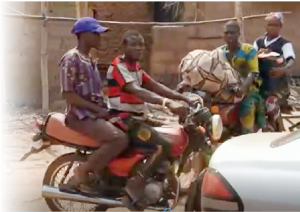
A man was sighted moving his family on his motorbike out of the village. The man, who asked not to be named, said he was moving his family into safety at an undisclosed community in neighbouring Republic of Benin.
He said: “I only escaped death by a whisker. But for Providence, I would have been dead by now. I don’t want to push my luck too far, so I have decided to relocate my wife and children to a village in the Republic of Benin where herdsmen are not allowed to do open grazing.
”Even if I stay back here, there is nothing to live on again. My farmland has been destroyed by these marauding herders. I am happy that I am leaving with my life intact.”
Hostilities between herdsmen and residents of about 29 agrarian communities in this part of Ogun State dates back to 15 years. The affected villages had been attacked recent times by terror herdsmen who were said to have camped at Eggua, a neighbouring town from where they moved with their hordes of cattle, ravaging farmlands within the Ketu-Yewa communities, which share borders with the Republic of Benin.
The villages are Ateru, Moro, Ologun, Agbon-Ojodu, Asa, Igbota, Ogunba-Aiyetoro, Oke-Odo, Ibore, Gbokoto, Iselu, Ijale, Ohunbe, Igbeme, Owode-Ketu, Igan-Alade, Lashilo, Oja Odan, Ijoun, Ateru, Moro, Ologun, Iyana Meta, Igbooro, Egbeda and Kuse, among others.
The armed herdsmen, who usually lead their flock in search of pastures because of the rich vegetation in the Ketu-speaking villages, have also been fingered in the destruction of cash crops belonging to the native farmers as well as killings and raping of women who are mostly natives of the communities.
The face-off peaked late last year when the residents prevented the herders from grazing and banished them from the communities.
The Nation had exclusively reported how some soldiers attached to 35 Artillery Brigade, Alamala, Abeokuta, later escorted the herders to the villages and openly flogged residents for rejecting them.
In a bid to discountenance the report, the soldiers again visited the communities a week after the story was published asking the victims to recant, but the brutalised residents refused.
Chronicle of attacks
Investigation conducted by our correspondent revealed that in the last couple of days, some of the villages mentioned in the report have been raided and destroyed by the herdsmen.
The well-coordinated attacks started with the killing of a farmer, Dele Owoniyi by suspected herders on February 7 at Oha village in Imeko area around 1 am. Several buildings and farmlands were destroyed by the hoodlums.
It was said that the herders, who were armed with guns and machetes, immediately left for Iwoye-Ketu after carrying out the attack. Four days later, two persons were allegedly killed on Thursday, February 11 by herdsmen who stormed Owode-Ketu village.
The victims – Isiaka Apesin and Adebayo Oguntosin, among other travelers, were said to have been ambushed by the herders along Owode Ketu-Ijoun axis, who bolted into a nearby forest after killing the villagers.
The attack, according to sources, was carried out by the herders around 5 am. It was learnt that the bodies of the victims were evacuated from the scene of the attack by men of Eggua Police Division.
The next day, Friday February 12, Imotto Orile witnessed the rage of the pastoralists who shot one resident dead and hacked another one to death. Same day, in the dead of the night, the herders took their bloody attack on innocent residents to Orile-Igbooro, where they killed six villagers and set houses and vehicles ablaze, while about 15 villagers, including children, sustained varying degrees of gunshot wounds.
Three farmers were said to have been killed on Sunday, February 14 when herdsmen stormed Agbon-Ojodu village shortly after the state’s Commissioner of Police, Mr. Edward Ajogun, visited the area.
The police commissioner, who visited some places in the troubled areas, including the palace of the Olu of Ilaro and paramount ruler of Yewaland, Oba Kehinde Olugbenle, had promised adequate security of lives and property. But a few minutes after commissioner and his team left the area, the suspected herdsmen struck and killed three farmers.
Also in the dead of the night on Sunday, February 14, the herders struck at Ibeku and Asa villages (the same communities where soldiers escorted herders to brutalise residents for rejecting herdsmen on December 19 last year, killing six persons, including one Kehinde Gbadamosi whose body was set ablaze.
According to sources, the hoodlums had dragged Gbadamosi, an indigene of Oyo State, out of his house and killed him before they threw his body back into the house and razed the building.
On Monday, February 15, they moved to Ijaka-Oke and Ijaka-Isale in broad daylight and started shooting at anything in sight. By the time the smoke from their guns receded, eight villagers had been dispatched into early graves while more than 16 commercial motorcycles were set ablaze.
By the evening of the same day, they moved to Oke-Akanni and Oke-Imala villages in Ayetoro where an unspecified number of residents were killed and buildings set ablaze.
The attacks occurred few minutes after Governor Dapo Abiodun visited Oja Odan and other communities in the area with members of his cabinet and heads of security agencies for on-the spot-assessment and assured the villagers of their safety with the deployment of a special police squad to tackle the herders.
The governor said: “The delegation I sent told me what they saw. They said a lot of things happened, and as they were giving the report of what they saw, we heard that another attack happened.
“I called a security meeting this morning. And before yesterday, I had set up a task force and bought new vehicles and motorcycles for Yewaland security. The task force consists of police, soldiers, civil defence corps and hunters to help us in terms of security in your area.
“Tomorrow, by God’s grace, all the new vehicles and motorcycles will be released. The task force will be stationed here; they will not only patrol your areas and go back to Abeokuta,” he assured the people.
Abiodun also promised to foot the hospital bills of those who were injured by herdsmen, pledging to help those who lost their property during the attack by cushioning the effect of the loss.
In the early hours of Wednesday, February 17, the herders once again struck at Ilogun Orile village where they were said to have killed unspecified number of residents.
A villager said the herders embarked on a shooting spree as soon as they stormed the community in a commando-like fashion, killing people and destroying properties worth millions of naira.
He said, “After killing our people, they broke into residential buildings, stole their belongings and looted shops. They raided a phone shop, carted away several expensive phones and set the shop ablaze. A lot of our people have left for villages in Benin Republic for fear of being subjected to another attack by the mindless herdsmen.
”They brought out Gbadamosi aka Big Daddy from his house and killed him before setting his body ablaze. As you can see, his huge body has become charred from the fire.”
Monarchs, lawmakers, residents lament
Lamenting the development, the Olu of Ilaro and Paramount ruler of Yewaland, Oba Kehinde Olugbenle, raised the alarm on February 13 that armed herdsmen were plotting to attack key communities in Yewa area.
Oba Olugbenle said the plan of the armed herders was to hold the targeted villages down in terror as they had done in remote villages in the last one week.
In a statement, the monarch urged President Muhammadu Buhari, the state government and security agencies to contain the sustained siege on Yewaland by armed herdsmen, noting that there had been the loss of lives, outright slaughtering of people, maiming and destruction of property by the herders.
The monarch appealed to President Muhammadu Buhari, Governor Abiodun and the security agencies to rise up as a matter of “extreme urgency” to their constitutional duties of securing lives and property by coming quickly to help, protect and defend them from the marauding herders.
The statement reads in part: “The criminal and dangerous activities of these herdsmen have so far happened in Egua, Oja-Odan, Igan Alade, Gbokoto, Ijoun, Owode Ketu, Ebute Igbooro, Imeko Afon and other places with reports of plans to attack major towns in Yewa land.
“The Federal Government and the state government are hereby implored, as a matter of extreme urgency, to act fast to secure the lives and properties of our people before it spirals out of complete control.”
In his remarks during the visit of Governor Abiodun to the communities, the Eselu of Eseluland, Oba Akintunde Akinyemi, said the people of the affected communities were demanding that the governor give an order for the eviction of Fulani herdsmen from the land.
He said: “The herdsmen are killing our people seriously. They are killing our people in Ketuland, they raped our women, they destroyed our silos.
“They have killed a lot of our people in Ketu, Igbooro, Iselu, Agbon-Ojodu, Asa, Ibeku and Oja-Odan. Within five days, the Fulani (herdsmen) have killed five persons in Igbooro, three in Asa, making eight. Your Excellency, our people have regards for you and they know that you will be just.
“I know that if not for the governor, if we ask our people to face Fulani, there will be war. Due to this, we want the paramount ruler in Yewa to support us while we want the governor to give an order that Fulani should not come to Ketuland again.”
Lamenting the gruesome killings, a member of Ogun State House of Assembly, Hon. Wahab Egungbohun, condemned the murderous activities of criminal herders, noting that that the alleged murderous activities of criminal herders appeared to have peaked lately.
Reacting to the development, the senator representing Lagos West Senatorial District, Solomon Adeola, urged the Federal Government to stop the deadly attacks on Yewa communities by herdsmen.
The lawmaker, who is a native of Yewa land, said citizens have the right to self-defence, noting that the government had failed to respond to the attacks suffered in the communities.
In a statement issued by his Special Adviser on Media, Kayode Odunaro, Senator Adeola said the inaction of the Federal Government was responsible for the mindless attacks on villages in Yewa North, Imeko, Afon, Ipokia and Yewa South local government areas.
He said: “I recalled that on various occasions on the floor of the Senate, I contributed to debates on the deteriorating security situation in different parts of the country and was always agitating for restructuring of the security architecture of the country.
“I made a similar contribution to a senate-wide motion on general security only last week. Now, something specific must be done urgently to stop the arson and killings in Yewaland by relevant authorities and security agencies.”
Condemning the killings, a former member representing Yewa South/Ipokia Constituency in House of Representatives, Hon. Adekunle Akinlade, suggested the deployment of surveillance drone to identify and track the herders.
He said: “The spate of killings across Ogun West, be it by men of the Nigeria Customs Service, bandits or criminal herdsmen, is evident of lack of preparedness for governance and lack of clear cut strategy on the part of the current chief security officer of the state.
“In my modest opinion, the CSO of the state should, as a matter of urgency, personally visit the affected villages and farming communities, commission the deployment of at least 50 high frequency aerial surveillance drones with night/infrared capabilities across those communities.”
Akinlade added: “The government should request from relevant federal authorities the deployment of a joint task force security patrol comprising the armed forces and the police.
“It is common knowledge that the cheapest and most efficient way to manage insecurity is to deploy deterrent mechanisms such as security tech hubs, communal intelligence gathering and leading from the front.”
Restraining order not enforced as northern governors visit
A community leader, Ishola Ademola, said the police and state authorities had failed to enforce a restraining order granted against the herders in 2007, by a State High Court sitting in Ilaro.
“We got an injunction restraining herdsmen from grazing in our communities following their destructive and deadly activities-killings and raping our women as well as ravaging our farmlands,” Ademola said.
The suit was filed by some monarchs and community leaders-Oba G.A. Olukunle; Oba Joseph Akinyemi; Chiefs Mathew Olukokun; Sabiu Bamgbola; Elijah Ayodele;Edun Samuel; A.A.Ayodele; Jimoh Abisekan; Olalekan Akintan; Ajana Fatosa and Rev. Enoch Korole.
The defendants were the Sarkin Fulani of Eggua, Alhaji Ibrahim Adamu Oloru and his deputy, Alhaji Ibrahim Usman.
In the ruling issued on November 1, 2007, the presiding judge, Justice M.A Dipeolu, held that the conduct of the herdsmen were unjustified and against the convenience of the residents.
The judge said: “The respondents and members of Fulani community in Yewa North Local Government Area of Ogun State are hereby restrained whether by themselves, servants, agents, privies or howsoever called, from going into or grazing their cattle or carrying out any activity whatsoever on the land situate, lying and being at Gbokoto; Isale; Pedepo; Ibayun; Abule Idi; Ohumbe; Igbeme; Asa; Ibeku; Iselu; Isiuku; Agbon –Ojodu; Moro; Agebelepon; Iyana Meta; Ikotun; Kobejo; Ijoko; Igbere; Alagbe; Agero; Ijege; Oke-Odo; Orobiyi; Korole; Abule Igbo; Ebute; Olope Meta; Okoso; Kodera; Abule Balogun; Iyalode; Abule Eyo; Orisada; Ogunba Ayetoro; Agbele; Gbedun; Sekeaje all of which constitute the Isale-Iselu community of Yewa North Local Government Area of Ogun State.
“The order has neither been set aside nor appealed by the leadership of the herdsmen. Unfortunately, the police and state government failed to implement the order despite several pleadings and appeals made to them,” Ademola said.
The Nation











metro
Benue Boat Mishap: Catholic Priest Among Four Dead, Nine Missing

Benue Boat Mishap: Catholic Priest Among Four Dead, Nine Missing
A Catholic priest, Rev. Fr. Moses Tsuagh, is among four people confirmed dead following a boat mishap at the Buruku crossing point in Buruku Local Government Area of Benue State.
The accident occurred on Saturday, October 3, 2026, as passengers were travelling across the Buruku River after attending a burial ceremony. Most of those on board were reportedly from neighbouring Gboko Local Government Area.
The Benue State Emergency Management Agency (SEMA) confirmed that four bodies had been recovered, while nine passengers remained missing as search and rescue operations continued.
SEMA Information Officer, Tema Ager, said the number of people who were aboard the boat was still being established because different accounts had emerged from survivors, relatives and community members.
READ ALSO:
- Rivers Police Arrest OSPAC Operative Over Alleged Killing, Secret Burial
- Adeleke Signs New Law to Regulate Motor Parks Across Osun
- Tragedy Strikes FMC: Medical Director Loses Two Daughters—A Doctor and a Pharmacist—Within 48 Hours
An earlier estimate suggested that more than 200 people may have been on the vessel, while subsequent information put the number of passengers believed to have been involved at about 138. The boat was also carrying numerous motorcycles.
Ager said 125 passengers had been rescued as of Monday, while divers and other rescue personnel continued searching for those still unaccounted for.
The rescue operation is also focused on recovering motorcycles and other belongings that went into the river. Authorities said 38 motorcycles were believed to have entered the water, with five subsequently recovered.
Initial accounts attributed the mishap to engine failure, overloading and difficulties encountered while attempts were made to rescue passengers. Another preliminary account from the state Commissioner for Marine and Blue Economy, Dennis Iyaghigba, said a strong current swept the boat into an abandoned barge, causing it to overturn.
The differing preliminary accounts are expected to be clarified as the authorities complete their investigation.
Following the accident, the Benue State Government suspended the Buruku crossing-point branch of the Nigeria Union of Maritime Workers.
Iyaghigba also ordered the suspension of the line operator and directed the arrest and detention of the boat skipper involved in the incident pending investigation.
SEMA has continued to appeal to passengers using the state’s waterways to observe water safety measures, particularly the use of life jackets and compliance with instructions from maritime officials.
The tragedy has renewed concerns about maritime safety in Benue, including passenger capacity, boat maintenance, enforcement of safety regulations and the need for safer river crossings.
Search and rescue efforts are continuing as authorities work to account for all passengers believed to have been aboard the vessel.
Benue Boat Mishap: Catholic Priest Among Four Dead, Nine Missing
metro
Rivers Police Arrest OSPAC Operative Over Alleged Killing, Secret Burial

Rivers Police Arrest OSPAC Operative Over Alleged Killing, Secret Burial
The Rivers State Police Command has arrested a member of the Onelga Security and Advisory Committee (OSPAC) over the alleged killing and secret burial of a man in Omoku, Ogba/Egbema/Ndoni Local Government Area of Rivers State.
The suspect, identified as Felix Dibia, is accused of killing Francis Chibuzor Ogwu during an incident reported on October 1, 2026.
According to the police, Dibia allegedly accosted Ogwu and another man along a road in Omoku and ordered both men to sit on the ground. While Ogwu reportedly complied, the other man allegedly fled from the scene.
Dibia allegedly shot Ogwu and subsequently buried his body in a shallow grave before leaving the area.
READ ALSO:
- Adeleke Signs New Law to Regulate Motor Parks Across Osun
- Tragedy Strikes FMC: Medical Director Loses Two Daughters—A Doctor and a Pharmacist—Within 48 Hours
- 27-Year-Old Woman Allegedly Kills Newborn Hours After Giving Birth in Abuja
The alleged incident came to light the following day, prompting the Rivers Police Command to launch an investigation.
Police investigators subsequently arrested Dibia and recovered a firearm allegedly linked to the incident.
The Rivers State Police Public Relations Officer, ASP Agabe Blessing Kaborlo, confirmed the arrest and said the investigation was ongoing to establish the circumstances surrounding the man’s death.
The command said the suspect would be subjected to due process as investigators work to determine what led to the alleged killing and whether any other person was involved.
The police have not disclosed further details about the recovery of Ogwu’s remains or whether additional suspects have been arrested.
The case has renewed attention on the activities of vigilante groups and community security outfits operating in parts of Rivers State, particularly the need for such groups to operate within the law while supporting conventional security agencies.
Dibia remains in police custody as the investigation continues, and the allegations against him have not been established in court.
Rivers Police Arrest OSPAC Operative Over Alleged Killing, Secret Burial
metro
Adeleke Signs New Law to Regulate Motor Parks Across Osun

Adeleke Signs New Law to Regulate Motor Parks Across Osun
Osun State Governor Ademola Adeleke has signed the Osun State Park Management Bill, 2026 into law, providing a new legal framework for the administration of motor parks and transport-related activities across the state.
The legislation, signed in Osogbo, is aimed at restructuring the management of motor parks, improving accountability in the transport sector and addressing longstanding disputes over the control and administration of parks.
The new law provides for a more organised system of park management, including measures to regulate operations, improve revenue collection and reduce leakages in the system.
It also introduces provisions for digital ticketing, with the aim of eliminating multiple ticketing and making revenue collection more transparent. The framework is expected to strengthen oversight of commercial transport activities while reducing opportunities for extortion and other irregular practices.
READ ALSO:
- Tragedy Strikes FMC: Medical Director Loses Two Daughters—A Doctor and a Pharmacist—Within 48 Hours
- 27-Year-Old Woman Allegedly Kills Newborn Hours After Giving Birth in Abuja
- Transporters Urge IGP Disu to Arrest Illegal Highway Tax Collectors
Under the new law, activities such as thuggery, violence and other unlawful conduct within motor parks are prohibited, as the state seeks to create a safer and more orderly environment for transport operators and commuters.
The legislation follows renewed efforts by the Adeleke administration to address disputes and insecurity associated with the control of motor parks in Osun.
The governor had earlier directed the reintroduction of a formal Park Management System following the killing of Olalekan Oyeyemi, popularly known as Emir Ajagungbade, in Ile-Ife. The incident heightened concerns over rival interests and disputes surrounding motor park operations.
Following the development, the state government ordered rival groups to vacate motor parks and directed security agencies to restore order while steps were taken to establish a statutory framework for park administration.
The Osun State House of Assembly subsequently passed the park management legislation, paving the way for the governor’s assent.
With the signing of the bill, the state now has a statutory framework for regulating motor parks, garages, loading points, transport operations and related revenue collection.
The implementation of the law is expected to bring changes to the way parks are administered and how transport operators interact with the state government. Its effectiveness will depend largely on enforcement, transparency and the cooperation of transport stakeholders.
Adeleke Signs New Law to Regulate Motor Parks Across Osun
-

 metro2 days ago
NYSC Kidnap: Abductors Demand N950m for 19 Prospective Corps Members in Imo
-

 Politics2 days ago
2027: Oshiomhole Dares Opposition Over ₦500 Petrol Promise, Says APC Will Take Argument to Nigerians
-

 metro2 days ago
N500 Petrol, Wage Award: Public Sector Workers Begin Warning Strike
-

 metro2 days ago
Amaechi: Tinubu’s Policies Made My Mother’s Drugs Unaffordable
-

 metro2 days ago
‘I Thought I Was Dead’ — Hairstylist’s Daring Escape From Kidnappers After Benin-Ore Ambush
-

 metro2 days ago
Tension as Kidnappers Threaten to Kill Abducted Oyo Corps Members
-

 Politics2 days ago
Wike to Amaechi: What Did You Bring to Rivers After 24 Years in Power?
-

 Entertainment2 days ago
Less Than Four Months After Wedding, Jarvis Threatens Peller With Lawsuit Over Second-Wife Plan
You must be logged in to post a comment Login