

metro
ISWAP: Nigeria confirms killing of Al-Barnawi’s successor, Malam Bako

The federal government has announced the killing of Malam Bako, a leader of Islamic State’s West Africa Province (ISWAP).
Bako succeeded Abu Musab Al-Barnawi, the late leader and son of Boko Haram founder, Mohammed Yusuf.
National Security Adviser, Babagana Monguno addressed State House correspondents on Thursday.
The retired General spoke after President Muhammadu Buhari met security chiefs at the State House.
Monguno disclosed that Bako was neutralized along with an ISWAP commander. He hailed the armed forces for recent successful operations.
“In one month, we have been able to take out the leadership of ISWAP, that is Abu Musab Al-Barnawi.
“Two days ago, the man who succeeded him, Malam Bako, one of ISWAP Shura Council, was also taken out.”
Monguno said the terror group is contending with leadership crisis accompanied with inherent issues of trust, conflicts and suspicion.
The NSA added that ongoing military operations had put pressure on Boko Haram, ISWAP, and the Islamic State in the Greatest Sahara.
On October 14, the Chief of Defence Staff (CDS), Lucky Irabor confirmed Al-Barnawi’s death.
Daily Trust












metro
Two Buses Carrying NYSC Prospective Corps Members Attacked, Passengers Abducted in Imo

Two Buses Carrying NYSC Prospective Corps Members Attacked, Passengers Abducted in Imo
Families panic as gunmen reportedly seize travellers on Owerri–Onitsha Expressway
At least two commercial buses carrying passengers, including prospective members of the National Youth Service Corps (NYSC) travelling from Ibadan to orientation camps in the South-East and South-South, were reportedly attacked by gunmen in Imo State on Thursday morning.
The incident reportedly occurred along the Owerri–Onitsha Expressway, around the Umunoha/No Man’s Land axis of Mbaitoli Local Government Area, at about 5:30am on October 1, 2026, as Nigerians marked the country’s Independence Day.
The attackers reportedly intercepted two 18-seater buses and allegedly took the passengers into the bush after robbing them.
Videos circulating online showed the two buses abandoned by the roadside, with one reportedly identified as belonging to Uko Akwa Ibom Motors.
The passengers were reportedly travelling from Samonda in Ibadan, with some of the prospective corps members heading to NYSC orientation camps in states including Abia, Imo, Enugu and Akwa Ibom.
A particularly distressing account came from a woman who said her daughter, identified as Kehinde, was among the prospective corps members travelling to the eastern part of the country.
According to the woman, her daughter left Samonda, Ibadan, on Wednesday with other prospective corps members.
The family reportedly received a message from her shortly after 6am on Thursday containing the word “kidnapper”, after which her phone became unreachable.
The woman appealed for assistance, saying she had been unable to establish contact with her daughter.
She also disclosed that the girl’s twin sister, Taiwo, had already arrived in Enugu for her orientation programme.
Reports indicate that the group was travelling in three vehicles, with one reportedly escaping while passengers in the other two buses were allegedly abducted.
An eyewitness who spoke in a video circulating online said security personnel arrived at the scene after the incident and that soldiers had moved into the bush in an attempt to locate the victims.
However, the exact number of people abducted has not been independently established.
One report claimed that about 18 prospective corps members were among those kidnapped, but the figure had not been officially confirmed at the time of filing this report.
There was also no immediate official confirmation of the incident from the NYSC or the Imo State Police Command.
The reported attack has triggered anxiety among families of prospective corps members travelling to various orientation camps, particularly those whose children departed from the Samonda area of Ibadan.
The development has also renewed concerns over the safety of young Nigerians travelling long distances to participate in the NYSC orientation programme.
As of the time of publication, there was no confirmed official figure for the number of NYSC prospective corps members or other passengers abducted in the incident, while no confirmed report of their rescue had been established.
Newstrends.ng will continue to monitor developments and update this report as official information becomes available.
Two Buses Carrying NYSC Prospective Corps Members Attacked, Passengers Abducted in Imo
metro
Bandits Kill Man, Abduct Wife, Children, Seven Others in Kaduna Community
Bandits Kill Man, Abduct Wife, Children, Seven Others in Kaduna Community
Suspected bandits have killed a man identified as Sikiru and abducted his wife, two children and six other residents during an attack on Babban Saura (PW) community in Chikun Local Government Area of Kaduna State.
The attack occurred in the early hours of Thursday, October 1, 2026, when the gunmen reportedly invaded three houses in the community.
A community source told the News Agency of Nigeria that the attackers first entered the residence of an elderly man and abducted two of his children before moving to Sikiru’s home.
The gunmen reportedly broke through the fence of Sikiru’s compound and entered the house. Sikiru was said to have confronted them after they entered his parlour, resulting in a struggle.
The attackers subsequently shot him dead before abducting his wife and their two children.
The assailants also invaded a neighbouring house and abducted a woman identified as Maman Mubarak and her four children.
Mubarak was later rescued after soldiers and local vigilantes pursued the attackers towards the Eastern Bypass area. However, her four children remained in captivity, along with the other abducted residents.
Usman Adamu, commander of the local vigilantes, confirmed that nine people were initially abducted during the attack.
He said the vigilantes received a distress call and immediately alerted soldiers, who joined the pursuit.
READ ALSO:
- Workers to Begin Nationwide Warning Strike Over Petrol Price, Wage Award
- Nigeria at 66: MURIC Urges Unity, Peace, Justice Ahead of 2027 Elections
- Atiku Challenges Tinubu’s Prosperity Claim, Says Nigerians Can Barely Afford to Live
According to Adamu, the security team traced the attackers towards the Eastern Bypass and succeeded in rescuing Mubarak, but the gunmen escaped with the remaining victims.
Another resident, who identified himself as Anas, said Sikiru had called him after the attackers entered the community.
When journalists visited the area, sympathisers had gathered at Sikiru’s residence while residents expressed concern over the worsening insecurity in Chikun LGA.
The attack came only days after suspected bandits invaded nearby Kadaure community, where a man was reportedly killed and cattle were rustled.
The latest incident also highlights continuing security concerns around Millennium City communities, including Babban Saura, Kyauta and Danhonu. Residents in the area have previously reported kidnappings, killings and cattle rustling, with some families reportedly relocating because of fear.
A September security report on the area said repeated attacks had increased residents’ reliance on community vigilantes and raised concerns about the abandonment of homes and investments.
The renewed violence comes despite ongoing security operations across Kaduna State.
The Kaduna State Police Command recently announced the arrest of 24 suspected kidnappers and the recovery of firearms, AK-47 magazines and more than 500 rounds of live ammunition in separate operations across the state.
The command said the operations targeted kidnapping, banditry, arms trafficking and cattle rustling, among other crimes. There was, however, no indication that any of those arrested had been linked to the Babban Saura attack.
As of Thursday, the Kaduna State Police Command had not issued a specific statement on the Babban Saura incident. Its spokesperson, DSP Mansur Hassan, could not be reached for immediate comment.
The whereabouts of the remaining abducted residents were unknown as of the latest reports, while security personnel and community vigilantes were expected to continue efforts to secure their release.
The attack has renewed calls for stronger security measures in communities on the outskirts of Kaduna metropolis, where residents say repeated kidnapping and bandit attacks are disrupting lives and forcing some families to leave their homes.
Bandits Kill Man, Abduct Wife, Children, Seven Others in Kaduna Community
metro
Workers to Begin Nationwide Warning Strike Over Petrol Price, Wage Award
Workers to Begin Nationwide Warning Strike Over Petrol Price, Wage Award
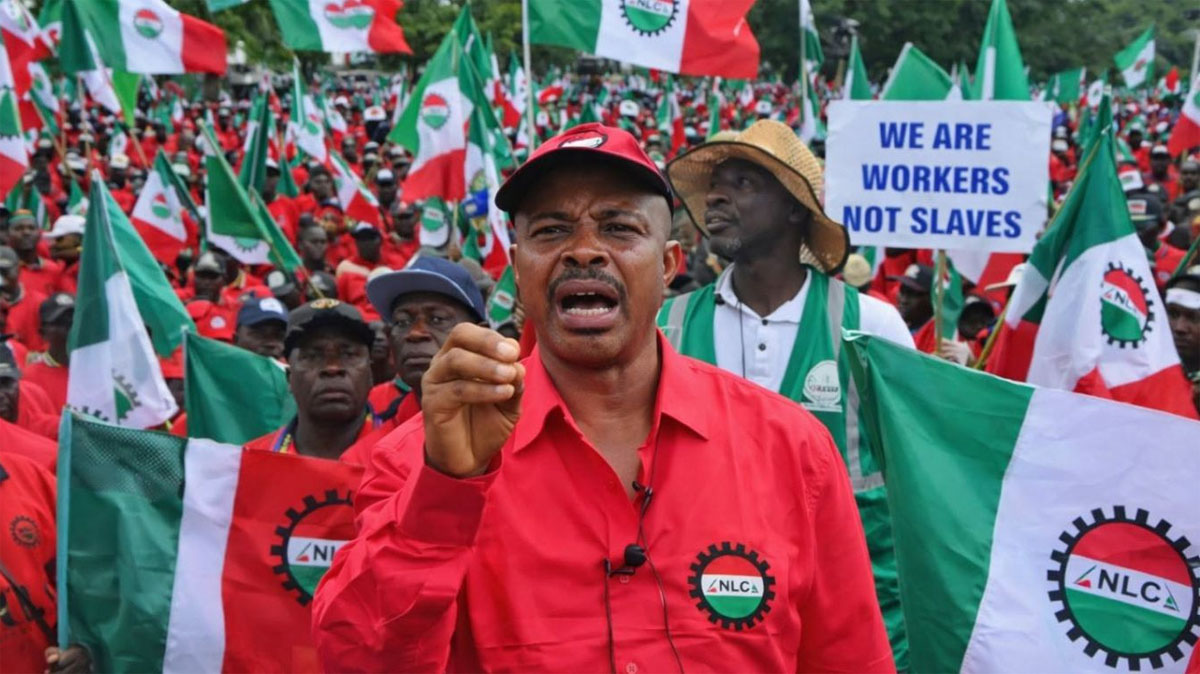
Public servants across the federal, state and local governments are set to begin a three-day warning strike on Friday, October 2, over rising economic hardship, high petrol prices, demand for a wage award and the commencement of negotiations for a new national minimum wage.
The industrial action was declared by the Joint National Public Service Negotiating Council (JNPSNC) after the expiration of its September 30 deadline to the Federal Government to address the workers’ demands.
The council said the warning strike will commence at midnight on Friday, October 2, and end on Sunday, October 4, 2026. It has directed its affiliate unions and their structures nationwide to mobilise public servants for the action.
The planned strike followed a September 21 letter to President Bola Ahmed Tinubu, in which the workers demanded urgent measures to ease the impact of rising living costs.
One of the major demands is a reduction in the price of Premium Motor Spirit (PMS), popularly known as petrol, to N500 per litre.
The JNPSNC said the government could reduce the price through an intervention fund to address landing costs and support oil and gas operators. It also called for crude oil to be supplied to the Dangote Refinery and modular refinery operators on appropriate terms to encourage increased domestic refining and reduce petroleum product prices.
The council said petrol prices ranging from about N1,450 to N2,000 per litre, and reaching as high as N2,500 in some locations, were placing severe financial pressure on workers and their dependants.
READ ALSO:
- Edo Police Arrest 37-Year-Old Man Over Alleged Rape of 70-Year-Old Woman
- Why Ronaldo Left Portugal Camp Ahead of Denmark Clash
- 2027: Amaechi Vows to Resign If Nigeria Fails to Change Within One Year
The workers are also demanding an immediate wage award to cushion the effects of rising prices and provide relief to public servants and other vulnerable Nigerians.
Another key demand is the immediate establishment of a tripartite committee to begin negotiations for a new national minimum wage expected to take effect in 2027.
The JNPSNC has called for negotiations around a new minimum wage of not less than N500,000, arguing that starting the process early would prevent administrative or procedural delays in implementing any new agreement.
The council had warned that the strike would follow if the Federal Government failed to address the issues by September 30. It also urged President Tinubu to use his Independence Day address to respond to the concerns raised by the workers.
With the deadline passing, the unions maintained their position and scheduled the industrial action for October 2.
The JNPSNC comprises eight public-sector unions: the Nigeria Civil Service Union (NCSU), Medical and Health Workers Union of Nigeria (MHWUN), Association of Senior Civil Servants of Nigeria (ASCSN), National Association of Nigerian Nurses and Midwives (NANNM), Amalgamated Union of Public Corporations, Civil Service Technical and Recreational Employees (AUPCTRE), Nigeria Union of Public Service, Reportorial, Secretarial, Data Processors and Allied Workers (NUPSRAW), National Union of Printing, Publishing and Paper Products Workers (NUPPPPROW) and National Union of Agriculture and Allied Employees (NUAAE).
The Nigeria Labour Congress (NLC) has also backed calls for measures to reduce the pressure of rising living costs, including lower petrol prices, a wage award and early negotiations for a new minimum wage.
The planned action is expected to affect public services at federal, state and local government levels, including ministries, departments and agencies, depending on the level of compliance by workers.
The warning strike comes as Nigeria marks its 66th Independence Anniversary, with organised labour continuing to demand measures it says would provide relief to workers facing increased transportation, food and other household costs.
For clarity, the strike has not begun as of October 1. The JNPSNC has scheduled its commencement for 12:00am on Friday, October 2, 2026.
Workers to Begin Nationwide Warning Strike Over Petrol Price, Wage Award
-

 metro2 days ago
Osogbo Food Bonanza Turns Nightmare as Discount Vendor Vanishes With Customers’ Millions
-

 Education2 days ago
FG Releases 2026–2028 Approved Textbooks, Introduces QR Codes for Tracking
-

 metro3 days ago
24 Hours in Darkness: Iju Ishaga Residents, Businesses Count Losses as Ikeja Electric Fails to Restore Power
-

 News2 days ago
Breaking: Tinubu Ends Extended European Vacation, Departs Paris for Nigeria
-

 metro1 day ago
$2.1m Land Suit: Court Orders Wike’s Son to Produce American Passport
-

 metro2 days ago
Hamzat Clarifies Lagos Traffic ‘Lifestyle’ Remark After Backlash
-
 metro2 days ago
Troops Rescue 41 Travellers as Bandits Attack Senegal-to-Kano Vehicle in Zamfara
-

 Sports2 days ago
Nigeria XI vs Guinea-Bissau: Awoniyi, Lookman, Adams Lead Super Eagles Attack