

Auto
Jetour regales Nigerian SUV lovers with DASHING, compact SUV combining trend, power, efficiency

Jetour regales Nigerian SUV lovers with DASHING, compact SUV combining trend, power, efficiency
As people begin to take vital decisions about their priorities for this year, a luxury automobile will expectedly feature on some To-Do lists.
Many will have to check out the Jetour brand, being one of the latest sport utility vehicles in the Nigeria’s market.
Dashing is one of the new models of the Jetour brand currently attracting a great deal of interest among new vehicle fans in the country. It is a compact crossover SUV produced by Jetour.
Jetour, a sub-brand under Chery’s umbrella targeting younger car buyers, unveiled its latest Dashing SUV in April 2022.
Now, the Jetour Dashing making waves globally is available in the Nigerian market, says Jetour Nigeria Mobility Service.
Jetour currently has nine different SUVs, with petrol powertrains. But the Dashing is the first vehicle to feature the brand’s new Kunlun Architecture. Jetour says it will use this architecture for an entire series of new cars, ranging from pickup to trucks, SUVs and 4×4 off-roaders.
Design
The design of Dashing focuses on the latest fashion trend. It aims at the overseas market of A-class SUV and combines fashion with intelligence.
The borderless-style air intake grille, overall large fastback shape, and bilateral four-outlet exhaust ports highlight the aesthetics and dynamic figure.
Exterior
The Jetour Dashing measures 4,590/1,900/1,685mm with a 2,720mm wheelbase.
To attract young buyers, the Jetour Dashing features a progressive design with sharply cut lines and sporty touches.
It also has pop-out door handles and large 20-inch alloy wheels.
The front boasts a split-headlight setup and a grille that protrudes into the car’s body.
The rear features a boomerang styled taillight design, roof spoiler and the diffuser-style bumper.
Interior
The simple yet impressive interior features multi-colour ambient lighting, a double-D-cut multi-function steering, an 8-inch instrument panel, a HUD projection screen and large 15.6-inch touchscreen multimedia unit which is equipped with the third-generation Snapdragon high-performance chip, and supports AutoNavi, Tencent, and Baidu navigation maps.
Other prominent features are voice recognition, a wireless charging pad on the centre console, panoramic roof as standard across the range, and Level2+ driving assistance functions that include cruise control and lane change assist.
Engine
Jetour Dashing conventional petrol engine is available in Nigeria and it comes with two engine options with a 1.5-litre turbo engine mated to a 6-speed dual clutch transmission or a 1.6-litre turbo engine mated to a 7-speed dual clutch transmission.
The 1.5-litre turbo engine has a maximum power output of 156 hp and a peak torque of 230 Nm.
The 1.6-litre turbo engine develops a maximum power of 197 hp and a peak torque of 290 Nm.




Auto
Beyond the Showroom: Why After-Sales Service Will Define Auto Industry Winners

Beyond the Showroom: Why After-Sales Service Will Define Auto Industry Winners
Nigeria’s automotive industry must look beyond vehicle prices, specifications and flashy new models if it hopes to win lasting customer confidence. The real test of competition increasingly lies in what happens after the sale — when a vehicle needs servicing, spare parts, repairs or warranty support.
A car purchase is not a one-off transaction. It marks the beginning of an ownership journey that could last several years, during which the quality of after-sales service can determine whether a customer remains loyal to a brand or regrets the decision to buy it.
When customers struggle to obtain genuine parts, secure timely repairs or get clear answers to warranty claims, their frustration can damage confidence not only in a dealer but also in the manufacturer and the wider automotive market.
After-sales service must therefore move from the background to the centre of automotive competition in Nigeria.
Promises must translate into performance
Effective customer care starts with clear, credible commitments. Buyers deserve to understand warranty coverage, servicing schedules, access to genuine parts, repair procedures and the support available when problems arise.
But promises alone are not enough. A warranty has limited value if customers cannot access a competent service centre. A roadside assistance number means little without an effective response system. And a repair-time guarantee is only as good as the technicians, parts and processes supporting it.
Automotive distributors and dealers must ensure that their marketing promises are matched by the operational capacity to deliver.
Buyers, on their part, should ask questions before committing their money, examine warranty conditions and establish what support they can realistically expect throughout the vehicle’s lifespan.
Competing on ownership experience
Nigeria’s automotive market would benefit enormously if brands competed not only on the vehicles they sell but also on the quality of ownership experience they provide.
Such competition could drive improvements in service delivery, warranty transparency, spare-parts availability, technical training, repair turnaround and customer communication.
Some players are already putting more structured after-sales propositions before buyers. Carloha’s CarlohaCare 6-6-7 programme, for instance, combines a six-year warranty, six years of free servicing and a seven-day repair promise, subject to applicable terms and conditions. Its CarlohaCare Rescue service extends the proposition to assistance beyond the workshop.
These offerings illustrate how clearly defined service commitments can become part of a vehicle’s value proposition, rather than an afterthought.
However, the objective should not be to crown a permanent winner or single out one company as the industry benchmark. Every provider must demonstrate that its commitments are practical, transparent and consistently delivered.
The wider industry should embrace continuous improvement, with customers ultimately judging brands by their real-world experiences.
Automotive journalism must ask tougher questions
Automotive journalism has a critical role in broadening the conversation.
Coverage of the sector often focuses on vehicle launches, new technologies, prices, specifications and expansion plans. These remain important, but consumers also need independent reporting on the realities of vehicle ownership.
Journalists can examine warranty conditions, investigate spare-parts availability, interview service managers and fleet operators, document consumer experiences and assess how effectively companies resolve complaints.
They should celebrate genuine improvements while holding businesses accountable when their public commitments fall short.
The Nigerian Automotive Journalists Association (NAJA) is well positioned to encourage this conversation through informed reporting, industry analysis, interviews and stakeholder engagement.
The goal should be to bring manufacturers, distributors, dealers, fleet operators and consumers around a fundamental question: What level of care should Nigerians reasonably expect after buying a vehicle?
That conversation must remain independent, balanced and evidence-led, rather than becoming a promotional platform for individual brands.
Make after-sales service a buying criterion
The shift towards stronger customer care will gather momentum when Nigerians begin to assess after-sales support as seriously as they consider engine performance, fuel economy, safety features and purchase price.
A private buyer should ask about warranty coverage, servicing costs and the location of authorised workshops. A fleet operator should evaluate parts availability, repair turnaround and vehicle downtime alongside acquisition costs. Families should know what assistance is available when a vehicle breaks down far from home.
Dealers that offer transparent terms and dependable support should earn a competitive advantage. Those that fall short should have a clear incentive to improve.
This is particularly important in a market where vehicle ownership involves significant financial commitment and prolonged exposure to maintenance costs. A seemingly attractive purchase can become expensive if parts are difficult to source or repairs take too long.
The industry must therefore recognise that customer care is not merely a cost centre. Properly managed, it can build loyalty, strengthen brand reputation, generate repeat business and encourage referrals.
The real test begins after payment
Nigeria does not need an automotive market in which businesses compete only to sell more vehicles. It needs one in which they also compete to keep customers satisfied long after the keys have been handed over.
The true measure of a brand is not simply how attractively it markets a vehicle or how efficiently it closes a sale. It is how responsibly it responds when the customer needs help most.
As competition intensifies, the companies that combine good products with reliable service, accessible parts and transparent customer support will have a stronger foundation for lasting success.
For buyers, the message is equally clear: look beyond the showroom, ask the difficult questions and compare the support behind the badge.
Buy the car. Demand the care.
Auto
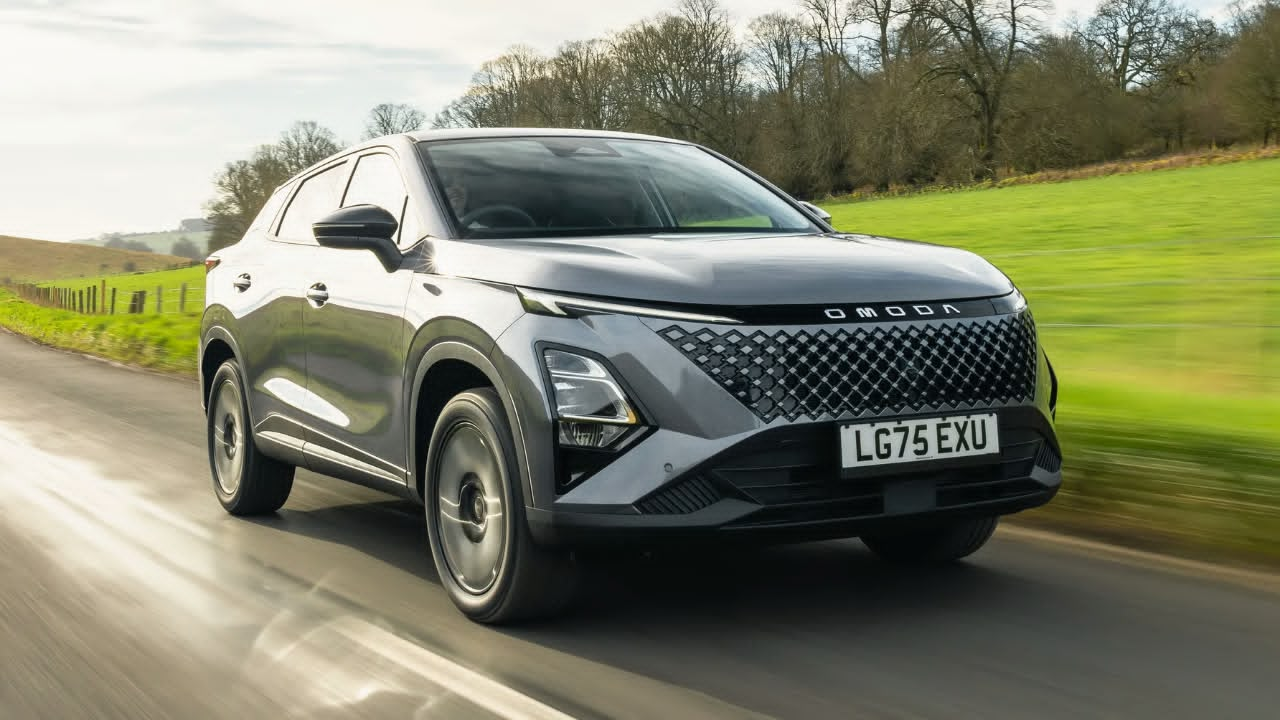
Omoda, Jaecoo Storm Europe as Global Sales Surge 123% to 73,421
Omoda, Jaecoo Storm Europe as Global Sales Surge 123% to 73,421
Chinese automotive brands strengthen foothold in UK, Spain, Italy and France as new-energy vehicles drive growth
Omoda and Jaecoo are accelerating their European expansion, buoyed by surging demand in key markets and a growing appetite for electrified vehicles, as the automotive brands recorded a 123 per cent year-on-year increase in global sales to 73,421 units in September 2026.
The latest performance underscores the brands’ growing international reach, with cumulative sales for the first nine months of the year reaching 587,846 units, according to figures released by the company.
The United Kingdom emerged as a major growth driver, with the brands recording 22,296 registrations in September, more than double their performance in the corresponding period of 2025. The volume translated into a 6.37 per cent market share and second place among automotive brands in the country for the month.
A standout performer was the Jaecoo 7, which recorded 10,813 registrations in the UK during September to become the country’s best-selling new-car model for the month. Its cumulative registrations for the first nine months of the year stood at 39,473 units.
The model’s performance highlights the growing competitive presence of the Chinese automotive brands in a market traditionally dominated by established European, Japanese and South Korean manufacturers.
READ ALSO:
- 16-Year-Old Girl Recounts Horror of Hookup Encounter, Says Man Threatened Her With Knife, Acid
- Ex-Super Eagles Coach Westerhof Battles Colon Cancer in Critical Condition, Wife Seeks Help
- NRC Denies Ticket Racketeering, Says Abuja-Kaduna Rail Demand Exceeds Seats by 10-Fold
Beyond sales, Omoda and Jaecoo are also deepening their long-term commitment to the UK through plans to establish a research and development centre at UTAC Millbrook in Bedfordshire. The proposed facility will focus on areas such as chassis tuning and advanced driver-assistance systems, enabling the brands to tailor their vehicles more closely to European driving conditions and customer expectations.
Spain, Italy and France also delivered strong performances, reinforcing the brands’ broader European growth strategy.
In Spain, September registrations increased by 91.5 per cent year-on-year to 4,010 units, lifting the brands’ market share to a record 4.3 per cent. Electrified vehicles accounted for 98 per cent of their sales in the country, highlighting the importance of alternative-powertrain models to their European strategy.
Italy recorded 4,678 registrations in September, giving the brands a 3.31 per cent market share. Their cumulative registrations between January and September rose by 256.23 per cent to 32,945 units, reflecting a rapid expansion in one of Europe’s important automotive markets.
France, another market in which the brands are building their presence, recorded combined September registrations of 3,003 units. Jaecoo contributed 2,589 units, an impressive showing approximately six months after its entry into the French market.
The gains across these countries point to an increasingly coordinated European push, with Omoda and Jaecoo seeking to translate their expanding product portfolios into stronger market positions.
Electrification drives global growth
New-energy vehicles (NEVs) remained a major contributor to the brands’ worldwide performance, with sales reaching 53,957 units in September, representing an 184 per cent increase year-on-year.
The volume accounted for approximately 73.5 per cent of total monthly sales, underlining the growing contribution of electrified models to the brands’ global business.
The figures suggest that electrification is becoming central to Omoda and Jaecoo’s expansion, particularly in markets where consumers are increasingly considering hybrid and other electrified powertrains alongside conventional petrol vehicles.
With rising registrations in major European markets, expanding technical development plans and strong demand for the Jaecoo 7, the brands are seeking to consolidate their position in an increasingly competitive automotive landscape.
Sustaining the momentum will depend on their ability to maintain product appeal, strengthen dealer and after-sales networks, and respond to the differing regulatory requirements and consumer preferences across Europe.\
Omoda, Jaecoo Storm Europe as Global Sales Surge 123% to 73,421
Auto
Naija Driver 2026: Online CBT Screening Holds today
Naija Driver 2026: Online CBT Screening Holds today
LAGOS, NIGERIA — The race to identify Nigeria’s safest and most skilled drivers enters a decisive phase today, Saturday, October 17, as registered candidates nationwide prepare for the 11am online computer-based test (CBT) screening of the inaugural Nigerian Drivers Challenge, Naija Driver 2026.
The organisers have urged candidates to log in prepared, with a functional laptop or desktop computer, webcam and reliable internet connection, warning that smartphones and tablets will not be supported for the 20-minute, 40-question examination.
-

 metro3 days ago
FG Begins Rollout of 3,700 Telecom Towers to Connect 20m Nigerians
-

 Education3 days ago
Tinubu Scraps Recruitment Waiver Requirement for Federal Universities
-

 metro3 days ago
Oyo Baby Trafficking Scandal: Mother, Doctor Arrested Over Alleged ₦2m Sale of Infant
-

 News3 days ago
Akpabio Under Fire as Senators Move to Secure His Return as Senate President in 2027
-

 Sports3 days ago
Lamine Yamal Shines as Barcelona Thrash Real Betis 5-2
-

 metro3 days ago
Kano: Soldiers Kill Two Kidnappers, Rescue Victim, Recover ₦10m
-

 metro2 days ago
NAFDAC Probes Corps Member’s Death at Enugu Camp as Fake Drug Claims Emerge
-

 Africa3 days ago
Nairobi Mother Says Husband Abandoned Her During Childbirth, Paid Dowry for Another Woman