News
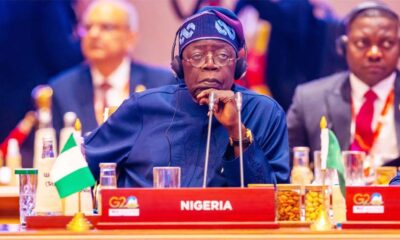
Just in: Tinubu fires six ministers, names seven new cabinet members
President Bola Tinubu has relieved six ministers of their jobs as part of cabinet reshuffle.
He also named seven new ministers, forwarding their names to the National Assembly for confirmation.
Details of the new development were announced on Wednesday by Special Adviser to the President on Information and Strategy, Bayo Onanuga.
He spoke at a briefing with State House correspondents after the Federal Executive Council meeting, presided over by the President in Abuja.
President Tinubu also appointed Shehu Dikko as Chairman of the National Sports Commission and he will take charge of the activities and programmes of the defunct Ministry of Sports Development.
The President appointed two former Ministers under President Muhammadu Buhariâs administration, former Police Affairs minister as the substantive Minister of Labour and Employment, while former Minister of Youths and Sports Development, Sunday Dare was appointed as Special Adviser on Public Communication and Orientation under the Ministry of Information and National Orientation.
The Ministers that were sacked from the cabinet were Prof. Tahir Mamman, (Education), Uju Kennedy Ohanenye (Women Affairs), Mohammad Gwarzo (State for Housing), Jamila Ibrahim (Youth Development), Lola Ade-John (Tourism) and the suspended Minister of Humanitarian Affairs, Betta Edu, who has been replaced even though the government was silent on her status.
The President also forwarded seven new ministerial nominees with their portfolios to the National Assembly including wife of late Dim Odumegwu Ojukwu, Mrs. Bianca Ojukwu (State for Foreign Affairs) for confirmation.
Others are Dr Nentawe Yilwatda, who replaces the suspended Beta Edu Minister of Humanitarian, Affairs and Poverty Reduction, Muhammadu Maigari Dingyadi, Minister of Labour and Employment, Federal Ministry of Labour & Employment and Dr Jumoke Oduwole, Minister of Industry, Trade and Investment.
Idi Mukhtar Maiha was nominated as the Minister of Livestock Development,
Rt. Hon. Yusuf Abdullahi Ata, Minister of State, Housing and Urban Development and Suwaiba Said Ahmad, Minister of State, Education, Federal Ministry of Education.
Onanuga also announced that ten ministers had been reassigned new portfolios.
They are, Dr. Yusuf Tanko Sununu, former Minister of State, Education, now Minister of State Humanitarian Affairs and Poverty Reduction, Dr. Morufu Olatunji Alausa Minister State, Health, now substantive Minister of Education, Bello Muhammad Goronyo Minister of State, Water Resources and Sanitation, now Minister of State for Works.
Also redeployed are Abubakar Momoh, former Minister of Niger Delta Development, now Minister of Regional Development, Uba Maigari Ahmadu, Minister of State Steel Development, now Minister of State, Regional Development and Dr. Doris Uzoka-Anite Minister of Industry, Trade and Investment, now Minister of State Finance.
The former Minister of Sports Development, Senator John Owan Enoh has been redeployed as the Minister of State Trade and Investment [Industry], Imaan Sulaiman-Ibrahim, who was the Minister of State, Police Affairs, is now Minister of Women Affairs, Ayodele Olawande, Minister of State for Youth Development, now Minister for Youth Development, while Dr. Salako Iziaq Adekunle Adeboye, Minister of State, Environment, now Minister of State, Health.
Onanuga said, âPresident Bola Ahmed Tinubu has approved the immediate implementation of eight far-reaching actions to reinvigorate the Administrationâs capacity for optimal efficiency pursuant of his commitment to deliver on his promises to Nigerians.
âThe eight actions approved by Mr. President include:
âThe renaming of the Ministry of Nigeria Delta Development to Ministry of Regional Development to oversee the activities of all the Regional Development Commissions.
âThe Regional Development Commissions to be under the supervision of the new Ministry are; the
Niger Delta Development Commission, the South East Development Commission, the North East Development and the North West Development Commission.
âThe immediate winding up of the Ministry of Sports Development and the transfer of its functions to the National Sports Commission in order to develop a vibrant sports economy;
âThe merger of the Federal Ministry of Tourism and the Federal Ministry of Arts and Culture to become Federal Ministry of Art, Culture, Tourism and the Creative Economy.
âThe President thanked the outgoing members of the Federal Executive Council for their service to the nation while wishing them the best in their future endeavours.
âHe then charged the newly appointed ministers as well as their reassigned colleagues to see their appointment as a call to serve the nation. He added that all appointees must understand the administrationâs eagerness and determination to set Nigeria on the path to irreversible growth and invest the best of their abilities into the actualisation of the governmentâs priorities.â
Briefing journalists after the FEC meeting, the Minister of Information and National Orientation, Mohammed Idris, explained that the Ministry of Regional Development would take over the Niger Delta Development Commission, NDDC, North East Development Commission, South East Development Commission and other regional development commissions in the country.
He further said that the President also directed that the Sports Commission would henceforth handle all sports activities and programmes initially handled by the Ministry of Sports Development.
He said that with the scrapping of the Ministry of Tourism, all of its activities have been brought to the Ministry of Arts, Culture, Tourism and Creative
![]()
News
Presidency announces arrest of suspect linked to fake Tinubu audio fraud
News
 State Police Framework Ready Soon, Presidency Tells Nigerians
State Police Framework Ready Soon, Presidency Tells Nigerians
The presidency said Thursday that a constitutional amendment to establish state police will soon happen following months of consultations between the executive, the National Assembly, and security authorities.
President Bola Tinubu’s Chief of Staff, Femi Gbajabiamila, briefed correspondents after a consultative meeting at the State House, Abuja, on Thursday, June 4, 2026. According to Gbajabiamila, discussions on the proposed state police framework began several months ago following a directive by President Bola Tinubu, and substantial progress has been achieved in developing the legal and constitutional pathways required for implementation.
“We started deliberations in the last three or four months on how to go about the establishment of state police as directed by Mr President,” he said. “Establishing state police is not something that you do with the snap of the fingers. There is a lot involved in terms of constitution and legalities, and thank God we have now gained a lot of traction.” Gbajabiamila expressed optimism that the constitutional amendment required to create state police would be introduced soon. “Hopefully, the amendment will come shortly, and the details of the amendment will come after that,” he added.
According to the Chief of Staff, the current focus is on the constitutional amendment itself, while enabling legislation would follow afterwards to define operational procedures and administrative frameworks for state police across the country. “Right now, what we are looking at is the constitutional amendment itself, and then the enabling law would follow thereafter. That is what we have been deliberating on in the last couple of hours,” Gbajabiamila stated. He further noted that there is now broad national consensus on the need for state police, stressing that discussions had evolved beyond the question of whether state police should exist. He said the focus had shifted toward ensuring the establishment of an effective legal and institutional framework capable of guaranteeing accountability and efficient operations.
READ ALSO:
- Kidnapping in South-West Is a Business, Not a Religious War â Ex-Minister Olanrewaju
- Osun 2026: Accord Party Chairman Shot in Osogbo as Police Begin Investigation
- FG Considers Tougher Age Limits for Social Media Use by Children
President Tinubu will receive a full report on the meeting’s outcome. He has consistently backed decentralised policing as a necessary response to Nigeria’s evolving security challenges, maintaining that such a structure would improve grassroots security, enhance intelligence gathering, and better protect lives and property across the country.
The consultative meeting was attended by a cross-section of senior government officials, demonstrating the administration’s commitment to the initiative. Those present included Deputy Senate President Jibrin Barau, Deputy Speaker of the House of Representatives Benjamin Kalu, Attorney-General of the Federation and Minister of Justice Lateef Fagbemi (SAN) , and Inspector-General of Police Tunji Disu. The meeting formed part of ongoing consultations by the Federal Government aimed at developing a workable and nationally acceptable framework for state police to enhance internal security and improve the ability of sub-national governments to tackle emerging security challenges.
The Thursday meeting followed recent kidnappings across the country that have reignited calls for security sector reforms. In May 2026, armed gunmen on motorcycles attacked schools in the Ahoro Esinle community of Oriire Local Government Area in Oyo State and abducted at least 39 pupils and 7 teachers. The assailants eventually killed one of the teachers in captivity. According to reports, the attackers stormed three schools on May 15, 2026 â Baptist Nursery and Primary School, Yawota; Community Grammar School, Esiele; and L.A. Primary School, Esiele â in what has been described as a highly organized operation. The attack marked one of the first mass school abductions of its scale in the South-West, a region previously considered relatively insulated from the mass kidnapping crises that have plagued Northern Nigeria.
Governor Seyi Makinde reported 32 total abductions and took decisive action in response to the crisis. The Oyo State Government ordered the immediate suspension of all school excursions, field trips, inter-school sports competitions, and any extracurricular activities that require students to leave school premises. The Ministry of Education issued a circular directing all school administrators to comply with the suspension until further notice, citing growing security concerns across the state.
The abduction took a tragic turn when reports emerged that a mathematics teacher, Michael Oyedokun, was later beheaded by his captors. Another teacher, identified as Joel Adesiyan (also reported as Adesiyan Adegboye), was killed during the initial raid on the schools. The deaths have sparked national outrage and triggered protests by teachers across the country. In a message marking Eid-al-Adha and National Children’s Day, Governor Makinde expressed deep solidarity with the families of the abducted school children and teachers. “As we mark this year’s Eid and Children’s Day, our thoughts are with every family awaiting the return of their loved ones, and with security agencies working to keep our communities safe,” he wrote on his official X handle. He reassured the state of his administration’s efforts to resolve the crisis, stating, “We are working to ensure the safe return of those who were kidnapped in Oriire LGA.”
The Oyo school abduction has triggered nationwide protests by the Nigeria Union of Teachers (NUT) . Members of the NUT, Kwara State wing, joined the nationwide solidarity rally organised by the national body of the union to protest the abduction and continued captivity of teachers and pupils. The rally, held in Ilorin, the Kwara State capital, saw teachers marching with placards bearing inscriptions such as “From Chibok to Oriire: Our children are still crying,” “We say no to attacks on schools,” and “Stop the killing and maiming of teachers in Nigeria.” The Deputy Secretary-General of the NUT in Kwara State, Mike Modesty, lamented that the victims had remained in captivity since May 15, adding that the continued attacks on teachers and learners showed that the government had not done enough to protect schools. “They have been abducted since May 15. One teacher has been killed and the remaining ones are still in captivity. And we are hearing that the bandits want to negotiate. Negotiate what? The lives of our children and the teachers?” he said.
The push for state police has gained renewed momentum amid growing concerns over insecurity and increasing calls for a more decentralised policing structure capable of addressing local security challenges across the federation. Supporters of the initiative have argued that Nigeria’s centralised policing structure has become overstretched amid rising security concerns including insurgency, banditry, kidnapping, and communal violence. Some states have already established regional and local security outfits, such as Amotekun in the South-West, but these operate without full constitutional backing. However, opponents have continued to raise concerns about possible political interference and the potential misuse of state police by state administrations, urging the inclusion of robust legal safeguards to prevent abuse. The state police bill has been one of the most contentious constitutional matters since 1999, with northern governors and some civil society groups previously expressing reservations. Nonetheless, Gbajabiamila expressed confidence that there is now a national consensus on the necessity of the reform.
The constitutional amendment, once finalised, will be presented to the National Assembly for consideration before the enabling legislation that will define the operational procedures and administrative frameworks for state police across the country. President Tinubu will receive a comprehensive briefing on the outcome of the meeting and the progress made toward actualising the long-awaited security reform. According to the administration, a decentralised policing structure would strengthen grassroots security, improve intelligence gathering, and enhance protection of lives and property across the country.
 State Police Framework Ready Soon, Presidency Tells Nigerians
![]()
News
Tinubu Approves One-Year Salary Gratuity for Retiring Federal Workers
ABUJA â Retiring personnel of the State House will be among the first federal workers to benefit from the newly approved gratuity scheme for civil servants introduced by the administration of President Bola Tinubu, the Permanent Secretary of the State House, Mr. Temitope Fashedemi, has revealed.
Fashedemi made the disclosure on Thursday during a send-off ceremony organised in Abuja to honour two retiring directors and two deputy directors, describing the initiative as a major milestone in the Federal Governmentâs efforts to strengthen the welfare of public servants before and after retirement.
According to a statement issued by the Director of Information and Public Relations, State House, Mr. Abiodun Oladunjoye, the Permanent Secretary praised President Tinubu for approving the return of gratuity payments for retiring federal workers in addition to pensions and other retirement entitlements.
The development follows the approval of a new federal civil service gratuity scheme by the Federal Executive Council (FEC) in March 2026. Under the policy, officers who have completed a minimum of 10 years in service will be entitled to a gratuity equivalent to one year of their total annual emolument upon retirement, with effect from January 1, 2026.
The scheme was introduced following recommendations by an inter-ministerial technical committee established by the Office of the Head of the Civil Service of the Federation in collaboration with key government agencies. It is designed to complement the Contributory Pension Scheme (CPS) introduced in 2004, which largely eliminated gratuity payments for federal civil servants.
READ ALSO:
- Transport Logistics Key to Nigeriaâs Growth, Says TCAN, Unveils 2026 Summit
- Goodluck Jonathan Yet to Decide on 2027 Race, Associates Clarify
- Seven Polytechnic Students Abducted in Zamfara
- Rivers United Players, Officials Escape Serious Harm in Road Accident
Speaking at the ceremony, Fashedemi noted that some of the retiring officers being honoured would be among the first beneficiaries of the new retirement package.
âMr President approved the introduction of gratuity for retiring civil servants, and some of you are among the first set of civil servants that will benefit from it,â he said.
He explained that the policy reflects the Federal Governmentâs commitment to ensuring that workers who dedicate decades of service to the nation are properly rewarded and supported after leaving active service.
The Permanent Secretary described retirement after 35 years of service or upon attaining the age of 60 as a significant milestone that deserves recognition and celebration.
âWe take it that when people work hard for government and put in all these years of service, they need to be recognised and celebrated,â he added.
Fashedemi further linked the initiative to the implementation of the Federal Civil Service Strategy and Implementation Plan (FCSSIP 25), which prioritises employee welfare, productivity and institutional reforms across the public service.
According to him, the State House has institutionalised programmes aimed at recognising exceptional officers during active service and celebrating them upon retirement.
He also commended the retirees for their professionalism, discipline, integrity and commitment to national service throughout their careers.
âIt is not easy to do all this work and retire peacefully. All of you have successfully achieved that, and it is no mean feat,â he stated.
The approval of the gratuity scheme has been widely welcomed by civil servants and labour groups, many of whom had long advocated the restoration of gratuity payments to improve the welfare of retirees under the contributory pension system.
Observers say the policy is expected to boost morale within the Federal Civil Service, provide greater financial security for retirees and strengthen confidence in government efforts to improve workersâ welfare.
Also speaking at the event, the Permanent Secretary of the General Services Office in the Office of the Secretary to the Government of the Federation, Dr. Ibrahim Kana, praised the retiring officers for their dedication and service to the country.
Former Permanent Secretary of the General Services Office, Dr. Nnamdi Mbaeri, also highlighted the importance of commitment, professionalism and hard work in public service.
Earlier, the Director of Administration, State House, Alhaji Abdulkadir Idris, described the ceremony as a celebration of distinguished officers who had rendered meritorious service to Nigeria and wished them a fulfilling retirement.
The officers honoured included Mr. Francis Wasa, Director of ICT; Mrs. Adenike Akintola, Director of Internal Audit; and Mr. Esiyede Godwin, Deputy Director, Library and Archives.
Another retiree, Bukar Usman Goni, a Deputy Director in the Finance and Accounts Department who was absent from the ceremony, was also recognised for his contributions.
Speaking on behalf of the retirees, Wasa thanked the State House management for the honour and prayed that serving officers would enjoy successful careers and retire in good health, peace and fulfilment.
With the implementation of the new gratuity scheme for federal civil servants, the Federal Government hopes to provide additional financial support for retirees and reinforce the value of long-term public service.
Tinubu Approves One-Year Salary Gratuity for Retiring Federal Workers
![]()
-
metro2 days ago[UPDATED] JUST IN: Gunmen Abduct Adelabuâs Sister, Twin Sons in Ibadan (VIDEO)
-
metro2 days agoVIDEO: Suspected Bandit in Full Army Camouflage Arrested in Osogbo
-
Business2 days agoPetrol Prices Fall Nationwide as Dangote Refinery Cuts Ex-Depot Rate
-
metro2 days agoFayose Links Wike to Oyo School Kidnapping Crisis, Faces Rebuttal from Aide
-
Entertainment2 days agoPortable Rejects EFCC Invitation Over Alleged Naira Abuse at Sonâs Naming Ceremony
-
metro3 days agoFalse Bandit Attack Alert Triggers School Closures in Six Osun LGAs
-
News3 days agoGroup Urges Osogbo Residents to Ignore âUncertainâ Governorship Promises
-
metro1 day agoSchoolchildren Abductions: Pastor Ibiyeomie Drops Bombshell, Names Sponsors