
News
Kano: Police vow to crush troublemakers, accuse Gov Yusuf of fueling crisis

Kano: Police vow to crush troublemakers, accuse Gov Yusuf of fueling crisis
Kano State Commissioner of Police, Mohammed Usaini Gumel, says Governor Abba Kabir Yusuf has perfected the royal crisis in the state.
He said this at a press briefing which held at Government House, Kano, on Sunday night.
Explaining the role of the police in the emirship tussle, Gumel said the police would enforce the law.
He also said security operatives had uncovered plot to unleash mayhem on the state while targeting some places, including the House of Assembly.
Gumel, who had earlier warned trouble makers to steer clear of the crisis, vow that the long arm of the law would catch up with whoever tests the resolve of security operatives.
READ ALSO:
- President Tinubu arrives in Lagos for Lagos-Calabar highway flag-off
- My wife was pregnant for another man inside marriage – Harrysong
- Portable hospitalised, says ‘I’m in pain, don’t want to die young’
He said, “Today, we are here to address you on one very key issue that has to do with the security situation in the state which you and all of us have been managing together since the issue around the chieftaincy affairs in the State started.
“We have received credible information about miscreants trying to unleash terror at locations, particularly the House of Assembly and other key places within the state. It has been verified by so many sources.
“Anybody who wants to test the ground, the security has the capacity to deal with the miscreants. We have perfected plans to embark on serious patrols and detection on locations where we are informed the miscreants are hiding.
“We are going to embark on house-to-house search; anybody who feels he is stronger than the law should try it. Kano will remain safe and nobody can override the decision.
“The issue of chieftaincy affairs has been perfected by the executive arm of government. We are standing by the law and we are strictly going to enforce the existing law.”
He further said different groups have been mobilised and paid to carry out attacks and disrupt peace.
Kano: Police vow to crush troublemakers, accuse Gov Yusuf of fueling crisis



News
Trump Adds Nigeria to List of Countries Facing US Entry Restrictions Over Security Concerns
Trump Adds Nigeria to List of Countries Facing US Entry Restrictions Over Security Concerns
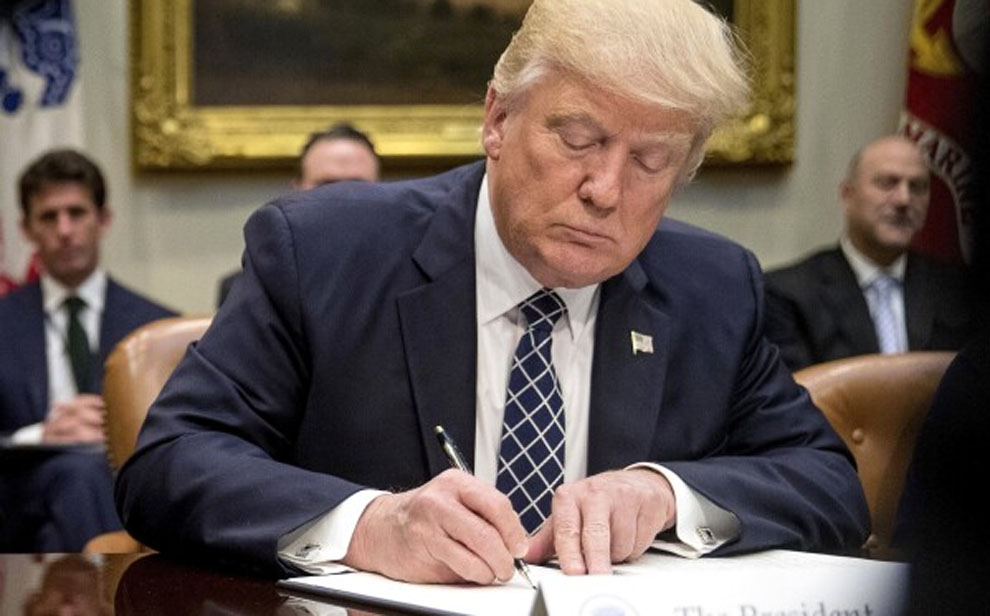
President Donald Trump on Tuesday signed a Proclamation further restricting entry to the United States for nationals from countries identified as high-risk due to “persistent and severe deficiencies in screening, vetting, and information-sharing” that threaten U.S. national security and public safety. Nigeria is now included among 15 additional countries newly subject to partial travel restrictions.
The announcement, published on the White House website in a fact sheet titled “President Donald J. Trump Further Restricts and Limits the Entry of Foreign Nationals to Protect the Security of the United States”, outlines the rationale for the move. It comes after Trump previously declared Nigeria a “country of particular concern” on October 31, 2025, citing alleged persecution of Christians.
The Proclamation maintains full restrictions on nationals from the original 12 high-risk countries—Afghanistan, Burma, Chad, Republic of the Congo, Equatorial Guinea, Eritrea, Haiti, Iran, Libya, Somalia, Sudan, and Yemen—and adds five more: Burkina Faso, Mali, Niger, South Sudan, and Syria. Countries previously under partial restrictions, Laos and Sierra Leone, now face full restrictions.
READ ALSO:
- Dangote–NMDPRA Conflict: House Launches Investigation to Stabilize Petrol Supply
- Why Buhari Retained Underperforming Appointees for Eight Years – Aisha Buhari
- Revealed: Why Buhari Withheld Support for Osinbajo’s Presidential Bid
The 15 newly restricted countries, including Nigeria, Angola, Senegal, Tanzania, Benin, The Gambia, Malawi, Mauritania, Zambia, and Zimbabwe, are subject to partial limitations, with exceptions for lawful permanent residents, visa holders, diplomats, athletes, and individuals serving U.S. national interests. Case-by-case waivers remain possible.
The White House fact sheet emphasized that the measure is aimed at preventing the entry of foreign nationals for whom the U.S. lacks sufficient information to assess security risks, ensure cooperation from foreign governments, enforce immigration laws, and support national security and counterterrorism objectives.
Trump was quoted saying, “It is the President’s duty to take action to ensure that those seeking to enter our country will not harm the American people.” The proclamation reflects ongoing efforts to restore travel restrictions on countries deemed a threat to American security and encourage compliance with vetting standards.
The fact sheet also highlighted specific challenges, including fraudulent or unreliable civil documents, high visa-overstay rates, terrorist activity, and non-cooperation with U.S. authorities, as reasons for country-specific restrictions. Meanwhile, Turkmenistan, previously restricted, has improved cooperation, resulting in partial lifting of its visa ban.
This latest travel restriction Proclamation underscores the Trump administration’s focus on border security, national safety, and stringent immigration vetting.
Trump Adds Nigeria to List of Countries Facing US Entry Restrictions Over Security Concerns
News
Revealed: Why Buhari Withheld Support for Osinbajo’s Presidential Bid
Revealed: Why Buhari Withheld Support for Osinbajo’s Presidential Bid
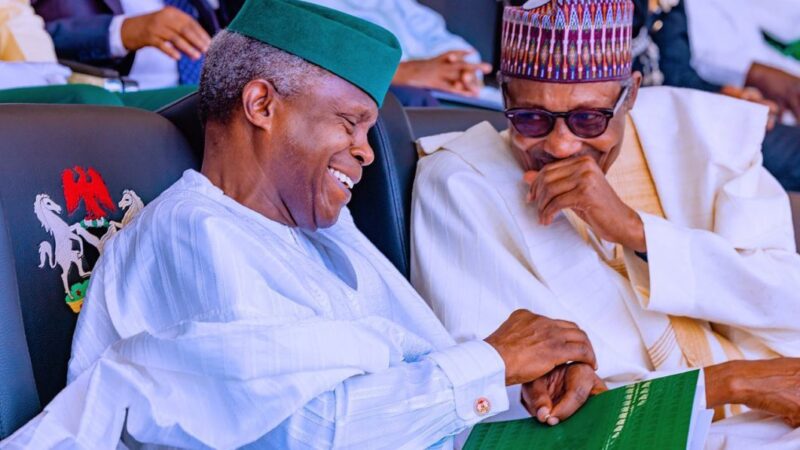
Fresh insights from a new biography reveal why former President Muhammadu Buhari did not support the presidential ambition of his former Vice President Prof. Yemi Osinbajo. The disclosure sheds light on the dynamics of the 2022 All Progressives Congress (APC) presidential race and Buhari’s silence during the contest.
According to the book, From Soldier to Statesman: The Legacy of Muhammadu Buhari, written by Dr. Charles Omole, Buhari reportedly declined to back Osinbajo because he had no personal relationship with him. The former president was quoted as saying, “I don’t know Osinbajo from anywhere, I met him only through President Bola Ahmed Tinubu.”
READ ALSO:
- CBN Cracks Down on Mortgage Banks, Revokes Licences of Two Non-Compliant Firms
- Former First Lady Aisha Buhari Rules Out Remarriage, Opts for Quiet Life
- French Court Orders PSG to Pay Mbappé €60m in Unpaid Wages, Bonuses
The biography notes that Buhari was also reportedly surprised by Osinbajo’s decision to contest against Tinubu during the APC presidential primaries, which Tinubu eventually won to become the party’s candidate.
Osinbajo is widely seen as a political protégé of Tinubu, having served as Attorney General and Commissioner for Justice in Lagos State during Tinubu’s governorship. He later became Buhari’s running mate in the 2015 general election, forming an eight-year federal administration.
Despite their years in government together, Buhari’s remarks suggest that his relationship with Osinbajo remained largely formal and politically arranged, rather than personal, explaining his decision to withhold support during the 2022 APC presidential contest.
The biography, recently presented at the Presidential Villa, offers a deeper look into Buhari’s political relationships and decision-making during his tenure and beyond.
Revealed: Why Buhari Withheld Support for Osinbajo’s Presidential Bid
News
Senate Backs ₦54.46trn 2026 Budget, Cuts Oil Price Benchmark to $60
Senate Backs ₦54.46trn 2026 Budget, Cuts Oil Price Benchmark to $60
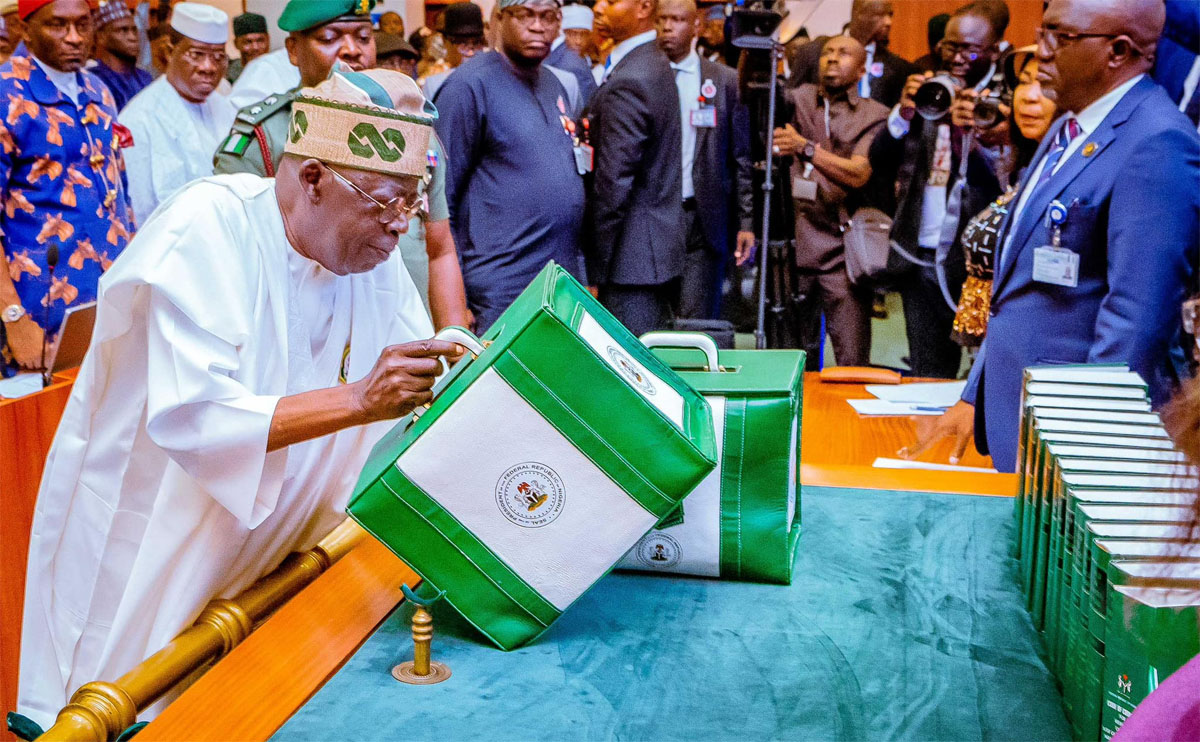
The stage is set for President Bola Ahmed Tinubu to present the 2026 Federal Government budget following the Senate’s approval of the 2026–2028 Medium Term Expenditure Framework and Fiscal Strategy Paper (MTEF/FSP).
The Senate, during plenary, approved a total ₦54.46 trillion 2026 budget, endorsing key fiscal and macroeconomic parameters despite concerns over a massive revenue shortfall recorded in 2025.
Under the approved framework, capital expenditure was pegged at ₦20.131 trillion, recurrent expenditure at ₦15.265 trillion, statutory transfers at ₦3.152 trillion, and Sinking Fund at ₦388.54 billion.
Lawmakers also approved an oil price benchmark of $60 per barrel, revised downward from the executive’s proposed $64.85, alongside projected aggregate revenue of ₦34.33 trillion, a fiscal deficit of ₦20.13 trillion, borrowings of ₦17.88 trillion, and debt service obligations of ₦15.52 trillion.
Other approved assumptions include crude oil production of 1.84 million barrels per day, inflation rate of 16.5 per cent, exchange rate of ₦1,512 to the dollar, and GDP growth rate of 4.68 per cent for 2026.
The approval followed the consideration of a report presented by the Chairman of the Senate Committee on Finance, Senator Mohammed Sani Musa (APC, Niger East). The committee recommended downward adjustments to oil price benchmarks in response to global geopolitical tensions and volatility in the international oil market.
READ ALSO:
- Inflation, Insecurity Drive Nigerians into Worst Survival Crisis in History – NLC
- Borno Police Defuse Unexploded Bomb Under Network Mast in Maiduguri
- Aisha Buhari Key to DSS DG Removal, Thwarts Alleged APC Primary Manipulation
The Senate also sustained projections for crude oil output, exchange rates and inflation for 2026–2028, citing the Central Bank of Nigeria’s stabilisation policies and ongoing economic reforms. Lawmakers expressed optimism that tax reforms would drive economic growth and improve revenue performance.
The committee further urged the Federal Government to implement a National Scanning Policy under the National Single Window of the Nigeria Revenue Service (NRS) to boost revenue assurance, reduce leakages, enhance transparency and strengthen national security.
Meanwhile, Minister of Finance and Coordinating Minister of the Economy, Wale Edun, disclosed that the Federal Government recorded a significant revenue shortfall in 2025, with actual inflows estimated at ₦10.7 trillion against a projected ₦40.8 trillion.
Speaking before the House of Representatives Committees on Finance and National Planning, Edun attributed the shortfall largely to weak oil and gas revenues, especially Petroleum Profit Tax (PPT) and Company Income Tax (CIT) from oil companies.
Despite the revenue gap, Edun said the government met key obligations, including salaries, statutory transfers, and debt servicing, through prudent treasury management.
He cautioned against rigid expenditure commitments tied to oil revenue projections, urging flexibility in spending plans amid recurring revenue underperformance.
Also speaking, Minister of Budget and National Planning, Atiku Bagudu, said the MTEF/FSP emerged from broad consultations and balanced conservative revenue assumptions with ambitious targets aimed at improving agency performance.
Chairman of the House Committee on Finance, James Faleke, stressed the need for critical scrutiny to prevent bloated budgets and ensure fiscal decisions that would move Nigeria’s economy forward.
Senate Backs ₦54.46trn 2026 Budget, Cuts Oil Price Benchmark to $60

-

 metro2 days ago
End Biafra Agitation, Tinubu Has Integrated Ndigbo Into National Development — Umahi
-
 Business2 days ago
Nigeria FX Market: Dollar Demand Surges, Naira Slides Slightly in Festive Season
-

 International2 days ago
(UPDATED) Sydney Bondi Shooting: Anti-Semitic Attack Leaves 16 Dead, 40 Injured
-

 Politics2 days ago
Ashimolowo Casts Doubt on Obi’s Northern Support as Opposition Coalition Wobbles
-

 Politics2 days ago
Peter Obi Poised to Dump Labour Party as Leadership Crisis Worsens
-
 Business2 days ago
Dangote Refinery: Nigerians to Enjoy Affordable Petrol as Importers Face Losses
-

 News8 hours ago
Trump Adds Nigeria to List of Countries Facing US Entry Restrictions Over Security Concerns
-
 metro2 days ago
Bello Turji Accuses Ex-Governors of Creating Insecurity in Zamfara, Sokoto