

International
Local security chief arrested over murder of mayor in Mexico

Local security chief arrested over murder of mayor in Mexico
German Reyes, a local security official in Chilpancingo, Mexico has been arrested for the murder of the city’s mayor, Alejandro Arcos.
The Mexican authorities announced his arrest via a statement on Tuesday, November 12.
The Mayor was killed in the month of October as security officials discovered his lifeless body in his pick-up truck with his head chopped off and placed on his body.
The brutal killing and decapitation of Mayor Alejandro Arcos, which occurred just days after he assumed office, stunned the nation.
Guerrero prosecutors confirmed the detention of the security official who was identified as German ‘N,’ in line with Mexican practice of withholding the full names of suspects.
However, a local government official later identified him as German Reyes, who was the security chief for Chilpancingo, a city of around 280,000 residents in southwestern Mexico prior to his arrest.
READ ALSO:
- Ondo: Police arrest prophetess over death of woman, newborn in church
- Why I can’t form coalition with Peter Obi – Sowore
- Man bags life imprisonment for defiling 11-year-old girl
“The Guerrero prosecutor’s office, the Mexican army and the National Guard, arrested a man for the crime of qualified homicide in Chilpancingo,” the statement said.
The arrest seems to provide more proof of the extensive infiltration of organized crime in local governments across large parts of Mexico, as well as the corruption among local officials.
Reyes had a lengthy career in Mexico’s military, according to his public profile.
Further reports by the police revealed that the Mayor had prior to his death, left Chilpancingo in his truck without a driver or security detail, heading toward the nearby town of Petaquillas, Mexico.
Local media also suggested that Arcos had met with members of Los Ardillos, a criminal group operating in Guerrero, Mexico.
Local security chief arrested over murder of mayor in Mexico











International
Iran Delegation Walks Out as Trump Threatens to ‘Annihilate’ Islamic Republic
Iran Delegation Walks Out as Trump Threatens to ‘Annihilate’ Islamic Republic
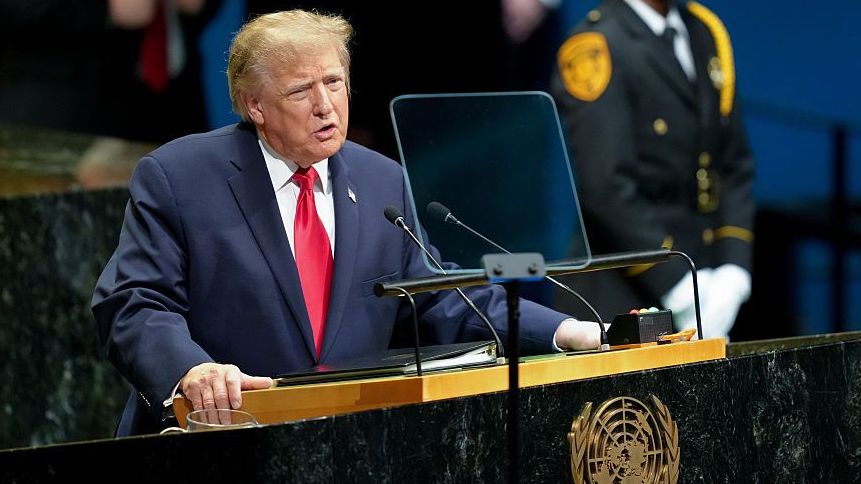
Members of the Iranian delegation walked out of the United Nations General Assembly during US President Donald Trump’s address after he threatened to “annihilate” the Islamic Republic if Washington and Tehran fail to reach an agreement to end the conflict.
The dramatic walkout occurred on Tuesday, September 22, during the opening day of the 81st United Nations General Assembly (UNGA 81) in New York, where Trump devoted a significant portion of his speech to defending the US military campaign against Iran.
Iranian President Masoud Pezeshkian and Foreign Minister Abbas Araghchi, who were in New York for the annual UN meeting, did not attend Trump’s address in the General Assembly chamber. Most members of Iran’s delegation who were present left the hall about 10 minutes into the speech, while a lower-ranking Iranian diplomat remained in the chamber.
Trump used the address to defend the US military action against Iran, arguing that the campaign had prevented Tehran from obtaining a nuclear weapon.
He said Washington faced a choice between reaching an agreement that would allow Iran to rebuild and taking further military action against the country.
Trump asked whether a deal would allow Iran to become “a far greater country” or whether the United States should “annihilate the Islamic Republic” and “drive them into hell with no chance of survival.”
The remarks represented a fresh escalation in Trump’s public warnings against Iran, although he simultaneously indicated that he expected diplomacy to eventually produce an agreement.
Trump said he believed a deal could be reached after the November 3 US midterm elections, while insisting that the election would not determine his administration’s policy towards Iran.
He also called on other countries to join the United States in imposing economic pressure on Tehran, arguing that international isolation would increase pressure on the Iranian government to negotiate.
READ ALSO:
- 2027: Tompolo-Backed Group Deploys 44 Vehicles for Tinubu-Shettima Campaign in Borno
- MTN, Gates Foundation Launch $25m AI Maternal Health Initiative for 500,000 Nigerian Women
- Niger Mosque Attack: Bago Says 63 Abducted, 14 Freed, Three Killed
The Iranian delegation’s departure provided a visible response to the remarks and underscored the continuing diplomatic divide between Washington and Tehran. Reports from the General Assembly said the delegation left as Trump moved into his warnings about the Iranian government and its nuclear programme.
The walkout came despite continuing diplomatic contacts between the two countries on the sidelines of the UN gathering.
Shortly after his speech, Trump said US officials had held what he described as a “very good” and productive meeting involving Iranian representatives and mediators.
He later clarified that US special envoys Steve Witkoff and Jared Kushner had met with mediators involved in the Iranian discussions, rather than necessarily holding a direct meeting with Iranian officials themselves.
Reuters reported that Trump subsequently said he believed a settlement between the United States and Iran would eventually be reached.
The diplomatic activity has highlighted the conflicting tracks surrounding the US-Iran conflict: public threats and military pressure on one side, and continued efforts to negotiate an end to the confrontation on the other.
US Secretary of State Marco Rubio had earlier confirmed that Washington was open to meeting Iranian representatives at the UN, although he said at the time that no formal meeting had been scheduled. Rubio said any engagement would need to address the US objective of preventing Iran from obtaining a nuclear weapon.
Arab countries have also been involved in efforts to facilitate communication between Washington and Tehran.
Qatar, which has previously played a mediating role in regional disputes, has urged both sides to pursue diplomacy. Qatari Emir Sheikh Tamim bin Hamad Al Thani told the General Assembly that the Gulf was experiencing a dangerous period and argued that the crisis could be addressed through diplomatic means, including efforts to reopen the Strait of Hormuz to maritime navigation.
The strategic waterway has become a major issue in the conflict because of its importance to international energy and shipping.
Iran has reportedly linked the reopening of the Strait of Hormuz to conditions including an end to the naval blockade, the release of frozen Iranian assets and an end to hostilities across the various fronts involved in the conflict.
The demands illustrate the substantial gap between Tehran’s conditions and Washington’s position, particularly over Iran’s nuclear programme and the future of military and economic pressure.
Trump’s UN speech also sought to rally international support for his administration’s approach to Iran.
He argued that previous US administrations had failed to adequately confront Tehran and maintained that his administration’s military campaign had prevented Iran from obtaining a nuclear weapon.
Iran has rejected the US military campaign and continued to call for diplomatic efforts to address the conflict on terms acceptable to Tehran.
The presence of both diplomatic contacts and military threats has created uncertainty over whether the latest negotiations can produce a lasting settlement.
The Iran nuclear dispute remains at the centre of the confrontation, with Washington insisting that Tehran must not obtain a nuclear weapon while Iran has maintained that its rights and national interests must be respected in any negotiations.
Trump’s remarks also came as the United States sought broader international support for its position.
During the same UN address, he criticised Cuba and said its communist government was failing, prompting members of the Cuban delegation to leave the chamber as well.
The Iranian walkout, however, was particularly significant because it occurred during Trump’s direct warnings against Tehran and came as mediators were working to bring the two sides closer to negotiations.
The developments have placed the UN General Assembly at the centre of renewed diplomatic activity surrounding the conflict.
Pezeshkian’s expected appearance before the General Assembly provides Tehran with an opportunity to present its position on the war, the nuclear dispute and the conditions it considers necessary for diplomacy.
For Washington, the priority remains preventing Iran from developing or obtaining a nuclear weapon, while Trump has continued to combine military pressure with calls for a negotiated settlement.
The immediate outcome of the latest diplomatic efforts remains uncertain. Trump has said he expects an eventual settlement, while significant differences remain over the conditions for ending the conflict and reopening key regional waterways.
For now, the Iranian delegation’s walkout has become one of the most visible moments of UNGA 81, highlighting the sharp tensions between Washington and Tehran even as officials and mediators continue to explore a possible diplomatic path.
Iran Delegation Walks Out as Trump Threatens to ‘Annihilate’ Islamic Republic
International
UNGA 81: Trump Threatens to ‘Annihilate’ Iran if No Deal Is Reached
UNGA 81: Trump Threatens to ‘Annihilate’ Iran if No Deal Is Reached
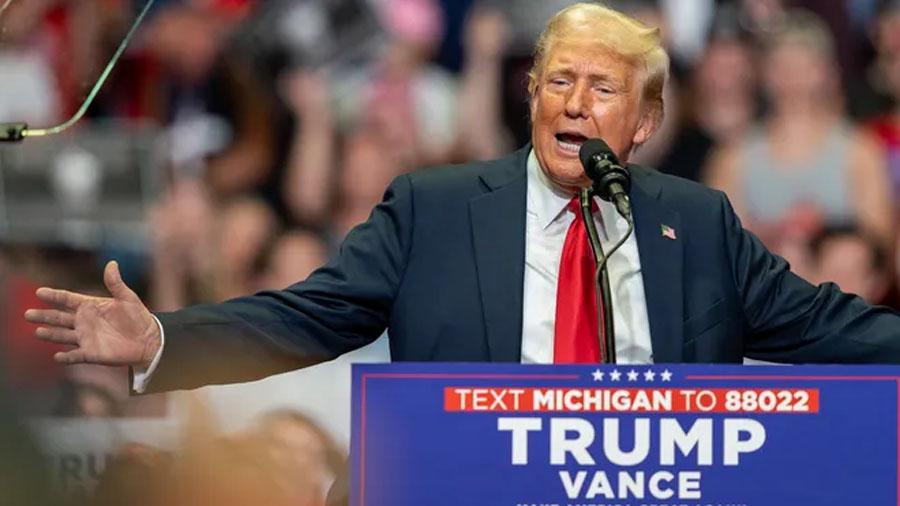
United States President Donald Trump has threatened to “annihilate” Iran if Tehran fails to reach a deal with Washington, using his address to the 81st United Nations General Assembly (UNGA 81) to defend the ongoing US military campaign against Iran.
Trump issued the warning on Tuesday, September 22, 2026, while addressing world leaders at the United Nations headquarters in New York. He framed the conflict around his administration’s stated objective of preventing Iran from obtaining a nuclear weapon and reducing what he described as Tehran’s ability to threaten countries across the Middle East.
Trump said he faced what he described as a major decision over the future of the conflict, contrasting the possibility of a negotiated agreement with further military action against Iran.
“I have a big decision to make,” Trump told the General Assembly, before asking whether a deal would be reached with Iran or whether he should “annihilate the Islamic Republic.” He also threatened to drive Iran “into hell” if an agreement was not reached.
The remarks represented a sharp escalation in the public rhetoric surrounding the US-Iran conflict, although Trump simultaneously indicated that he believed a diplomatic settlement remained possible.
Trump said he expected the United States and Iran to reach an agreement after the November 3 US midterm elections, suggesting that Tehran was waiting to see the outcome of the elections before committing to a deal.
He nevertheless said the elections would not determine his policy towards Iran and insisted that his decisions would be based on what he considers to be US national-security interests.
Trump used his UNGA 81 speech to defend the military campaign against Iran, arguing that US action had prevented Tehran from obtaining a nuclear weapon and had significantly weakened its military capabilities.
He accused Iran of supporting militant groups and contributing to instability across the Middle East, while reiterating that the United States would not accept Iran acquiring a nuclear weapon.
Trump also urged countries around the world to maintain economic pressure on Iran, calling for what Reuters described as complete economic isolation of Tehran.
The US president’s comments came as Washington and Tehran continued to face pressure to find a diplomatic route out of the conflict.
READ ALSO:
- Mambilla: Malami Defends $200m Settlement, Rejects ICC Corruption Findings
- Obasanjo Family, Orji Kalu Among Nigerians Linked to $271m US Property Investigation
- Nationwide Blackout Looms As Electricity Workers Give NAF Three-Day Ultimatum
Iran has previously signalled conditions for ending the fighting, including an end to hostilities, the release of frozen Iranian funds and an end to the US naval blockade of Iranian ports, according to reporting ahead of the UN summit.
The Iranian delegation’s response to Trump’s speech underscored the depth of the diplomatic divide.
Iranian representatives reportedly walked out of the General Assembly chamber as Trump delivered his address and criticised Tehran’s conduct.
Iranian President Masoud Pezeshkian and Foreign Minister Abbas Araghchi were in New York for the UN General Assembly, although they did not attend Trump’s address in the chamber.
Trump also used the speech to claim that the US military campaign had altered Iran’s ability to operate as a regional power.
He described Iran as having previously been a major source of regional instability and argued that American military action had changed the balance of power.
Iran, however, has rejected Washington’s characterisation of its nuclear programme and military activities and has continued to call for diplomatic engagement based on its own conditions.
The confrontation has implications beyond the two countries because of the importance of the Strait of Hormuz, a major global energy shipping route.
The waterway has remained a central concern during the conflict, with disruptions affecting oil supplies and contributing to higher energy prices. Gulf countries have also faced the risk of being drawn further into the confrontation because of their geographical proximity to Iran and their strategic relationship with Washington.
The impact on energy markets has become an increasingly important part of the political debate in the United States, particularly as the country approaches the 2026 midterm elections.
READ ALSO:
- Phyna, Nkechi Blessing Take Social Media Feud To Boxing Ring In Lagos
- Edo Police Arrest Cleric Over Alleged Abduction, Sexual Abuse Of Five Girls
- Abia Police Rescue Four-Day-Old Baby, Arrest Four Over Alleged Theft, Trafficking
Trump has argued that a deal with Iran could eventually help stabilise the situation and bring energy prices down, while continuing to maintain that military pressure is necessary to force Tehran towards an agreement.
US Secretary of State Marco Rubio has also indicated that Washington remains open to negotiations, even as the Trump administration maintains pressure on Iran.
Trump’s UN appearance was part of a wider diplomatic programme that included meetings with leaders from Europe, the Middle East and other regions.
The Iran war nevertheless dominated much of the attention surrounding his speech because of its implications for regional security, energy supplies and US foreign policy.
Trump also addressed the Russia-Ukraine war and other international issues, presenting his administration’s foreign policy as an effort to use American military and economic power to pressure adversaries towards negotiations.
The president portrayed his approach as different from previous US administrations, arguing that Washington had been more willing to use American power to confront international conflicts.
The remarks on Iran, however, were the most consequential part of the address because Trump explicitly presented further military escalation as an alternative to a negotiated settlement.
His comments did not result in an immediate agreement between Washington and Tehran.
Instead, the United States continued to demand major concessions from Iran while indicating that diplomacy remained possible.
Trump’s statement that a deal could be reached after the November election also leaves open a potentially significant diplomatic window, although there was no indication from Tehran during the UN session that an agreement was imminent.
The US-Iran conflict has already created wider regional consequences, including pressure on shipping, energy markets and Gulf states concerned about retaliatory attacks.
Gulf leaders meeting Trump in New York have been seeking to prevent further escalation while protecting their own countries from the consequences of an expanded war. CNN reported that Saudi Arabia, the United Arab Emirates and Qatar had previously urged Trump against a major escalation and were again concerned about being drawn deeper into the conflict.
The possibility of renewed negotiations therefore remains alongside the threat of further military action.
For now, Trump’s “annihilate Iran” warning represents a public statement of the consequences he says Tehran could face if it refuses an agreement, while his prediction of a possible post-election deal indicates that Washington has not closed the door on diplomacy.
The UN General Assembly address produced no immediate breakthrough between the two countries, leaving the conflict at a critical point as international pressure continues to build for a negotiated settlement.
UNGA 81: Trump Threatens to ‘Annihilate’ Iran if No Deal Is Reached
International
UK Approves Defensive Military Support for Saudi Arabia as Houthi Attacks Escalate
UK Approves Defensive Military Support for Saudi Arabia as Houthi Attacks Escalate
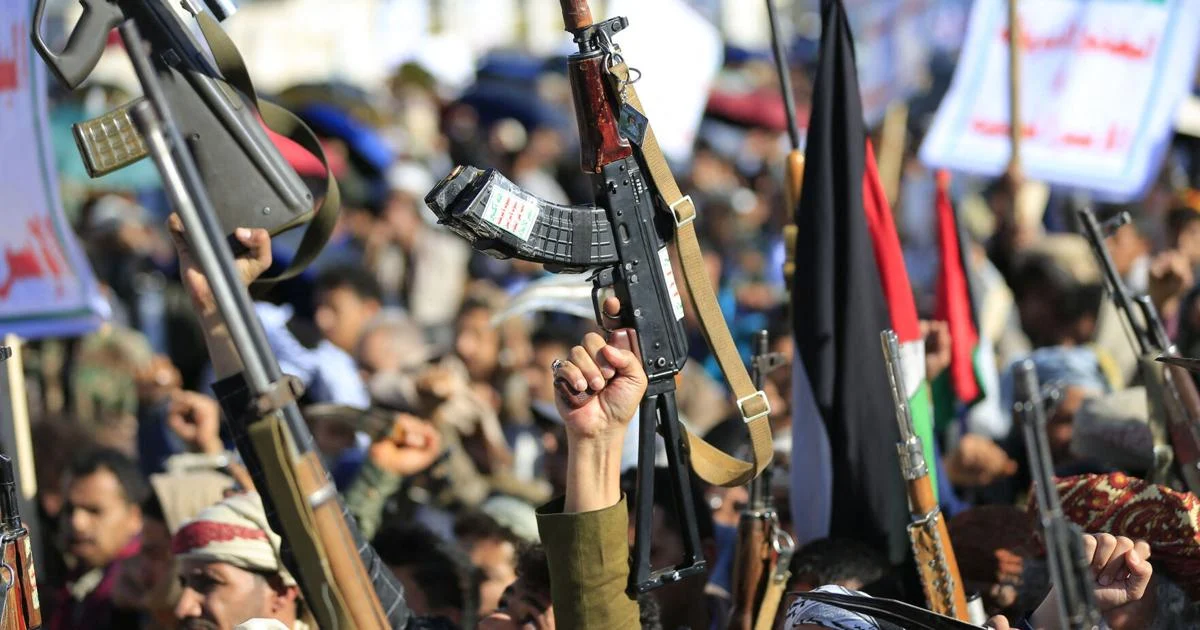
The United Kingdom has approved limited military support for Saudi Arabia after Riyadh requested assistance to counter escalating attacks by Yemen’s Houthi movement.
British Prime Minister Andy Burnham said the UK would provide defensive air-to-air refuelling for Saudi aircraft under a time-limited arrangement that will initially involve the deployment of a Royal Air Force Voyager aircraft.
Burnham announced the decision on Monday while travelling to New York for the United Nations General Assembly, saying he approved the Saudi request following advice from the British defence and foreign secretaries.
The RAF Voyager is expected to help refuel Saudi fighter aircraft in the air, allowing them to remain operational for longer as Saudi Arabia responds to Houthi missile and drone attacks.
The British government has described the assistance as defensive military support, rather than an agreement for British forces to join offensive operations against Houthi targets.
Burnham said the arrangement would be temporary and kept under review.
The decision follows an escalation in fighting in Yemen, with Houthi forces intensifying attacks on Saudi Arabia since July.
According to the UK government, Houthi missiles and drones have targeted cities, airports, military facilities and energy infrastructure in Saudi Arabia, while attacks have also affected Saudi-linked shipping in the Red Sea.
British officials have warned that the escalation threatens regional stability and freedom of navigation through the Red Sea and Bab al-Mandeb Strait, one of the world’s important maritime routes.
READ ALSO:
- UK Student Visa: 63 Countries Exempt From Proof of Funds, Nigeria Excluded
- Lagos Intensifies Surveillance as Adulterated Palm Oil Raises Food Safety Concerns
- Saudi Arabia Rejects Nigeria’s Request for More 2027 Hajj Slots
The UK government said Houthi attacks on Saudi Arabia had injured civilians, damaged homes and residential areas and disrupted commercial aviation.
The conflict has also created a growing humanitarian crisis in Yemen, with the UK saying more than 126,000 people have been displaced amid the renewed fighting.
Humanitarian agencies have reported increasing food insecurity and growing health and protection needs, particularly among women and children.
The British government has called on the Houthis to end their attacks, release detained humanitarian, United Nations and diplomatic personnel and return to the UN-led peace process.
London has also accused Iran of providing longstanding support to the Houthis, saying that assistance has enabled attacks affecting civilians, neighbouring countries and maritime security. Iran’s role remains part of the wider regional dispute.
The latest British deployment adds to an existing UK-Saudi defence relationship.
Earlier this year, Britain deployed its Sky Sabre air-defence system to Saudi Arabia to help protect the kingdom against missile threats.
The new RAF support comes as the Houthis have expanded their military presence along Yemen’s Red Sea coast, increasing international concern about the security of commercial shipping and energy supplies.
The strategic importance of the Bab al-Mandeb Strait has made the latest escalation particularly significant for international trade.
The UK government has said the disruption of major shipping routes could have wider economic consequences, while Burnham linked regional stability to protecting Britain’s economic interests and limiting further pressure on energy and living costs.
The Houthis control Yemen’s capital, Sana’a, and large parts of the country’s most populated areas. Their renewed conflict with Saudi Arabia and Yemen’s internationally recognised government has added another layer to the wider instability in the Middle East.
Saudi Arabia has for years maintained close defence and security ties with Britain and has been one of the UK’s major defence customers.
Under the new arrangement, however, Britain’s immediate military role is limited to the agreed defensive support.
The deployment of the RAF Voyager is expected to begin within days, with the duration of the assistance subject to review.
The UK has said it will continue working with regional and international partners to support regional stability, civilian protection and humanitarian access while backing diplomatic efforts to end the conflict.
The latest development places Britain more directly alongside Saudi Arabia as Riyadh responds to the renewed Houthi attacks, while also highlighting the wider implications of the Yemen conflict for Red Sea shipping, energy supplies and Middle East security.
UK Approves Defensive Military Support for Saudi Arabia as Houthi Attacks Escalate
-
 International2 days ago
18 Suspects Transferred to US Over 2021 Killing of Haitian President Moïse
-

 News2 days ago
NiMet Predicts Thunderstorms, Rain Across Nigeria Till Wednesday
-

 Politics2 days ago
‘Join the Hunt’ — Soludo Urges Igbos to Strategically Align Ahead of 2027
-

 Sports2 days ago
Messi Fires Stunning 75th Career Free-Kick to Reach 930 Goals in Inter Miami Draw
-
 metro2 days ago
My Heart Has Always Been Home With You — Tinubu’s Powerful Message to Oluremi at 66
-
 News2 days ago
Working People United Celebrates Oluremi Tinubu at 66, Commends Her Humanitarian Efforts
-
 News1 day ago
NLC Backs ₦500 Petrol Demand, Workers Propose ₦500,000 Salary
-

 Auto2 days ago
Jetour T1 Storms Abuja as Automaker Accelerates Nigeria Expansion