

News
Looking for job? NAFDAC Recruitment Portal 2023
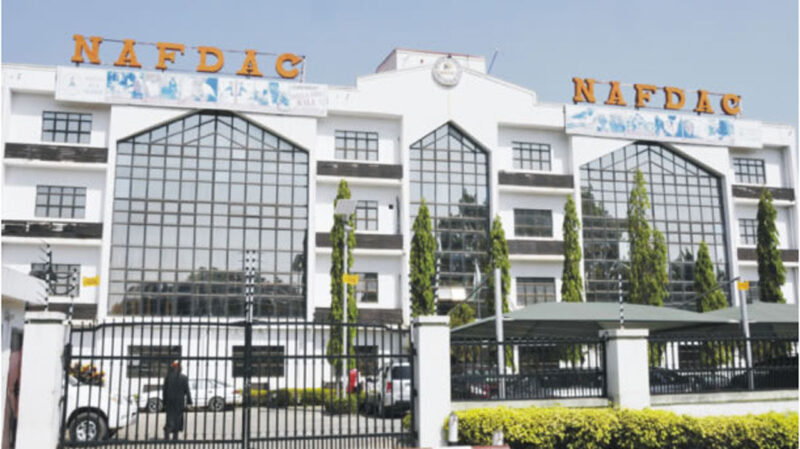
Looking for job? NAFDAC Recruitment Portal 2023
NAFDAC Recruitment Portal 2023: Apply Online for National Agency for Food Drug Administration and Control Jobs
Looking to join the National Agency for Food Drug Administration and Control (NAFDAC) and pursue a rewarding career in the health sector? Discover how to apply and increase your chances of being selected for the NAFDAC recruitment exercise in 2023.
To begin the application process, visit the official NAFDAC recruitment portal at www.nafdac.gov.ng. This portal provides all the necessary information and forms for the application process. Read on to find out the requirements and steps to successfully apply for the NAFDAC recruitment.
NAFDAC offers an excellent opportunity for young health graduates to start a career in the health sector. It is important to note that the NAFDAC 2023 registration application form is currently not available. Beware of any misleading information claiming ongoing recruitment at NAFDAC. Any official announcements regarding recruitment will be made on the NAFDAC official portal and other reputable news channels.
READ ALSO:
- Group supports Tinubu’s fuel subsidy removal, calls for calm
- Atiku tenders 118 exhibits to challenge Tinubu victory
- Subsidy: Kyari meets Tinubu, says fuel queues will be short-lived
The application form and process for NAFDAC recruitment are completely free. You can access the forms online through the NAFDAC application site at www.nafdac.gov.ng.
NOTE: Currently, NAFDAC 2023 recruitment form will soon be available and recruitment is yet to begin. From reliable sources, NAFDAC will very soon commence a massive recruitment exercise in which the portal will then be open and applications will be accepted. Closing date too has not yet been announced as the time of publishing this article.
NAFDAC requires certain qualifications and criteria for recruitment in 2023. The basic requirements are as follows:
- Higher Qualifications: HND or BSc from a recognized institution.
- Nationality: Nigerian.
- Minimum Age: 18-35 years old.
- Preferred Qualification: SSCE, NECO, and NABTEB with 5 Credits, including Mathematics and English.
- Location: Nationwide.
- Gender: Male and Female.
- Other Requirements: Computer Literacy and English proficiency.
To apply for the NAFDAC recruitment in 2023, follow these steps:
- Visit the official NAFDAC recruitment website at www.nafdac.gov.ng.
- Fill in all the required information in the provided spaces on the portal.
- Click on “submit application” after completing the form.
- Wait for the release of the NAFDAC employment shortlist. If your name is on the list, you will proceed to the next phase of the recruitment process.
For the latest updates and information about NAFDAC recruitment, feel free to contact us. We value your feedback on the National Agency for Food Drug Administration and Control recruitment process and would like to know which specific details you are interested in learning more about.
Looking for job? NAFDAC Recruitment Portal 2023






News
Tinubu Arrives Paris for Second Phase of European Vacation
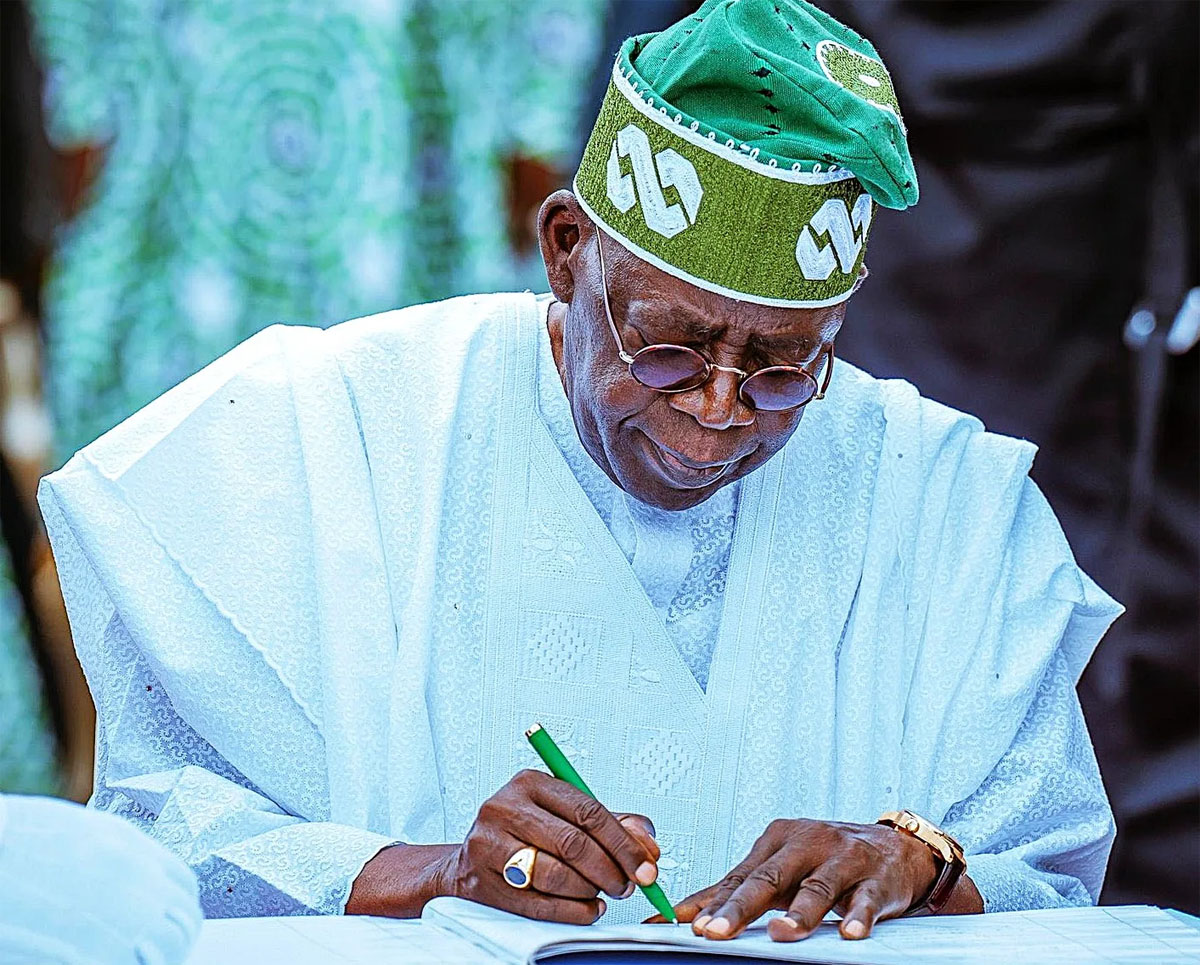
President Bola Ahmed Tinubu has arrived in Paris, France, as he continues his three-week annual vacation in Europe.
The President was received by Nigeria’s Ambassador to France, Ayodele Oke, following his arrival in the French capital on Sunday.
Tinubu began the holiday in London after departing Abuja on August 30. The Presidency had announced before his departure that the President would spend three weeks in Europe as part of his annual leave.
The move to Paris marks the second phase of his European vacation.
In the statement announcing the trip, Special Adviser to the President on Information and Strategy, Bayo Onanuga, said London would be Tinubu’s first destination and that he was expected to return to Nigeria after the working vacation.
The Presidency said his return would coincide with preparations for the January 2027 general election, as political activities intensify ahead of the polls.
Tinubu is seeking another term in office on the platform of the All Progressives Congress (APC).
No detailed public itinerary has been released for the President’s stay in Paris.
The President is expected to return to Nigeria after completing the three-week vacation, in line with the schedule earlier announced by the Presidency.
News
Petrol Subsidy: Presidency Rejects Atiku’s Plan, Says No Going Back
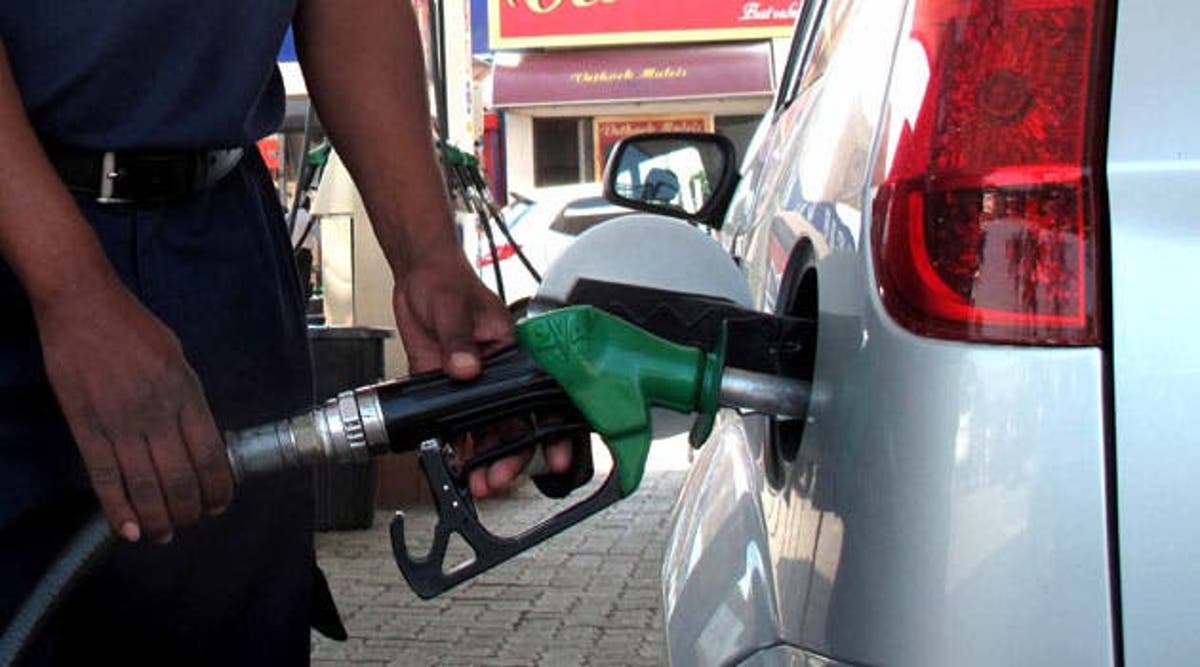
Petrol Subsidy: Presidency Rejects Atiku’s Plan, Says No Going Back
The Presidency has ruled out any return to the petrol subsidy regime, insisting that the Federal Government will not reverse the policy despite renewed calls by African Democratic Congress (ADC) presidential candidate Atiku Abubakar for government intervention to reduce the cost of petrol.
The renewed disagreement has pushed fuel subsidy removal back to the centre of Nigeria’s political debate ahead of the 2027 presidential election, with the Tinubu administration defending the reform while Atiku argues that Nigerians have borne the brunt of higher fuel prices without receiving sufficient benefits from the savings generated by the policy.
The Presidency said there would be no going back to the old subsidy system, arguing that restoring it would undermine the economic reforms introduced by President Bola Ahmed Tinubu and could weaken investment in Nigeria’s emerging domestic refining industry.
The government’s position followed Atiku’s renewed advocacy for a form of petrol subsidy, which his camp says would be targeted at domestic production rather than a return to the opaque system that previously consumed huge public funds.
Atiku had earlier pledged to restore petrol subsidy if elected president in 2027. His spokesman, Paul Ibe, subsequently explained that the proposed intervention would initially be used to support households and businesses, revive economic activity and improve productivity before being gradually phased out.
Atiku has argued that the immediate priority should be to reduce the pressure that high petrol prices have placed on households, businesses and the wider economy.
His position has evolved into a proposal for a more targeted intervention linked to domestic production. Under the proposed framework, government support would be directed towards crude supplied to Nigerian refineries in order to lower the cost of locally produced petrol rather than returning to the previous broad subsidy structure.
The proposal has nevertheless attracted criticism from the Federal Government and supporters of the current market-based approach.
The Presidency maintains that subsidy removal was necessary because the former system placed an unsustainable financial burden on the government and created opportunities for abuse.
READ ALSO:
- JAMB Takes Over HND Admissions in Polytechnics, Health Institutions Nationwide
- SERAP Threatens Legal Action Over ₦126bn INEC Electoral Funds
- Why I Gave Peter Obi My Vehicle During Benue Visit — Ortom
President Tinubu announced the removal of petrol subsidy on May 29, 2023, shortly after taking office, declaring that the subsidy was gone.
The decision immediately triggered a sharp increase in petrol prices and contributed to higher transportation and logistics costs, with the effects spreading across food prices and other areas of the economy.
The Federal Government, however, has consistently argued that the policy freed resources that would otherwise have continued to finance petrol consumption rather than infrastructure and public services.
According to figures cited by the government, the removal of the subsidy generated N15.8 trillion in resources for the federation between June 2023 and December 2025.
The government says the resources strengthened the finances of the federal, state and local governments and created additional fiscal space for public spending.
Critics, however, have questioned whether the financial gains have translated sufficiently into improvements in the living standards of ordinary Nigerians.
That disagreement is at the heart of the emerging 2027 fuel subsidy debate.
Atiku has argued that Nigerians should be able to see tangible benefits from the money saved by the removal of subsidy, particularly in the areas of transportation, food prices, electricity, healthcare, education and employment.
The former vice-president has also called for accountability over funds previously spent under the subsidy regime, insisting that anyone who diverted public money should be held responsible.
The Presidency, meanwhile, argues that reversing the policy would create uncertainty for investors who have committed billions of dollars to Nigeria’s downstream petroleum sector.
The government has particularly pointed to the expansion of domestic refining capacity, including the Dangote Refinery, as evidence that the petroleum sector is gradually moving away from dependence on imported refined products.
The Dangote Refinery has continued to expand its operations and has announced plans to increase its processing capacity significantly as it ramps up production.
The refinery has also increased its purchases of Nigerian crude, strengthening its position as a major supplier of refined petroleum products to the domestic market.
The development has strengthened the government’s argument that Nigeria should allow the domestic refining industry to grow under a market-oriented petroleum pricing system.
The Presidency fears that a return to government-controlled petrol prices could distort the market and discourage private investment in refineries.
READ ALSO:
- Sanders Urges Trump, Xi to Halt AI Race, Ban Superintelligence
- DSS warns Osun churches, mosques, markets over alleged terrorist attack plot ahead of 2027
- ‘Tinubu Will Win Again in 2027’ — Charismatic Bishops’ Secretary
The government has also maintained that the country cannot sustainably return to a situation where public funds are used to bridge the difference between the market cost of petrol and an artificially lower pump price.
The debate is further complicated by changing conditions in the global oil market and Nigeria’s increasing domestic refining capacity.
Industry groups have also highlighted the potential benefits of the post-subsidy environment, particularly the increased role of local refineries and changes in the downstream petroleum market.
Atiku’s camp, however, insists that a carefully designed intervention does not necessarily mean a return to the old subsidy regime.
Paul Ibe has said an Atiku administration would use the intervention as a temporary measure while working towards conditions that would eventually make subsidy unnecessary.
Atiku has also sought to distinguish his proposal from the subsidy arrangement that existed before 2023, arguing for a production-based subsidy that would support domestic refining and help bring down the cost of petrol for consumers.
The disagreement has therefore shifted from a simple question of whether subsidy should exist to a broader debate over how petrol should be priced, who should bear the cost and whether government should intervene in the market.
For the Tinubu administration, the priority is to sustain subsidy removal, increase domestic refining and allow market forces to determine petroleum prices.
For Atiku, government intervention may be necessary to cushion consumers and businesses while Nigeria builds a more productive and competitive economy.
The issue has become particularly politically sensitive because petrol remains a major driver of transportation and logistics costs in Nigeria.
When petrol prices rise, the effects are felt by commercial transport operators, manufacturers, farmers, traders and households.
The high cost of moving goods from farms and factories to markets also contributes to broader inflationary pressure, making the fuel-price debate inseparable from the wider cost-of-living crisis.
The Federal Government has responded with alternative energy and transport initiatives, including efforts to expand compressed natural gas (CNG) use as a cheaper alternative to petrol and diesel for transportation.
The administration has argued that such measures are intended to reduce Nigerians’ dependence on petrol and gradually soften the impact of the subsidy removal.
But opposition parties and critics continue to argue that the pace of relief has not matched the scale of the hardship caused by higher energy and transportation costs.
The issue is consequently expected to feature prominently in political campaigns as parties present competing economic programmes to Nigerian voters ahead of 2027.
For now, the Presidency has made its position clear: there will be no return to the old petrol subsidy regime under the Tinubu administration.
Atiku, meanwhile, continues to defend a targeted intervention that his camp says would reduce petrol prices, support domestic production and eventually be phased out.
The competing positions are likely to keep petrol subsidy removal, fuel prices and domestic refining at the centre of Nigeria’s economic and political debate as the country moves closer to the 2027 presidential election.
Petrol Subsidy: Presidency Rejects Atiku’s Plan, Says No Going Back
News
SERAP Threatens Legal Action Over ₦126bn INEC Electoral Funds
The Socio-Economic Rights and Accountability Project (SERAP) has threatened to drag the Independent National Electoral Commission (INEC) to court unless it accounts for more than ₦126.46 billion in electoral funds linked to findings by the Auditor-General.
SERAP said INEC must, within seven days, provide documentary and physical evidence showing that the money was used for its intended purpose and clarify what happened to the electoral materials reportedly procured with the funds.
The group particularly pointed to ₦112.15 billion described in the audit findings as “irregularly paid” for ballot boxes, electoral devices and other sensitive and non-sensitive election materials.
Questions were also raised about some of the contractors involved in the transactions. SERAP wants the commission to establish whether the companies and suppliers had the capacity to execute the contracts and whether the goods and services they were paid for were actually delivered.
The organisation said the review should also determine whether payments corresponded with the value of materials supplied or services rendered and whether procurement contracts were split to avoid established requirements.
SERAP called on anti-corruption agencies, including the EFCC and ICPC, to investigate the transactions if necessary. It said any probe should extend to public officials who authorised or facilitated questionable payments, as well as the contractors and other private entities that received the funds.
It further demanded that any money found to have been improperly spent or received be recovered and returned to government coffers.
SERAP also warned against the disposal or transfer of any electoral equipment or other public assets covered by the audit findings until the issues surrounding their procurement and use have been fully resolved.
According to the organisation, Nigerians are entitled to know how public institutions spend public funds, particularly money allocated for electoral operations.
SERAP said failure by INEC to provide the requested information within the stipulated seven-day period would lead to legal action aimed at compelling compliance in the public interest.
-

 metro2 days ago
Woman disguises as Muslim woman in Niqab to steal in Ado-Ekiti market, video sparks outrage
-

 metro1 day ago
Ondo Herbal Drink Tragedy: Survivor Vows Never to Drink Again as Death Toll Tops 30
-
 Business1 day ago
Dangote: ₦525 Refinery Shares Could Rise to ₦10,000
-

 metro1 day ago
Sokoto Cleric Stabbed Twice in Neck After Juma’at Prayer, Attacker Killed
-

 Africa2 days ago
Murder of Nigerian Bishop in South Africa Sparks Outcry Over Unsolved Killings
-

 News2 days ago
AI on the Roads: LASTMA Turns to China to Fix Lagos Traffic
-

 Community2 days ago
Kaduna Traditional Rulers Set for 100% Pay Rise as Zazzau Emir Backs Proposal
-

 International2 days ago
Iran’s President Seeks End to War as US Tightens Economic Pressure