
Opinion
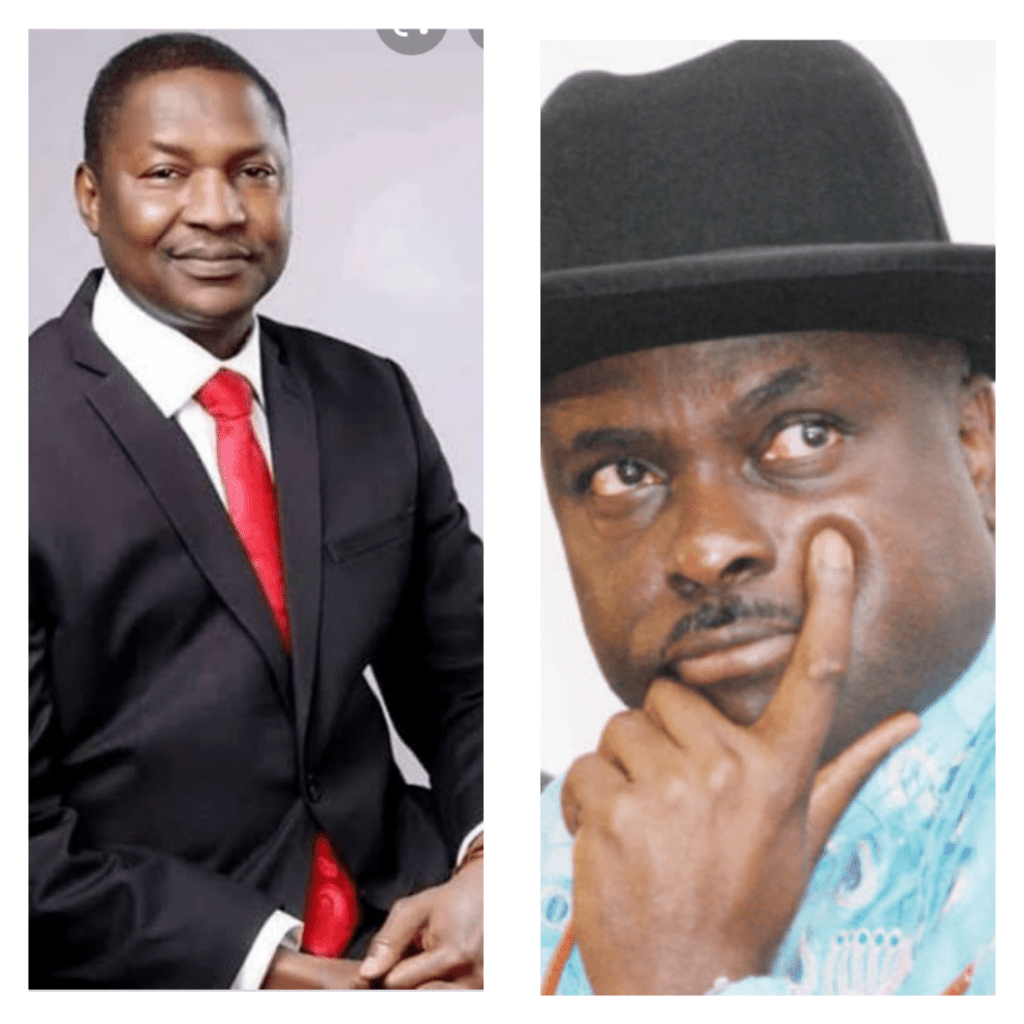
Malami, Ibori dance palongo to Bob Marley songs, by Tunde Odesola
Tunde Odesola
(Published in The PUNCH on Monday, May 24, 2021)
He has no known middle name and, as such, he doesn’t sit on the fence. With magisterial standoffishness, he exemplifies the ruin of law. He never tiptoes, never prevaricates when it’s time to swat southern flies disturbing the herd. He’s Fulani, the strong and all-conquering breed.
Though many call him foolish, he wasn’t born on April Fools Day. He was born on April 17, 1967, when the little cry of a newborn rang in the serene distance. On the seventh day, the tot derived the initials, A.M, from a birth name that would later grow to read law but squander the knowledge before the god of clannishness and nepotism.
He is Abubakar Malami, 54-year-old Attorney General of the Federation and Minister of Justice.
Birthdays and deathdays are important human milestones. Reggae superstar with a middle name, Robert Nesta Marley, aka Bob Marley, was born on February 6, 1945, 70 years before a 48-year-old Malami was made minister by Nigeria’s President, Major General Muhammadu Buhari (retd.), in 2015.
Stricken by cancer, Marley bade the world goodbye on May 11, 1981, at the University of Miami Hospital and Clinics, USA, bequeathing an imperishable legacy of didactic songs, some of which suggest ways out of Nigeria’s current turning and turning in the widening gyre.
In this article, I intend to celebrate the 40th anniversary of Bob Marley’s transition to immortality. Also, I wish to spotlight the redefinition and affirmation of animal rights over human rights by the great Mallam Malami.
This is what Malami said last week in reaction to southern Nigeria governors’ banning of open grazing, “It is about constitutionality. Within the context of the freedoms enshrined in our constitution, can you deny a right of a Nigerian?
“It is as good as saying maybe the Northern governors coming together to say that they prohibit spare parts trading in the North. Does it hold water? Does it hold water for a Northern governor to come and state expressly that he now prohibits spare parts trading in the North?”
Before an inscrutable ad lib after the third stanza of ‘Crazy Baldheads’, Marley says, “I and I build the cabin/I and I plant the corn/Didn’t my people before me/Slaves for this country?/Now you look me with your scorn/Then you eat up all my corn.”
It’s not clear if cows are the objects of oppression used to eat up Marley’s corn, but they’re the tools of oppression used by northern Fulani herdsmen to eat up the corn of southern farmers.
It’s clear that Marley and southern Nigerian governors and their people were agreed on the need to chase the crazy baldheads out of town.
I don’t know what ad lib Marley would make of these rhyming names: Buhari/Yemi/Kyari/Malami/Pantami/Fulani/Ibori and graffiti. But I know the clock is ticking down for Nigeria, and the chickens are heading homewards to roost.
“There’s a natural mystic/ blowing through the air/ If you listen carefully now you will hear…/Things are not the way they used to be/I won’t tell no lie,” sings Bob Marley in ‘Natural Mystic’.
A few weeks ago, another Fulani in Buhari’s kitchen cabinet, Isa Pantami, who’s the minister of communications and digital economy, came under fire when a viral video surfaced showing Pantami saying Boko Haram terrorists don’t deserve to be killed like pigs even as he bemoaned the killing of al-Qaeda founder, Osama bin Laden.
Like Pantami, Malami should be commended for upholding the golden rule in the Animal Farm Nigeria has turned into, where some animals are more equal than humans; four legs good, two legs bad.
Marley was a preacher, so is Malami, though their messages belong to different worlds. Marley sings, “Guiltiness rests on their conscience.” But Malami feels man is guilty for demanding to live above cattle. Marley’s message calls man to love, unity and redemption. Malami’s message calls cows to eat farmers’ sweat, roam and moo.
Warning against inequality and human wickedness, Marley predicts in his song, ‘War’: Until there are no longer first class and second class citizens of any nation/Me say war. War in the East, War in the West, War up North, War down South/ War, War!” But Malami doesn’t see a classless society. He sees a classed society where Fulani cows possess greater rights than human beings.
Marley didn’t foresee the unfolding shame in Delta State when he composed ‘One Love’ because Delta had yet to be created when the song was released in 1965.
Delta State Government, since the days of the immediate past governor, Dr Emmanuel Uduaghan, to the days of the incumbent, Dr Ifeanyi Okowa, has been a shackled slave in the farm of disgraced former Governor James Ibori.
It’s not ‘One Love’ that made Uduaghan and Okowa keep quiet and continue to worship in the mud of corruption at the feet of Ibori. It’s ‘One Greed’. Despite being jailed in the UK for corruption, neither Uduaghan, who was governor when Ibori was jailed, nor Okowa, who became governor when Ibori was released, has ever condemned the King of Gluttony.
Last week, when I saw the video of Ibori dancing at a public function while security men and folks ‘cleared the road’ for him, I remembered Marley’s ‘Redemption Song’ and the plundering old pirates.
Though I won’t mind if Abuja gives Delta part of the recovered Ibori loot from the UK, my mind cut, as Warri people would say, to see the Delta State government falling on the ground, wailing and demanding justice in the way the loot of the insatiable Ibori should be shared.
Uhnmmm!? Delta wey dey support Ibori since dey talk now? Well, maybe Delta has a point, after all. The Federal Government, led by then President Musa Yar’Adua of the People’s Democratic Party, didn’t condemn Ibori nor his ‘comraid’ in corruption, Diepreye Alamieyeseigha, who as Bayelsa State governor, was impeached and sentenced in Nigeria to just two years imprisonment for multi-million dollar corruption after jumping bail in the UK. Alamieyeseigha only spent some weeks in prison before his release.
Deputy to Alamieyeseigha at the time, Dr Goodluck Jonathan, rose in support of the governor and described his trial as witch-hunt, despite the fact that Alamieyeseigha pleaded guilty to six charges. When he later emerged president, Jonathan never condemned the looting of Bayelsa by Alamieyeseigha. Marley’s ‘Time Will Tell’ hums in my mind.
This is just the same way the Buhari-led FG has never condemned the armed robber General, Sani Abacha, despite the unending recovery of loot stashed away by the late thief.
Particularly, Nobel laureate, Wole Soyinka, in 2018, told Buhari to ‘stop creating confusion in the minds of Nigerians’ by honouring the winner of the June 12, 1993 presidential election, MKO Abiola, and admiring his tormentor, Abacha, saying loyalty could become perverse. With Soyinka’s mention of Abiola, I remember Marley’s “Johnny was a good man.”
The embers of the crashed NAF jet in which the Chief of Army Staff, Lt.-Gen. Ibrahim Attahiru, and 10 other military officers lost their lives, are still smouldering. Nigeria mourns. But, questions beggar answers. Why are military planes dropping off our air? Twenty military officers have been killed in three military jet crashes within the last three months. Something is terribly wrong somewhere. I suspect lack of proper maintenance.
When a military Alpha-Jet went missing in the plains of Boko Haram-dominated Borno on March 31, 2021, I thought the debris of the aircraft would never be seen. We all know who controls Borno.
I remember that Nigeria embarked on four jamborees into space in the first decade of the millennium when she launched four separate satellites. None of the satellites is functioning effectively today. None can be deployed to look for the missing aircraft or fight insurgency. And nobody is answering questions for billions down the drain. I shot the sheriff.

Email: [email protected]
Facebook: @tunde odesola
Twitter: @tunde_odesola





Opinion
How a Misleading Channels TV Headline Reignited Nigeria’s Religious Tensions
How a Misleading Channels TV Headline Reignited Nigeria’s Religious Tensions
In Southwestern Nigeria, the historic heartland of the Yoruba ethnic group, religious coexistence was once deeply ingrained in everyday life. Families were often religiously heterogeneous yet harmonious: a Muslim husband with a Christian wife, parents of different faiths raising children who chose Islam, Christianity or indigenous beliefs. Religious festivals were commonly celebrated together, reinforcing social cohesion.
This tradition of harmony began to erode significantly after the introduction of the Structural Adjustment Programme (SAP) in 1986 by the military government of General Ibrahim Badamasi Babangida, under the influence of the World Bank and the International Monetary Fund (IMF). SAP policies—such as reduced government spending on education and social services, trade liberalisation and currency devaluation—triggered soaring inflation, weakened purchasing power and widespread economic hardship.
As livelihoods collapsed, some Nigerians turned to corrupt practices, while others found opportunity in the rise of commercialised religious enterprises, complete with aggressive business models and intense competition for followers. This shift contributed to rising intra- and inter-religious tensions, particularly in a region once celebrated for tolerance.
The erosion of harmony in the Southwest mirrored growing religious conflicts across Nigeria, especially between Christians and Muslims. Scholars and analysts have long warned that the media plays a decisive role in either escalating or de-escalating such conflicts. In his 2006 pamphlet Voices of War: Conflict and the Role of the Media, Andrew Puddephatt observed that media outlets can either inflame violence through partisan reporting or promote peace through independence and responsible framing.
READ ALSO:
- Carter Efe Slams Peller’s Suicide Attempt, Urges Him Back to Streaming After Jarvis Breakup
- Breaking: Popular Nigerian Actress Allwell Ademola Dies at 43
- Labour Party Urges Tinubu to Sign Executive Order on Local Government Autonomy
These concerns resurfaced sharply on 24 December 2025, when a mosque in Maiduguri, Borno State, was bombed during Maghrib prayers, killing worshippers. International and local media clearly identified the target as a mosque. Headlines from BBC, Al Jazeera, Deutsche Welle, The Cable, The Guardian (Nigeria) and Daily Trust all referenced the mosque or Muslim worshippers.
However, Channels Television published the headline: “BREAKING: Many feared dead as bomb blast rocks Maiduguri on Christmas eve.” The omission of the mosque and the emphasis on “Christmas Eve” drew widespread criticism for being misleading and inflammatory.
Reacting on X, commentator Boss Kitty Kitty (@Aashfinn) condemned the framing, warning that it fed a dangerous “Christian genocide” narrative, despite evidence that terrorism in Nigeria targets victims indiscriminately. The Muslim Public Affairs Centre (MPAC) also issued a strong statement, accusing Channels Television of editorial bias, deliberate omission of Muslim identity, and the weaponisation of language to provoke religious tension.
MPAC argued that the headline change—adding “Christmas Eve” after initial publication—suggested a calculated attempt to drive engagement at the expense of national unity. The organisation further alleged a pattern in which Muslim victims are anonymised while narratives that heighten suspicion against Islam are amplified.
Media scholars describe this practice as media bias and confirmation bias, where editorial choices reinforce preconceived narratives while excluding crucial context. Studies consistently show that headlines shape public perception, especially in an era where many readers share stories based solely on headlines without reading full reports.
The controversy came just a day after President Bola Ahmed Tinubu, in his Christmas Day 2025 broadcast, reaffirmed the government’s commitment to religious freedom, protection of all faiths, and peaceful coexistence. While the President sought to calm tensions and promote dialogue, critics argue that irresponsible media framing risks undermining these efforts.
As one commentator, @mrabdulreacts, noted on TikTok: “Narratives can be more dangerous than bullets… misleading headlines can destroy trust for generations.” The Maiduguri bombing coverage has therefore reignited urgent questions about journalistic responsibility, religious sensitivity, and whether sections of the Nigerian media are contributing to division in an already fragile society.
How a Misleading Channels TV Headline Reignited Nigeria’s Religious Tensions
Opinion
When a Tax Law is an illegality, By Farooq Kperogi

When a Tax Law is an illegality, By Farooq Kperogi
What began as a routine legislative reform of the Nigerian tax system by the Bola Tinubu administration has transmogrified and metastasized into an allegation of unexampled transmutation of a duly passed law to an illegality.
It’s by now well known that a law passed by the National Assembly and assented to by the president may have been materially altered after assent and then presented to the public as binding law. If this allegation is established beyond all shadows of doubt, Nigeria would be confronting the specter of an illegality fraudulently constituted as law.
Interestingly, the discovery wasn’t brought to public notice by secretive, conscientious whistleblowers in the bureaucracy or from eagle-eyed civil society audits. It came from within the legislature itself.
A member of the House of Representatives, Abdulsammad Dasuki, raised a point of privilege after personally comparing the harmonized bill passed by both chambers with the version of the tax laws published in the official gazette. He found that the documents did not match.
His discovery was the product of days of rigorous, studious and painstaking examination of Votes and Proceedings, committee harmonization records and the gazetted text. He realized that he voted for one thing, but the country was being governed by another.
That intervention sparked a chain reaction. Other lawmakers requested certified true copies of the assented bill to verify whether the president had signed the same text that was now in circulation. According to multiple reports, those requests were denied.
The refusal to release certified copies deepened suspicion and transformed what could have been dismissed as a clerical misunderstanding into a full-blown institutional crisis.
When legislators are blocked from seeing the law that they passed and that the president signed, the issue verges on criminal constitutional transgression that must not be swept under the carpet.
While full official disclosure is still pending, several discrepancies have been repeatedly cited by lawmakers, journalists and civil society groups. These include expansions of the discretionary powers of tax authorities beyond what the National Assembly approved, alterations to reporting and oversight obligations, changes in enforcement thresholds, and adjustments that potentially increase executive control over revenue administration.
READ ALSO:
- AFCON 2025: Mali Fight Back to Draw With Hosts Morocco in Rabat
- AFCON 2025: Salah’s Spot Kick Seals Egypt’s Knockout Spot Against South Africa
- 2026 World Cup: FIFA Throws Out Nigeria’s Appeal Against DR Congo
These are not innocent, unintentional clerical slips. They go to the meaning, scope and intent of the law. In short, they change who has power to tax Nigerians, how that power is exercised and to whom it is accountable.
The distinction matters. All legislative systems experience clerical errors. A misplaced word or a misnumbered section does not invalidate a statute. But when alterations confer new powers, remove safeguards, or shift institutional balance, they cross from error into illegality.
A gazette cannot lawfully create what the legislature did not enact or what the president did not assent to. Publication is supposed to merely provide evidence of the existence of the law. It can invent a law that hasn’t been passed.
The official responses so far have been evasive and contradictory. Government representatives initially insisted that there was only one authentic version of the law and that claims of alteration were partisan, ill-natured rumors. But that posture is difficult to reconcile with subsequent developments.
For example, a December 26, 2025, press statement signed by Akin Rotimi, House Spokesman and Chairman of the House Committee on Media and Public Affairs, said the National Assembly has now constituted an ad hoc committee to investigate the sequence of events from harmonization to assent to gazetting.
More tellingly, Rotimi said, the leadership of the legislature has directed that the tax laws be re-gazetted and that certified true copies of the versions duly passed by both chambers be issued.
Re-gazetting is not a neutral act. It is an implicit admission that the existing gazette cannot be confidently treated as an accurate record of legislative intent. If nothing were amiss, there would be nothing to authenticate. The attempt to frame this as a routine administrative clarification rings hollow. Laws are not re-gazetted in the absence of doubt about their authenticity.
Supporters of the government have urged the public to trust the president’s integrity and to avoid speculation. The issue, however, is not whether the president is personally trustworthy but whether the law now being enforced is the law he signed. No amount of rhetorical reassurance can substitute for producing the signed text and allowing a side-by-side comparison with the gazetted version.
There is no precedent in the world that I have found for this kind of illegality. In the United States, the much-cited Deficit Reduction Act controversy of 2006 involved a discrepancy between House and Senate versions due to a clerical transmission error. The president signed the enrolled bill that was presented to him.
Courts upheld it under the enrolled bill doctrine, which treats the signed text as conclusive. Crucially, there was no claim that the law was altered after presidential assent.
READ ALSO:
- Cancer Patient Appeals for Second Wife for Husband, Cites Sexual, Health Challenges
- ACF Awaits Full Details Before Commenting on US–Nigeria Airstrikes in Sokoto
- FG Confirms Debris from US–Nigeria Joint Airstrikes on ISIS in Sokoto Fell in Offa
In the Philippines, in 1964, there was a case where the wrong version of a bill was signed by the president. Legislative leaders later disowned the enrolled copy and treated the signature as invalid. Again, the error occurred before or at assent, not after. Once discovered, it was confronted as a mistake. It wasn’t normalized.
Nigeria’s case, if the allegations are borne out, is more disturbing. Here, the claim is that the president signed the correct bill but that the authoritative law published afterward materially departs from it.
Comparative constitutional practice offers no comfort here. Stable legal systems do not recognize post-assent textual mutation as valid law. Where gazetting errors occur, they are corrected. They do not become the basis for enforcement.
This raises an unavoidable question: why would anyone alter a law after it has been passed and signed? Motives can only be inferred from circumstantial evidence, but the inferences are troubling.
Expanding the powers of tax authorities in a period of fiscal stress creates incentives for bureaucratic overreach. Removing or weakening legislative-oversight provisions reduces accountability. Centralizing discretion in the executive arm simplifies revenue extraction while insulating decision makers from scrutiny. These are not abstract possibilities. They align closely with the specific alterations that have been alleged.
There is an even more unsettling implication. If a major tax reform law can be altered after assent without immediate detection, what confidence can citizens have in the integrity of other statutes? Nigeria has passed hundreds of laws over the years, many of them technical, complex and rarely scrutinized line by line after gazetting. The discovery of this discrepancy raises the chilling possibility that post-assent alterations may not be unprecedented in practice.
That possibility should alarm every Nigerian regardless of political affiliation. Law is the foundation of collective life. If the text of the law is unstable, if it can be surreptitiously modified after constitutional procedures have been completed, then legality itself becomes provisional. Governance slides from rule of law to rule by document manipulation.
The seriousness of this violation cannot be overstated. If officials altered the tax law knowingly, they did not merely breach administrative rules. They subverted the Constitution. Such conduct would amount to forgery, abuse of office and an assault on democratic sovereignty. It would mean that Nigerians are being taxed under provisions that were never lawfully enacted.
This is why a thorough, transparent investigation is not optional. It must establish a clear documentary chain: the harmonized bill passed by both chambers, the exact text transmitted for assent, the document signed by the president and the version published in the gazette. Any divergence must be accounted for, step by step, with named responsibility. Institutional reviews that end in vague recommendations will not suffice.
If culpability is established, punishment must be severe. Anything less would invite repetition. As I always say, there is no greater enabler of habitual relapses into the same crime than the absence of consequences for committing the crimes.
The alteration of law after assent is not a victimless bureaucratic shortcut. It is a constitutional crime with nationwide consequences. Deterrence requires more than quiet corrections. It requires accountability that is visible, proportionate and unmistakable.
This episode can either be buried under procedural language and political loyalty, or it can become a moment of constitutional self-correction. A tax law that is an illegality cannot be the foundation of fiscal reform. The integrity of the lawmaking process is itself a public good. Without it, no reform, however well intentioned, can claim legitimacy.
When a Tax Law is an illegality, By Farooq Kperogi
Kperogi is a renowned columnist and United States-based Professor of Journalism
Opinion
Experts Warn US Strikes in Nigeria Could Harm Civilians, Fuel Sectarian Tensions
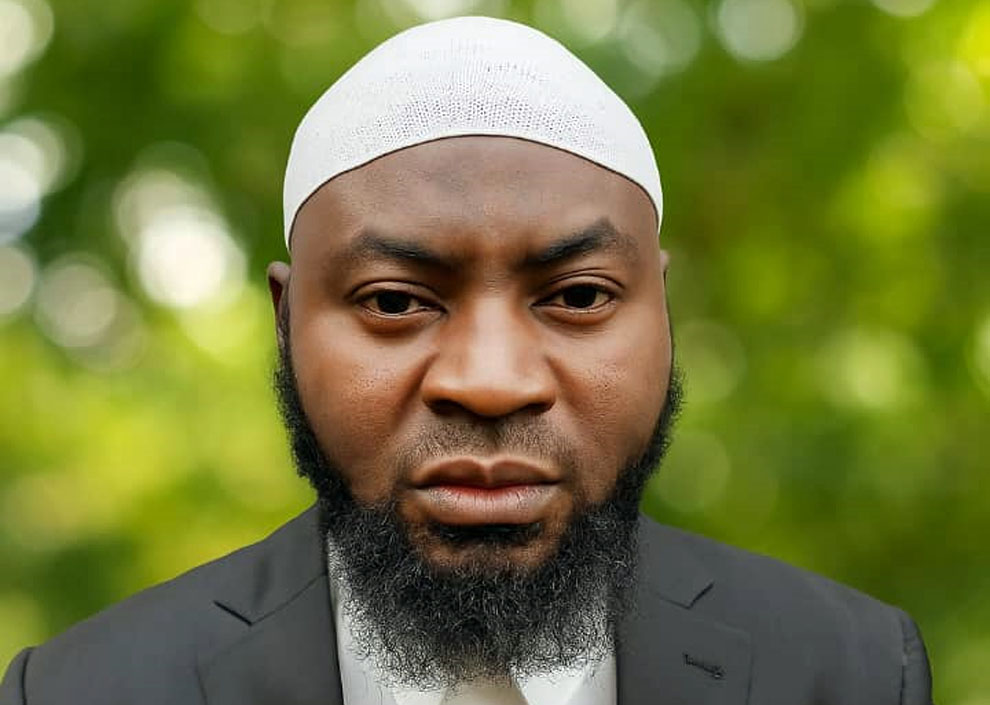
Experts Warn US Strikes in Nigeria Could Harm Civilians, Fuel Sectarian Tensions
Security analysts and local observers have raised concerns over the recent United States military strikes in Nigeria, warning that the operations could misfire and exacerbate tensions rather than curb terrorism.
The strikes, carried out in Sokoto State on Christmas Day under the guise of counterterrorism, mark the first US military operation on Nigerian soil in modern history. The action follows repeated claims by former US President Donald Trump, who alleged a “Christian genocide” in Nigeria and threatened military intervention.
According to eyewitnesses, the areas targeted have no established history of terrorist or bandit activity, with some strikes reportedly affecting civilian-populated areas rather than forested hideouts typically associated with terrorist groups like Boko Haram and ISWAP. Analysts warn that this raises questions about intelligence accuracy and operational planning.
READ ALSO:
- Fenerbahçe Move Ahead of Galatasaray in Race to Sign Nigerian Star Ademola Lookman
- Benue Police Foil Christmas Day Kidnap, Rescue Victim Unharmed
- Alleged Alterations Threaten Nigeria’s January Tax Reforms, Lawmakers Call for Suspension
Mallam Ibrahim Agunbiade, writing on the implications of the strikes, emphasized that Nigeria’s security challenges are regionally specific. Boko Haram and ISWAP are concentrated in the North-East, while armed banditry is largely confined to forested regions in Zamfara and Niger states. “Any counterterrorism effort that ignores these realities is either grossly incompetent or deliberately misleading,” he noted.
Experts also caution against framing Nigeria’s crisis as a religious conflict, pointing out that both Muslims and Christians are affected by terrorism. Weaponizing religion to justify foreign military intervention could delegitimize Nigeria’s sovereignty and inflame sectarian tensions.
Agunbiade stressed that the country needs intelligence-driven cooperation and respect for its territorial integrity, rather than indiscriminate bombardments that may increase civilian casualties, deepen resentment, and destabilize communities.
“The goal must be accuracy, accountability, and restraint. Anything less is not counterterrorism; it is a reckless intervention with potentially devastating consequences,” he wrote.
Experts Warn US Strikes in Nigeria Could Harm Civilians, Fuel Sectarian Tensions

-
 metro3 days ago
Ibadan Explosion: Fayose Releases Documents, Claims Makinde Got ₦50bn from FG
-

 metro2 days ago
Plateau Kidnappers Demand ₦1.5m Each as 28 Muslim Travellers Remain in Captivity
-

 metro2 days ago
Niger Delta Crackdown: Army Seizes ₦150m Stolen Oil, Arrests 19 Suspects
-

 Sports2 days ago
Cristiano Ronaldo Wins Best Middle East Player at 2025 Globe Soccer Awards in Dubai
-
 Sports2 days ago
Anthony Joshua injured as two die in fatal Lagos-Ibadan Expressway crash (plus photos)
-
 metro2 days ago
Bello Turji Not Killed in US Airstrikes, Security Expert Debunks Reports
-

 metro22 hours ago
Ogun Man Arrested After ₦4,000 Debt Dispute Claims Stepbrother’s Life
-
 Politics2 days ago
Kwankwaso, Governor Abba Yusuf Set to Dump NNPP for APC in Major Kano Political Realignment