

News
‘Many drivers are unqualified’– reps seek review of registration process for truck operators
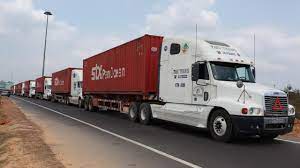
The house of representatives has asked the Federal Road Safety Corps (FRSC) to “stipulate stringent administrative procedures” for the registration of tankers, trailers and first-time articulated vehicle operators in Nigeria.
An articulated vehicle is a type of vehicle that has permanent or semi-permanent pivot joint in its construction, which allows it to make sharp turns.
At its sitting on Tuesday, the lower legislative chamber also urged the federal ministry of transport to establish the Nigerian Institute of Transport Technology (NITT) in the six geopolitical zones to ensure drivers gain the needed qualification to operate heavy vehicles.
The resolution was passed following the adoption of a motion sponsored by Rollanda Igbakpa from Delta state.
Leading the debate on the motion during plenary session, Igbakpa argued that drivers need to have the required skill to operate articulate vehicles.
He noted that when operators of articulated vehicles possess the minimum skills, incidents of road crashes will be reduced.
“Driving articulated vehicles requires special skills and knowledge of traffic laws and regulations in force, but many drivers of articulated vehicles are not qualified to operate such vehicles as they are not licensed and lack skills to drive, thus resulting in fatal accidents,” he said.
“The administration of minimum safety requirements demands that operators of the articulated vehicles conform to the road transport safety standardisation scheme and registration of companies, and that all tankers/tractor–trailers or any other form of an articulated vehicle, including those conveying dangerous goods, are also required to comply with the guidelines on safe operations.
“Most tanker drivers are adolescents who can neither speak nor write in English, yet when issued licenses they endanger other road users contrary to the FRSC registration process mandating tanker/tractor–trailer transport services/ operators to register their transport companies with the FRSC.”
The lawmaker said the increasing number of “uncertified driving schools issuing driving certificates to untrained drivers results in producing inexperience drivers thereby causing accidents”.
Igbakpa said if the vehicle licensing processes and safety requirements guidelines for articulated vehicles is not reviewed, road accidents “will continue unabated”.
The motion was unanimously adopted after it was put to a voice vote by Femi Gbajabiamila, speaker of the house.
The house mandated its committees on the FRSC and land transport to ensure compliance.









News
Tinubu appoints Olanrewaju-Smart as Special Adviser on House of Reps matters
Tinubu appoints Olanrewaju-Smart as Special Adviser on House of Reps matters
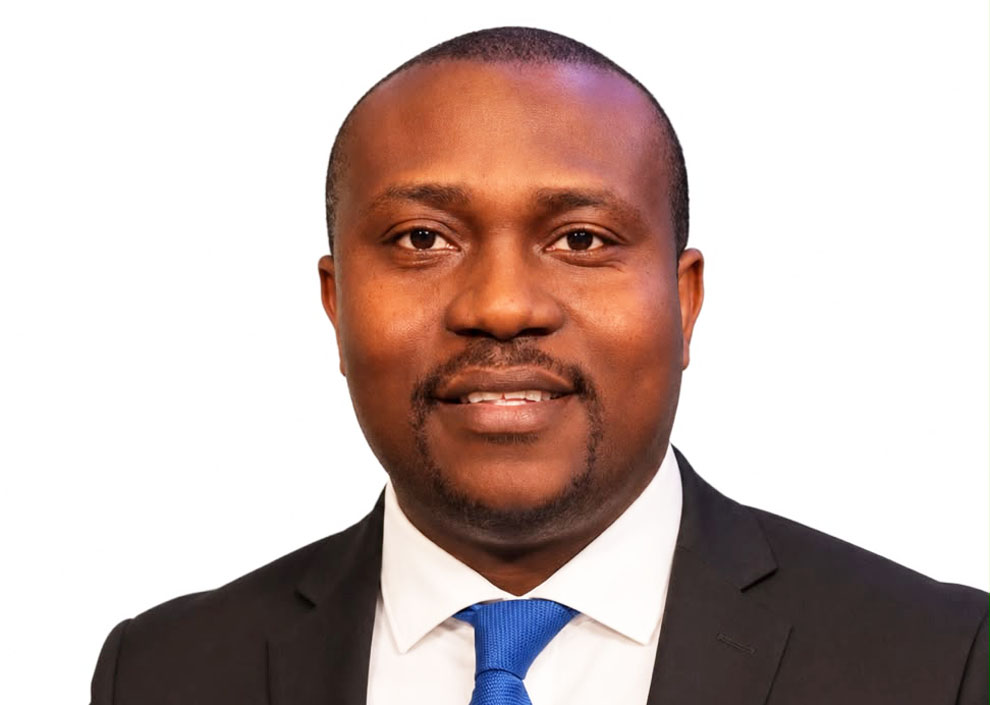
President Bola Tinubu has appointed Dr. Wasiu Olanrewaju-Smart as the new Special Adviser to the President on National Assembly Matters (House of Representatives), following the resignation of Hon. Ibrahim Olanrewaju, who stepped down to pursue an elective political office in his home state.
The appointment takes immediate effect and was announced in a statement issued on Sunday by the President’s Special Adviser on Information and Strategy, Bayo Onanuga.
According to the Presidency, the appointment is part of ongoing efforts to strengthen collaboration between the Executive and the National Assembly, particularly the House of Representatives, as the Tinubu administration advances key legislative reforms and governance priorities.
Olanrewaju-Smart is widely regarded as an experienced legislative strategist and public policy expert, having served in several senior positions within both the National Assembly and the Presidency.
He holds a Doctorate in Educational Management from Lead City University, a Master’s degree in Public Administration from Harvard University, where he was an Edward Mason Fellow in Public Policy at the Harvard Kennedy School, and is also a LEAPS Fellow at the Massachusetts Institute of Technology (MIT).
In addition, he earned a Professional Diploma in Public Relations from the London School of Public Relations and served as a Policy Fellow at Quantum Alliance AI in the United States, where his work focused on artificial intelligence, digital governance and civic technology.
READ ALSO:
- Gunmen invade Osun PVC distribution centre, flee with voter cards
- NDLEA intercepts ₦10bn worth of cocaine, Loud, opioids in Lagos
- Super Falcons recover stolen cash after hotel theft suspect confesses
His legislative career began during the 7th and 8th National Assemblies, when he served as Research and Media Assistant to both the Minority and Majority Leaders of the House of Representatives.
Over the years, he rose through the ranks to become Special Adviser, Deputy Chief of Staff, and later Chief of Staff to the Speaker of the House of Representatives during the 9th and 10th National Assemblies, gaining extensive experience in legislative administration, policy coordination and executive-legislative engagement.
In October 2023, President Tinubu appointed him Senior Special Assistant to the President on Intergovernmental Affairs, a role in which he coordinated relationships between the Presidency, Ministries, Departments and Agencies (MDAs), state governments and other stakeholders.
The Presidency also credited Olanrewaju-Smart with contributing to policy development and legislative research for several important bills, including the Interest-Free Student Loan Act, one of the administration’s flagship education reforms designed to improve access to higher education for Nigerian students.
Announcing the appointment, President Tinubu expressed confidence that Olanrewaju-Smart’s experience, academic background and understanding of legislative processes would strengthen cooperation between the Presidency and the House of Representatives.
The President said the new adviser is expected to improve policy coordination, facilitate legislative engagement and deepen collaboration between the Executive, lawmakers and government institutions to support the implementation of the administration’s reform agenda.
Political observers say the appointment reflects the administration’s commitment to maintaining cordial Executive-legislative relations, which remain crucial to the passage of government bills, budget implementation and broader governance reforms.
With his extensive experience in parliamentary affairs and public policy, Olanrewaju-Smart is expected to play a key role in promoting effective communication between the Presidency and members of the House of Representatives while supporting the smooth implementation of government policies requiring legislative backing.
The Presidency said the appointment takes effect immediately.
Tinubu appoints Olanrewaju-Smart as Special Adviser on House of Reps matters
News
INEC Chairman assures Nigerians every vote will count in 2027 general election
INEC Chairman assures Nigerians every vote will count in 2027 general election
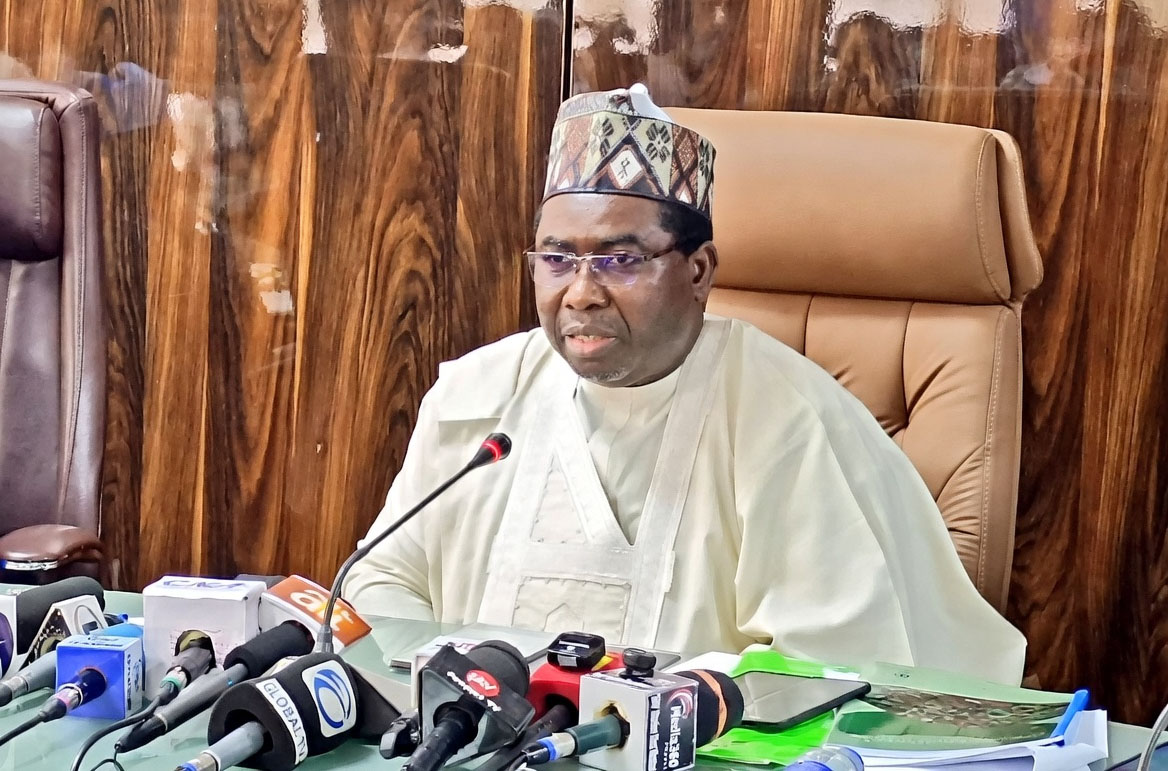
Chairman of the Independent National Electoral Commission (INEC), Prof. Joash Amupitan (SAN), has assured Nigerians that every valid vote cast in the 2027 general election will count, reaffirming the electoral body’s commitment to conducting free, fair, credible and transparent elections.
Amupitan gave the assurance during a courtesy visit to former Head of State and Chairman of the National Peace Committee, Gen. Abdulsalami Abubakar (retd.), at his residence in Minna, Niger State, where he sought the elder statesman’s continued support for INEC’s efforts to strengthen Nigeria’s democracy ahead of the next general election.
The INEC chairman described Abdulsalami as “the father of democracy in Nigeria,” saying his successful transition from military to civilian rule in 1999 laid the foundation for the country’s Fourth Republic and remains one of the most significant milestones in Nigeria’s democratic history.
According to Amupitan, Abdulsalami has continued to play a vital role in promoting peaceful elections through the National Peace Committee, whose Peace Accord initiative has encouraged political parties, candidates and supporters to embrace issue-based campaigns, reject violence and respect democratic principles.
He said INEC views the former military leader as a dependable pillar of support whose guidance and interventions have contributed to electoral stability and democratic consolidation.
Describing the visit as “a pilgrimage of appreciation,” Amupitan said it was meant to honour Abdulsalami’s decades of service to the nation and acknowledge his continued commitment to peace, national unity and democratic governance.
READ ALSO:
- 2027 election: Atiku accuses Obasanjo of reviving false allegations to favour preferred candidate
- Alleged Coup Plot: How Attack on Aso Rock, Airports Was Planned — Court Documents
- Gumi Questions FG’s Refusal To Dialogue With Bandits, Boko Haram, Cites Niger Delta Precedent
He also congratulated the former Head of State on his recent 84th birthday, describing him as a statesman whose leadership continues to inspire confidence across the country.
Addressing concerns over the credibility of future elections, the INEC chairman assured Nigerians that the commission remains focused on protecting the integrity of the electoral process despite the challenges associated with conducting nationwide elections.
“The commission’s determination under my leadership is to ensure that ordinary Nigerians go out to vote with confidence that their votes will be duly counted and reflected in the outcome of elections,” Amupitan said.
He stressed that guaranteeing the sanctity of every valid vote remains one of INEC’s core constitutional responsibilities and pledged that the commission would continue implementing measures aimed at improving transparency, professionalism and public confidence in the electoral system.
Amupitan also reaffirmed the commission’s timetable for the 2027 general election, announcing that the Presidential and National Assembly elections will be held on January 16, 2027, while the Governorship and State Houses of Assembly elections are scheduled for February 6, 2027.
He urged eligible Nigerians to actively participate in the electoral process, noting that democracy can only thrive when citizens exercise their voting rights and have confidence that their choices will be respected.
The INEC chairman further called on political parties, candidates, civil society organisations, security agencies, the media and other stakeholders to work together in ensuring peaceful, credible and inclusive elections across the country.
He said sustained collaboration among stakeholders would strengthen public trust in the electoral process and reduce tensions before, during and after the polls.
Responding, Abdulsalami commended the INEC chairman for the visit and acknowledged the enormous responsibility placed on the electoral commission in delivering credible elections.
The former Head of State urged Nigerians to support INEC in its preparations for the 2027 general election, stressing that credible elections remain the cornerstone of democracy and national stability.
He also appealed to political parties and their supporters to conduct themselves peacefully and place the nation’s interest above partisan considerations, noting that violence and electoral malpractice undermine democratic development.
The renewed assurance by the INEC chairman comes at a time when public interest in the credibility of the 2027 elections continues to grow, with many Nigerians calling for greater transparency, accountability and stronger safeguards to ensure election results accurately reflect the will of the people.
Political observers say INEC’s commitment to protecting the value of every vote will be closely monitored as preparations for the country’s next general election gather momentum.
INEC Chairman assures Nigerians every vote will count in 2027 general election
News
PFICP scandal: How ₦1.3bn ‘fake agency’ traced to Buhari’s government entered 2026 budget
PFICP scandal: How ₦1.3bn ‘fake agency’ traced to Buhari’s government entered 2026 budget
The Budget Office of the Federation has disclosed that the controversial Presidential Foreign Intervention Promotion Council (PFIPC) — now declared fake and under investigation — originated from institutional records linked to the administration of the late former President Muhammadu Buhari. Director-General of the Budget Office, Tanimu Yakubu, made this known while appearing before the House of Representatives Ad-hoc Committee investigating the matter. He explained that although ₦1.302 billion was appropriated for the council in the 2026 budget, not a single kobo was released because statutory spending controls prevented the funds from ever being accessed.
Providing a detailed account of how the PFIPC found its way into the 2026 budget, Yakubu traced the council’s institutional origin to the Presidential Economic Advisory Council (PEAC), which President Buhari inaugurated on October 9, 2019. By the time the 2026 budget preparations began, official government instruments had already been issued by key institutions. The Office of the Accountant-General of the Federation had assigned an administrative budget code to the PFIPC, while the Office of the Head of the Civil Service of the Federation had approved an authorised establishment and a recruitment waiver. Yakubu emphasised that the Budget Office did not create the council or approve its establishment — it merely acted on official documents received from other government institutions. In his words, “The Budget Office did not create the Council. It did not assign its code. It did not approve its establishment. It did not grant its recruitment waiver. It received official instruments and did what the law required of it: it measured their fiscal effect.”
Giving a breakdown of how the ₦1.302 billion allocation was calculated, Yakubu disclosed that the PFIPC initially requested ₦3.85 billion for personnel costs, but the Budget Office independently calculated a reduced figure of ₦802,978,783. This amount, which represented 61.63 per cent of the total ₦1.302 billion appropriation, was based strictly on the authorised establishment, the approved recruitment waiver, the applicable public-service salary structure, and the extant costing methodology. The overhead component stood at ₦200 million, while capital expenditure was set at ₦300 million. Despite the full appropriation of ₦1.302 billion, not a single kobo was disbursed to the council.
READ ALSO:
- INEC urges eligible Nigerians to complete Continuous Voter Registration as deadline ends Sunday
- Court grants Blessing CEO N20m bail in alleged N69.15m property fraud case
- UN calls for urgent evacuation of 6,000 sailors stranded in Strait of Hormuz
Explaining why the money was never released, Yakubu stated that despite the appropriation, the council could not access the funds because the Budget Office withheld Financial Clearance — the mandatory approval required before recruitment, payroll enrolment, or salary payments can commence. He clarified that two conditions remained incomplete: first, the 2026 Appropriation Bill only became law on March 31, 2026, meaning final clearance could not be issued before presidential assent; second, the National Salaries, Incomes and Wages Commission had not confirmed that the proposed staffing and remuneration arrangements complied with the approved public-service compensation framework. Yakubu stressed that “There was no Financial Clearance. There was no lawful recruitment. There was no payroll enrollment. There was no salary payment. Not one kobo of the personnel provision could lawfully have been drawn. Not one kobo was drawn.” The overhead allocation of ₦200 million could not be released because it required treasury warrants and cash backing from the Federal Ministry of Finance, while the capital allocation of ₦300 million never progressed beyond appropriation because no procurement plan was initiated, no tenders board approved any project, and no Certificate of No Objection was issued by the Bureau of Public Procurement.
The scandal surrounding how a ‘fake agency’ gained official recognition became public on June 11, 2026, when the Chief of Staff to the President, Femi Gbajabiamila, declared the council fake and petitioned law enforcement agencies. Subsequent investigations revealed that the PFIPC had secured office space within the Federal Secretariat in Abuja, that the Central Bank of Nigeria opened two foreign currency accounts — one in US dollars and another in British pounds — on the directive of the Office of the Accountant-General, and that the agency was listed in the 2026 Appropriation Act with a budget of ₦1.302 billion. It was also discovered that the self-declared Director-General, Prince Adeniyi Adeyemi Matthew, presented forged appointment letters and falsely claimed to be a presidential appointee. On July 7, 2026, President Bola Tinubu directed the Independent Corrupt Practices and Other Related Offences Commission (ICPC) to conduct a thorough investigation and submit a report within 30 days.
In the midst of counterclaims and the ongoing investigation, before his arrest, Adeniyi Adeyemi alleged that Gbajabiamila received ₦400 million through a proxy and demanded an additional ₦200 million to secure his appointment. The Chief of Staff has denied the allegations and filed a defamation suit seeking ₦15 billion in damages. The ICPC investigation is now examining forged appointment letters and official documents, the use of false presidential claims to obtain official recognition and diplomatic support, the opening of multiple bank accounts using allegedly forged documents, the role of public officers, private individuals, and financial institutions that may have facilitated the scheme, as well as broader weaknesses in government procedures that may have been exploited. The Budget Office has maintained that the episode demonstrates the strength of Nigeria’s public financial management system, as the controls held firm and prevented any actual loss of public funds.
PFICP scandal: How ₦1.3bn ‘fake agency’ traced to Buhari’s government entered 2026 budget
-
 metro2 days ago
PFICP scandal: How ₦1.3bn ‘fake agency’ traced to Buhari’s government entered 2026 budget
-
 Politics3 days ago
Atiku denies Obasanjo’s N5m bribery claim, links accusation to 2027 presidential race
-
 metro2 days ago
Dalung gives Mutfwang 72-hour ultimatum to withdraw apology to Igbos over civil war role
-
 Education3 days ago
Oluwo Urges Youths to Pair Degrees with Skills, Commends Westland University’s Excellence
-
 metro3 days ago
Police Detain 4 Officers Over Viral Ethnic Profiling Video on Lagos–Benin Expressway
-
Politics1 day ago
2027 election: Atiku accuses Obasanjo of reviving false allegations to favour preferred candidate
-

 metro5 hours ago
NDLEA intercepts ₦10bn worth of cocaine, Loud, opioids in Lagos
-
 metro3 days ago
“No Governor Has Such Power” – MC Oluomo Fires Back at Gov Adeleke Over Osun NURTW Ban