
metro
Matawalle Okays Death Penalty For Kidnappers, Bandits, Informants, Others
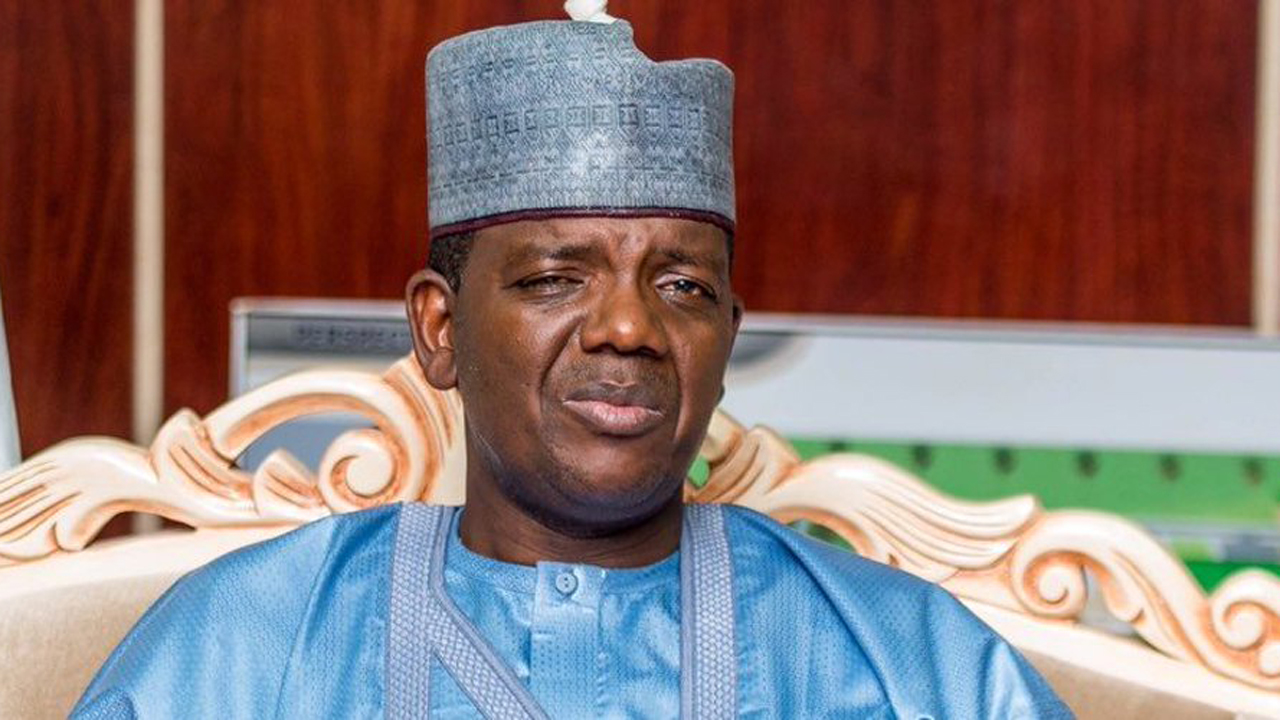
The governor of Zamfara State, Bello Matawalle, has signed into law a death penalty on anybody found guilty of banditry, cattle rustling, cultism, or serving as a bandits’ informant.
He announced this in a broadcast to the people of the state on Tuesday morning.
The broadcast was preceded by an expanded security council meeting that lasted for more than eight hours.
The governor said, “On the 28th of June this year, I passed the bill on Prohibition and Punishment for Banditry, Cattle Rustling, Cultism, Kidnapping and Other Incidental Offences, 2022.
“The law provides a legal instrument for prosecuting banditry-related offenders.
“Based on the new law, anyone found guilty of banditry, kidnapping, cattle rustling, cultism, or serving as a bandits’ informant is subject to the death penalty.
“Similarly, anyone found guilty of supporting in any manner the aforementioned offences faces a sentence of life in prison, 20 years in jail, or 10 years in prison, without the option of a fine.”
READ ALSO:
- Nigeria targets 2030 to eradicate malaria, says Buhari
- How gunmen kidnapped Nasarawa commissioner, by police
- Wike presents multi-million naira mansion to Odili as 74th birthday gift
Matawalle stated that the measures were part of his administration’s unrelenting efforts to tackle the problem of banditry that had plagued the state and the neighbouring North West states for more than a decade.
He described the activities of informants as a major change towards addressing insecurity challenges in the state, expressing optimism that the situation would soon come to an end.
The governor directed the task force on security to embark on house-to-house search to flush out criminal elements in the 19 emirates of the state.
He said the measure was part of efforts to restore law and order and ensure peace in the state.
He urged the emirs who were part of council meetings to be vigilant and report suspicious persons or strange movements in their respective domains to security agents.
Matawalle also announced a restriction on motorcycle movement in the communities on the outskirts of Gusau from 9pm till dawn.
He ordered the security agencies to shoot at sight any motorcycle rider who violates the order and refuses to stop at security checking points within the affected areas.
He said there were reports of the use of motorcycles by bandits and other criminal elements to perpetrate their criminal activities within the state capital and its environs.
The governor also ordered hotel operators to scrutinise their guests by means of valid identification before accommodating them.
“Any hotelier found violating the new order will have his hotel shut down and face prosecution according to the law,” he warned.










metro
Woman Dies in Bandits’ Camp After Family Pays ₦25 Million Ransom

Woman Dies in Bandits’ Camp After Family Pays ₦25 Million Ransom
The family of seven abducted residents in Erinmope-Ekiti, Moba Local Government Area, Ekiti State, is mourning the death of one of the victims, identified as Hawau Suleiman, who reportedly died in captivity, even after her family paid a ₦25 million ransom for the release of the hostages. Six other abductees were freed following the payment, but the deceased’s remains have not yet been recovered.
The victims were initially kidnapped on January 24, 2026, when armed gunmen stormed the community, abducting five women, including a nursing mother and a pregnant woman. The kidnappers initially demanded a ₦100 million ransom for their release.
Family members first raised ₦10 million and sent two relatives to deliver the money, but the kidnappers rejected the amount and detained the emissaries, increasing the number of captives to seven. After further negotiations, a total of ₦25 million was paid, resulting in the release of six abductees.
One of the freed victims, Muhammad Soliu, who had also been detained as part of the ransom negotiation, recounted the harrowing conditions in captivity. He said the abductees were tied together like goats and forced to trek several kilometres barefoot through dense forests spanning Ekiti, Kwara, and Kogi states.
READ ALSO:
- Reno Omokri Alleges El-Rufai, Sons Linked to Dadiyata’s Disappearance
- UK-Based Nigerian Gets 13-Year Jail Term for Forcing Girlfriend to Abort Pregnancy
- Lawmaker Jailed for Mocking President in Facebook Post
Soliu revealed that the deceased, Hawau Suleiman, became too weak to continue the trek and collapsed. “She was exhausted from the long distance we were made to walk. We pleaded with them to allow us carry her, but they threatened to kill us if we stopped. They ordered us to keep moving without looking back. It was the worst experience of my life,” he said.
He added that the pregnant woman among the captives was taken to an undisclosed hospital for medical attention, while locating Suleiman’s remains would be difficult due to the depth and density of the forest where she reportedly died.
Sunday Abutu, the Police Public Relations Officer in Ekiti State, said the command would investigate the incident and provide further details, but no official updates have yet been released regarding the recovery of the deceased.
The ordeal highlights the growing kidnapping crisis in Ekiti and southwestern Nigeria, where families are often forced to pay large ransoms under threats of violence, and victims face life-threatening conditions in captivity. Security analysts continue to warn that ransom payments, while sometimes saving lives, may embolden criminal gangs and perpetuate the cycle of banditry and insecurity.
Woman Dies in Bandits’ Camp After Family Pays ₦25 Million Ransom
metro
Reno Omokri Alleges El-Rufai, Sons Linked to Dadiyata’s Disappearance
Reno Omokri Alleges El-Rufai, Sons Linked to Dadiyata’s Disappearance
Former presidential aide and political commentator Reno Omokri has renewed allegations implicating former Nasir El-Rufa’i and his sons in the disappearance of activist Abubakar Idris, popularly known as Dadiyata, who has been missing since August 2, 2019, in Kaduna.
In a post on X (formerly Twitter), Omokri claimed that statements and social media posts by El-Rufa’i and his sons suggest they “have a strong case to answer” over Dadiyata’s abduction. Omokri cited a remark allegedly made by El-Rufa’i in 2019:
“Anybody that tries to criminalise Nasir El-Rufa’i should know that he has a battle on his hands till one of us drops dead.”
Omokri noted that Dadiyata had repeatedly criticised the former governor and alleged corruption and abuse of power in Kaduna State. He argued that the remark, combined with later statements by El-Rufa’i’s son, Bashir El-Rufa’i, indicated a potential link to the activist’s disappearance. Omokri cited a December 23, 2019, statement by Bashir warning that:
“Dangerous lies in the public space have consequences,”
referring to the trending hashtag #WhereIsDadiyata.
READ ALSO:
- UK-Based Nigerian Gets 13-Year Jail Term for Forcing Girlfriend to Abort Pregnancy
- Lawmaker Jailed for Mocking President in Facebook Post
- Police to Arrest TikToker Mirabel After She Recants False Rape Claim
Omokri also highlighted a post allegedly made by Bashir in August 2025, in which he threatened to “unalive” a social media user and their family, saying it would be “easier than you think” to locate them — a comment Omokri suggested implied access to tracking or surveillance.
Another son, Bello El-Rufa’i, was mentioned in Omokri’s post for allegedly sending threats to the Speaker of the Kaduna State House of Assembly, Honourable Yusuf Liman, during a probe into claims that ₦432 billion went missing from the state coffers. Omokri further cited a 2020 private message allegedly sent by Bello containing threats of sexual violence against women of Igbo descent.
Describing these statements as evidence of “death threats” and “bloodlust”, Omokri concluded that there is sufficient reason to question Nasir El-Rufa’i and his sons over Dadiyata’s disappearance. He also praised Dadiyata as “young, intelligent, handsome and fearless,” while referring to the El-Rufa’i family as “fiendish.”
As of February 2026, no formal charges have been filed against El-Rufa’i or his sons. Nigeria’s Department of State Services has reportedly reopened investigations into the case, and public pressure continues for accountability and justice in the long-running mystery.
Reno Omokri Alleges El-Rufai, Sons Linked to Dadiyata’s Disappearance
metro
Again, Early Morning Blaze Destroys Dozens of Shops in Kano Market
Again, Early Morning Blaze Destroys Dozens of Shops in Kano Market
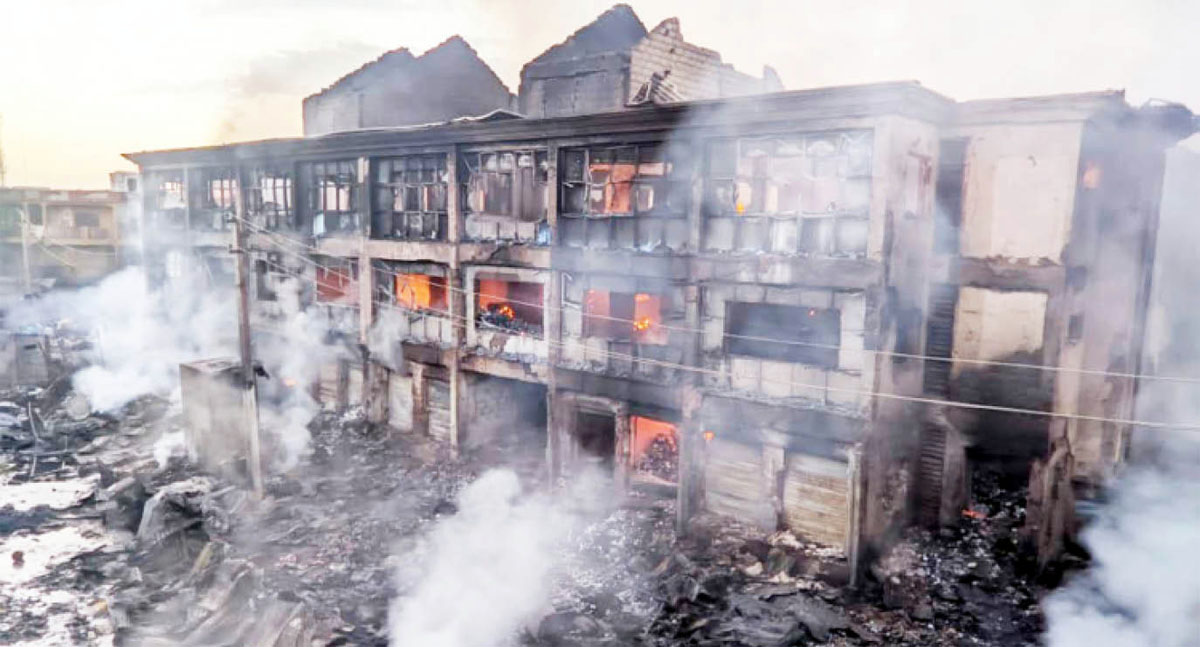
A devastating fire outbreak on Friday, February 20, 2026, razed at least 50 shops at the Fatima Simra Multi‑Purpose Market in the Dakata area of Kano State, leaving traders and residents in shock. The early morning blaze, which began around 5:40 a.m., rapidly spread across the market, affecting mainly small-scale enterprises involved in oil production, plastic recycling, and nylon processing.
The chairman of the market fire committee, Dauda Haruna Chula, confirmed the incident, noting that the Kano State Fire Service had been alerted and was en route to the scene. “From the preliminary assessment, about 50 shops are already down, and the fire is still ongoing. We did as much as we could to inform the authorities, and I can hear the sound of their fire trucks arriving now,” Chula said.
Traders expressed frustration over what they described as a slow emergency response, which allowed the fire to spread more rapidly. Many are now counting losses and making plans to salvage remaining goods, while others fear losing their entire livelihoods.
READ ALSO:
- Suspected Terrorists Warn Kebbi Residents: Pay ₦100 Million or Face Attack
- ICPC Searches El-Rufai’s Abuja Home Amid Multi-Agency Corruption Investigation
- Nigerian Navy Chief of Operations Dies in Egypt
This latest blaze comes less than a week after a major fire devastated Singer Market in Kano, displacing over 1,000 traders and destroying goods worth billions of naira. Following that disaster, the Federal Government and the APC Governors’ Forum pledged financial support to assist affected traders, highlighting the need for improved fire safety measures in commercial hubs across the state.
Authorities are continuing firefighting operations and have assured traders that investigations are ongoing to determine the cause of the fire, which preliminary reports suggest may have been triggered by electrical faults or unattended cooking equipment. Officials have emphasized the importance of emergency preparedness, fire prevention, and rapid response systems to prevent similar incidents in the future.
Kano State has a history of recurring market fires, raising calls from experts, trade associations, and residents for stricter safety regulations, including proper spacing of stalls, installation of fire hydrants, and training for traders on emergency response.
Again, Early Morning Blaze Destroys Dozens of Shops in Kano Market

-

 News3 days ago
Saudi Arabia Confirms Sighting of Ramadan Crescent, Fasting Begins Wednesday
-

 metro3 days ago
Lagos Woman Shares Ordeal After Alleged Rape, Sparks Nationwide Outcry
-

 News3 days ago
Ramadan Begins in Nigeria as Sultan Confirms Crescent Sighting
-

 International1 day ago
Canada Opens New Express Entry Draw for Nigerian Workers, Others
-
 metro3 days ago
Seven Killed in Horrific Crash at Ota Toll Gate
-

 News2 days ago
Korope Drivers Shut Down Lekki–Epe Expressway Over Lagos Ban (Video)
-

 Health2 days ago
Ramadan Health Tips: Six Ways to Stay Hydrated While Fasting
-

 Entertainment2 days ago
Actress Destiny Etiko Breaks Silence on Alleged Nollywood Betrayal