
Education
Mock UTME 2026: JAMB Warns No-Show Candidates, Extends Exam Duration to Four Hours
Mock UTME 2026: JAMB Warns No-Show Candidates, Extends Exam Duration to Four Hours
The Joint Admissions and Matriculation Board (JAMB) has issued a strong warning to candidates who registered for the 2026 Mock UTME but fail to appear for the exercise, stating that such actions may attract sanctions.
In a statement released on Monday, JAMB explained that candidates who indicated interest during registration and successfully secured a slot must honour their commitment. The board emphasized that failure to participate without valid reasons deprives other prospective candidates of the opportunity, especially since the mock UTME slots are limited due to logistical constraints.
JAMB noted that although the Mock UTME is optional, it is designed to simulate the actual examination environment and is only open to a fixed number of candidates. As a result, every allocated slot represents a carefully planned resource involving examination centres, personnel, and technical arrangements.
READ ALSO:
- Court Jails Ex-Acting Accountant-General 72 Years Over N868m Fraud
- Ebonyi Journalist Assault: LG Chairman Denies Role as NUJ Demands Probe
- SSS Storms Malami’s Abuja Residence After Atiku Visit, Disperses Occupants
The board warned that absenteeism after registering for the exercise will not be condoned, adding that appropriate consequences may follow for affected candidates. It urged all registered candidates to take the exercise seriously and make necessary arrangements to attend their assigned centres.
JAMB further announced that the 2026 Mock UTME has been scheduled for Saturday, March 28, 2026. Candidates are expected to strictly adhere to their assigned examination centres and session times, as no rescheduling will be permitted for those who fail to comply.
In a major update to the structure of the examination, JAMB disclosed that the duration of the Computer-Based Test (CBT) mock exercise has been extended from the traditional two hours to four hours. The adjustment, according to the board, is intended to give candidates more time to familiarize themselves with the CBT system and improve their readiness for the main UTME.
The board also explained that the 2026 Mock UTME will be conducted in two consecutive sessions on the same day. The first session is scheduled to hold between 8:00 a.m. and 10:00 a.m., while the second session will run from 10:30 a.m. to 12:30 p.m. Candidates will participate in both sessions consecutively as part of the mock exercise.
JAMB advised candidates to arrive early at their designated centres and comply with all examination requirements, including biometric verification and other CBT protocols, to avoid delays or disqualification.
The Mock UTME is designed as a preparatory exercise to help candidates experience the real examination environment, reduce anxiety, and improve familiarity with the digital testing format used in the main UTME. While participation is optional, JAMB stressed that candidates who choose to take part must treat it as a serious rehearsal.
Education stakeholders have noted that enforcing attendance rules is necessary to ensure efficient use of resources, as unused slots during the mock examination lead to underutilization of infrastructure and planning efforts. JAMB reiterated that candidates should only indicate interest in the mock UTME if they are certain of their availability.
Mock UTME 2026: JAMB Warns No-Show Candidates, Extends Exam Duration to Four Hours




Education
NDDC Opens Applications for 2026/2027 Foreign Postgraduate Scholarship Programme

NDDC Opens Applications for 2026/2027 Foreign Postgraduate Scholarship Programme
The Niger Delta Development Commission (NDDC) has opened applications for its Foreign Postgraduate (Master’s Degree) Scholarship Programme for the 2026/2027 academic session, aimed at boosting human capital development across the Niger Delta region.
According to the Commission, the application window opened on March 23, 2026, and will close on April 19, 2026. The programme is designed to support academically qualified indigenes of the Niger Delta in pursuing advanced degrees at recognised international universities.
The initiative is part of efforts to equip young Nigerians with relevant technical, professional, and academic skills needed to participate effectively in the local content programme and compete globally in their respective fields.
The scholarship is open to candidates with a minimum of a Second Class Upper (2:1) or First-Class degree from a recognised university, and applicants must not be above 40 years of age. Eligible candidates must also be indigenes of the Niger Delta region.
The programme covers several disciplines, including Agricultural Sciences and Biotechnology, Engineering, Environmental Sciences, Geosciences, Information Technology and Artificial Intelligence, Medical Sciences, Architecture and Building Technology, and Law.
READ ALSO:
- Mock UTME 2026: JAMB Warns No-Show Candidates, Extends Exam Duration to Four Hours
- Court Jails Ex-Acting Accountant-General 72 Years Over N868m Fraud
- Ebonyi Journalist Assault: LG Chairman Denies Role as NUJ Demands Probe
Interested applicants are required to submit their applications online via the Commission’s official website, www.nddc.gov.ng, and must upload relevant documents including a recent passport photograph, Local Government Identification letter, postgraduate admission letter from a recognised foreign university, academic certificates, and NYSC discharge or exemption certificate.
Upon successful submission, applicants will receive a registration number and are expected to print and retain their acknowledgment slip for reference. The Commission stressed that applications must be completed within the stipulated deadline, as late submissions will not be considered.
The selection process will involve multiple stages, beginning with preliminary shortlisting based on academic performance, including WASSCE/NECO results, degree classification, and Local Government identification. Shortlisted candidates will then sit for a Computer-Based Test (CBT) to be conducted in Rivers State.
Candidates are required to score at least 70 percent in the CBT to proceed to the next stage. Further verification will be carried out by the candidates’ Local Government Areas and Community Development Committees before final selection.
The NDDC noted that only shortlisted applicants will be contacted for the CBT and subsequent stages, adding that candidates who are not selected will not receive further communication. It also warned that no deferment or change of institution or course will be permitted once a scholarship is awarded.
Preference will be given to candidates from oil-producing host communities, and the Commission stated that it will ensure a fair distribution of beneficiaries across the Niger Delta states, including Abia, Akwa Ibom, Bayelsa, Cross River, Delta, Edo, Imo, Ondo, and Rivers.
The Commission reaffirmed its commitment to transparency in the selection process, stating that final decisions remain solely at its discretion.
Applicants and interested persons seeking further information are advised to contact the NDDC through its official communication channels.
NDDC Opens Applications for 2026/2027 Foreign Postgraduate Scholarship Programme
Education
Nigeria to Scrap Common Entrance Exam, Introduce Continuous Assessment Model

Nigeria to Scrap Common Entrance Exam, Introduce Continuous Assessment Model
The Federal Government has unveiled plans to abolish the Junior Secondary School Common Entrance Examination and replace it with a Learner Identification Number system aimed at tracking pupils throughout their educational journey and improving access to basic education across Nigeria.
The Minister of Education, Tunji Alausa, disclosed this during an interactive session with journalists in Lagos, explaining that the reform is part of broader efforts to modernise the education system and address gaps in student progression from primary to secondary school.
According to the minister, the proposed system will shift the country away from a single high-stakes entrance examination to a more continuous assessment-based framework, where pupils are evaluated over time based on their academic performance from primary school level.
“It will be replaced by Continuous Assessment, CA. The CA will reflect the performance of the pupil from primary one… even if a pupil is transferring from one school to another, he will take it along to his new school,” Alausa said.
The Federal Government also plans to introduce a unique Learner Identification Number for every child enrolled in school. This identifier will follow the pupil throughout their academic journey, making it easier for authorities to monitor enrolment, transitions, and dropouts across the country.
READ ALSO:
- Obi, Makinde, Dickson Visit Kwankwaso, Fuel Coalition Rumours
- Tinubu Secures France Military Support to Boost Fight Against Terrorism in Nigeria
- State Police: Governors Submit Proposal to National Assembly Over Insecurity
The minister explained that the initiative is designed to improve data tracking, accountability, and planning within the education sector, while also helping to identify children who drop out of school early.
He noted that Nigeria currently faces a significant gap in school retention. Citing official figures, Alausa said the country has over 50,000 public primary schools with more than 23 million pupils, yet only a small fraction proceed to junior secondary school.
“Only a little over 3 million among those pupils move to the junior secondary school level… then the question is, where are the about 20 million not enrolled in our public secondary schools?” he asked.
The minister attributed the gap largely to limited access to secondary education, stressing that infrastructure deficits remain a major challenge. He called on state governments to invest more in building schools to accommodate the growing number of pupils.
“It is obvious that we cannot say our private schools accommodate all of them… there is need to build more schools,” he added, noting that discussions have already been held with the Nigeria Governors’ Forum to address the issue.
Alausa further stated that the new Learner Identification Number will allow education authorities to monitor students’ progression in real time. This means that if a child is expected to be in a particular class but is not enrolled, the system will flag it, enabling intervention.
“If somebody is expected to be in JSS class one and he is not there, we will be able to know the reason why he is not continuing his education,” he said.
The reform also aligns with broader efforts by the government to strengthen basic education, improve retention rates, and reduce the number of out-of-school children in Nigeria—an issue that has remained a major concern for policymakers and international education bodies such as the United Nations Children’s Fund.
In addition, the minister disclosed plans to revive and restructure the school feeding programme, with considerations to place it under the supervision of the Federal Ministry of Education to enhance oversight and effectiveness. The programme is expected to serve as an incentive to boost enrolment and retention in public schools.
Education stakeholders say the transition from a Common Entrance Examination to a continuous assessment and identification-based system could mark a major shift in Nigeria’s education policy. However, they also note that successful implementation will depend on robust data systems, adequate funding, teacher capacity, and collaboration between federal and state governments.
The proposed reforms are part of ongoing efforts to address structural challenges in Nigeria’s education sector, including low transition rates, infrastructure deficits, and limited access to quality schooling, which continue to affect millions of children nationwide.
If fully implemented, the Learner Identification Number system could provide a more efficient framework for tracking students, improving policy decisions, and ensuring that more Nigerian children complete their basic education.
Nigeria to Scrap Common Entrance Exam, Introduce Continuous Assessment Model
Education
Students expelled as police probe viral assault at Igbinedion School
Students expelled as police probe viral assault at Igbinedion School
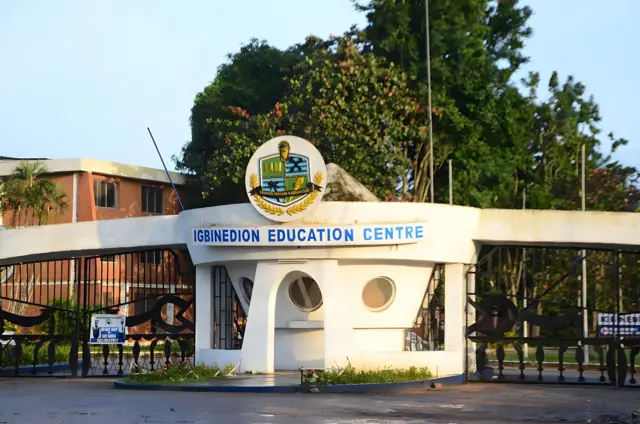
The Edo State Police Command has launched an investigation into a viral video showing a violent bullying incident involving students of Igbinedion Secondary School.
The footage, which has been widely circulated on social media, shows two students repeatedly beating, kicking and dragging a younger boy believed to be in a junior class across the floor.
During the assault, one of the attackers was seen using a belt to flog the victim, while another stomped on the boy’s chest as he cried out in pain.
The victim could be heard screaming while another student, who appeared to be recording the incident, pleaded with the attackers to stop.
The motive behind the assault has not yet been established.
Reacting to the incident on Sunday, the Edo State Police Command’s spokesperson, SP Eno Ikoedem, said the police were aware of the disturbing video and had commenced steps to investigate the matter.
She said the Commissioner of Police in the state, Monday Agbonika, had directed the Divisional Police Officer in charge of the area to immediately visit the school and begin a thorough inquiry.
“The Commissioner of Police has directed the Divisional Police Officer in charge of the area to proceed to the school and commence a detailed inquiry into the matter,” Ikoedem said.
She noted that although the school authorities had taken disciplinary action, the police would still carry out a comprehensive investigation into the incident.
According to her, the management of the school informed the police that the students involved in the bullying had already been expelled.
The command condemned all forms of bullying, violence and intimidation among students, warning that anyone found culpable would be dealt with in accordance with the law and in line with their ages.
Ikoedem also urged members of the public to remain calm and assist the police with credible information that could aid the ongoing investigation.

-

 metro2 days ago
Ozoro Festival Controversy: 15 Suspects Arrested, Community Denies Rape Claims
-

 Entertainment1 day ago
Baba Ijesha Speaks Out After Prison Release, Denies Sexual Assault Conviction
-

 metro1 day ago
Over 150 Bandits Reportedly Die in Sokoto Water Accident
-
metro3 days ago
Festival of Fertility: FG Orders Arrest, Promises Justice for Victims
-

 metro2 days ago
Nigerian Woman, Children Die in US Road Accident
-

 metro2 days ago
Shock as Governor Oborevwori’s Aide Collapses, Dies at Event
-

 News2 days ago
US Deploys MQ-9 Drones, 200 Troops to Support Nigeria’s Counterinsurgency Efforts
-

 International3 days ago
Netanyahu Clarifies Jesus Remarks, Denies Offending Christians Amid Backlash