

Education
More state-owned tertiary institutions submit student loan data to NELFUND

More state-owned tertiary institutions submit student loan data to NELFUND
Twelve state-owned tertiary institutions have uploaded the data of their students to the student loan application portal, the Nigerian Education Loan Fund (NELFUND) has said.
In a statement by the Head of Media and Public Relations, NELFUND, Nasir Ayitogo, the organisation said the expansion came following the successful submission and verification of data completeness and accuracy required from the institutions.
On Monday, 36 state-owned tertiary institutions joined the scheme after successfully uploading the data of their students to the NELFUND Student Verification System (SVS).
“With this latest addition, the total number of participating state government-owned tertiary institutions has now increased from the initial 36 announced earlier to 48. Students data from 121 institutions is outstanding,” the statement said.
It added: “Whilst paying a courtesy call on His Excellency the Governor of Osun State in Oshogbo on Tuesday, NELFUND Managing Director, Mr Akintunde Sawyerr expressed his immense gratitude to all who have submitted their data so far, and gave special recognition to the Governor His Excellency, Senator Ademola Jackson Nurudeen Adeleke for his exemplary leadership in this regard.
READ ALSO:
- Lagos begins demolition of shanties on drain setback
- We’re ready to move livestock from North to South – NRC MD
- BREAKING: ECOWAS court finds Nigeria guilty of rights abuse at Lekki tollgate
“The Fund urges all institutions that are yet to submit their students’ data to the Student Verification Portal (SVS) of the fund to kindly do so to enable their students benefit from the scheme.
“It also urges states whose data has been captured and successfully uploaded to urgently sensitise their students to apply, thereby bringing succour to students who are struggling financially whilst also bringing guaranteed revenue to the institutions.
“Students from the following state government-owned tertiary institutions can now visit www.nelf.gov.ng to apply for the loan.”
The twelve institutions included: Abia State Polytechnic; Benue State University, Makurdi; College of Education, Waka-Biu; University of Medical and Applied Sciences Enugu State; Aliko Dangote University of science and Technology Wudil, Kano State; Kwara Polytechnic; Lagos State University of Science and Technology; Ibrahim Badamasi Babangida University Lapai, Niger State; Olabisi Onabanjo University; Abraham Adesanya Polytechnic; Taraba State Polytechnic and Yobe State University.
No fewer than 1.2 million students are expected to benefit from this initiative which will be funded with one per cent of the total annual collectable revenue by the Federal Inland Revenue Service (FIRS).
The president approved N35 billion for the scheme’s take-off.
According to the law, repayment will begin two years after the National Youth Service Corps (NYSC) programme.
More state-owned tertiary institutions submit student loan data to NELFUND







Education
Hoodlums Invade ATBU Female Hostel, Rob Students of Over 50 Phones, Valuables
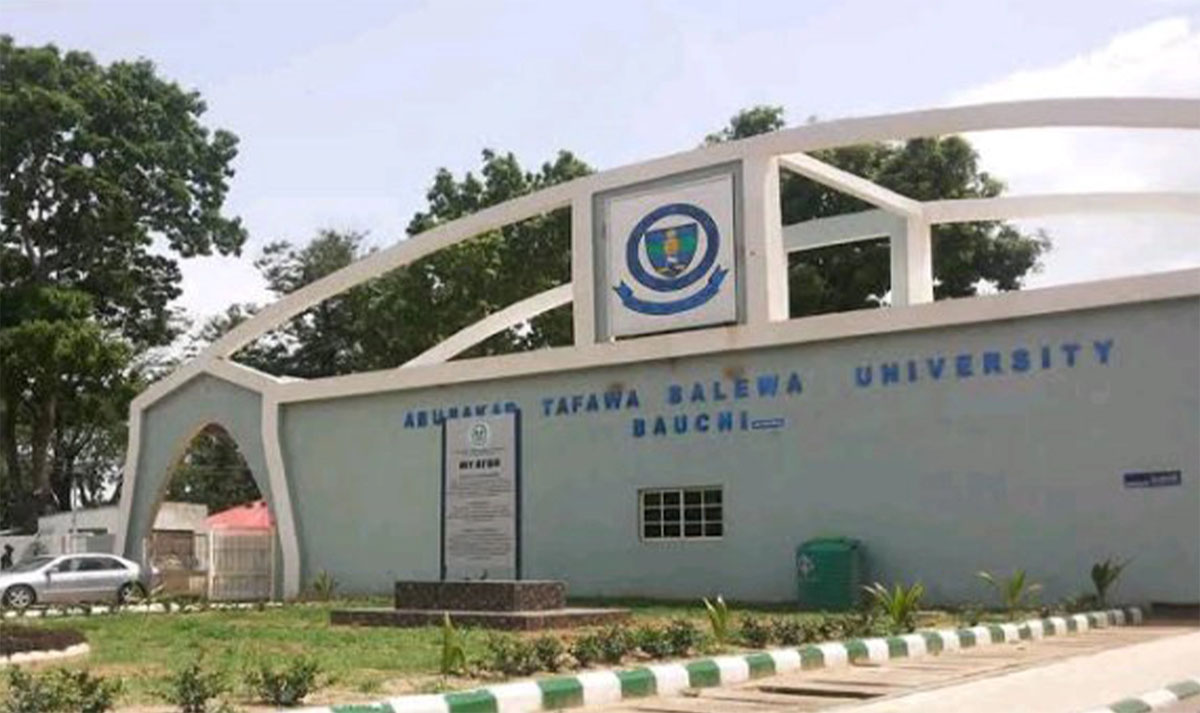
Hoodlums Invade ATBU Female Hostel, Rob Students of Over 50 Phones, Valuables
Armed hoodlums invaded the female hostel of Abubakar Tafawa Balewa University (ATBU), Gubi Campus, Bauchi, in the early hours of Monday, robbing students of mobile phones, cash and other valuables during a violent attack that has left students traumatised and heightened security concerns across the institution .
The attackers reportedly stormed the hostel at about 2 a.m., armed with machetes, knives and other dangerous weapons . An eyewitness, who pleaded anonymity, disclosed that the assailants broke into more than 10 rooms within the hostel, terrorising the students and carting away over 50 mobile phones and other valuables .
Recounting the incident, one of the students, Rejoice Duke, said the attackers operated swiftly and methodically, splitting up to cover more ground within the hostel. “At about 2 a.m. this morning, some guys came into the hostel and barged into different rooms. They split up and entered several rooms. They were asking whether you wanted your life or your phone. They made away with valuables, including mobile phones. The whole operation lasted about three minutes before they left,” she said .
Some of the students alleged that the suspects gained access to the hostel by cutting through the barbed-wire fence before using a ladder to climb onto the premises. The Gubi Campus lies near thick bushes and shares boundaries with nearby villages, making it vulnerable to criminal activities .
Some of the victims sustained injuries during the attack, with one female student reportedly suffering serious injuries after refusing to surrender her mobile phone. The eyewitness confirmed that the student who resisted was attacked by the armed hoodlums .
READ ALSO:
- Presidency tells Peter Obi to stop dreaming, insists he lost 2023 presidential election
- Kano Woman Arrested for Severing Boyfriend’s Manhood Over Plan to Marry Another
- PFIPC scandal: How Accountant-General exposed Adeniyi Adeyemi’s fake presidential agency
Expressing fear over what they described as a delayed security response, another student, Fauziya Abdullahi, voiced concerns that the campus remains vulnerable to more severe attacks. “Our main fear is that if they come in here and march us out, we do not want to become another Chibok girls. We do not want to be used for campaigns. We do not want people to say we had a bright future. We want to stay here and live our bright future. We cannot wait 45 minutes for security personnel to drive from town to this place,” she said .
The incident has since dominated discussions within the university community and on social media, with many calling for improved security around the hostel and the arrest and prosecution of those responsible. Students have also taken to various platforms to express their frustration over what they perceive as inadequate security measures on campus .
Confirming the incident, the university’s Director of Information and Public Relations, Zailani Bappa, said the situation was under control. He disclosed that the Vice-Chancellor, Prof. Ibrahim Hassan Garba, had visited the female hostel to sympathise with the affected students and reassure them of the university management’s commitment to their safety . “The incident has been reported to the police. They have deployed personnel to the campus, taken statements from the affected students and commenced investigation,” Bappa said . He added that the university has taken proactive steps with relevant security agencies to strengthen security on campus .
Speaking on the incident, the Bauchi State Police Public Relations Officer, Nafiu Habib, said the suspects had fled before officers arrived at the scene. He added that investigations are ongoing and efforts are underway to track down and arrest those responsible . The police have assured stakeholders that those responsible will be arrested and prosecuted .
Some affected students have urged the institution to replace the stolen items, arguing that its failure to deploy enough security personnel to the campus contributed to the incident. Others appealed to the university management to deploy more security personnel to the Gubi Campus, located on the outskirts of Bauchi metropolis .
The incident comes barely two weeks after students living off campus at Sa’adu Zungur University were reportedly robbed. In April, students residing off campus near the Federal Polytechnic, Bauchi, also experienced a similar attack . The Bauchi State Safe School Implementation Task Force was inaugurated in March this year to strengthen security in schools and prevent such incidents. However, following the recent attacks, many residents are calling for more proactive security measures to better protect students and educational institutions across the state .
Hoodlums Invade ATBU Female Hostel, Rob Students of Over 50 Phones, Valuables
Education
Kogi Poly Suspends 7 Lecturers Over Sex-For-Marks, Handout Sales Amid Cultism Crisis

Kogi Poly Suspends 7 Lecturers Over Sex-For-Marks, Handout Sales Amid Cultism Crisis
- The management of Kogi State Polytechnic, Lokoja, has suspended seven lecturers following separate allegations of sexual harassment and unauthorised sale of handouts, as investigations intensify into a wider campus crisis involving cultism, intimidation of female students, and weakening institutional discipline.
The management of Kogi State Polytechnic, Lokoja, has taken decisive action against seven lecturers over allegations ranging from sexual harassment to the unauthorised sale of handouts and textbooks, sources have confirmed. According to the institution’s Public Relations Officer, John Onimisi, six lecturers were suspended on Wednesday, July 22, 2026, for allegedly engaging in the illegal sale of handouts to students, while a seventh lecturer was separately suspended over a specific allegation of sexual harassment. The suspensions, however, appear to be only the tip of the iceberg, as multiple sources within the polytechnic have raised alarm over a deepening crisis on campus, with claims that sex-for-marks practices, cult-related activities, and a general breakdown of discipline have surged under the current administration.
In a statement issued on Sunday, Mr. Onimisi confirmed that the disciplinary action was taken after the institution’s management received credible reports of misconduct involving academic staff. The statement read in part that six lecturers were suspended on Wednesday, July 22, 2026, by the management of the institution for the unauthorised sale of handouts and textbooks, while a lecturer was also suspended for alleged sexual harassment. The affected lecturers are currently facing internal investigation, and the polytechnic has assured that appropriate sanctions will be imposed if they are found guilty by the institution’s disciplinary committee.
While the official statement focused on the suspensions, insiders have painted a troubling picture of systemic misconduct that has allegedly taken root at the polytechnic. These allegations suggest that the suspensions are merely a response to a much deeper and more pervasive problem affecting the institution’s academic and social environment. Sources familiar with developments at the institution alleged that some lecturers, particularly from the Department of Public Administration and Department of Graphics Design, have been demanding sexual favours or monetary payments from female students in exchange for passing grades. One particularly disturbing account claimed that a lecturer instructed a female student to book and pay for a hotel room as a precondition for passing his course. When the student reportedly reported the incident, she was met with intimidation rather than institutional support, sources said, adding that female students who speak up are often victimised and receive little or no protection from the school authorities.
READ ALSO:
- Tinubu appoints Olanrewaju-Smart as Special Adviser on House of Reps matters
- Gunmen invade Osun PVC distribution centre, flee with voter cards
- NDLEA intercepts ₦10bn worth of cocaine, Loud, opioids in Lagos
In addition to sexual misconduct, sources claimed that cult groups have resurfaced on campus, holding nocturnal meetings and reportedly conducting initiations near female hostels. These activities, sources said, have continued despite being reported to campus security personnel on multiple occasions, raising serious questions about the effectiveness of the institution’s security apparatus and its commitment to student safety. A recurring complaint among sources is the perceived weakening of disciplinary measures since the resumption of the current Rector, Professor Salihu Sanusi Avidime. Allegations include lax enforcement of the institution’s dress code policy, which has allowed students to appear on campus in inappropriate attire without consequence, and a failure to enforce the mandatory use of student identity cards, permitting unauthorised persons to access campus facilities and potentially contributing to security breaches. Furthermore, there has been a return of compulsory handout sales, which had previously been banned under the institution’s earlier administration, forcing students to purchase materials they may not need or want. Overall, sources point to a general decline in staff accountability, emboldening both lecturers and students to engage in misconduct with impunity.
Responding to the growing allegations, Mr. Onimisi stated that the school management is fully aware of the claims and has already referred the matter to the institution’s disciplinary committee for thorough investigation. He assured that the school management is aware of the allegations, and the disciplinary committee of the Polytechnic is already investigating them, adding that the outcome will be made available to journalists in due course. He further pledged that any staff or student found culpable would face the full weight of the institution’s disciplinary framework, sending a strong signal that misconduct will not be tolerated.
For students, parents, and education stakeholders, the unfolding scandal raises serious concerns about safety, academic integrity, and the overall learning environment at Kogi State Polytechnic. Female students are particularly vulnerable, with allegations of sexual coercion creating a hostile academic atmosphere where their educational pursuits are compromised by predatory behaviour from those entrusted to teach them. The resurgence of cultism threatens campus security and undermines the polytechnic’s ability to provide a safe space for learning, potentially discouraging enrollment and tarnishing the institution’s reputation. The weakening of discipline suggests a systemic failure that may require intervention beyond the institution’s internal mechanisms, possibly involving external regulatory bodies to restore order.
Stakeholders have called on the polytechnic management to expedite the disciplinary process and make findings public to restore confidence in the institution’s commitment to justice. They also urge the management to strengthen protection mechanisms for students who report misconduct, ensuring that whistleblowers are shielded from retaliation and intimidation. There are calls to reinforce campus security to curb cult-related activities and restore a sense of safety among students and staff. Additionally, stakeholders demand that the management reintroduce and strictly enforce dress codes, ID card policies, and bans on handout sales to re-establish a culture of discipline. Finally, there is a growing demand to engage external oversight bodies such as the National Board for Technical Education (NBTE) to ensure accountability and provide independent monitoring of the institution’s reforms.
The disciplinary committee is expected to conclude its investigations in the coming weeks, and the polytechnic management has promised to communicate its findings to the public through the media, ensuring transparency in the process. In the meantime, students and staff await action that will determine whether Kogi State Polytechnic can restore its reputation as a credible institution of higher learning and whether meaningful reforms will be implemented to prevent a recurrence of these troubling incidents.
Kogi Poly Suspends 7 Lecturers Over Sex-For-Marks, Handout Sales Amid Cultism Crisis
Education
Oluwo Urges Youths to Pair Degrees with Skills, Commends Westland University’s Excellence

Oluwo Urges Youths to Pair Degrees with Skills, Commends Westland University’s Excellence
- Monarch describes institution as one of Nigeria’s leading private universities, calls for skills-based education to tackle unemployment as he tasks wealthy Nigerians to invest in youth development
The Oluwo of Iwoland and Chancellor of Westland University, Iwo, Oba Abdulrosheed Adewale Akanbi, has described Westland University as one of Nigeria’s leading private universities, attributing its growing academic excellence to the dedication, passion, and teamwork of its management and workforce, while urging Nigerian youths to complement their academic degrees with vocational and entrepreneurial skills for career success and self-reliance .
The monarch made the remarks on Wednesday during an official visit to the institution in Iwo, Osun State, where he commended the university’s Governing Council, management, lecturers, and other members of staff for maintaining high academic standards and producing graduates with impressive academic performances . He expressed satisfaction with the quality of graduates produced by the institution, noting that the impressive number of students graduating with distinctions reflects the university’s commitment to academic excellence and its determination to produce well-rounded graduates capable of making meaningful contributions to society .
Although the university may not yet enjoy widespread national recognition, Oba Akanbi said its achievements have positioned it among Nigeria’s best institutions of higher learning, with the capacity to compete favourably on the global stage and attract students from across the country and beyond . “I am proud of this university because our students are graduating with distinctions. The lecturers, departments, Chairman of the Governing Council and everyone involved are doing an excellent job. Westland University is one of the best universities in Nigeria, and I believe it has what it takes to stand among the best in the world,” the Oluwo said, emphasizing that the institution’s trajectory points toward even greater achievements in the coming years .
READ ALSO:
- Troops, Hunters Arrest Five Suspected Kidnappers, Seize Weapons in Yobe
- “No Governor Has Such Power” – MC Oluomo Fires Back at Gov Adeleke Over Osun NURTW Ban
- Police Detain 4 Officers Over Viral Ethnic Profiling Video on Lagos–Benin Expressway
The monarch attributed the institution’s success to the spirit of unity and commitment among members of staff, describing the university community as one family working towards a common goal of producing graduates who are not only academically sound but also equipped with the practical skills needed to thrive in today’s competitive environment . He urged Nigerians to approach their various professions with dedication, patience, and integrity, stressing that genuine commitment to service remains the foundation of success in both the public and private sectors, and linking the same spirit of excellence to Westland University’s steady progress and rising profile .
Speaking on youth empowerment and unemployment, Oba Akanbi emphasised that academic qualifications alone are no longer sufficient in today’s competitive world, urging students and graduates to complement their certificates with vocational and entrepreneurial skills that would enable them to become employers of labour rather than job seekers . According to him, practical knowledge has become indispensable for career success and self-reliance, as employers increasingly value both academic credentials and practical competence in an era of rapid technological change and economic uncertainty .
“Degrees are important, but skills acquisition is equally important. Even after obtaining a degree or a master’s qualification, practical experience remains essential. Life is not only about theory; practical skills are indispensable,” he added, urging educational institutions to integrate vocational training into their curricula to prepare students for the realities of the job market . The Oluwo also tasked wealthy Nigerians to channel more resources into education and vocational development of young people rather than spending lavishly on luxury and extravagant social events that have little or no lasting impact on national development . “People should invest in education instead of spending hundreds of millions on luxury and parties that have little or no lasting impact. If we truly desire national development, we must invest in our young people because they are the future of this country,” he said, calling on the affluent to see youth education as a patriotic duty and a strategic investment in Nigeria’s future .
Also speaking during the visit, the Vice President of Westland University, Chief Dr Mrs Esther Adepoju, encouraged Nigerian youths to embrace education as a pathway to personal development and national advancement, stating that education instils discipline, builds character, and promotes integrity while discouraging involvement in criminal activities and other social vices that have become prevalent among young people . “Education may not automatically make one wealthy, but it liberates. An educated person understands the value of integrity and is less likely to engage in criminal acts that could destroy their future. Our youths should reject social vices and embrace education for a better tomorrow,” she said, emphasizing the transformative power of education in shaping responsible citizens and future leaders .
Chairman of the University’s Governing Council, Professor Oyekunle Oyelami of the University of Lagos, also underscored the importance of combining academic learning with practical skills, explaining that members of the Governing Council, drawn from different universities across the country, were committed to supporting the institution’s growth through voluntary service, mentorship, and academic guidance . Professor Oyelami noted that universities have three fundamental responsibilities—teaching, research, and community service—adding that academics must continually contribute to societal development by producing knowledge that addresses real-world challenges and preparing students to become agents of positive change in their communities .
“Our responsibility is to ensure that Westland University becomes one of the highest-ranking universities in the world. The facilities here are world-class and compare favourably with those of many universities within and outside Nigeria. We invite young people across Nigeria and beyond to choose Westland University as a place where they can receive quality education, acquire practical skills and develop the capacity to make meaningful contributions to humanity,” he said, inviting prospective students to take advantage of the institution’s world-class facilities and commitment to holistic education . The Oluwo’s latest call aligns with his long-standing commitment to youth empowerment and vocational development, as he had in April 2024 empowered youths in Iwoland with a multi-million naira cash gift aimed at promoting vocational skills and business development among young people who had completed apprenticeships in their respective crafts, expressing hope in the ability of the beneficiaries to multiply the grant in their various investments .
Oluwo Urges Youths to Pair Degrees with Skills, Commends Westland University’s Excellence
-

 Politics2 days ago
2027 election: Atiku accuses Obasanjo of reviving false allegations to favour preferred candidate
-

 metro1 day ago
NDLEA intercepts ₦10bn worth of cocaine, Loud, opioids in Lagos
-

 Sports1 day ago
Super Falcons recover stolen cash after hotel theft suspect confesses
-

 Sports2 days ago
Anthony Joshua stuns Kristian Prenga with dramatic knockout to revive career
-

 metro2 days ago
Al-Mustapha Fires Back: Ex-DSS Officer’s Account of Abacha’s Death Is a Lie, I Have CCTV Evidence
-

 metro2 days ago
ISWAP finance chief surrenders to Nigerian troops with two children in Borno
-

 metro3 days ago
Bandits Abduct Zamfara LG Chairman, Kill Four Security Operatives
-

 metro3 days ago
Gumi Questions FG’s Refusal To Dialogue With Bandits, Boko Haram, Cites Niger Delta Precedent